Posts

Legless in Paluma

Over the recent Easter weekend, Juanita and I went for an evening walk around Lennox Crescent. We discovered one of our local residents trying to cross the road in an utterly legless state. However, an excess of Easter cheer was not a factor in its slow progress. This particular resident was born legless, and when not trying to cross smooth packed surfaces like roads, its apodal state is a big advantage for its chosen lifestyle.

Our struggling neighbour was, in fact, one of two species of legless lizards that can be found in the rainforests around Paluma. While snakes have adapted well to rapid progress on open ground, legless lizards are mostly burrowing animals and their form is ideally suited to digging and pushing their way through soil and leaf litter, and hiding under logs and rocks. Legless lizards may sometimes be mistaken for snakes, but careful inspection shows that compared to snakes, they have: earholes (or covered depressions); long tails that are a significant proportion of their overall length; and no forked tongue.

I took several pictures of this beautifully coloured lizard once back at home and hoped to get further close-ups and naturalistic shots the next morning but it managed to escape its temporary home early the next morning, so I am left with these hand-held images. They were enough for me to be pretty confident in identifying it as the limbless snake-tooth skink (Coeranoscincus frontalis).

Photo by Juanita Poletto

This species is fairly common (but infrequently encountered) in the wet tropics. It is thought to be nocturnal and is commonly found in rotten logs or in the soil under logs and rocks. As suggested by its common name, members of the genus have relatively large recurved snake-like teeth and in a related species (C. reticulatis) stomach contents suggest it eats earthworms, beetle larvae and other insects. The sharp recurved teeth may be an adaptation to capturing and holding the large, muscular writhing earthworms that are commonly found in our rainforests and local gardens.

Photo by Jamie Oliver

Leglessness has independently evolved in at least 7 different families of lizards (and one clade of six closely related families). Most of our commonly found legless lizards in Queensland belong to the family Pygopodidae (related to geckos), however, C. frontalis is actually a member of the skink family.

A recent publication in the Australasian Journal of Herpetology has suggested that C. frontalis is actually 3 separate species that have distinct geographic distributions. The individuals that are found between Paluma and Mt Elliot have been recognized as a new species: Coeranoscincus pailsei. In case you were under the misapprehension that taxonomists are humourless nerds with no social life, check out the note from this publication on the derivation of this new species name:

The new species C. pailsei sp. nov. is named in honour of Roy Pails of Ballarat, Victoria, Australia in recognition of his many contributions to herpetology spanning many decades. Quite appropriately, I note his love of alcohol and his regular habit of drinking himself “legless” with Peter Whybrow (see above) and others, including at my wedding in year 1999, which is appropriate and relevant when naming a legless skink in his honour.

Hoser, RT (2022) Austrasian Journal of Herpetology 59:32-47

Text by Jamie Oliver; photos as indicated.

Harley the Action Dog

Whenever you see Sam and Aline from Outer Limits Adventure around the village of Paluma, the chances are that their canine companion Harley is not too far away. Harley loves nothing better than to accompany his humans on a walk, run or cycle. In fact, most times Harley is leading the way with a big grin on his freckly face. Harley has been pretty busy just lately with lots happening at the Outer Limits Centre with training programs, renovations to install an ablutions block and the preparation work is in full swing for the upcoming Paluma Push in July.

Sam says that one of Harley’s favourite activities is to join him in the all-terrain vehicle for track surveillance and maintenance works. Sam just has to think about taking out the all-terrain vehicle and Harley is by his side, ready to roll on paw patrol. Strapped in securely in his canine harness, Harley looks extremely pleased with himself. Sam and Harley stopped briefly for a chat and photograph last weekend, but Harley was keen to keep moving. Harley is clearly living the (canine) dream and every day is an adventure for a busy Outer Limits action dog.

Text & Photos by Michele Bird

What’s Fruiting in Paluma? – Harlequin Fruit

Over the last several months, from December last year, I have found the remains of a striking fruit around the village, both on roadsides and along tracks. And more recently I have found some vines with ripe fruit still hanging prominently beside the road opposite the turnoff to McClennan’s Lookout.

Aptly named the Harlequin Fruit, Melodinus australis is a moderately common vine found in a variety of rainforests from central NSW and Eastern Queensland ranging from sea level to 1200m. It is also known as the Bellbird Vine. The genus name Melodinus is derived from the latin words “melon” (= apple) and “dinein” (= twisted) in reference to its twisted viney growth form and the roughly apple-shaped fruit it produces.

This vine, opposite the newly cleared signage area at the turnoff to McClelland’s lookout, is still bearing fruit.

The vine has elongate pointed leaves with a distinct central vein. The flowers are cream to yellow and can be strongly perfumed. The distinctive fruit are initially green and turn orange-red progressively from the distal end, but they always remain green near the area of attachment to the vine.

The genus has 23 species ranging from Indo-Malaya through Greater Australia and the western Pacific Island. They are all climbing plants that belong to belongs to the family Apocynaceae or Dogbanes. This common name refers to the fact that some plants in the family have been known to poison dogs. Harlequin Fruit, however, appears not to be particularly toxic.

The fruit are most often seen on the ground after cockatoos or other birds have fed on them. Even unripe green fruit is taken, although in this case the birds appear strip the outer skin in order to get to the inner flesh.

Judging by the remains of fruit which often litter the forest floor, Cockatoos appear to love this fruit. It is also eaten by cassowaries.

Aboriginals in the Kuranda range are reported to have eaten the fruit. Other sources on the web recommend only eating the coloured portion of the fruit and avoiding any part that exudes white sticky sap.

The harlequin fruit can be propagated from cuttings and seeds, and it will flower and fruit prolifically in large pots.

Text and Photos by Jamie Oliver

Easter Working Bee

The monthly Working Bee at Paluma was held on Easter Saturday (8 April). A small group of volunteers turned up to undertake some much-needed tasks around the village. Colin and Richard carried out work along the Rainforest Walking Track in installing a new bench seat. Charlie, Anneshka, Wilfred and Michele took on the unenviable task of continuing the clean-up along the road verge at the Loop Road.

The clean-up involved trimming back the overgrown vegetation on the road side and in the table drain including dead wood, overhanging low branches, encroaching sword grass and a variety of introduced weeds including dense patches of Singapore daisy. We also tackled the last of the lantana along the (raised wall) road verge at the top of Loop Road. It was hard but satisfying work in tidying up this area, removing some noxious invasive weeds and (hopefully) improving the stormwater flow to the culvert at the bottom of Loop Road. We were rewarded with a cool drink at the end of the session…..and some of us took home some leeches and ticks for our efforts.

The next Working Bee will be held on Saturday 6th May so save the date and take up the challenge!

Text by Michele Bird. Photos by Charlie and Michele.

Bumper Easter Market at Paluma

It was a big Easter at Paluma with lots of visitors to the village, both day visitors and campers who stayed on for a few days. The local accommodation was fully booked and reports are that the camp ground at the Paluma Dam was at capacity. There were certainly a lot of people out and about enjoying the beautiful Autumn weather and all that Paluma has to offer.

The Sunday Easter Market was a roaring success. There were queues several times throughout the morning at the Sausage Sizzle and all stall holders reported excellent trade. The fundraising efforts for the PDCA on the day were outstanding.

The Sausage Sizzle alone raised over $630.00 and thanks go to Don, Leslie, Anneshka and Jill for keeping everyone fed. Lynda made the delicious coleslaw for the BBQ. Jill was a roving volunteer who popped up everywhere and between herself and Colin the coffee/tea stall raised $80.00. Stella’s contribution of freshly baked scones with jam and cream were a delicious addition to the coffee/tea stall, giving people the opportunity to enjoy a Paluma-style version of ‘Devonshire tea’.

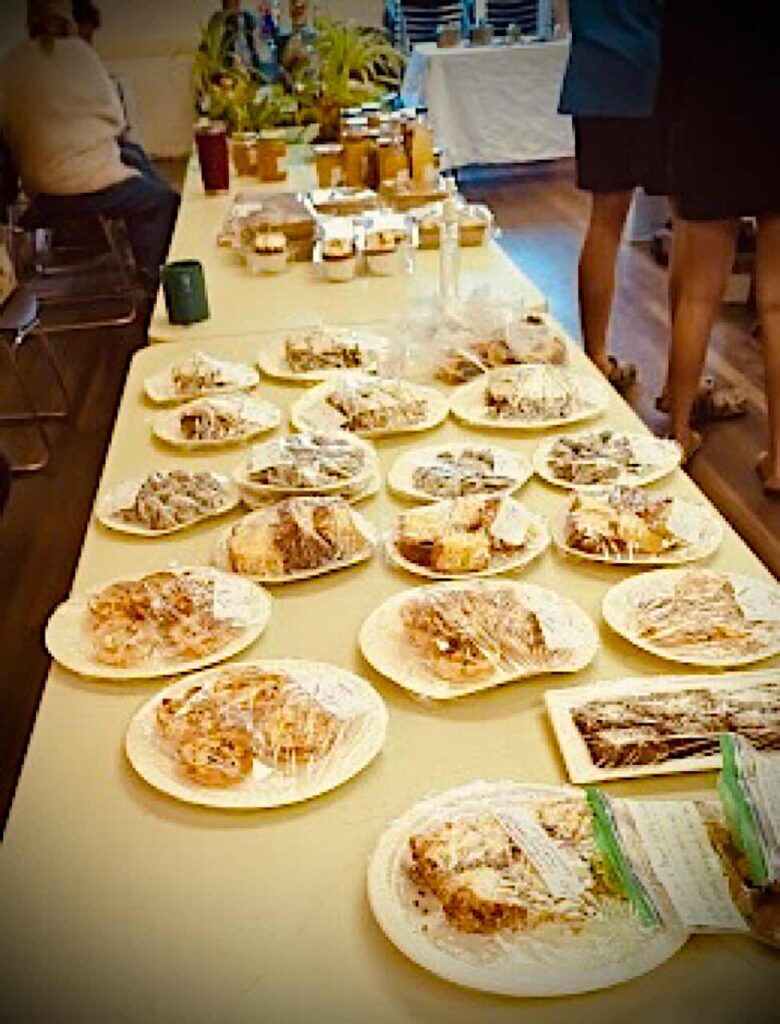
The Paluma Bakers Stall made a record profit of some $454.00. Once again the Kitchen Goddesses of the village excelled themselves with their efforts. Eleven ladies baked to their hearts content to produce a huge variety of cakes, slices, biscuits and other sweet treats. Anneshka and Bronwyn deserve special mention as they both went above and beyond. Anneshka donated a huge variety of goods including freshly baked hot-cross buns. Bronwyn’s gluten free options and very glamorous baked treats sold like’ hot-cakes’ and were all snapped up early in the day. Thanks to the following ladies for their outstanding and very generous contributions for the cake stall – Stella, Ros, Bronwyn, Jill, Anneshka, Julia, Jan, Lynn, Michele, Bobbie and Jennie. Charlie ran the cake stall, assisted by Michele.

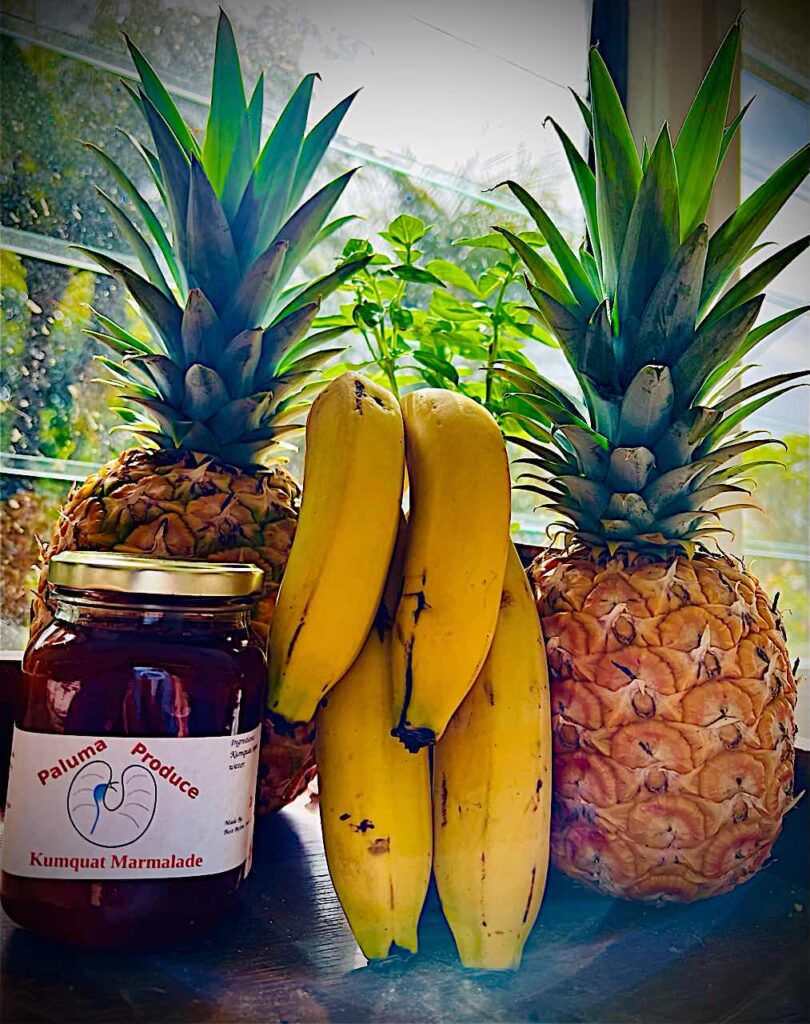
Other funds were raised on the day from an Easter raffle run by Wilfred. The raffle raised over $140.00 and the Easter egg and chocolate-filled food hamper was won by ‘Jessie’, a visitor to the village staying at one of the cottages on Mt Spec Road. Con the Fruiterer (aka Wilfred) raised $165.00 from the sale of produce (pineapples and bananas, etc). Les and Lynn report that the Paluma History (books and card sales) raised $240.00. Peter and Jan ran the book stall for fund-raising for the Paluma Rural Fire Brigade.

The overall success of the Paluma Easter Market and the impressive fundraising for the community is possible due to the generous contribution of time from the many volunteers in planning, setting up and cleaning up on the day. Lynn worked tirelessly and was still at the Community Hall at 3 pm on Sunday. To all of the volunteers from the community, well done and a big thank you!

And a similar big thank you to all those residents and their visiting friends and families who stopped in at the market to buy a sausage sizzle, some baked goods for morning/afternoon tea and to shop at the numerous stalls. Your support is greatly appreciated. Well done Paluma!

Text & Photos by Michele Bird

Free Workout at Paluma this Saturday

A reminder that there is a Free Workout on offer this Saturday afternoon 8th April – otherwise known as a Paluma Working Bee. Many hands make light work and there are always plenty of jobs to do around the village to keep things maintained and looking beautiful.

If you have a couple of hours to spare this Saturday afternoon, please meet at the Community Hall at 2 pm. Everyone is welcome.

It will be a great opportunity to work-off those extra Easter calories from chocolates and hot-cross buns and working outside in the fresh Paluma mountain air is always good for the mind and body.

A free beverage is on offer after the work is completed.

PDCA AGM – Executive Committee for 2022-23

This year’s Annual General Meeting was well attended with 25 people in attendance. Don Battersby and Lynda Radbone manned the BBQ to provide a lunch beforehand which may have helped to bring in a range of members from around the village.

The AGM minutes will be posted on the Member’s area shortly, together with the President’s Report, Financial Statement and History Project Report.

This year there were advance nominations for two new members of the Committee, who were elected unopposed (Anneshka Brown as Vice-President, and Juanita Poletto as Secretary).

Sarah Swann decided not to run for office this year, and I would like to thank her on behalf of the PDCA for her efforts on several PDCA initiatives and inputs into discussions over the last few years.

The remaining Committee Members agreed to stay on for another year and were elected unopposed. After a call from the floor for other nominations to fill available positions, I am delighted that Leonie Crennan and Linda Whitely agreed to join the committee.

It is great that we start this year with four new faces on the Committee and with the position of Secretary filled after more than two years.

The final composition of the PDCA Committee is listed below.

PresidentJamie Oliver
Vice-PresidentAnneshka Brown
SecretaryJuanita Poletto
TreasurerWilfred Karnoll
Committee Member (SES)Charlie Allen
Committee Member (RFS)Ross Hyne
Committee MemberLyn Hyland
Committee MemberJill Meads
Committee MemberLeonie Crennan
Committee MemberLinda Whitely

If anyone is interested in reading a summary of events and achievements for the year, you can download the President’s Report here.

Jamie Oliver

Rooster Ramblings….

There is no doubt that the Rooster on the Range Road has been the talk of the town over the past few months since he first appeared along the roadway at culvert 147 or thereabouts. I can’t recall the number of times I’ve been asked or have heard people remarking, ‘have you seen the rooster lately’?

Well, now some of Paluma’s local artists and craftspeople have taken inspiration from the wee Rooster. Jennie recently painted a portrait of the feisty fowl in all his splendour. She took inspiration from a photo taken by the Cooke’s in early January soon after the Rooster took up residence on the Range.

Ros and Jennie are now planning to transfer the image of the Rooster to coffee cups/mugs for sale at the upcoming Easter Market. Other images of birds native to Paluma are also being transferred to mugs from photos taken by local residents. The Riflebird will be featured as one of Paluma’s iconic native birds. Make sure you check out the Paluma-inspired crafts at this Sunday’s market stalls.

The ‘Portrait of a Rooster’ has already been sold and now hangs on the kitchen wall in a local Paluma residence.

Text & Photo by Michele Bird (no relation to the Rooster).