
During the last two weeks, I have been hearing the faint, high-pitched, wispy warble of the Scarlet Honeyeater (Myzomela sanguinolenta), a consistent but relatively rare visitor that feeds on flowering trees, often high up in the canopy. Houses that offer a view of tree canopies in flower may provide a glimpse of this strikingly coloured little bird. Len Cook’s front verandah is one of the few places I have been able to get a good view in the past, but so far this year it has been heard but not seen. It is the male that catches the attention of birdwatchers, with it brilliant red head and neck, set off by black back and whitish underparts.
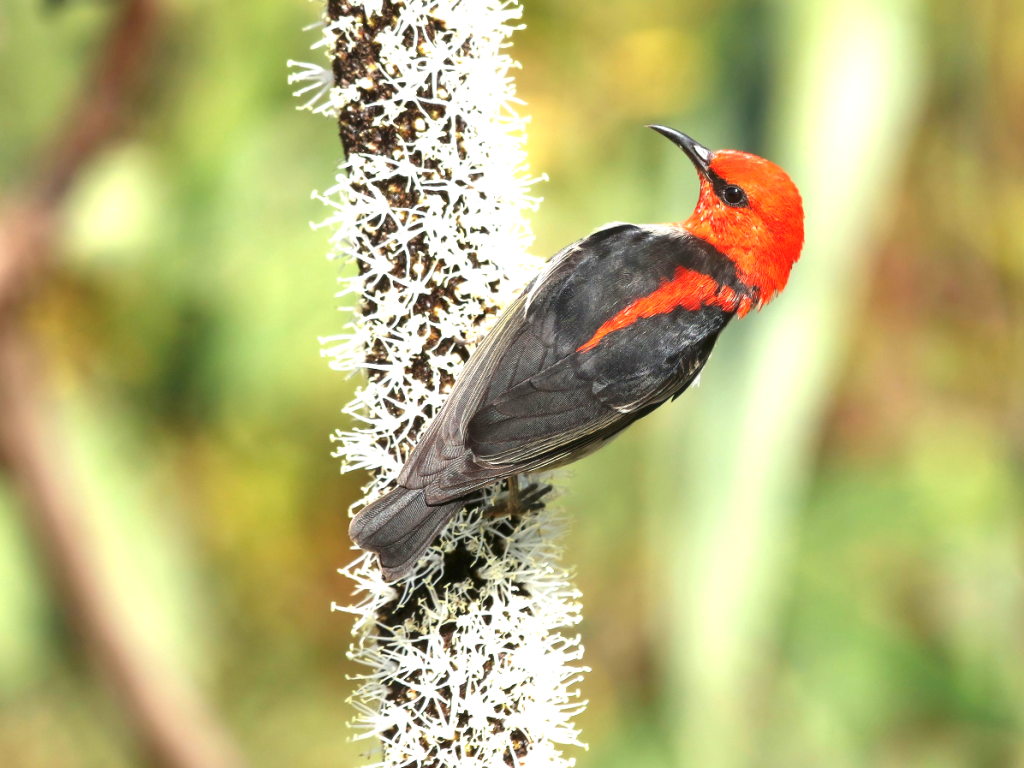
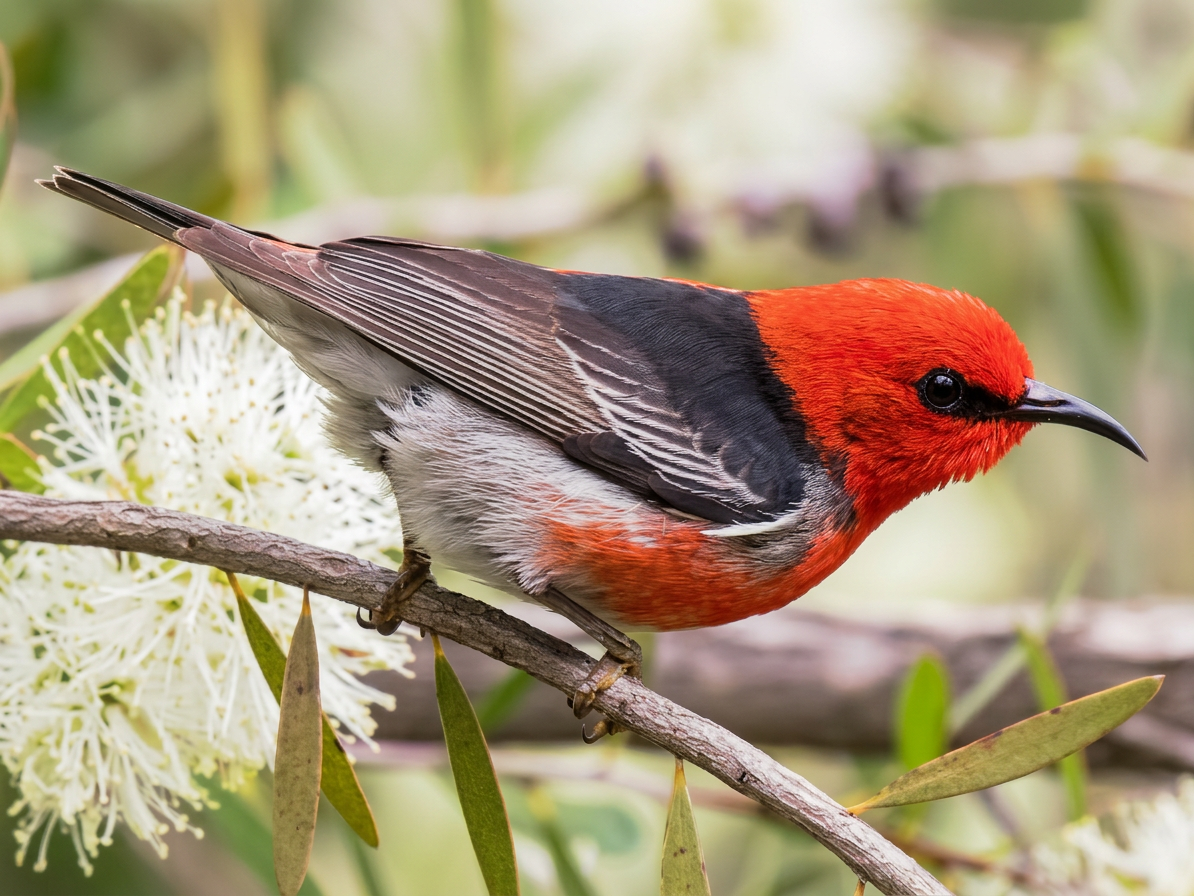
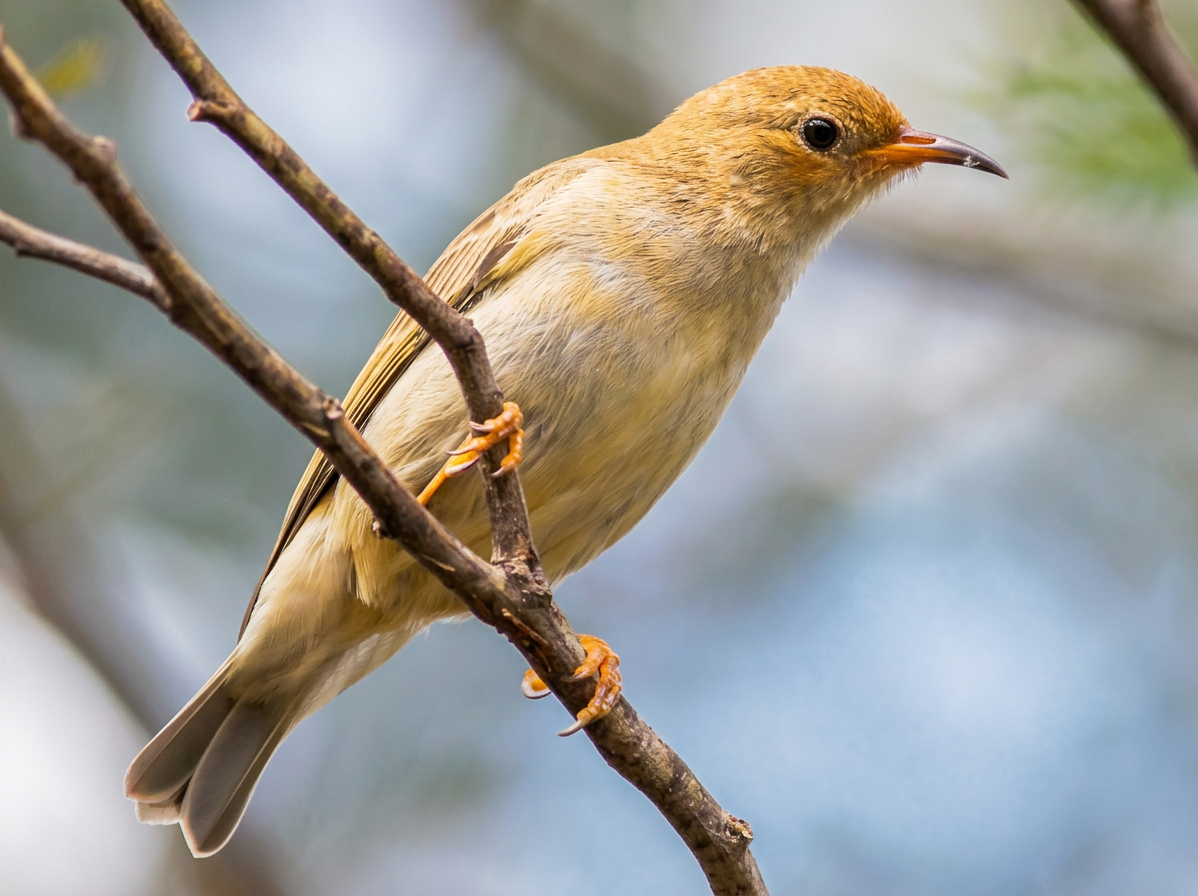
The female is rather drab and brown with a cream belly and sometimes a reddish flush around the face.
The Scarlet Honeyeater is the smallest Australian honeyeater (Family Meliphagidae) and can be found in open eucalypt woodlands, wet sclerophyl forests and riverine Melaleuca habitats. It feeds predominantly on nectar from flowering trees, with insects and fruit only occasionally eaten. Most feeding occurs above 10m in the canopy. It occurs along eastern Australia from Cooktown to northeastern Victoria. In the far north, its range overlaps with the quite similarly coloured Red-headed Myzomela, which is mainly found across northern Australia.
The brilliant plumage of the Scarlet Honeyeater has made it a well-recognised bird to many Australians. Early colonists gave it various names, including Bloodbird and Little Soldier (in reference to its similarity to English redcoat soldiers). The officially recognised common name, used predominantly outside Australia, is Scarlet Myzomela.
The genus Myzomela is the largest in the honeyeater Family, containing 41 species distributed from Indonesia to Australia and the Pacific Islands. Australia has only 3 species, and two occur in Paluma: the Dusky Honeyeater and Scarlet Honeyeater. The name refers to this group’s feeding method of sipping or “sucking” honey-rich nectar from flowers. It is derived from two old Greek words: “myzo”, meaning to suck or suckle; and “meli”, meaning honey.
Text by Jamie Oliver; Photos and recording as indicated in the text
References used:
Birds of the World
Wikipedia
Google search for the etymology of Myzomela
Thanks for another interesting article, Jamie; and the photos are stunning.
I was lucky enough once or twice to see scarlet honeyeaters feasting in Len’s big bottlebrush. They were darting so quickly through the branches, their brilliant red plumage merging with the the red of the flowers, that it was difficult to focus on them.