
The date for the next PDCA Executive Committee Meeting has been brought forward to August 15th at 3.00pm at the Community Hall. The meeting is open to all Paluma and District residents, although voting will be restricted to Committee Members only.
Author: admin
Paluma Working Bee this Saturday
Our next working bee will be held on Saturday, August 8th at 2pm at the Community Hall. Bring a wheel barrow and shovel if you have one, to shift the remaining mulch into the garden and under the Trees of Memory.
Drinks afterwards at 4pm
Friday Social Drinks at the Hall
Our next Friday night social drinks will be held on 7th August at 6pm. The bar will be open. Bring nibbles, catch up with your neighbours, play darts or just chill out…
Paluma Bird of the Month, July 2026 – Lesser Sooty Owl
The Lesser Sooty Owl (Tyto tenabricosa multipunctata) is one of two owls that are residents in Paluma (3 others are occasional visitors). It is not as commonly heard or seen as the other resident, the Babook owl, but its cry is unforgettable and quite un-owl-like. It sounds like the whistling of a descending WWII bomb.
It is not that common around the village, but a few years ago I was walking along the track from McClelands lookout and hoping I might catch a glimpse of an individual that had been calling when I felt the whisper-soft touch of wings on my head as a bird dive-bombed me and then settled in a tree 5m away. With a shaky hand, I tried to simultaneously illuminate the bird with my head torch and frame it with my iPhone. The result was one of the blurriest, overexposed bird shots in my collection, but it was enough to convince me it was indeed a Lesser Sooty Owl.
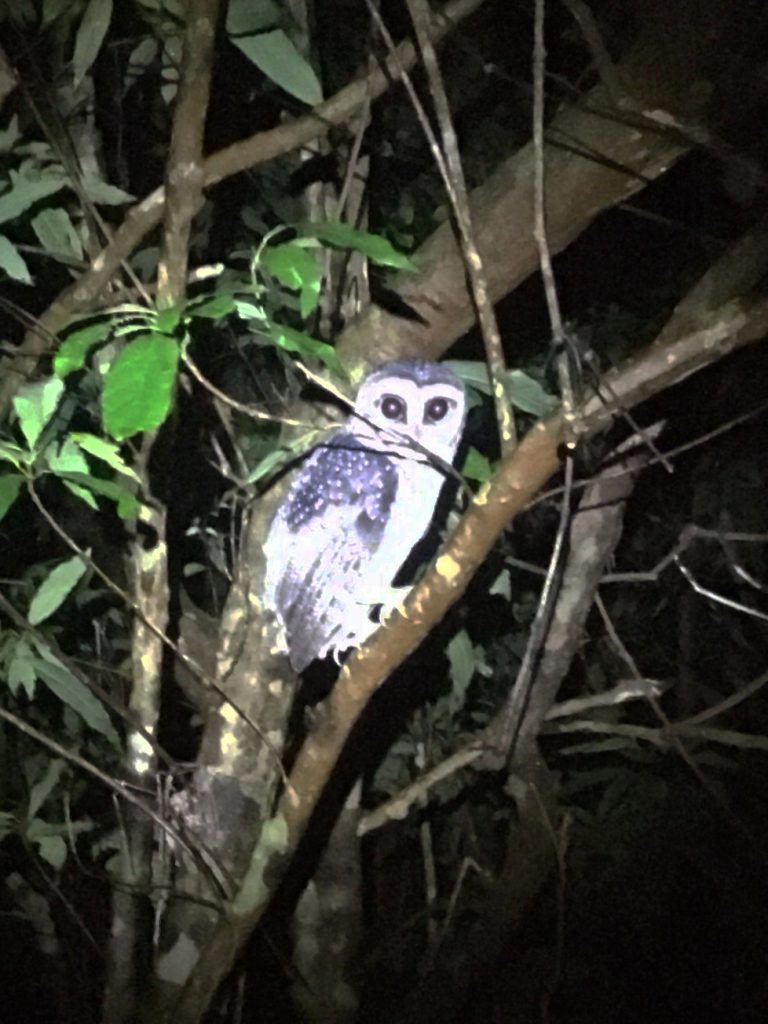
Here is what it might have looked like if I had the right equipment and steadier hands …..
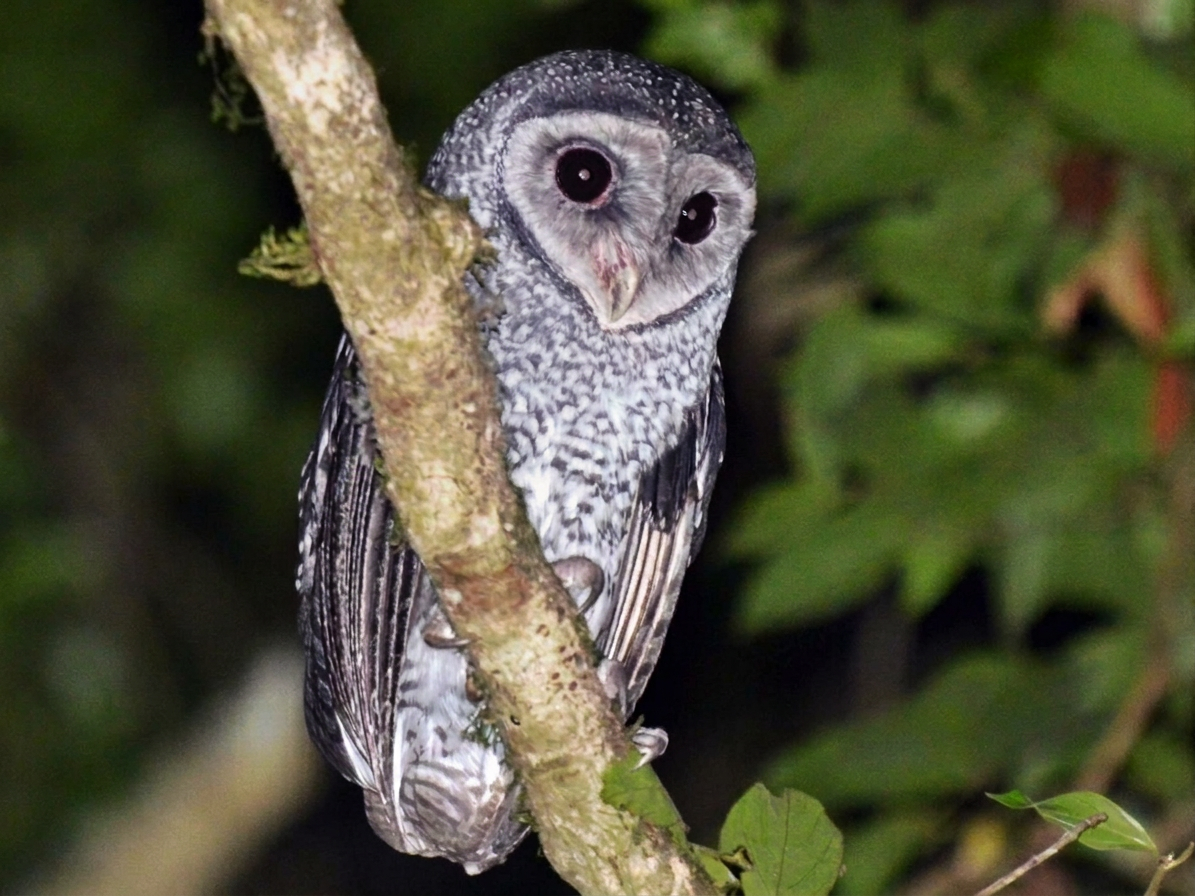
The Lesser Sooty Owl can be found in rainforest and adjacent wet Eucalypt habitats from Cooktown to Bluewater. It has been considered a separate species in the past but it is now one of three subspecies. The other two ( T.t. tenebricosa and T.t. arfaki) are larger and found in southeastern wet forests of Australia, and mainland New Guinea, respectively.
Lesser Sooty Owls are mainly sedentary and have permanent territories. They breed throughout the year but mainly from March to May. They are monogamous and form lifelong pairs. As with other species of Tyto, males provide food to the female, who feeds the young nestlings. Later, both parents hunt and feed the young. The young fledge and leave their nest at about 3 months, but remain dependent on their parents for food for several weeks to months.
Like most owls, the Lesser Sooty hunts at night and can capture prey in complete darkness using the sound of rustling leaves. The diet of owls is fairly easily studied. They eat their prey whole or in large chunks and then regurgitate the undigested parts (bones, teeth, fur, feathers, and even small whole skulls) as compacted pellets at its roosts. Researchers can easily collect pellets on the forest floor below known roosts and then identify the body parts down to species.
Based on a study of pellets near Lake Tinaroo in the Atherton Tablelands, the diet of the Lesser Sooty Owl was found to be composed primarily of small mammals, with the Bush Rat, Melomys species and the marsupial mouse Antechinus godmani making up 75% of prey items. Overall, the owls’ diets ranged from Ringtail possums and small gliders to microbats and small lizards.
Studies of owl pellets can also inform conservation management of rare species. The above study included the bones of a near-threatened species of tree mouse. Apart from 3 museum specimens, the existence and ongoing presence of an isolated population from this locality has only been detected from owl pellets.
Text by Jamie Oliver, photos as indicated
Further reading
Dhillon, J., M.D. Bruce, J. S. Marks, and G. M. Kirwan (2022). Sooty Owl (Tyto tenebricosa), version 2.0. In Birds of the World (S. M. Billerman, Editor). Cornell Lab of Ornithology, Ithaca, NY, USA. https://doi.org/10.2173/bow.sooowl1.02
McDonald et al. (2013). Utility of owl pellets for monitoring threatened mammal communities: An Australian case study. Wildl Res (2014) 40 (8): 685–697.
Another Successful Paluma Push
Last Saturday saw several hundred people come up to Paluma to join (or support) the 2026 Paluma Push. The event was back in Paluma this year with around 400 competitors participating in all standard event distances. Overall, the Push was a great success. There was strong Community support with about 32 residents from Paluma to Hidden Valley turning up to man the various checkpoints and to help run the Bar at Hidden Valley. The time and effort contributed by these volunteers contributed greatly to the overall success of the event.
The Community also benefited significantly. A total of $3,500 will be donated by Outer Limits jointly to the SES, RFS and PDCA for our support with volunteers and logistic assistance. In addition, the bar, run by Wifred Karnoll and others at the Hidden Valley campground, reported a profit of $2,000 for the PDCA coffers.
Thanks to everyone who turned up, and to Outer Limits and Sam Stedman for his ongoing support for the Community and for helping to promote Paluma as a destination.
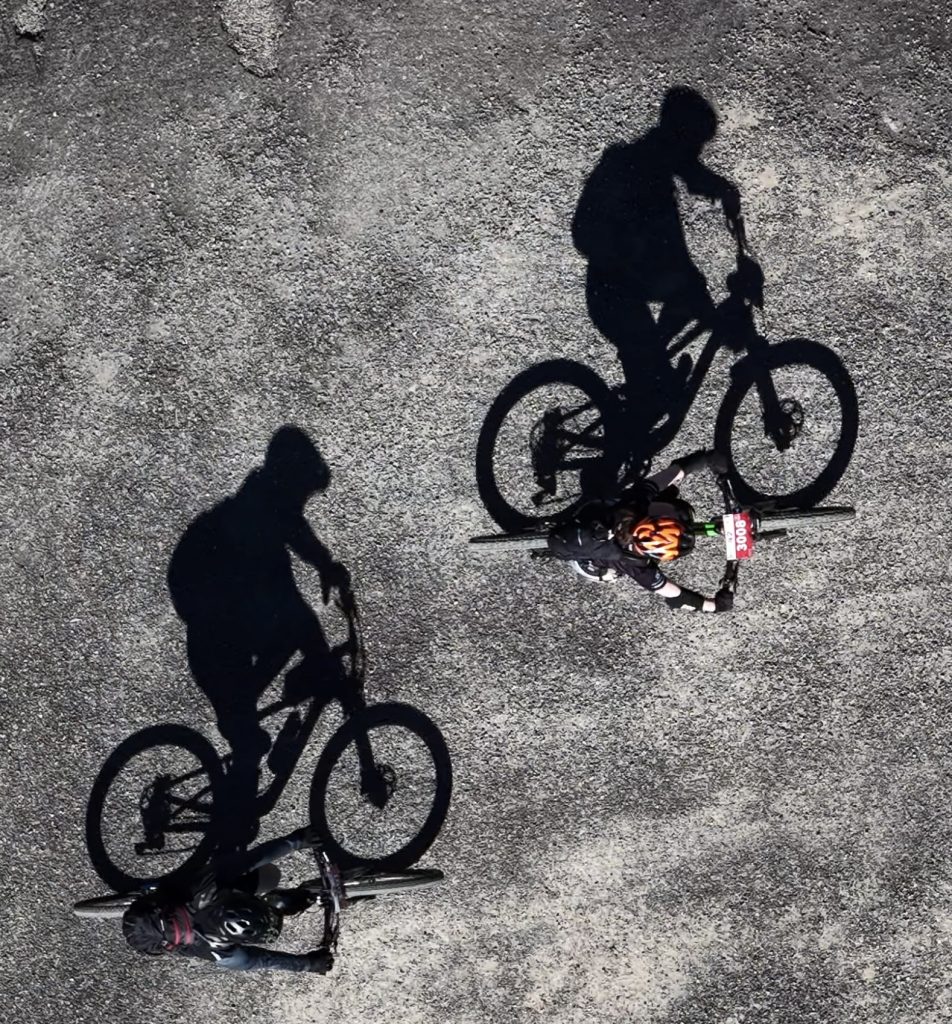
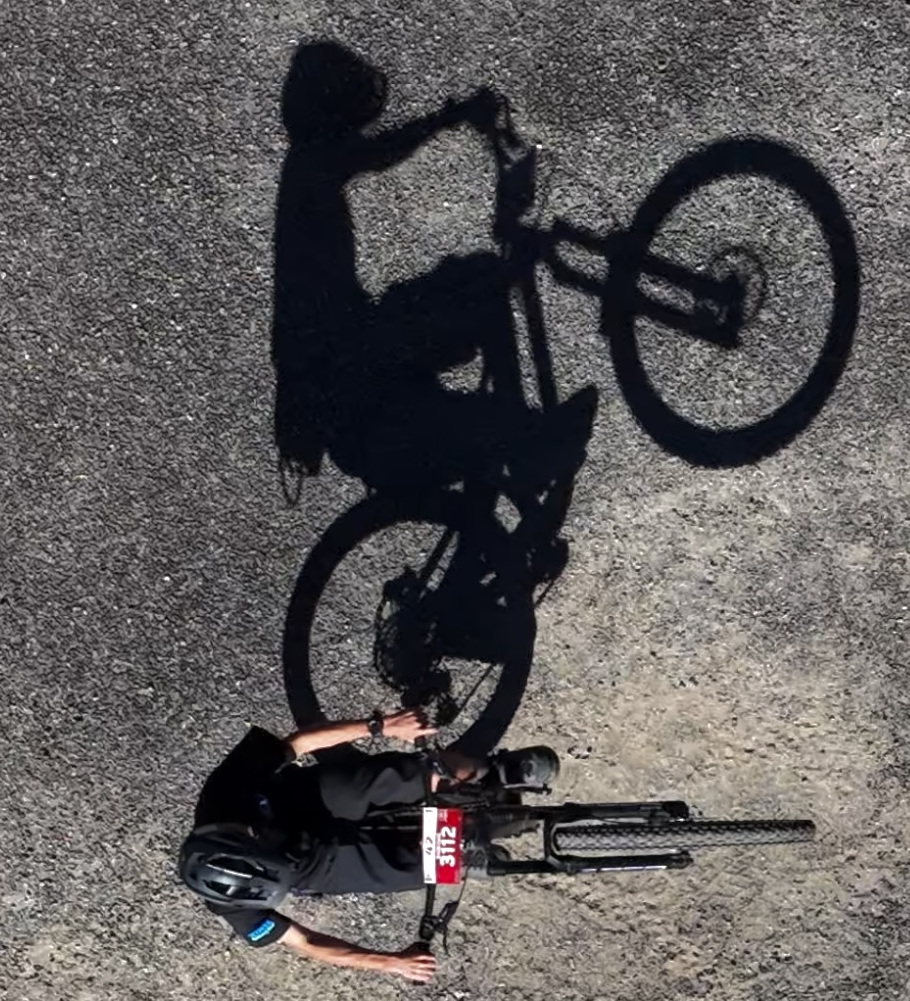
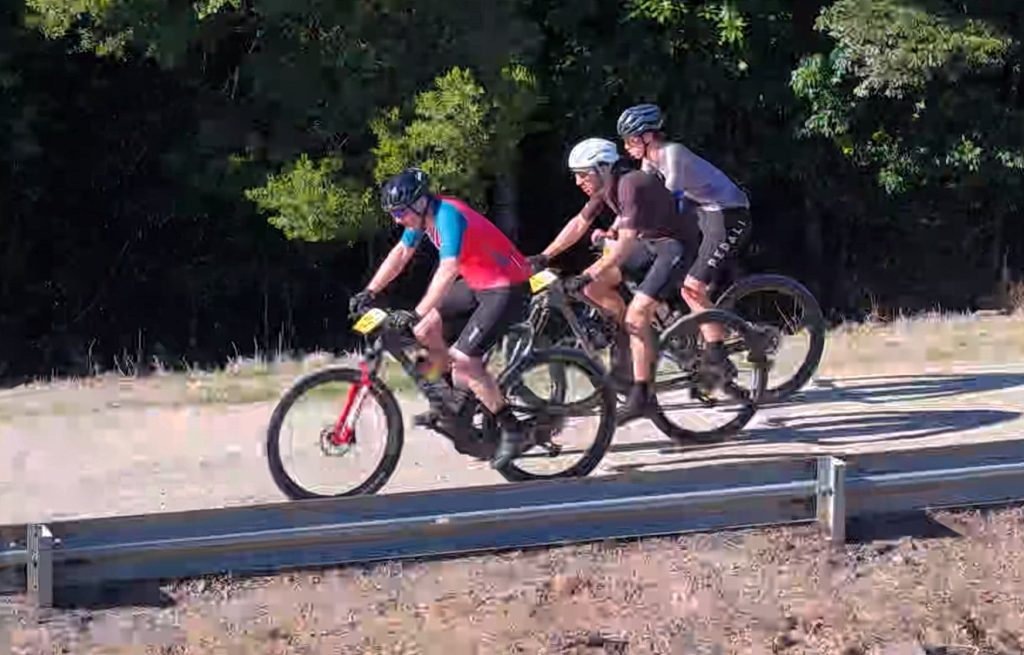
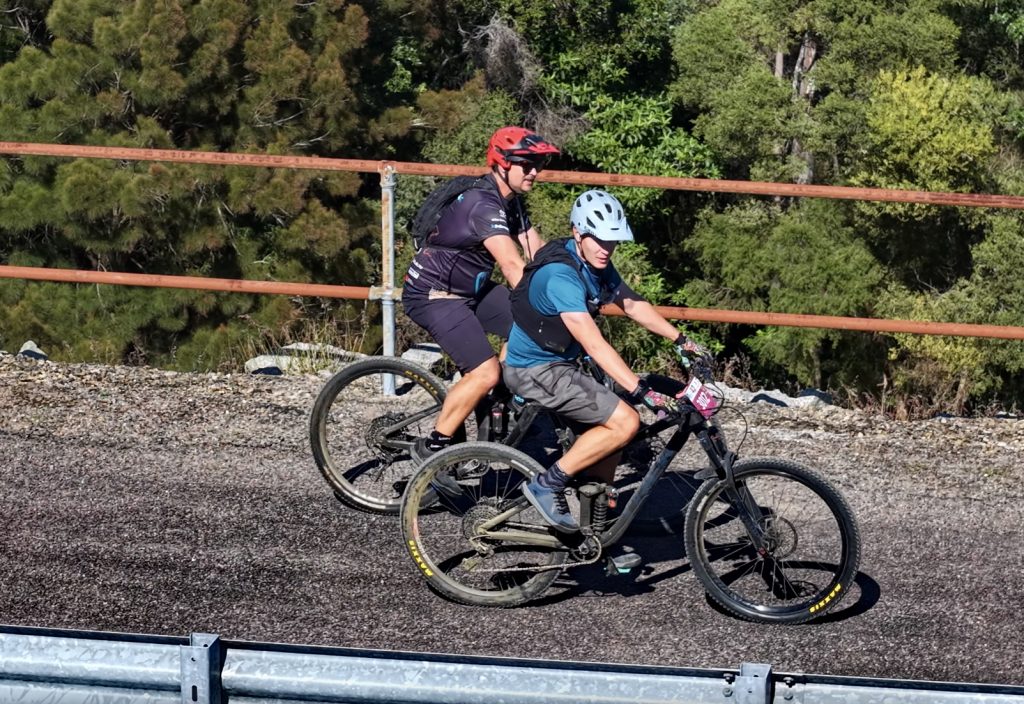
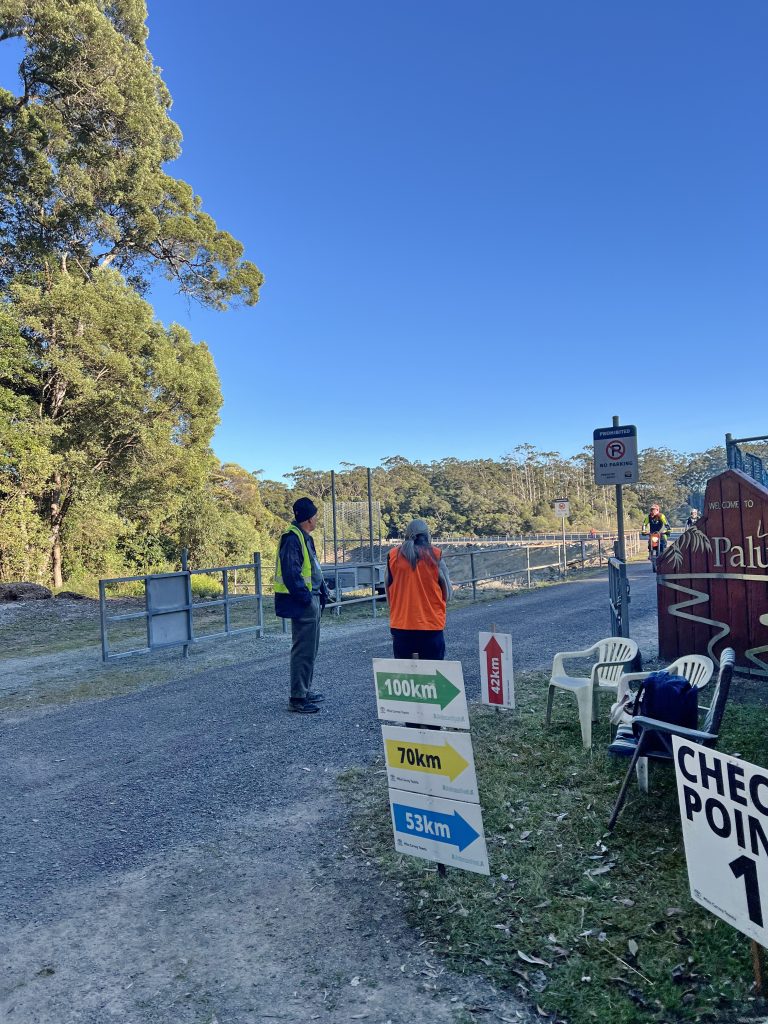
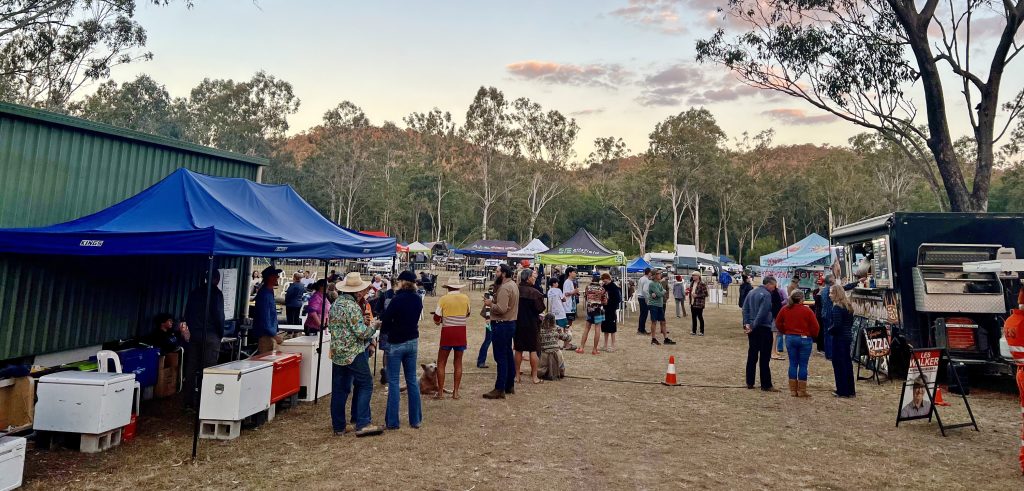
The PDCA bar (left) at Hidden Valley was well patronised.
High-Speed Internet and Wifi for the Community Hall
Last year, the Paluma Community Hall was nominated by the City Council’s Disaster Management Group for a federally funded program to install Wi-Fi and internet facilities at the Hall. Our nomination was successful, and last week an NBN technician installed a new community Wi-Fi in the Paluma Community Hall with internet provided via the NBN skymuster satellite.
I have measured a speed of 80Mbps in the building, which is a great improvement on what has been available from either the TCC community Wi-Fi or Wi-Fi derived from local 4G/5G, in the building. Because Skymuster uses geostationary satellites, there is still that slight delay (latency) because of the distance to the satellite.
This service was applied for because of problems experienced in February 2025 caused by the failure of the Telstra facility in Paluma. It should provide a reliable backup following most weather-related problems, provided the satellite dish survives. It also provides faster Wi-Fi around the building for visitors to Paluma who don’t have a Telstra mobile phone.
A sign advertising this new facility will be placed outside the hall.
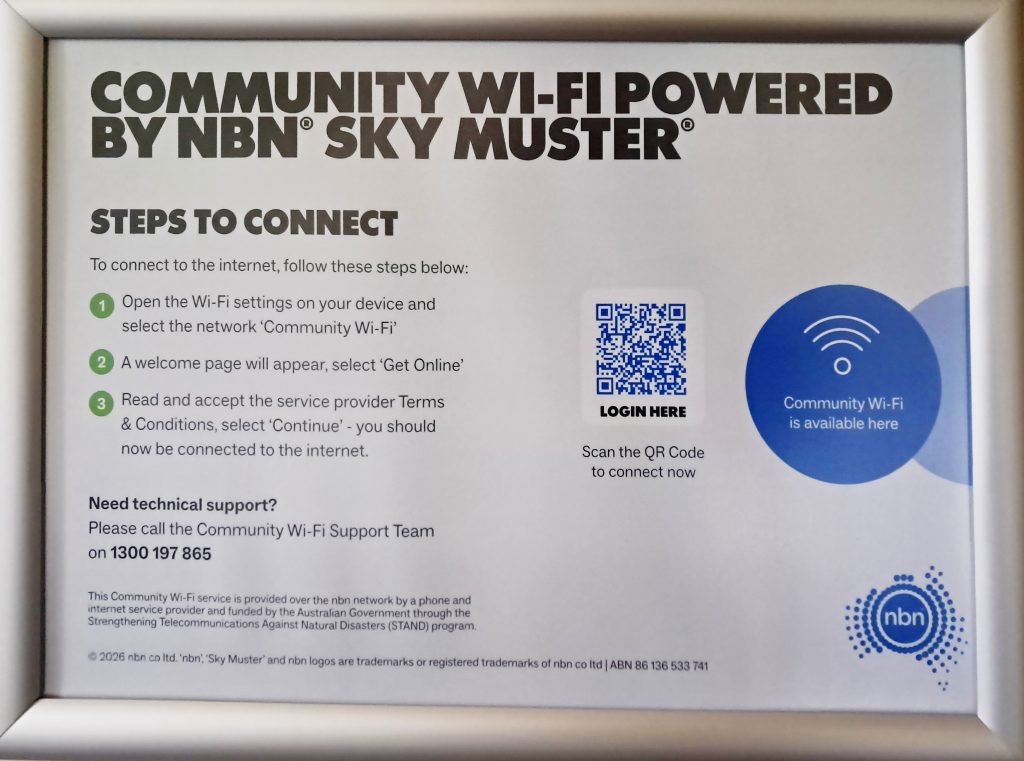
In approximately two years, the current NBN satellites are due to be replaced with Amazon low-earth-orbit (Leo) satellites that are currently going into orbit. This service should transfer with that transition.
Charlie Allen
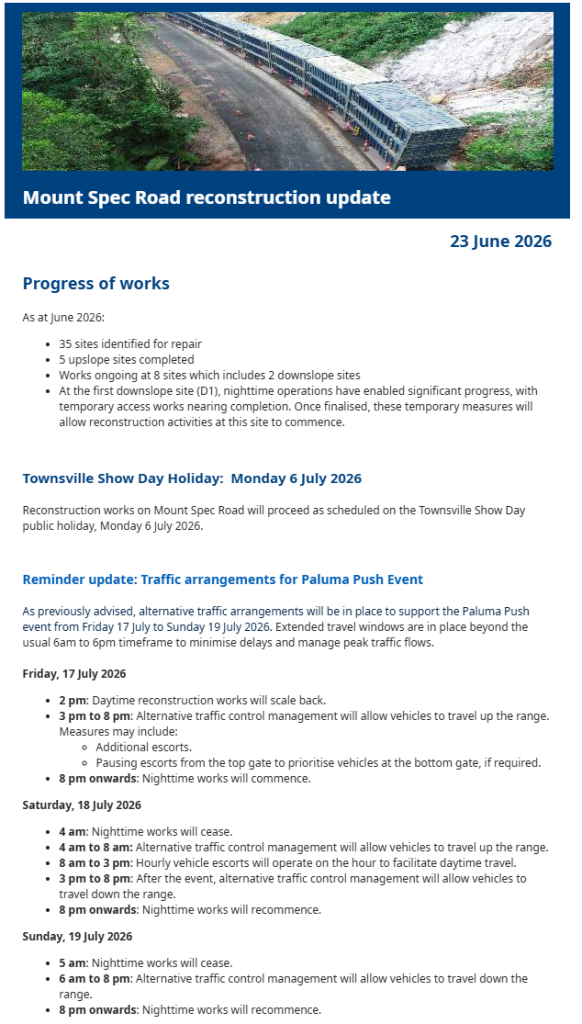
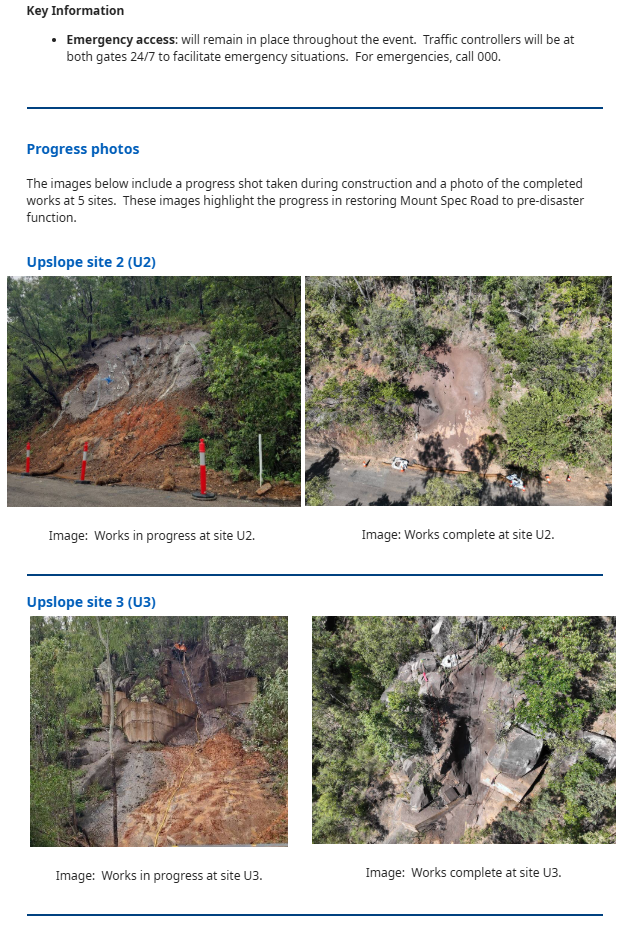
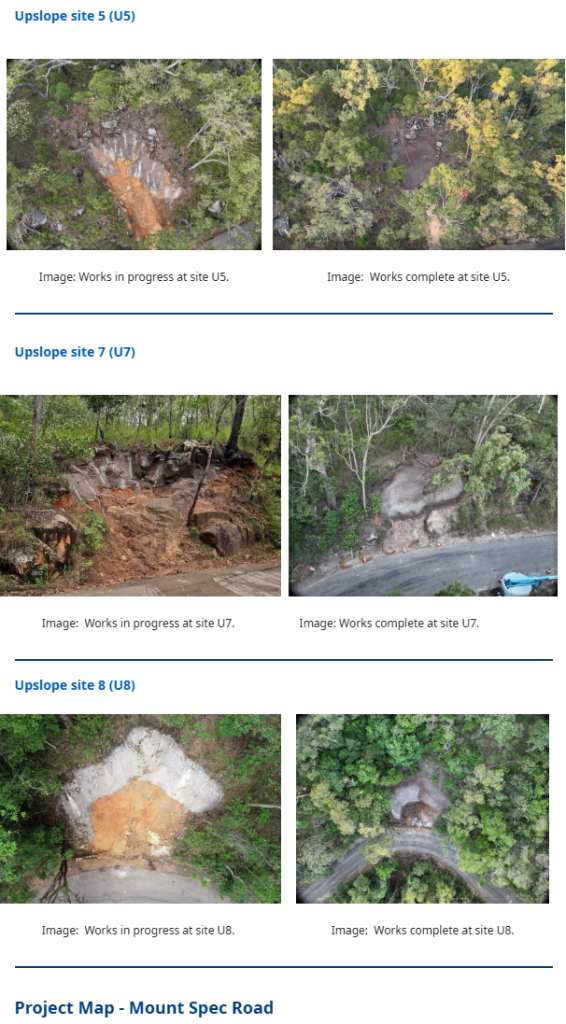
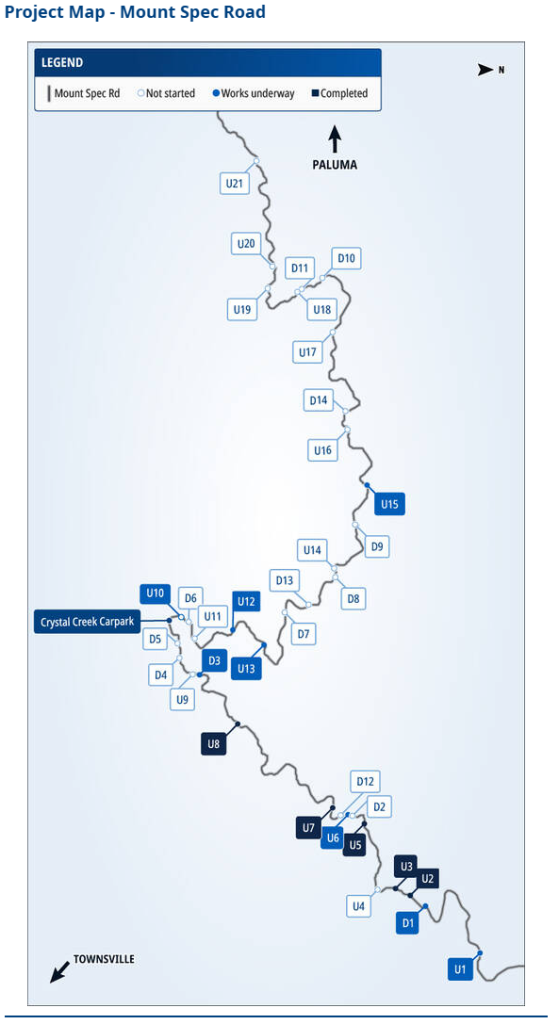
TMR Range Road Update, June 23, 2026
This update was sent out last month, but not posted on Paluma.org. It is still relevant since it has information on road closures during the upcoming Paluma Push this weekend.
Admin
Reminder – Social Drinks in the Community Hall this Friday, July 3.
The Community Hall, and the bar will be open from 6pm – ~8pm on Friday, July 3rd. Come along for a drink and a catch-up with other residents. Table Tennis, Darts, Music and other activities are available for anyone willing to set up the equipment. Bring along some nibbles/finger food.
July Working Bee postponed till July 11th
The next Paluma working bee has been postponed till the second week of July. Volunteers please meet at the Community Hall at 2pm, July 11, where you will be allocated tasks by Wilfred for about 2 hours. Drinks will follow at the Hall at 4pm.
Call for baked and preserved goods at June Markets
In order to ensure adequate facilities/space at the markets on June 28th could any Paluma & District people who intend to provide baked goods, preserves or other edible items at the Markets let Wilfred Karnoll know as soon as possible by email on Wilfred.Suzanne@bigpond.com.