
The Lesser Sooty Owl (Tyto tenabricosa multipunctata) is one of two owls that are residents in Paluma (3 others are occasional visitors). It is not as commonly heard or seen as the other resident, the Babook owl, but its cry is unforgettable and quite un-owl-like. It sounds like the whistling of a descending WWII bomb.
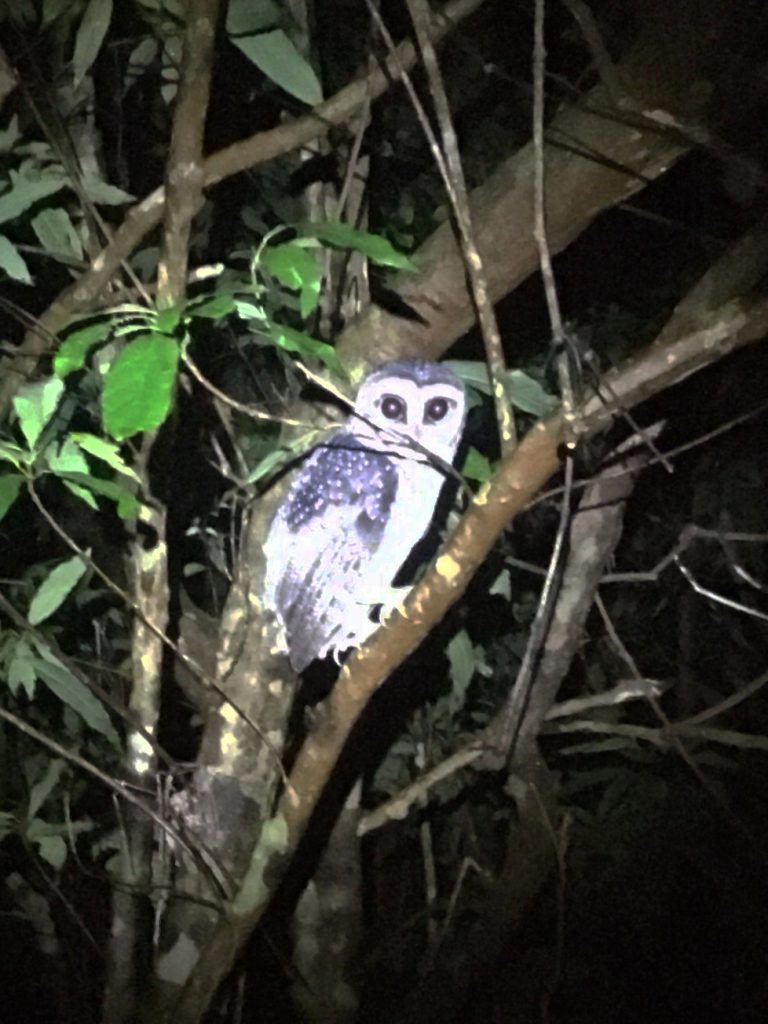
It is not that common around the village, but a few years ago I was walking along the track from McClelands lookout and hoping I might catch a glimpse of an individual that had been calling when I felt the whisper-soft touch of wings on my head as a bird dive-bombed me and then settled in a tree 5m away. With a shaky hand, I tried to simultaneously illuminate the bird with my head torch and frame it with my iPhone. The result was one of the blurriest, overexposed bird shots in my collection, but it was enough to convince me it was indeed a Lesser Sooty Owl.
Here is what it might have looked like if I had the right equipment and steadier hands …..
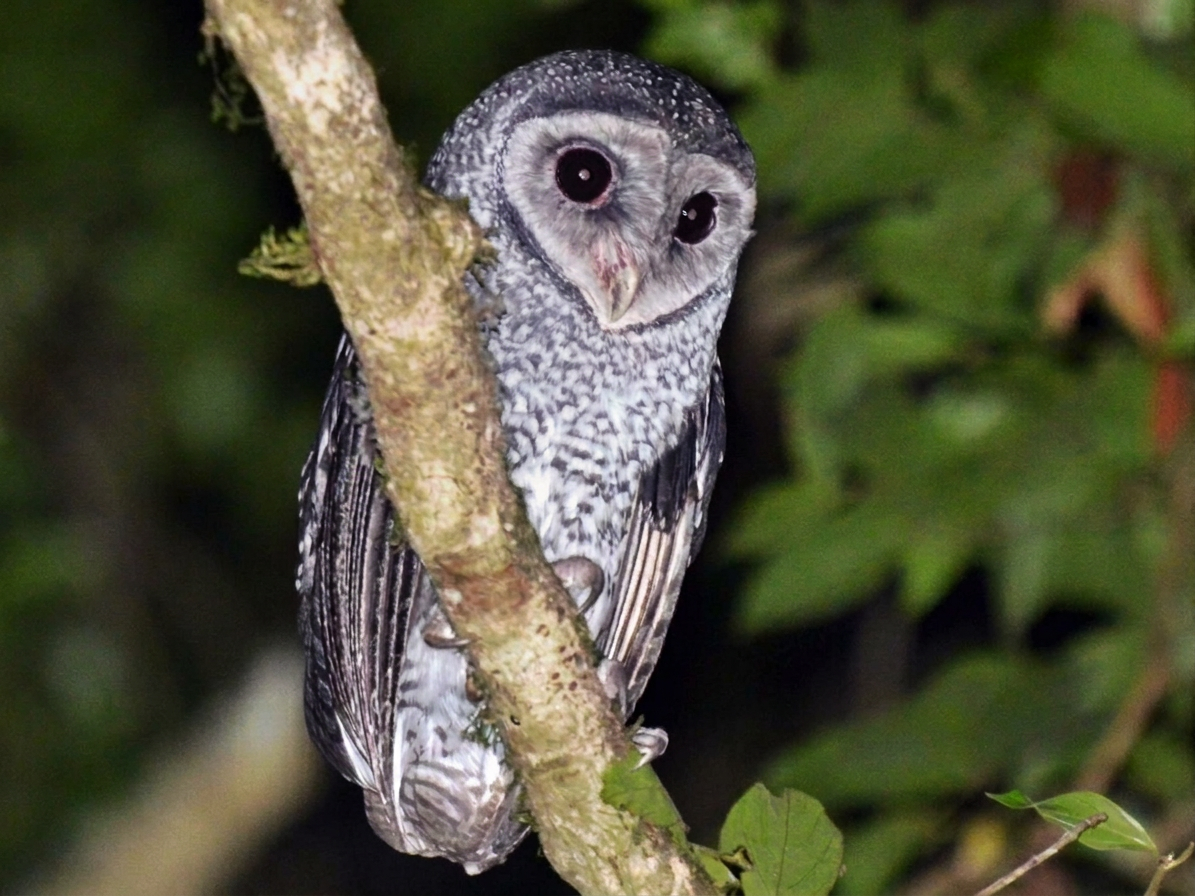
The Lesser Sooty Owl can be found in rainforest and adjacent wet Eucalypt habitats from Cooktown to Bluewater. It has been considered a separate species in the past but it is now one of three subspecies. The other two ( T.t. tenebricosa and T.t. arfaki) are larger and found in southeastern wet forests of Australia, and mainland New Guinea, respectively.
Lesser Sooty Owls are mainly sedentary and have permanent territories. They breed throughout the year but mainly from March to May. They are monogamous and form lifelong pairs. As with other species of Tyto, males provide food to the female, who feeds the young nestlings. Later, both parents hunt and feed the young. The young fledge and leave their nest at about 3 months, but remain dependent on their parents for food for several weeks to months.
Like most owls, the Lesser Sooty hunts at night and can capture prey in complete darkness using the sound of rustling leaves. The diet of owls is fairly easily studied. They eat their prey whole or in large chunks and then regurgitate the undigested parts (bones, teeth, fur, feathers, and even small whole skulls) as compacted pellets at its roosts. Researchers can easily collect pellets on the forest floor below known roosts and then identify the body parts down to species.
Based on a study of pellets near Lake Tinaroo in the Atherton Tablelands, the diet of the Lesser Sooty Owl was found to be composed primarily of small mammals, with the Bush Rat, Melomys species and the marsupial mouse Antechinus godmani making up 75% of prey items. Overall, the owls’ diets ranged from Ringtail possums and small gliders to microbats and small lizards.
Studies of owl pellets can also inform conservation management of rare species. The above study included the bones of a near-threatened species of tree mouse. Apart from 3 museum specimens, the existence and ongoing presence of an isolated population from this locality has only been detected from owl pellets.
Text by Jamie Oliver, photos as indicated
Further reading
Dhillon, J., M.D. Bruce, J. S. Marks, and G. M. Kirwan (2022). Sooty Owl (Tyto tenebricosa), version 2.0. In Birds of the World (S. M. Billerman, Editor). Cornell Lab of Ornithology, Ithaca, NY, USA. https://doi.org/10.2173/bow.sooowl1.02
McDonald et al. (2013). Utility of owl pellets for monitoring threatened mammal communities: An Australian case study. Wildl Res (2014) 40 (8): 685–697.