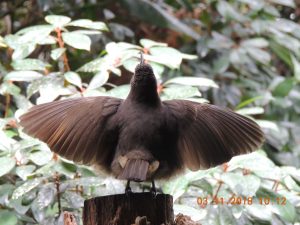
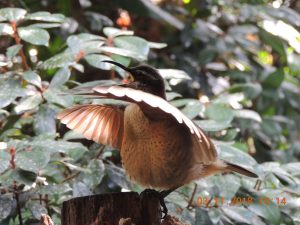
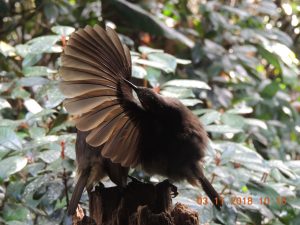
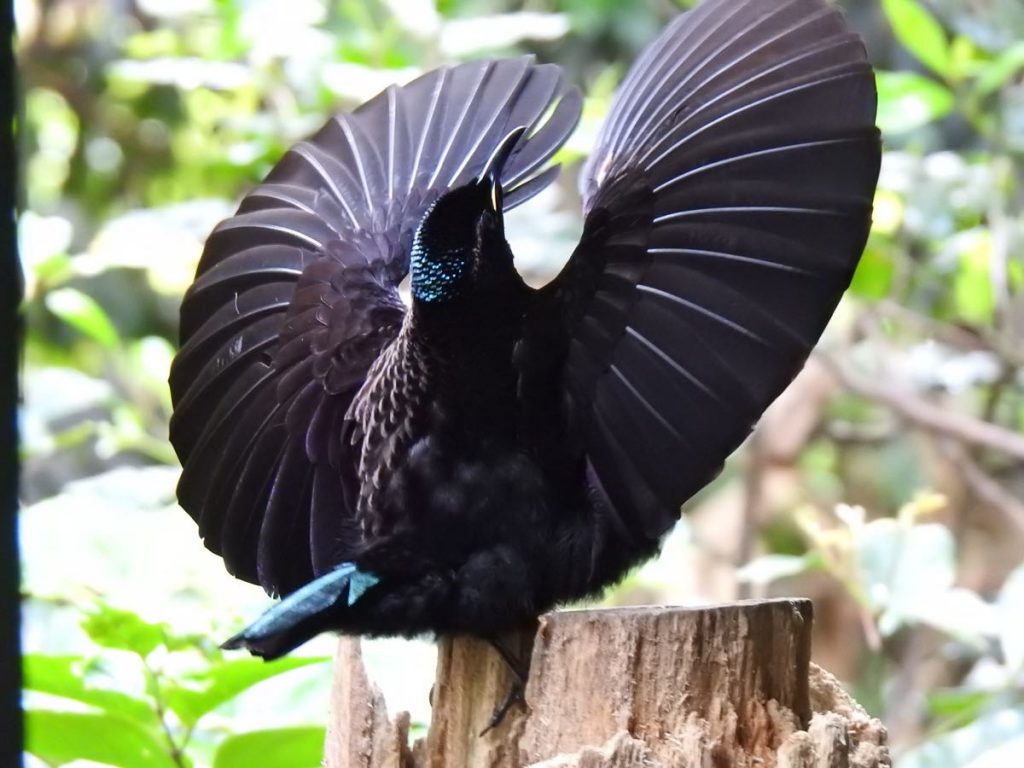
The Chowchilla (Orthonyx spaldingii) is one of my favourite birds inhabiting the upland rainforest in the Paluma area. It is not a particularly large bird, nor does it have striking plumage. It does not build an elaborate bower like the numerous local bowerbirds and it does not have the impressive dance moves of the riflebird.
BUT, the Chowchilla has a loud and unmistakeable call that echoes throughout the forest, usually at dawn and dusk. Any bird with a call like the Chowchilla demands your attention and admiration. Scientists report that their complex vocalisations vary quite markedly from place to place and there are identifiable local dialects. Imagine that – a unique Paluma Chowchilla language!
Chowchillas are also known as ‘logrunners’. They are ground dwelling birds, living and foraging in small family groups of between 3 to 8 birds. Each flock has their own permanent territory. Chowchillas spend most of their time foraging for invertebrates on the forest floor. They have strong legs for scratching in the leaf litter and their tail is used to support their body whilst they vigorously throw leaf litter aside.
Chowchillas are common in and around the village of Paluma. I see them regularly (or at least flashing glimpses of them) in the forest adjacent to the walking track to McClellands Lookout and along Lennox Crescent. They are regular visitors to the forest margins in my back garden.
I find them absolutely endearing for their elaborate songs and their lively and gregarious nature. When foraging as a family group they happily chatter away, enthusiastically intent on their search for food. They are oblivious that they are excavating precious garden beds and pot plants.
But, I have to admit that Chowchillas are the cause of considerable consternation and ongoing frustration for me!
For about two and a half years I have been trying to ‘capture’ a half decent photograph of a Chowchilla. Dozens and dozens of attempts and not one decent photograph!. Blurry, dark and unfocused images of Chowchillas are my speciality!
If I manage to find a bird within photographic range, it will rarely sit still for more than a split second and will surely move just at that moment when I press the shutter. Because the birds inhabit the forest floor, the light is usually poor and it is hard to see the bird clearly, let alone focus the camera.
I am well aware my frustration is shared by many fellow birdwatchers and photographers. ‘Photographing a Chowchilla’ is high on the wish list of many bird enthusiasts who visit Paluma, but it seems not many people actually achieve their goal.
So, after two and a half (long) years, this is my best effort at a Chowchilla photograph. Blurry, too dark, not centred and the bird is obscured by vegetation. And I am sure that Chowchilla is grinning at me, just before it darts back into the cover of the rainforest foliage. I’ll keep trying……….!
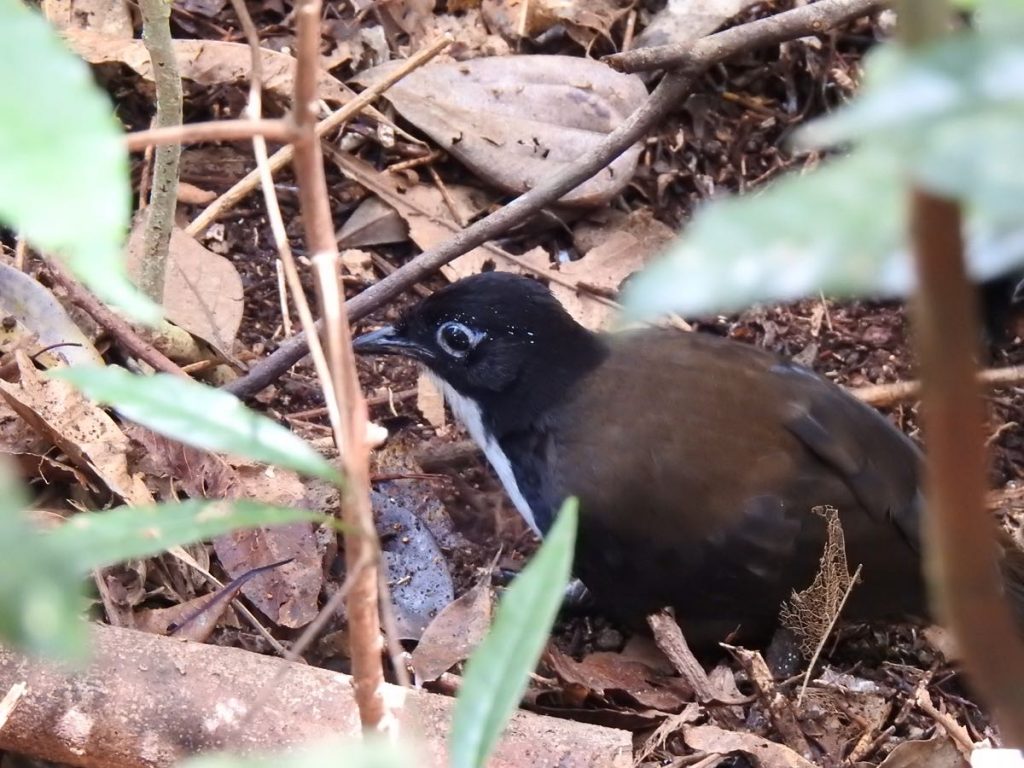
Please let me know if you have had better success in capturing images of these beautiful, but very elusive birds in and around the Paluma area!
Text & (Blurry) Photo by Michele Bird

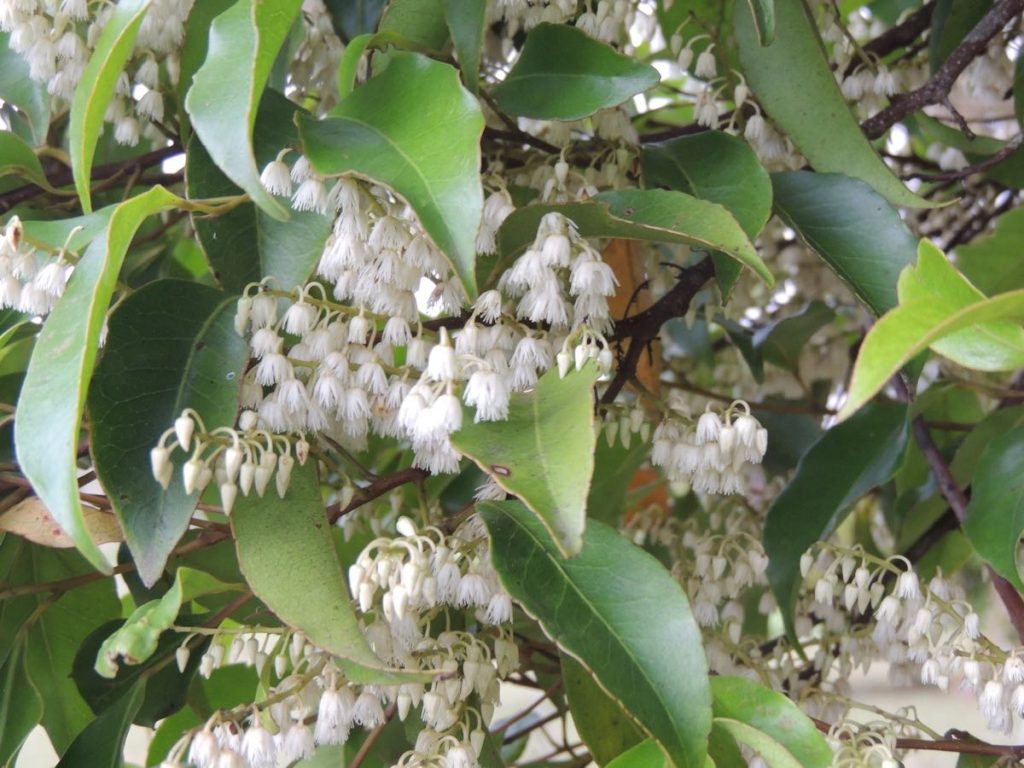
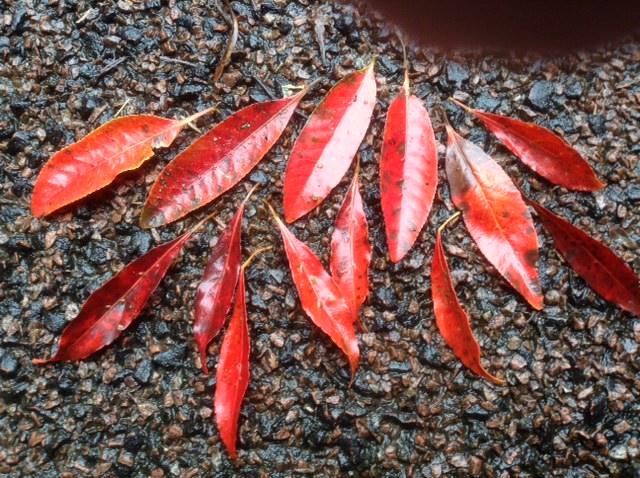
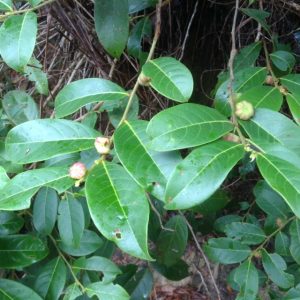 Glochidion hylandii is a shrub or small tree growing to a height of up to 12 metres, usually to be found on the edges of rainforests or in revegetation areas as a pioneer tree. The leaves are simple, elliptic and between 30 and 150 mm long with clearly defined veins. Upper surfaces are smooth, or sparsely covered with fine hair while the undersurface is slightly waxy with fine brown hairs. Flowers, growing in the leaf axils are inconspicuous, being only 2 or 3 mm with 6 green sepals and no petals.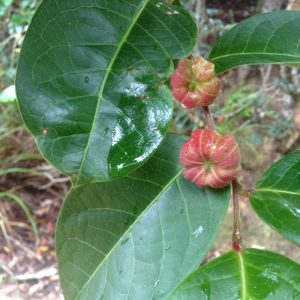

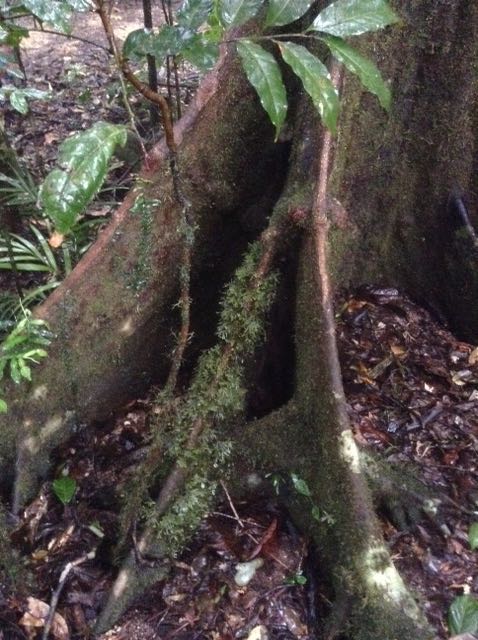
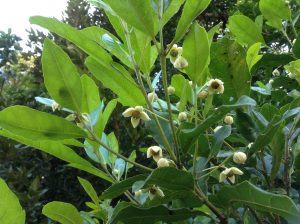 Worldwide, there are about 120 species of Sloanea –named for British scientist and collector Hans Sloan, who lived 1660 to 1753. Four species are endemic to Australia with three of these growing in tropical rainforests in Queensland. Sloanea australis is distributed between the Windsor Tableland and Paluma. Several of these trees may be seen on Mount Spec Road near the Sensory Trail at Paluma Environmental Education Centre where they grow among the stand of forest trees bordering the school property.