The satin bowerbird is common at Paluma and quite easy to spot around many of the village gardens and along the numerous walking tracks.
The population of satin bowerbirds at Paluma is quite unique in that it is reported to be an isolated population in the Wet Tropics of North Queensland.
The male birds are black in colour, but the rich dark gloss of their feathers gives the birds an almost metallic sheen, so that they appear to be a deep shiny blue colour. They are quite breathtaking to see in the varying shades of light in the rainforest.
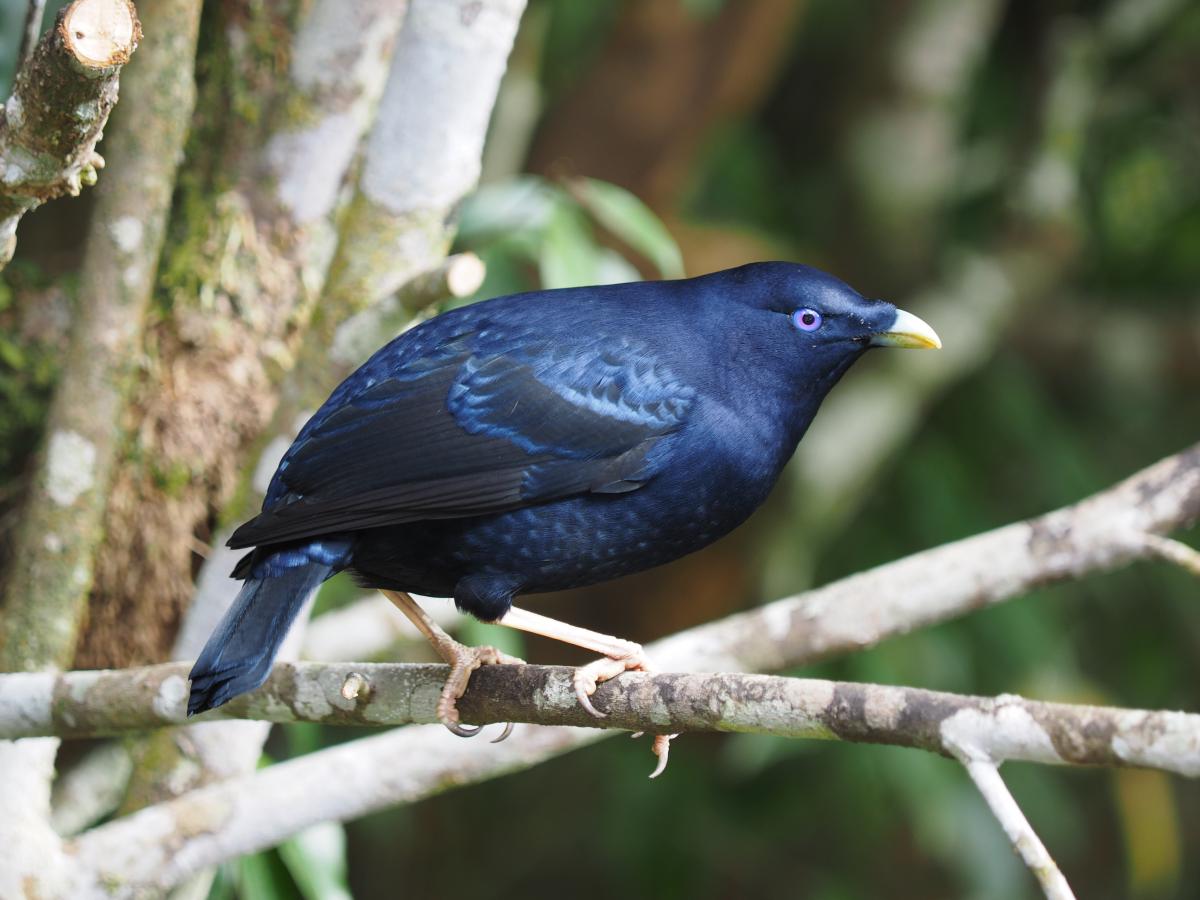

Satin Bowerbird male (top) and female (bottom). Photos by Jamie Oliver
The female birds are green and brown in colour, but with a distinctive scalloped pattern down the body. Both male and female birds have striking blue eyes.
If these birds are not spectacular enough, like most bowerbirds they have a very complex courtship behaviour that involves the male birds building elaborately woven stick structures, or ‘bowers’.
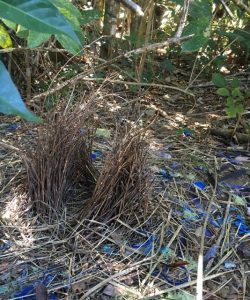
The intention of the bower is to lure females for mating. The female birds will visit the bowers and based on their inspection, will then choose which male they will allow to mate with them.
Male satin bowerbirds go to great lengths to decorate their bower with shiny and coloured objects to impress the ladies. As the males mature they favour blue objects in particular.
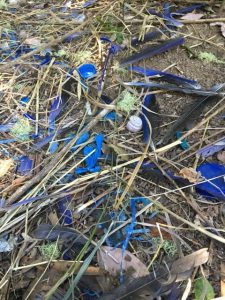
Some lucky Paluma locals have a resident satin bowerbird and bower in their garden, or on their bush block. The bower here was recently sighted in the Hussey Road area.
This bower is decorated with an array of natural objects. This bird has collected blue bird feathers (probably from a crimson rosella), land snails, brightly coloured pebbles and bright-green moss or lichen. However, the majority of the items are non-natural materials including fragments of plastic, surveyor’s tape, pieces of tarpaulin, pegs, bottle lids, the rings from milk bottles and pieces of aluminium foil.
To me, this bower shows how remarkably innovative and adaptive these birds are to the modern world, in sourcing and using a vast array of treasured blue finds. But, it also shows that even in a small village such as Paluma, which is nestled on the very margins of the Wet Tropics World Heritage Area, the birds are able to find a great deal of plastic material. For me it serves as a timely reminder that we could all do a little bit better in managing our waste and taking care of our environment and native fauna.
Text by Michele Bird
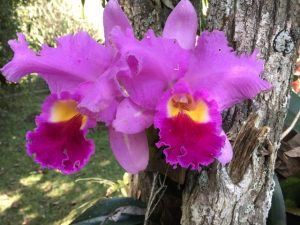 This superb specimen of Cattleya orchid belongs to Paluma residents Michael and Donna Drew. The beautiful mauve, deep purple and yellow blooms are long lasting and Michael says that these flowers first opened in early July.
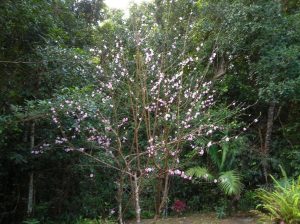 Several gardens in Paluma have peach trees which are at present coming into bloom. Buds are swelling along the slender branchlets, with many flowers already open. Another week, (it is 12 July at the time of writing), should see the trees densely covered in delicate pink blossoms. Unless heavy rain washes the blossom off, the tree will display its beauty for up to three weeks. Tiny fruit will begin forming which will swell and ripen in the summer months but Bush Rats and White-tailed Rats will have eaten most of them well before then.
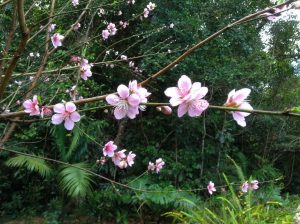 The peach is a deciduous tree and looks bare and straggly for a few months during the year, until mid- winter, but is worth growing for its sheer beauty during the flowering period.
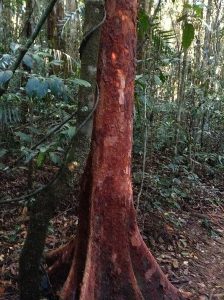 is one rainforest tree that can be unmistakably recognised by its bark. The bright red/orange papery bark stands out like a glowing beacon in the surrounding greens of the forest. The flakes of bark are thin, soft and translucent.

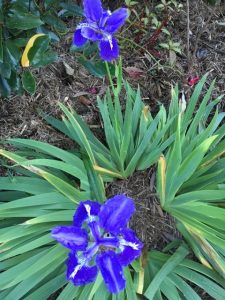
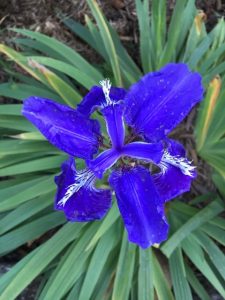 The leaves are light-green in colour and sword-shaped. The flowers attract bees and other insects which are important for pollination. Iris plants flower between June and August and after flowering they produce an ellipsoid seed capsule with black-brown seeds.