
Pink Ash – Alphitonia petriei
Around the world there are 20 species of this distinctive tree, mostly in tropical Asia, while in Australia there are seven or eight species, found in eastern northern Australia. Alphitonias are known by several popular names which can cause some confusion in identifying a particular species. Pink Almond, White-leaf, White Ash, Soap Tree, Sarsaparilla, Red Ash, Red Almond, Foam-bark and Pink Ash are those names most commonly used.
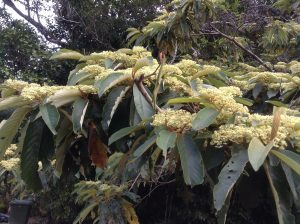
Alphitonia petriei is a pioneer species which grows rapidly on the edge of the forest or in a gap where sunlight can reach. Trees can grow to a height of 40 meters and sometimes look grotesque with gnarled and twisted limbs and branches which reach out impossible distances laterally from the trunk. At present trees around Paluma are particularly eye-catching as most are densely covered in white flowers, often with a tiered effect and, from a distance, appear like snow-laden Christmas trees.
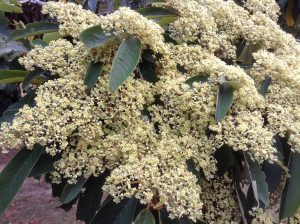
The flowers which grow in dense panicles at the ends of branchlets and between leaves are white, cream or pale green. They have five petals, only 1.5 mm long which envelop the stamens. Flowering is usually from September through to March. Pollination is by beetles. Butterflies are also attracted to Alphitonia. The fruit is produced from February to July; globular, dark capsules, which ripen to reveal three orange to red seeds surrounded by a powdery flesh. Many birds, including King Parrots and Crimson Rosellas, feast on these while fallen fruit is eaten by cassowaries.
Leaves of the Alphitonia are simple, lanceolate and can be 65 to 180 mm long. The upper surface is glabrous and a dull grey-green in colour while the undersurface is whitish and slightly hairy. In some species of Alphitonia, notably A. excelsa, the leaves when rubbed in water will produce a soapy froth, hence the popular name Soap Tree. This species is more commonly found at a lower altitude than that of Paluma.
The bark on the trunk and limbs of this tree is grey, flaky, almost tessellated and if torn gives off a liniment-like odour. This is a distinctive feature of the tree. The strong liniment smell of broken twigs and leaves is methyl salicylate, produced in the cambial layers of the limbs. 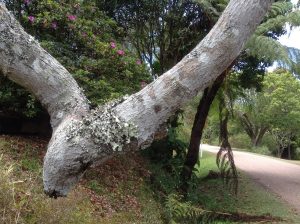 Some people liken the smell to sarsaparilla, hence another popular name for this tree. Rainforest Aborigines used the Alphitonia petriei medicinally, probably as a liniment.
Alphitonia petriei is one of the many rainforest trees that contain bio-active chemicals which could potentially produce valuable medicinal drugs. In his book ‘Plants of Tropical North Queensland’, John Beasley says that “research at Paluma found that more than half the trees tested showed marked bioactivity.”
There are many of these interesting trees growing in and around Paluma. Particularly good specimens may be seen outside No 62 Mount Spec Road and at the corner of the western entry to Lennox Crescent from Mount Spec Road.
Text and photos by Colwyn Campbell

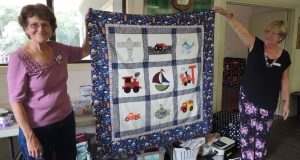
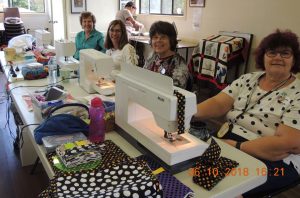
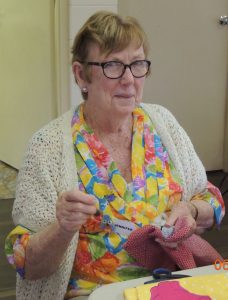 The Townsville Blankets of Love group formed in 2000 after a founding member suffered the devastating loss of a grandchild. Out of this hardship, was formed a truly dedicated and remarkable group of women. Their most important role is to make and provide small quilts which are passed on to social workers at hospitals. The quilts are given to parents suffering the loss of a baby and the hope is that the quilts will assist in the process of saying goodbye to the loved one.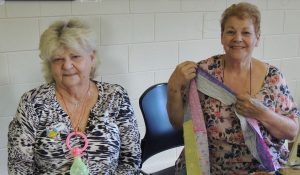
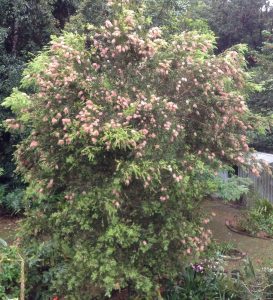
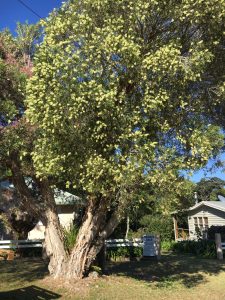 This tree is likely to be a Melaleuca quinquenervia, commonly known as the broad-leaved paperbark. This specimen is a sturdy, multi-trunked tree with masses of creamy-yellowish bottlebrush-like flowers. This species of paperbark is native to Eastern Australia, Papua New Guinea and New Caledonia. It often grows in damp areas, on the margins of swamps, on floodplains and near watercourses. This specimen is thriving on the mountain top at Paluma!
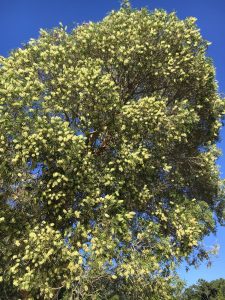 Not only is this tree a magnet for bees at the moment, it also provides a source of nectar for many honeyeaters. In less than 15 minutes of bird watching at this tree, I observed numerous birds visiting for a feed – Macleay’s Honeyeater, Dusky Honeyeater, White-throated Honeyeater, Eastern Spinebill and Lewin’s Honeyeater.