Posts

Paluma Profiles – Lynn Hyland

This month in ‘Meet A Villager’ we introduce you to long-time Paluma resident Lynn Hyland.

  • Lynn and her husband Les bought their 5-acre property at Paluma in 1986, having been regular bushwalkers and campers to the area for many years.
  • For 38 years Lynn worked as an Early Education teacher and then as a Primary Deputy Principal in Townsville schools for 28 years.
  • Lynn and Les were regular weekenders to Paluma up until 2003 when they retired to paradise and made ‘Barr’ na ‘Coille’ their principal residence.
  • Barr’ na ‘Coille’ derives from Les’ Irish heritage and translates literally as ‘Top of the Forest’, but with a little licence the Hylands like to call their home ‘Woody Heights’.
  • Over the past 25 years they have battled fires and cyclones on their property. They were burnt out in 1993 and then trees fell on the house during Cyclone Yasi in 2011.
  • It has taken much hard work and perseverance to restore their property. They planted 760 trees to revegetate the block after the fires and to re-establish their extensive gardens.
Photo by Doug Head
  • Lynn’s motto has always been “if you are going to live in a small community then one should be willing to contribute to that community”. And contribute she has.
  • Lynn has been a Paluma Rural Fire Brigade member for 30 years and a Mt Spec SES member for 29 years.
  • In 2007, Lynn took the position of Vice President of the Paluma and District Community Association. She then served as President for 9 years up to 2018. She is currently the Second Vice President.
  • Lynn has served as an active member on many fundraising committees including the Paluma Rainforest Festival, Northern Beaches Festival, Paluma Art Exhibitions and local markets.
  • Lynn is currently involved with the Paluma Local History Display and she is the coordinator of the annual Paluma Garden Competition.
  • In her spare time (!) Lynn loves to paint and to follow her interest in gem and opal fossicking.
  • The Hylands love to travel and they have made many tours around Australia in their motorhome. They also love to travel overseas and they have made 11 trips to Europe during their 39 years of marriage.
  • In 2017, they embarked on a 7 week cruise to Ireland. Their next big adventure is planned for 2019 with a 5 week cruise around the South Pacific.
  • Lynn enjoys the tranquility and peaceful lifestyle that Paluma offers.
  • If there is a community or social event at Paluma, then Lynn is sure to be there. She is often the first to arrive and the last to leave, selfless with her time and dedication to our village community.

Volunteering for Paluma Push

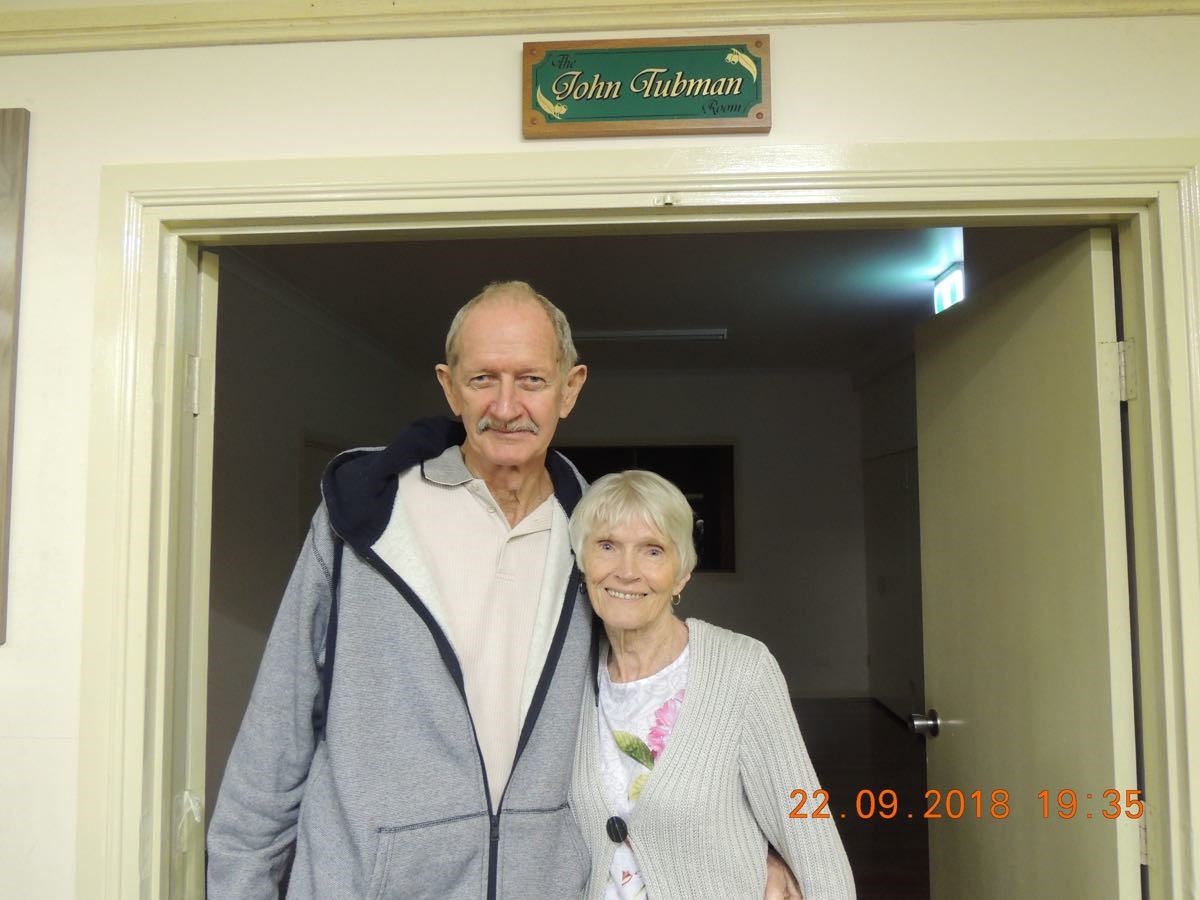
Photo by Doug Head

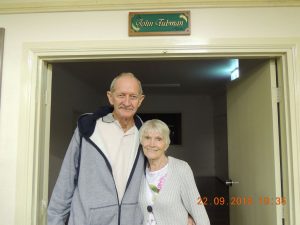
Les and Lynn Hyland are veteran volunteers for the Paluma Push having been involved in the annual event since 2002. They were team captains at Checkpoint 1 at Paluma Dam on Sunday 22 July. Both have been tireless and dedicated volunteers at Paluma community and social events over the past three decades.

Looking for Spotted-tailed Quoll scat

Alberto Vale, from the Australian Quoll Conservancy (www.quolls.org.au) is looking for help in determining if the Spotted-tailed Quoll, which was once fairly common in Paluma, is still in the area. Sadly, quolls were hunted as pests by the original settlers.

For the past 9 months, the Australian Quoll Conservancy has been  surveying the Paluma area in search of Spotted-tailed Quolls, presumed extinct in the area since the 1930’s however confirmed sighting reports have floated in the 60’s as well in 1984.

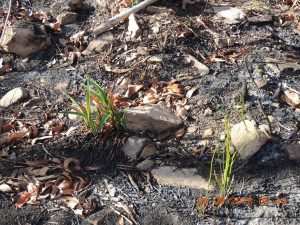
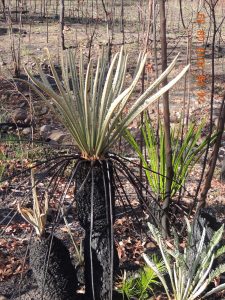
While direct sightings of the animal would be most exciting, a more likely observation (if they are here) would be scat (Quoll poo) on the walking tracks or on top of adjacent rocks and bolders around the Dam or even near the village. If you see anything resembling the images below please take a picture as close-up as possible (or even collect a specimen) and contact Alberto on 0412 632 328 or aqc@quolls.org.au

Volunteering for Paluma Push

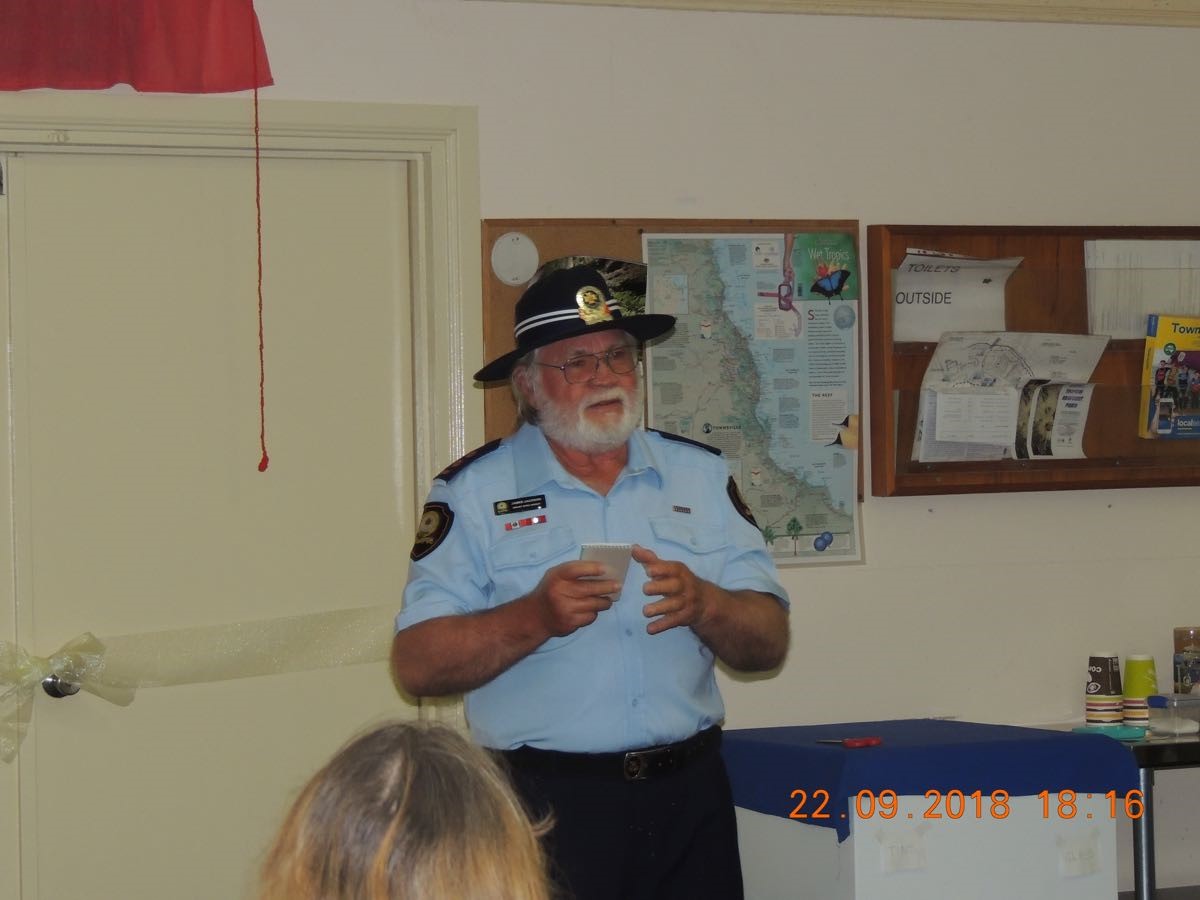
Photo by Doug Head

Roy Mackay and Colwyn Campbell have been dedicated volunteers for the Paluma Push for many years. Colwyn celebrated her 10th year as a volunteer at Check Point 1 at Paluma Dam on Sunday, 22 July. Roy has been volunteering for the event since the race commenced in 2002.

Feedback requested on future night-time closure of Bruce Highway

Do you use the Bruce Highway through Yabulu (north of Townsville) at night?

The Department of Transport and Main Roads (TMR) is seeking feedback from people who regularly travel the Bruce Highway through Yabulu at night, about upcoming temporary highway closures.

The feedback will be used to inform when these closures occur, so as to have the least impact on motorists. We will provide two weeks notice once the closure dates have been determined, so that road users can plan their journeys accordingly.

Further information about the closures and how you can have your say, is outlined in the attached flyer.

We encourage you to circulate this notice to others who regularly travel this section of the highway at night.

Feedback should be directed to TMR’s Customer and Stakeholder Management team by telephone on 1800 625 648, or by email at engagement.northern@tmr.qld.gov.au no later than close of business Friday 3 August 2018. Thank you for your assistance.


Kind regards,

Customer and Stakeholder Management Team
North Queensland Region

Customer and Stakeholder Management Team
North Queensland Region
Program Delivery and Operations Branch | Infrastructure Management and Delivery Division | Department of Transport and Main Roads

____________________________________________

Floor 5 | Townsville Government Office Building | 445 Flinders Street | Townsville Qld 4810
PO Box 1089 | Townsville Qld 4810
1800 625 648 
engagement.northern@tmr.qld.gov.au
www.tmr.qld.gov.au

Flyer_Seeking feedback_Bruce Highway closure_yabulu


Bird of the Month – Satin Bowerbird

The satin bowerbird is common at Paluma and quite easy to spot around many of the village gardens and along the numerous walking tracks.

The population of satin bowerbirds at Paluma is quite unique in that it is reported to be an isolated population in the Wet Tropics of North Queensland.

The male birds are black in colour, but the rich dark gloss of their feathers gives the birds an almost metallic sheen, so that they appear to be a deep shiny blue colour. They are quite breathtaking to see in the varying shades of light in the rainforest.


Satin Bowerbird male (top) and female (bottom). Photos by Jamie Oliver

The female birds are green and brown in colour, but with a distinctive scalloped pattern down the body. Both male and female birds have striking blue eyes.

If these birds are not spectacular enough, like most bowerbirds they have a very complex courtship behaviour that involves the male birds building elaborately woven stick structures, or ‘bowers’.


The intention of the bower is to lure females for mating. The female birds will visit the bowers and based on their inspection, will then choose which male they will allow to mate with them.

Male satin bowerbirds go to great lengths to decorate their bower with shiny and coloured objects to impress the ladies. As the males mature they favour blue objects in particular.

Satin Bowerbird bower. Photos by Michele Bird

Some lucky Paluma locals have a resident satin bowerbird and bower in their garden, or on their bush block. The bower here was recently sighted in the Hussey Road area.

This bower is decorated with an array of natural objects. This bird has collected blue bird feathers (probably from a crimson rosella), land snails, brightly coloured pebbles and bright-green moss or lichen. However, the majority of the items are non-natural materials including fragments of plastic, surveyor’s tape, pieces of tarpaulin, pegs, bottle lids, the rings from milk bottles and pieces of aluminium foil.

To me, this bower shows how remarkably innovative and adaptive these birds are to the modern world, in sourcing and using a vast array of treasured blue finds. But, it also shows that even in a small village such as Paluma, which is nestled on the very margins of the Wet Tropics World Heritage Area, the birds are able to find a great deal of plastic material. For me it serves as a timely reminder that we could all do a little bit better in managing our waste and taking care of our environment and native fauna.

Text by Michele Bird

What’s Flowering in Paluma – Madonna Orchid

Pink Madonna orchid (Cattleya trianaei)

This superb specimen of Cattleya orchid belongs to Paluma residents Michael and Donna Drew. The beautiful mauve, deep purple and yellow blooms are long lasting and Michael says that these flowers first opened in early July.

The orchid is about 10 years old and was purchased by Donna at an Orchid Society Show in Townsville. The plant is happily growing in shaded conditions in the fork of a small tree with rough, corky bark. Michael feeds the plant regularly with a spray of liquid fish emulsion and the odd banana skin (as a source of potassium).

Michael has named the orchid ‘Pink Madonna’ after his lovely wife, Donna.

Did you know that the genus of Cattleya orchids was first named in 1824 in tribute to William Cattley of England who was a keen cultivator of tropical plants.  These orchids originate from the Central and South Americas.

Text and Photos by Michele Bird

What’s Flowering in Paluma – Peach Blossom

Several gardens in Paluma have peach trees which are at present coming into bloom. Buds are swelling along the slender branchlets, with many flowers already open. Another week, (it is 12 July at the time of writing), should see the trees densely covered in delicate pink blossoms. Unless heavy rain washes the blossom off, the tree will display its beauty for up to three weeks. Tiny fruit will begin forming which will swell and ripen in the summer months but Bush Rats and White-tailed Rats will have eaten most of them well before then.

The peach is a deciduous tree and looks bare and straggly for a few months during the year, until mid- winter, but is worth growing for its sheer beauty during the flowering period.


Paluma must be one of the few places in the tropics where a tree more suited to a temperate climate can thrive.

Text and photos by Colwyn Campbell

Rainforest Tree of the Month – July 2018 Paperbark Satinash

Paperbark Satin-ash    –    Syzygium papyraceum

This is one rainforest tree that can be unmistakably recognised by its bark.  The bright red/orange papery bark stands out like a glowing beacon in the surrounding greens of the forest.  The flakes of bark are thin, soft and translucent.

The tree grows to a height of 20 to 30 metres and often has buttresses.  The small, filamentous flowers are out of sight, high in the canopy but their faint citron scent wafts in the air.  The fleshy fruits when they drop to the ground from December to February, are readily identifiable.

These are purple, round to obovoid in shape, and about 30 mm long, holding one seed.    Cassowaries, Bush Rats, White-tailed Rats and Musky Rat Kangaroos eat the fruit.

Leaves are glossy dark green obovate, 60 to 130 mm long.

These beautiful trees can be seen along the walking tracks in Paluma and particularly along the Andre Griffin track you will see several at close hand.

Text and photos by Colwyn Campbell
What’s Flowering in Paluma? Iris tectorum

What’s Flowering at Paluma in July?  Roof Iris (Iris tectorum)

This species of clumping iris is known as Iris tectorum. It is a perennial plant native to China and Burma. It is called the Roof Iris because in Japan it is grown on the ridges of the roofs of thatched houses. The plants grow from a thick rhizome which forms spreading clumps. These plants thrive in Paluma as they prefer dry and cold winters, with warm and wet summers. The plants prefer partial shade as opposed to full sun. The remarkable flowers range in colour from lavender-blue to bluish-violet shades.

The leaves are light-green in colour and sword-shaped. The flowers attract bees and other insects which are important for pollination. Iris plants flower between June and August and after flowering they produce an ellipsoid seed capsule with black-brown seeds.

As you walk through the village of Paluma during the winter months, keep an eye out for some spectacular iris flowers, especially in the gardens along Mount Spec Road.

Text and photos by Michele Bird