
Members (and prospective members) are advised that the Annual General Meeting of the Paluma & District Community Association Inc. will be held on:
Saturday, March 21 2026,at 12pm for a BBQ lunch followed by the AGM at 1:15pm in the Community Hall
For full details please see the notice posted on Paluma.org on February 24th.
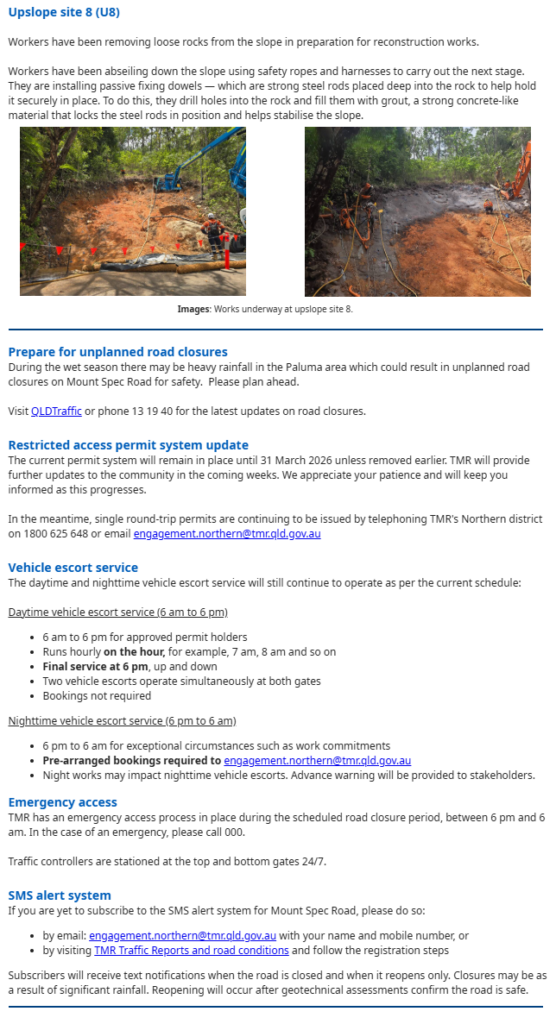
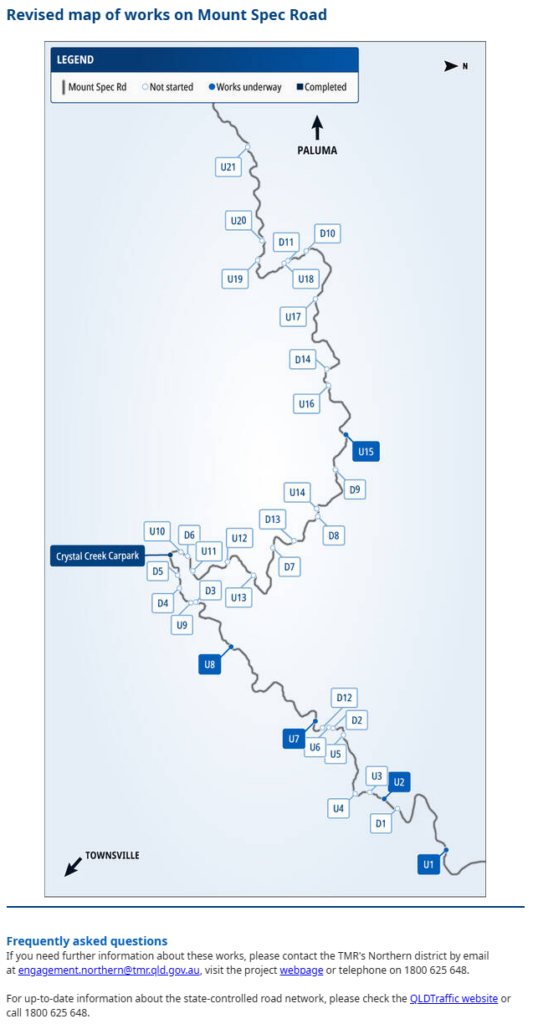
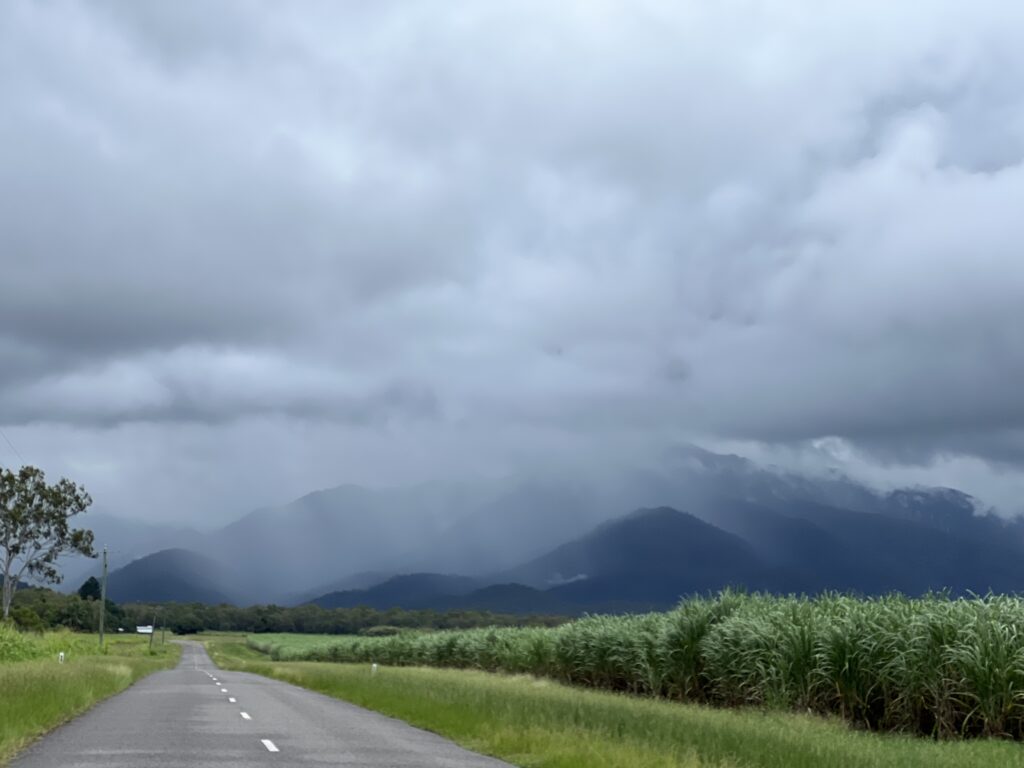
Due to the expected volume of rain this coming weekend these events are cancelled.

Autumn has arrived feeling a lot like an extended wet summer. The ‘to do’ list is ever present regardless and so …
…Our first working bee for this autumn season is on this Saturday, March 7th.
Meet at the hall at 2pm. Bring along some good cheer, energy and a mate.
Drinks on the verandah afterwards at 4pm.

March Friday Night Social is on this coming Friday, March 6th.
The drinks will be chilled just right and as always bring some bar nibbles to share. Bar open at 6pm.
See you then.
Early mornings around Paluma are invariably accompanied by a wide range of bird songs. The most distinctive and noisy of these is produced by the Chowchilla (Orthonyx spaldingii), although the whipbird and the catbird run a close second.
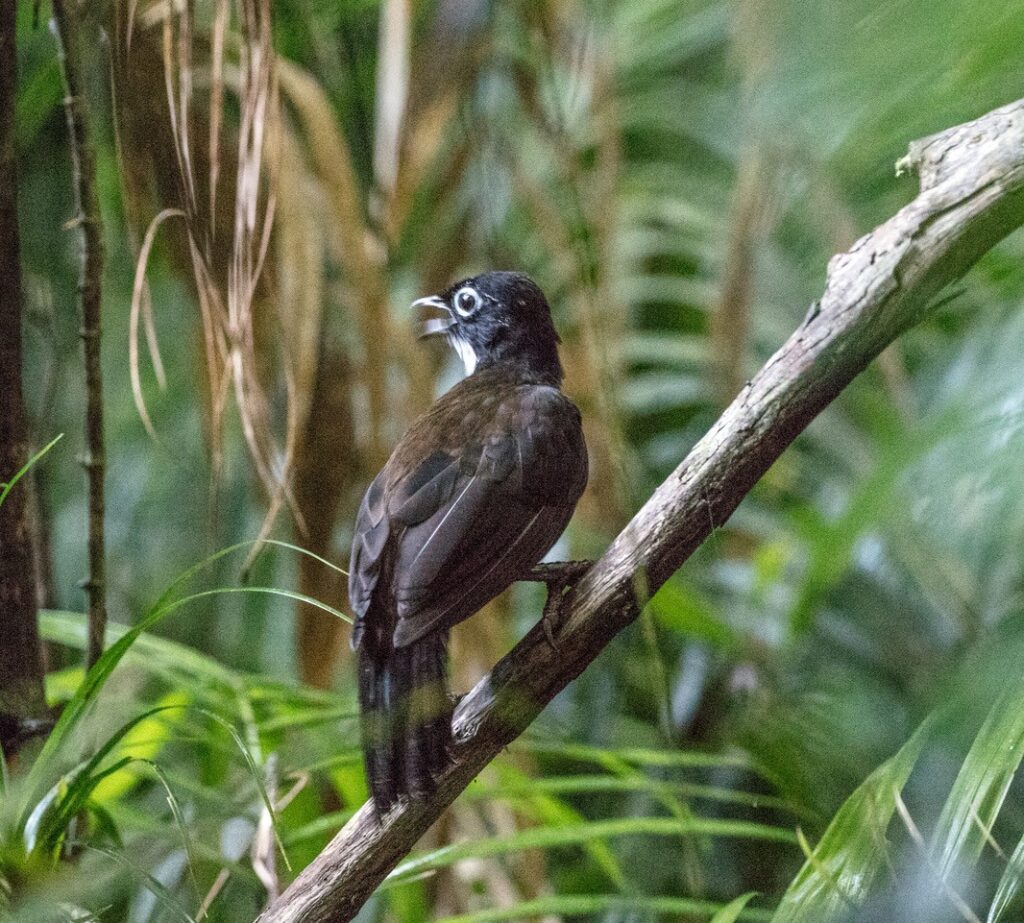
Chowchillas are endemic to north Queensland, with two subspecies: O. spaldingii melasmenus occurring from near Cooktown to the Daintree, and O. spaldingii spaldingii ocurring south of the Daintree to the Paluma ranges. They are found in rainforests mostly above 450m. Chowchillas don’t vocalise much during full daylight hours, but its not hard to spot them as they run along the ground across, or next to village tracks, or reveal themsleves as the rustle through the leaf litter. Male and females both have handsome plumage, with the rich rufous throat of the female being particularly striking.
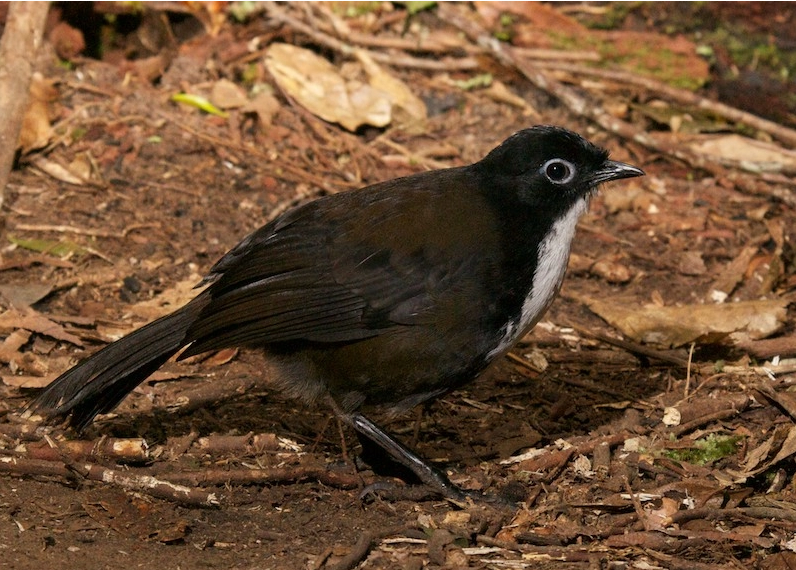
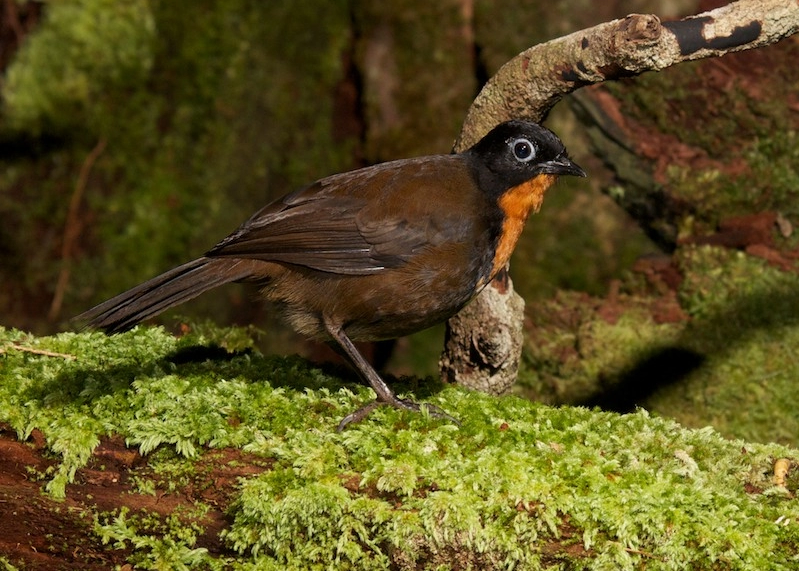
Male (top) and Female (bottom) Chowchilla. Photos taken by Brian O’Leary at Paluma in 2012.
Chowchillas forage on the forest floor, scratching leaves and debris to expose small insects and other invertebrates in the leaf litter, as well as the odd small lizard or frog. They are sometimes joined by other bird species such as the Grey-headed roobin, Whipbird and Yellow-throated scrub-wren who will take advantage of the disturbed litter to find food for themselves.
Chowchillas are well known to form social groups, usually comprised of a mating pair accompanied by male offspring from the last few nesting years. Occasionally unrelated maies will also occasionally join the group. The group jointly defends a territory with all individualls participating in the well-known vocal chorus of rythmic warbles to warn off adjacent family groups. Each group has its own distinct song dialect. The status of the Chowchilla social behaviour is somewhat controversial. Group territoriality is not uncommon in Australian birds (eg Babblers), but in most cases it has been shown that they assist in rearing offspring of the main breeding pair that they are usually related to (cooperative breeding). However in Chowchillas no direct assistance in rearing has been observed in any of the non-breeding group members. An alternative explanation for the evolution of group formation and persistence in Chowchillas is that by assisting in defending the group territory, they enhance the security of food resources that the breeding pair will use to raise offspring.
Chowchillas are one of three species in the genus Orthonyx (log-runners). The other two are found in southeastern Australia and New Guinea.
The name Chowchilla was used by the Dyirbal Aboriginal group and is presumably onomatopoeic. Many local settlers adopted this name, although it was more frequently named the northern Log-runner in early bird guides. (See here for a short article on some other rainforest birds whose aboriginal names have been rediscovered)
Text by Jamie Oliver, Photos by Brian O’Leary and Peter Cooke
Sources:
Cornell Lab Birds of the World
Frith and Frith (2021).The entertaining and enigmatic Chowchilla;
a summary of our limited knowledge
Members (and prospective members) are advised that the Annual General Meeting of the Paluma & District Community Association Inc. will be held on:
Saturday, March 21 2026,at 12pm for a BBQ lunch followed by the AGM at 1:15pm in the Community Hall
Nominations are open for all Executive Committee positions. Nominations should be forwarded to any member of the Executive Committee or by email to PalumaPDCA@gmail.com. Please use the nomination forms, which can be downloaded here.
Positions are:
Members are reminded that Annual Subscriptions are now due and should be paid prior to the commencement of the AGM. Membership is $45.00 Please use the subscription form here to submit your dues. New members are more than welcome and should use the same form. Forms will be available on the day if you wish to pay your membership and join prior to the start of the meeting.
Please note that you must be a PDCA member to nominate someone to the Committee or vote for any Committee member.
The AGM will be followed immediately by a normal General Meeting with the new Committee.
If a member and wanting your vote to count but unable to attend, a signed notice of your proxy (must be a PDCA member) can be given to any member of the exec committe or by email to PalumaPDCA@gmail.com, prior to the meeting.
AGM AGENDA
Normal General Meeting Agenda
A monthly update encompassing Paluma and District “news” has been published in The Rollingstone Rag for quite a long time. However in recent times, this has not been the case. Is there anyone who would like to write a brief update of the goings on of our community on a regular basis, please respond in the comments for this post and I will let Barbara Drew, the co-ordinator of the Rolly Rag editorial, know.
Barbara is also querying whether you wish to continue receiving your hard copies of the Rolly Rag as:
“…we’re trying to streamline our delivery, doing some hard copies for those that require them, whilst also providing a link to an electronic version. This is due to commence with the April edition. Do people in Paluma read the Rag and do you all want to continue getting a copy? We are happy to do whatever suits your community best. Any input from you will be greatly appreciated.”
Please respond to Barbara’s query in the comments and I will let her know what you prefer. I’ll send a response to Barbara by the end of the month.