Outer Limits is now calling for volunteers for the 21st Edition of the Mike Carney Toyota Paluma Push to be held on Saturday 16 July 2022.
If you would like to volunteer for the event, please register at:- http://www.palumapush.com.au/volunteers/ You can also call Sam on 0421 484 211 – or bail him up in the village.
A reminder that everyone in the community is invited to the ‘after party’ on Saturday night at Hidden Valley with a live band and PDCA running the bar.
A reminder that local artist Colwyn Campbell will host her Watercolours & Wine Workshop this coming Saturday 14 May. The Workshop will commence at 4 pm at the Paluma Community Hall. The Workshop is FREE.
Colwyn plans to bring along a few objects to set up as subject matter for a still-life. However, if you have your own trinkets or treasures that you’ve been wanting to paint, please bring them along. Colwyn asks that each person bring along three small items like a jug, bottle, vase or jewellery box, of varying sizes and shapes, that can be suitably arranged into simple compositions for a painting.
Colwyn has some art supplies, but if you have your own brushes, paints, paper and other supplies, please bring them along. Bringing along your own brushes if you have them (size 7 or 8 or thereabouts) would be most helpful.
The Workshop will be a fun activity and hopefully the participants will have something to take home to show for their efforts!
The Bar will be open for drinks and please bring along some nibbles to share if you feel so inclined.
The crowd was rowdy, the enthusiasm was high, the competition was fierce and the skills were varied……
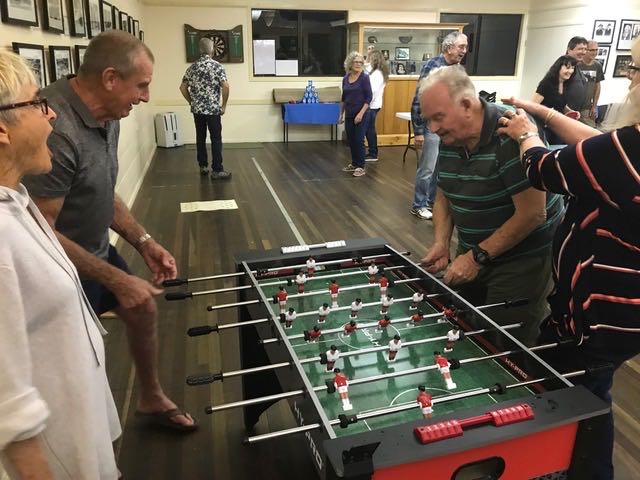
That about sums up the second annual Games Night hosted by Peter and Dorothy Klumpp last Saturday night (7 May) at the Paluma Community Hall.
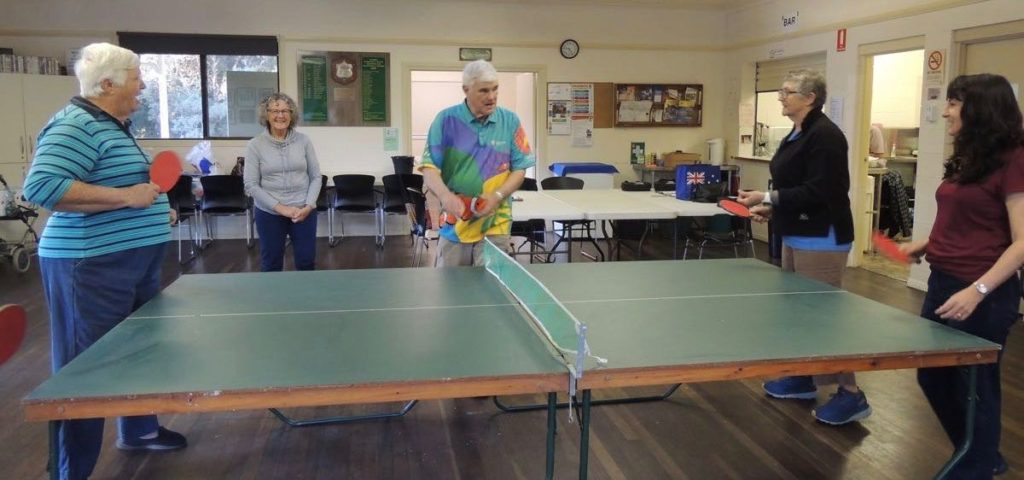
More than 25 people attended the Games Night and we started the evening with a practice run of the various games set up by Peter Klumpp and his volunteers. There was carpet bowls, table tennis, mini-table tennis, darts, mini golf, throwing cans and the very popular table soccer. Before the main event, the crowd enjoyed a sausage sizzle cooked by Lynda, complete with her delicious coleslaw.
The competition began with the drawing of 10 teams of 2 people – 1 male and 1 female in each team. Peter’s roster for the rotation of the 10 teams through the various games had us all organised with a system to rival the best mathematical tables. The system worked (a bit like herding cats) and the games began. There was frenetic activity, sweating, cheering, shouting, laughing, swearing and a fair bit of cheating as the competition heated up, especially at the carpet bowls, table tennis and the table soccer. ‘Bend it like Beckham’ took on a whole new meaning at the soccer table!
Without any doubt the evening was a great success and a great deal of fun. The Grand Champions on the night were Big Mark and Ros taking out first prize as the overall winning team. There were four teams who came second as runners up – Jill and Neil, Jamie and Jodie, Michele and Mark and Dorothy and Les. The winners were presented with trophies, gold medals and chocolates.
Big Mark gets the award for the most athletic moves of the games whilst simultaneously playing table tennis and carpet bowls. We will call it the ‘A over T back flip in pike position, ending in a front tuck reverse commando roll’. The ground definitely moved for all those who witnessed this feat and who were in close proximity!. Come to think of it, Mark spent quite a bit of time rolling around on the carpet bowls mat on the night?!
Despite the thrills and spills of the night, fortunately no injuries were sustained (or none that we’ve heard about), but it’s possible that some participants were reaching for the Dencorub by Sunday morning…..?. My only complaint was a sore face from laughing and cheering (mostly for myself) on the night.
Barman Les reported a roaring trade for the evening. The takings for the bar and sausage sizzle were some $420.00, so the big winner from Games Night is the community with important funds being raised for the PDCA.
A very big thank you to Peter and Dorothy for the initiative and for running the Games Night and to Lynda for volunteering at the BBQ. It was great to see new residents Ros and Wayne from Lennox Crescent join in the fun and we welcome you to the village. We hope that we haven’t scared you away!
Well done Paluma. A great night, a lot of fun and a community spirit that shines. Check out the following photos from the night!
Text by Michele Bird, with photos by Michele Bird, Wendy Crisp and Les Hyland.
Just a quick update to let you know that TMR’s contractors will be continuing geotechnical investigation works at various sites along Mt Spec Road throughout May. These works are being planned around bus movements for the educational camps in Paluma, so you may notice crews working on some days and not others. As with previous works, there will be minimal impacts for light vehicles.
If you have any concerns, please do not hesitate to get in touch via email or phone.
Mt Spec Road geotechnical investigations – May 2022 Works hours and activities – 7am to 5pm. Works each day will include site and traffic management setup, unloading and loading of drilling rig, drilling of boreholes to test soil and rock conditions. What to expect during these works – Traffic controllers on site, signage and speed restrictions in place. Stop-Go traffic controllers and traffic signals will be used intermittently. Traffic reduced to single lane (one direction at a time). Minor delays of 5-10 minutes – please plan your journey and allow additional travel time. Important information for heavy vehicle operators – Access for heavy vehicles (more than 4.5 tonnes) including buses and light trucks may be impacted during these works. Please contact TMR by phone on 1800 625 648 or by email at engagement.northern@tmr.qld.gov.au if you are planning to travel on Mt Spec Road with a heavy vehicle during these works.
Kelly Stolz, Customer and Stakeholder Management Northern District | Department of Transport and Main Roads
Floor 6 | Townsville Government Office Building | 445 Flinders Street | Townsville Qld 4810 PO Box 1089 | Townsville Qld 4810 P: 1800 625 648 | F: (07) 4421 8711 engagement.northern@tmr.qld.gov.au www.tmr.qld.gov.au
A reminder to locals and visitors to Paluma that the Paluma History Display is open each Tuesday from 11 am to 1 pm. If you’ve never visited, or you haven’t stopped in for a while, it’s well worth the visit to learn more about the local history of our little village on the top of the mountain. Information is being compiled and added to the History Folders on a regular basis and the dedicated volunteers who run the display are a wealth of information on all things Paluma.
You might be interested in leaning more about the original Aboriginal inhabitants of Paluma, the Nywaigi People, or the timber-getting and early mining history. There’s lots of information on the early European settlers to the village, long-time residents and pioneering families, the building of the Range Road and the World War 2 history and occupation of the area. For a small village, the history of this place is rich and fascinating.
The volunteers can also provide you with information on the local walking tracks, Paluma Dam, things to see in and around the village, bird watching and the local wildlife. Drop in for a look at what’s on display and it’s a great place to take a break from the hectic pace of life and enjoy a relaxing cuppa and cake.
The best things in life really are free….!
Les and Lynn Hyland are amongst the dedicated volunteers running the Paluma History Display.
Text & Photos (from the History Display) by Michele Bird
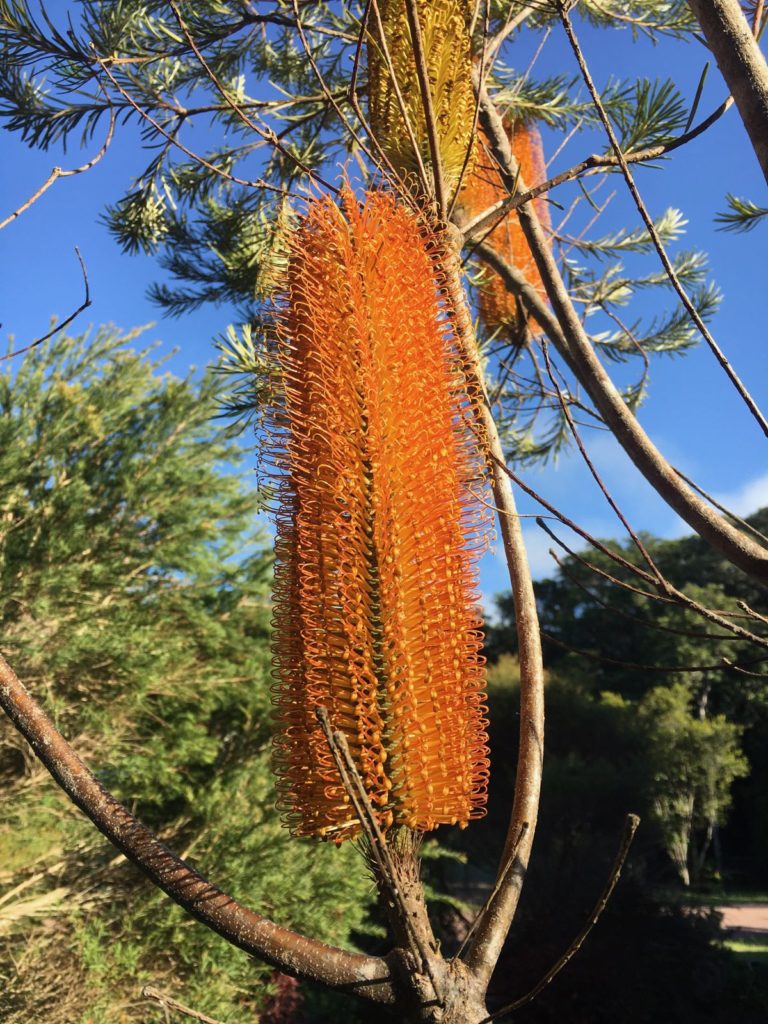
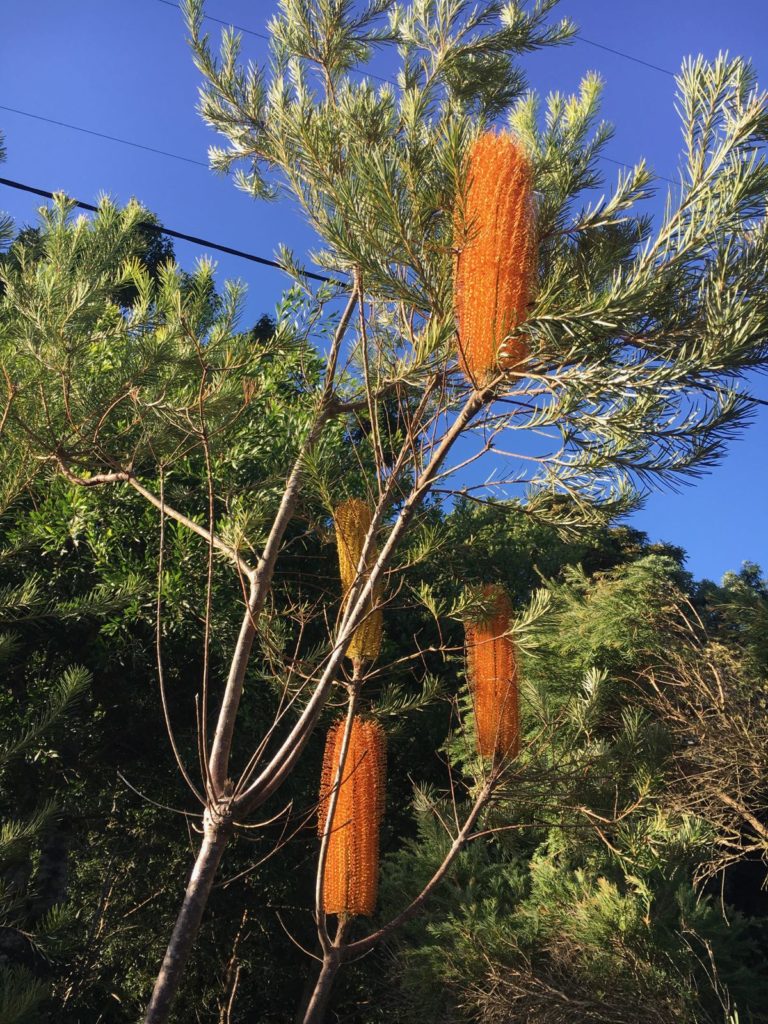
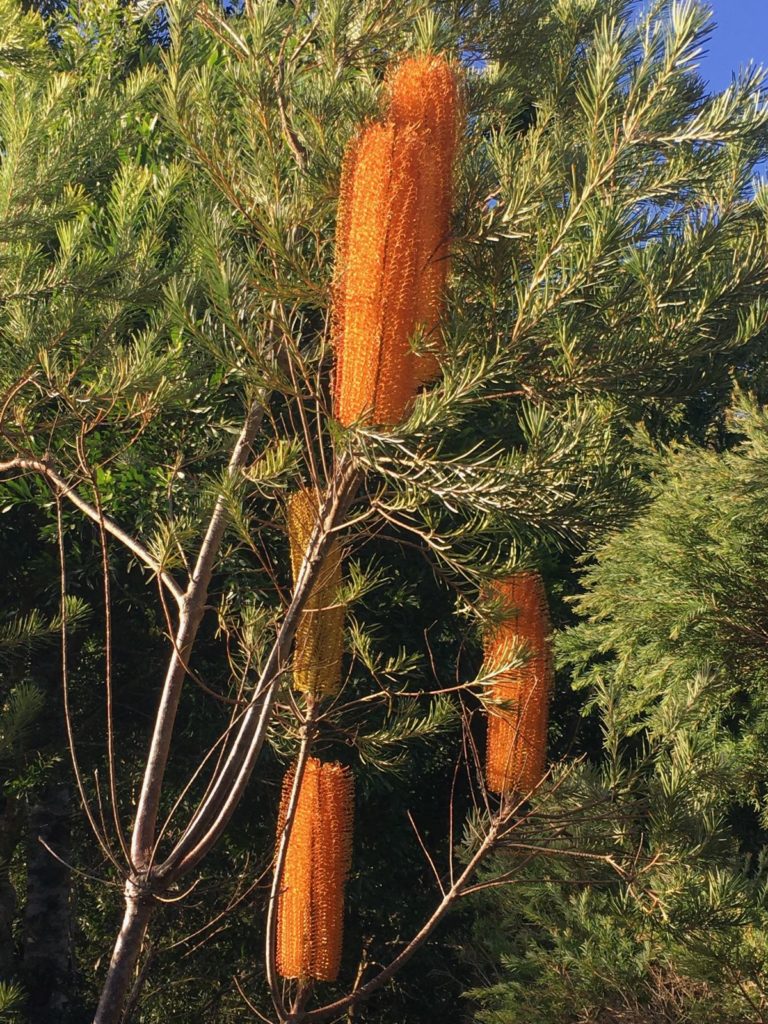
If you have visited the Rainforest Inn recently you will have noticed the impressive Banskia flowering in the garden at the front of the building. It’s hard to miss, given the very large and striking deep orange to bronze coloured blooms.
Jennie says that she planted the Banksia about 6 years ago and while it has grown into a sizeable bushy shrub standing to about 2.5 m in height, this is the first time it has flowered. Jennie purchased the plant from a nursery in Ingham and she is unsure of its exact identification. We think it is most likely Banksia ‘Giant Candles’ which is a registered cultivar and a hybrid between Banksia ericifolia and Banksia spinulosa.
The flower spikes are at least 25 cm in size and they can reach up to 40 cm. Flowering time is late Autumn through winter. Banksia ‘Giant Candles’ is described as an adaptable large shrub that can grow up to 5 m in height if left unpruned. It likes a sunny and well-drained position, flowering best in full sun.
If you are looking for a stunning plant to bring birds to your garden then this is a great option. Several times over the past weekend we noticed the local honeyeaters visiting the giant candle flowers. Lewins’ honeyeaters and eastern spinebills were eager feeders on the nectar laden flowers in the early morning and late afternoon.
A reminder that the second annual Games Night at the Community Hall will take place this coming Saturday 7th May from 5 pm.
Hosted by Peter and Dorothy Klumpp this not-to-be-missed event will include a range of indoor and outdoor games (the latter will be weather pending and/or until it gets dark). Whether you are into darts, table tennis, carpet bowls, pétanque or hop-scotch, there will be something for everyone to enjoy. Come along to beat your friends and neighbours in a bit of friendly rivalry and competition.
For those who have worked up an appetite from the games, a Sausage Sizzle will be held from 6pm to 7 pm on the Hall verandah. Lynda will be cooking the snags on the bbq and she is making her delicious coleslaw. The Sausage Sizzle will cost $3.00 per serve with all proceeds to the PDCA. The Bar will be open from 5 pm with Barman Les in his usual role.
Come along and join in the fun. If last year is anything to go by, there will be a lot of laughs, some fierce competition and a fair bit of cheating!
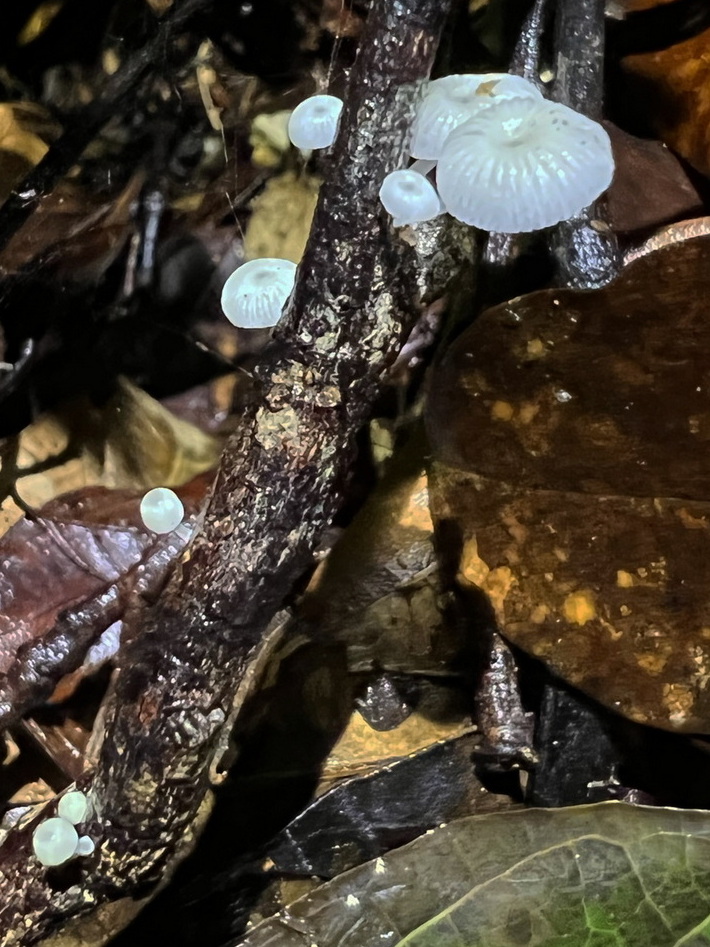
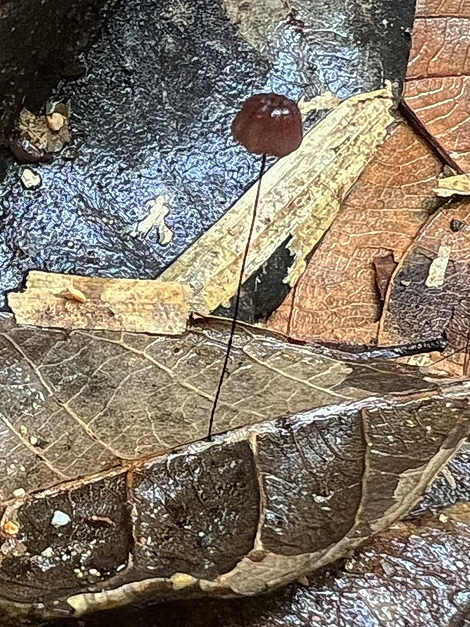
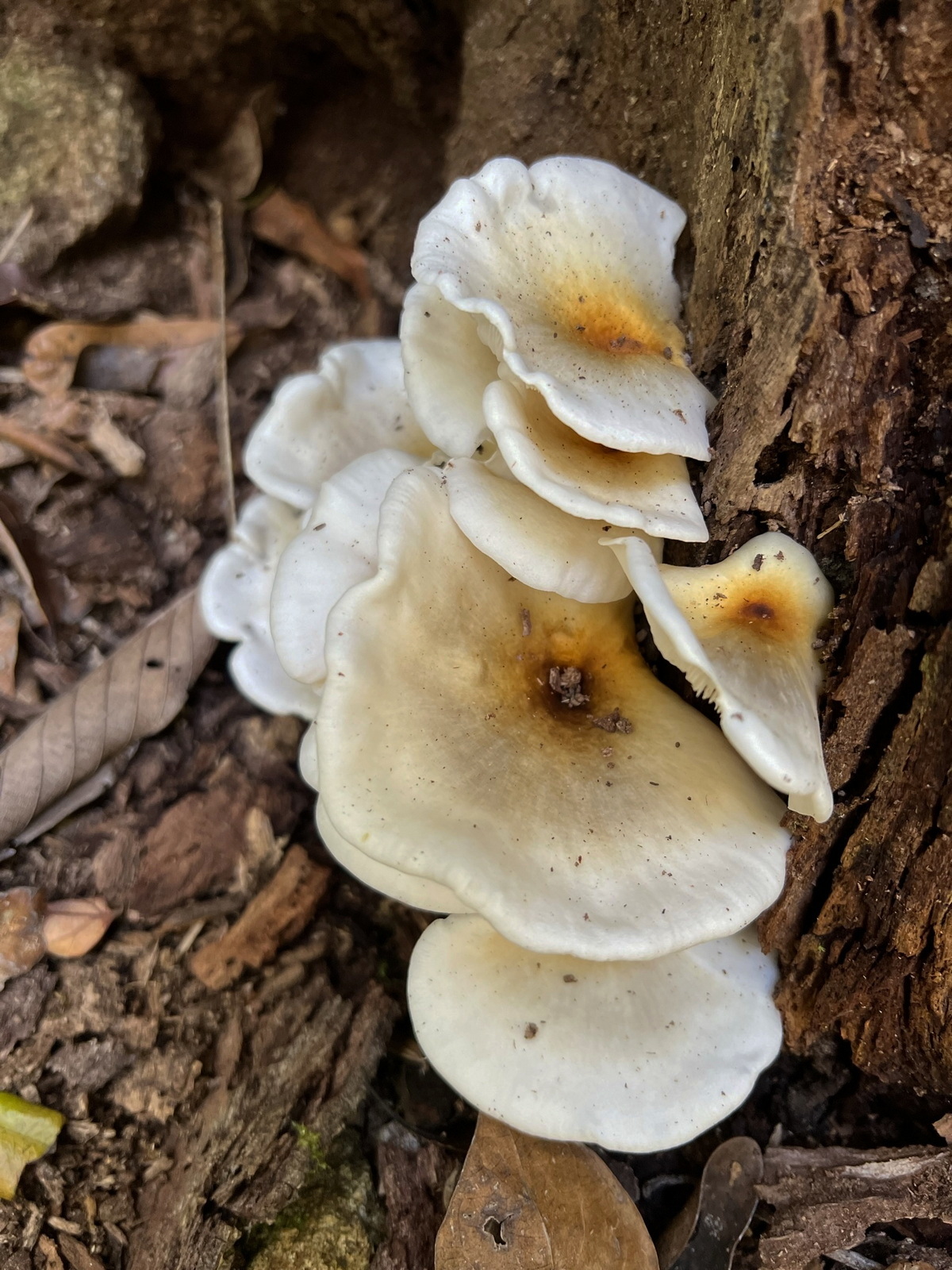
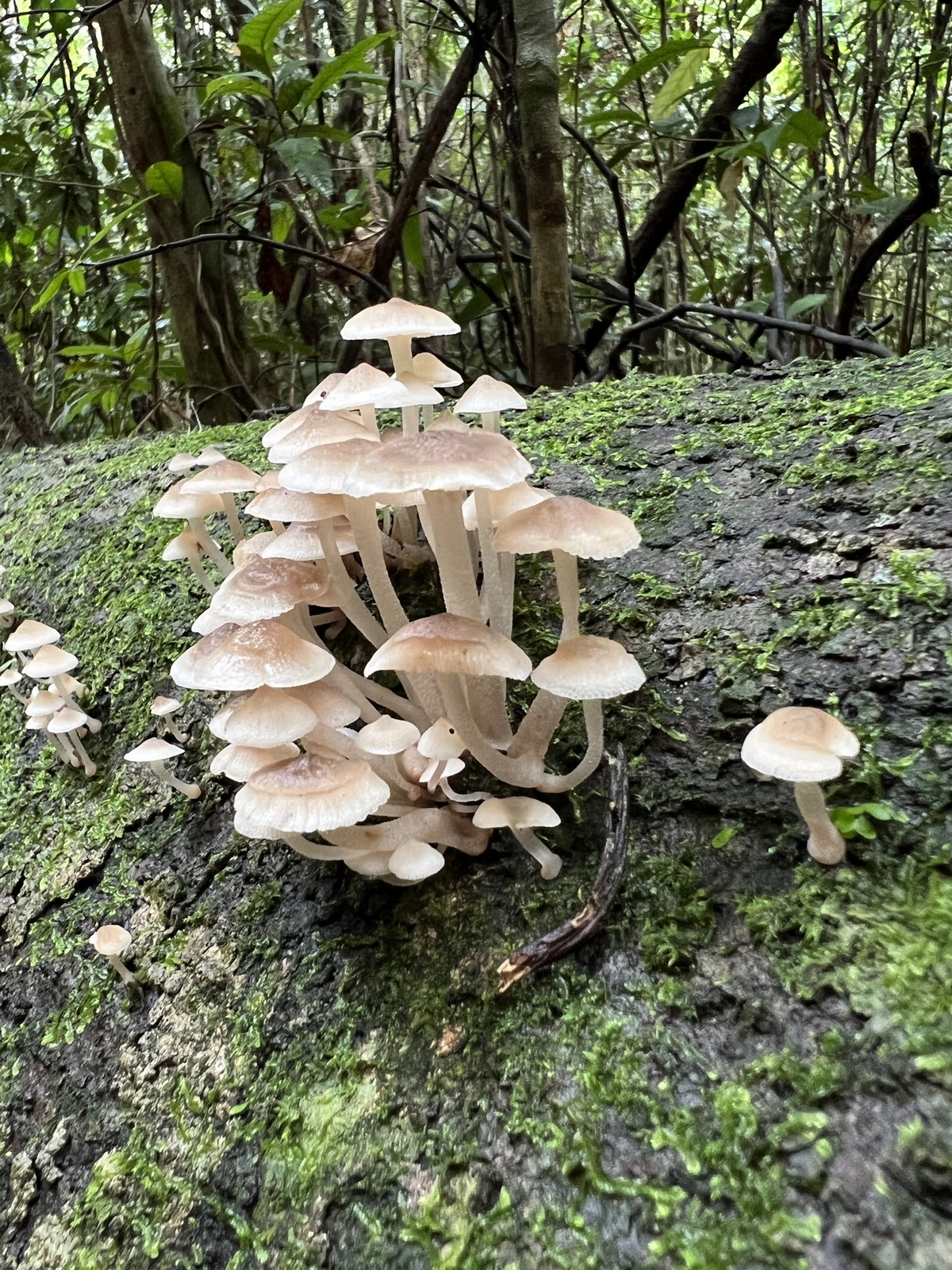
The wet season was late to start this year and in the forest this was reflected in the relative paucity of mushrooms and other fungi during the initial months of this year. The recent late season rains have partly made up for this, although the cooler weather may have inhibited growth in some varieties. I have been keeping record of any mushrooms I have seen since January when I got back from travelling out west and decided to compile a gallery of the results, together with any preliminary identifications I have been able to glean from various references.
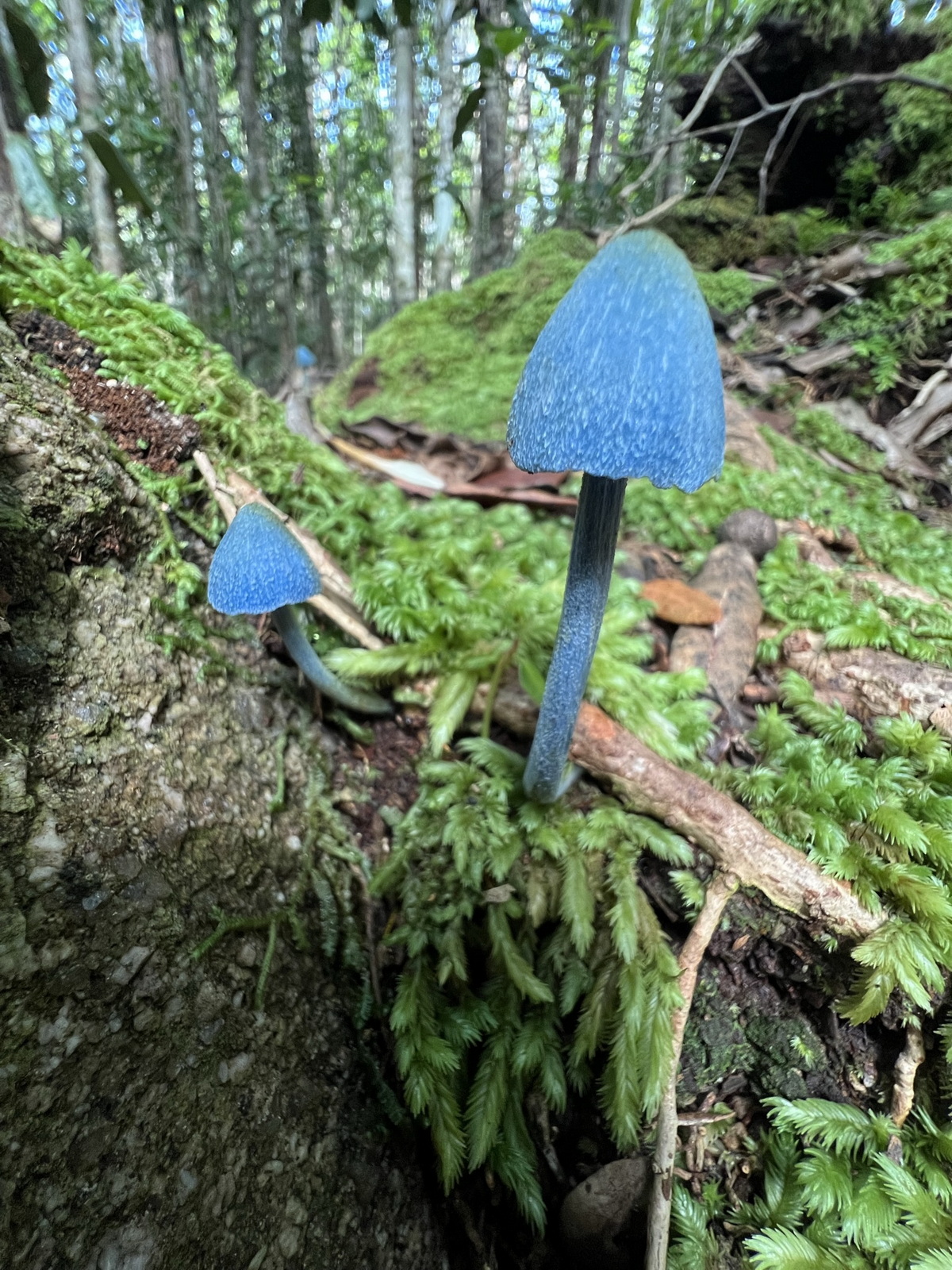
One of the highlights for me this year was a blue mushroom that I had seen in previous years but never photographed. This species is quite different from the one that Michele photographed last year (and which I misidentified as being the one pictured here). It has a more mat surface and more muted colour but is quite striking nonetheless.
Entolama hochstetteri is also referred to as E. virescens (a Japanese species) on many web pages and there may still be some uncertainty over which name is most appropriate (or indeed whether it is a separate possibly undescribed species). If you care to do some further reading there is a very readable article in the Queensland Mycologist 12(2):5-8. It’s an unusually fun read with historical anecdotes as well as a brief diversion to discuss the national origin of Pavlova! In New Zealand, where the species was first described, the indigenous name for E. hochstetteri is called “Werewere kokako” which translates as “Kokako’s wattle” referring to the similarity in colour between the mushroom and the facial wattle of the Kokako, a native wattlebird, both of which are featured on the NewZealand $50 note.
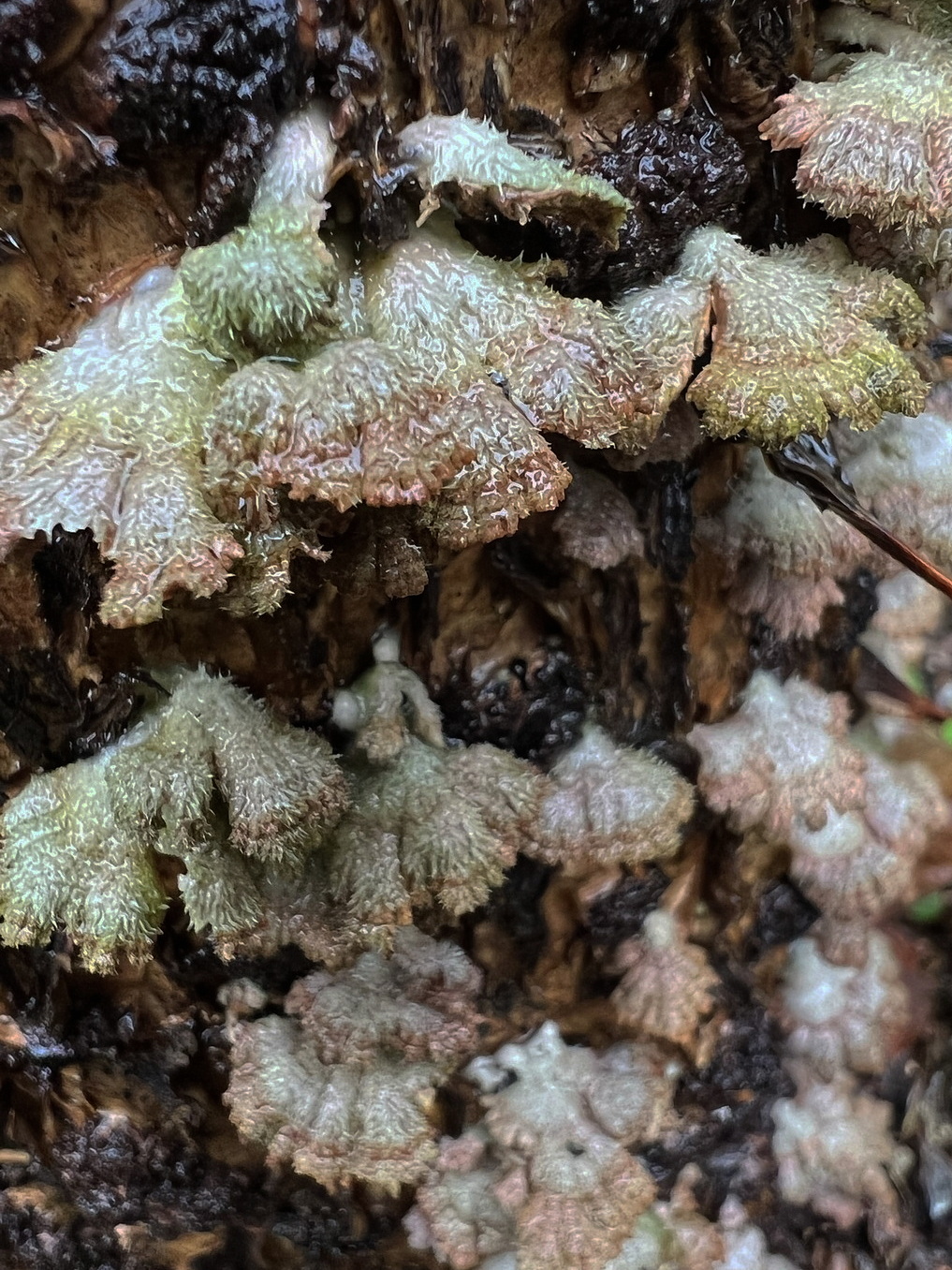
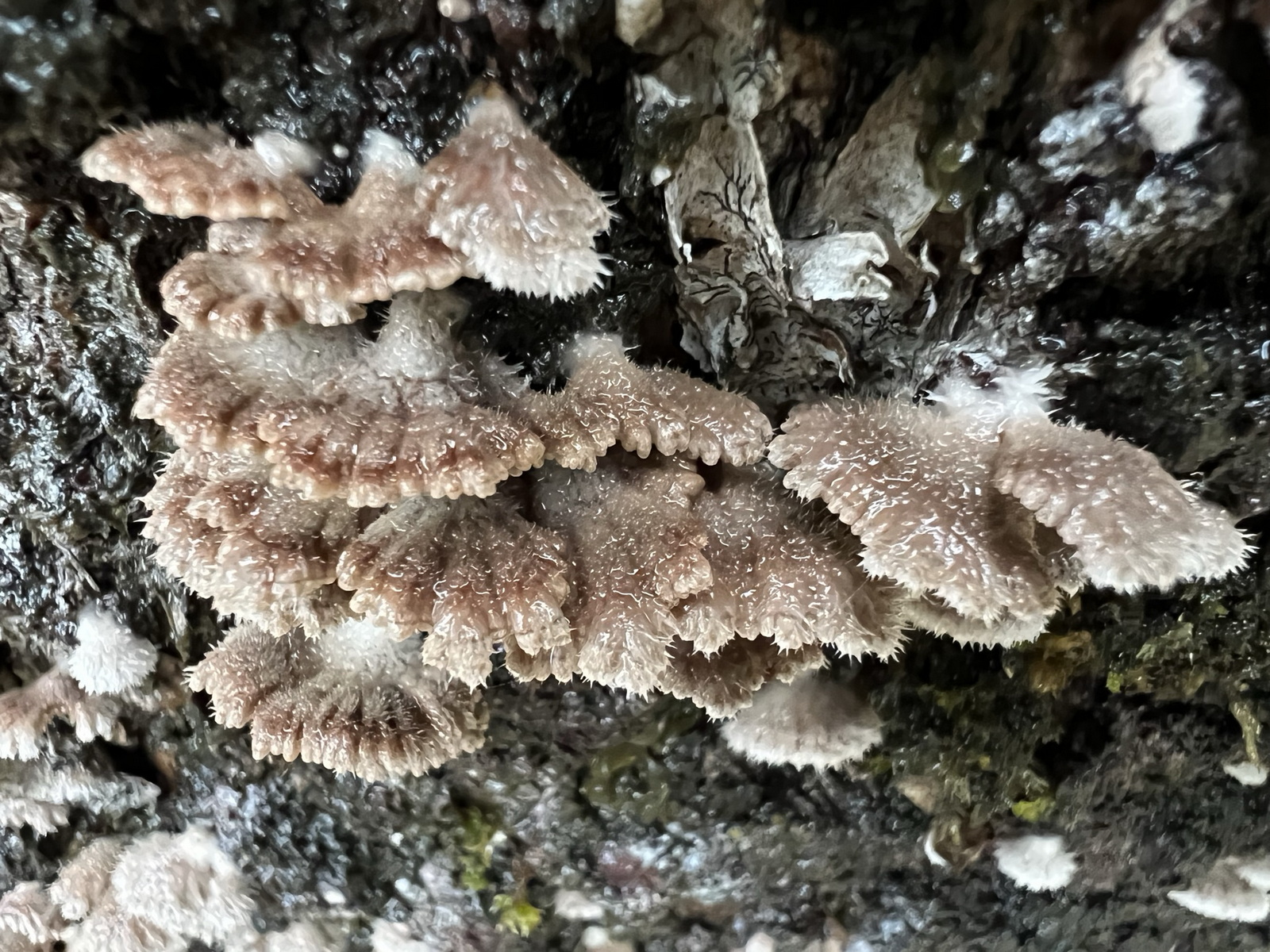
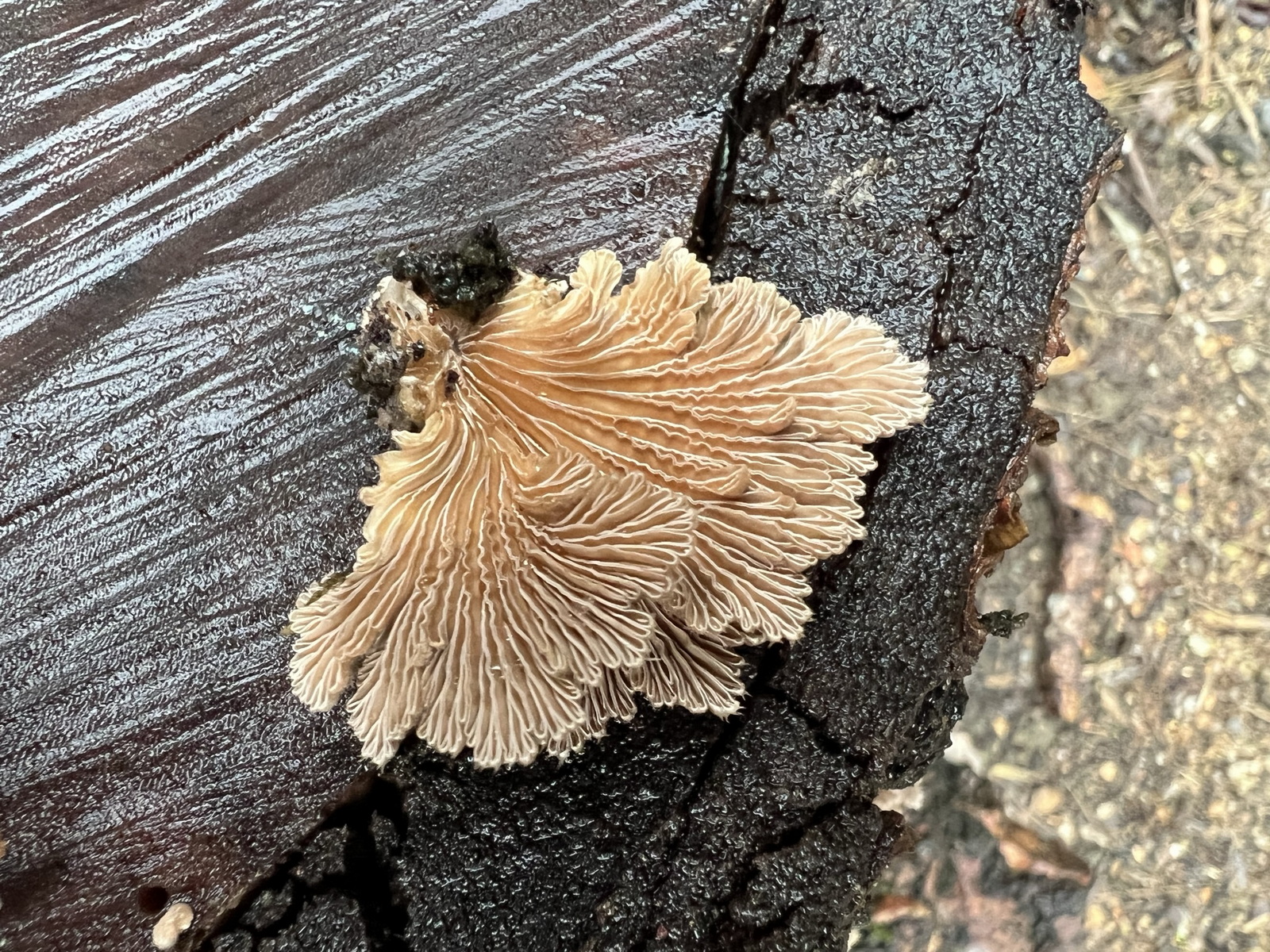
The mushroom below (Schizophylllum commune – split gill fungus) is currently still visible growing on old pine logs (ask Lynda Radbone if you would like to see it). Michele Bird first noticed it and its unusual shape led us to think it might be something rare and unique. However it turns out to be a common cosomopolitan species often seen growing on dead wood in gardens and forests. has a shape and texture quite unlike most other mushrooms. it gest its name from the fact that the gills on the undersurface can split lengthwise. The upper surface can be covered in fine white “fluff” and its colour ranges from brown or cream to pale green. This mushroom is considered pathogenic with recent research indicating it can cause respiratory diseases. DO NOT SMELL IT!
UndersurfaceSchyzophyllum commune
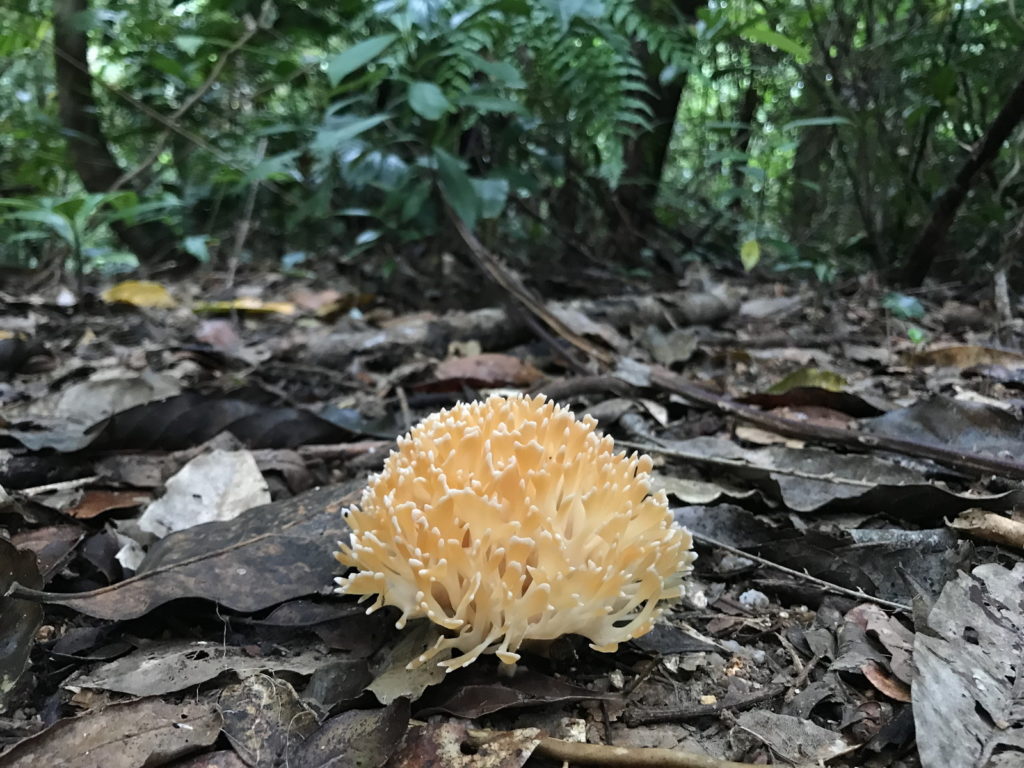
Coral fungi are always a joy to see, and this one found by Juanita on the H-track is no exception. It is probably a member of the genus Aphelaria.
Aphelaria sp – Coral Fungus, photo by Juanita Poletto
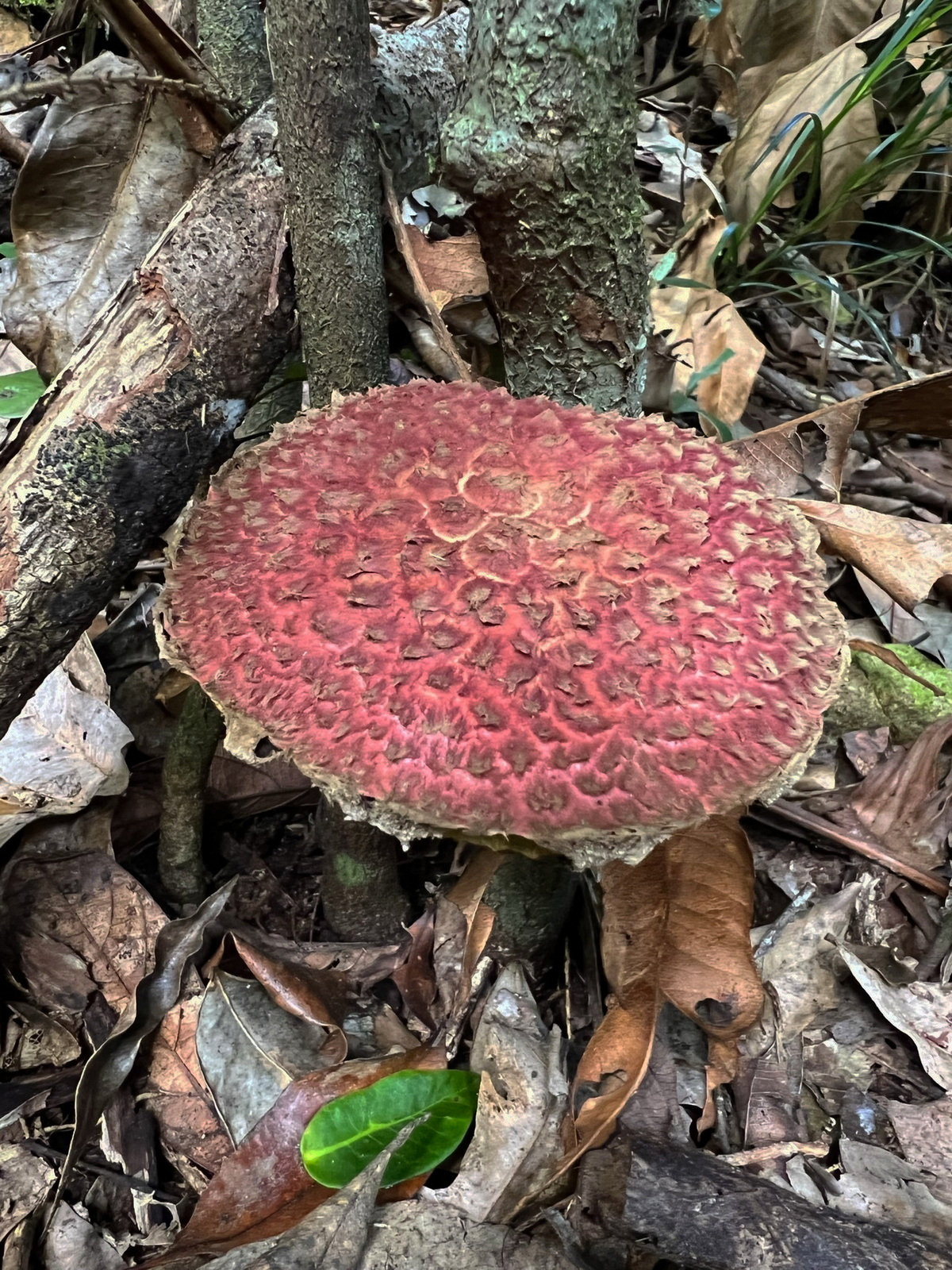
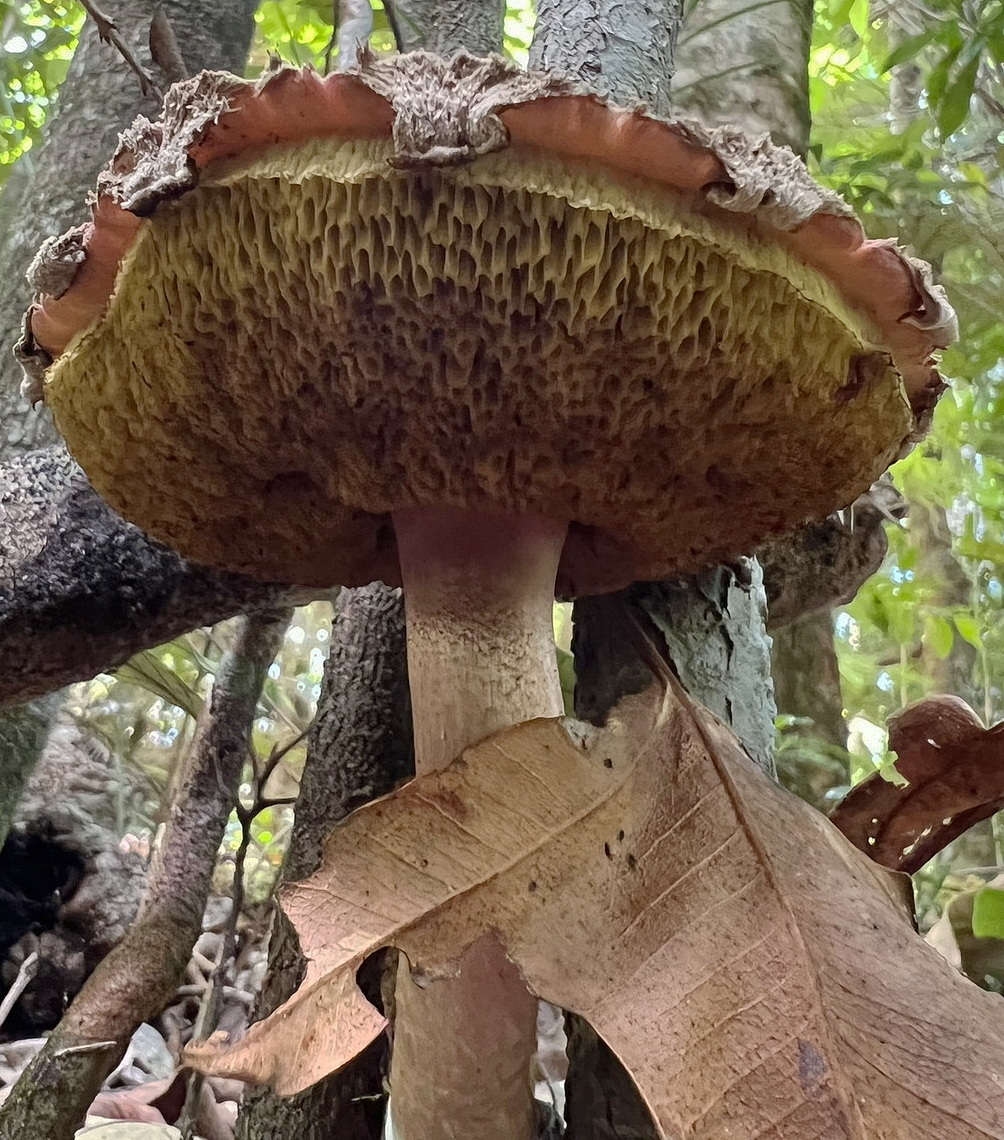
Identification of a mushroom usually requires a check of the undersurface of the cap to determine if it has gills (Agarics) or fine pores (Boletes or Polypores) The mushroom below is a typical bolete. It most probably belongs to the genus Boletellus and looks like the “shaggy cap” B. emodensis. I’ve found this a couple of times along dryer sections of the Witts lookout track and the Bluegum track. Its attractive pink flakey cap and yellow undersurface are very distinctive.
Boletellus cf emodensis – Shaggy cap
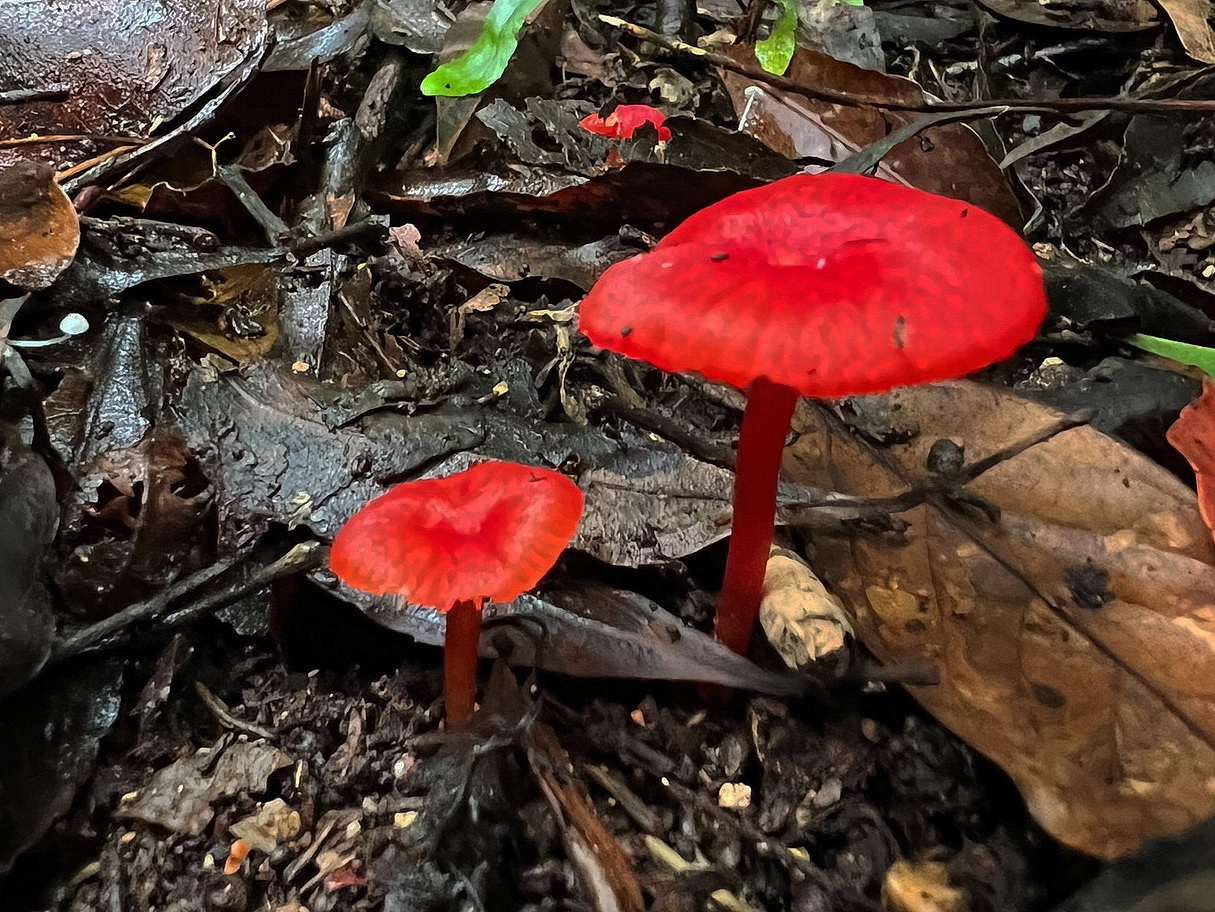
Little red mushrooms are a common sight along the forest tracks poking up from the leaf litter. This one is probably Hygrocybe miniata, which has a mat red surface, a cap that becomes flattened or even concave as it grows larger.
Hygrocybe cf miniata – vermillion waxcap
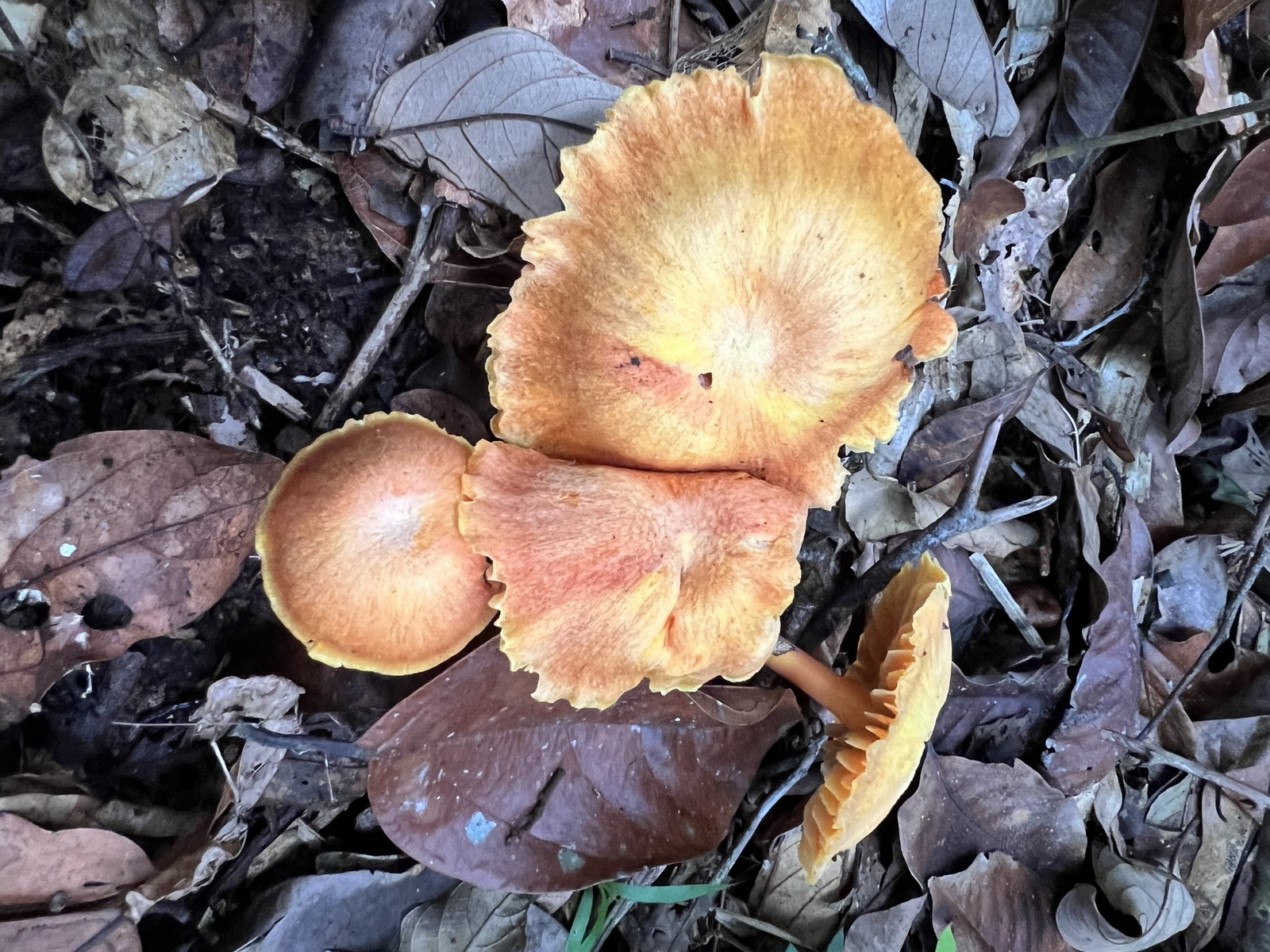
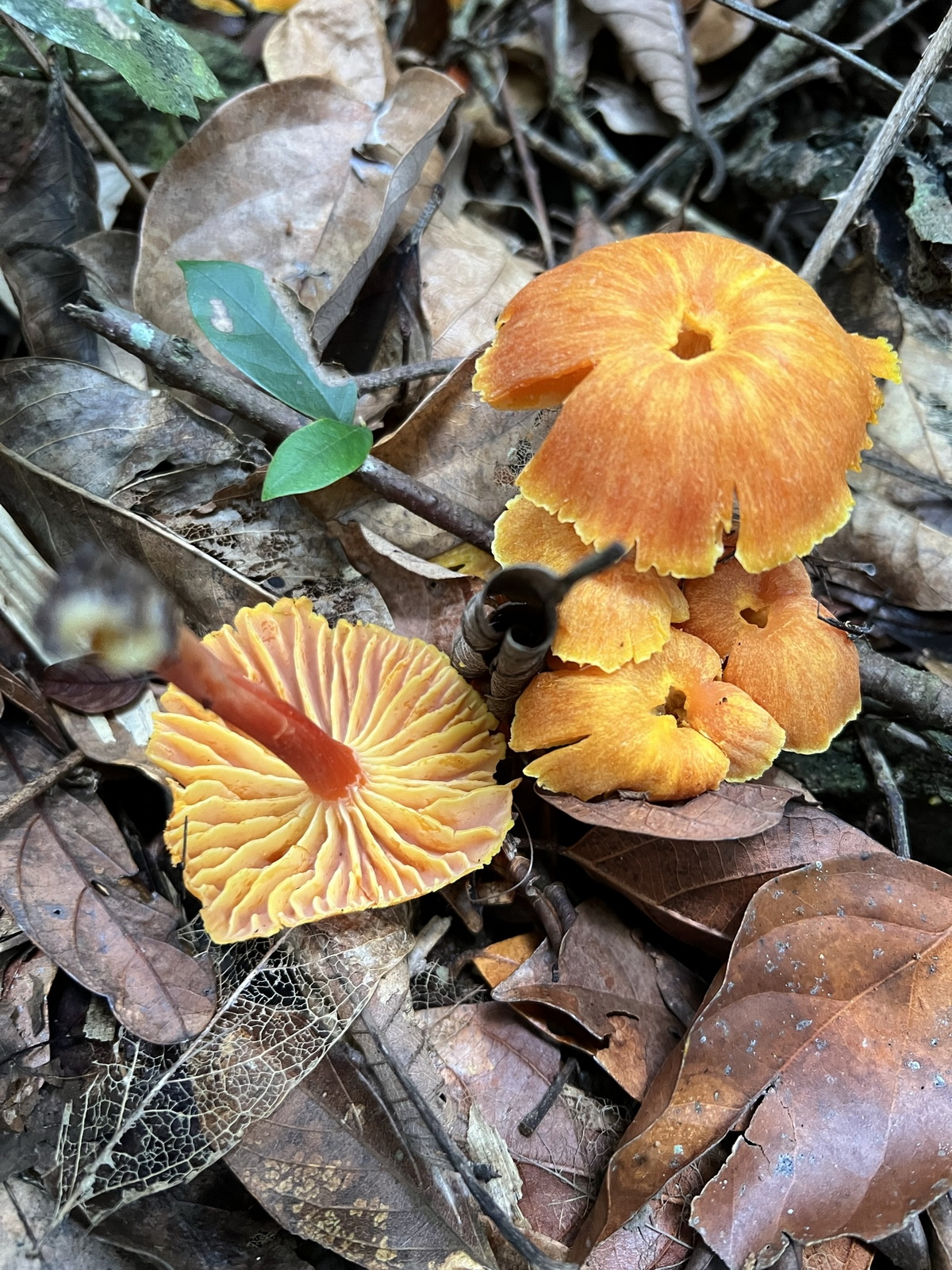
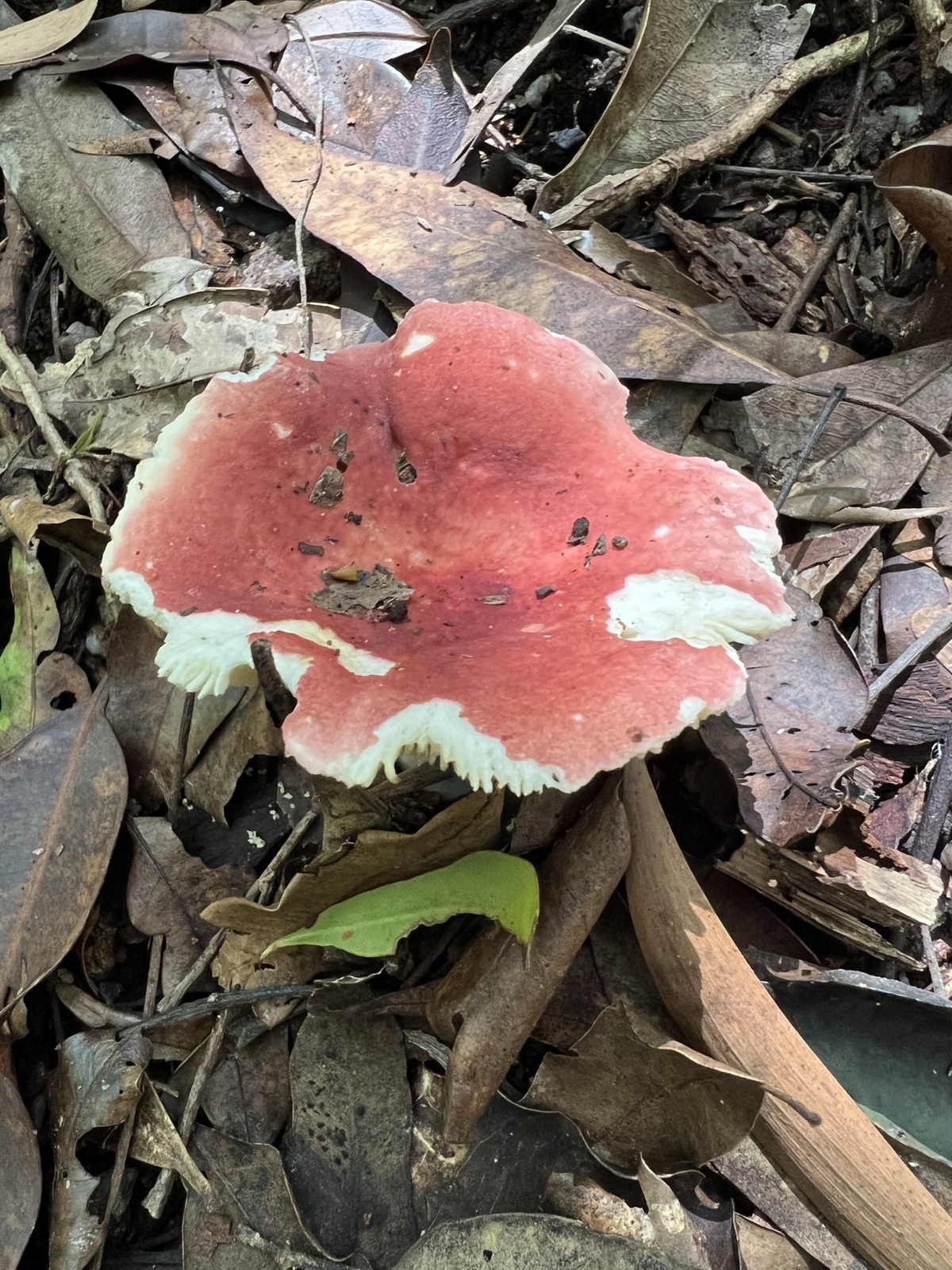
A few other specimens found over the last few months are set out below – with names where I have found something likely.
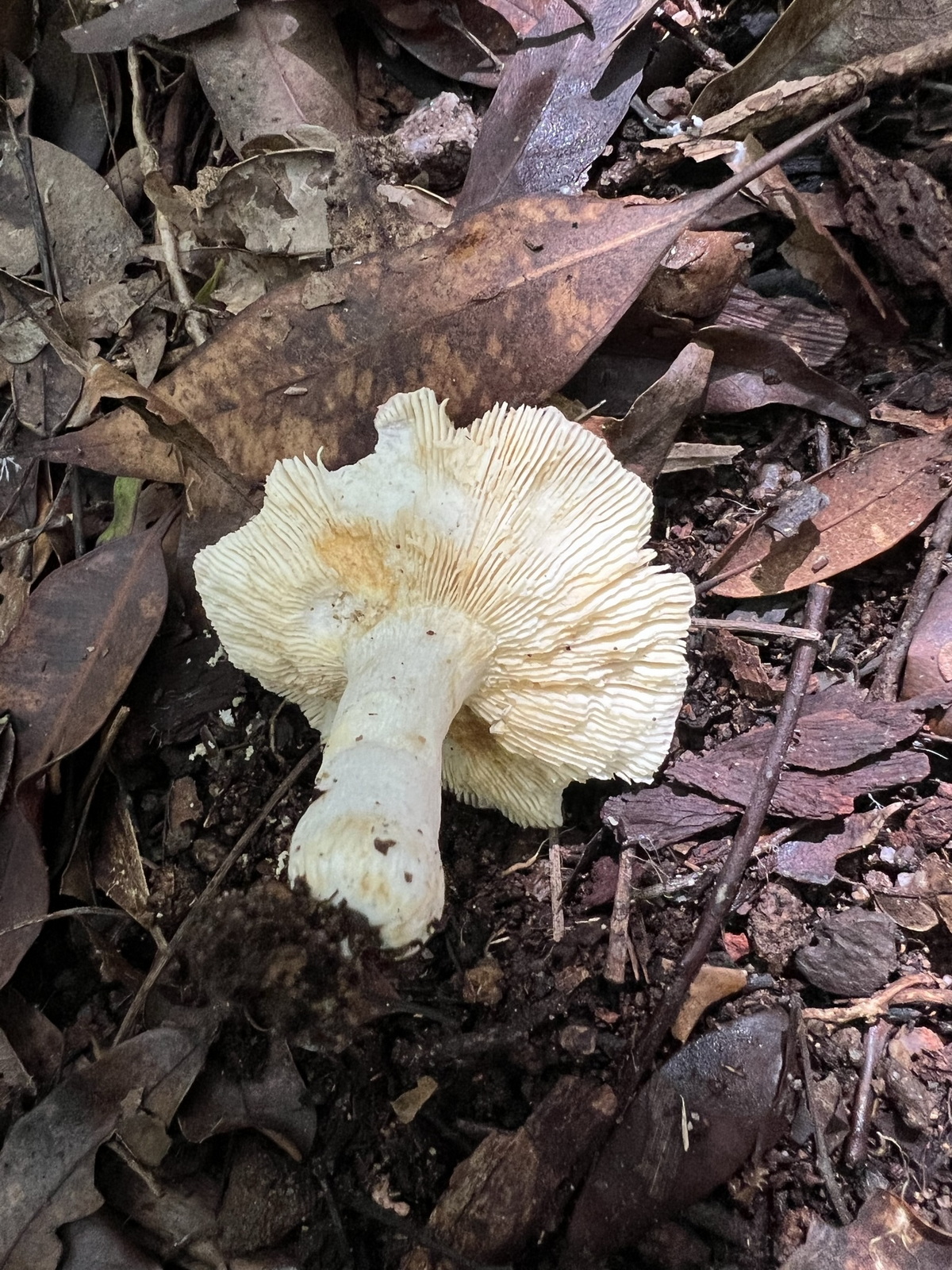
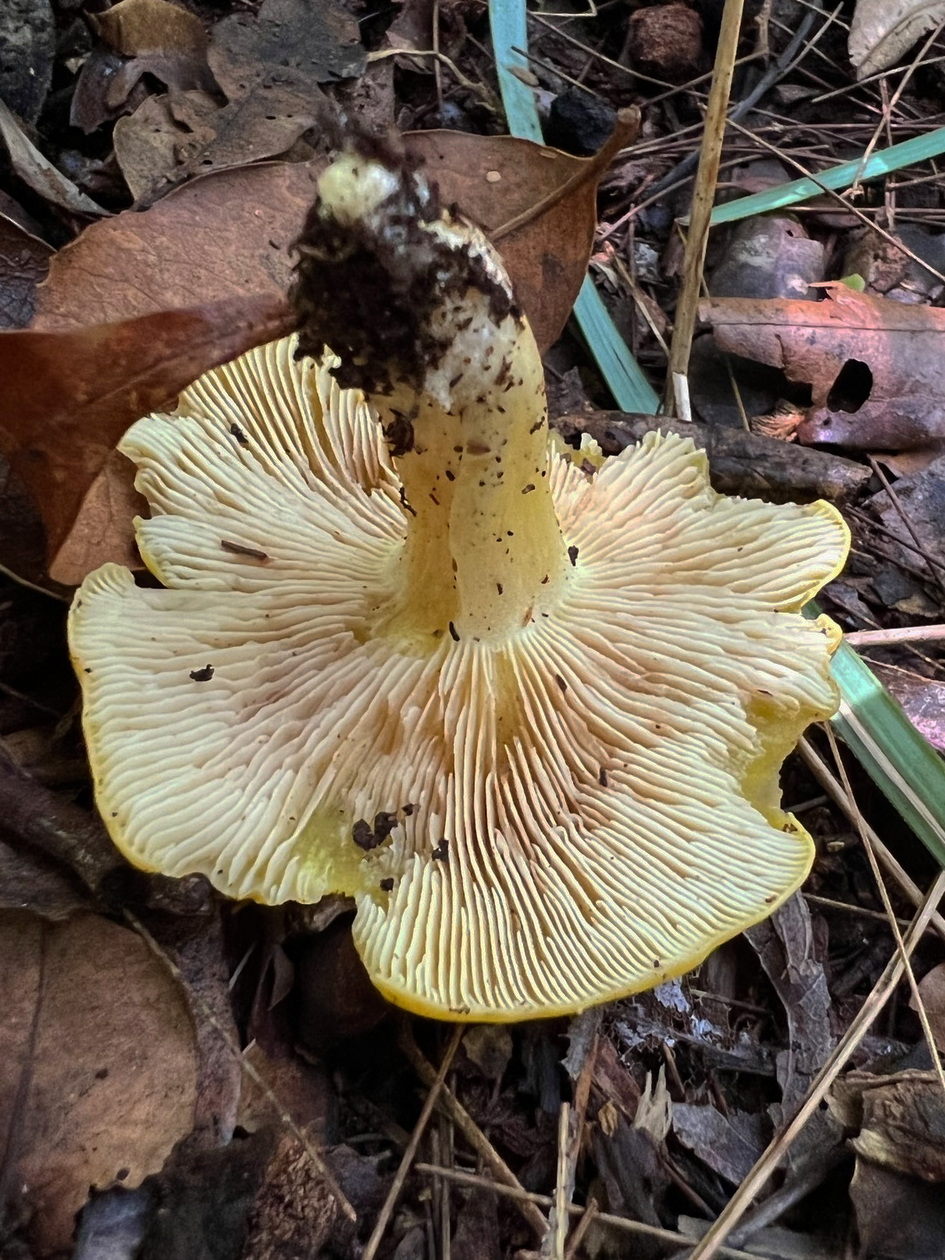
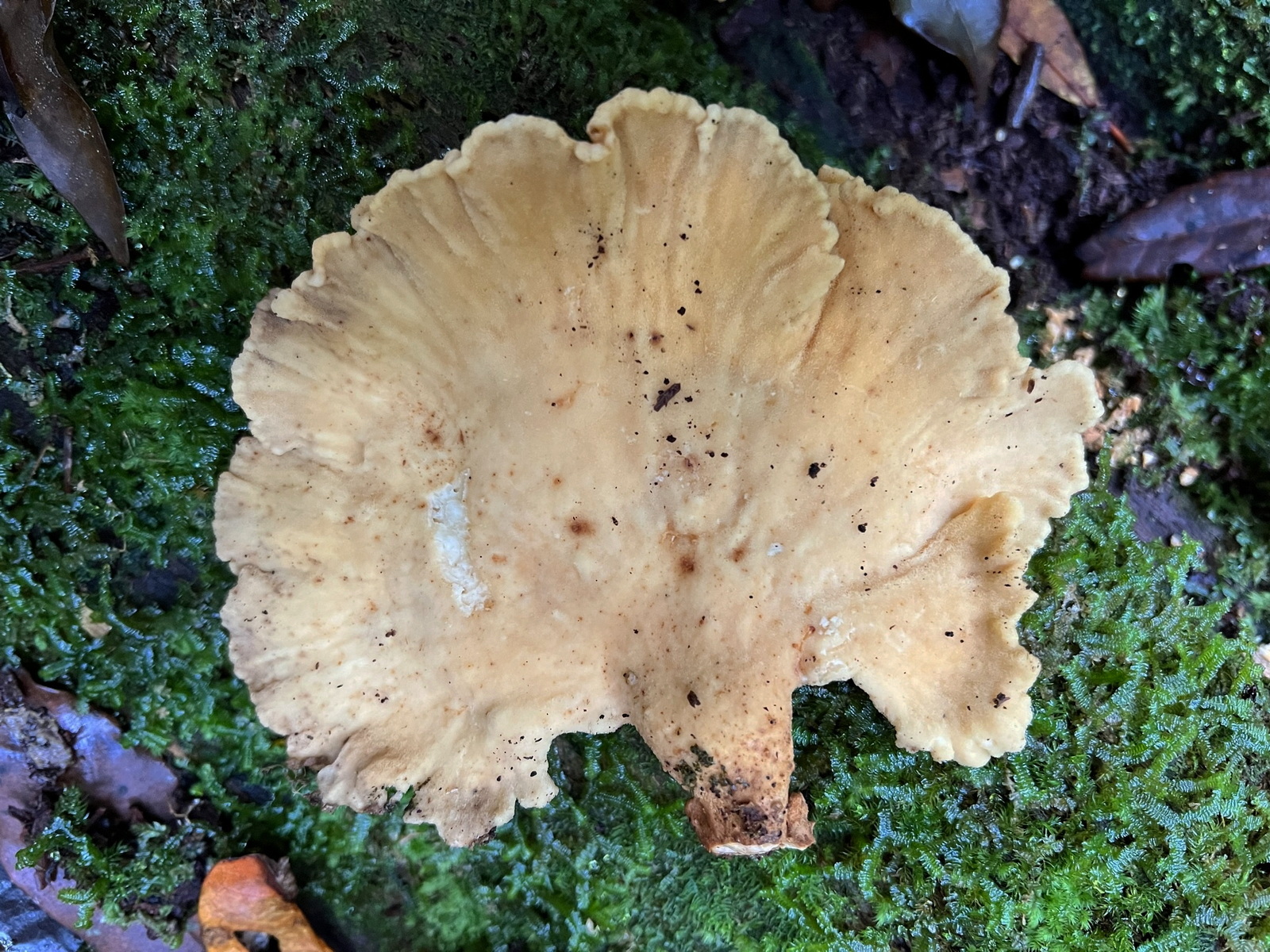
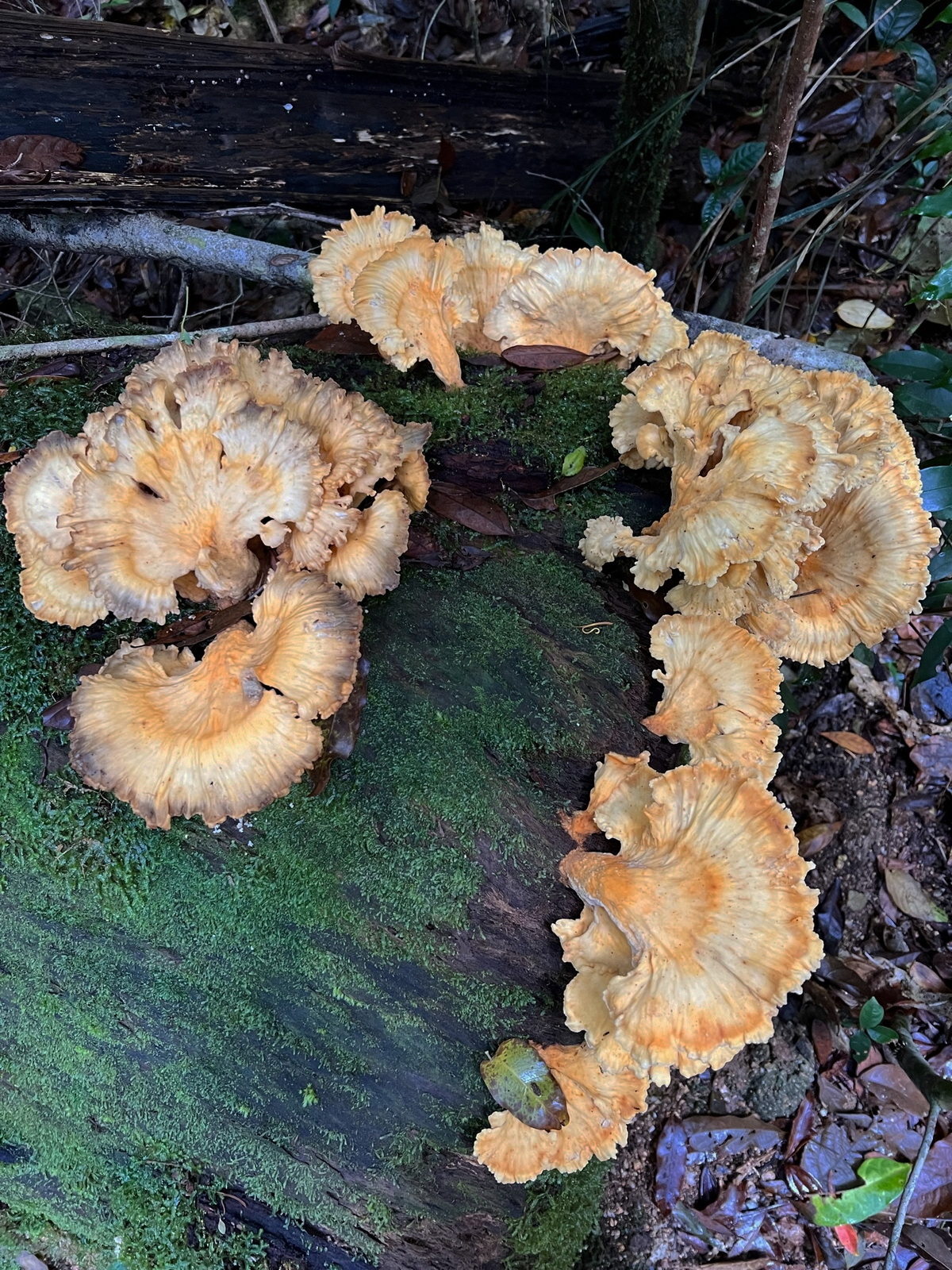
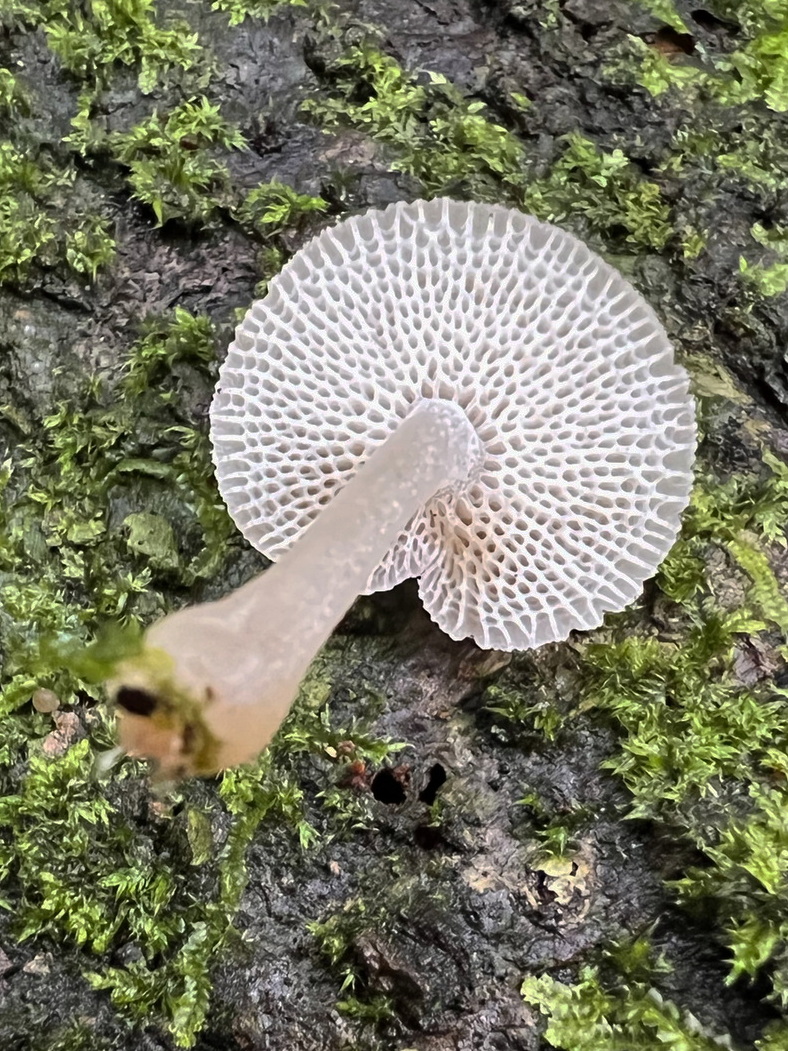
Hygrocybe cf proceraHygrocybe cf proceraRussula spRussula spEntoloma pamelae?Entoloma pamelae?Laetiporus sulphureusLaetiporus sulphureus Chicken of the woodsMycena chlorophosMycena chlorophosFiloboletus manipularisFiloboletus manipularis
Text and photos (unless indicated) by Jamie Oliver
Anyone who spent some time at Paluma Village over the ANZAC Day long weekend doesn’t need me to tell them it was wet, wet, wet!
Finally there has been some respite from the relatively dry weather over the early months of 2022 with good rainfall totals in the BOM gauge at the Village Green over the past few days. In case you were wondering how much rain we’ve had in the village, here’s a quick snapshot of the weekend totals, noting that these recordings are made each morning between approximately 7.30 am and 8.30 am. Recorders are Barry Smith, Peter Cooke and/or Michele Bird.
Friday 22 April – 145 mm
Saturday 23 April – 48.5 mm
Sunday 24 April – 24.8 mm
Monday 25 April – 65.4 mm
Tuesday 26 April – 144 mm
That’s a whopping total of 427.7 mm over the past five days!
The good news from around the village is that many of the empty rainwater tanks on the outer village blocks (in the Republic) are now overflowing. Don at Hussey Road reported that his dam is full and that was early on Monday morning before the additional 144 mm of rain over the 24 hours to Tuesday morning.
Fortunately, the rain eased off slightly at 6 am Monday morning just in time for fifteen very hardy Paluma residents to mark ANZAC Day with our version of the Dawn Service. Daylight broke with the raising of the flag, the Last Post and a minute of silence. We shared ANZAC biscuits and then headed home for a hot cuppa. Special thanks to Len and Lynda for their efforts in contributing to the Dawn Service.
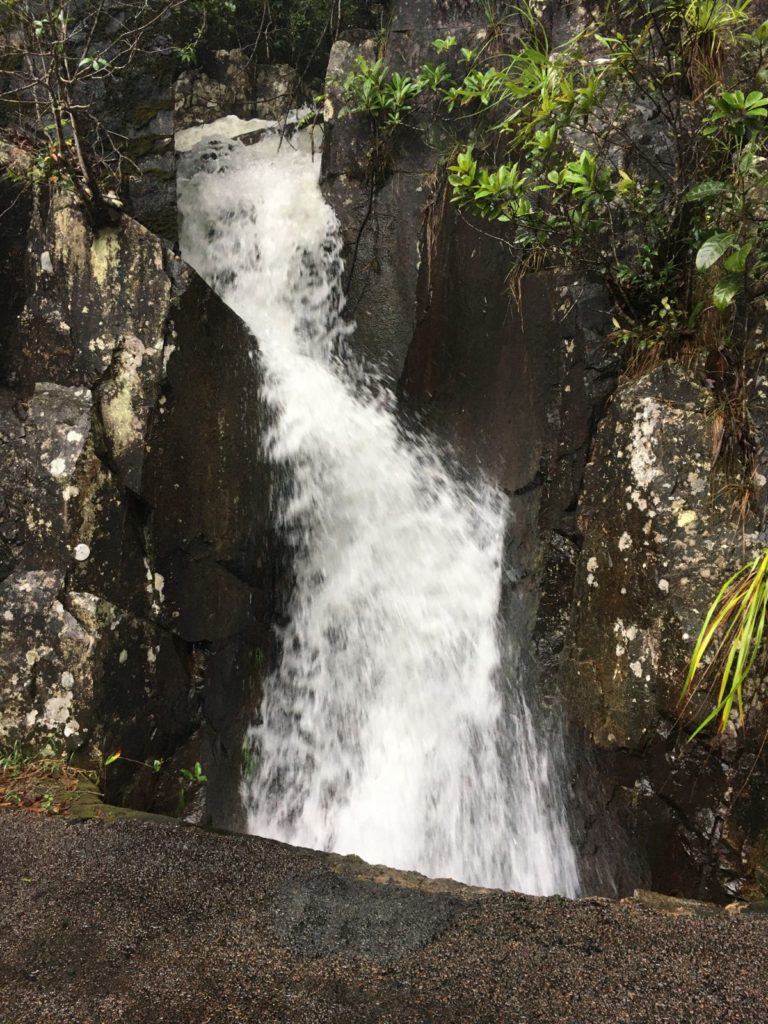
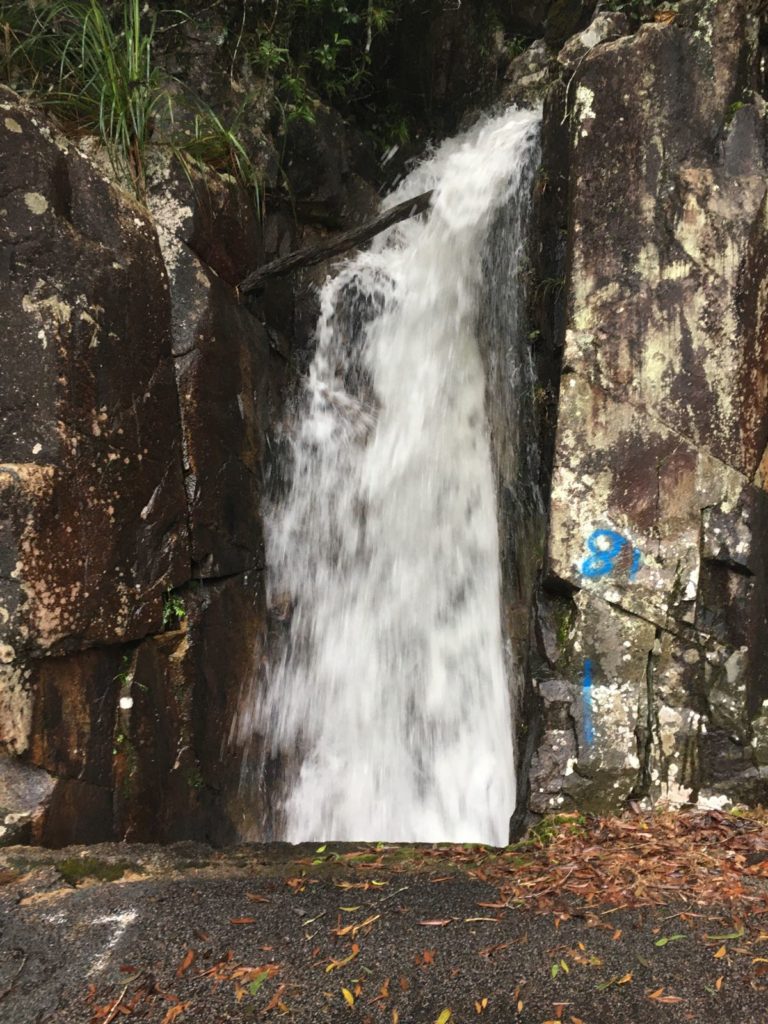
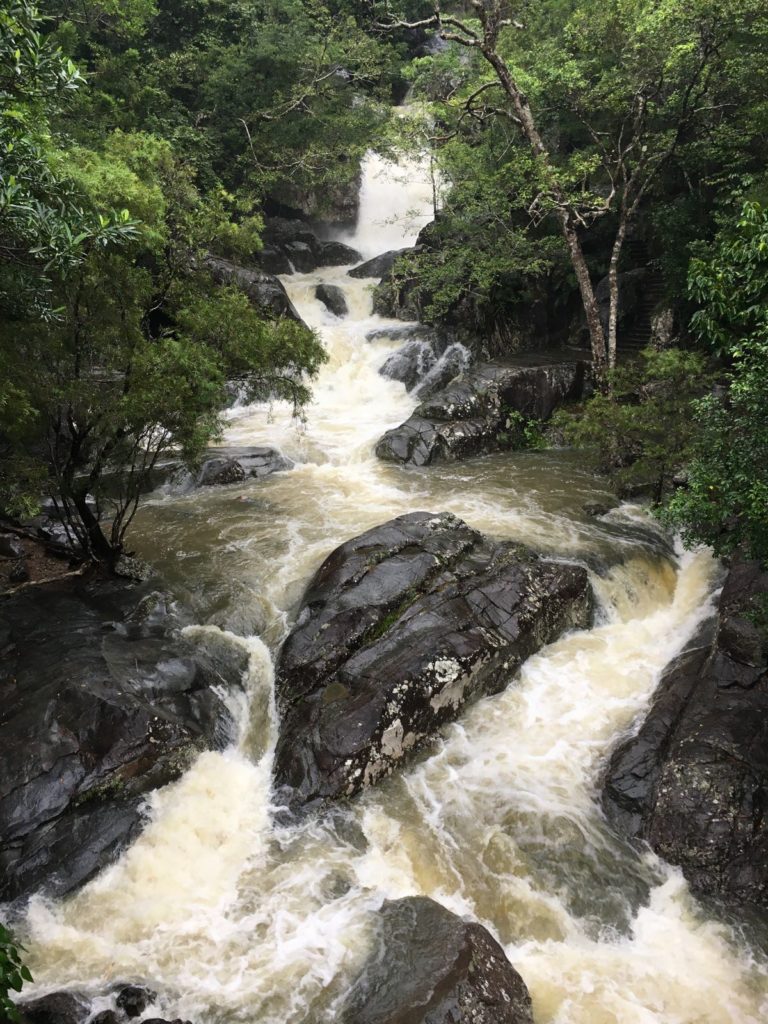
An added note is that the good rainfall means that the drive up and down the Paluma Range Road is pretty spectacular just now with all creeks and waterfalls in rapid flow. I snapped a few iPhone photographs yesterday (25 April) at some of my favourite spots along the way.
Twin Falls 1Twin Falls 2. Looks like the geotech guys have added some notes to the rock wall!Crystal Creek Bridge 1Crystal Creek Bridge 2The beautiful Fairy Falls.
Text & Photos by Michele Bird with recent rainfall readings contributed by Barry Smith and Michele Bird.
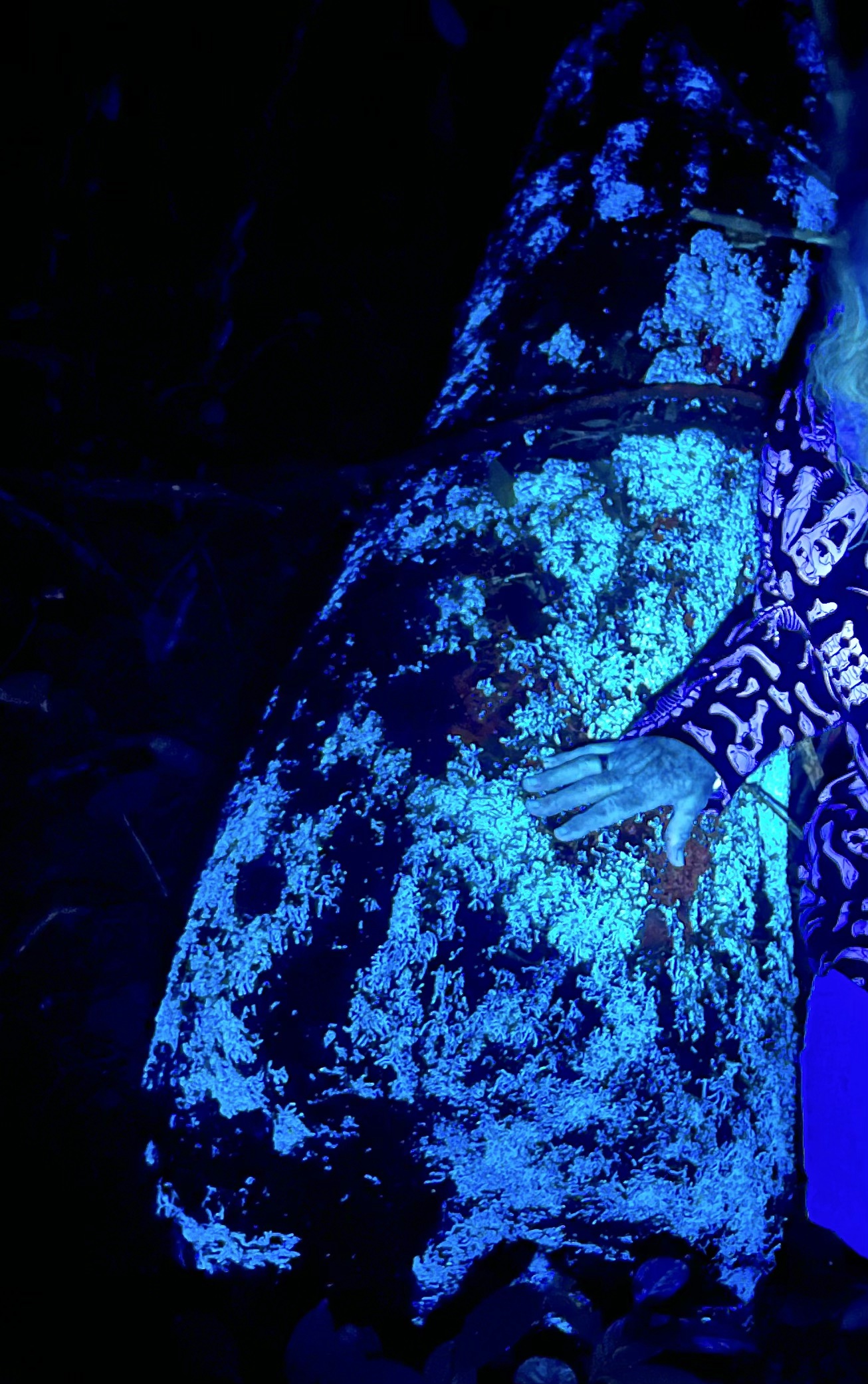
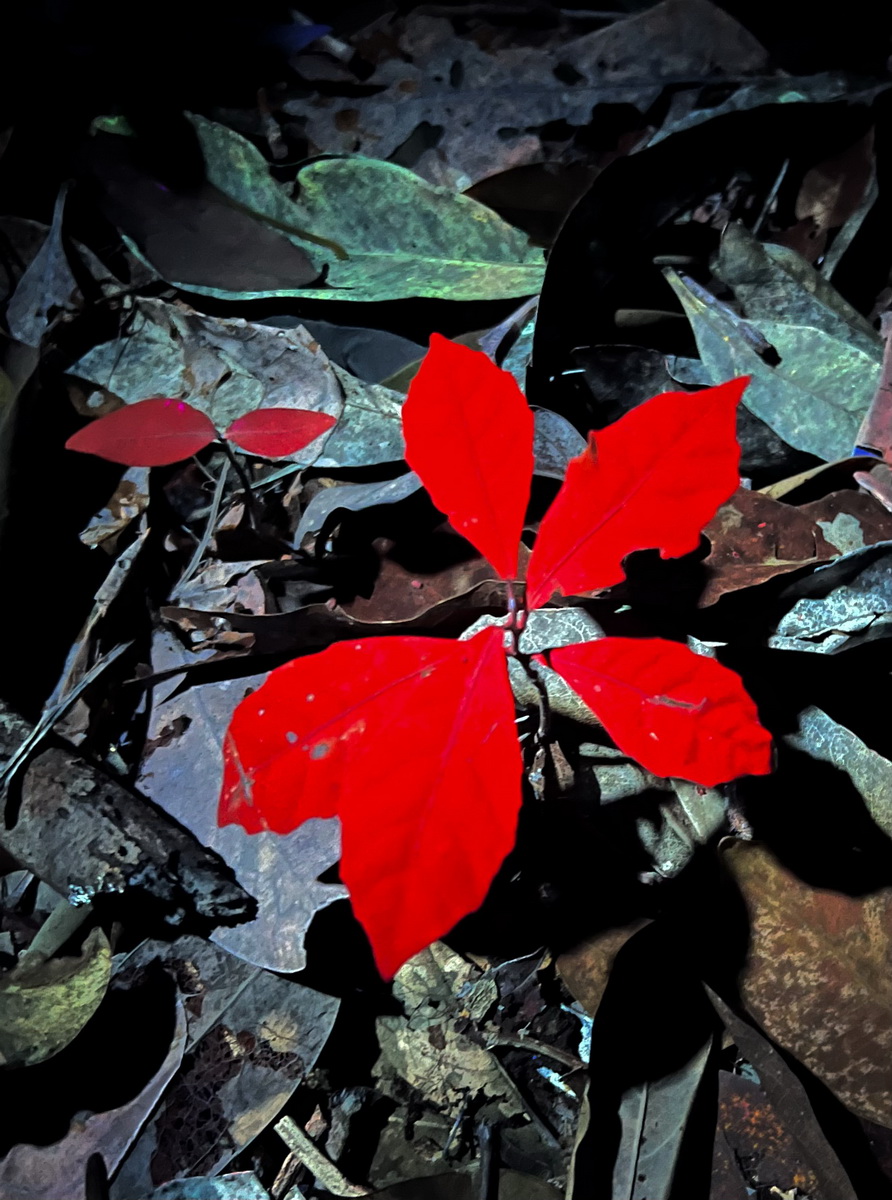
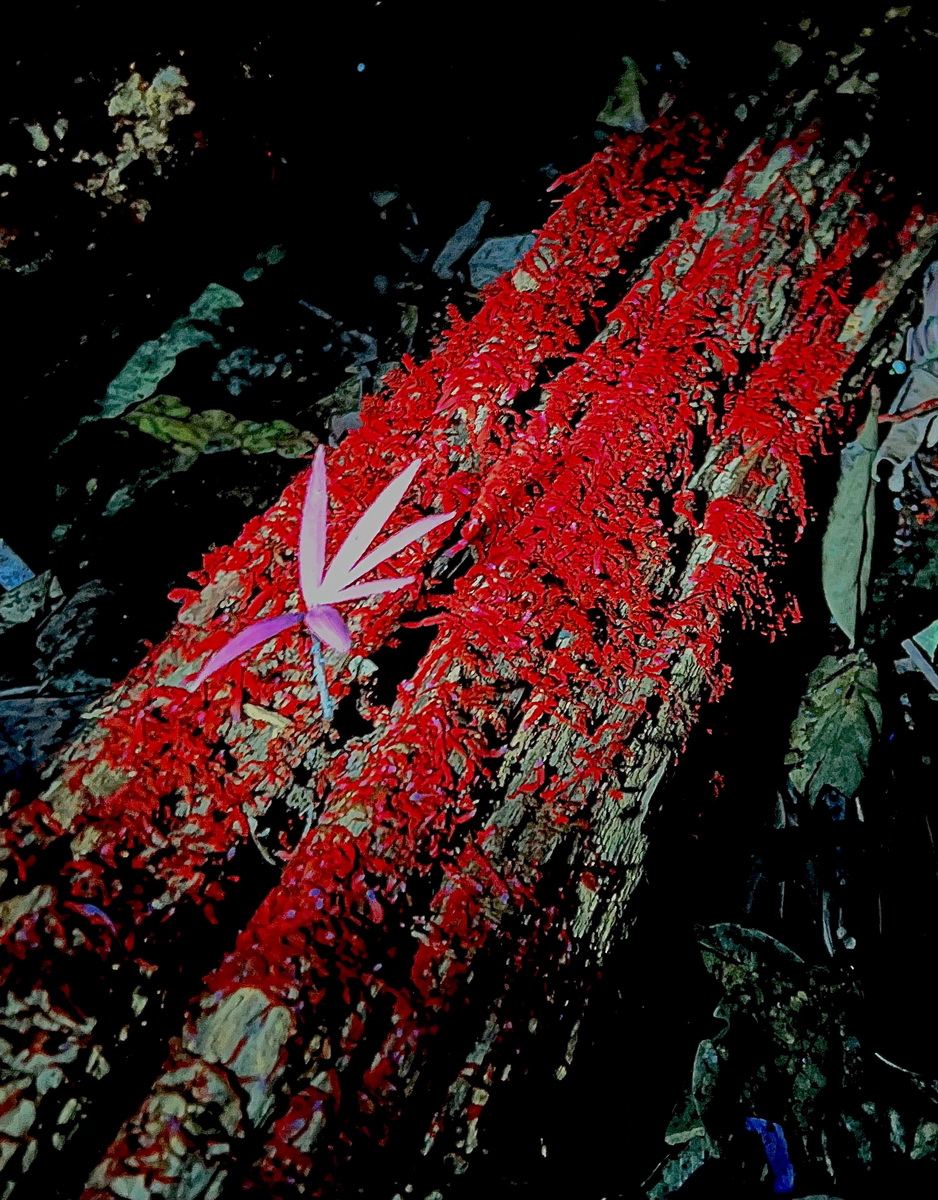
This Saturday’s Paluma After Dark walk along Lennox Cr and the start of the H-Track was a success with a small but enthusiastic group of residents and a bit of luck with the inclement weather. Colwyn Campbell was able to joint the group, together with Michele Bird, Jodie Pace, Juanita Poletto and myself. Fortunately, the rain paused just before our scheduled walk and started up again just as we finished. The wet forest floor was covered in gleaming droplets lit up by our torches, but we were still able to see eyeshine from some huntsman spiders and a nocturnal moth. There were several larger items on display as well, including a medium-sized amethystine python crossing the path in front of us, a native rat glowing bluish in our UV lights, a small colony of glow worms (and a minute luminous mushroom) along Lennox Cr. and a large log covered in brilliantly fluorescing liverworts.
One of the things we learned on the walk was that when it comes to using UV light to bring out fluorescence, “torches ain’t torches”. The common inexpensive UV torches available in Townsville stores emit light that is only just within the UV range and also produce substantial visible violet light that can mask or mute the fluorescence. A recently purchased (but more expensive) UV light that emits more light fully in the UV range (365nm) induced more brilliantly blue fluorescence in the liverworts, but also created stunning red fluorescence in some mosses and the new leaves of small seedlings in the forest floor.
Here are a few photos from the walk that will hopefully inspire others to join our next walk in June.