
Due to unforeseen circumstances, the owners of Misthaven Units are desperately seeking a cleaner for the next 8 weeks. If you or anyone you know are interested, please contact Renae Ross at the Markwell Group on 4774 7300 or email: Accounts@markwellgroup.com.au
Posts
And the winner is…
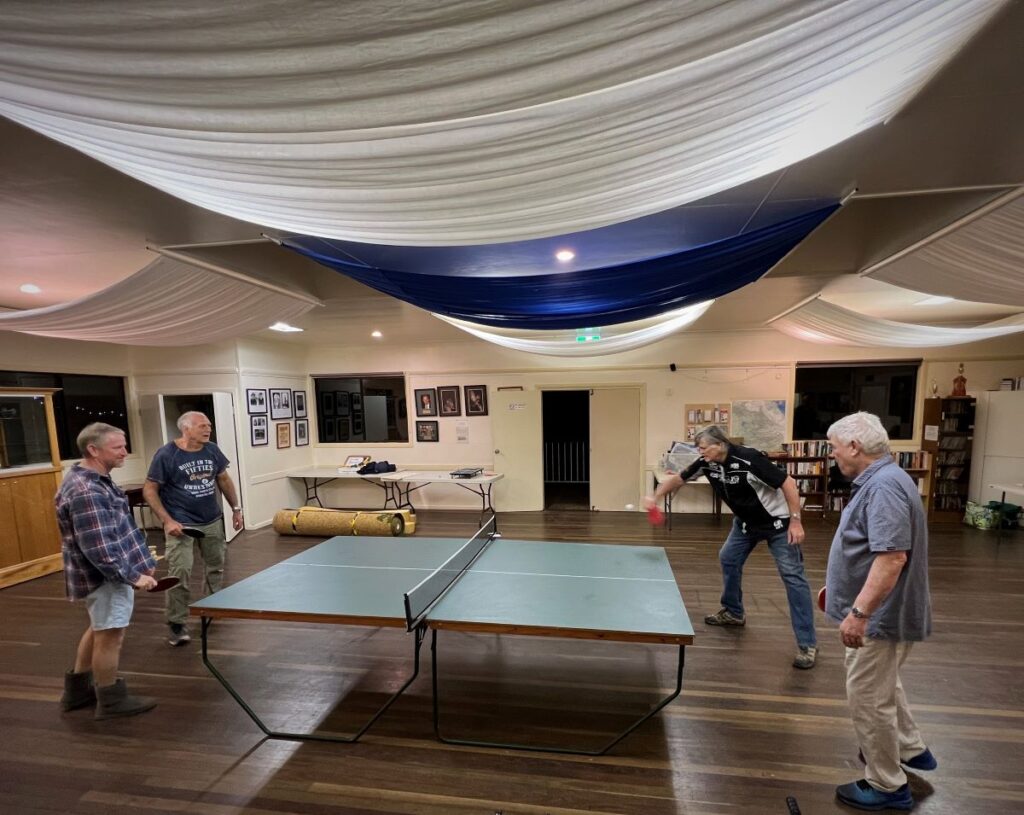
There were a lot of winners at our recent “Game On!” night at the community hall enjoyed by a rowdy crowd of enthusiastic participants, not least, our SES and RFS groups.
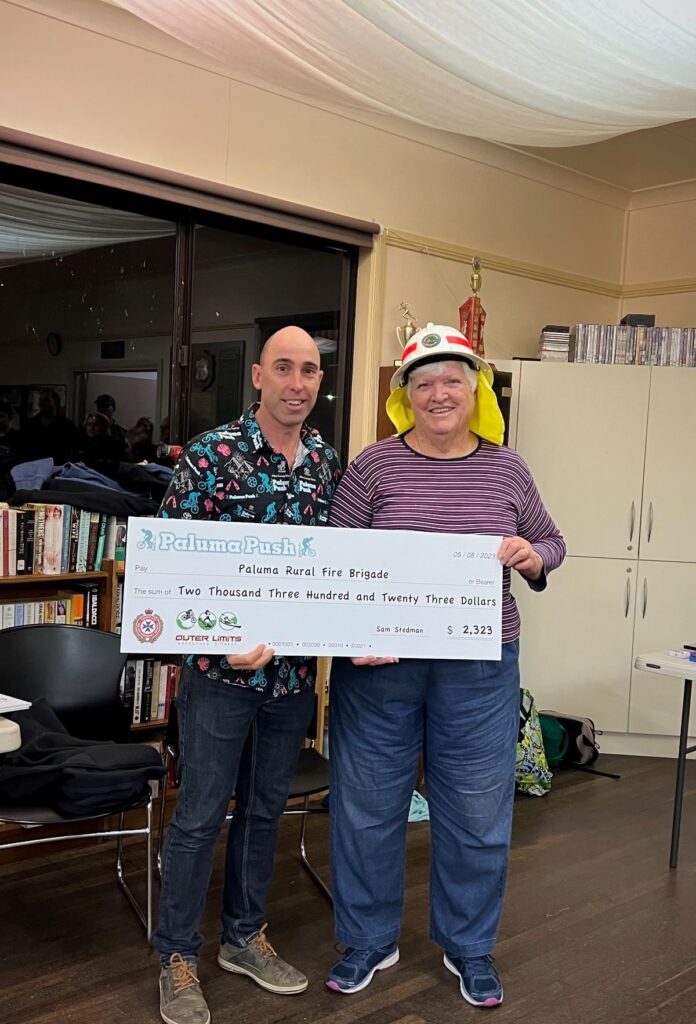
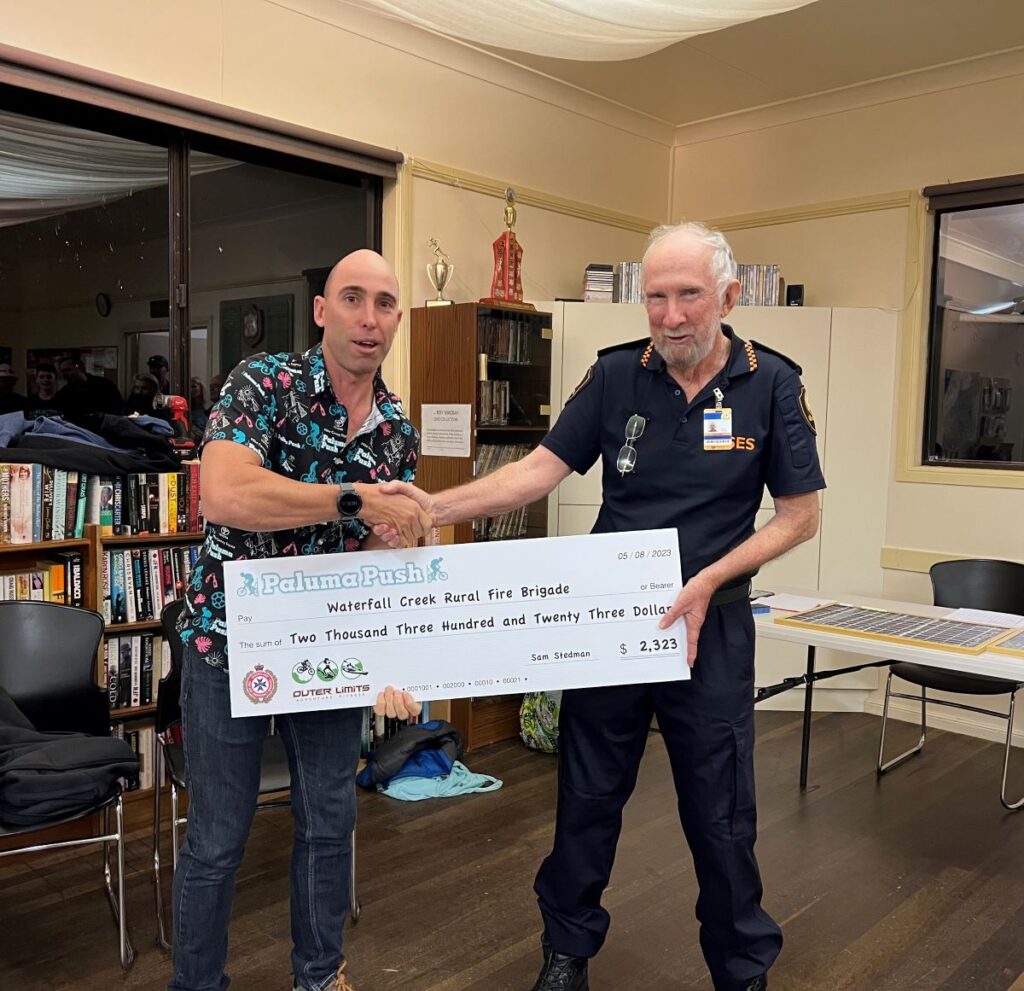
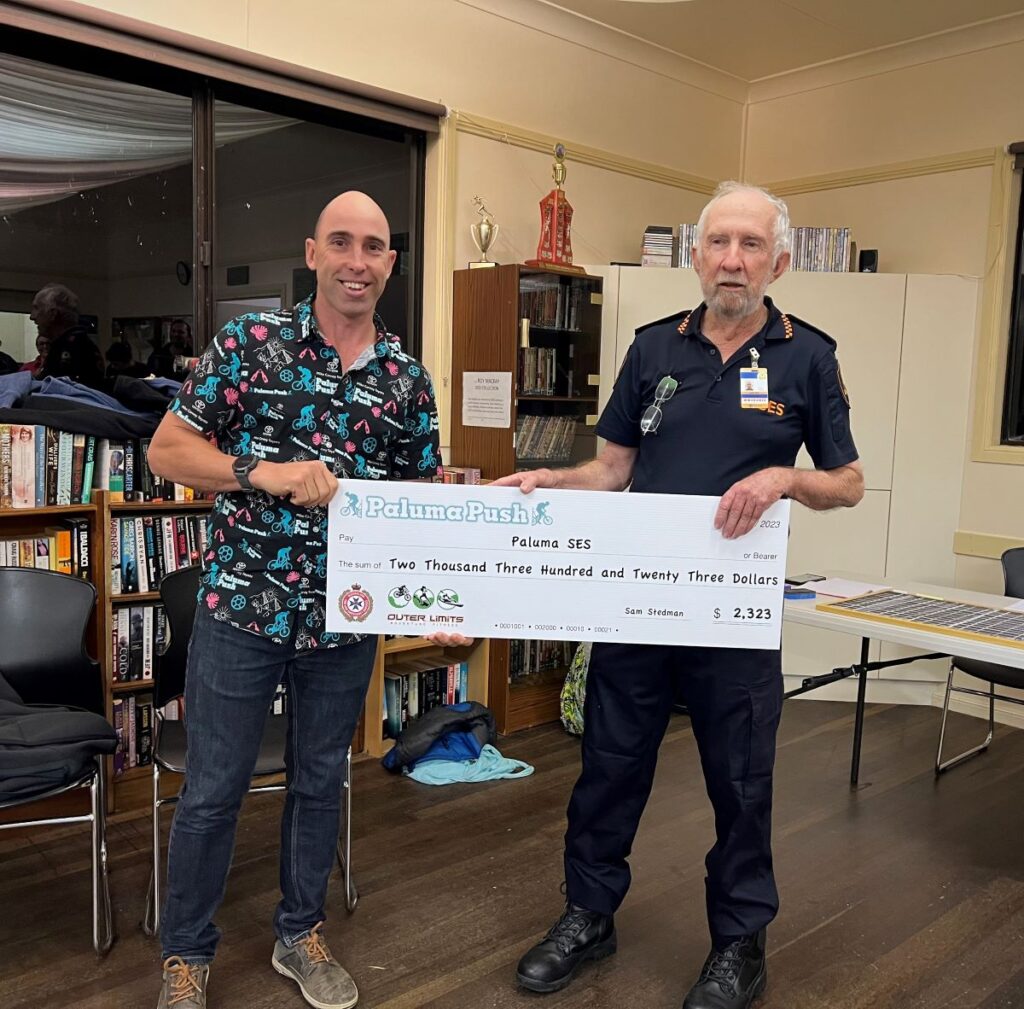
Sam Steadman of Outer Limits Adventure Fitness at the start of the evening, presented $2, 323 cheques to EACH of our local SES and RFS (Paluma and Waterfall Creek) branches in recognition of their support of the recent Mike Carney Paluma Push event. In his speech, Sam said he was happy to give back to our community that provides such a fabulous location and support for this annual event. Having this kind of event that promotes our location nationwide as one to enjoy healthy outdoor activities in a beautiful environment and which helps to grow our essential services at the same time, is definitely a winner!
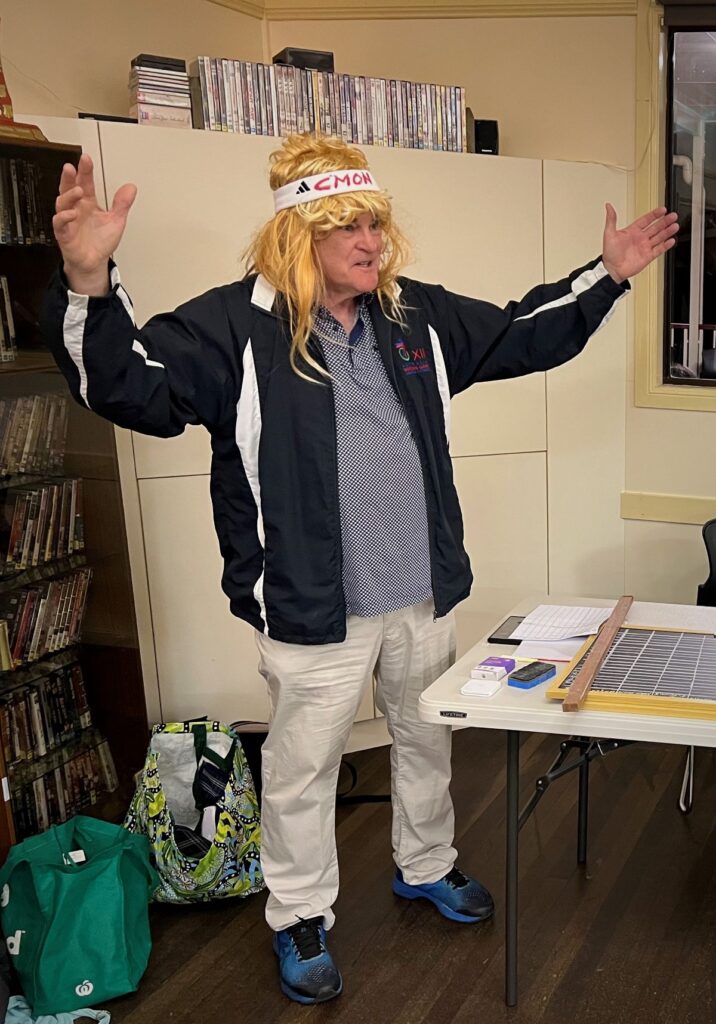
The games were officially opened by Peter Klump (who seemed to be channeling Bjorn Borg) as names were drawn out of the “boy and girl buckets” to find out who our games partner was going to be. He gave us a rundown on rules and a rousing pep talk and then we were off to our first 15 minute round of foozball, table tennis, indoor bowls, darts, knock-em-downs or hole-in-one golf. It was a lot of fun, a lot of laughs and a great event that encouraged locals to mix it up and get to know each other a little better.
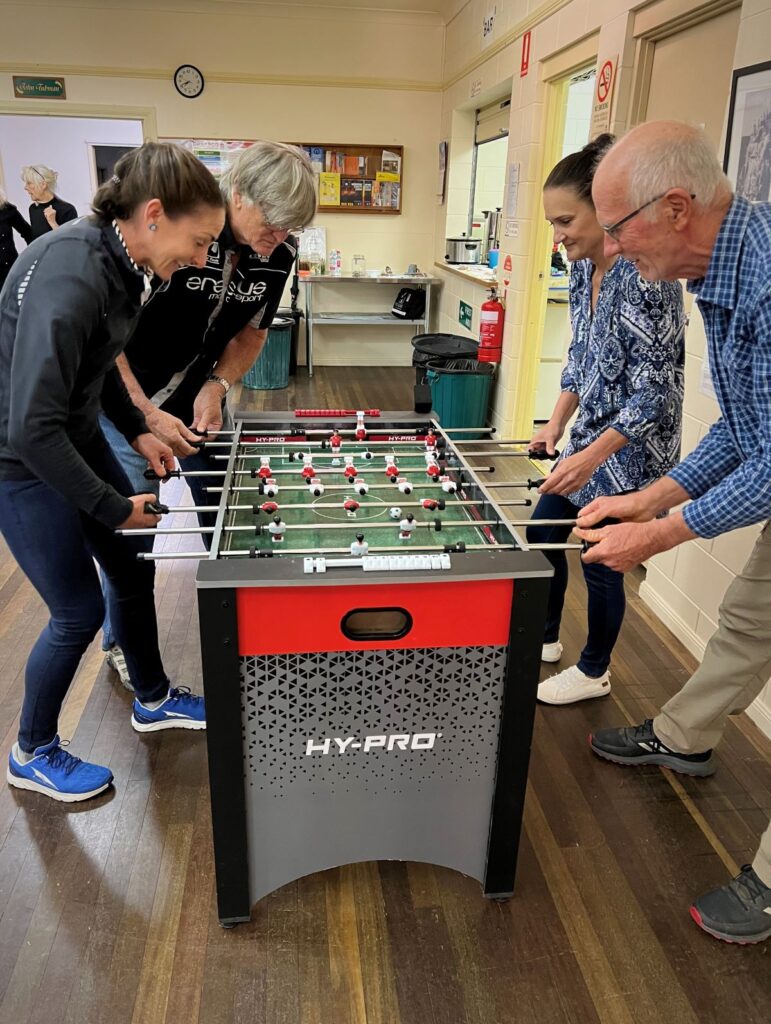
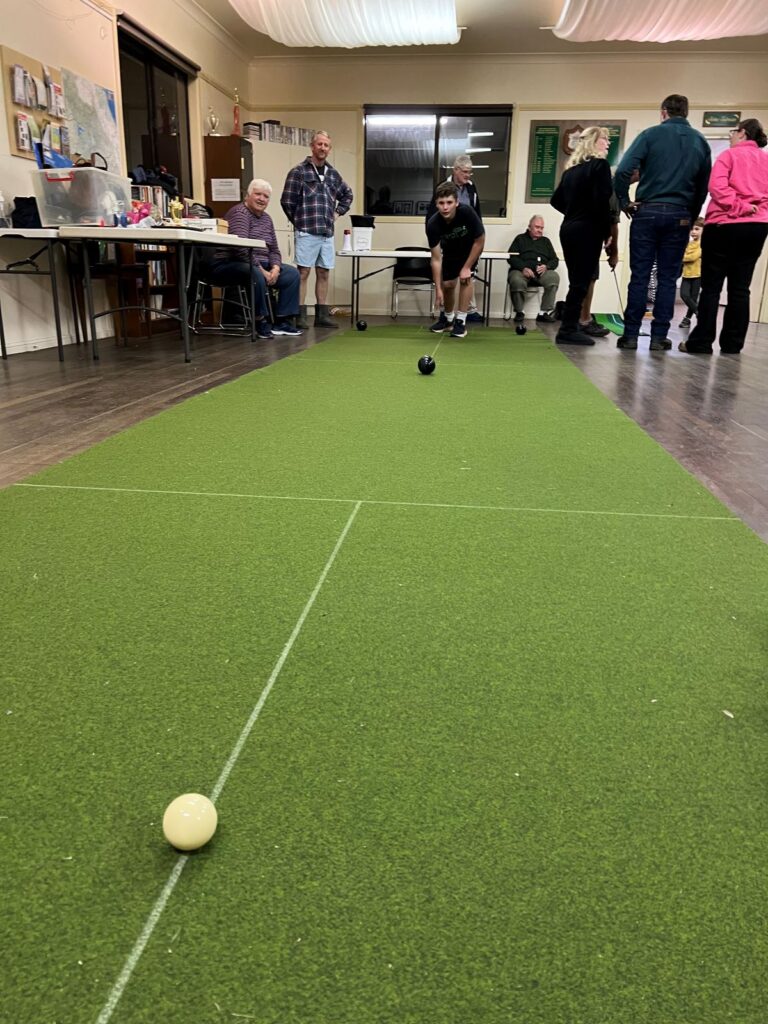
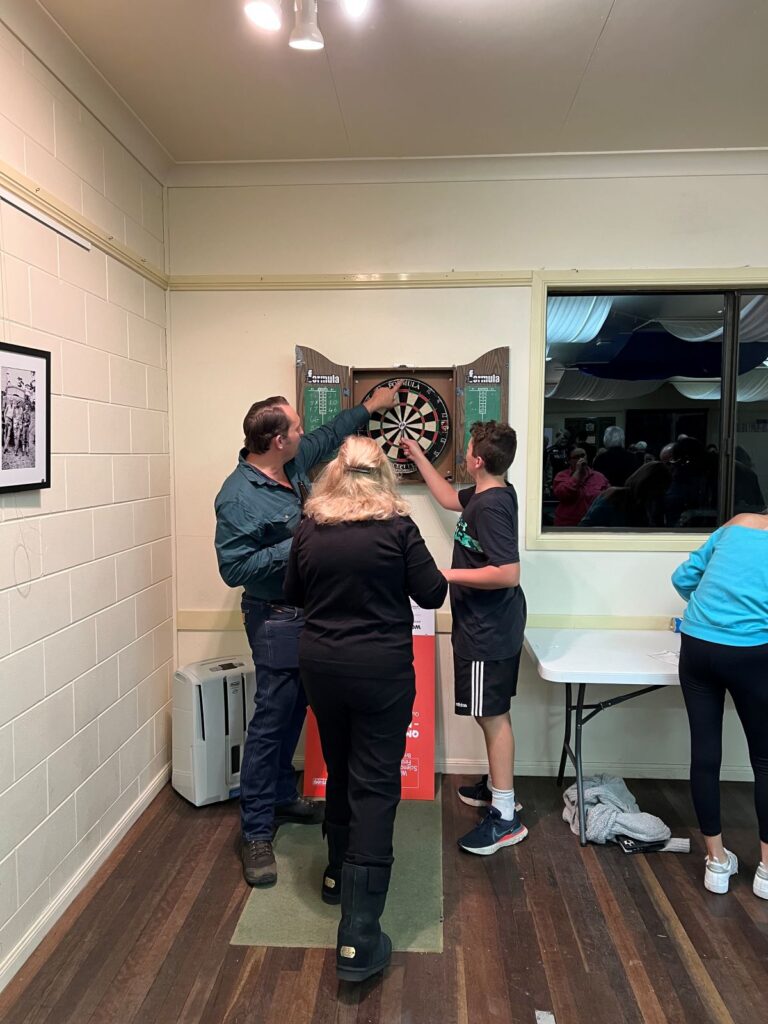
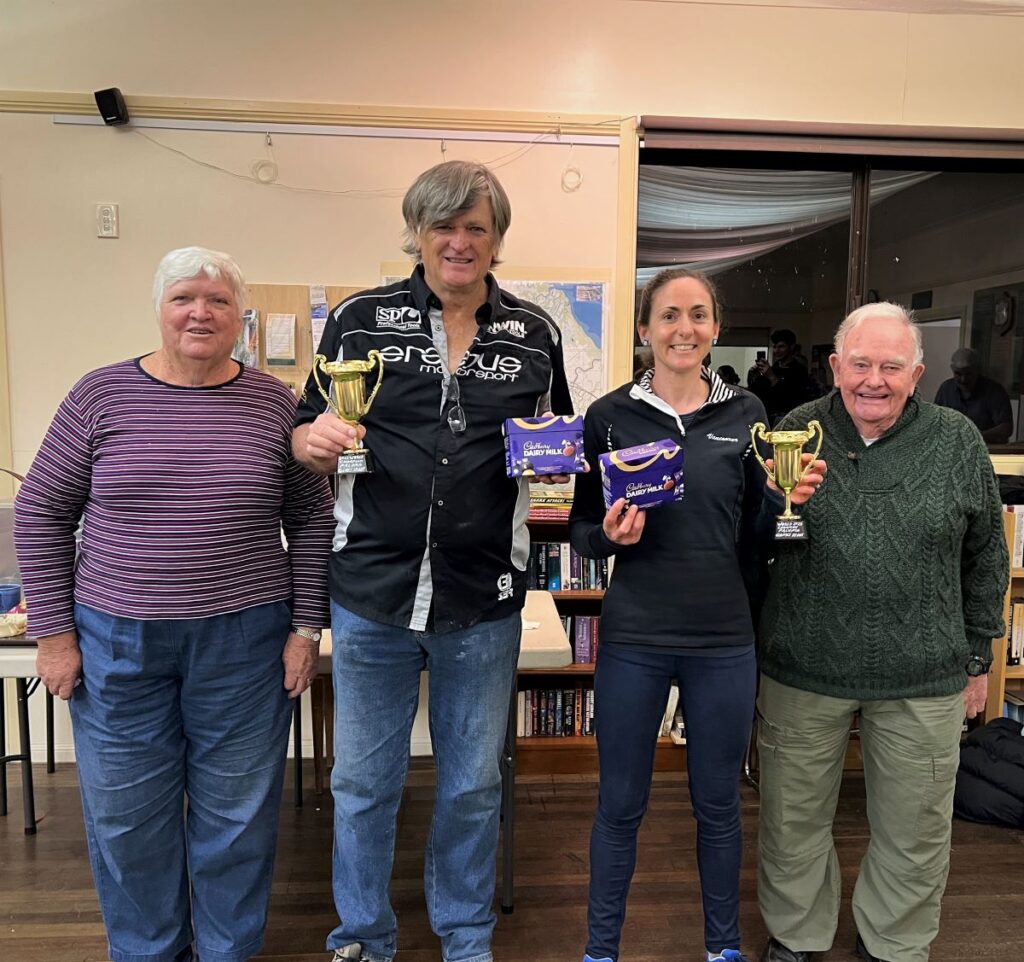
Scoring was monitored to ensure all was fair by Les as recorded by Peter. After some heated and very close competition and triple checking of scores, the champion pair of the night was announced. Mark Crisp and Julia Anderson very happily received their gold trophy and chocolates as their just reward as champions of Game On! for 2023. Great sporting spirit was shown throughout the games including the young accomplished golfer, Kian, who coached his opponents on form to help achieve their hole in one.
Not to be forgotten, our wonderful volunteers including Lyn Hyland who capably organised the sausage sizzle enjoyed prior to the games whilst Lynda Radbone once again had the bar in hand with the delicious addition of spiced mulled wine. The many helping hands on the night cleaning up was appreciated in addition to Wilfred, Colin and Jill Mead as well as Peter and John Klump who were seen by this author in the clean up the day after.
We are lucky to have Peter and Dorothy Klump who have successfully organised this community event for the past three years and we are all very much looking forward to the 2024 games!
Text and Photos by Juanita Poletto
Working Bee August 5th Reminder
Meet at the Rotunda next to the Community Hall at 2PM where Wilfred will let us know what the plans for the afternoon are.
Where’s Wary? Volunteers needed to count Cassowaries around Paluma-Mt Spec
Although Cassowaries have been seen very occasionally by many of us on the roads and tracks near the village, the only one we can be guaranteed to see in Paluma is the barbed-wire sculpture of “Wary the Cassowary” in front of Wilfred Karnoll’s house. Cassowaries are an iconic and charismatic resident of the Wet Tropics, but due to multiple human-related threats, they are listed as endangered. As many of us can attest Cassowaries are not easy to spot, even when there are nearby, and getting information on population numbers in different areas is very difficult. A new project to fill in this gap has recently commenced and the researchers are looking for volunteers to assist them in their work, or to provide any additional local knowledge that could help their assessments. This project is being conducted in conjunction with BirdlifeAustralia’s “Birds with Altitude” program, that is monitoring a range of Endangered and Vulnerable species in the Wet Tropics.
If you would like to volunteer for these projects, or would like to learn more about the issues they are addressing, please come along to the Launch event at the Paluma Community Hall on August 25th. There will be a catered dinner (donations accepted to defray costs) at 6pm and presentations at 7pm and organising volunteer teams at 8pm. For catering purposes please register if you intend to come to the dinner and think you want to volunteer. Any residents just wanting to learn more are welcome come to the presentations. Surveys and training for both the Cassowary and Birds with Altitude citizen science programs will then be held over the 26th and 27th.
To register follow this LINK. Further information below:
Paluma Range Citizen Science Program Launch & Camp Out

Join with researchers, locals, BirdLife Townsville & BirdLife North Queensland and bushwalking clubs to help contribute to our knowledge of Cassowaries at the southern extent of their global distribution and high altitude birds vulnerable to climate change in Paluma Range National Park.RSVP
Time and location
25 Aug, 1:00 pm AEST – 28 Aug, 10:00 am AEST
Lake Paluma – Magar Yamba Group Area, Lake Paluma, Crystal Creek QLD 4816, Australia
About the event
Paluma Range Citizen Science Program Launch & Birds With Altitude Camp Out
25 – 28 August 2023
Join with researchers, locals, BirdLife Townsville and BirdLife North Queensland and bushwalking clubs to help contribute to our knowledge of Cassowaries at the southern extent of their global distribution and high altitude birds vulnerable to climate change in Paluma Range National Park.
The only targeted surveys for cassowaries on the Paluma Range were for the faecal DNA wet tropics populaton analysis (Westcott et al 2014). No scats, signs or sightings were recorded during that study however, the extrapolated population estimate for the area was 16 adult birds. The Paluma Range however contains 22,050 ha of potential habitat and birds are sighted here semi-frequently. So let’s track them down to add to our body of knowledge about the distribution, abundance, habitat condition and threats to Cassowaries here. Please download the Birdata App on your phone.
Camping @ Lake Paluma – Magar Yamba group camping area or self-arranged B&B accommodation at Paluma Village.
Friday evening welcome, presentation and dinner @ Paluma Community Centre, 65 Mount Spec Road, Paluma.
Friday, 25 August
1:00 pm campsite open @ Paluma Community Centre – Nywaigi Welcome to Country.
6:00 pm catered dinner.
7:00 pm presentations on Cassowary and Birds with Altitude programs. Organise survey teams and locations.
Saturday, 26 August
AM survey designated routes.
PM review camera trap data. Self-catered.
Sunday, 27 August
AM survey designated routes.
PM review findings & camera trap data. Sunday night camping optional. Self-catered.
Monday, 28 August
AM survey optional.
Checkout by 10:00 am.
Funded by a Qld Government CSA – Threatened Species Grant and Jacksonville Zoo and Gardens. Supported by BirdLife Townsville, BirdLife Australia, Queensland Parks and Wildlife Service, NQ Dry Tropics NRM and Girringun Aboriginal Corporation and thank you to the Paluma Community Centre for gifting in-kind support of the community centre for the Friday evening.Read moreRSVP
Push in the Bush Done and Dusted

The dust ( or rather mud) has well and truly settled for those who recently participated in the Mike Carney Toyota Paluma Push on the weekend of July 15th and 16th. Muscles have recovered and the joy of crossing the finish line is a fond memory along with many formed around the warmth of the bonfire at the Hidden Valley Cricket Oval.
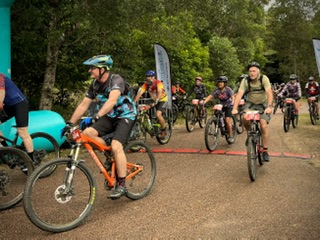
Paluma village was inundated with rubber, spokes and lycra but mostly smiles and laughter as people prepared for the start of their race. The beauty of the rainforest trails and bush land makes for a truly unique cross country mountain bike race which even had some of our local residents registered as participants including Rob, Sandi and Jamie. All of whom finished their designated distances hale and hearty!
The RFS and SES volunteers plus a few ‘local’ volunteers assisted with registration and monitoring various checkpoints along the routes and were able to enjoy viewing and encouraging the participants going hell for leather along the trails.
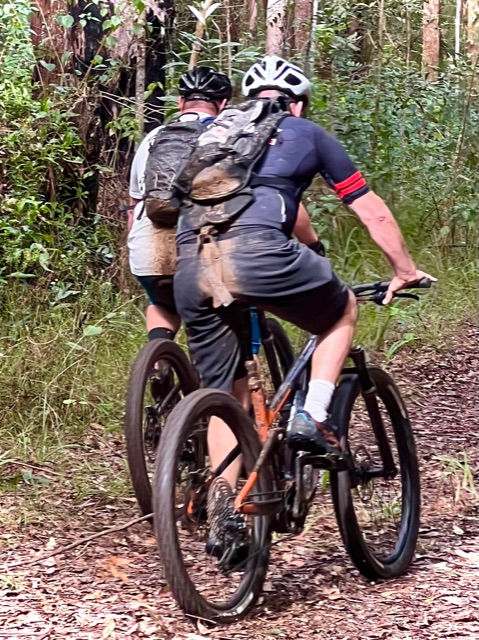
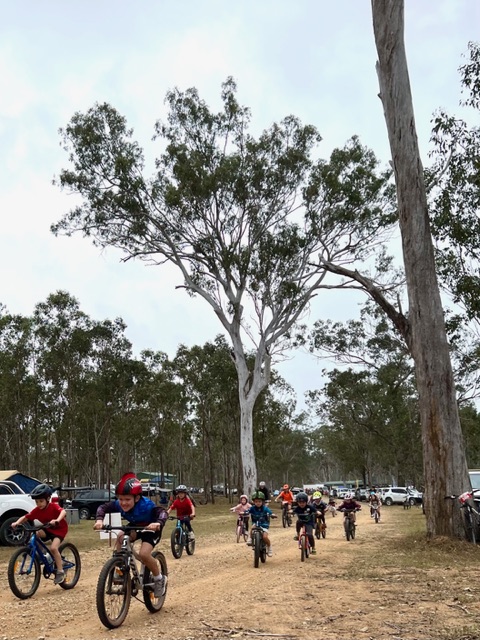
Seeing the youngsters set on doing their best in their very own race is possibly my fondest memory of Paluma Push 2023.
Paluma Push is such a great event for our village and a credit to Outer Limits Adventure for again bringing life to our sleepy little misty village on the mountain.
Text and photos (except where indicated) by Juanita Poletto
Game On!! Paluma Games Night August 5th
Our Annual Palum Games night, organised by Peter and Dorothy Klump will be held in just a few weeks, on Saturday, August 5th at the Community Hall.
The evening will start with a sausage sizzle dinner ($3.00) at 6:00 pm with the bar also open for the purchase of drinks. By 7:oo pm, the teams of two will have been announced and the various games will commence. These will include darts, indoor bowls, ping pong, and soccer pinball to name a few.
Previous years have proved a great success with lots of friendly participation mixed with bouts of enthusiastic competition. There are probably a few residents looking to topple the previous winners in some categories so the spirits will be high. Hope to see you there!


Christmas in July
18 revellers turned up to celebrate Christmas in July. From young to elderly, locals to visitors.


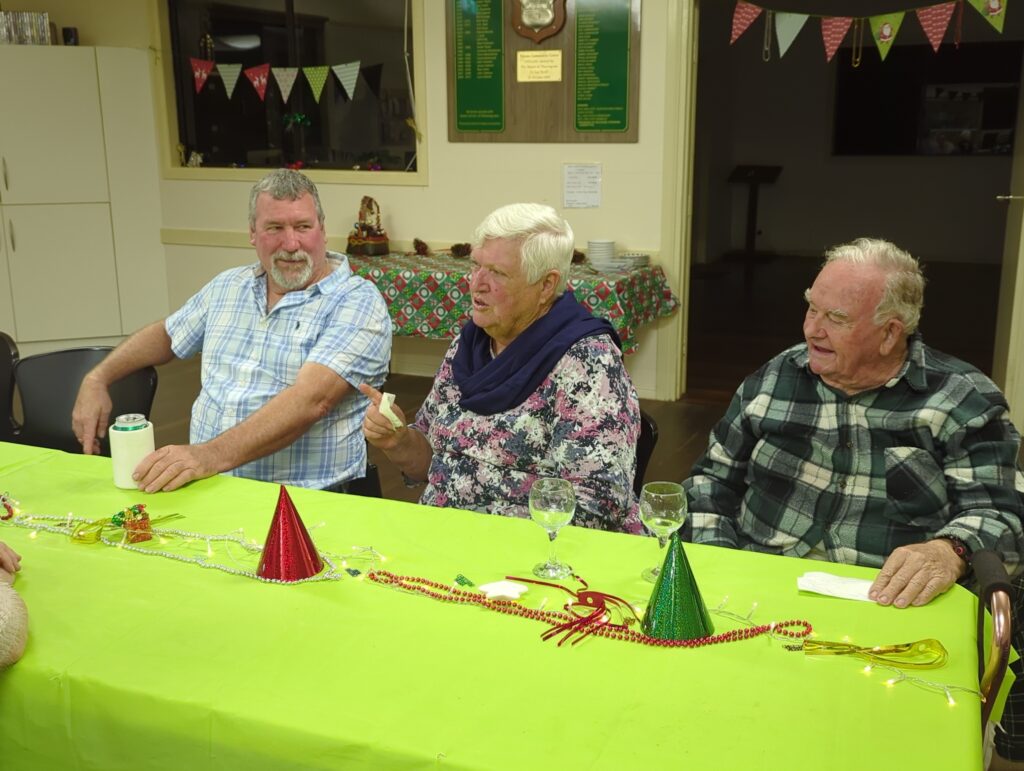
Including a surprise visit from Michael Offerman who many years ago owned one of the 5 acre blocks on Hussey Rd, but sold it after Yasi.
Lyn and Micheal enjoyed reminiscing early days on the 5 acre blocks.
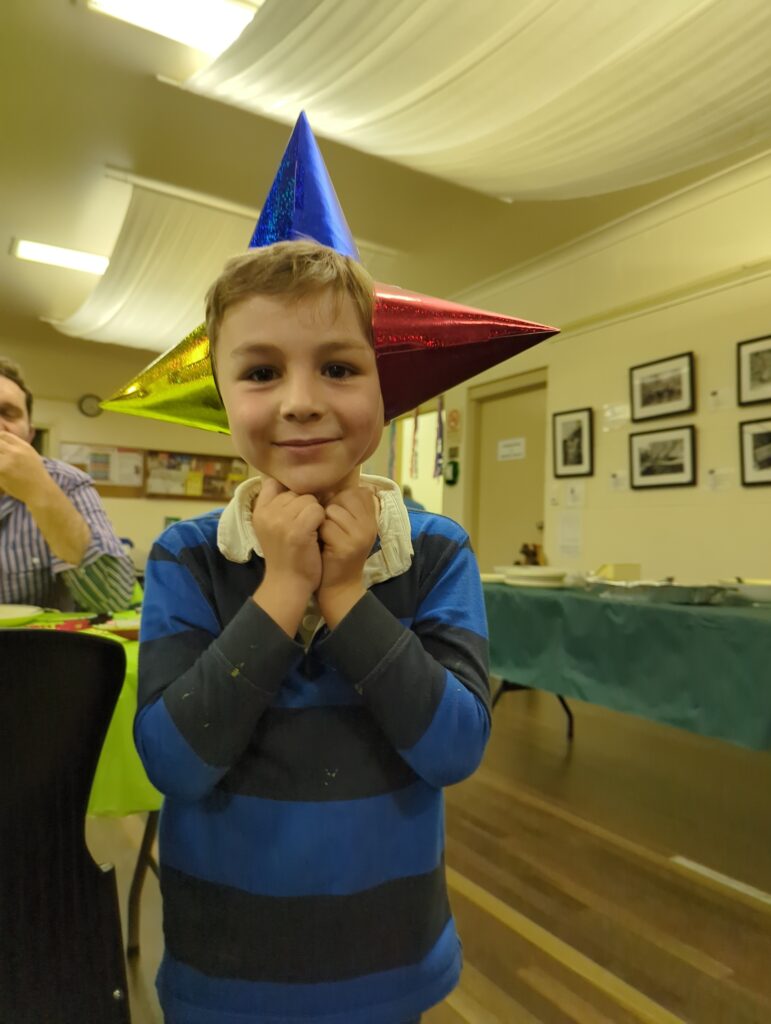
The table decorations helped to keep the younger generation entertained!
They also enjoyed decorating their mothers as Christmas trees!


Vale Ross Eberle
Ross Wells Eberle passed away after a long illness on Friday, June 9th with his family by his side. He was a loving husband, Father, Father-in-Law and Pop as well as a great mate to those who knew him here on the mountain.
Ross and Denise purchased their property on Hussey Road about 20 years ago. They both became well known in the community and Ross was an active member of the Paluma Rural Fire Brigade. Ross worked at the Townsville General Hospital as an orderly and was very active in motor sports. He drove rally cars and enjoyed the thrill of trail bike riding.
A keen fisherman, he loved travelling and camping. He has left his loving wife, Denise, with many fond memories of their adventures together.
Ross’s life was celebrated at Woongarra Crematorium Chapel on June 19th. Our thoughts and hearts go out to Denise, Ross’s family and friends.
Len Cook and J. Poletto
Change of Day for History Displays
Please note that after this week, the History Display at the Community Hall will be on a Wednesday from 11am – 1PM. Due to power outages it was on Tuesday this week.
A call will be put out soon for volunteers to support the display at these times. July is currently covered.
Reminder, Christmas in July this Saturday (July 1)
Our annual Christmas in July Social is on Saturday 1st July at 6.30 pm at the Community Hall. Bring a Plate to share. The Bar will be open