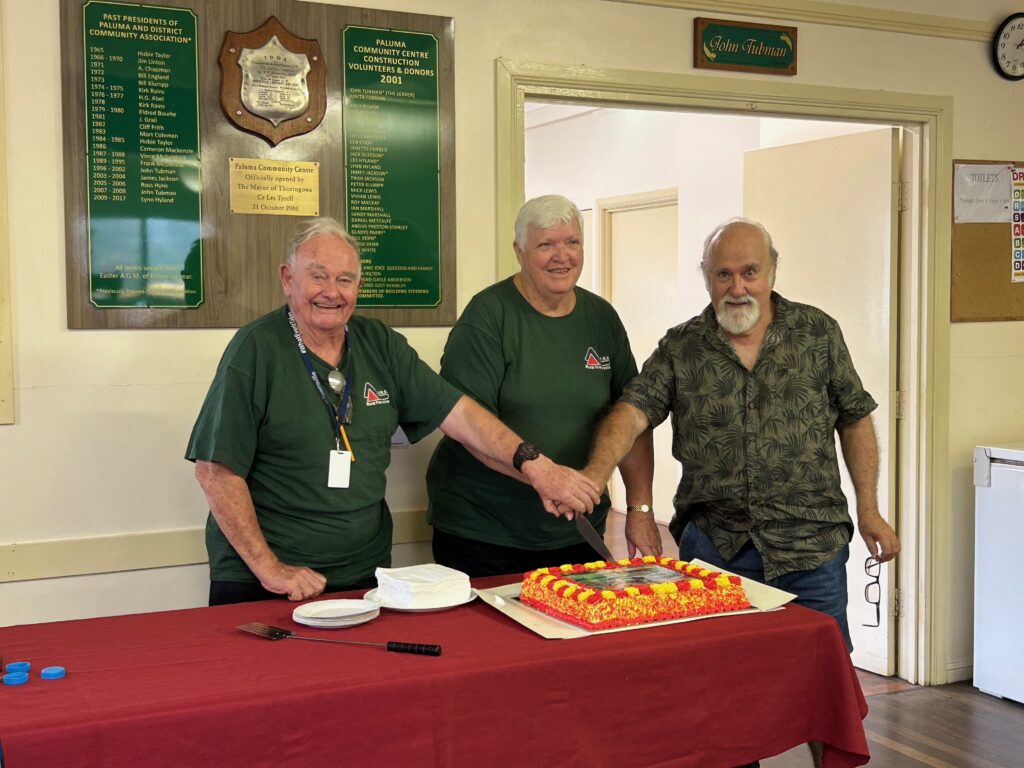
November’s Social Drinks evening has been changed to the second Friday of this month – November 8th. As usual, it will be at the Community Hall. The bar opens at 6pm. Come along for a catch-up over a drink. Locals and visitors alike are all welcome. Bring a plate of nibbles to share.
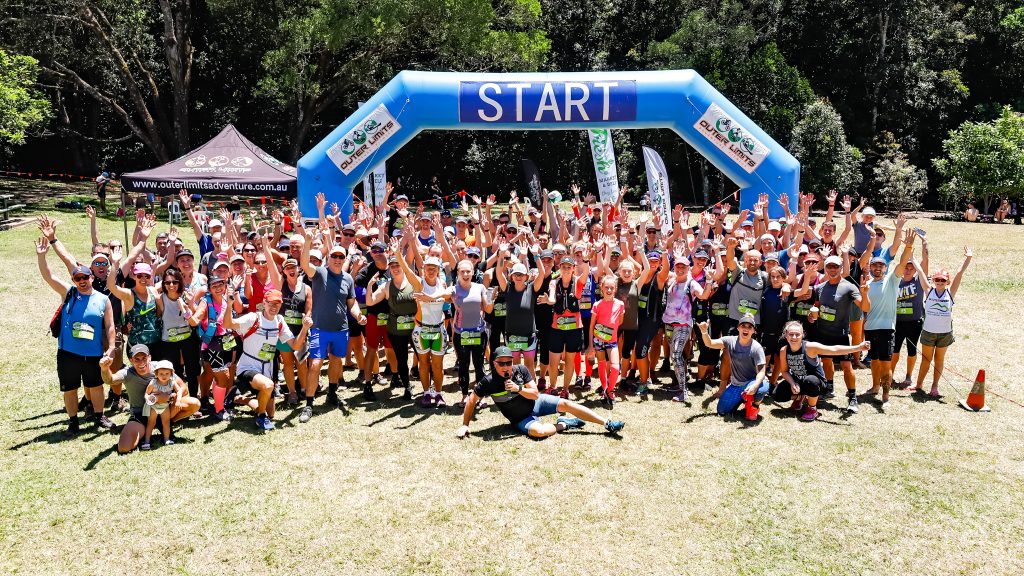
This is a reminder about next weekend’s trail runs in and around Paluma village. It is also in our events calendar.
If you’re interested in where competitors will be running, please check out Outer Limits Adventures’ website. However, if you’re unaware, the 50km Ultra marathon starts early Saturday morning from Gumburu. The Sunday morning trail runs of 5km, 10km and 21km start from and finish at the Village Green.
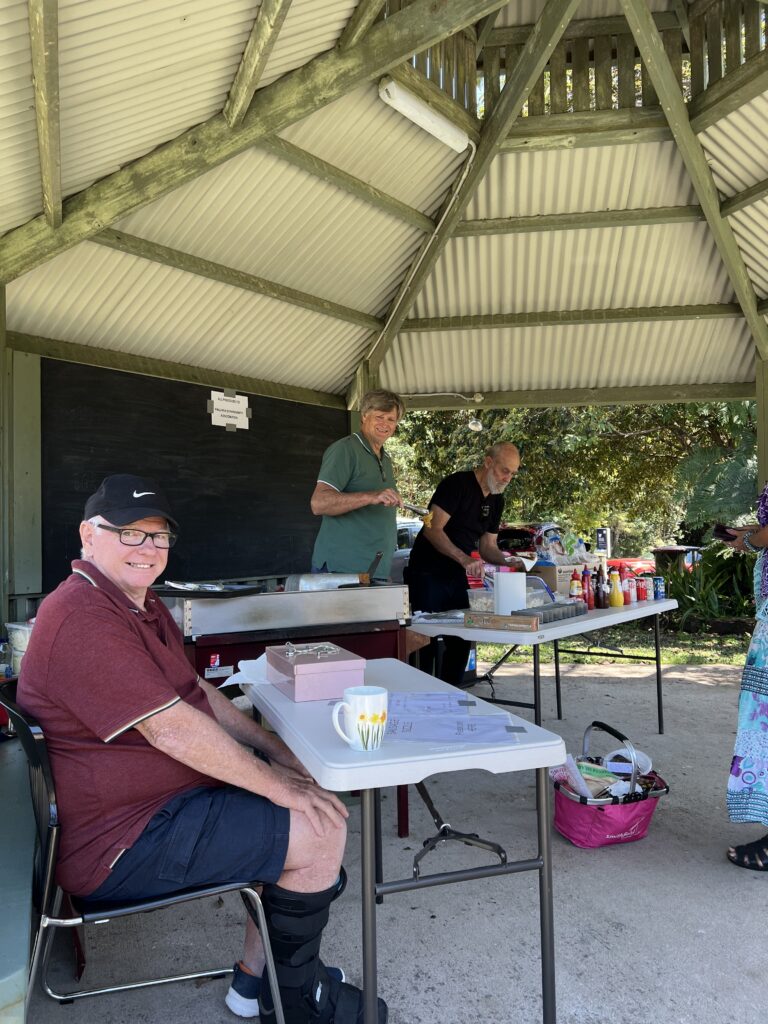
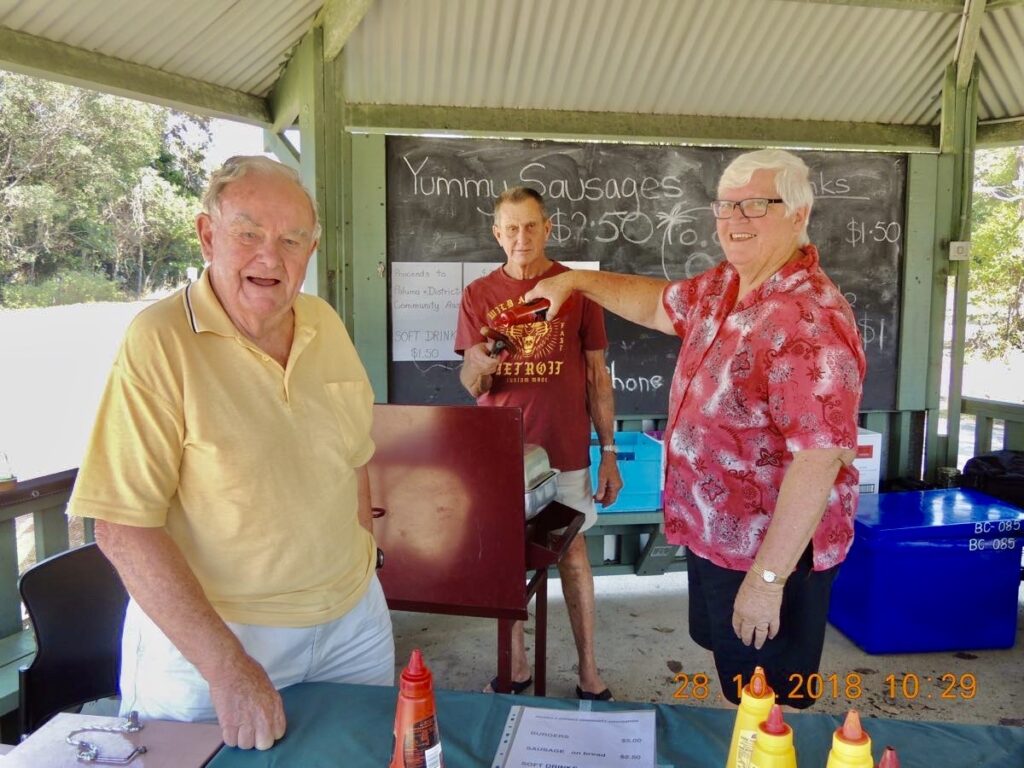
This is another major event organized by Outer Limits Adventures which puts Paluma on the map for adventure racing. Please be patient with the increased amount of traffic and parked cars in the village on Sunday morning in particular. This event brings extra business to local restaurants and the PDCA is operating the BBQ and selling soft drinks to raise funds for the community.
Feel free to come to the village Green on Sunday morning to cheer competitors on at the start of their races.
Would you like to be stronger, more mobile, and learn how to deeply relax?
Hello, I’m Tracy, when I am not standing on my head you will find me in the garden hanging out with the chooks watching the plants grow.
I recently moved to Hidden Valley from Townsville where I have been teaching Yoga for 26 years. Needless to say I have loads of teaching experience and can easily accommodate varying levels of ability. I also have a keen eye for alignment. When we are in the correct position energy flows freely, tensions are released and the poses become effortless.
Yoga offers numerous benefits including increased strength, improved mobility & balance, reduced stress, emotional stability and an overall holistic wellness.
I would really like to offer a regular yoga class at the Paluma Community Centre. I am proposing Friday mornings starting 1st November, but would really like to hear from you to ensure your preferences are met.
If you are interested in participating or have any questions please get in touch by either emailing tracyarmstrongyoga@outlook.com or call 0407522080.
Yoga – the journey of the self, through the self, to the self
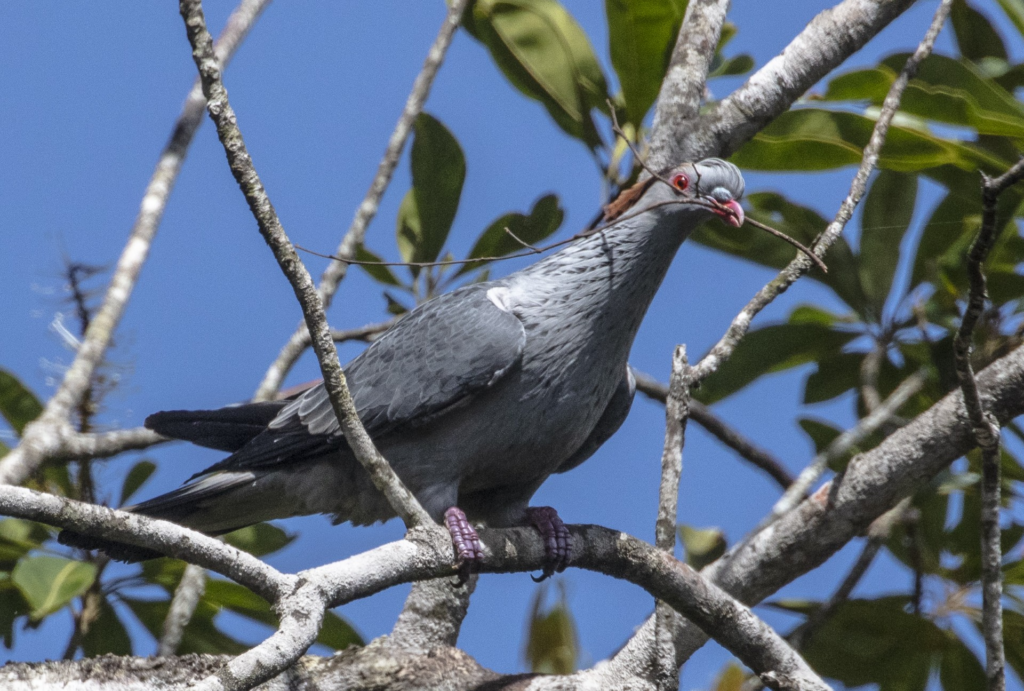
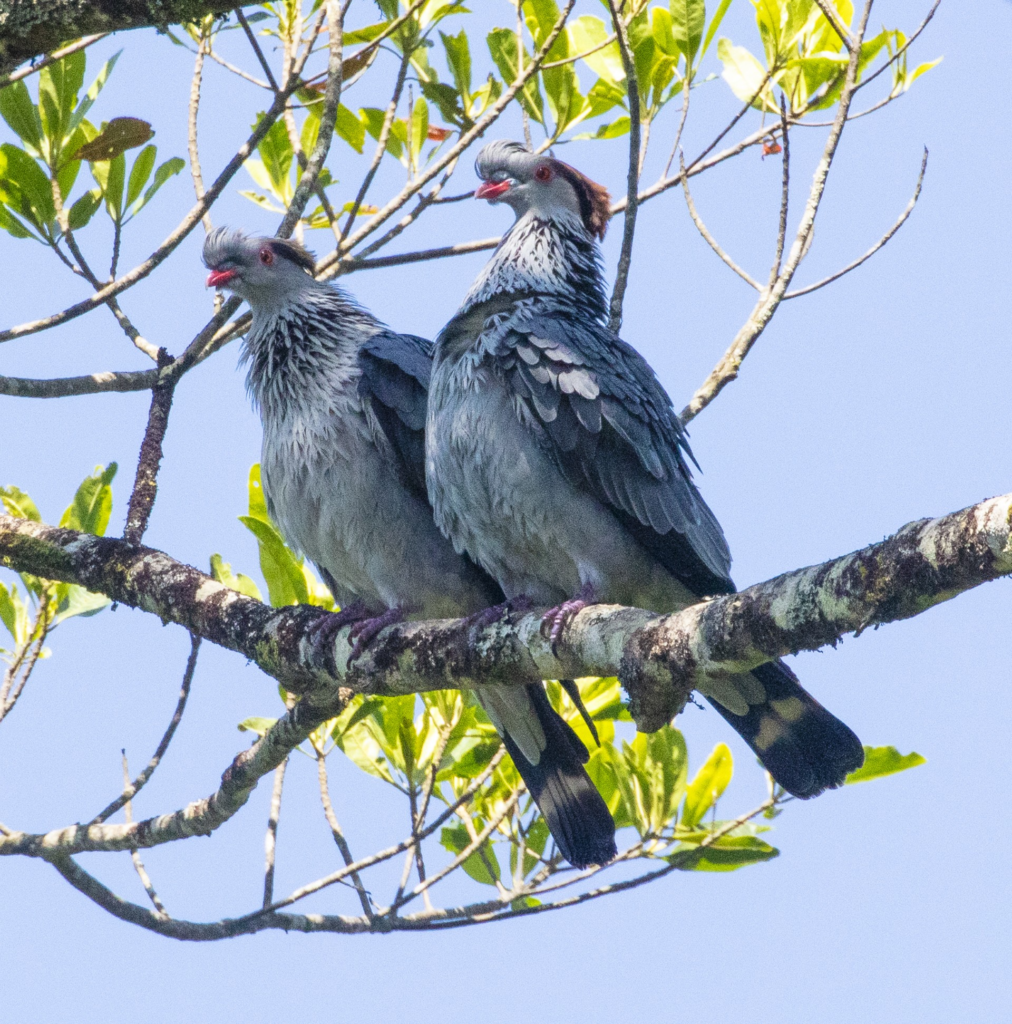
Many of the rainforest trees at Paluma are presently providing a bounty of fruit for many species, especially pigeons. As is their lifestyle, large numbers of Topknot Pigeons (Lopholaimus antarcticus) are here taking advantage of that seasonal abundance. They are big pigeons and fly particularly high above the canopy, sometimes singly, or in pairs or flocks.
Finding them parked up somewhere easy to photograph is a rare treat and I managed to grab two shots of one sitting high in a flowering Buckinghamia behind our deck. Despite the 500mm lens the bird occupied only a small part of the frame but when cropped I was delighted to see it carrying a twig in its beak. Clearly it was going about nest building.
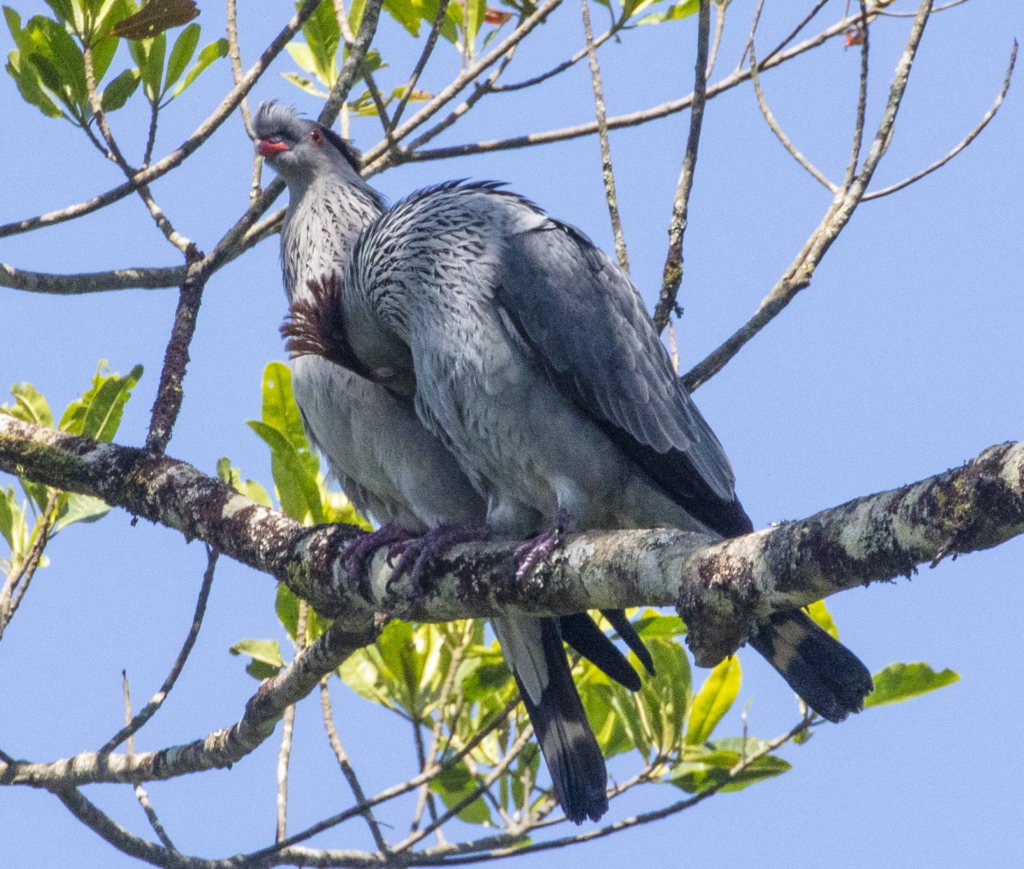
Yesterday a female was sitting high in a quandong behind our back yard when it was joined by a male who pressed close and then began to bob its head deeply to its chest and bounced upright again. This went for a while until they both flew off together.
If courtship and nesting are successful they’ll produce just one nestling after about three weeks which will be fully fledged around a month later. Both parents incubate the eggs and feed the young, using regurgitated “pigeon milk” from their crops in the earliest stages. It takes both parents to keep up the supply of pigeon milk, explaining why only one egg is laid.
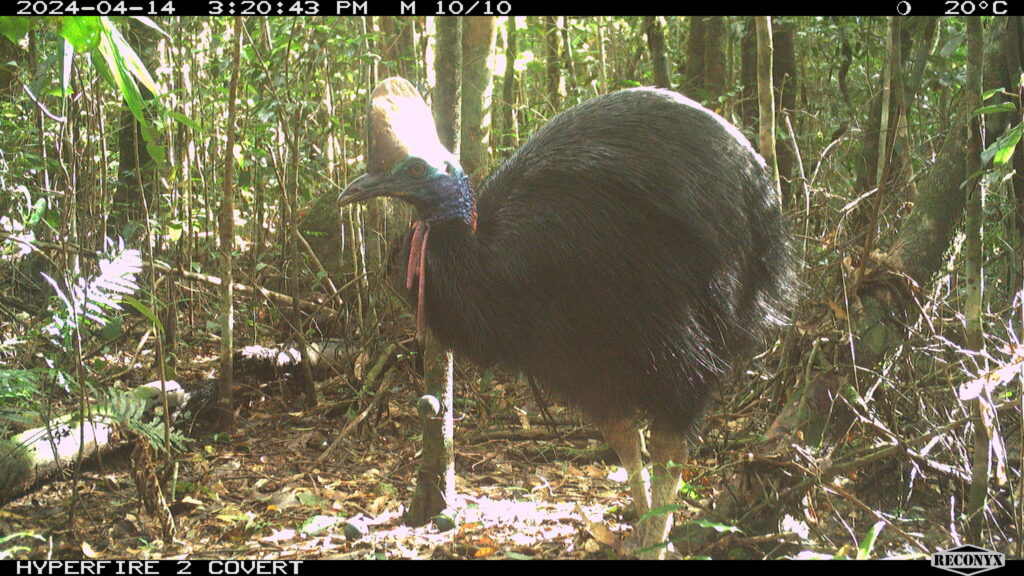
A male cassowary captured on one of the ‘camera traps’ in the Paluma Range.
As you may remember from reading a post back in July, there is a multi-year study of the cassowary across Paluma Range currently underway. It has returned some exciting early results with images of at least 7 individual birds so far. An update from the lead researcher, Wren McLean has been received and she has requested it be shared with the community as follows:
The 2nd Paluma Range Cassowary Citizen Science weekend has now been rescheduled to July 4th -6th 2025. For those not yet already informed, my mother has surgery which is scheduled for the end of Oct 2024 so I have committed to caring for her post surgery. This event will begin at 5pm on Friday 4th July 2025 at the Paluma Community Centre where we can socialise, share an Indian dinner (by donation) and enjoy the open bar before a presentation on the results of the Paluma Cassowary Project and planning session for the weekend’s surveys.
Please save the date and RSVP HERE to join the survey weekend. I will send out an email or two before the event to those registered in preparation for the survey. Apologies for any inconvenience for the reschedule. I hope to see you there in July.
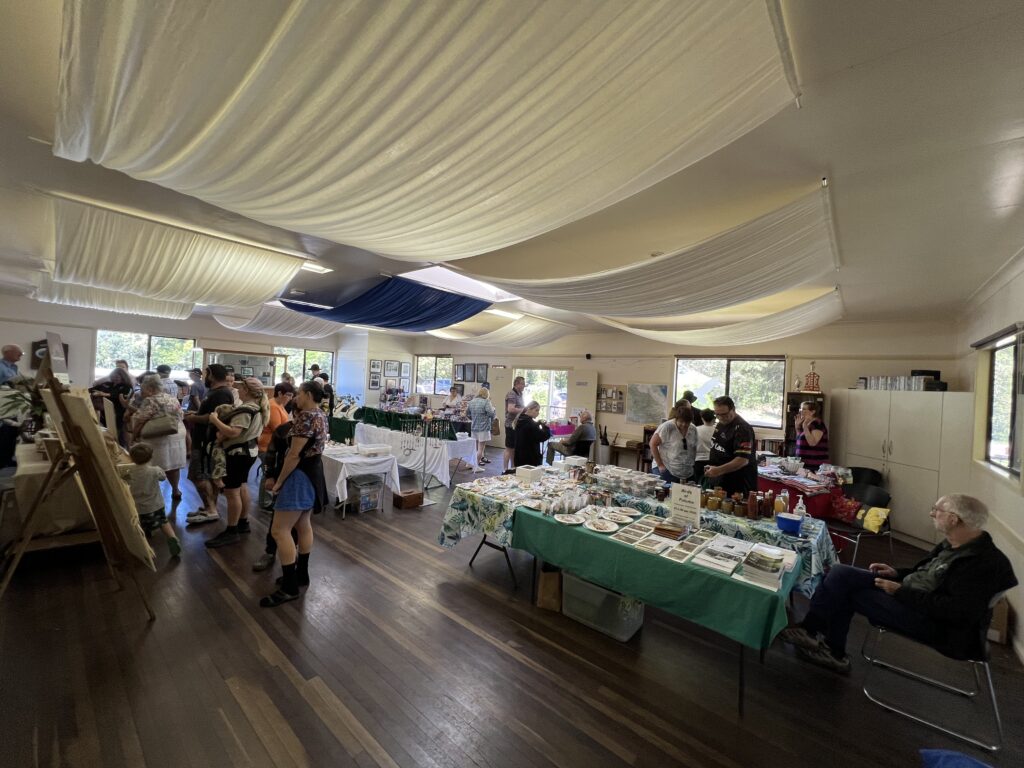
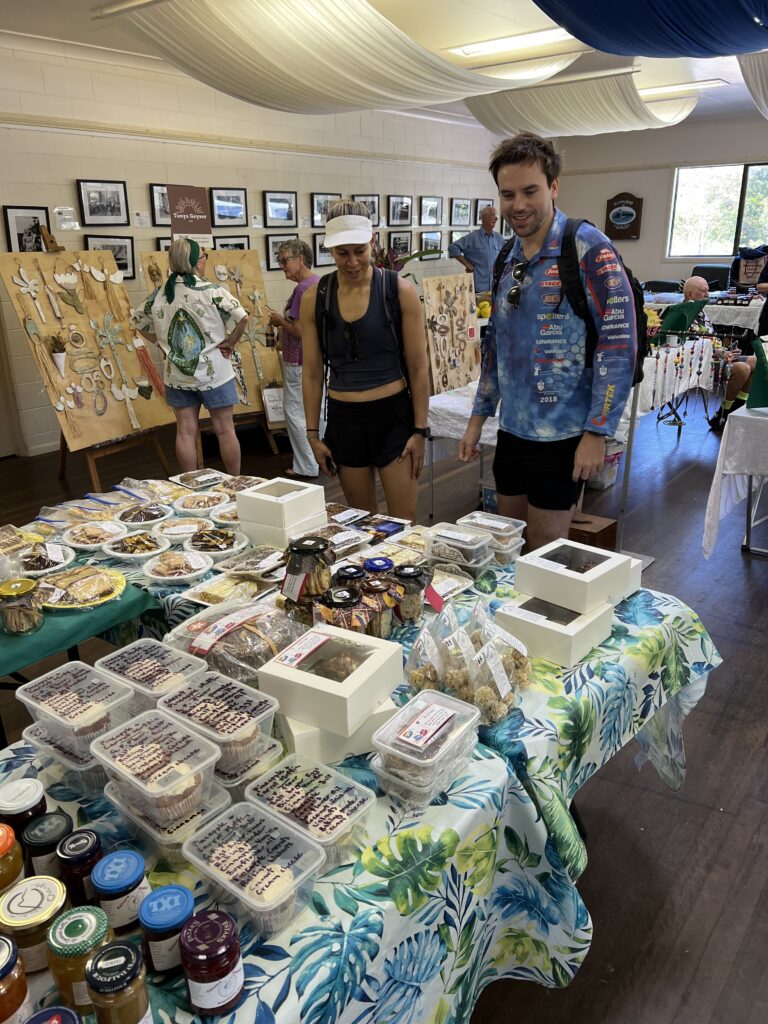
Many punters enjoyed the offerings of the various stalls.
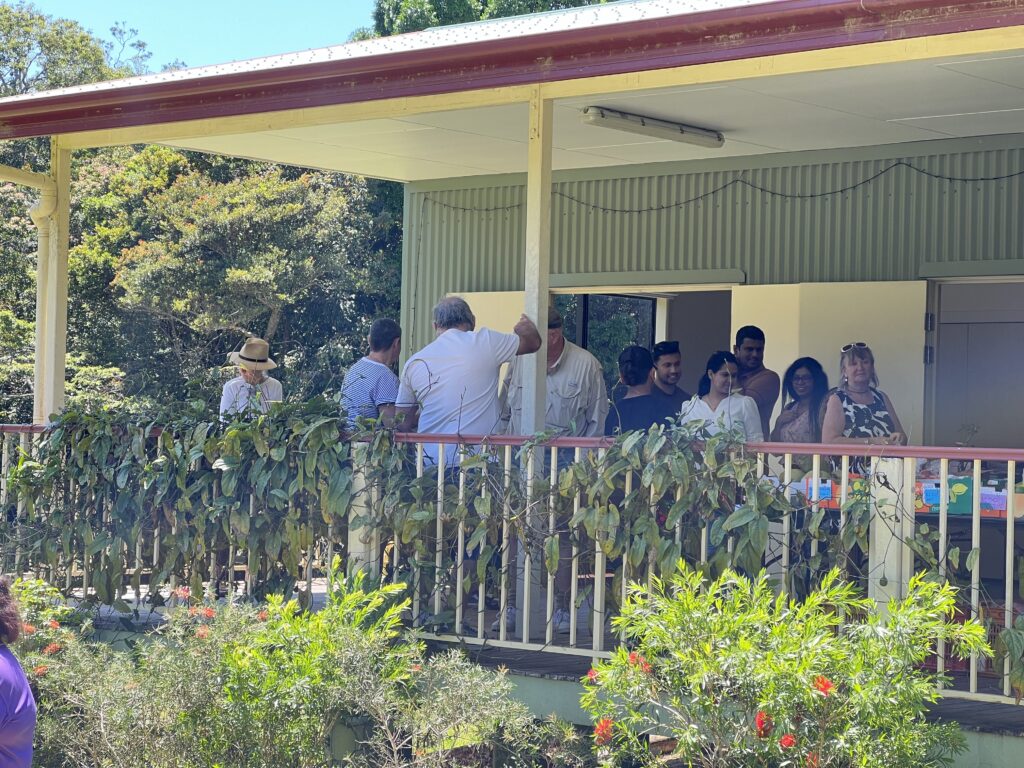
Two significant events occurred last Sunday, October 7th: our final markets for the year and the dedication of the Hylands’ Rainforest Walk. Our last markets for the year, the Paluma Spring Markets, drew many visitors who browsed, chatted, laughed, ate and most importantly, spent their coin at our PDCA stalls. A slow start to the morning but foot traffic increased and remained steady till the end. Reports from all stall holders was one of being very pleased with their sales.
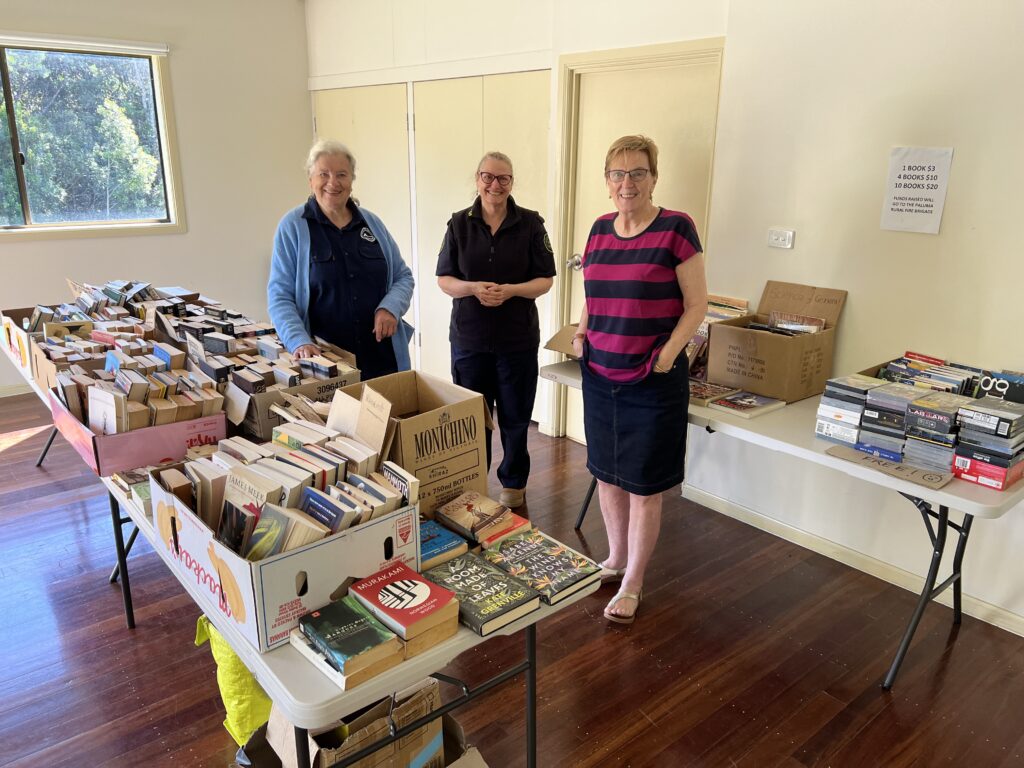
The SES book stall was very pleased with their takings for the morning as was the PDCA baked good and preserves stall.
Wilfred has reported takings for the day to be over $1400! Much gratitude and thanks for the efforts of all involved who have supported raising these funds for the PDCA – for your community. This couldn’t be done without the generosity of those in our community donating goods, time, skills and energy to ensure a successful market. We look forward to catching up with everyone at the next TGIF Friday social evening where we will put on a free sausage sizzle for those who may have missed out on one at the markets. Pass the word round and keep the date, Friday November 1st. Be great to see y’all there.
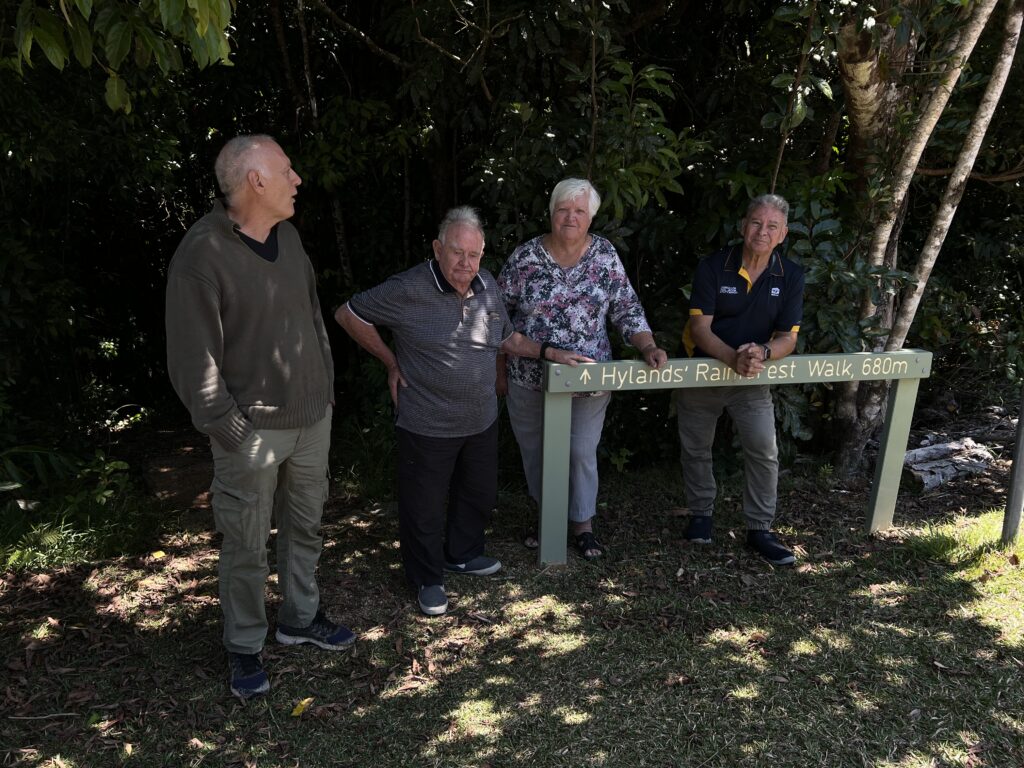
Jamie spoke of Les and Lynn’s enormous commitment and contribution to the Paluma community which Paul Jacobs acknowledged earlier during the unveiling of the sign.
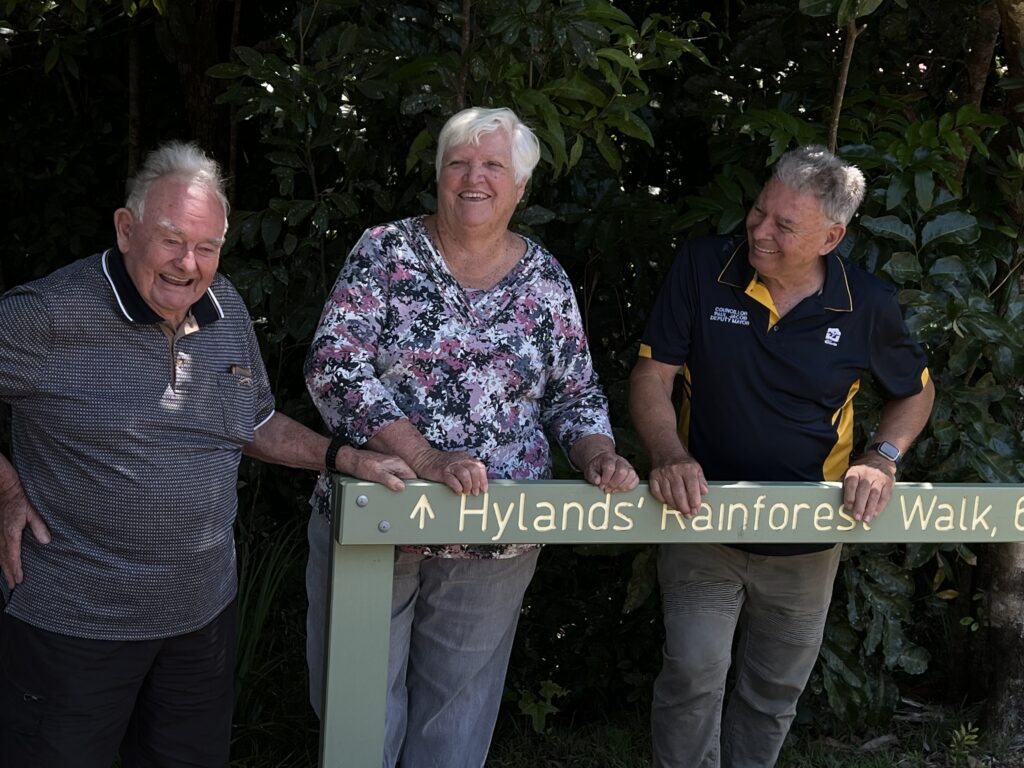
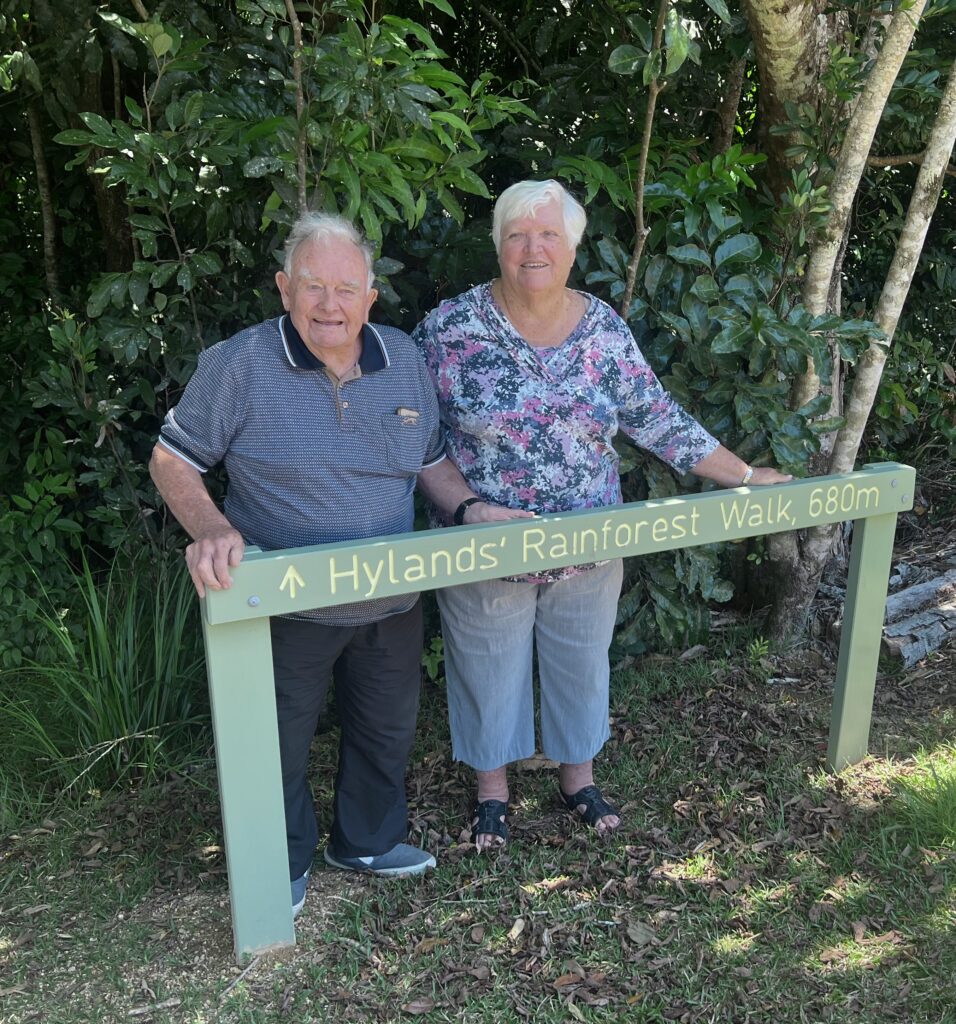
Immediately following the Markets at 1PM there was a dedication ceremony for the “Hylands’ Rainforest Walk’ which our councillor member and Deputy Mayor, Paul Jacobs opened. Those in attendance heard how grateful and lucky our community was to have Les and Lynn Hyland who have together contributed an enormous amount of time and effort over the past 40 plus years to Paluma. It is obvious there are strong emotional ties and many happy memories Les and Lynn both have with Paluma. And it goes without saying they have left an indelible mark not only on the many events and improvements in our community but in our hearts as well.
Les and Lynn Hyland at the start of the walk named in their honour in recognition of their love of hiking in their younger days and their many contributions to Paluma Community. Photo: J. Oliver
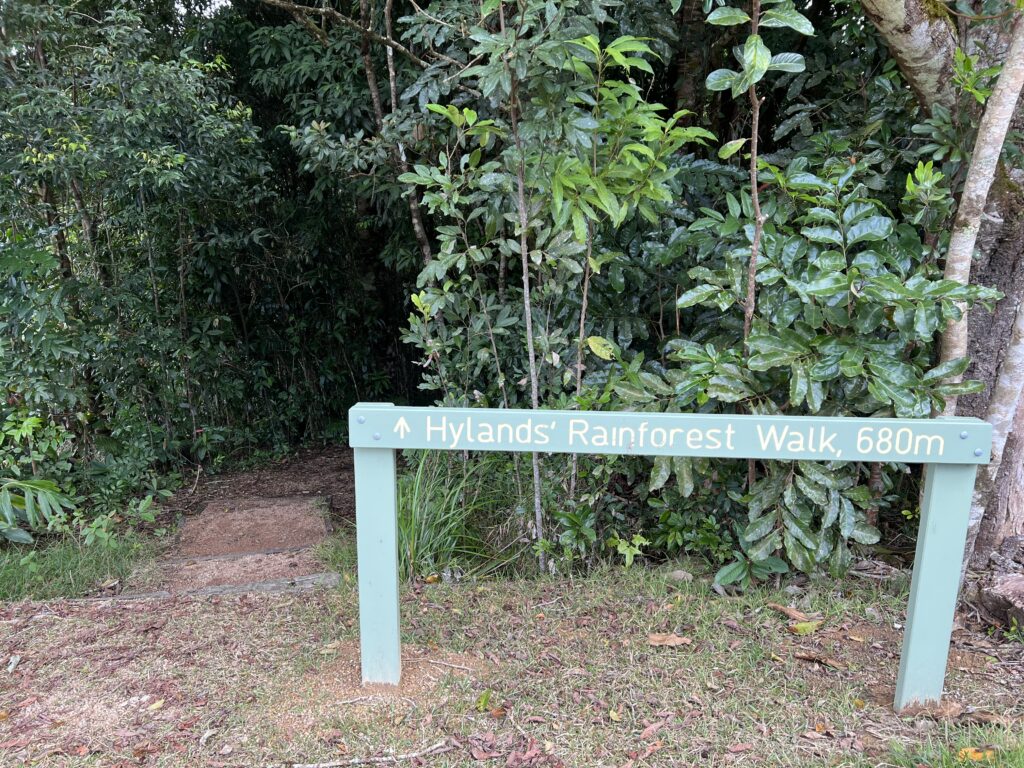
Lastly, many thanks to all those who joined the working bees that have made the Hylands’ Rainforest Walk, just opposite the Community Hall, such a lovely easy stroll in the cool rainforest.
Text and photos by J. Poletto unless otherwise stated
At 1pm this Sunday, there will be an official dedication of the Hylands’ Rainforest Walk by Deputy Mayor Paul Jacobs.
All community members and visitors are welcome to attend. The walk is located opposite the rotunda at the community hall. Please be aware of traffic and stay well off the road.
Come and say ‘Hi’ to Les and Lynn Hyland, who have put so much time and effort into our community for more than 35 years.
Photos provided by Lynn and Les showing their active participation in community events and membership of the Rural Fire Brigade.
Text: J. Poletto Images: J. Poletto unless otherwise stated
Our monthly Social Drinks evening is THIS coming Friday, October 4th at the Community Hall. The bar opens at 6pm. Come and mingle and catch up on the latest. Locals and visitors alike are all welcome. Bring a plate of nibbles to share.
🐝 🐝 🐝 🐝 🐝 Also, don’t forget there is no working bee this Saturday but if you’re available 8am Sunday morning, meet Wilfred at the hall to help set up for the Sunday Spring Markets. Many hands make light work.
Topknot Pigeons are most often seen in flight, usually in flocks high over the forest, says the Birds of Australia guide by Campbell et al.
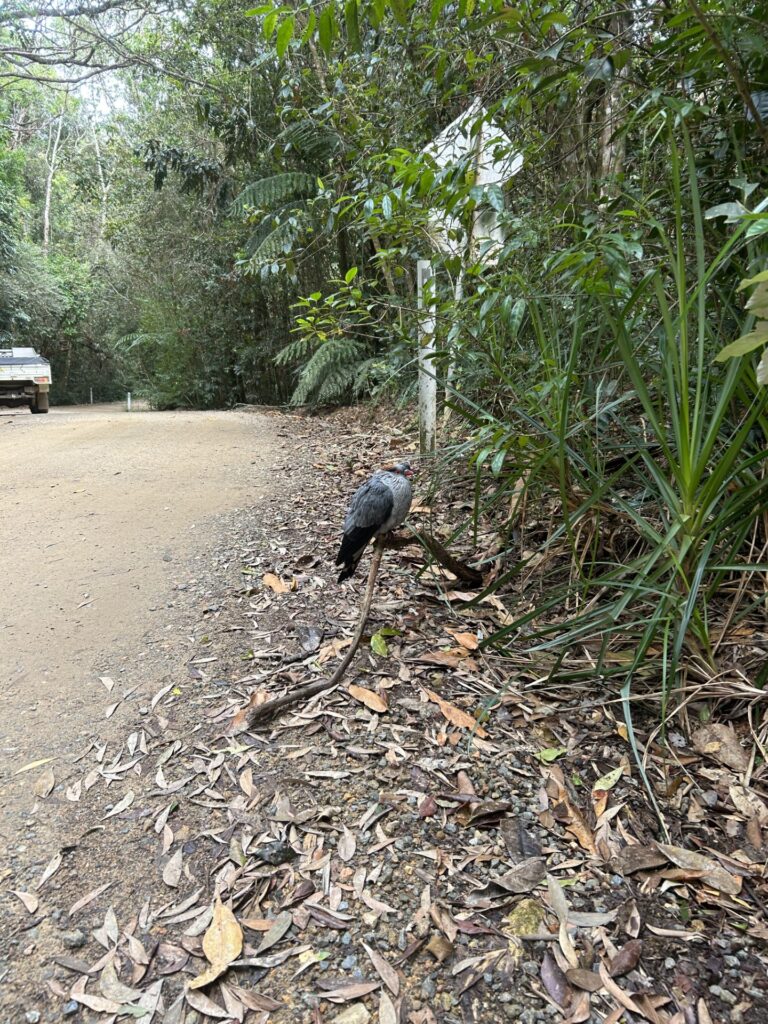
And that’s how we mostly see them during their nomadic and sporadic visits to Paluma when then the time is right to find their favourite food plants fruiting. So it was a big surprise for Tracy Cooper on her way to work at the dam last week when she came across this big pigeon perched on a fallen branch beside Mt Spec Road.
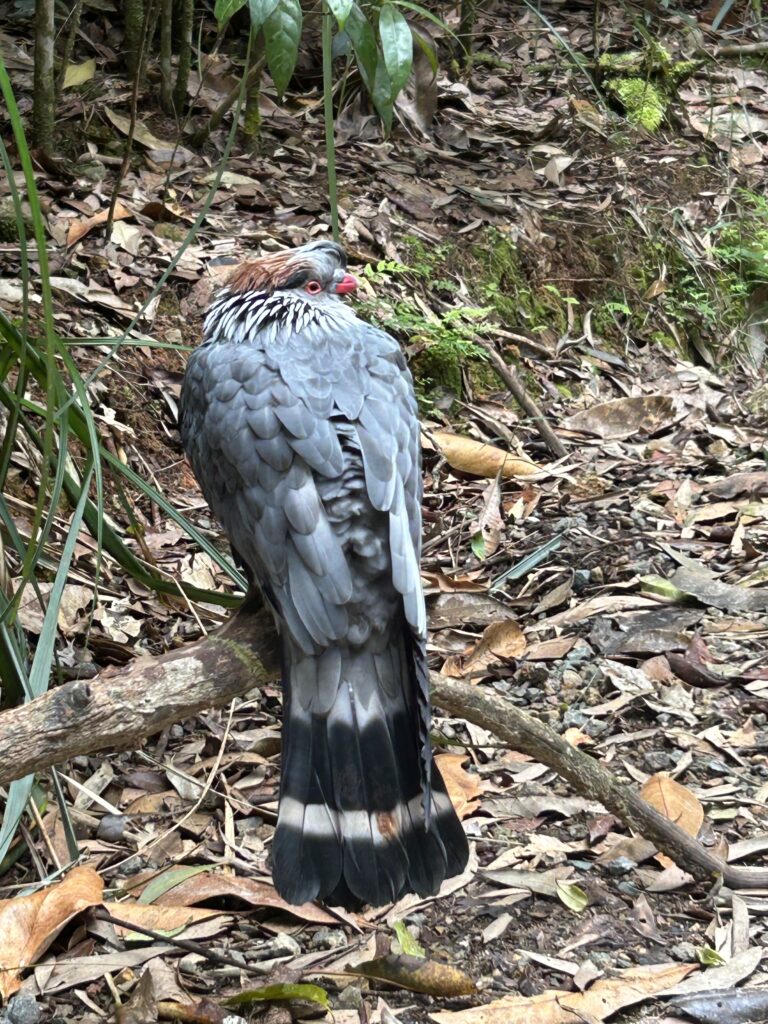
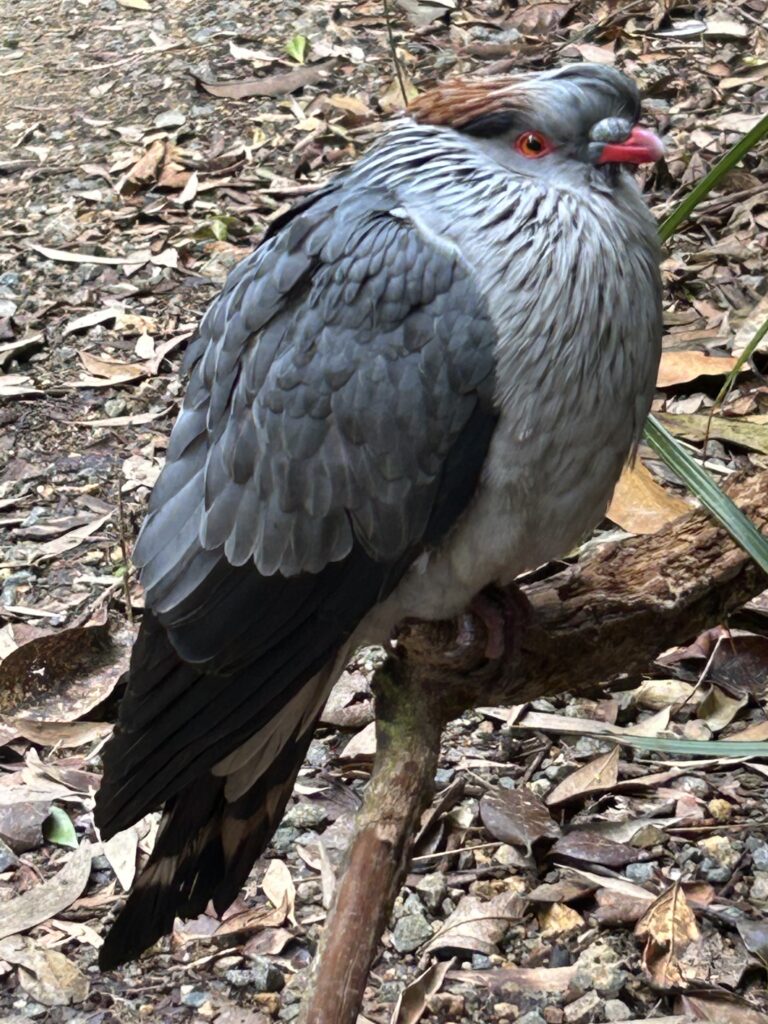
She stopped and walked back, hoping to get a picture but expecting the bird to fly off. It showed no disturbed reaction to her approach to about a metre away and she was able to get these great pics. It showed no visible sign of injury or illness, other than being close to the ground and being undisturbed by people approaching.
Tracy’s colleague saw it separately on the way to work and it was still there on the same branch in the afternoon when he dropped some fruit of Ficus destruens beside the perch. The next morning it was gone.
Topknots (Lopholaimus antarcticus) may be seen singly or in pairs or flocks high above the canopy when they aren’t feeding or nesting in the canopy.
The Atherton Tableland, Paluma and the Lamington Plateau are good places to see them say Campbell et al but single rare migrants have been seen even in Tasmania.
Topknot Pigeons have lost much of their rainforest habitat to clearing, but have compensated by feeding on the introduced tree species Camphor Laurel and they may spread this unwelcome weed into agricultural areas.
Although the Paluma bird looked perky enough, being out of the canopy and not being frightened away by people does suggest it wasn’t well.
Australia is worried about new variants of avian flu arriving here from wild birds coming in from overseas. Birds have been coping with, and developing some resistance to, bird flu for thousands of years but the virus may mutate from common strains in domestic or commercial flocks when passing back to wild bird populations. A new variant may be catastrophic for wild bird populations.
People are being asked to report sick birds. “The following are indications that a bird may be sick or injured: The bird is quiet, dull, the eyes may be closed, and it has fluffed feathers (the bird looks “puffed up”). It may have an obvious wound, breathing problems, a drooping wing, or show lameness or an inability to stand. It does not fly away when approached.”
Even though this bird looked pretty perky Tracy and colleague were wise not to handle it.
Photos by Tracy Cooper. Text by Peter Cooke
Some additional comments from Jamie:
The topknot pigeon is endemic to Australia and is fairly common in rainforests and wet sclerophyll forest along the entire eastern coastal ranges. In flight their size and distictive white tail band help in identification, while when perched the fluffy brown swept-back crown is diagnostic, bringing to mind aging rockstars or a past US president whose comb-over got blown back in the wind.