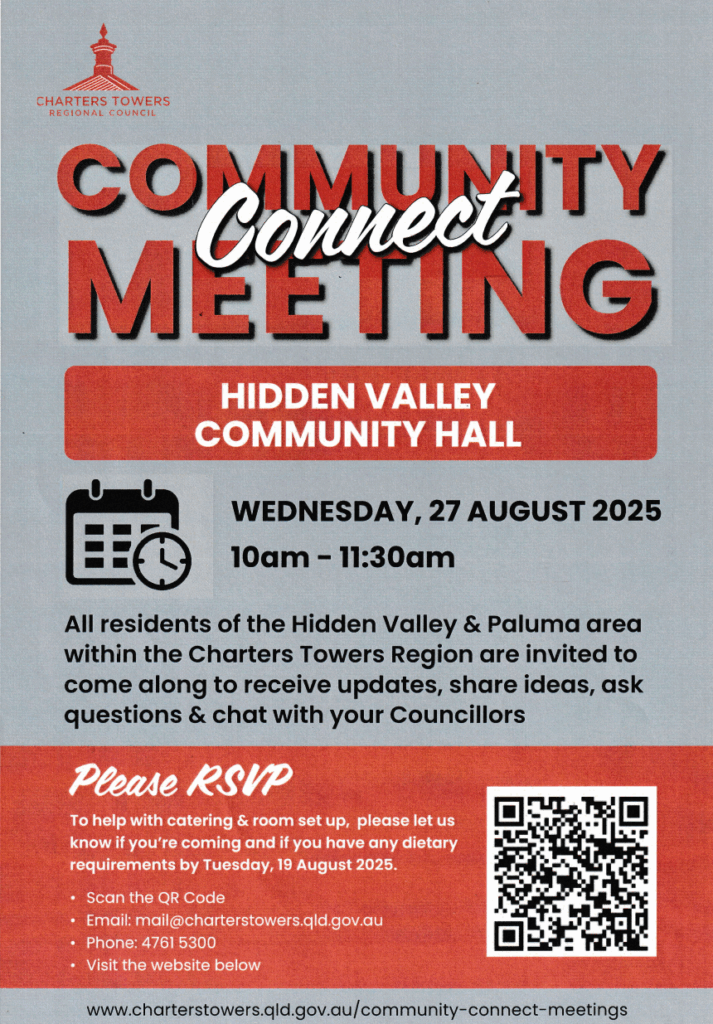
Due to a scheduled full road closure on the weekend of the 18th Oct, the Paluma Games Night has been rescheduled to October 25th. Hope you all make it.
Posts
🐝 Spring Working Bee 🐝

Our first working bee for spring is on this Saturday, September 6th. Hall clean and vegetation control are on the program.
Meet at the hall at 2pm. Bring along some good cheer and energy and a mate.
Drinks on the verandah afterwards at 4pm.


Author Admin4Posted on Categories Community Noticeboard, Life in Paluma, Members NoticeboardEdit
First Friday Night Social for Spring

Our first Friday Night Social for spring is on September 5th, this Friday at 6pm. There will be a table tennis competition for those wishing to begin their training for the upcoming Paluma Games night in October. Perhaps a few rounds of darts even for those wishing to hone their skills. Winners to be awarded a complimentary drink of their choice.
The bar will be open from 6pm. If you wish, bring some light nibbles and yarns to share.
Paluma Bird of the Month, August 2025 – Grey-headed Robin
The Grey-headed Robin (Heteramyias cinereifrons) is a large, plump robin of the Wet Tropics with a range extending north from Paluma to near Cooktown.
At Paluma it’s often seen along rainforest tracks and margins, usually feeding on or near the ground, scanning leaf litter from an upright perch on tree trunks or low branches before dropping to take its prey.
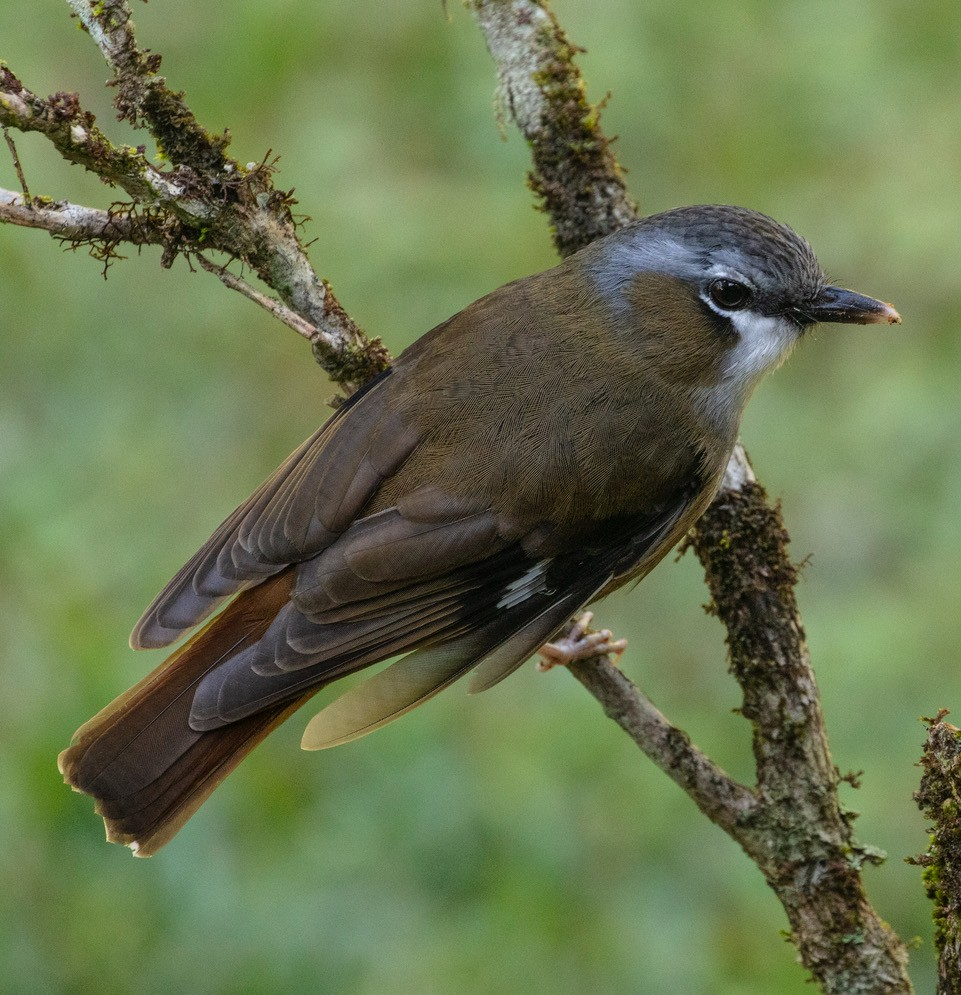
Both sexes are olive brown above, with gray crown and breast, stark white throat, and white wing patch, prominent in flight. Its upright stance, large size, intricate plumage, and pale pink legs are distinctive.
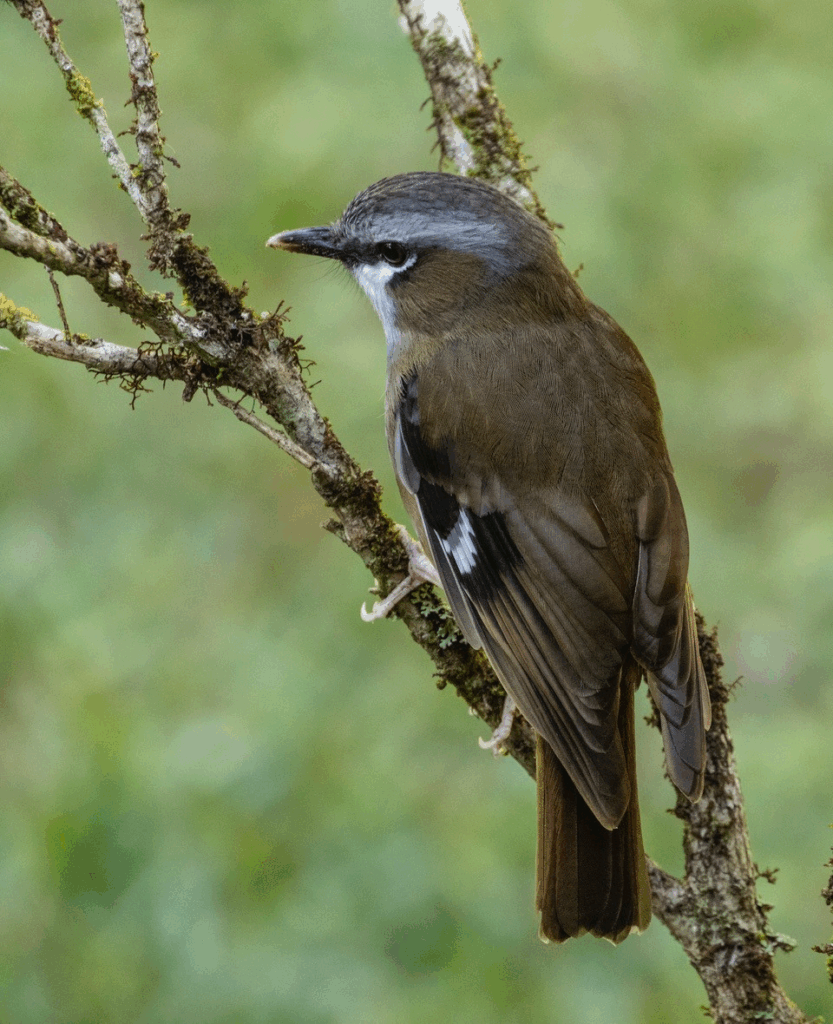
Breeding occurs from August or September to January, with one or two broods per season. The nest is a shallow cup made of bark, grass, and dry leaves. Spider webs are used for binding or filling, and strips of fern and palm for lining; the outside is decorated by dried vegetation. The nest is generally placed in a lawyer vine up to 10 m above the ground. A clutch of one or two eggs is laid. The eggs are buff, cream- or dark greenish-white, and marked with light brown splotches and spots, usually concentrated around the large end, and they measure 26 by 19 mm.
Photos by Peter Cooke and text adapted from Wikipedia and e-bird.
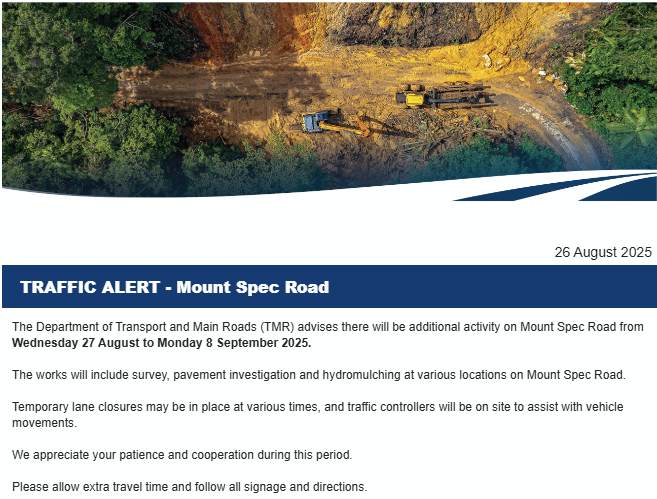
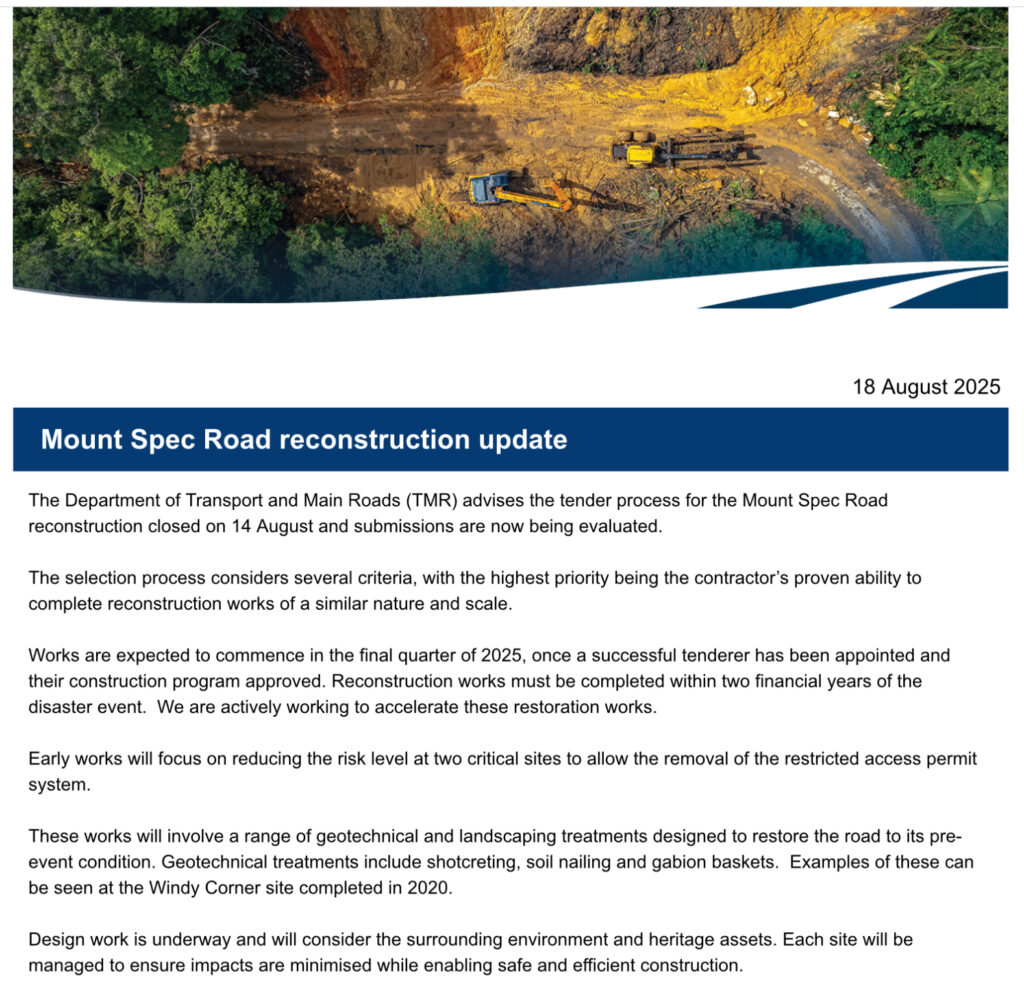
TMR Range Road Update 33
Paluma Games Night, October 18th
Peter and Dorothy Klump have announced that this year’s Paluma Games Night will be held on Saturday, October 18th, at the Community Hall starting at 5:30 pm.

The evening will start with a sausage sizzle dinner ($3.00) at 5:30 pm, with the bar open for the purchase of drinks, including Lynda Radbone’s famous Mulled Wine. By 7:oo pm, the teams of two will have been announced and the various games will commence. These will include darts, indoor bowls, ping pong, and soccer pinball to name a few.


Previous years have proved a great success with lots of friendly participation mixed with bouts of enthusiastic competition. There are probably a few residents looking to topple the previous winners in some categories, so the spirits will be high.
This year will include a special “Children’s Competition” (12 years and under). Prizes included.
If possible, please let Peter or Dorothy know (pdklumpp1@bigpond.com) if you will be coming so we can ensure we have plenty of food and drinks for all .
Hope to see you there!
Paluma & District Community Association Executive Meeting Notice
The PDCA will be having its executive meeting on Saturday August 23rd at 5pm at the hall. All residents are welcome to attend and engage with the agenda though voting rights are for executive members only.
The meeting will start promptly at 5pm with drinks available for purchase at the bar after closure of the meeting.
Bring along some bar snacks to share if you wish.
Queries regarding the tenders for remediation of the Mt Spec Range Road
Recently, David Roveda wrote to TMR asking them for information relating to the tenders that have been invited for work on repairing the damage to the Range Road. His questions are highly relevant to the broader Paluma community and its concerns about timelines for full opeing of the range road. David has suggested that the resulting exchange be published on Paluma.org. In David’s words:
“This started out with a simple request to get a copy of the tender documents which I have outlined the reasons for this in the most recent email below…Not an unreasonable request I would have thought but it seems like TMR are throwing all sorts of obstacles in the way. I smell a rat!! Interesting to note that they use Transparency and Ethics as a reason to not provide any details.”
From: David Roveda
Sent: Tuesday, August 12, 2025 2:23 PM
To: Engagement Northern <engagement.northern@tmr.qld.gov.au>
Subject: Re: Request for Tender Documents – Mount Spec Road
Without Prejudice, Save as to Costs
Hello Clare
As a concerned resident and owner of a small business in Paluma (and tax payer I might add), there are a number of reasons why I would like to have access to the tender documents for the Mount Spec Road project as I believe it may contain answers to several important and relevant questions. They include but are not restricted to the following:
- The expected duration of the project. When is the date for practical completion. Is there an expectation that the project completion and therefore the reopening of the road will not occur in the next 6 months? 12 months? 18 months?? Is the road likely to reopen to the public prior to the project completion. Will the road stay open to permit holders during the day with most of the work occurring at night. Has any thought been given to closing the road to all traffic during the work program in an effort to speed up work as well as avoiding dangerous working conditions during the night.
- The actual scope of work. Is the planned project work only expected to repair and restore the road to the pre-February condition or is there an expectation that the road will be improved to at least 21st century safety standards for a public road. Is there provision for road widening, parking or turning bays at strategic locations and placement of safety barriers where there is a risk of vehicles going over steep embankments.
- What constraints will the successful tenderer be working under in regard to Environmental and Heritage guidelines. As an example, will blanket approval be allowed for foliage removal during the process or will it be on a case by case, location by location requirement. Will repairs to relatively insignificant heritage areas be stifled and rendered overly complicated and therefore become costly and time consuming issues.
These and several other questions were raised at the TMR meeting 9th July 2025 and to date, none have been satisfactorily answered. Perhaps now would be a good time.
Sincerely
David Roveda
From: Engagement Northern <engagement.northern@tmr.qld.gov.au>
Sent: Friday, August 8, 2025 9:46 AM
To: David Roveda
Subject: RE: Request for Tender Documents – Mount Spec Road
Good morning David
Thank you for your email dated 29 July 2025 regarding your request for access to the tender documents for the Mount Spec Road project.
We would like to provide further clarification as to why your request has been declined.
The Department of Transport and Main Roads (TMR) follows the Transport Infrastructure Project Delivery System (TIPDS), which is designed to ensure value for money in the delivery of infrastructure projects. TIPDS provides comprehensive guidance on procurement processes, including:
- Developing the most appropriate delivery strategy
- Procedures for calling, compiling, and assessing tenders
- Determining eligibility criteria for tenderers.
As outlined in TIPDS Volume 2, Section 6.6.1, districts now utilise the QBuild eTender system. This platform is specifically designed to allow only prequalified tenderers, at or above the required levels, to access tender documents. This ensures that only suppliers with the appropriate capability and expertise are invited to tender.
The tendering process, whether through single/sole invitation, restricted, or open tender, forms the basis of engagement and contract formation between the principal and suppliers. As a government agency, TMR is bound by the Queensland Procurement Policy, which mandates that all procurement activities be conducted in an ethical, transparent, and confidential manner to ensure value for money for the public.
Allowing access to tender documents by parties who are not prequalified would compromise several key principles of the procurement process, including:
- Confidentiality – Protecting the integrity of the contract between the principal and suppliers
- Transparency and Ethics – Ensuring fair and unbiased decision-making
- Efficiency – Maintaining the timeframe allocated for the procurement process
Restricted tenders are specifically designed to target suppliers who meet the required qualifications and capabilities. This approach not only ensures the suitability of participants but also streamlines the evaluation process and expedites contract award.
It is not standard or ethical practice to involve non-prequalified parties in the tendering process. However, general members of the public may request information about the engagement through a formal information request after the contract has been awarded.
We trust this explanation clarifies the basis for our decision. Should you have any further questions, please don’t hesitate to reach out.
Kind regards,
Clare
Customer and Stakeholder Management Team – Northern District, North Queensland Region
From: David Roveda
Sent: Tuesday, 29 July 2025 3:12 PM
To: Engagement Northern <engagement.northern@tmr.qld.gov.au>
Subject: Re: Request for Tender Documents – Mount Spec Road
Clare,
I acknowledge receipt of your notification refusing my request for a copy of the Tender documents promulgated on 14/7/25 in respect of Mt Spec Road repair contracts , which is the public access to my business in Paluma village which has been closed to Mt Spec Road travelers since 1/2/25 and which has thereby caused my business to be closed through lack of customers who formerly used the Mt Spec Road to visit my business . ( “ my locus standi”)
Please advise & provide the following details in relation to the TMR Decision to refuse my request to be given a copy of the TMR tender advertisement document :
( a) The full name of the TMR Decision Maker ( delegate or otherwise)
( b) The date of the aforesaid Decision.
(c) The legislative authority relied upon by TMR to refuse my request.
( d) A copy of the TMR Decision Maker’s written file record of the said Decision .
David Roveda
Mt Spec Road
Paluma.
From: Engagement Northern <engagement.northern@tmr.qld.gov.au>
Sent: Tuesday, July 29, 2025 1:41 PM
To: David Roveda
Subject: RE: Request for Tender Documents – Mount Spec Road
Good afternoon David,
While we understand that this information will be of interest to people, the tender documents have been restricted to pre-qualified contractors as this provides confidence to TMR that suitably qualified contractors are being engaged to undertake the works. As the works are challenging both technically and due to site conditions, TMR believes that this is the best option.
Please be assured that we will communicate any updates to the community as soon as information becomes available.
Kind regards,
Clare
Customer and Stakeholder Management Team – Northern District | North Queensland Region
From: David Roveda
Sent: Monday, 28 July 2025 5:52 PM
To: Engagement Northern <engagement.northern@tmr.qld.gov.au>
Subject: Re: Request for Tender Documents – Mount Spec Road
Hi Clare,
Is there any reason why this particular tender is currently restricted to pre-qualified contractors?
I would have thought it would be in the public interest to have open access.
Is there any reason why the scope of works has not already been communicated to the community given that it must already be outlined in the tender documents. I would like to take this opportunity to remind you that I am one of a number of businesses in the area who have not been able reopen since 1st February 2025 due to the road closure.
It is imperative that we have some idea what is going on or at least planned to go on so that we can make informed LIFE DECISIONS. We are receiving no on going financial assistance while our business remains closed and we need to know now whether we continue to live in hope or do we permanently close the business…
Sincerely
David Roveda
From: Engagement Northern <engagement.northern@tmr.qld.gov.au>
Sent: Monday, July 28, 2025 1:52 PM
To: David Roveda
Subject: Request for Tender Documents – Mount Spec Road
Good afternoon David,
The Department of Transport and Main Roads (TMR) has received your request for the Mount Spec Road tender documents. Please note that this particular tender is currently restricted to pre-qualified contractors, and as such, we are unable to issue the documents to you at this time.
TMR will provide an update to the community regarding the commencement and scope of works once the tender process has been completed and submissions have been reviewed.
We appreciate your enquiry and your interest in the project.
Kind regards,
Clare
TMR Range Road Update 32
Community Meeting for Charters Towers residents