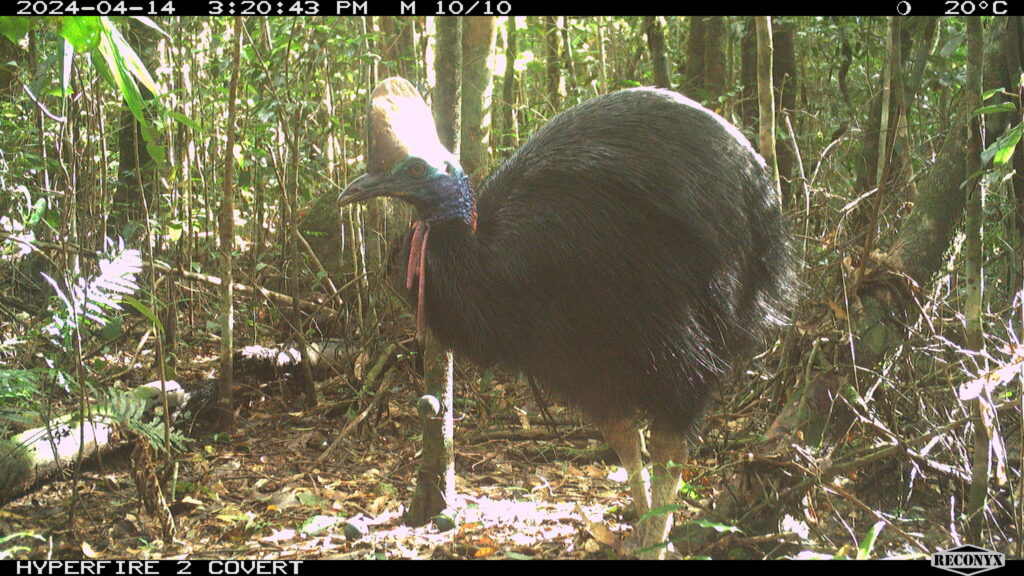
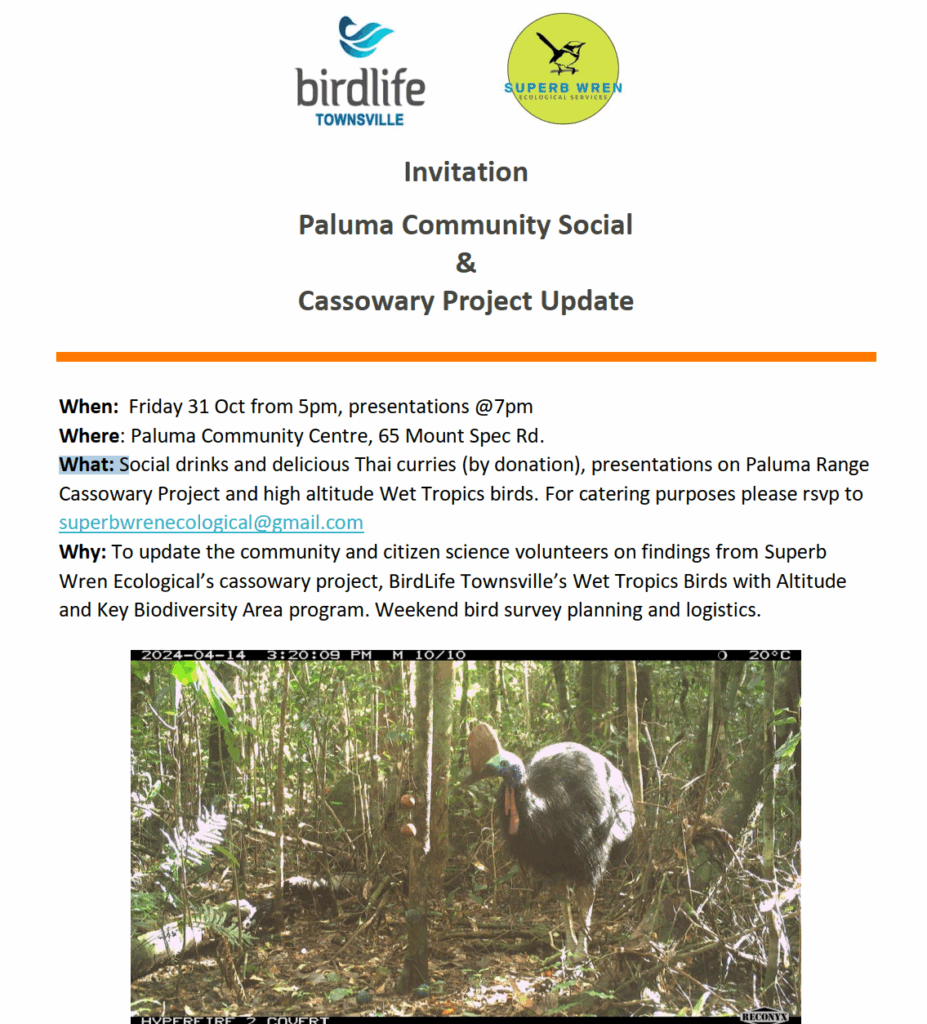
Have you got your Friday night sorted this evening. Don’t feel like cooking? Come and listen and watch the presentation on the Paluma Cassowary Project by Wren McLean and enjoy some delicious complimentary Thai Curry as well.
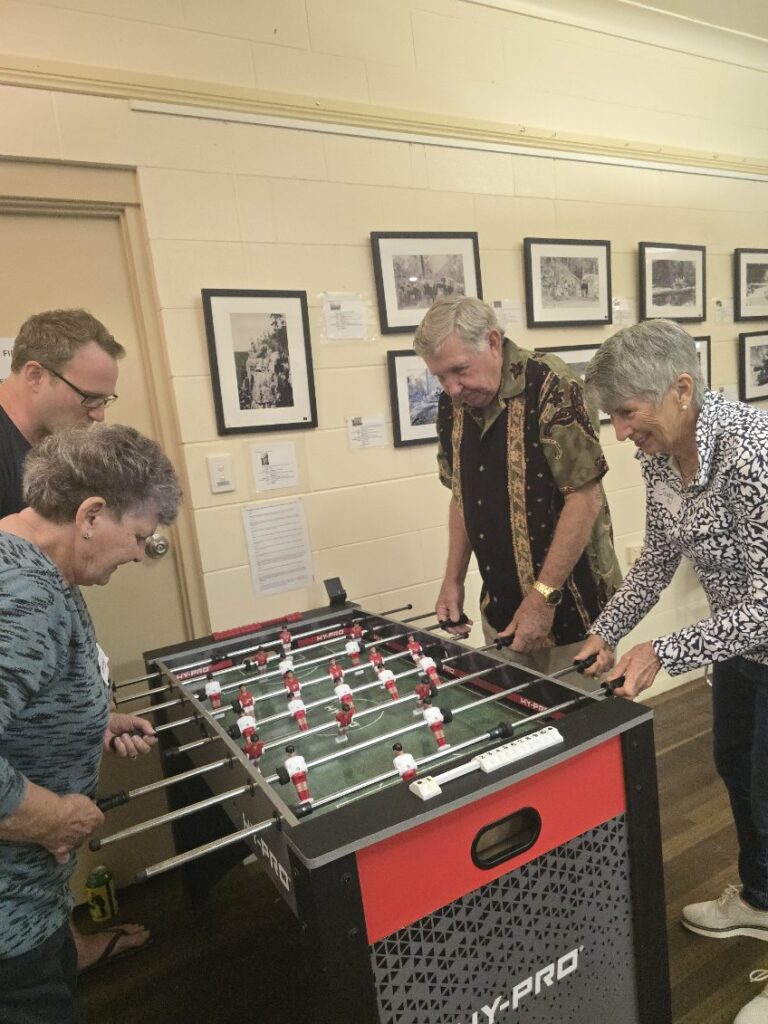
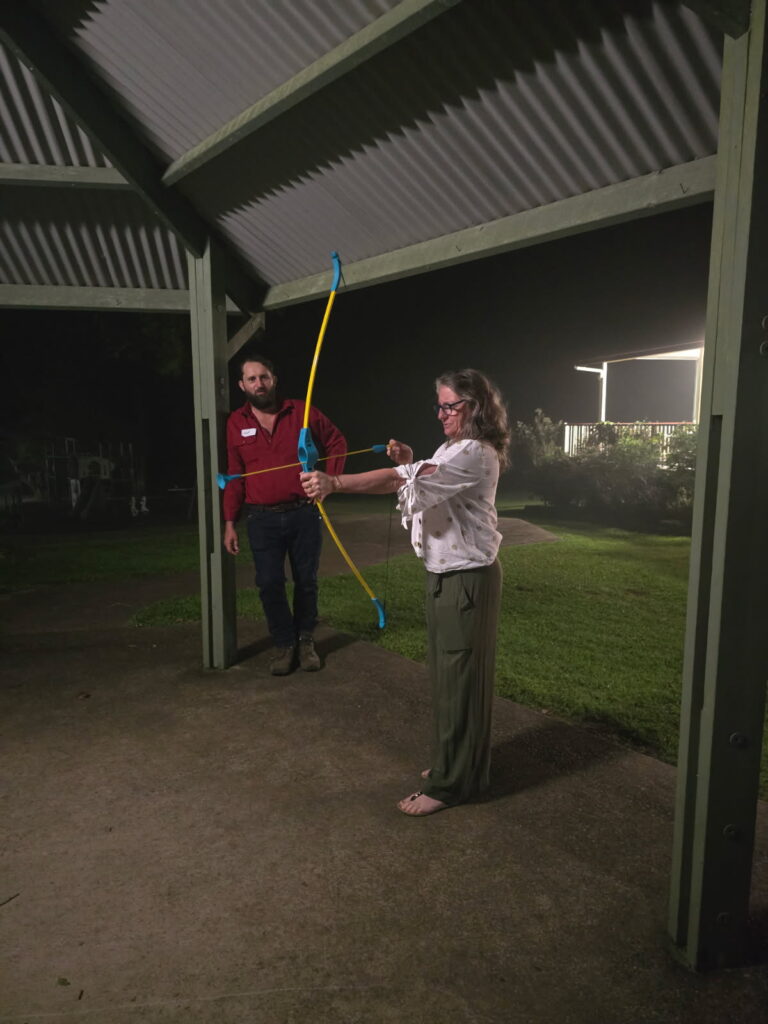
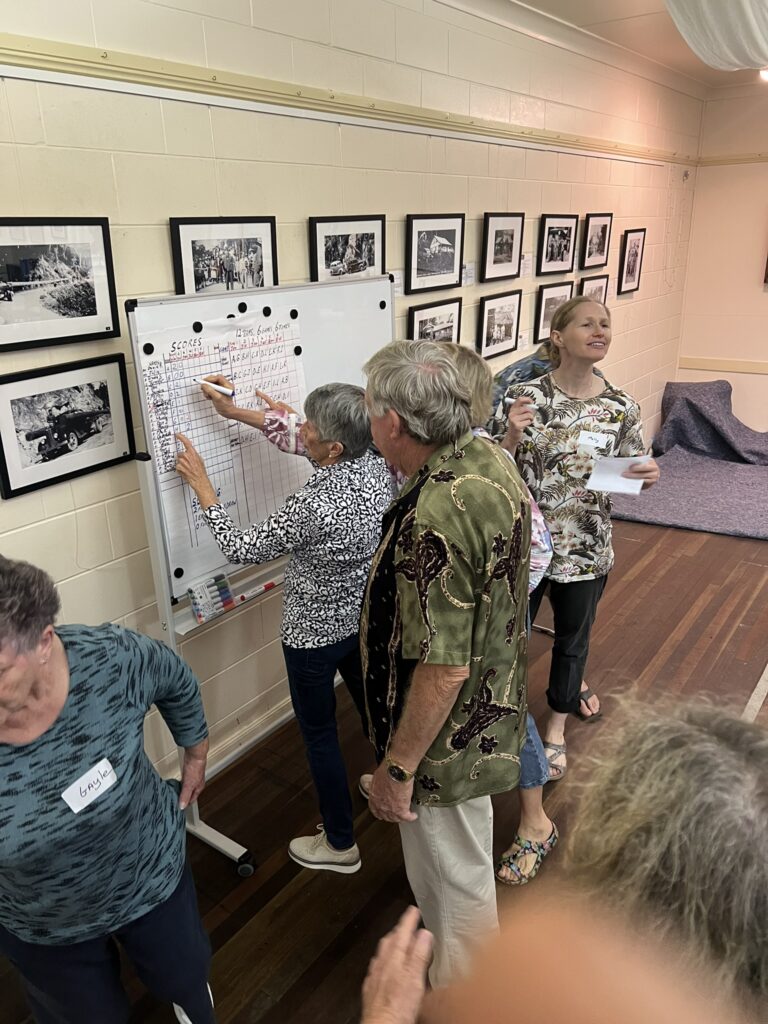
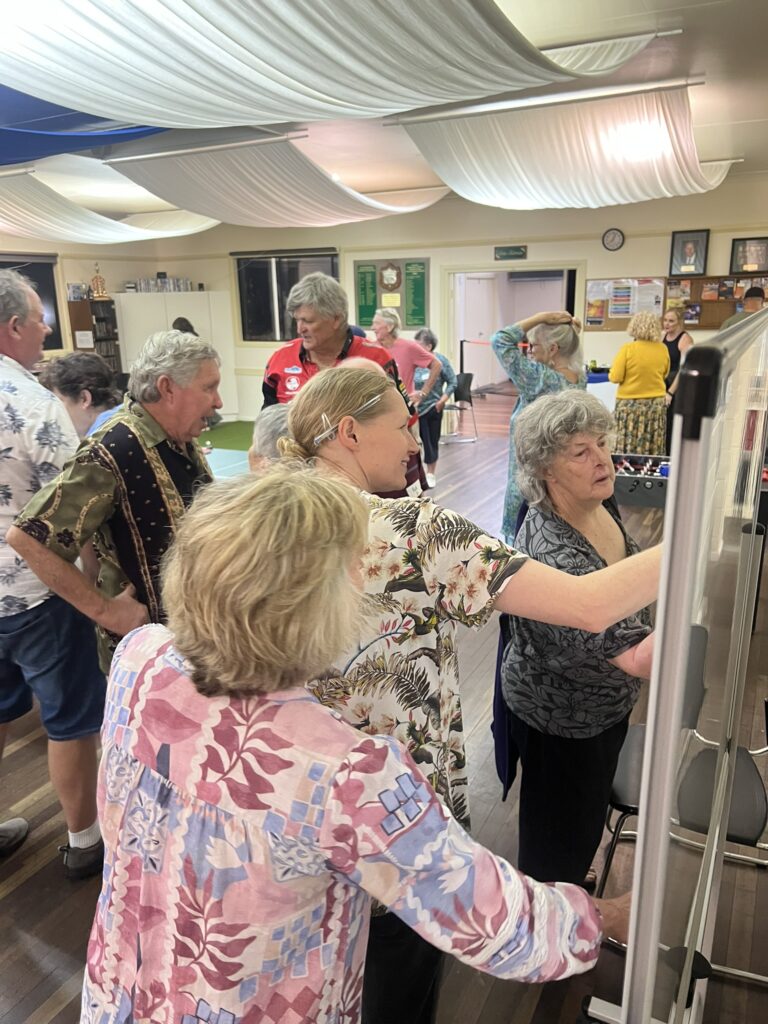
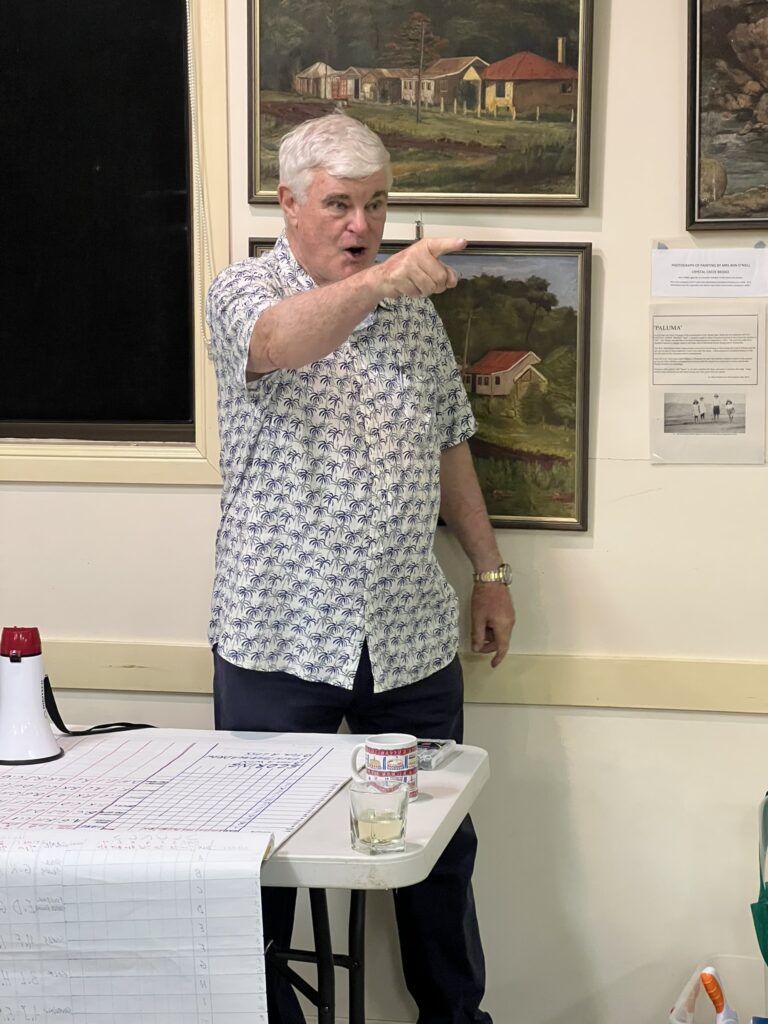
Last Saturday night’s annual Games night, hosted by Peter and Dorothy Klumpp was a great success.
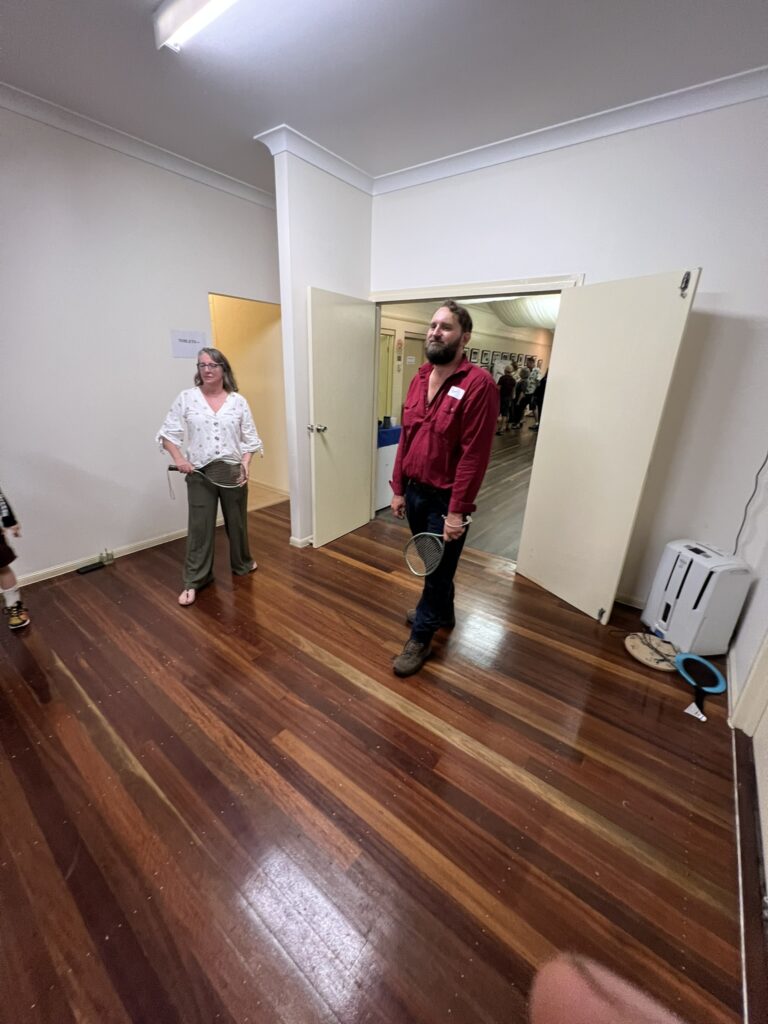
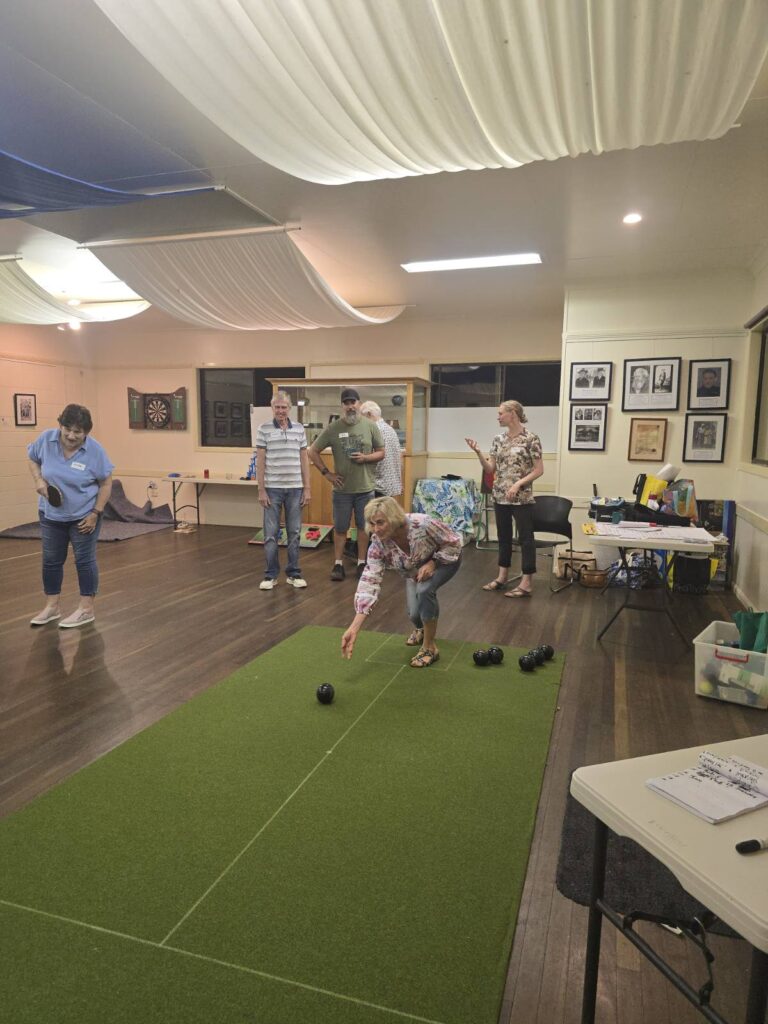
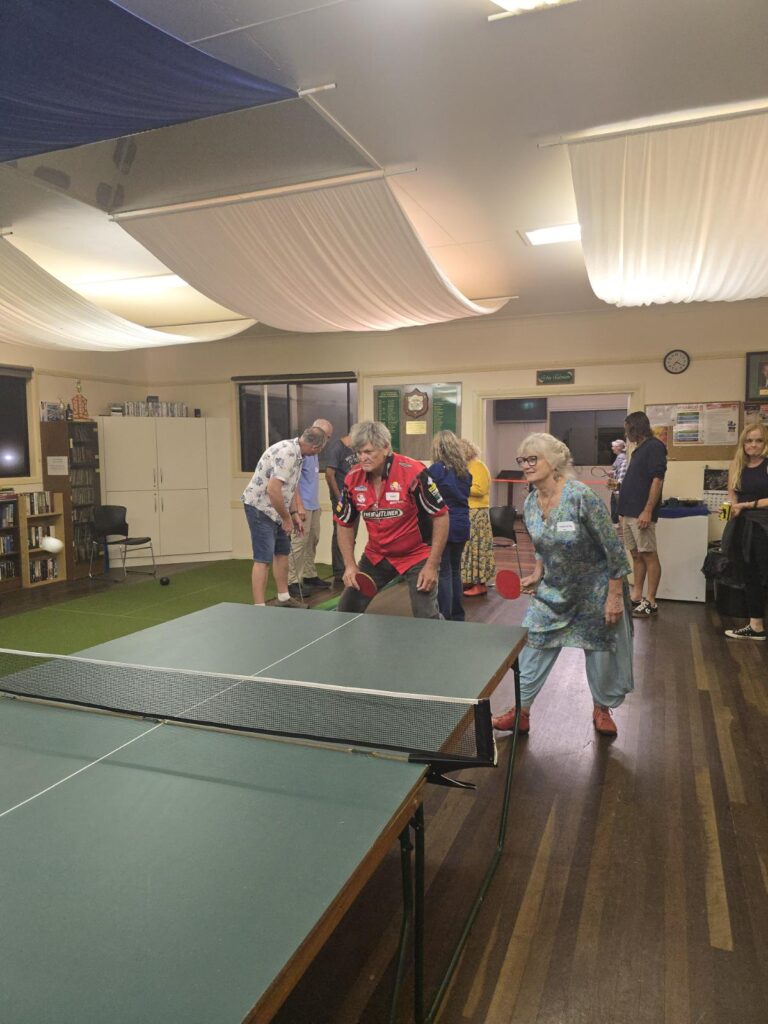
Around 35 people showed up and enjoyed a meal while catching up with friends (and sizing up the competition). This year, the number of sports on offer was very diverse:
Badminton
Golf
Bowls
Table Tennis
Foosball
Archery/axe-throwing
Teams of two (one male, one female) were allocated at random; however, the excess of males over females resulted in some contestants being given honorary female status for the evening.
Figuring out which teams played which sport against which other team, and then recording the results, seemed to exercise the mind just as strenuously as the different sports exercised the body!
The competition was fierce but friendly, with the open bar providing a source of solace or fortification depending on the fortunes of the different participants throughout the event.
Once all the points had been added up there was a tie for first place, which led to a sudden death game of ping-pong tic tac toe, which required some time to understand let alone master. In the end, the winning team (Wilfred Karnoll and Ms Jamie Oliver), through sheer luck, just edged out Sandy Smythe and Ian Graniglia for the championship, with a box of chocolates given to all four.
After the end of the games, Jamie and Wilfred challenged Peter Klump and Mark Crisp to what has become a traditional table tennis “grudge match”. Peter and Mark came out on top this year, but no one seems to remember who won any of the previous years’ matches, so the grudge appears to remain unsettled.
In addition to Peter and Dorothy, many thanks are due to Mark Crisp (sausage sizzler extraordinaire) and Lynda Radbone (bar tender, mulled wine maker, and much more).
Besides masterminding the event, Peter played a crucial role in keeping the event on track and on time!
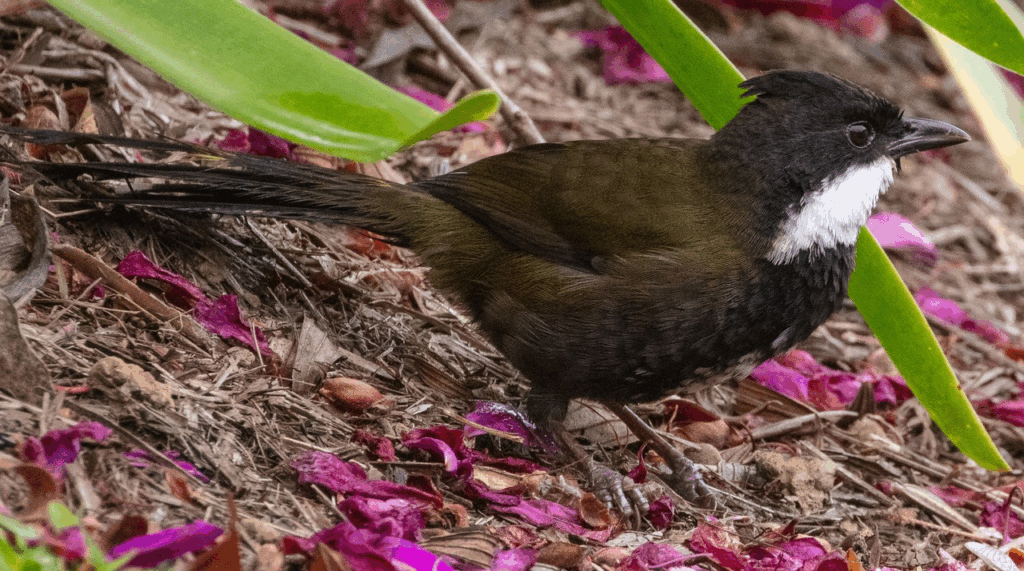
The distinctive calls of the whip-bird are often heard coming from dense and usually moist habitat, but they are rarely seen out in the open.
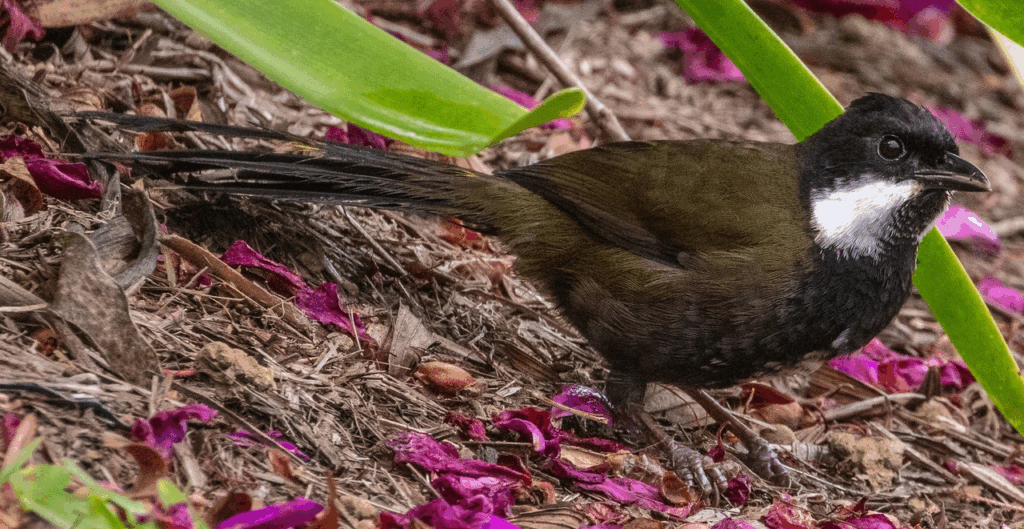
They are generally shy, so it was quite a surprise to see this bird happily foraging amongst leaf litter and fallen tibouchina flowers only metres from the road in downtown Paluma recently.
Whipbirds are found in dense habitats all the way as far south as eastern Victoria but two sub-species of Psophodes olivaceous are distinguished geographically.
The sub-species expected here at Paluma is the northern race, sometimes known as the northern whipbird (Psophodes olivaceus lateralis) found in the wet tropics from Townsville to Cooktown.
The call is usually a duet between the male and female, the male producing the long note and whip crack and female the following notes.
Whipbirds are monogamous. Breeding occurs from late winter through spring; a loosely built bowl of twigs and sticks lined with softer material such as grasses, located in shrubs or trees less than 3–4 m above the ground. Several broods may occur in an extended breeding season
The female incubates the eggs and broods the nestlings, though the male helps feed and take a more active role in looking after fledglings for six weeks after leaving the nest.
The male and female are similar in plumage, so it’s hard to tell which pronouns the bird pictured bird might prefer.
Photos by Peter Cook. Text gleaned mostly from Wikipedia by Peter Cooke.
The Paluma Environmental Education Centre is seeking applications from those interested in the position of casual cook. This position will assist in facilitating catering for visiting groups of school students during the school term. Applicants will be required to hold, or be eligible to apply for, a working with children blue card (or blue card exemption) and be willing to undergo a criminal history check prior to commencing.
Additionally, we also have a current job listing on Smart Jobs for the position of Business Manager. Further details can be found using the following link:
For those interested in the cook position, please contact Cooper Locke (Business Manager – clock111@eq.edu.au) for further information or to submit your expression of interest.
If you are interested in the position of Business Manager, application details can be found on Smart Jobs.
The Spectacled Monarch (Symposiachrus trivirgatus) is a small and colourful songbird with an international range — from Eastern Australia, through New Guinea into the Islands of Indonesia and Timor.
There are multiple subspecies. In eastern Australia the northern subspecies is albiventris, with melanorrhous further south and gouldii at the southern limit of its range, Port Stephens in New South Wales.
According to the Australian Bird Guide maps, at Paluma we would expect to find sub-species melanorrhous. The differences between subspecies are somewhat subtle so in Paluma we may be seeing an overlap with the far northern sub-species albiventris. Albiventris is described as having a rufous upper breast sharply defined from more extensive white underparts than melanorrhous and gouldii.
Males and females are similarly feathered — blue-grey above, with a black face mask that extends across both eyes, rufous (red-orange) breast, white underparts and a black tail with white outer tips. Immature birds lack the black face and have a grey throat.
As well as subtle changes in plumage the sub-species are distinguished by a variety of songs and calls from rising mellow whistles in the Lesser Sundas to raspier whistled notes in Australia. eBird says that calls vary, but are generally “harsh and unpleasant-sounding buzzes and rattles”.
The eastern Australian sub-species are found in subtropical or tropical moist lowland forests, subtropical or tropical mangrove forests, and subtropical or (as we have here at Paluma) the moist montane forests of the Wet Tropics.
The Spectacled Monarch is not an easy bird to photograph, stopping only for a few seconds to perch as it makes its way, mostly obscured, amongst dense foliage while foraging for insects below the canopy and on tree trunks or vines.
Google search comes up with several spellings for the scientific name: Birds in Backyards says Symposiarchus trivirgatus, most other sites use Symposiachrus trivirgatus
Photos by Peter Cooke and text gleaned and adapted from Wikipedia, eBird and Birds in Backyards. Location: jungle margin behind #56.