
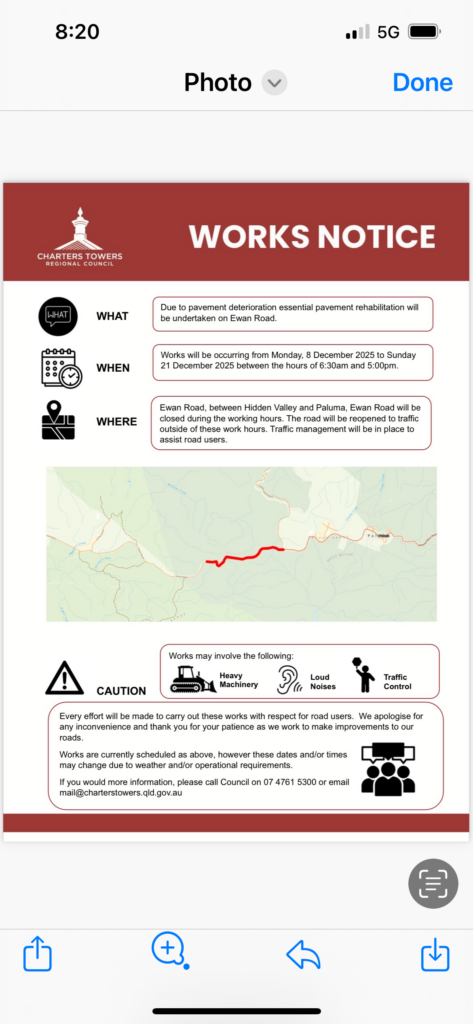
Time for the briefing on the new Emergency Action Plan has been rescheduled to 5:30 pm in order to allow people west of the Paluma Dam road to get into town (the road is closed until 5 pm). The Tropical BBQ will start immediately after the Briefing.
The briefing will be led by Sonya Bryce and Charlie Allen, who have put many hours into collecting relevant information, procedures and contacts so that we can effectively self-organise if we experience a serious rain event or cyclone in the future. The document will be continuously revised and improved. The current version and relevant appendices can be accessed on Paluma.org here.
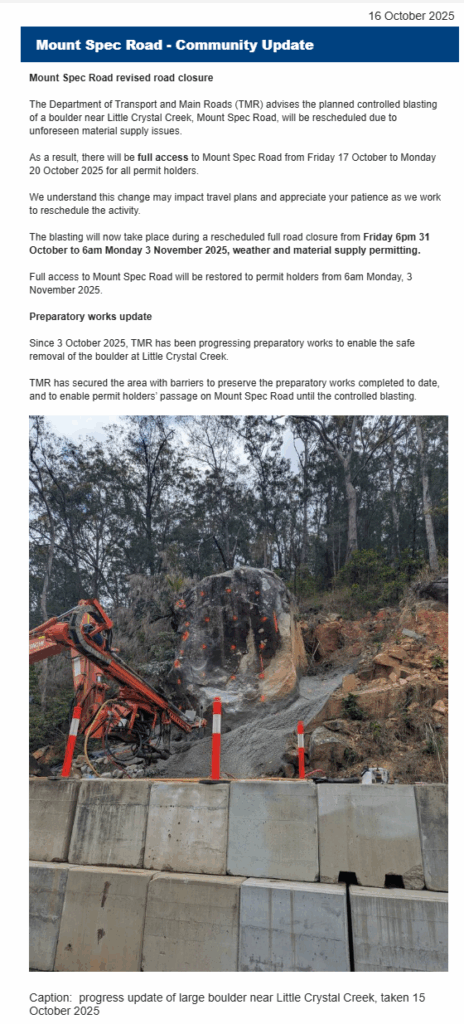
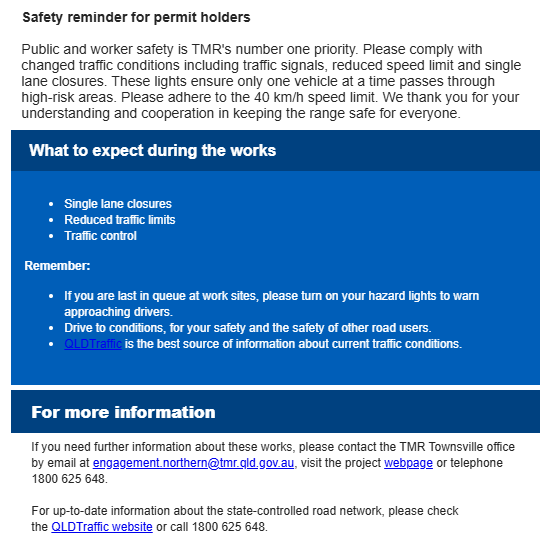
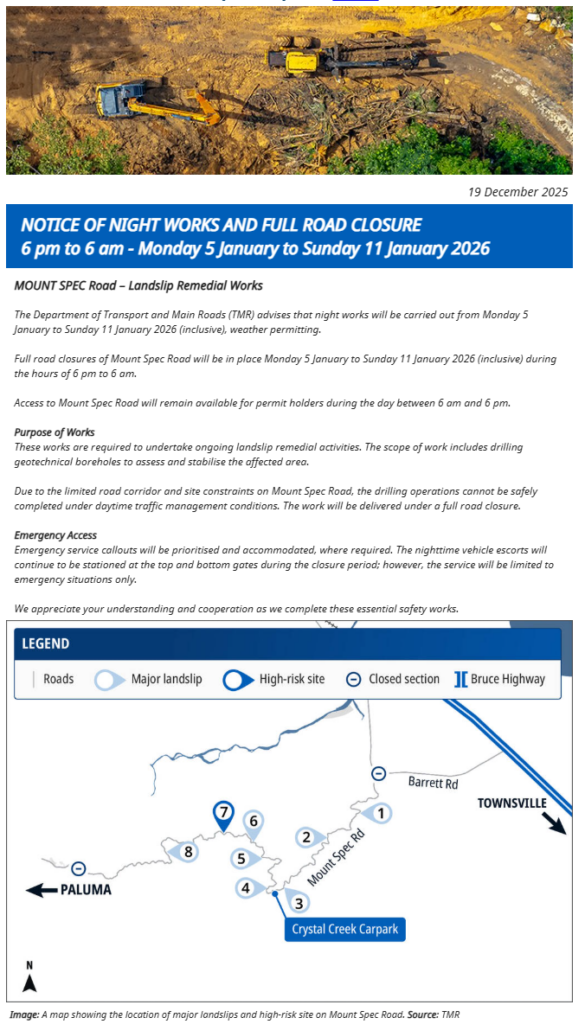
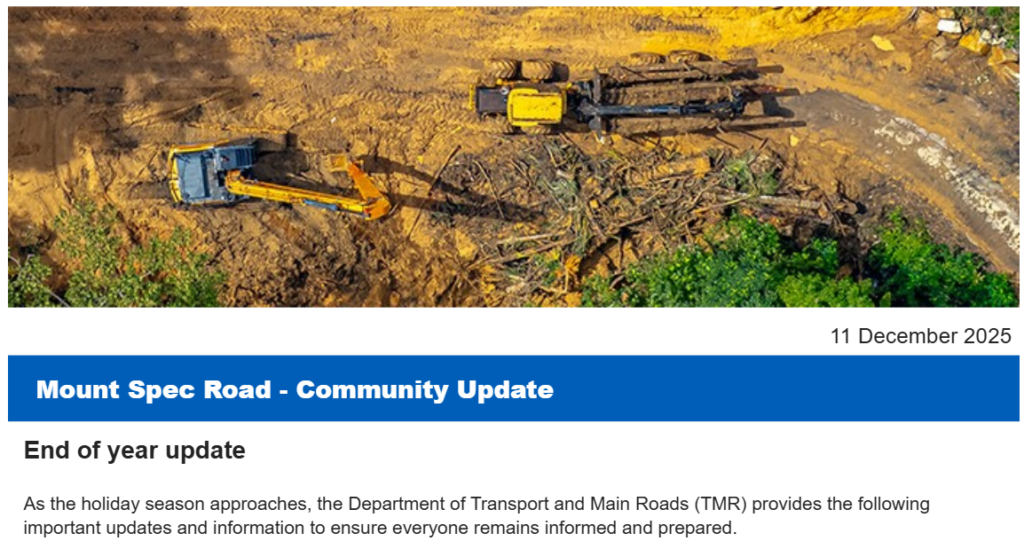
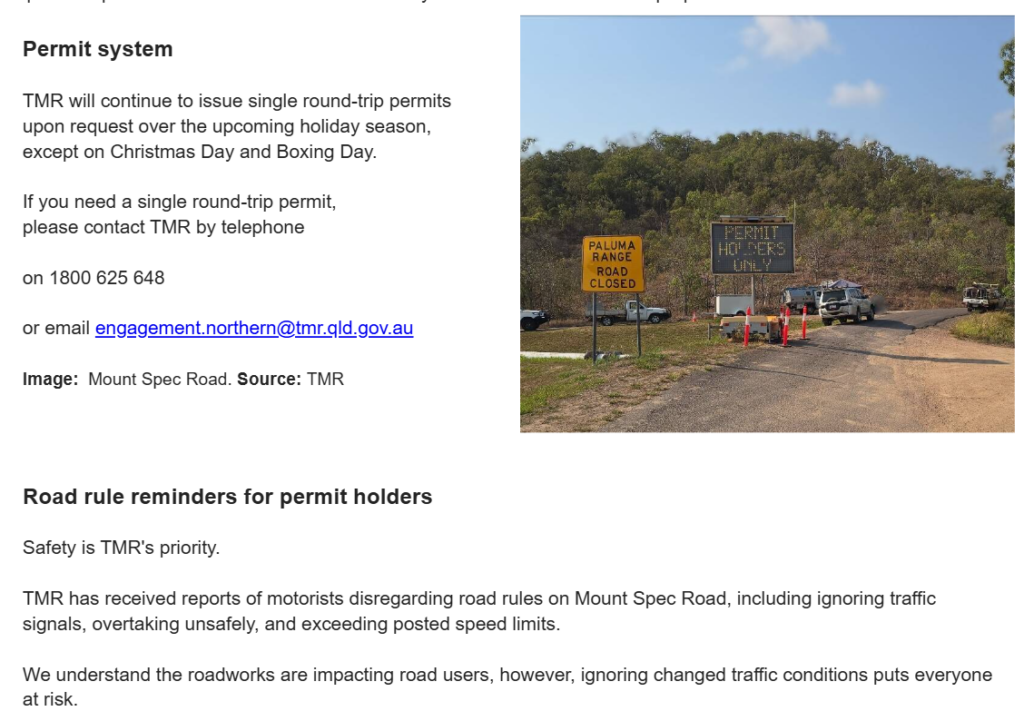
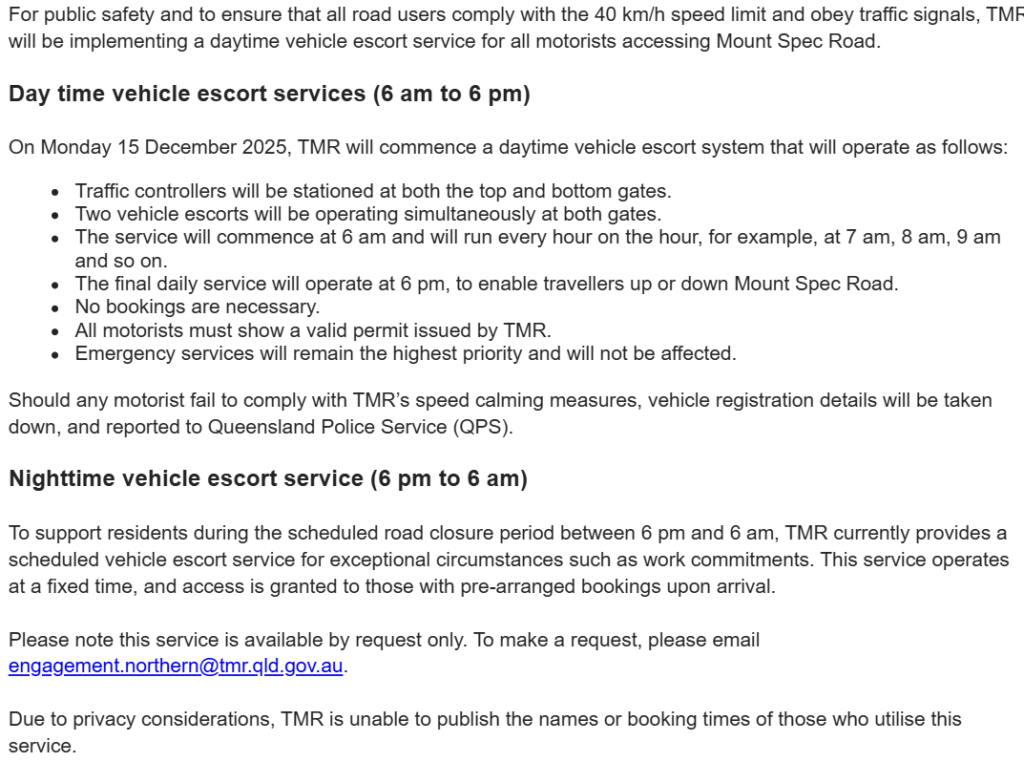
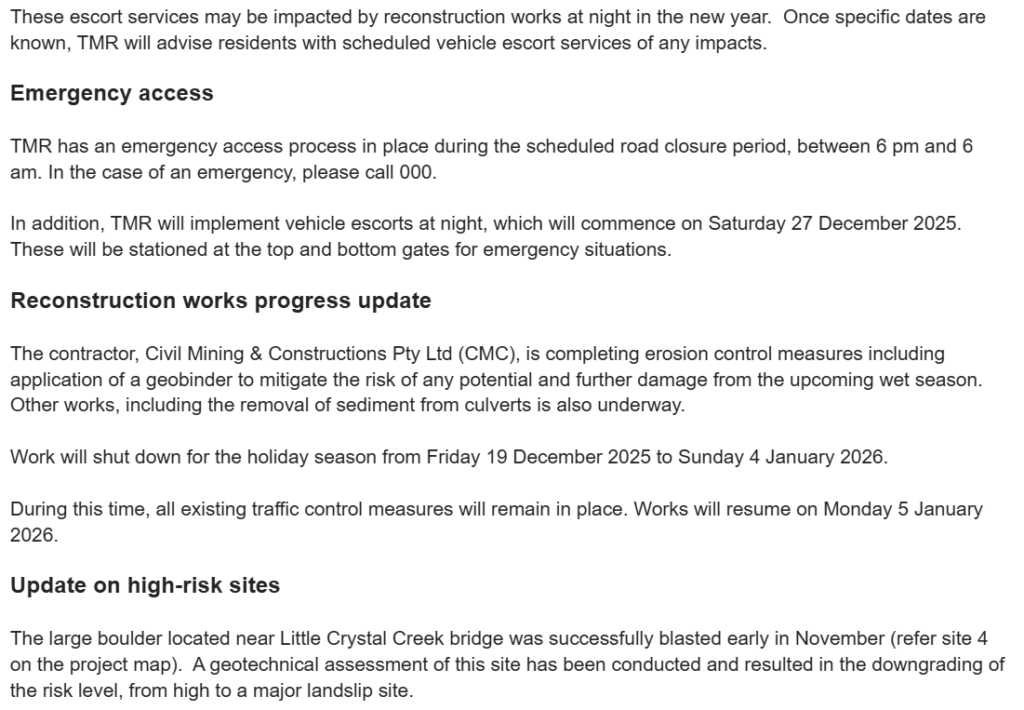
See notice below from the Charters Towers Regional Council.
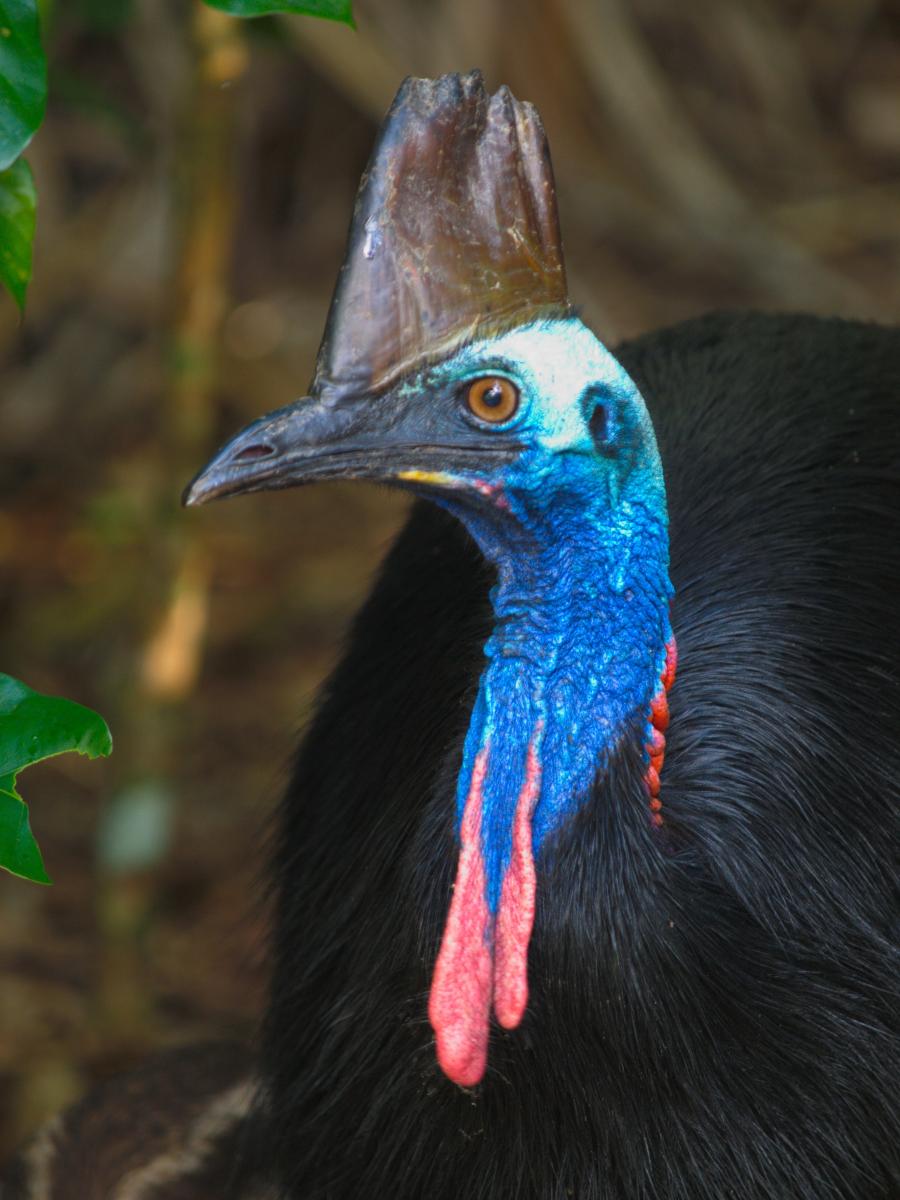
The Southern Cassowary (Casuarius casuarius) is the truly the iconic animal of Australia’s tropical rainforests.
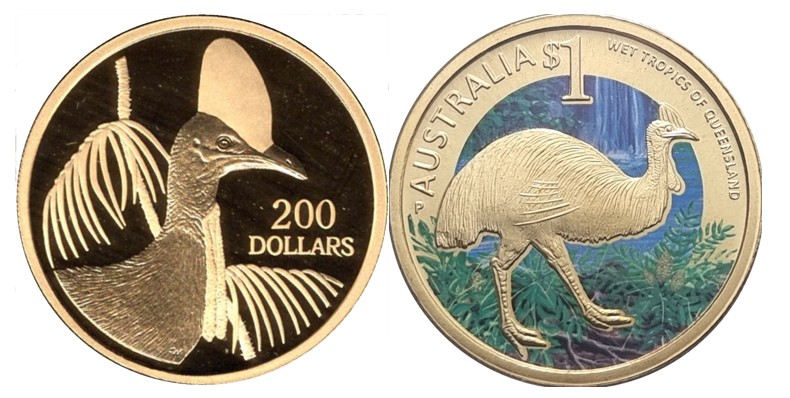
It features on countless posters, and the name has been applied to geographic areas (the Cassowary Coast), and the common names (plum, satin ash, pine) and scientific names (the genus Casuarina) of several plants. It also features on 2 commemorative Australian coins and is used to celebrate outstanding community contributions to Wet Tropics World Heritage Area management through the WTMA annual Cassowary awards.
The vivid red and blue facial skin, and the pendulous wattles of mature Cassowaries, probably serve to signal sexual readiness and warn off competitors during the breeding season, and may also serve to deter predators. The uniquely large head casque is a prominent feature of fully adult birds and is now thought to play a role as a heat exchanger to regulate body temperature. The Southern Cassowary is the second biggest bird, by weight, in the world, exceeded only by the Ostrich.
Cassowaries are primarily frugivorous. In Australia, they are recorded to eat the fruit of at least 75 plant species. They can travel into nearby habitats such as eucalyptus woodlands, beaches and mangroves in search of fruiting trees. Like most non-carivourous birds, Cassowaries will supplement their diet with invertbrated and small vertebrates including nestlings of several birds, frogs, fish and snails.
Cassowaries play a critical role in the ecology of our rainforests. In particular their penchant for freshly fallen fruit results in them serving as a primary agent of seed dispersal for many rainforest trees. One rare, near-threatened species of tree in the Daintree has been shown to be virtually incapable of germination without first passing through the gut of a Cassowary. It is aptly referred to as the “rainforest gardener” by many naturalists.
Cassowaries are often referred to as ratites, which also includes Ostriches, Emus, Rheas and Kiwis. These large flightless birds lack a keel on their breastbone, which forms the anchor point for flight muscles. Since this condition is now known to have evolved more than once, the term is no longer used by taxonomists.
Cassowaries are most closely related to Emus, both of which belong to the family Casuariidae. There are three species of Cassowary. Only the Southern Cassowary occurs in Australia, as well as the southern lowlands of New Guinea. The other two are restricted to PNA and some offshore islands.
Cassowary Breeding follows the seasonal pattern of fruiting. In Australia, breeding extends from June to October. Very low-frequency calls are common at this time. Like most ratites, male Cassowaries are responsible for incubation of eggs and care of the young up to 12 months after hatching. Males can be aggressively protective of their young. During the first year, the pale brown striped young gradually turn darker and lose their stripes. Full adult plumage and a fully developed casque can take up to 4-5 years.
Apart from their size and impressive colouration, part of the allure of Cassowaries is that they are never very abundant, even in their prime habitat. Catching a glimpse or an extended view of an individual or family group is a special occasion even for long-term residents of Paluma.
Paluma is near the southern limit of the Cassowary’s range and the density of birds here is significantly lower than in areas further north. Even at peak densities, Cassowaries are not very abundant (less than 2 adults per km2). Our best current estimates of abundance are based on a study that examined DNA of droppings (a shitty job if ever there was one!)
Peak density estimates were found for Tully and Russel River. (~1.8 and 1.5 adult birds per km2). No dung was found around Paluma during the study, but an extrapolated density of 0.02/km2 or about 15 individuals was predicted for the region.
This very low estimate, and the general lack of data on densities around Paluma, prompted the recent work by Wren Mclean to carry out a more comprehensive survey that used counts of scat (and other signs) as well as camera traps to derive an updated population size for the Paluma region.
Last month, Paluma hosted a presentation from Wren and others to report on the results of this project.
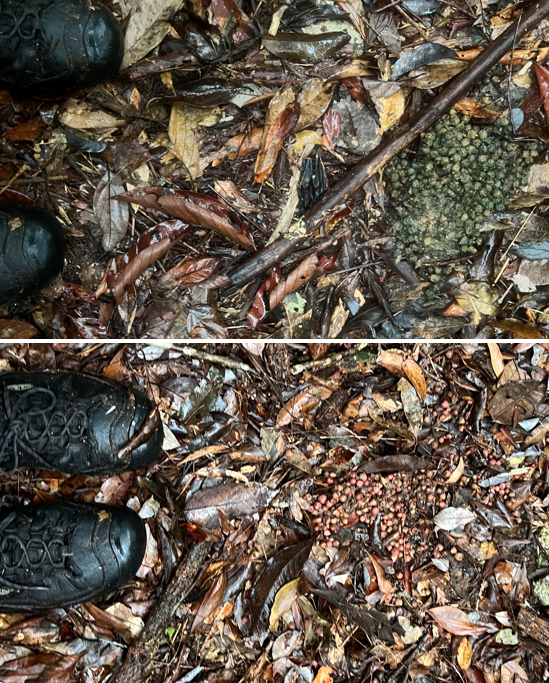
During the weekend survey on Oct 31 -Nov 1, teams covered 53km of ground and detected 4 cassowary scats [2 fresh and 2 mature] on Jourama and Dolerite Falls tracks to the north and north east of Paluma dam. These observations and other signs, contributed to a new encounter rate of Cassowary signs for the overall project to one sign per/14.5km.
While further analysis will be needed to turn these results into a reliable new estimate of Cassowary densities around Paluma, the data do suggest that Cassowaries are certainly still present in the Paluma Range and, interestingly, that they move between the upland rainforests and lower altitudes at different times of the year, presumably in pursuit of fruiting trees.
While the project is wrapping up, if you see any Cassowaries, or signs of their presence, feel free to contact me, or use the QR Code on the Rotunda sign at the village green to lodge a report.
PS – If you are lucky enough to encounter a group of cassowaries in the forest, the popular literature says they can be referred to as a “dash of Cassowaries”. Google searches and careful consultation with ChatGPT suggest that this is a recent appellation and it might not take hold, if only because it would be so rare to see one!
Text by Jamie Oliver; photos as indicated
Key references:
Hard rubbish collection is for Paluma residents only.
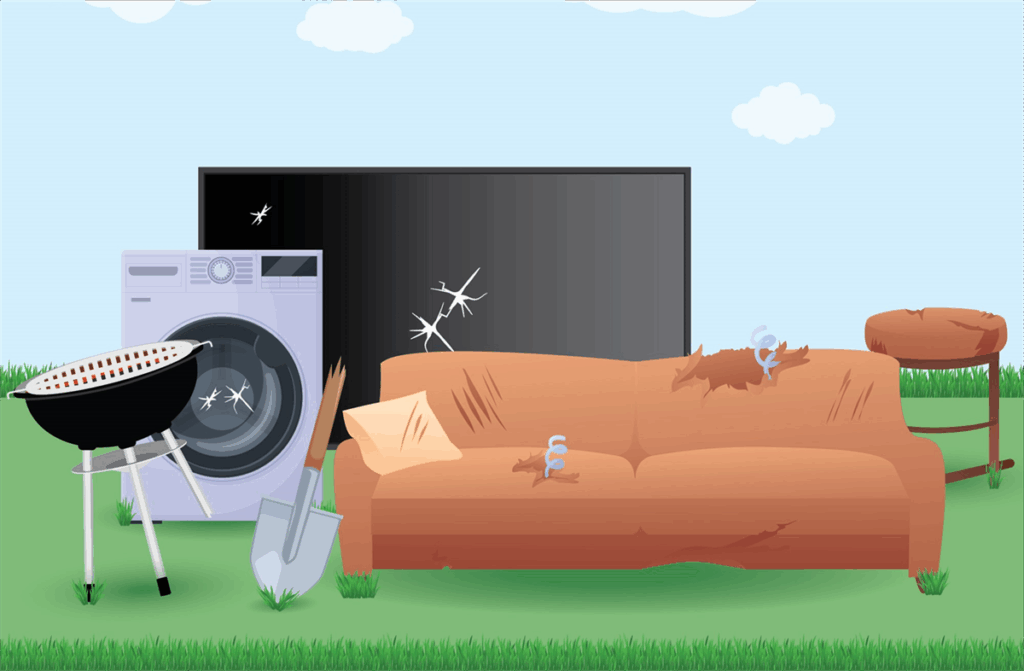
This year, Townsville City Council will collect hard rubbish from a central location, and residents must take their rubbish to two skip bins that will be placed at the village green on Sunday 30th of this month. They are for all the hard rubbish that can not fit in your council bin. Each household is allowed 2 cubic square metres, approximately the size of 8 wheelie bins. Please check the TCC website to see what is, and is “NOT” allowed to go in these bins. The bins are very large and have walk in gates. This must be stacked correctly from the back to the gate to avoid residents having to climb over your rubbish to get theirs in. The bins will be in place for two weeks.
As this is not the usual kerb-side collection and we have to take it all to the hall, anyone with a trailer or ute and the muscles to help a neighbour out would be greatly appreciated. I will put my hand up first. I have a ute, but no muscles. I’m here most of the time, feel free to let me know if you need transport.
A big thank you to Violet for pushing the Council with me for the past three months.
Cheers everyone Lynda
Last Saturday night’s annual Games night, hosted by Peter and Dorothy Klumpp was a great success.
Around 35 people showed up and enjoyed a meal while catching up with friends (and sizing up the competition). This year, the number of sports on offer was very diverse:
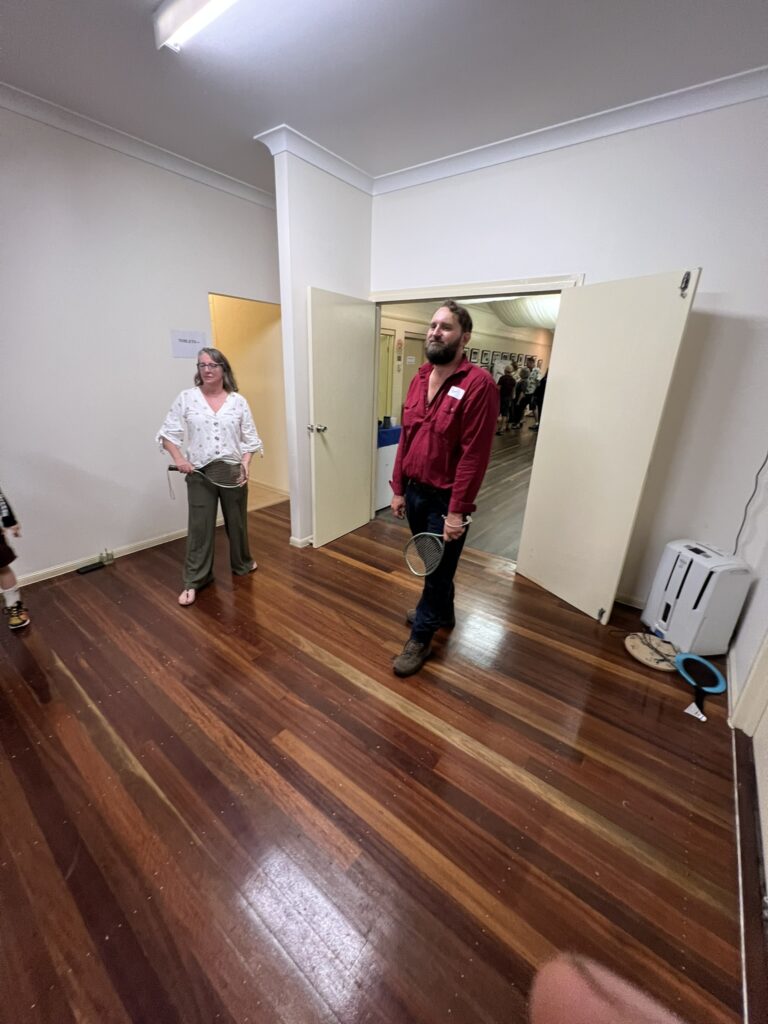
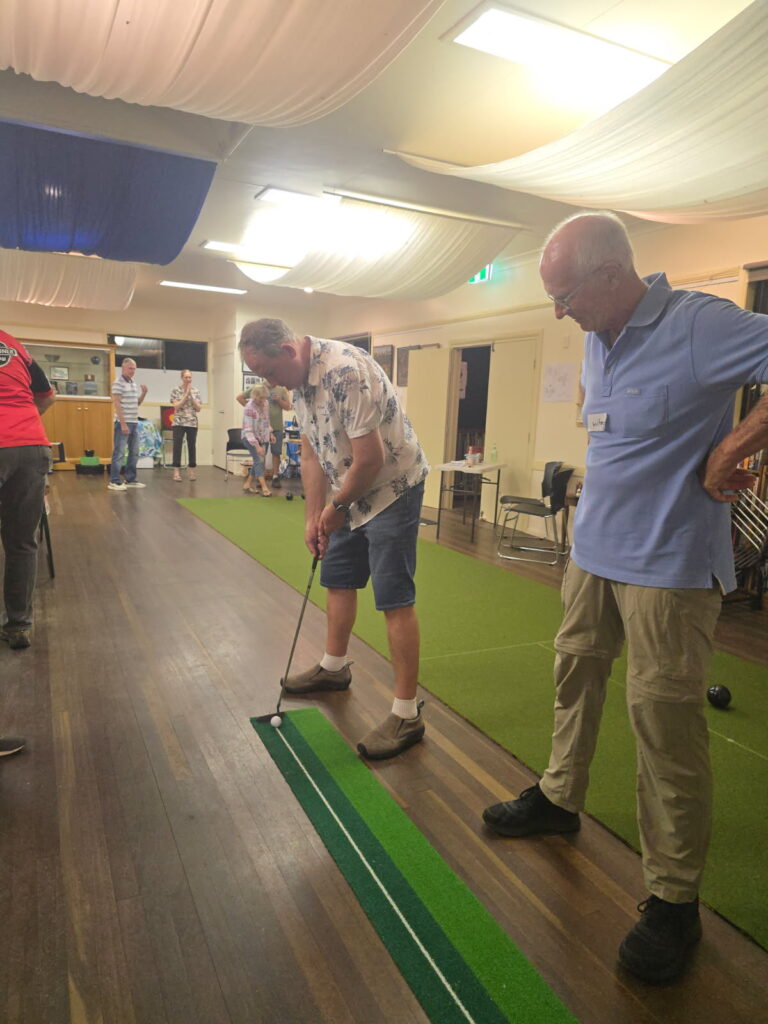
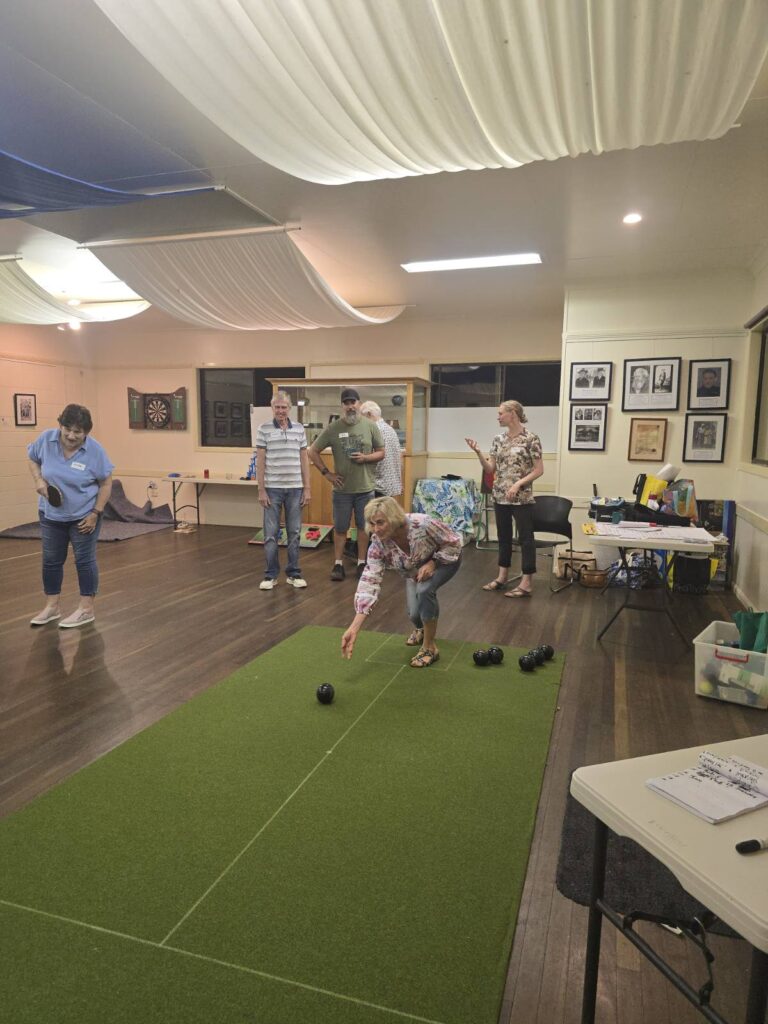
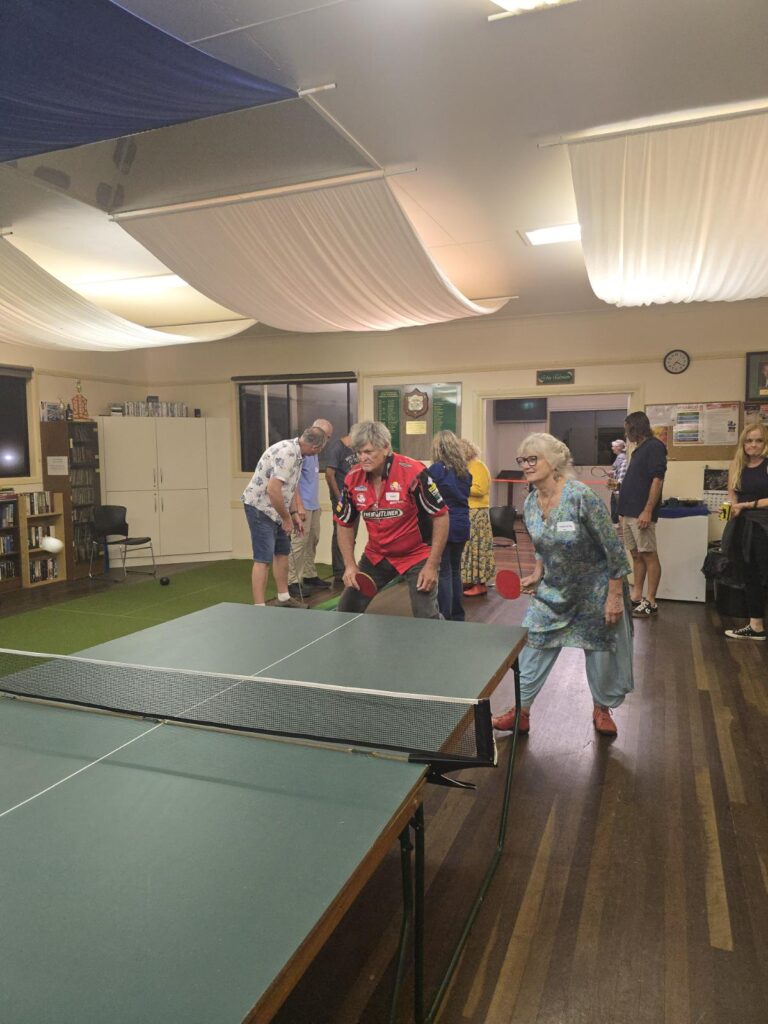
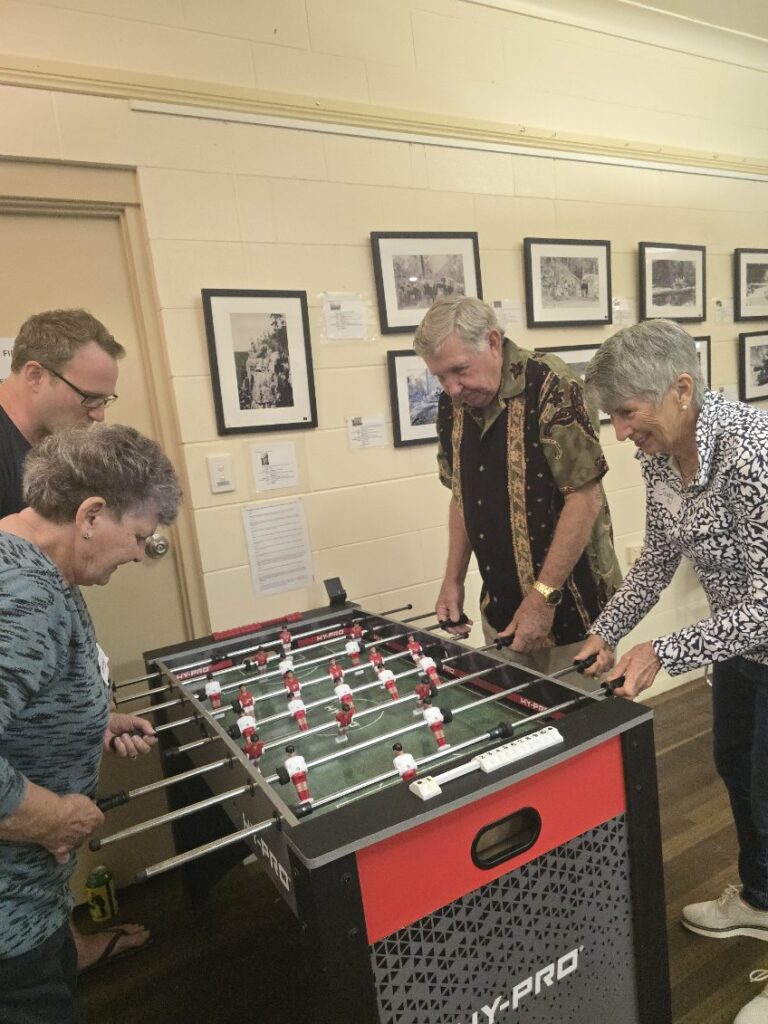
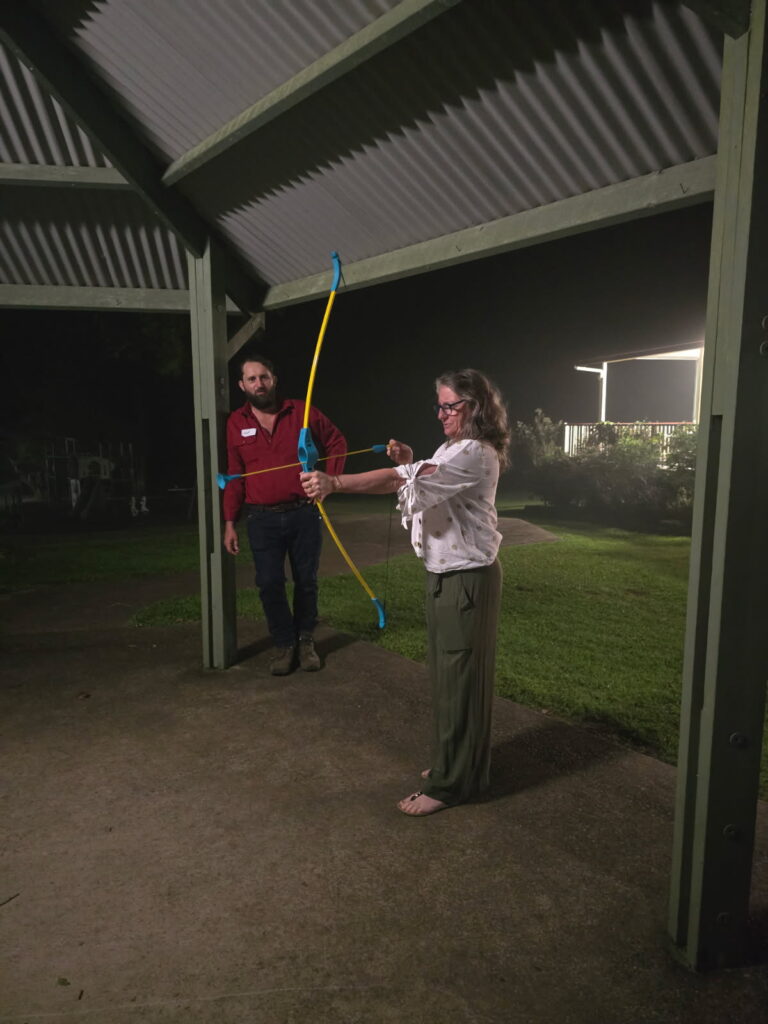
Teams of two (one male, one female) were allocated at random; however, the excess of males over females resulted in some contestants being given honorary female status for the evening.
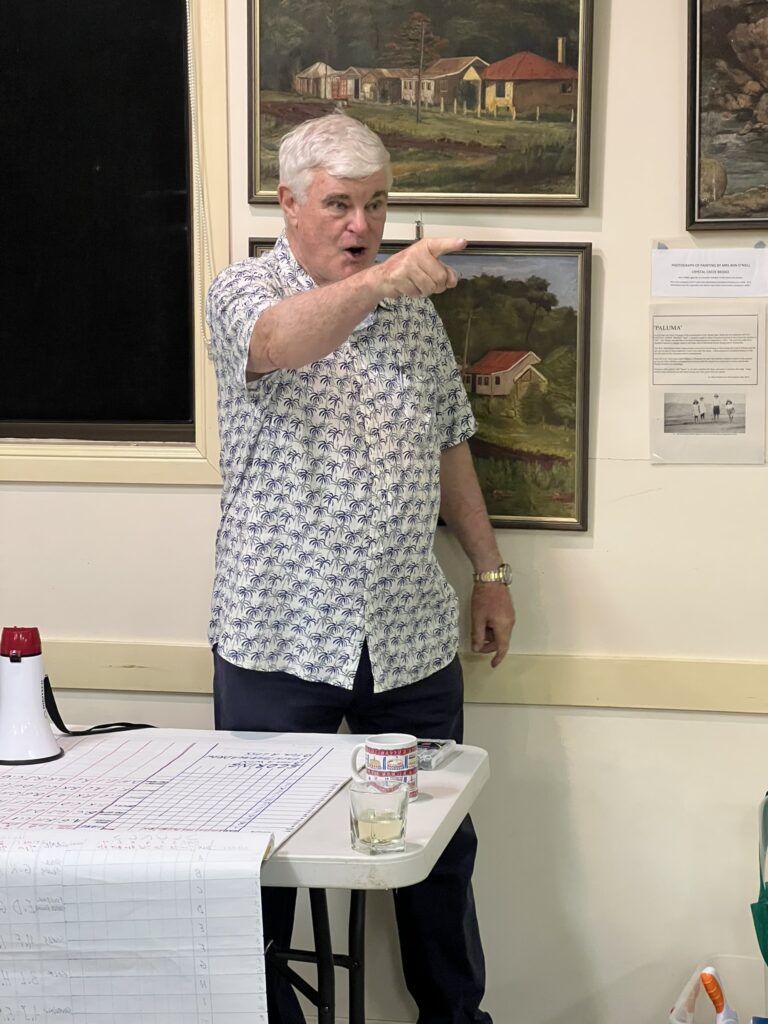
Figuring out which teams played which sport against which other team, and then recording the results, seemed to exercise the mind just as strenuously as the different sports exercised the body!
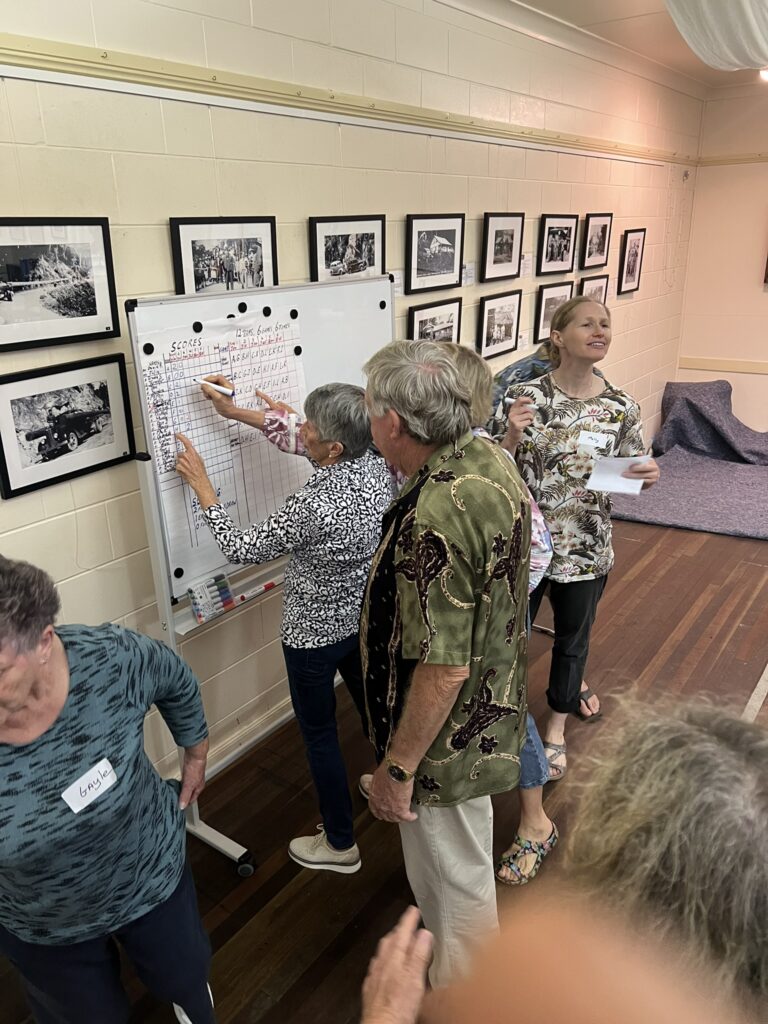
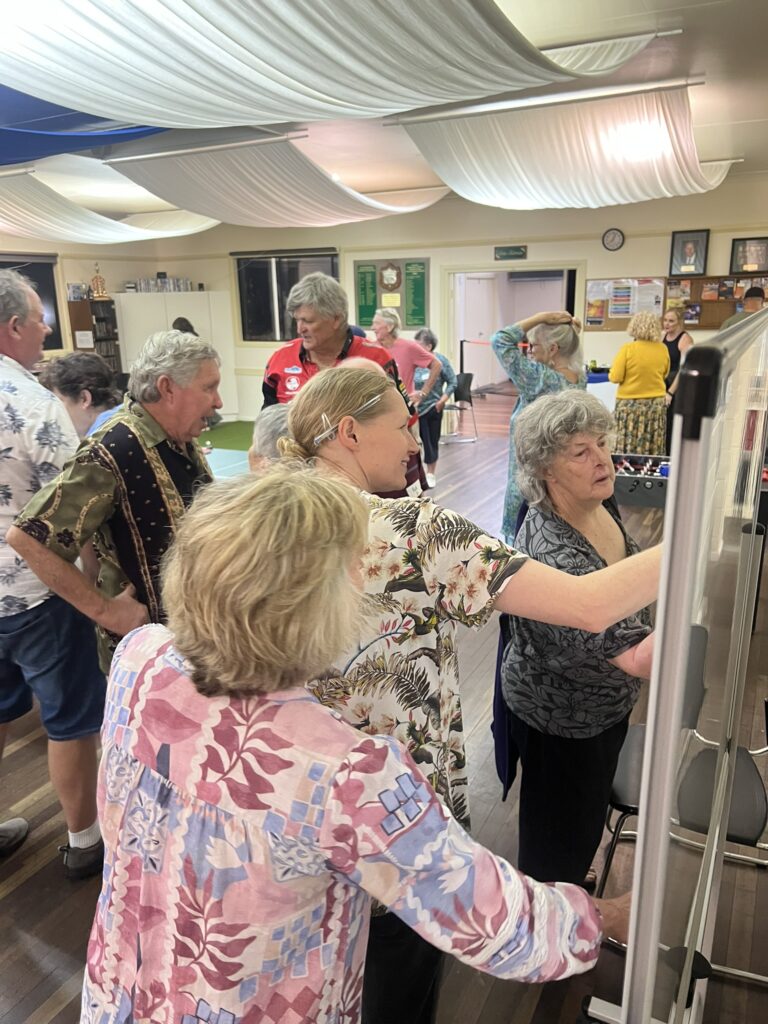
The competition was fierce but friendly, with the open bar providing a source of solace or fortification depending on the fortunes of the different participants throughout the event.
Once all the points had been added up there was a tie for first place, which led to a sudden death game of ping-pong tic tac toe, which required some time to understand let alone master. In the end, the winning team (Wilfred Karnoll and Ms Jamie Oliver), through sheer luck, just edged out Sandy Smythe and Ian Graniglia for the championship, with a box of chocolates given to all four.
After the end of the games, Jamie and Wilfred challenged Peter Klump and Mark Crisp to what has become a traditional table tennis “grudge match”. Peter and Mark came out on top this year, but no one seems to remember who won any of the previous years’ matches, so the grudge appears to remain unsettled.
In addition to Peter and Dorothy, many thanks are due to Mark Crisp (sausage sizzler extraordinaire) and Lynda Radbone (bar tender, mulled wine maker, and much more).
The distinctive calls of the whip-bird are often heard coming from dense and usually moist habitat, but they are rarely seen out in the open.
They are generally shy, so it was quite a surprise to see this bird happily foraging amongst leaf litter and fallen tibouchina flowers only metres from the road in downtown Paluma recently.
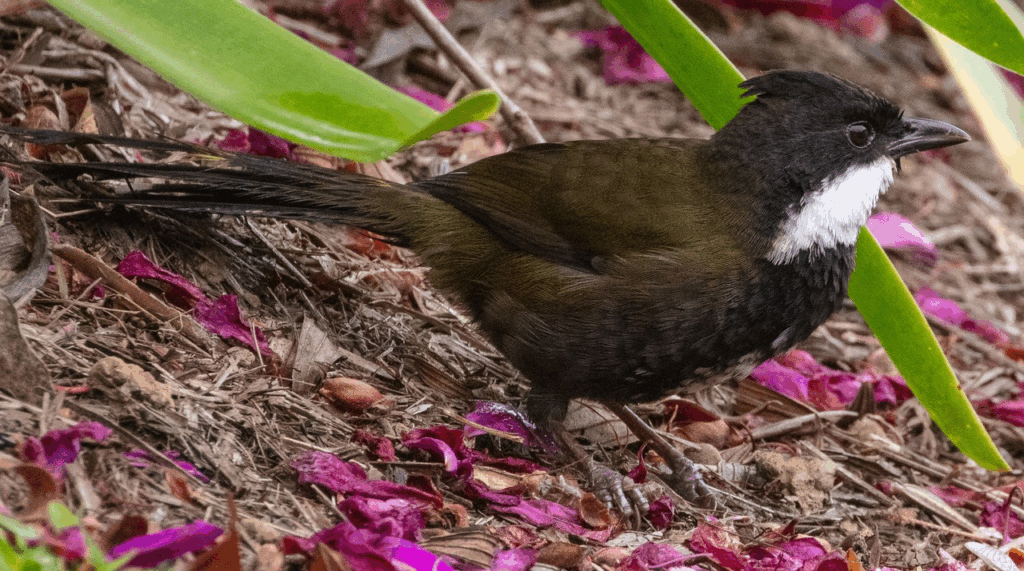
Whipbirds are found in dense habitats all the way as far south as eastern Victoria but two sub-species of Psophodes olivaceous are distinguished geographically.
The sub-species expected here at Paluma is the northern race, sometimes known as the northern whipbird (Psophodes olivaceus lateralis) found in the wet tropics from Townsville to Cooktown.
The call is usually a duet between the male and female, the male producing the long note and whip crack and female the following notes.
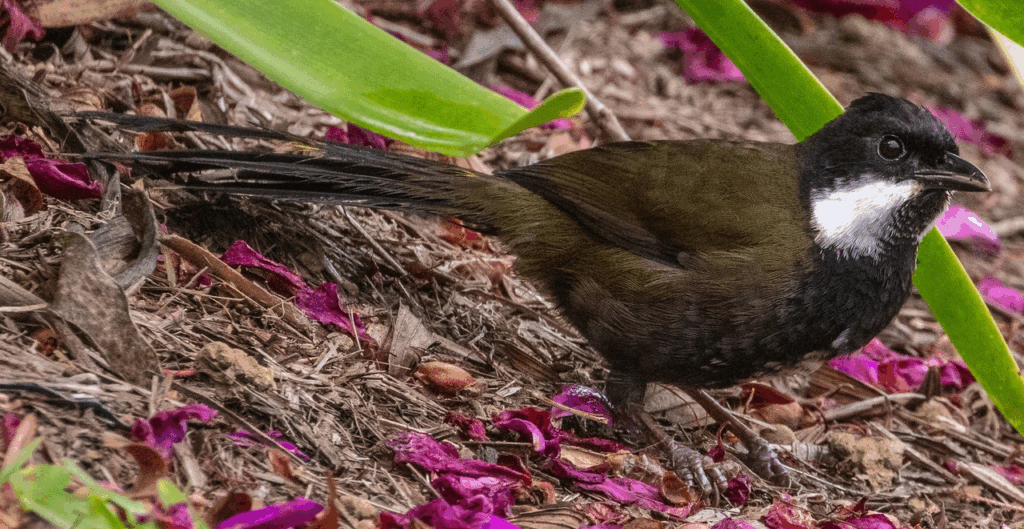
Whipbirds are monogamous. Breeding occurs from late winter through spring; a loosely built bowl of twigs and sticks lined with softer material such as grasses, located in shrubs or trees less than 3–4 m above the ground. Several broods may occur in an extended breeding season
The female incubates the eggs and broods the nestlings, though the male helps feed and take a more active role in looking after fledglings for six weeks after leaving the nest.
The male and female are similar in plumage, so it’s hard to tell which pronouns the bird pictured bird might prefer.
Photos by Peter Cook. Text gleaned mostly from Wikipedia by Peter Cooke.
The Paluma Environmental Education Centre is seeking applications from those interested in the position of casual cook. This position will assist in facilitating catering for visiting groups of school students during the school term. Applicants will be required to hold, or be eligible to apply for, a working with children blue card (or blue card exemption) and be willing to undergo a criminal history check prior to commencing.
Additionally, we also have a current job listing on Smart Jobs for the position of Business Manager. Further details can be found using the following link:
https://smartjobs.qld.gov.au/jobs/QLD-NQR666811-25P
For those interested in the cook position, please contact Cooper Locke (Business Manager – clock111@eq.edu.au) for further information or to submit your expression of interest.
If you are interested in the position of Business Manager, application details can be found on Smart Jobs.