
Early mornings around Paluma are invariably accompanied by a wide range of bird songs. The most distinctive and noisy of these is produced by the Chowchilla (Orthonyx spaldingii), although the whipbird and the catbird run a close second.
Chowchillas are endemic to north Queensland, with two subspecies: O. spaldingii melasmenus occurring from near Cooktown to the Daintree, and O. spaldingii spaldingii ocurring south of the Daintree to the Paluma ranges. They are found in rainforests mostly above 450m. Chowchillas don’t vocalise much during full daylight hours, but its not hard to spot them as they run along the ground across, or next to village tracks, or reveal themsleves as the rustle through the leaf litter. Male and females both have handsome plumage, with the rich rufous throat of the female being particularly striking.
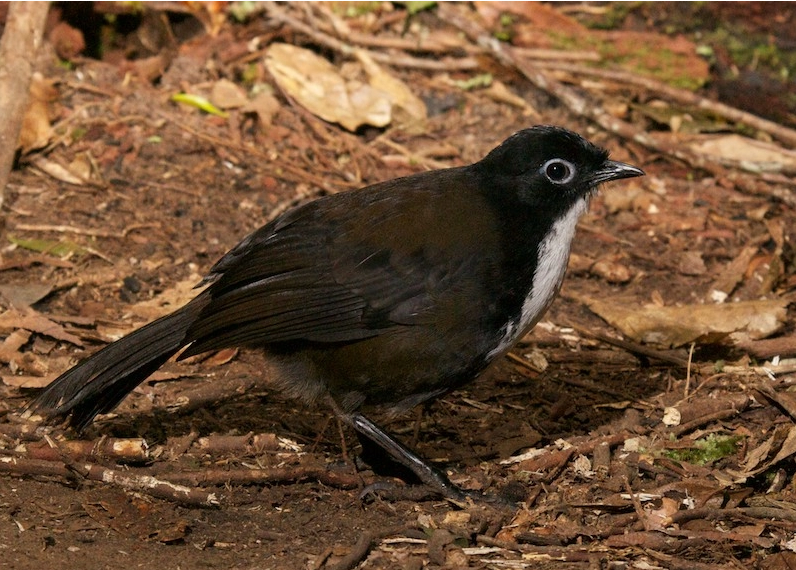
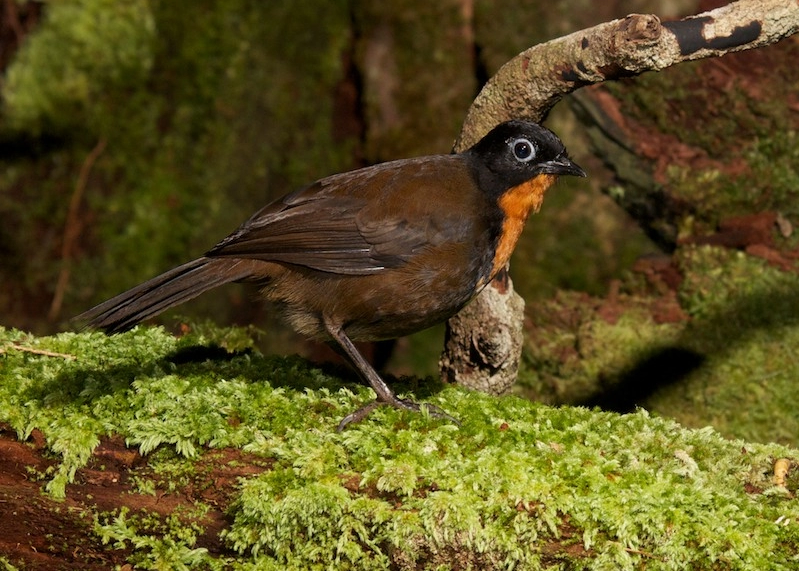
Male (top) and Female (bottom) Chowchilla. Photos taken by Brian O’Leary at Paluma in 2012.
Chowchillas forage on the forest floor, scratching leaves and debris to expose small insects and other invertebrates in the leaf litter, as well as the odd small lizard or frog. They are sometimes joined by other bird species such as the Grey-headed roobin, Whipbird and Yellow-throated scrub-wren who will take advantage of the disturbed litter to find food for themselves.
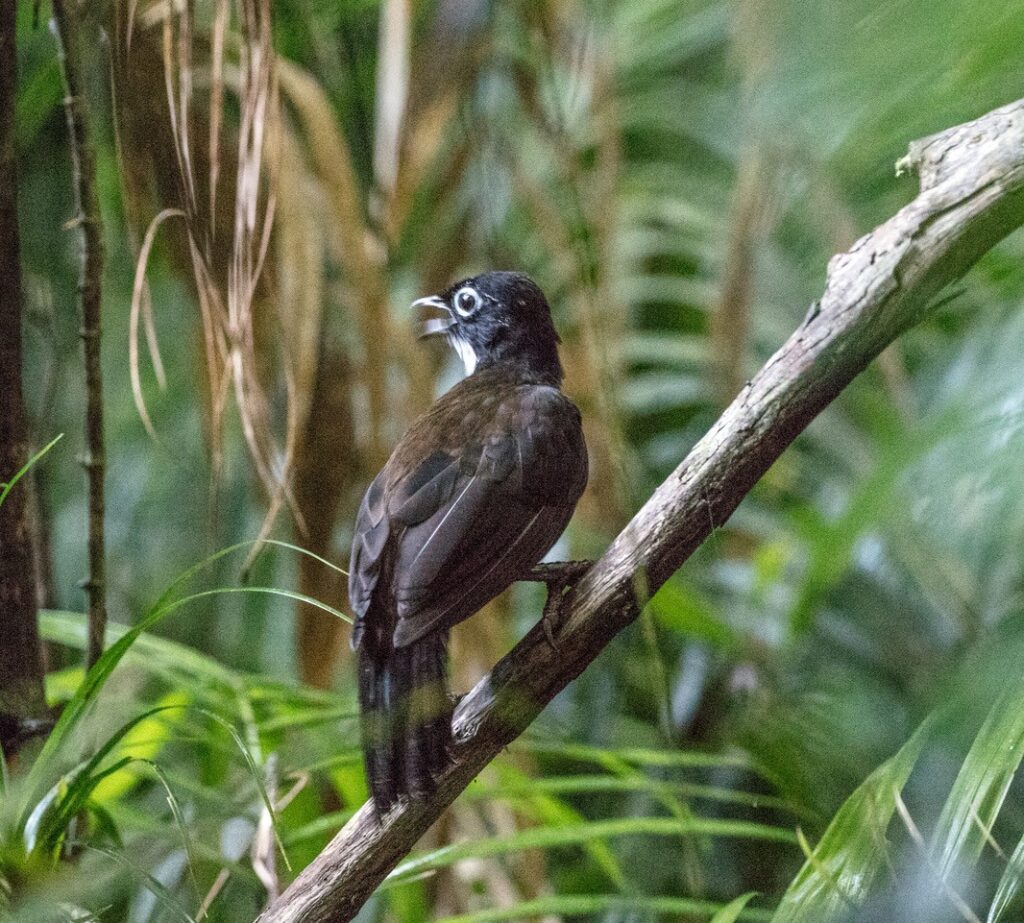
Chowchillas are well known to form social groups, usually comprised of a mating pair accompanied by male offspring from the last few nesting years. Occasionally unrelated maies will also occasionally join the group. The group jointly defends a territory with all individualls participating in the well-known vocal chorus of rythmic warbles to warn off adjacent family groups. Each group has its own distinct song dialect. The status of the Chowchilla social behaviour is somewhat controversial. Group territoriality is not uncommon in Australian birds (eg Babblers), but in most cases it has been shown that they assist in rearing offspring of the main breeding pair that they are usually related to (cooperative breeding). However in Chowchillas no direct assistance in rearing has been observed in any of the non-breeding group members. An alternative explanation for the evolution of group formation and persistence in Chowchillas is that by assisting in defending the group territory, they enhance the security of food resources that the breeding pair will use to raise offspring.
Chowchillas are one of three species in the genus Orthonyx (log-runners). The other two are found in southeastern Australia and New Guinea.
The name Chowchilla was used by the Dyirbal Aboriginal group and is presumably onomatopoeic. Many local settlers adopted this name, although it was more frequently named the northern Log-runner in early bird guides. (See here for a short article on some other rainforest birds whose aboriginal names have been rediscovered)
Text by Jamie Oliver, Photos by Brian O’Leary and Peter Cooke
Sources:
Cornell Lab Birds of the World
Frith and Frith (2021).The entertaining and enigmatic Chowchilla;
a summary of our limited knowledge
Thank you for yet another interesting article on Paluma’s birds.