
The Metallic Starling (Aplonis metallica) is a frequent visitor to Paluma from about August till February, where it can be seen in small groups feeding on the fruit of various rainforest trees. Unless the light is right, they can appear to be fairly nondescript, small dark birds up in the canopy feeding, flitting and calling. But when the sunlight catches them, they are quite spectacular, with glowing red eyes and a metallic rainbow of iridescent feathers. They also called Shining Starlings, with good reason.
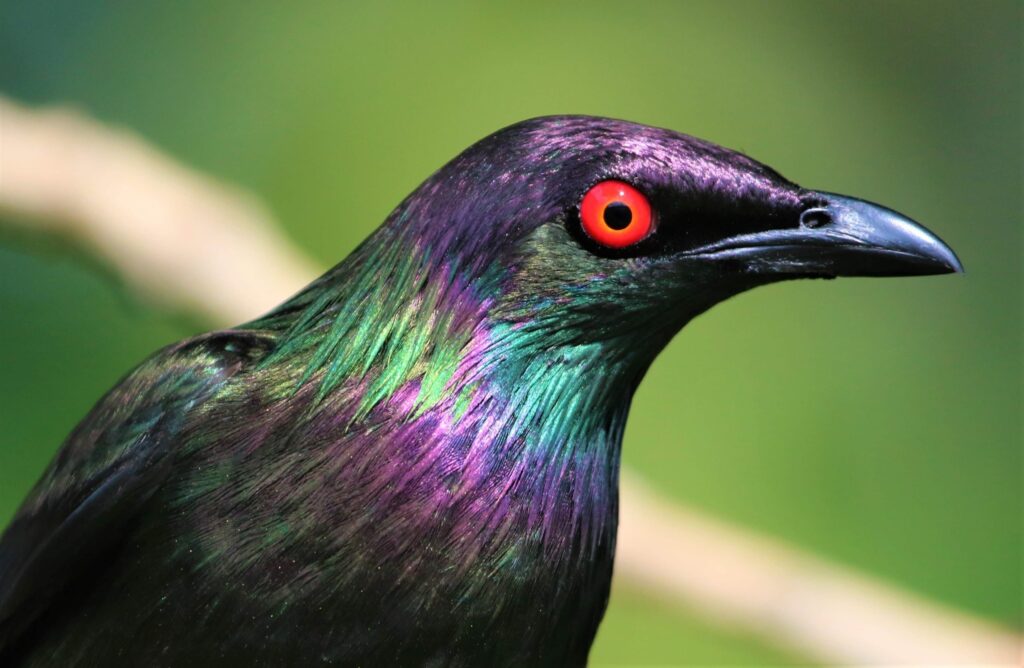

Metallic Starlings can be found in rainforests and adjacent coastal woodlands, as well as tropical gardens. They are primarily frugivorous (fruit-eating) but supplement their diet with nectar and insects. They forage in flocks of up to several hundred, although in Paluma flocks are much smaller, often just a few birds. In Australia, most birds are believed to migrate from eastern New Guinea around August, and remain until April.
Starlings have a bit of bad rep, all due to the habits of one out of the 125 species in the Starling family (Sturnidae). The Common Starling (Sturnus vulgaris) is one of the most invasive species in the world. It competitively displaces native species of birds in southern and eastern Australia and is an economic pest in WA. Another member of the starling family (the Indian Myna) is also an invasive pest. However, the majority of starlings are beautiful tropical birds with little if any invasive tendencies. The glossy starlings of Africa are truly spectacular in appearance and a favourite of birdwatchers.
Several years ago, Michael Drew pointed out a tree on the range road, which had hosted a colony of metallic starlings but had subsequently been abandoned. Last year Peter Laux reported that the birds were again nesting there, and they are here again this year as well. The tree is on the downhill slope next to the very large landslip on the corner above culvert 151 (now dubbed Starling Corner by Michael).
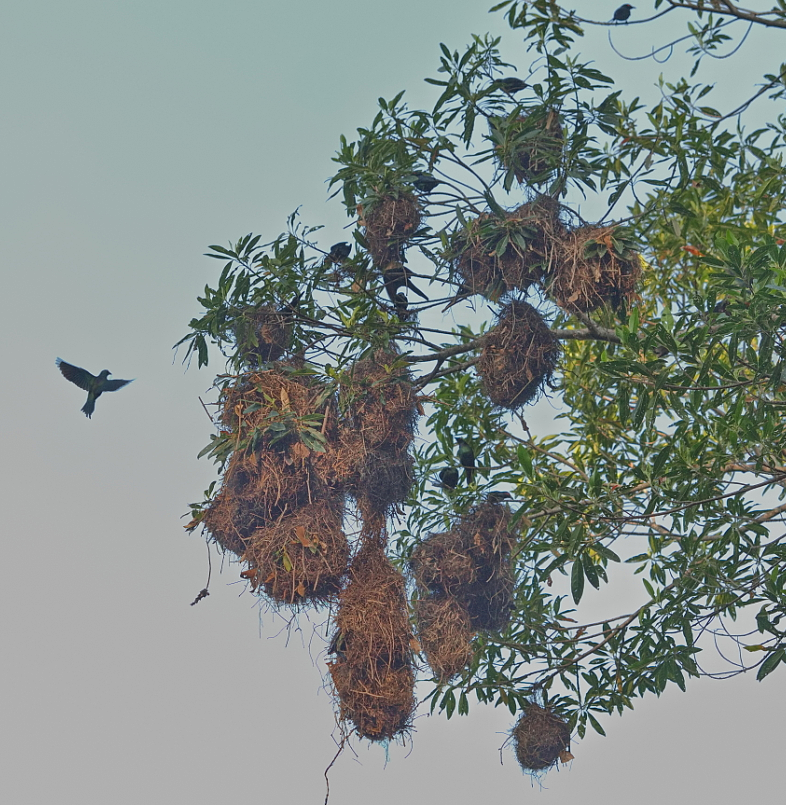
Metallic Starlings, as well as many other species in the family, are colonial nesters. Up to 1000 Metallic Starlings can build domed nests in an emergent tree. The sudden arrival or departure of flocks to the nesting tree provides a memorable spectacle of coordinated aerial acrobatics.
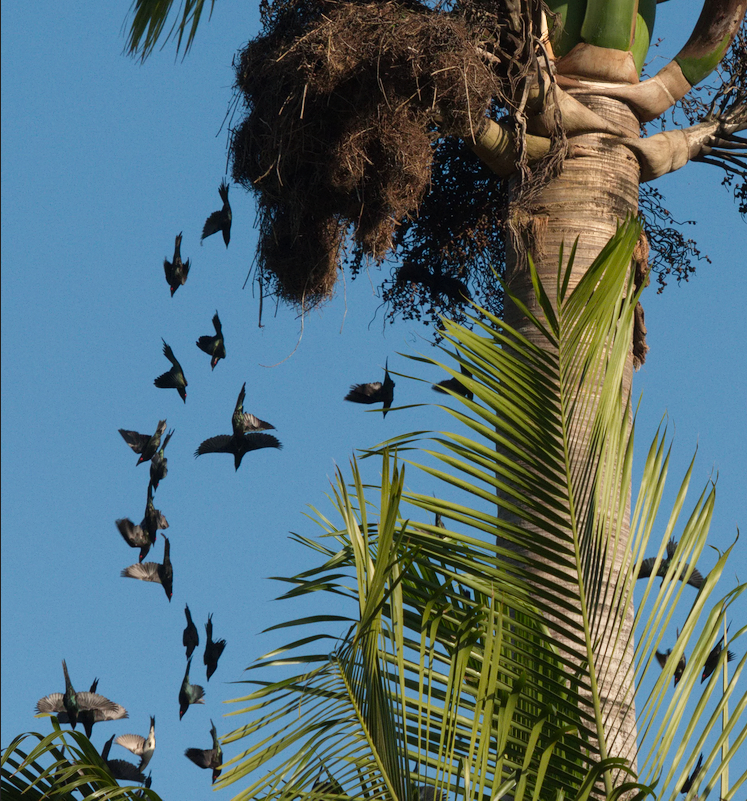
The presence of this many birds breeding in such a small area has been shown to have a profound impact on the fauna below the nesting tree. Huge concentrations of invertebrates, and vertebrates such as turkeys, parrots, pittas, pythons, tree snakes, frogs, toads, native rats and pigs were found to exploit the rain of organic matter (including nestlings) falling from the nests above.
Text by Jamie Oliver; Photos as indicated
Key Sources:
Cornell Lab – Birds of the World https://birdsoftheworld.org/bow/species/metsta1/cur/introduction
Natusch (2016). How I discovered one of the greatest wildlife gatherings on Earth in far-north Queensland. Australian Geographic