Members of the Paluma Rural Fire Brigade (PRFB) are advised that Len Cook proposes to hold the Annual General Meeting (AGM) on Saturday 14th September at 4 PM at the Community Hall.
Len Cook advises that a full quorum is required to the hold the meeting.
If you are a member of the PRFB please advise your availability to attend the AGM by contacting Len Cook via email:- anagama@activ8.net.au
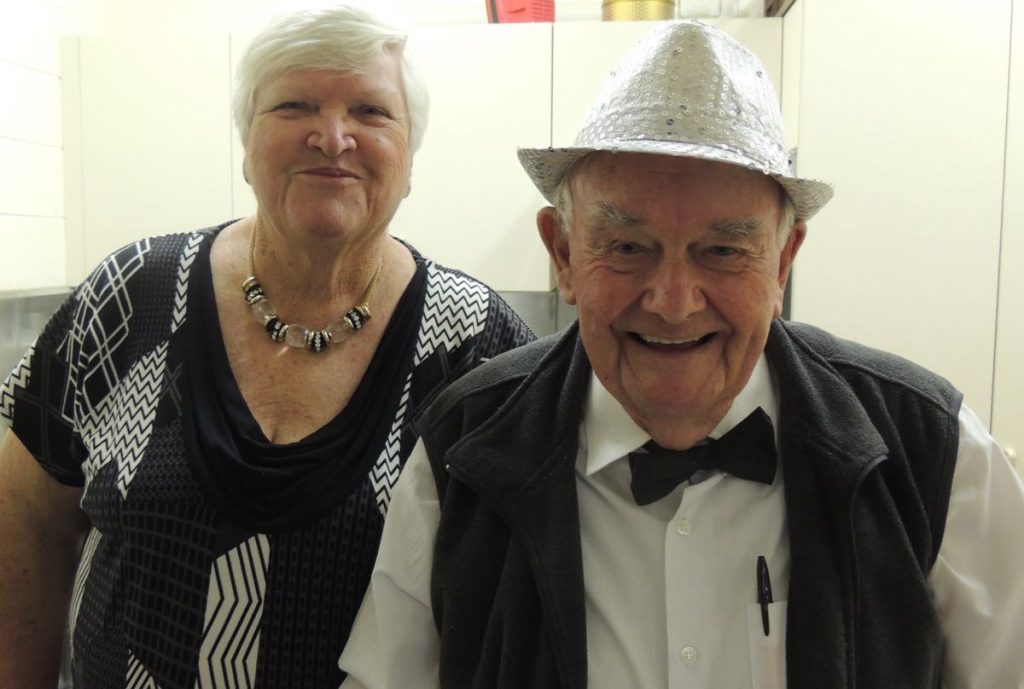
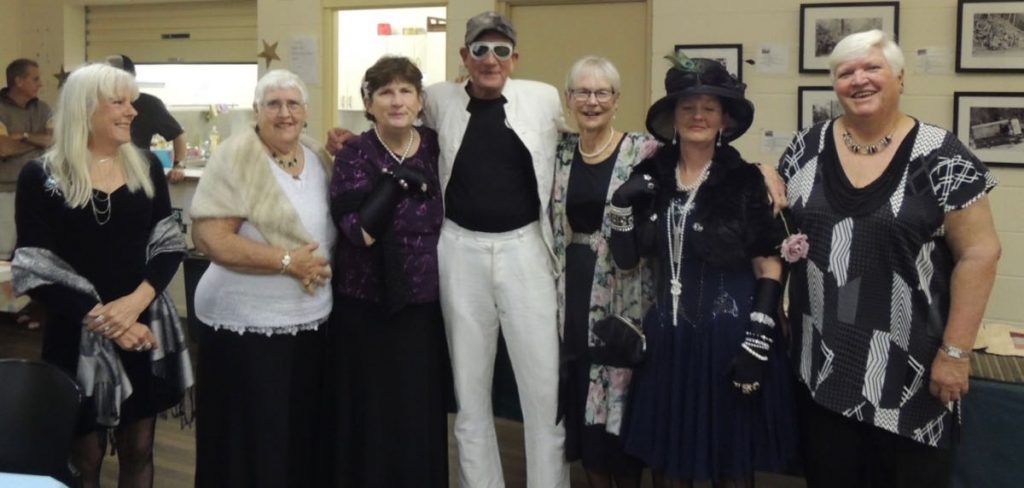
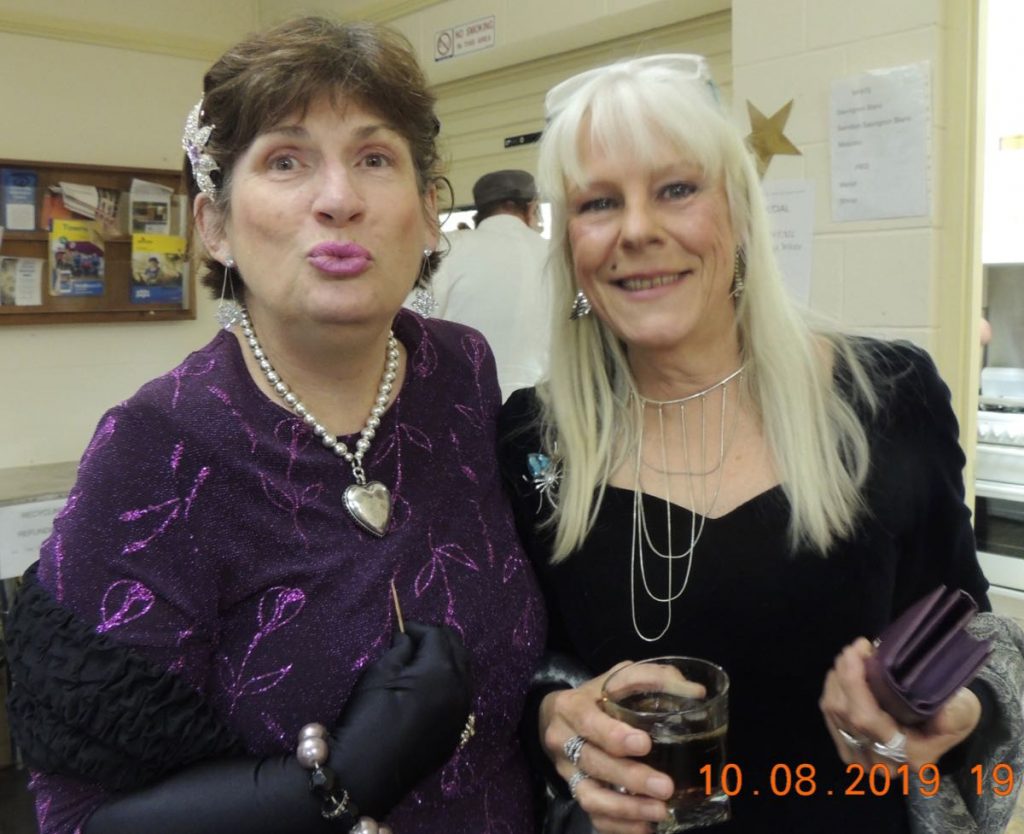
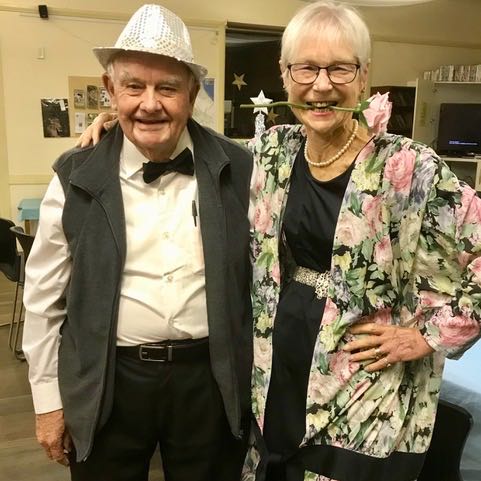
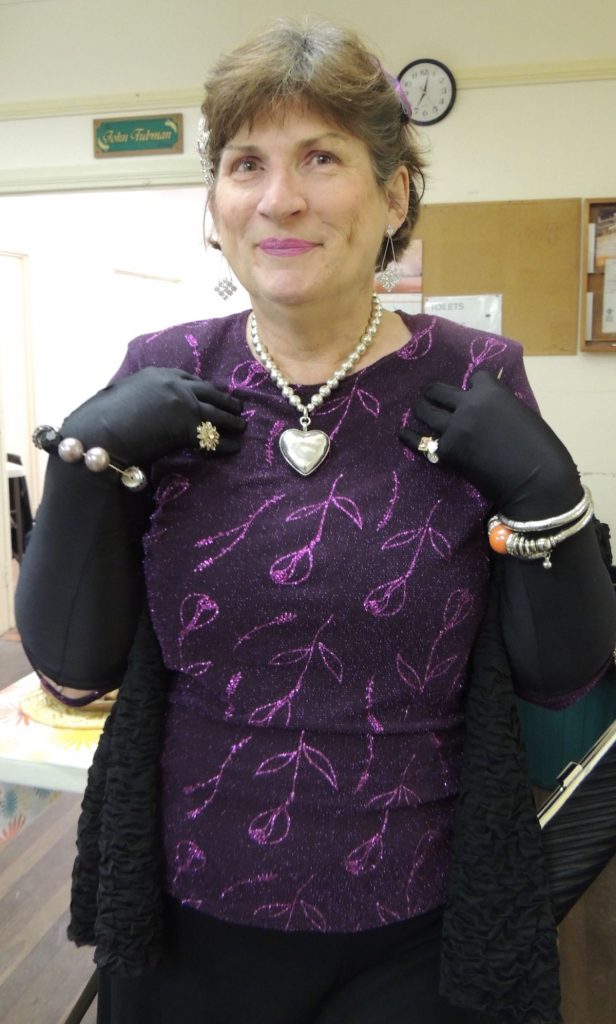
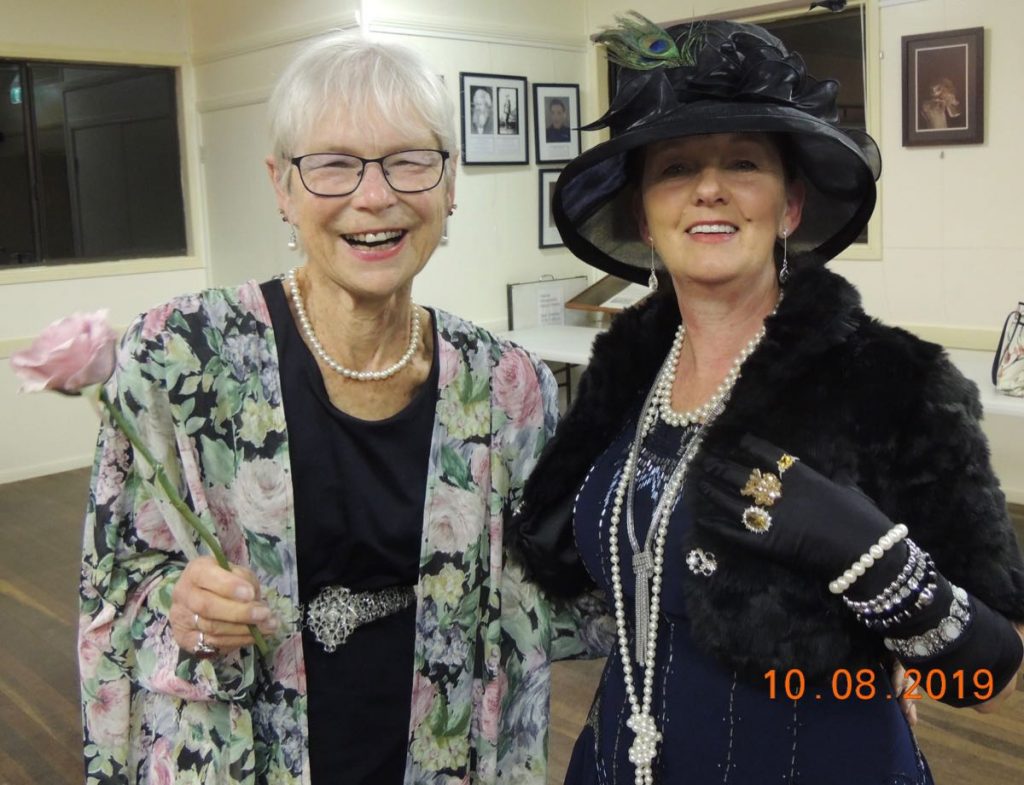
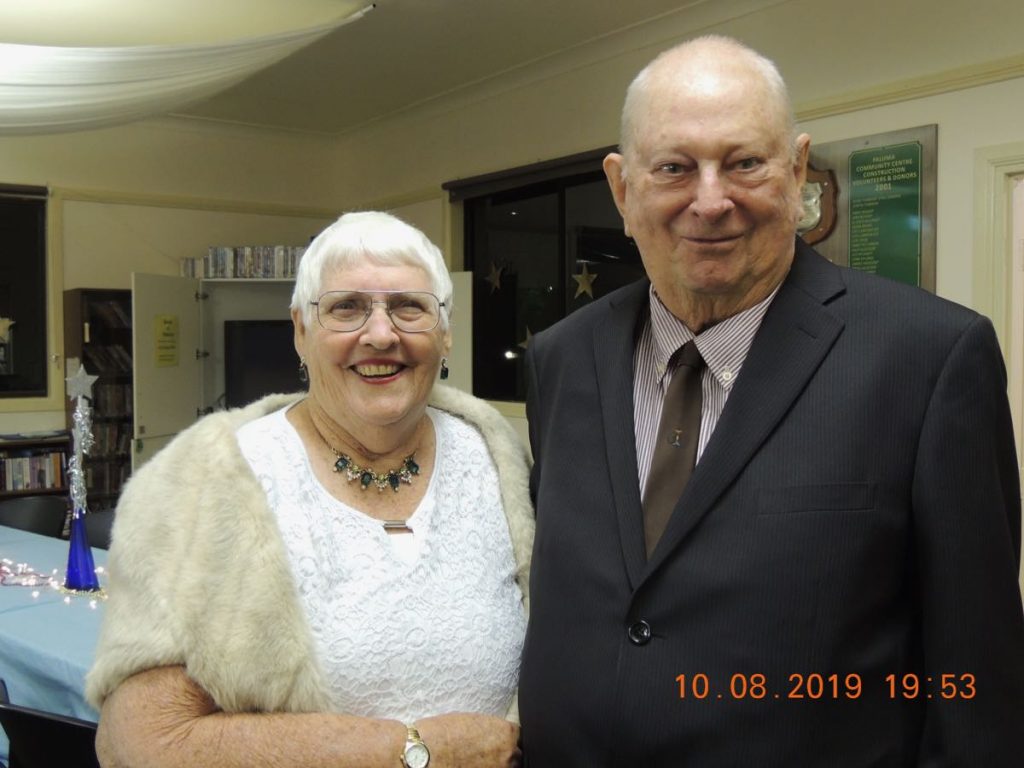
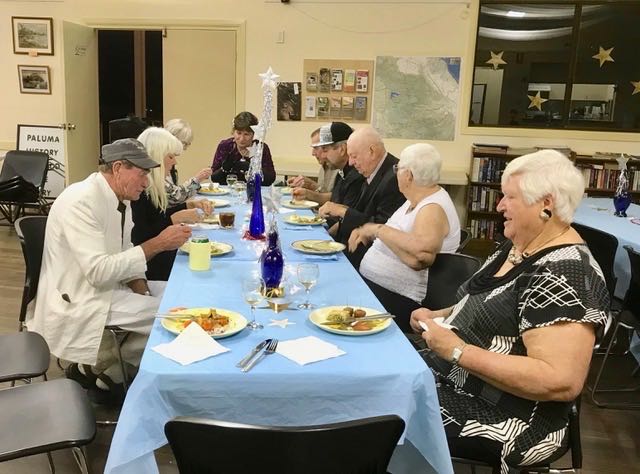
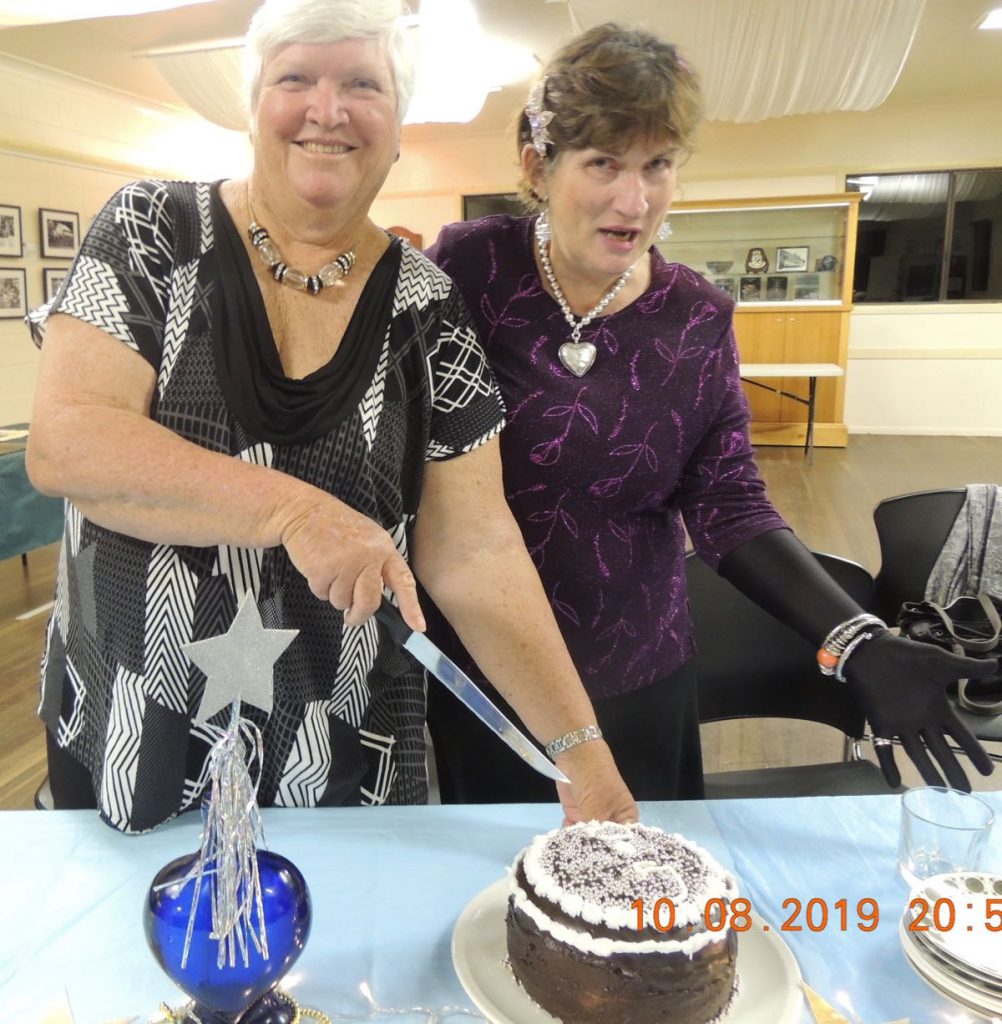
The stars weren’t the only thing shining at Paluma last Saturday night, with the inaugural Glamour & Glitz Social at the Community Hall. The night was filled with glitter, sequins and precious jewels, all on display. Some stunning outfits were worn by the ladies, the frocks to rival any H(B)ollywood red carpet event. The razzle dazzle and glitz was so great that some patrons had to wear their sunglasses all night! Even the menu had sparkle with a dazzling chocolate and silver masterpiece (cake) made by Jennie, in (belated) celebration of Lynn’s birthday.
While only a small crowd attended this event, it was quite possibly the most successful social this year for fun and frivolity. There was much laughter and camaraderie and anyone passing the Hall on Saturday night might have thought that 100 people were in attendance. The music was sensational with a soundtrack of classic dance tunes. Some patrons took a whirl around the dance floor before tucking into the menu of savouries, casseroles and other delights.
If you didn’t attend the Glamour and Glitz Social then you missed the opportunity for a night of fun and frivolity – but most importantly, you missed the chance to meet and mingle with your Paluma friends and neighbours and to support your own community association. Social events are fun, but they are also vital to raising much needed funds for the PDCA, so that all those very important matters like road repair and maintenance and the preservation of all those things we most love about Paluma can remain on the working agenda.
See you at the next Social planned for 2 November. The weekend is short, but friendship and strength of community goes on and on……!
Well folks, it almost time for one of the most anticipated social events of the year – the Paluma Glamour and Glitz Social. This auspicious social occasion will be held on Saturday 10th August at the Community Hall, commencing at 6.30 pm.
Now’s the time to check that wardrobe and plan your most glamorous and glitzy outfit for this not-to-be-missed social event!
There will be a prize on the night of a free beverage for the Best Dressed Male, the ‘King of Bling’ – and also the best dressed Female – the ‘Queen of the Village’. No doubt this will be a hotly contested competition.
Rumour has it that several local ladies have been planning their outfits for some time and are set to dazzle and sparkle on the night!!
It’s time to put the mower, the leaf-blower and the chainsaw in the shed, ditch those work clothes and scrub-up for a night of glitz, bling, razzle-dazzle and fun.
As usual, please bring a plate to share (savoury or sweet) and don’t forget that the bar will be open with our very own ‘Blingy Barman’ (Les Hyland) who will be dispensing low-cost drinks.
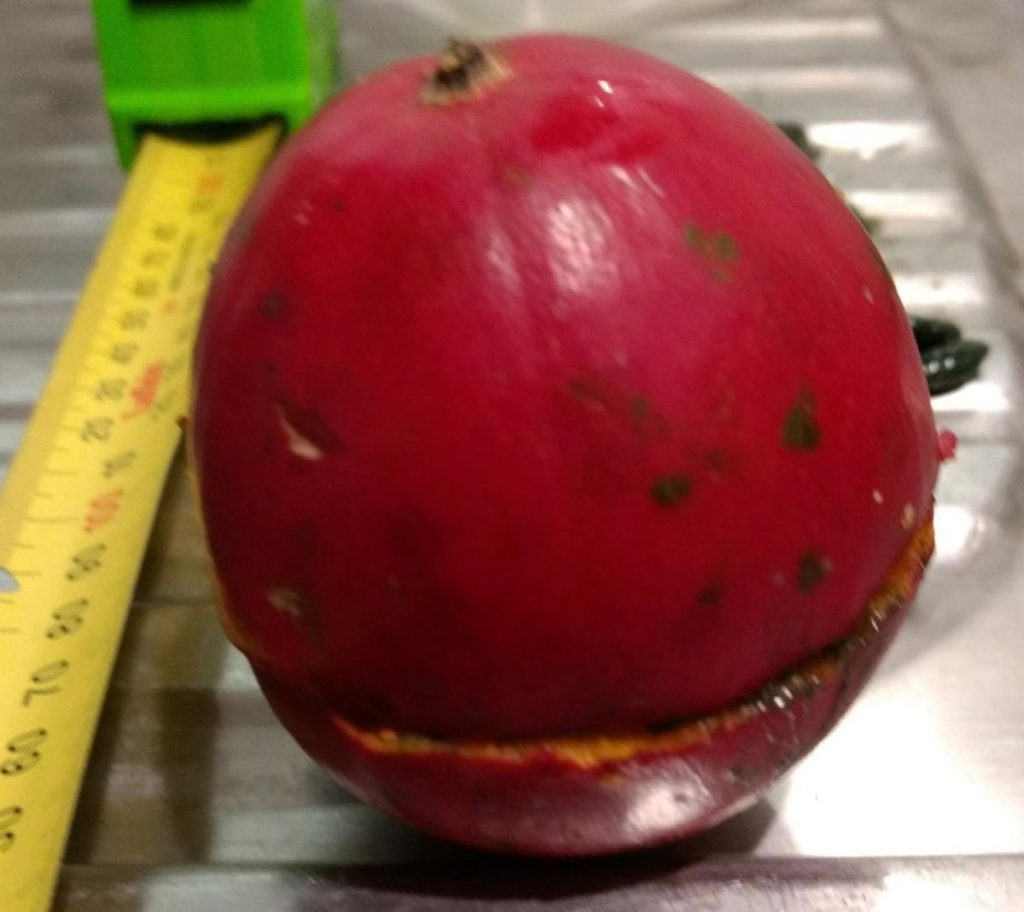
A plant you may see fruiting in and around Paluma at present is the Red Gourd, scientific name Trichosanthes pentaphylla. This is a vine with very conspicuous rounded, bright red fruit. The fruit grow to nearly cricket-ball size (40-70 mm x 50-60 mm). The usual fruiting season is from February to June, but sometimes there are a few late-comers (or late bloomers….!).
The fruit of the red gourd vine, almost the size of a cricket ball.
The distribution of this vine is from Cape York to Home Hill, south of Townsville. It is a tendril climber with both male and female plants. Leaves are compound with 3 to 5 leaflets, 40-170 mm x 22-110 mm in size and are slightly rough (resembling sandpaper) on both sides. Flowers, not particularly conspicuous, are white with 5 petals, 12-14 mm long.
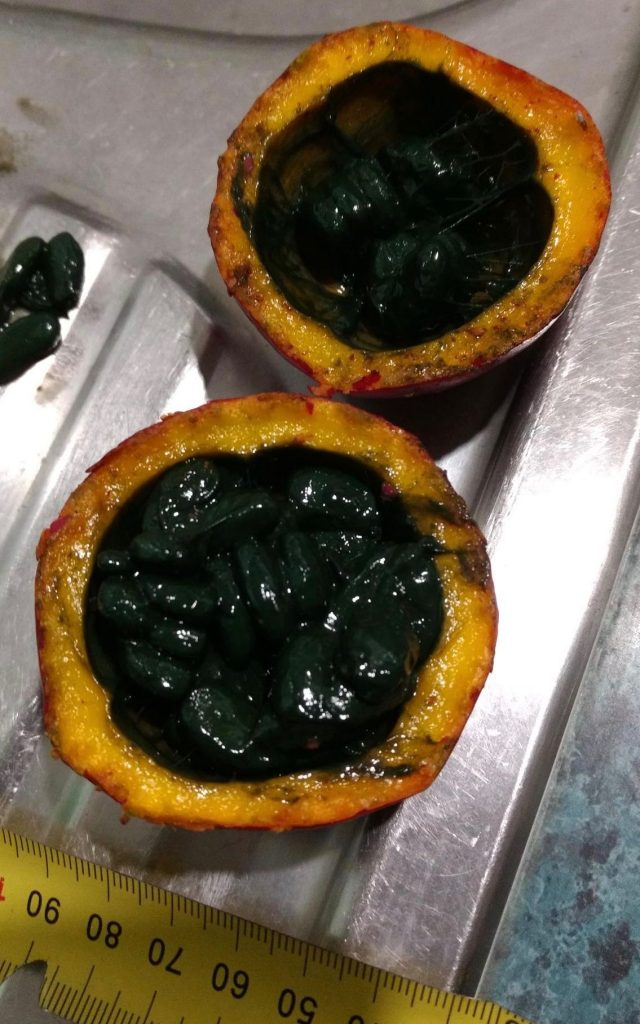
The fruit, which is eaten by cassowaries, is distinguished by its dark-brown to black, 9-17 mm long seeds which are suspended in a slimy, dark green pulp.
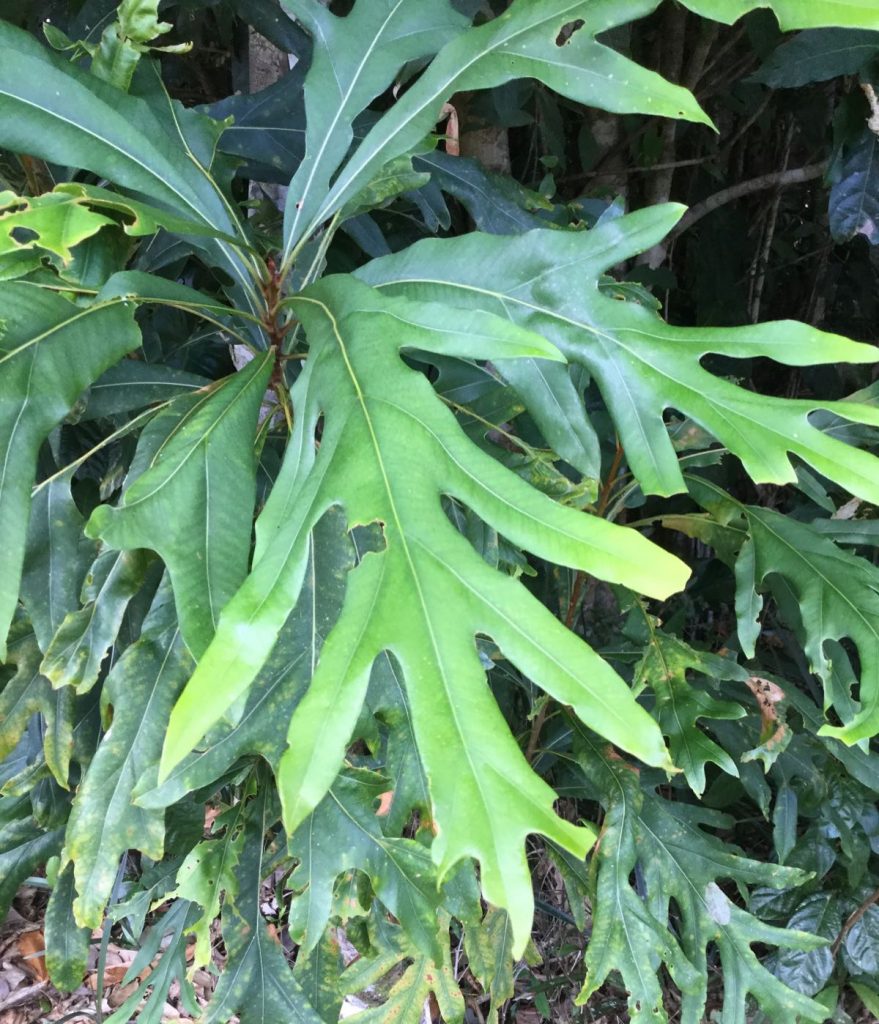
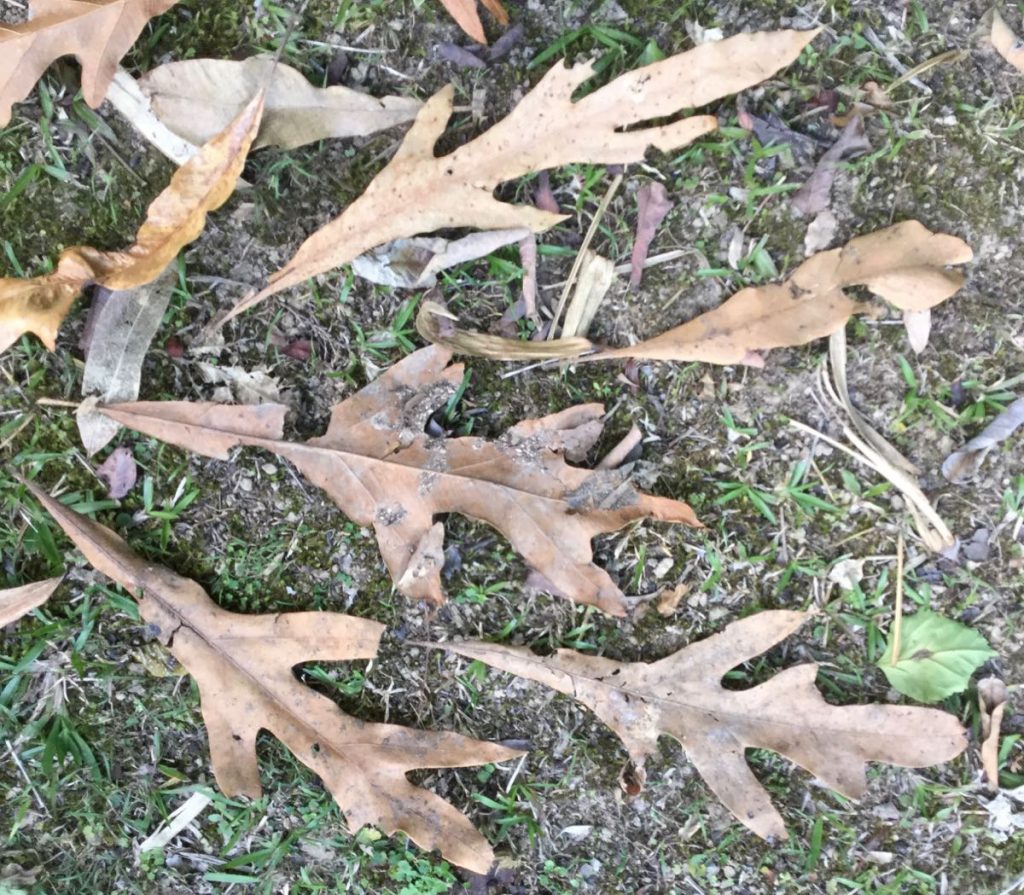
Have you ever been curious about the large leaves, shaped roughly like dinosaur footprints, commonly seen amongst the leaf litter on the forest floor? These belong to the Darlingia darlingiana, also known by the common names of Silky Oak, Brown Silky Oak or Rose Silky Oak, a handsome tree which can grow to a height of 30 metres. The common name of ‘oak’ originates from the oak-like grain in its wood, which is a dark red lace-like pattern. The tree was originally named after Charles Darling (1809-1870), Governor of Victoria. Distribution of this tree is from the Cooktown area to Paluma, at altitudes between 0 and 1,150 metres.
The leaves of Darlingia darlingiana are large: 70-500 mm long x 20-140.5 mm wide and may be lobed or unlobed. Juvenile leaves tend to be heavily lobed which gives them the ‘dinosaur footprint’ appearance. As they age prior to dropping, the leaves lose their bright green pigmentation and look striking in hues of red, orange and yellow, before fading to a coppery brown.
The bright green leaves of Darlingia darlingiana.
Aged leaves of the Darlingia darlingiana resembling dinosaur footprints…….!
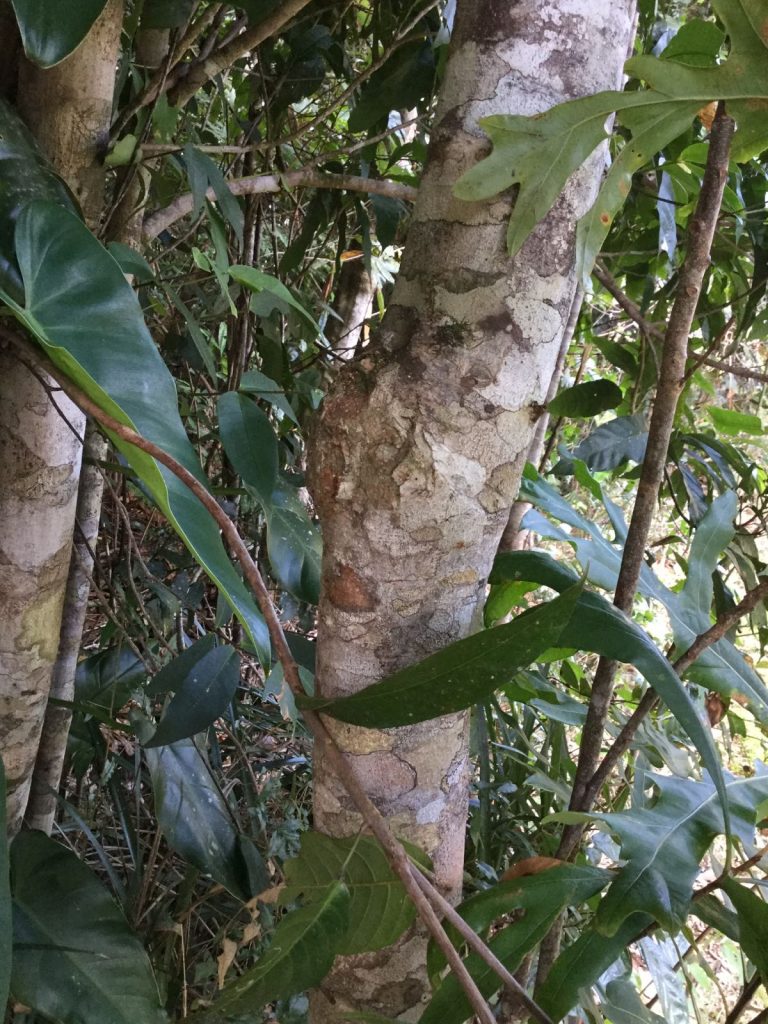
Trunk and bark of the Darlingia darlingiana.
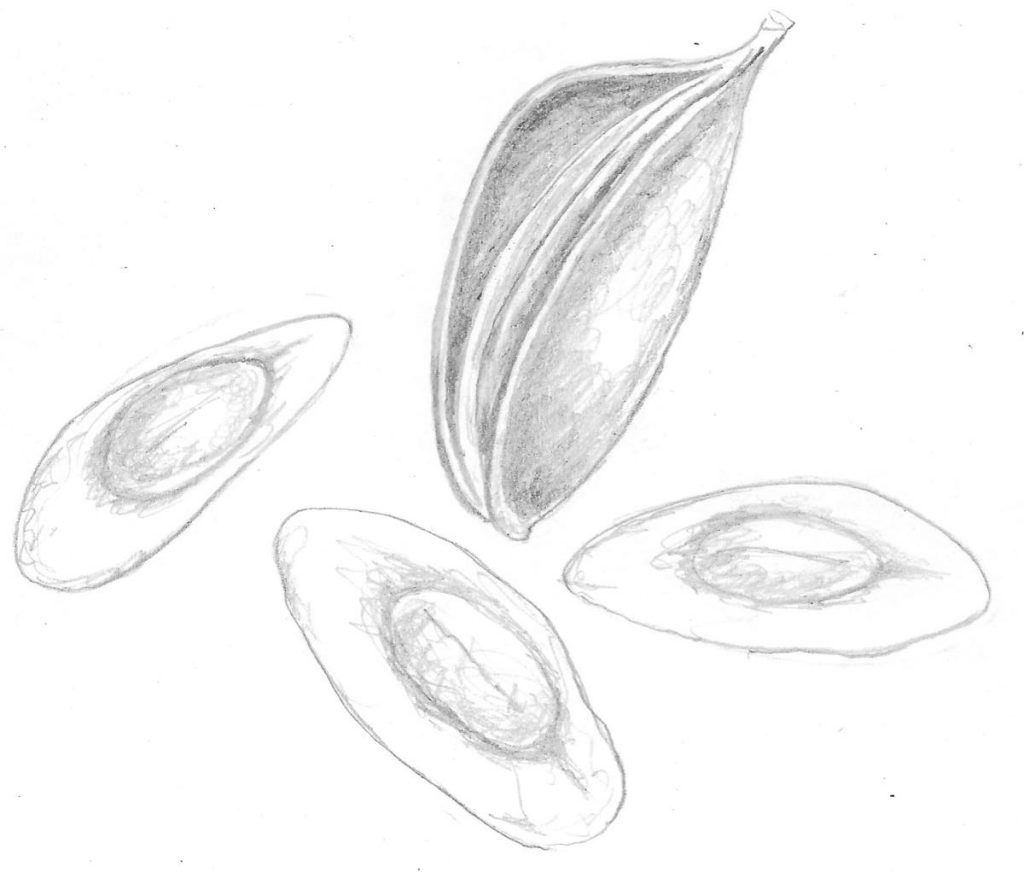
Darlingia has a dense crown of large leaves and conspicuous, strongly scented flowers which bloom from May to November. Prominent spikes or racemes of cream or white flowers are held at the ends of the branches and attract a variety of nectar and insect-eating birds. Many people find the scent of the flowers unpleasant. The fruit which follows, from November to January, are olive-green to brown leathery capsules, measuring 40-70 mm x 20-30 mm. These split along one side only, (like a mussel shell), to release several winged seeds, around 40-60 mm in size. A sketch of the seed pods is shown below.
There are many of these attractive trees in and around Paluma. Look for the distinctive green leaves in the canopy and also the aged brown leaves (dinosaur tracks!) on the forest floor next time you take a walk around the village.
The annual Paluma Push event was held last Sunday 21 July 2019. It was one of the best organised Paluma Push events in recent times. There was a ‘Check Point Operations Plan’ available in advance which was extremely informative, especially for new volunteers. It clarified set up times, duties and the number of persons needed at each Check Point. Equally useful, a digital map was provided and updated so that all organisers and volunteers were aware of the designated Check Points along the course.
This year there were four categories:- Competition 70 km. Intermediate 53 km. Recreational 42 km and the new E-bike class 53 km. Start times from Paluma were at 09.00 am, 09.05 am, 09.10 am & 09.20am, respectively.
The Paluma Dam Road was in very good condition after the recent remedial roadworks (following the February 2019 deluge) and the fastest competitor arrived at Check Point 1 in just under 28 minutes. One has to say that at many of the checkpoints some ‘assertive direction’ is necessary where the different competitor classes diverge to take different courses.
Radio communications were essential, provided mostly by handheld radios supplied by the Rural Fire Brigades, Mt Spec SES and Townsville SES. Members of all three services manned Check Points and some additional local volunteers manually recorded and counted the numbers of competitors as they passed through the Check Points. Waterfall Creek Rural Fire Brigade handled from Check Point 5A onwards, while Paluma volunteers manned the rest. Interestingly some of the Check Points which had excellent communication in previous years had some issues with static and positioning problems.
From the Check Point 1 rider count we believe there was a total of 445 competitors. The rider numbers in the first three categories were quite similar, whereas in past years the highest number of riders were from the Recreational group. There were 9 riders in the E-bike class – a recent addition to the Paluma Push competitors.
All volunteers regarded their participation in the Paluma Push as rewarding and a great day out on what was a perfect Paluma winter day. Many enjoyed the excellent barbeque provided in the Paluma Community Hall after the race.
Paluma’s own artist and potter Len Cook has taken out the major award at the 41st Hinchinbrook Art Awards. Len was named as the overall winner (Open Award) for 2019 at a ceremony at the Tyto Gallery last Friday evening (19 July).
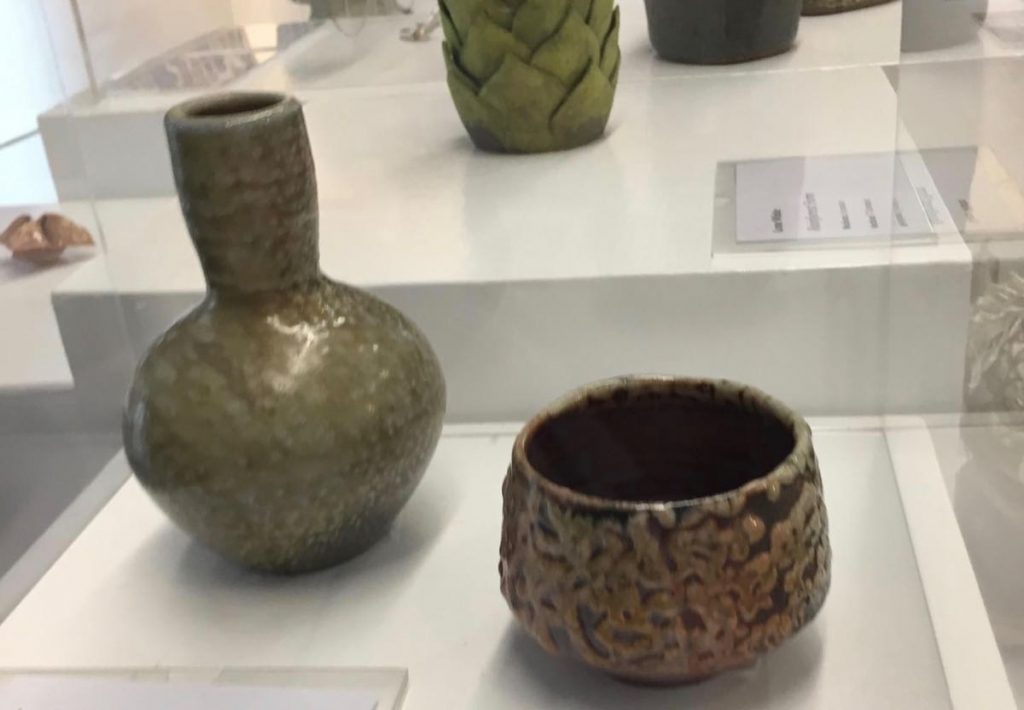
Congratulations to Len from all his friends and colleagues at Paluma for this major achievement and recognition of his exceptional work in clay. Len’s award winning exhibit was a tea bowl with a shino glaze.
Len Cook’s award winning Tea Bowl with shino glaze (pictured on the right).
Local artist, Ange Venardos also took out the Watercolour Award for her work entitled ‘Diversity’ (female form). This work features the four corners of the earth, depicted by plants including magnolia, lotus and dutchman’s pipe.
Locals and visitors to Paluma are reminded that Len Cook Ceramics is OPEN on a regular basis with the usual business hours of 10 am to 4 pm. The Gallery is located at 29 Lennox Crescent, Paluma (off Mount Spec Road).
Len Cook in his Gallery at Len Cook Ceramics, Paluma.