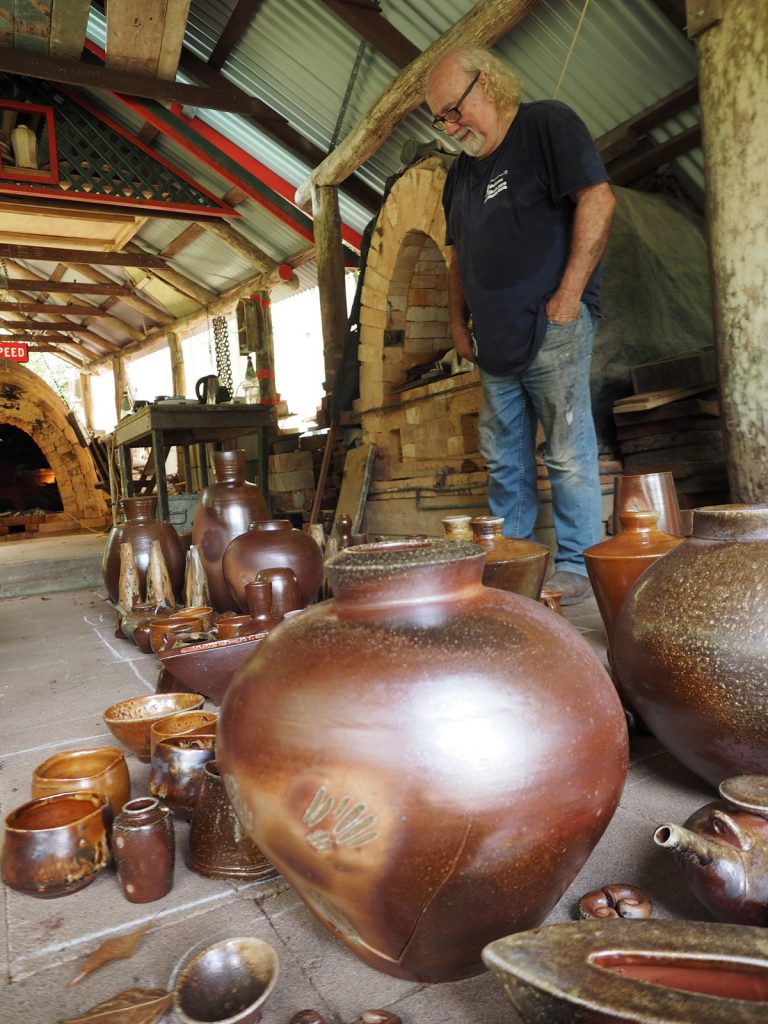
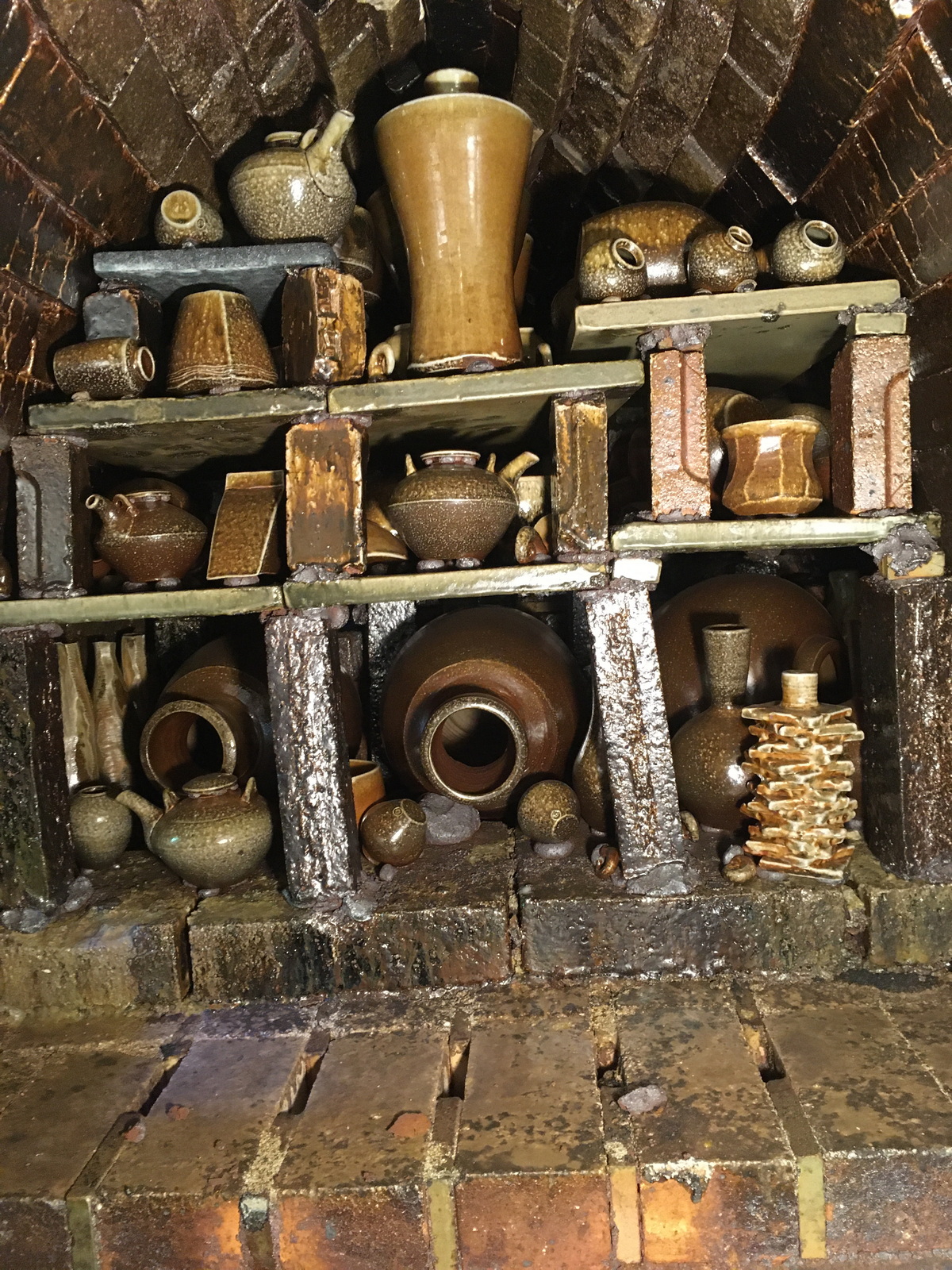
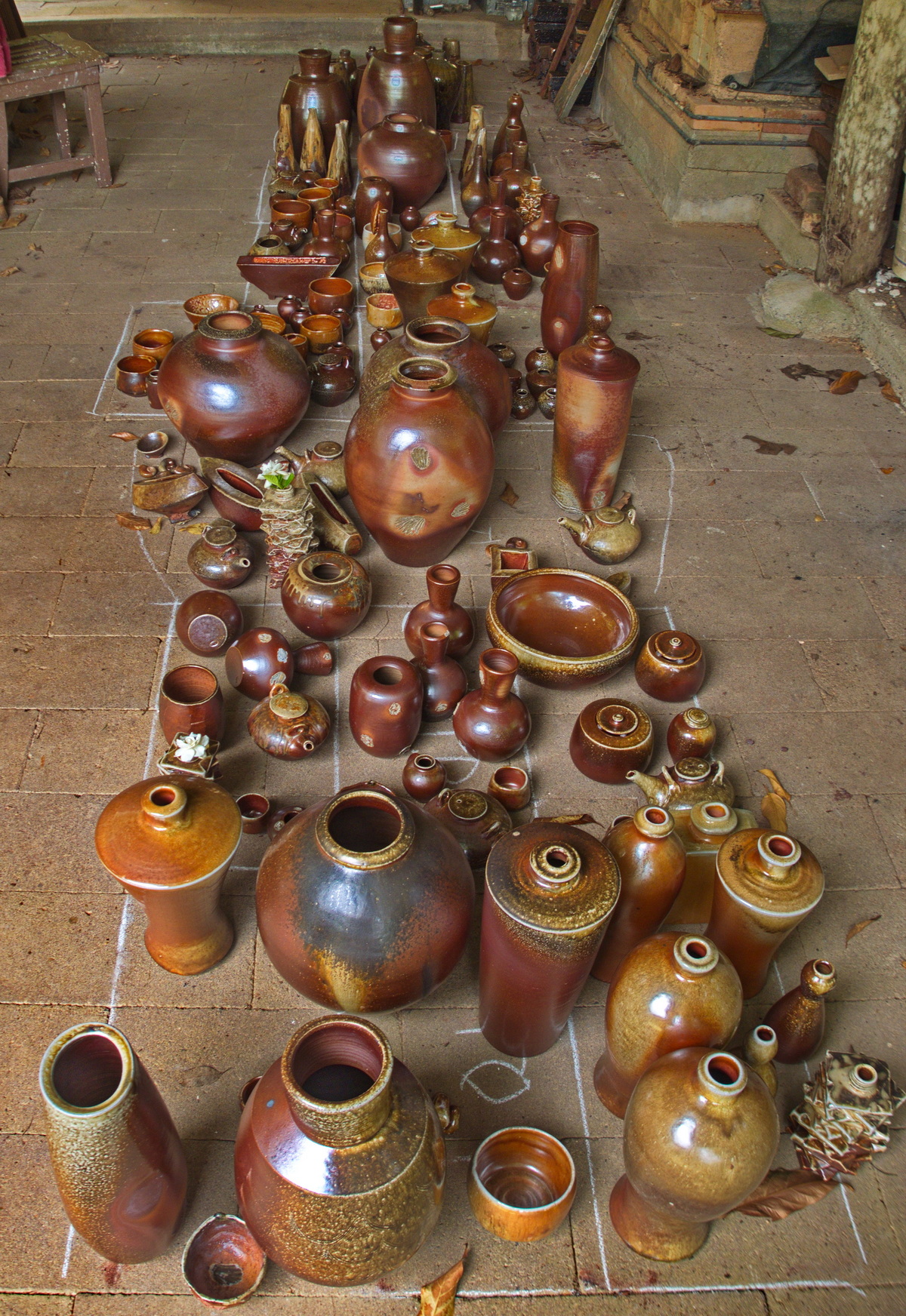
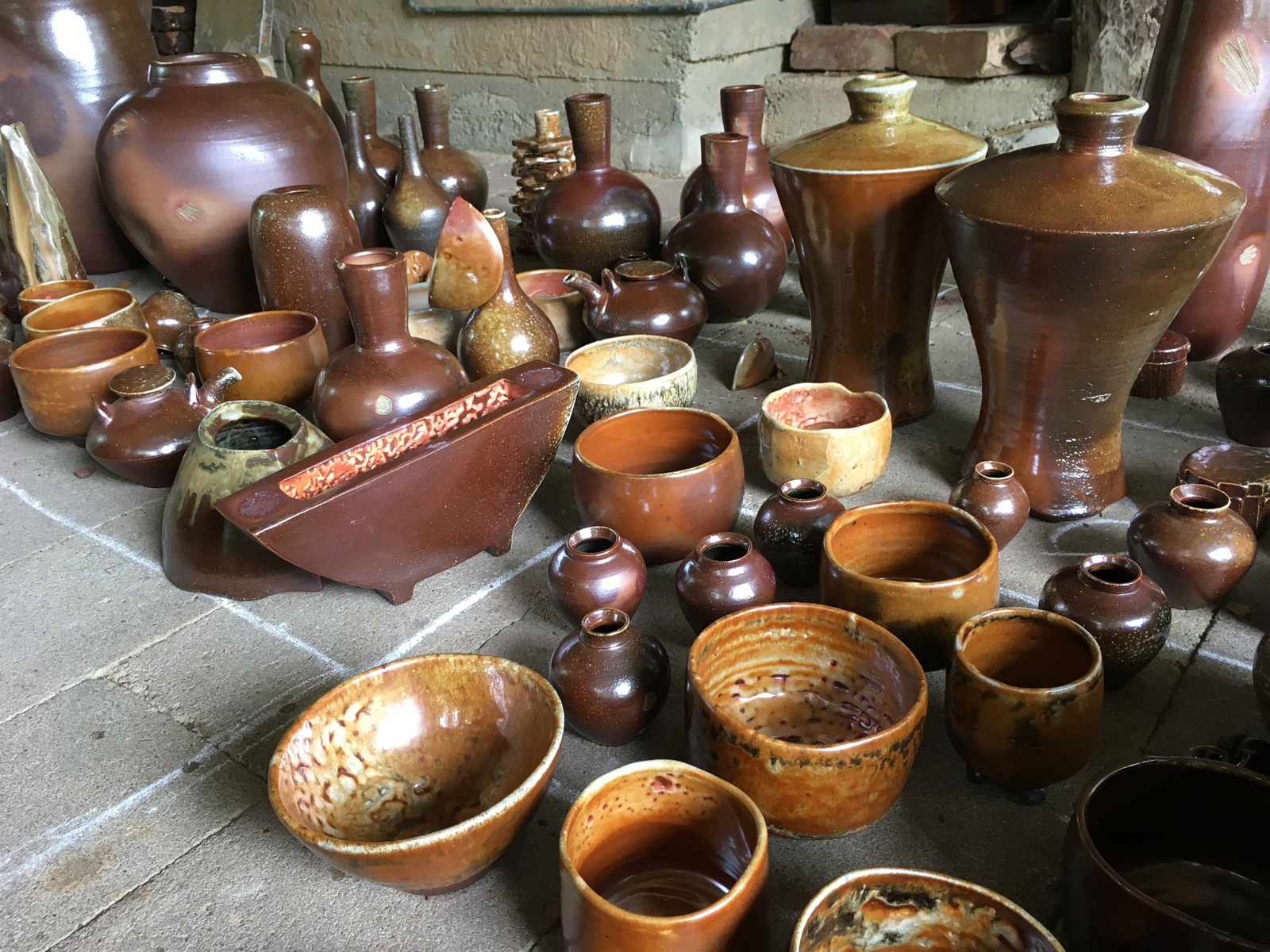
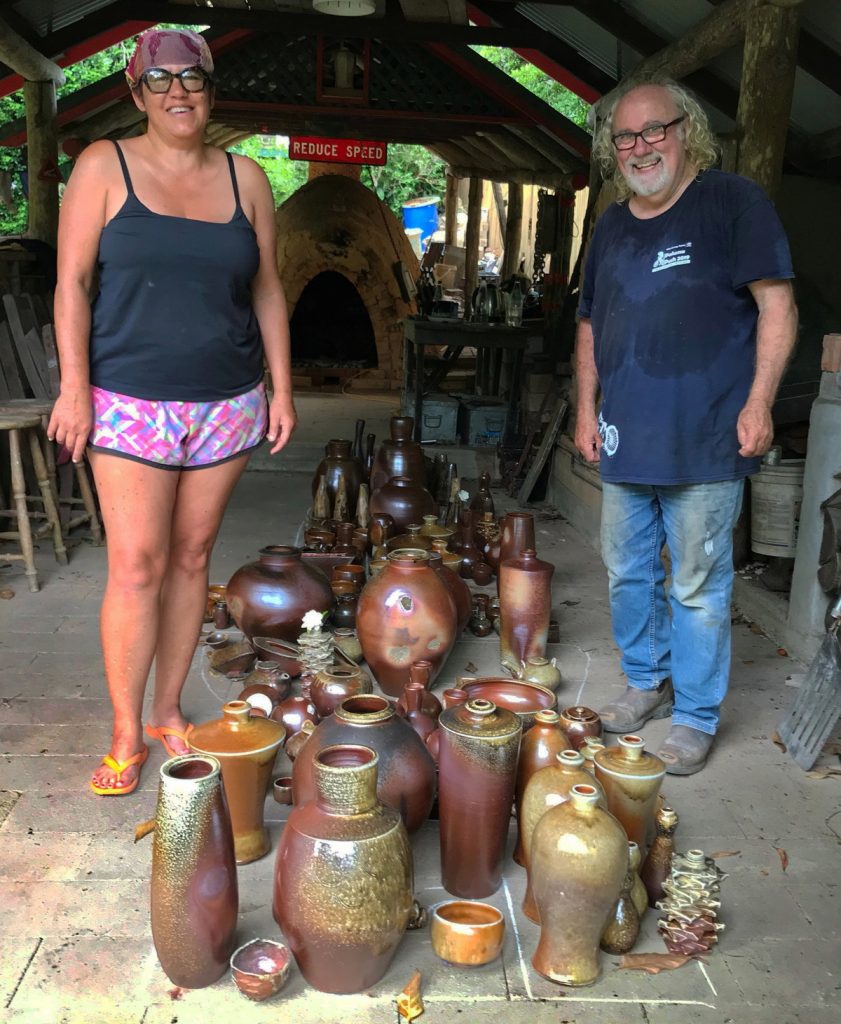
Last Saturday (Oct 31) Len and Tania, with fingers crossed in anticipation, entered the still warm belly of the Anagama kiln to find out how successful this year’s wood firing had been. I think the photo below shows the general reaction: a smile on Len’s face as he surveys the assembled pots.
To recap the events leading up to this, the process was quite simple in the telling:
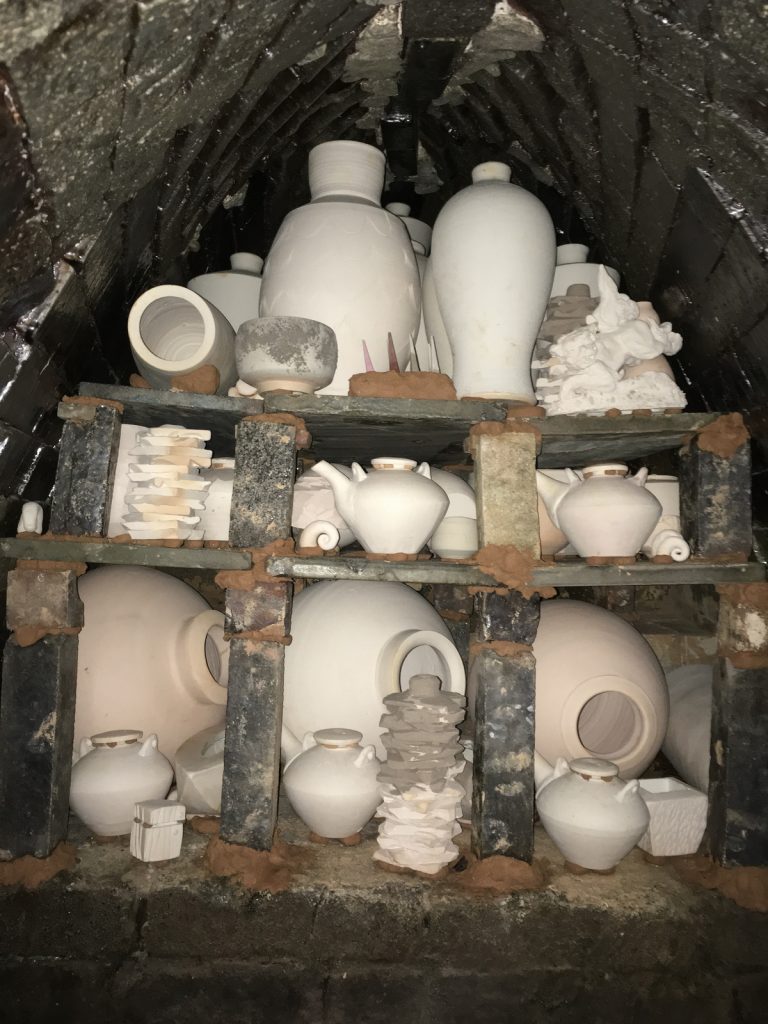
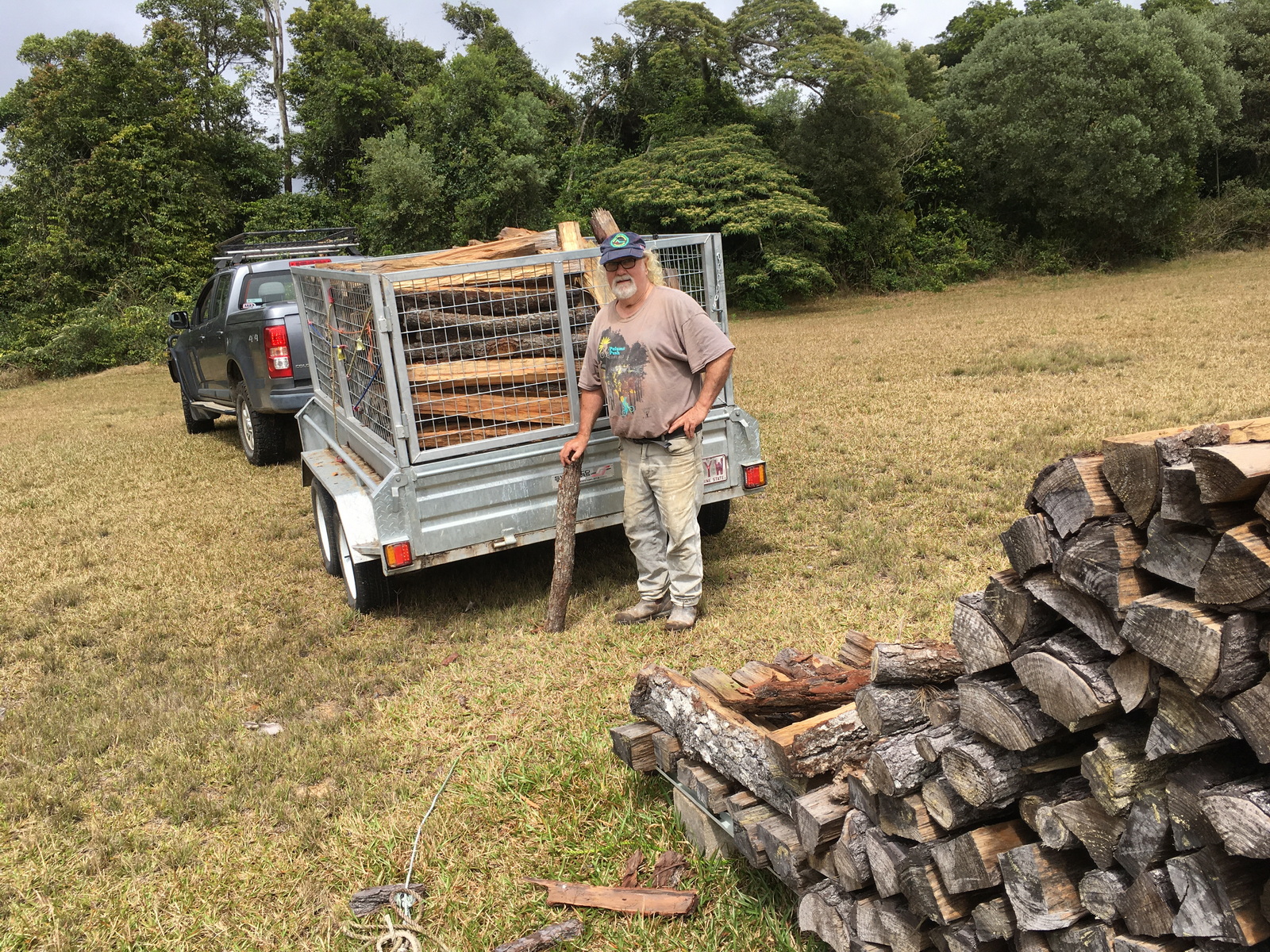
1. Insert unfired pots
2. Add a few tonnes of wood
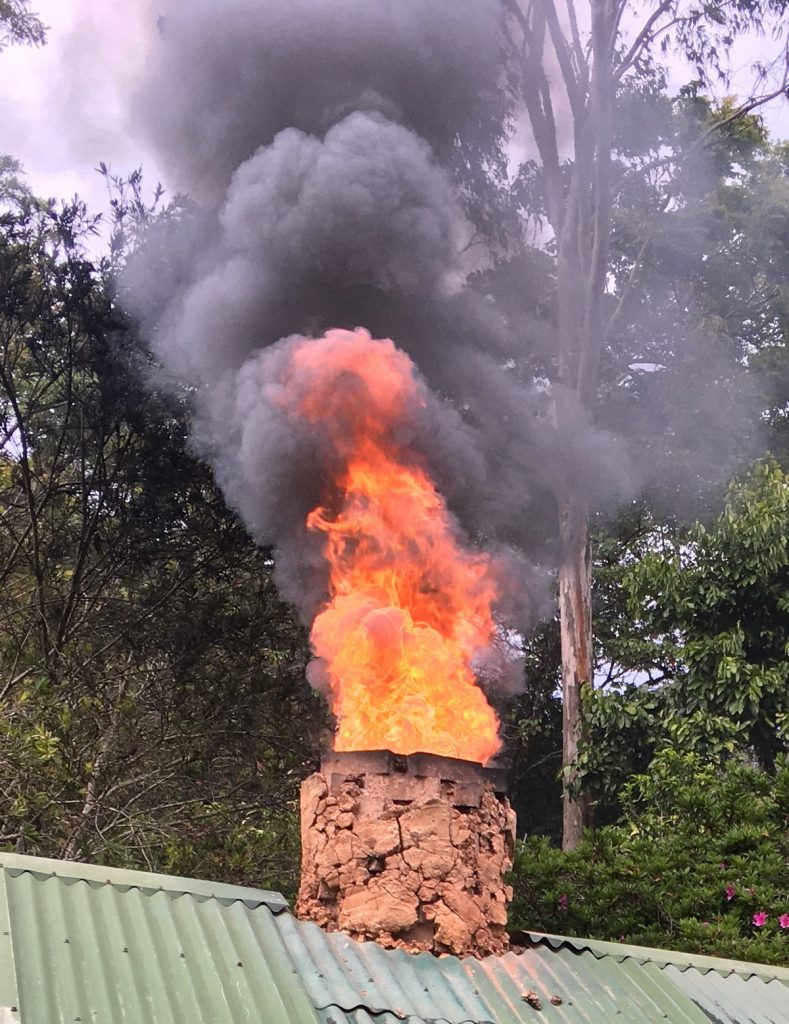
3. Burn (m-f) Burn for 100 hrs
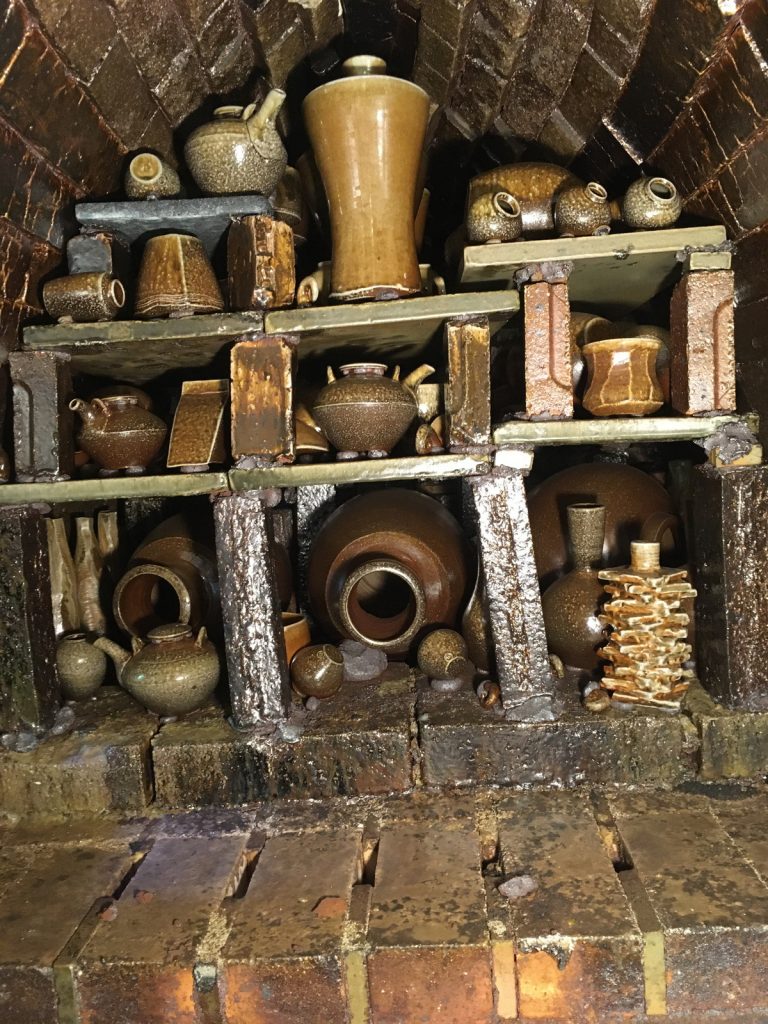
Voila! Beautifull smoke/ash glazed pots!
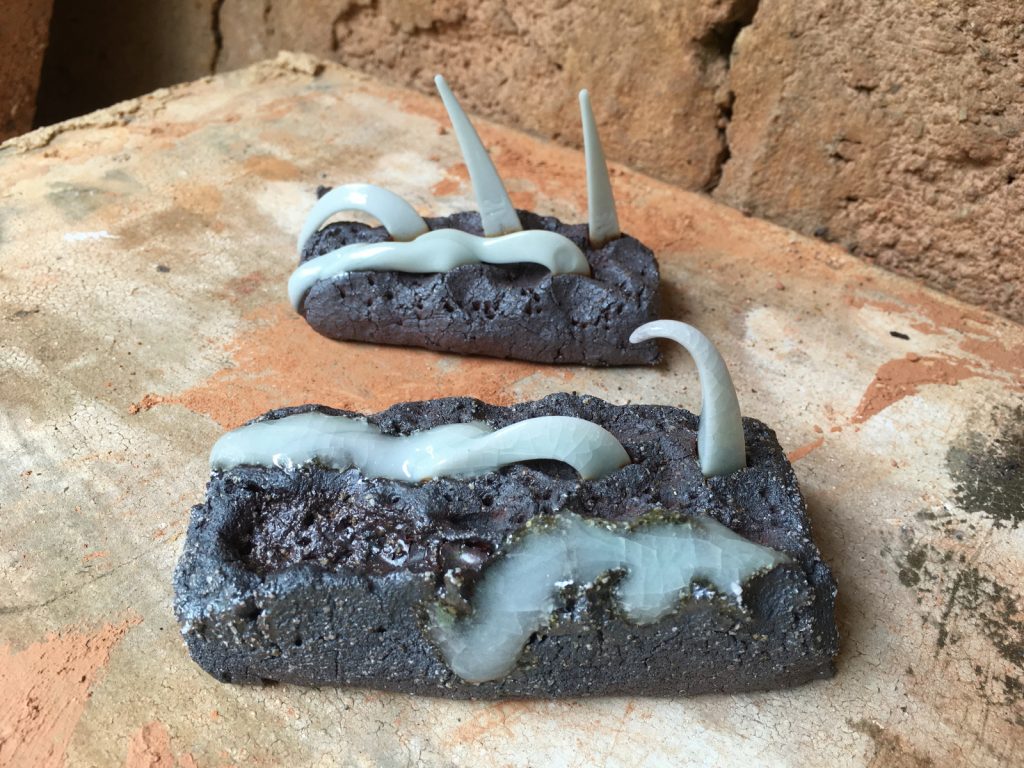
As Len tells it, the secret to this year’s success was getting sufficiently high temperatures in both the front and back of the kiln. While Len and Tania carefully monitored the digital temperature display throught the process, the final indicator that the heat was right was verified by the appearance of the “kiln cones”. Six cones were set up in the front and back of the kiln and the hope was that at least 5 of these would melt or soften enough to droop. The photo below shows the array of front cones from this year’s firing with the same front cones from a previous firing behind them. Clearly this year went better than previously with even the last cone drooping noticeably.
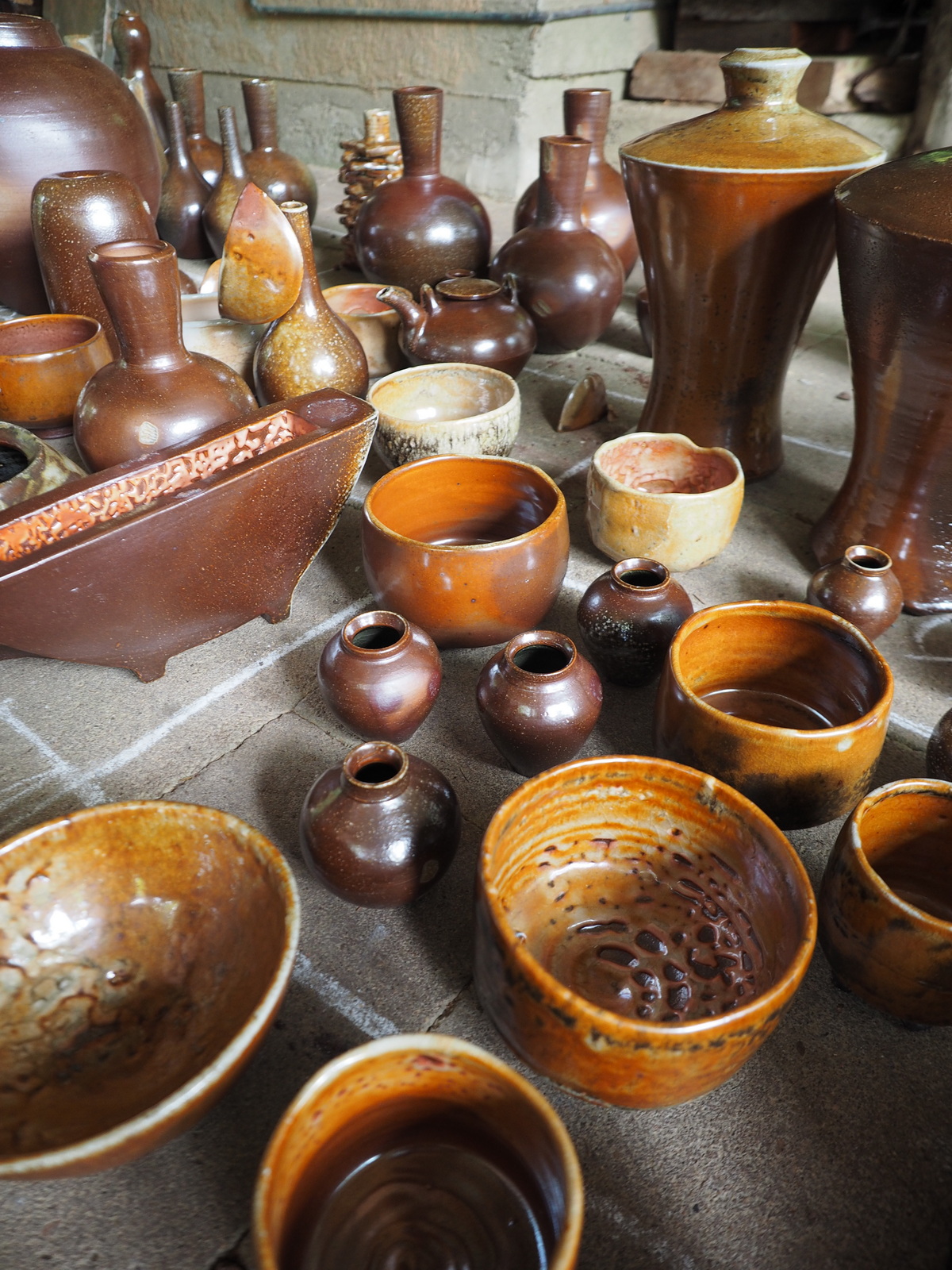
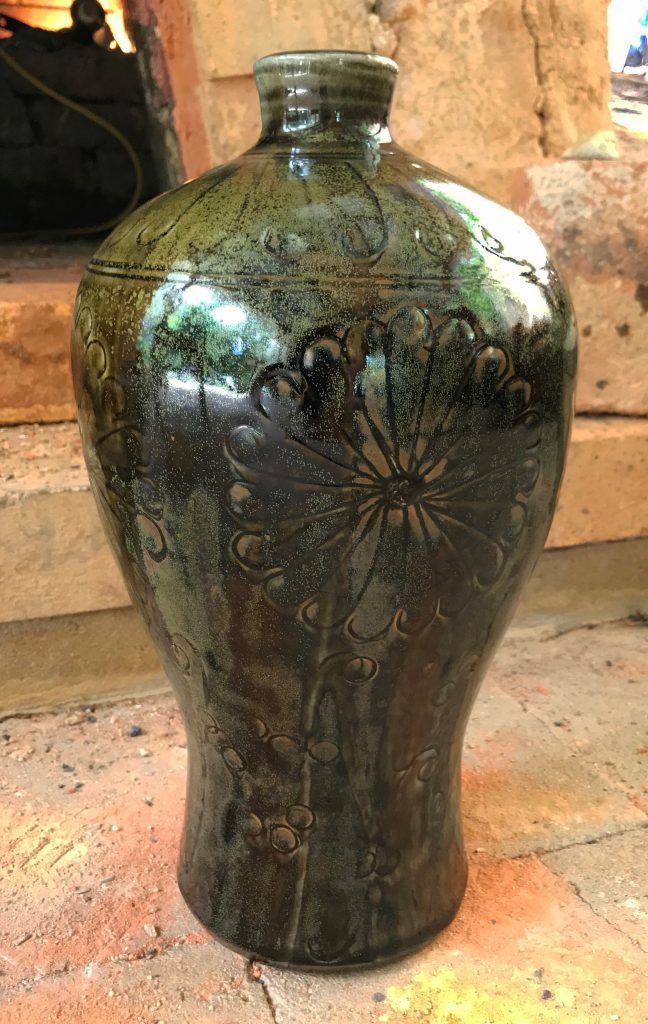
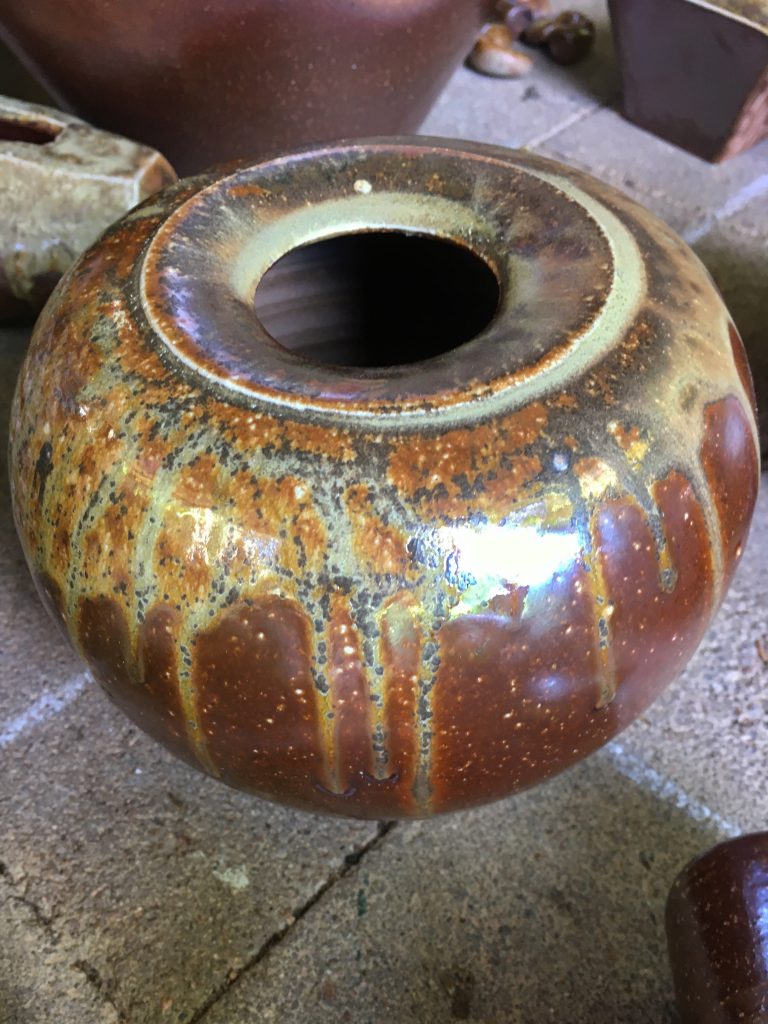
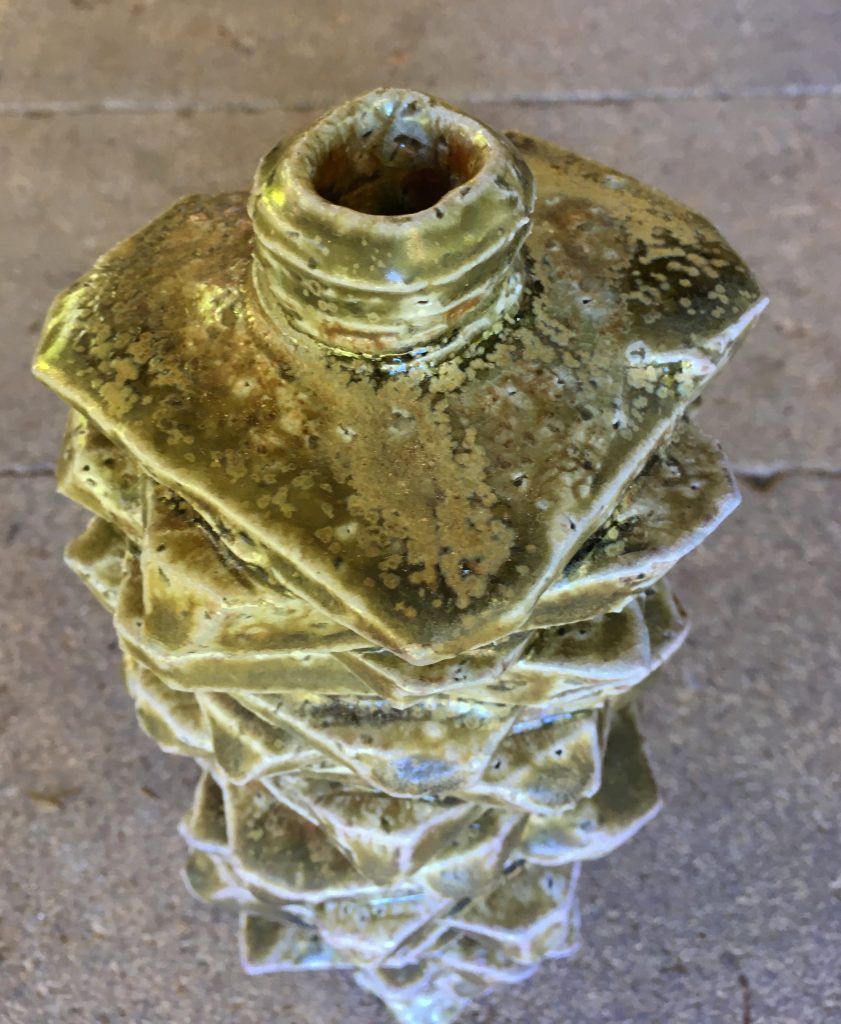
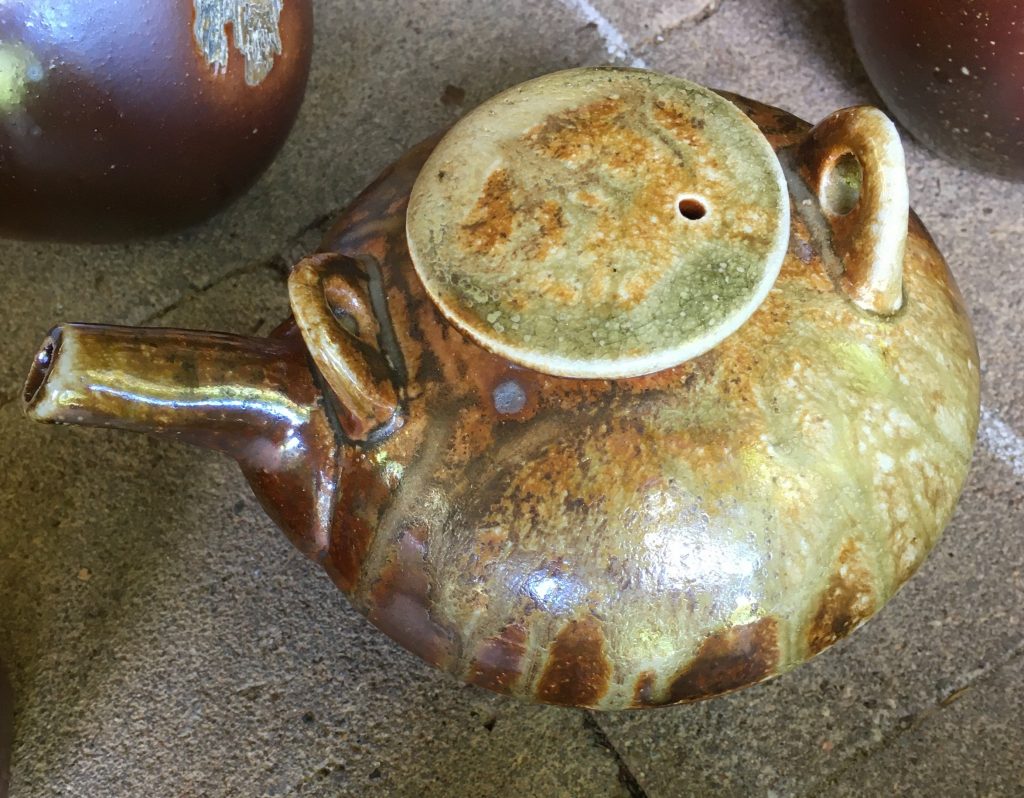
There was a huge range of pots that emerged from the kiln and each one had a unique glaze with rich colurs ranging from brown, to red, gold, green, cream and even swirls of black from carbon soot trapped beneath the glaze.
Some of the favourites individual pots of those who helped in the unpacking are shown below, but you will need to inspect them once they have been sorted and presented in Len’s studio to decide on your own personal favourite.
JLP
Congratulation to Len and Tania on the success of the Anagama firing for 2020 (Photo JLP)
Text by Jamie Oliver Photos by Juanita Poletto (JLP) & Jamie Oliver
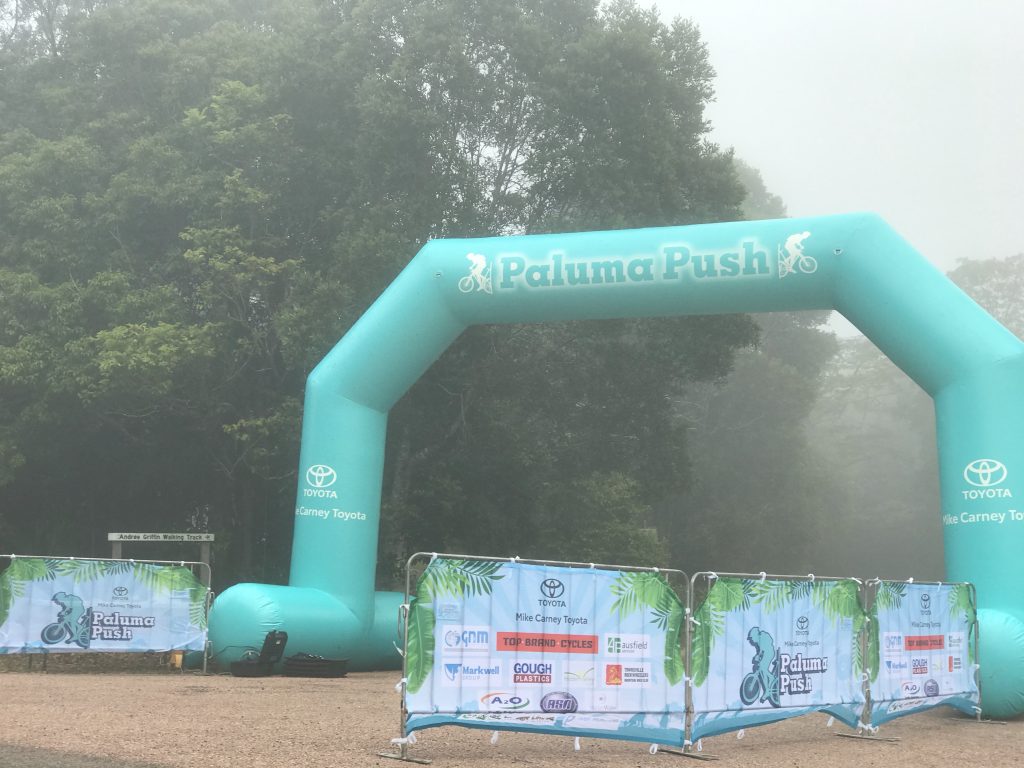
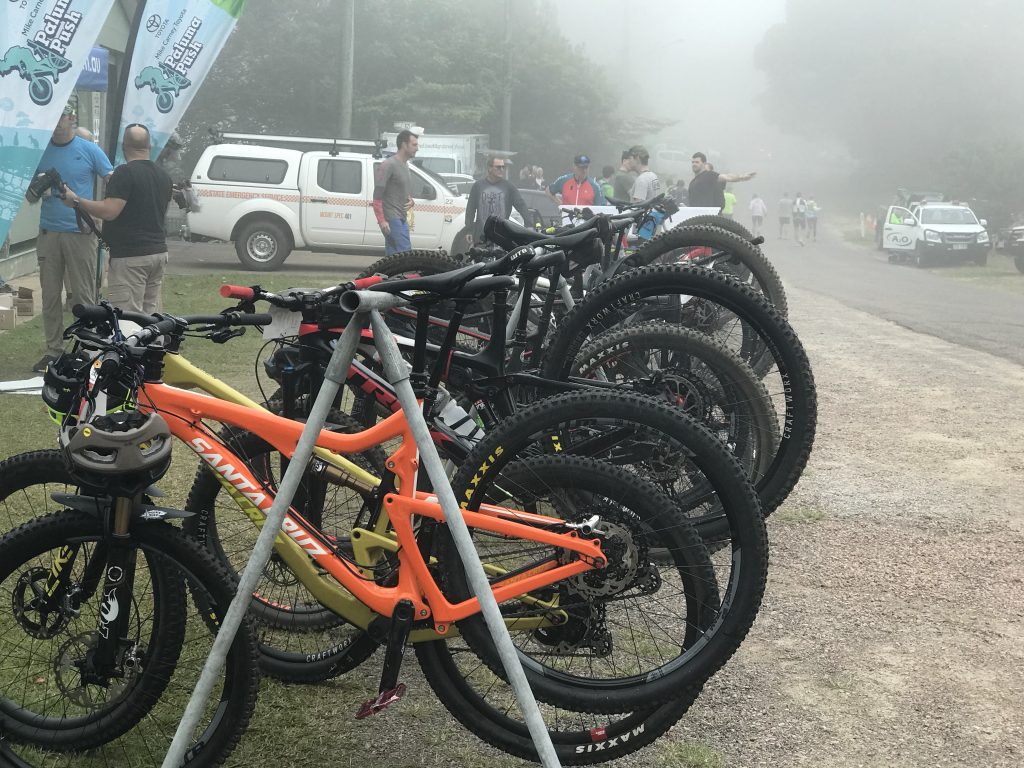
The 19th edition of the Paluma Push was a great success. We had 420 mountain bike riders saddle up for the challenge to ride from Paluma Village to Hidden Valley across 3 distances: 42km, 53km and 70km.
This also included 30 E-bike riders for the 53km course. The E-bike category has doubled in size compared to last year. We are still in the early days when it comes to E-bikes, but it is a rapidly growing option for people to get out and about riding the trails.
This was the first year Outer Limits hosted the Paluma Push after taking the event over from the Rockwheelers. Townsville’s Mountain Bike Club and Outer Limits collaborated and came to an agreement which intends to keep the Push alive, continue the tradition of the event and have it professionally run and organised. We have goals to grow the event and make it, not the biggest, but the best (and most efficiently run) mountain bike race in NQ.
The Rockwheelers have received $4000 from the event, which will go toward the mountain biking community in Townsville and aid the trail maintenance on our local trails.
This year Outer Limits introduced the “Pre Push Dinner”, which was held at the Community Hall in Paluma (The event HQ and start of the race). We had 60 people attend and we hope to grow this dinner for 2021, which will be the 20th anniversary of the event.
All photos above by Juanita Poletto
We also added a perpetual trophy “The Hayden Tiley and Peter McLean Trophy”. This is to celebrate the history of the event as the years go by. This year the winners of the 70km competition course were Michael England in the Mens and Anita Narula in the Womens.
This year we learnt a lot about the event, and we have taken many notes for next year. Thank you to the team from Hidden Valley Cabins, Charlie Allen, Len Cook and Jamie Oliver for your assistance in the lead up and during the event and sharing your knowledge with us.
Thank you to Peter Mclean for all the guidance for the event and I hope we can continue the tradition you started 19 years ago.
Thank you to all the RFS and SES volunteers that helped make the event possible. The event has donated over $5000 for their services.
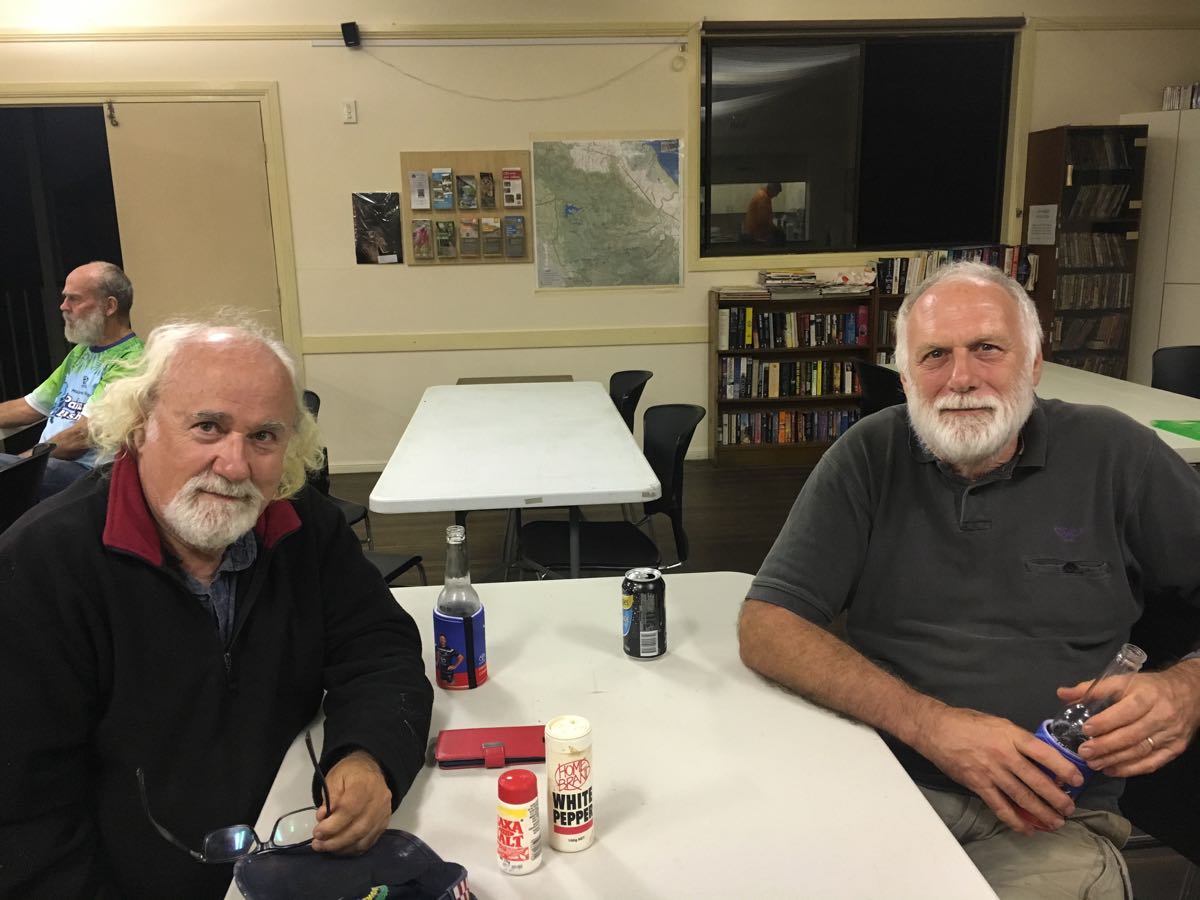
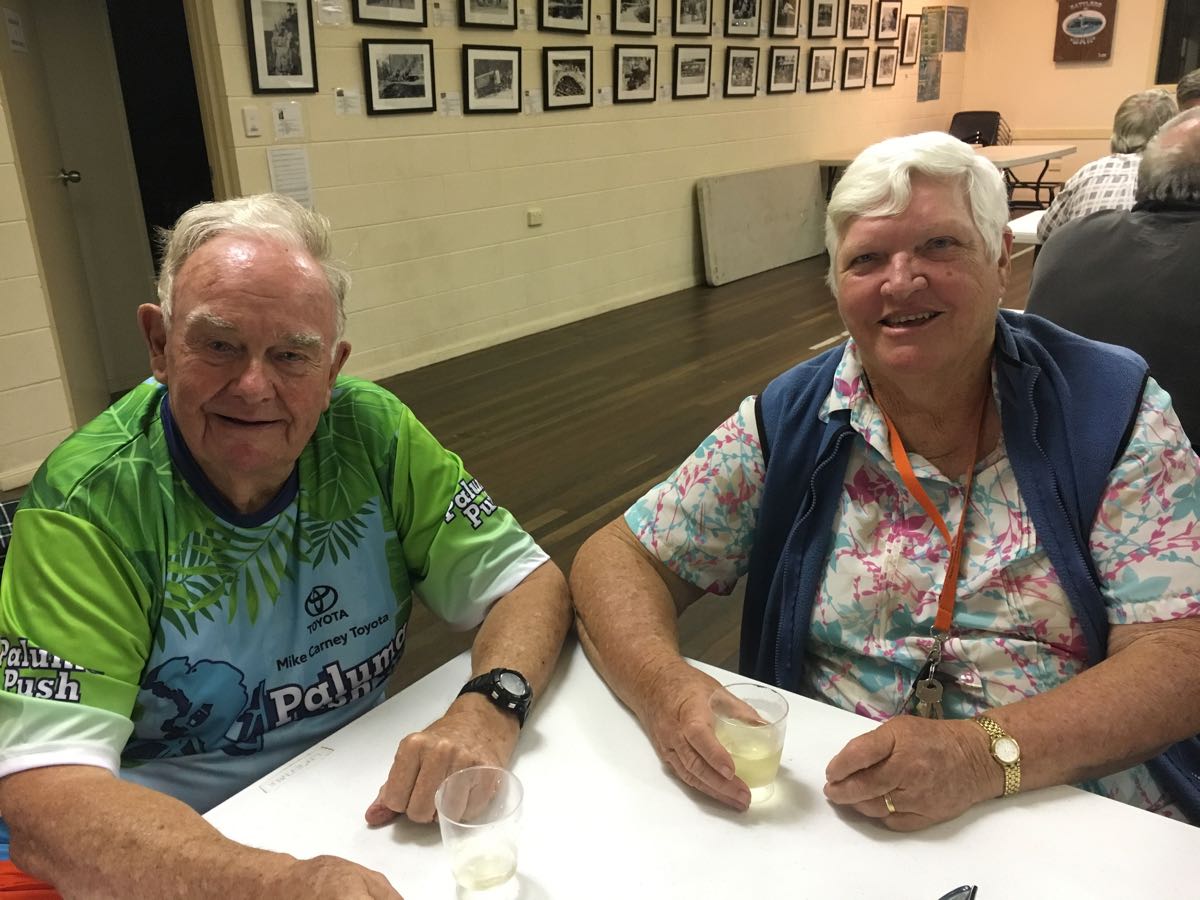
As part of a big thank you to all the volunteers, the Paluma Fire service put on a BBQ with funds from Outer limits for the checkpoint workers and other volunteers along the track and at headquarters. A great eveing was had by all!
Len Cook (RFS) and Jamie Oliver
Les and Lynn Hyland
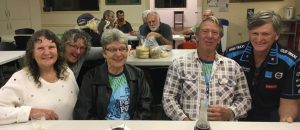
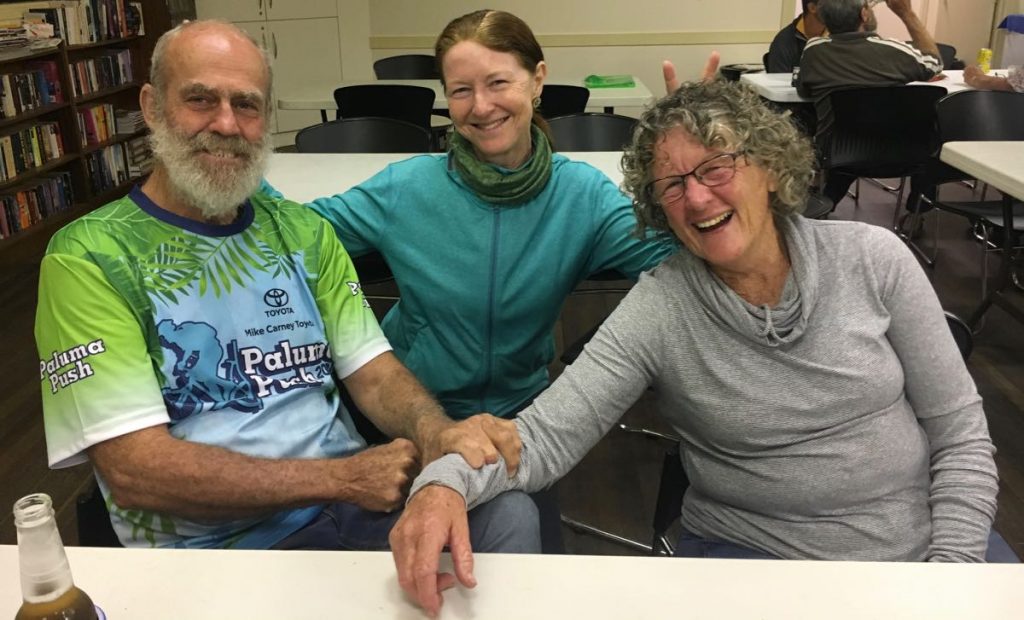
A motley crew indeed – the community volunteers for the Paluma Push
Wendy, Judy, Graham and Mark
Photos by Michele Bird
Thank you to the Furber family to allow us to clear the trails and continue to ride the trails that lead through Hidden Valley Station.
Thank you to the event naming sponsors, Mike Carney Toyota, who has been sponsoring the event for many years. Outer Limits will continue the partnership to help bring professional events into our community. They also sponsored the new “Home of the Paluma Push”- sign, which is installed in Paluma Village.
Thank you to Ausfield Services who assisted us to clear the entire Push course. I am sure those who rode the course would agree that they did a mighty fine job.
Thank you also to Top Brand Cycles, GNM, Markwell Demolition for your support of the event.
2021 will see the 20th year of the Paluma Push. We have big plans to celebrate this special occasion, one of the ways might see the addition of a 100km course!
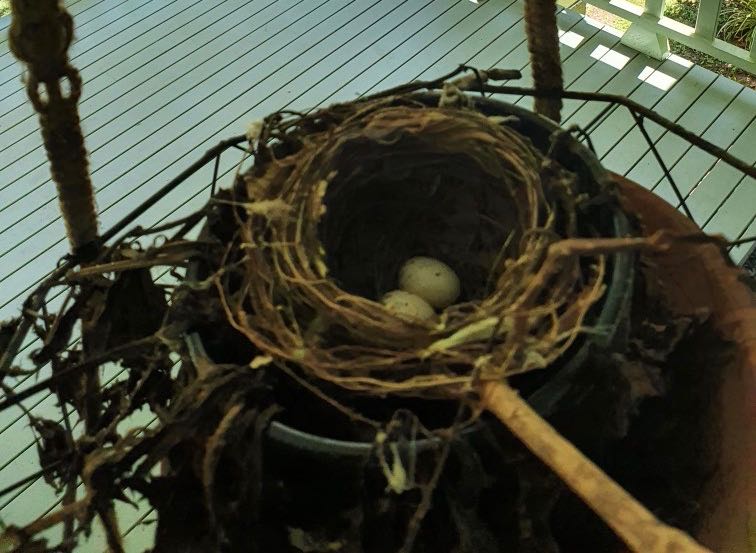
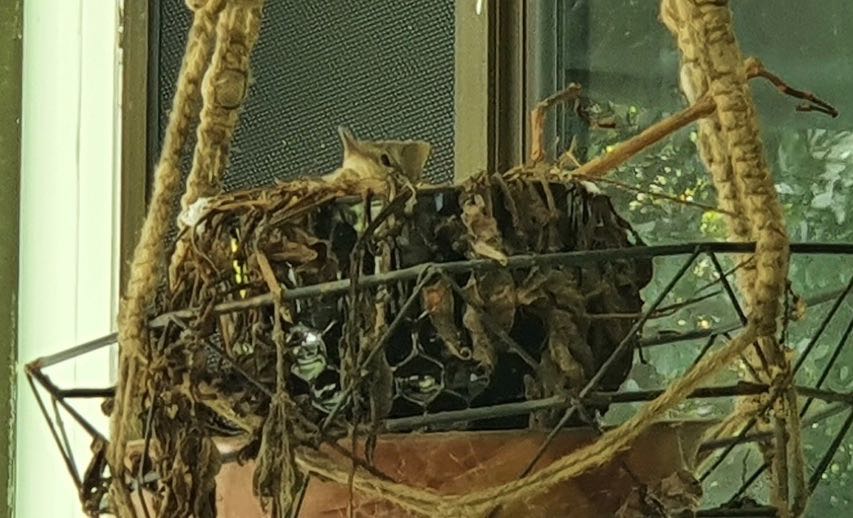
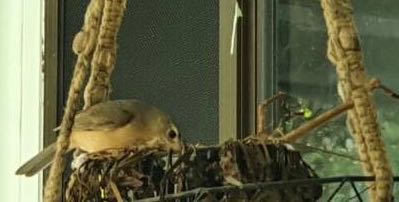
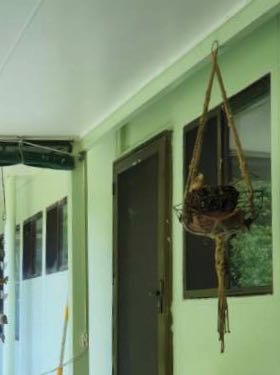
Dorothy and Peter Klumpp have kindly shared some photographs from their back verandah. Just recently the Bower’s Shrikethrush (Colluricincla boweri) has moved in and is nesting, literally on the backdoor step. The chosen nesting place is a hanging basket that once held a pot-plant. Peter says that his ineptitude at gardening has finally paid off. The plant died and the birds took the opportunity to make good use of the macrame plant hanger. Of course, we all know that the Klumpps are great gardeners, but in this case they have graduated from green-thumbs to feathered fingers!
One nesting season I had the Bower’s Shrikethrush build a nest in the plastic peg basket hanging from the (undercover) washing line. Colwyn has had the birds return several seasons to also nest in her peg basket on the back verandah.
The Bower’s Shrikethrush is endemic to upland rainforests in the Wet Tropics region. It has been described as “one of the more common plainer birds in the tropical rainforest”. No one who has heard the call of this bird would describe it as plain. Female and male birds are distinguishable in that the female has an eye ring and eyebrow of pale feathers that is lacking in the male. The Bower’s Shrikethrush feeds on insects and their larvae from the mid-canopy and often on the ground.
We look forward to an update on the nesting at the Klumpps and some photos of the new (feathered) grandchildren??!!
Two lightly speckled eggs in the nest.The Bower’s Shrikethrush sitting on eggs. Note the very dead pot plant!
Birds at the back door.
Text by Michele Bird and Photos by Peter & Dorothy Klumpp.
There is no doubt that Paluma has been a hive of frenetic activity over the past month with the rescheduling of the Paluma Push and the Paluma Dam Good Trail Run into October and early November. With the weather warming up, there has been a lot of sweating in the village of late. Len Cook also fired up the anagama kiln in late October, so things got pretty hot and heavy over on Lennox Crescent. Well, now it’s time to put out the fire, wash the lycra and put the jock-strap back in the drawer.
With the advent of Covid-19 restrictions in March 2020 the only PDCA Paluma Social Event this year has been the St. Patrick’s day celebrations. But, that is about to change……..!
This coming Saturday the 7th November, the PDCA will host its second social event for the year – It’s Monsters and Mayhem on the Mountain!
You are all invited to join your friends and neighbours for a post-Covid catchup and at the same time you can support our PDCA. Come as you are (some of you are already monsters!?!?), or come dressed as your favourite monster, ghoul, witch, demon or wizard. There will be a free drink for the best/worst costume.
As always, please bring a plate of food to share – savoury or sweet. Barman Les (Lurch) will have the bar open to serve you beverages at great prices.
The Monsters will congregate at 6.30 PM at the Community Hall.
Over the last month or so the rainforest seems to have been awakening in anticipation of the coming wet, with an number of trees and plants bursting into flower along the road as well as deeper into the forest.
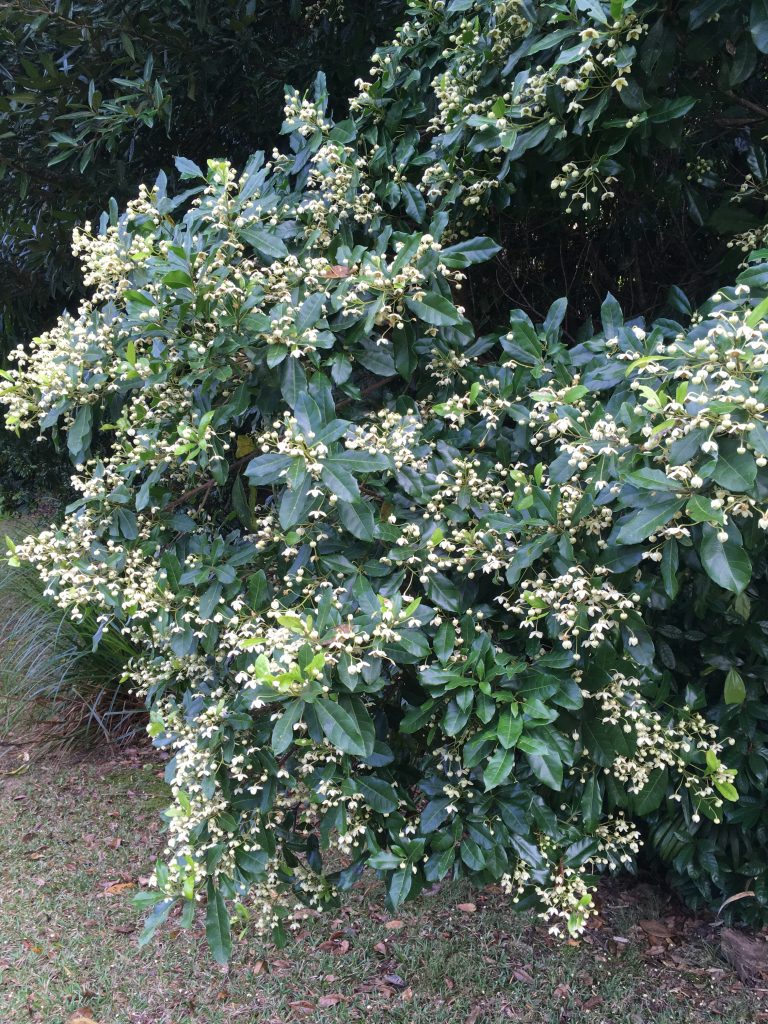
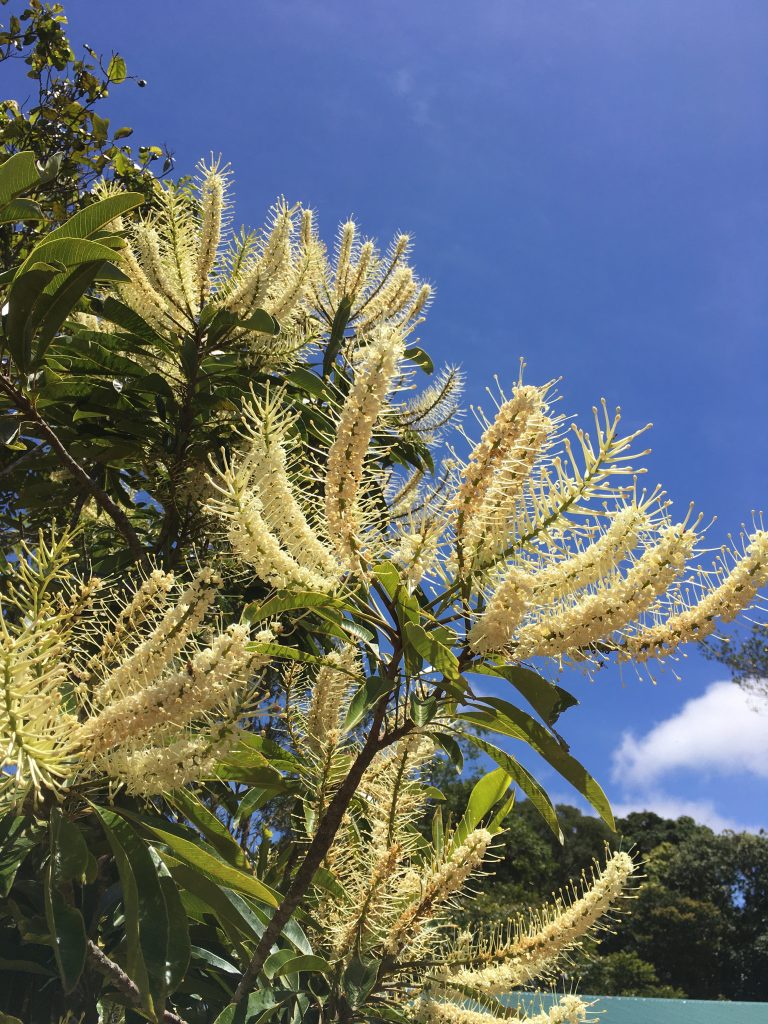
Two trees that have been putting on a great show are the blush alder (Sloanea australis) and brown silky oak (Darlingia darlingiana). Both of these have been featured in Colwyn’s Rainforest Tree of the Month series and for me its great to not only appreciate the displays of creamy flowers around the village roads and tracks, but also to now know the names and key characteristics of the trees.
Blush alder (Sloanea australis) beside Mt Spec Rd near the Paluma Environmental Education CentreBrown silky oak (Darlingia darlingiana)
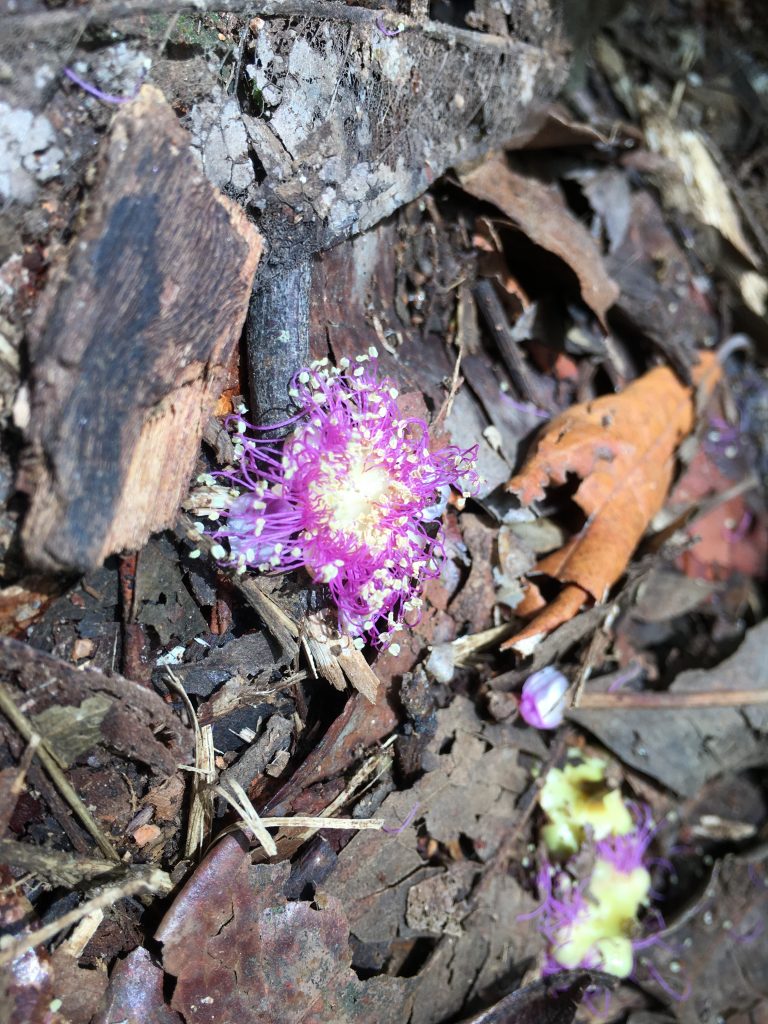
Another tree that is currently flowering along the tracks, creating small patches of purple petals on the ground is the paperbark satinash (Syzygium paryraceum). Many of us would be familiar with the beautiful bright purple fruit from this species which appears on the forest floor around Christmas time, but I had not realised that the flowers were equally attractive (albeit a bit more subtly).
There are probably other equally beautiful trees in bloom that I have not seen, so feel free to add to this list using the comments section of this post. There should be a Tree Warratah in bloom somewhere in the village?
Text and photos (unless indicated) by Jamie Oliver
Also known as Powder-puff Lilly Pilly and Wilson’s Satinash, this tree was possibly named after Dr Thomas Braidwood Wilson, (1792 – 1843), a botanical collector in the 1890’s.
It is an unremarkable-looking little tree, with its straggly growth under and among the protective foliage of neighbouring trees, but it bears beautiful, pompon flowers which make the plant worthy of recognition. Although not endemic to Paluma, there are several examples of this Lilly Pilly in Paluma gardens. Perhaps the most striking, as it is bearing blooms at present, is in the garden bed beside the office at PEEC. Another small shrub grows in the Trees of Memory grove, alongside the memorial stone.
The natural distribution for this Lilly Pilly is in the rainforest at Whyanbeel, near Mossman to Hinchinbrook Island, at altitudes up to 850 metres.
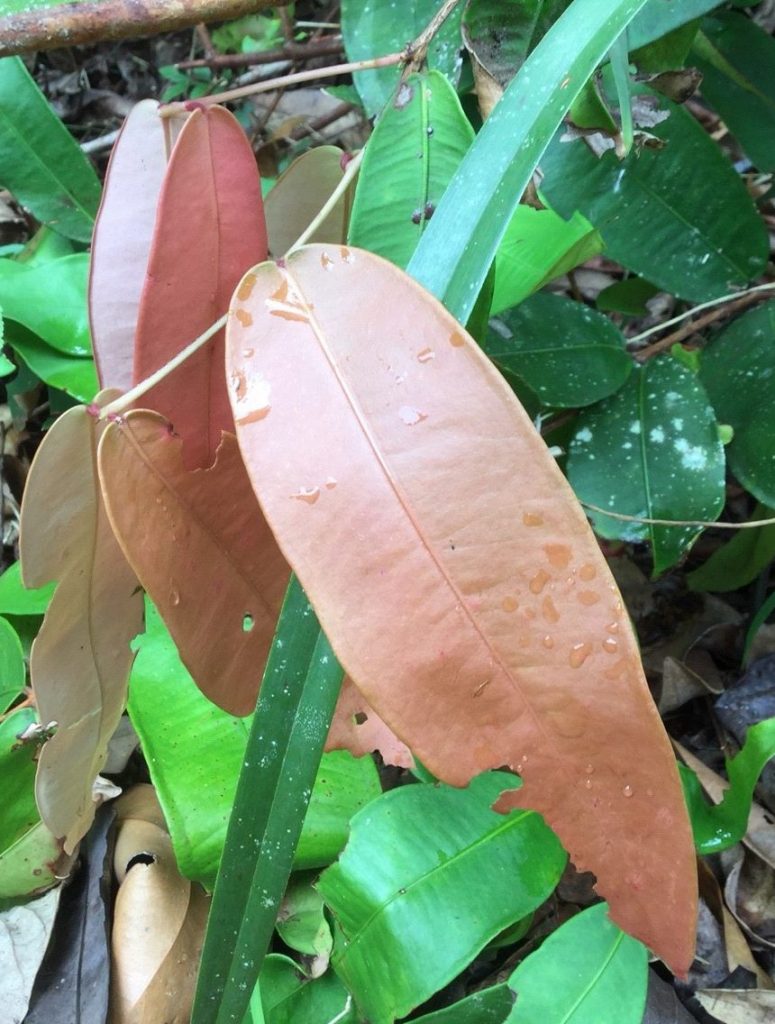
The leaves of this tree are distinctive. They are simple, alternate or opposite, hairless and can be quite large, growing from 80 – 190 mm by 22 -54 mm. with a recurved margin. New growth is spectacular with deep salmon-pink colouration.
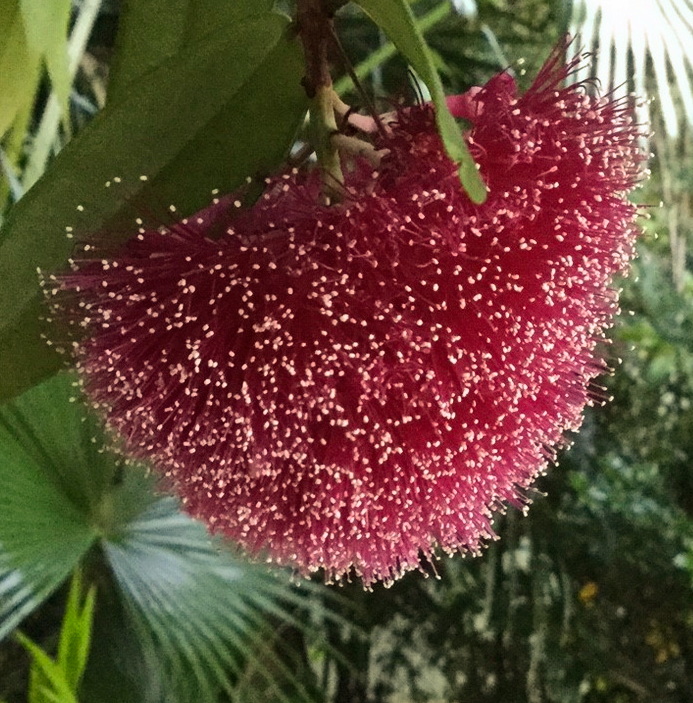
Flowers, growing in axillary or terminal panicles, hang modestly among the foliage and can easily be missed. The individual flowers are tiny, the red trumpet shaped calyx hidden by the dense cluster of magenta to crimson stamens, about 20 mm in length. They form a dense, soft pompon about the size of a mandarin, hence the name powder-puff. An accompanying photo shows the remains of the flower panicle after the stamens have gone. Flowering season can last from June to December.
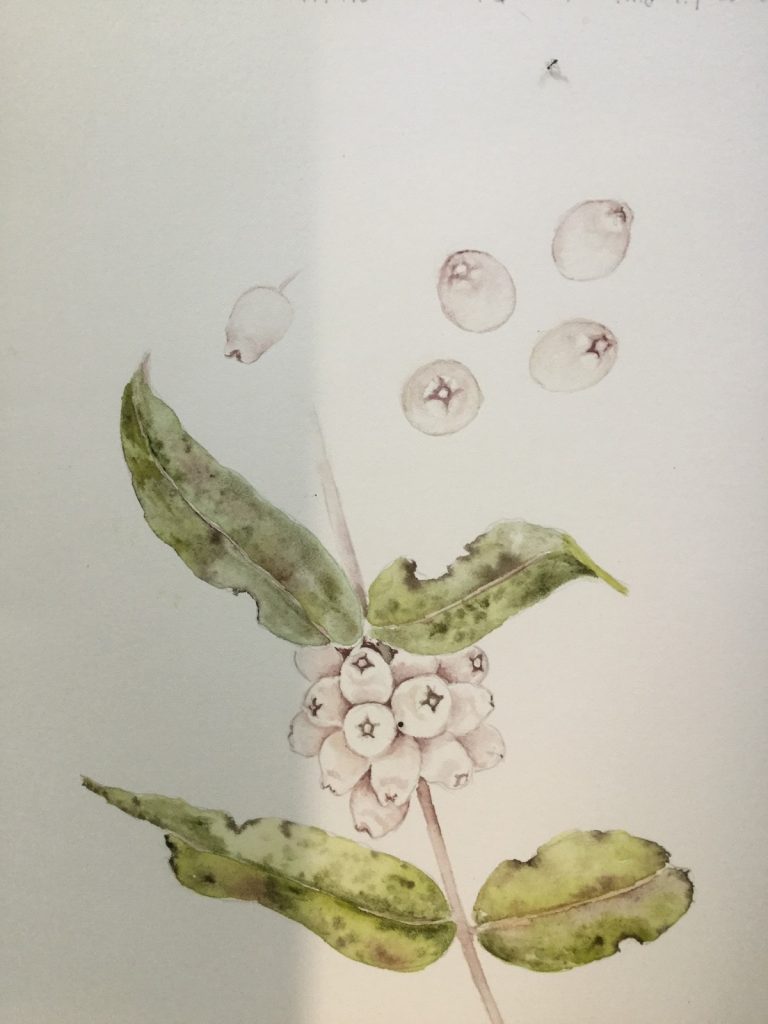
The fruit of the Powder-puff Lilly Pilly is a fleshy white or cream berry, 10-18 mm long by 10 -16 mm long. It contains one seed. Like most Syzygiums, the fruit is edible but is very sour and unpleasant to eat raw. As I do not have a photo of the fruit, a sketch will have to suffice. Note the ant which was determined to get into the picture!
Next time you stroll around the streets of Paluma, see if you can spot one of these demure little trees.
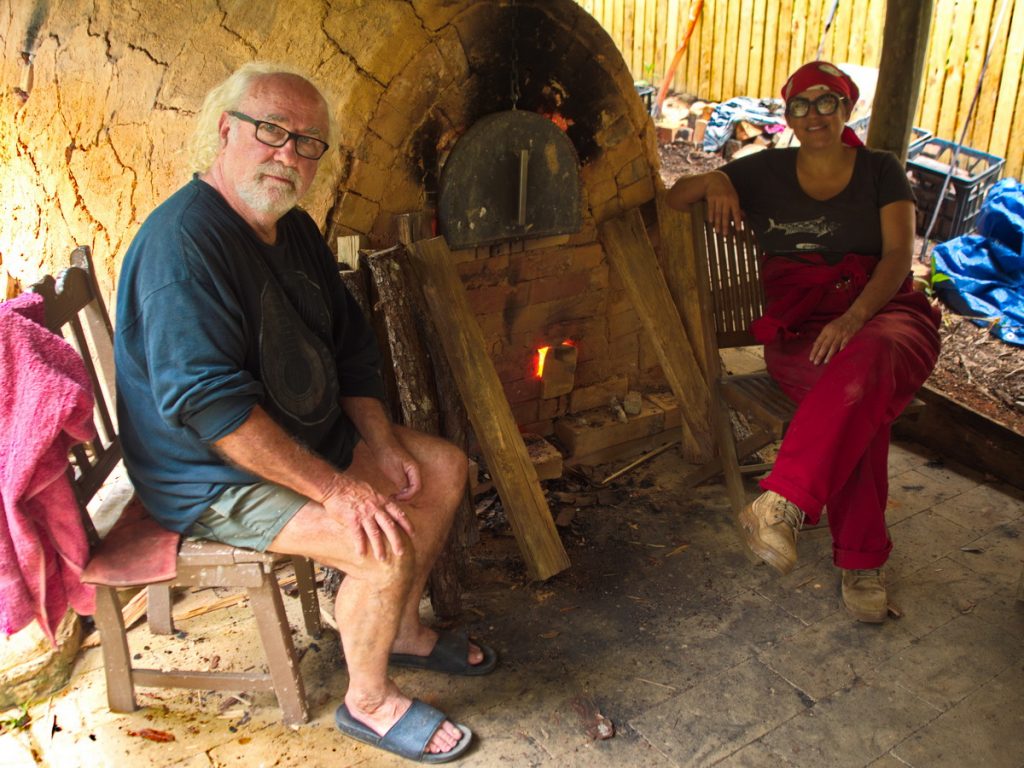
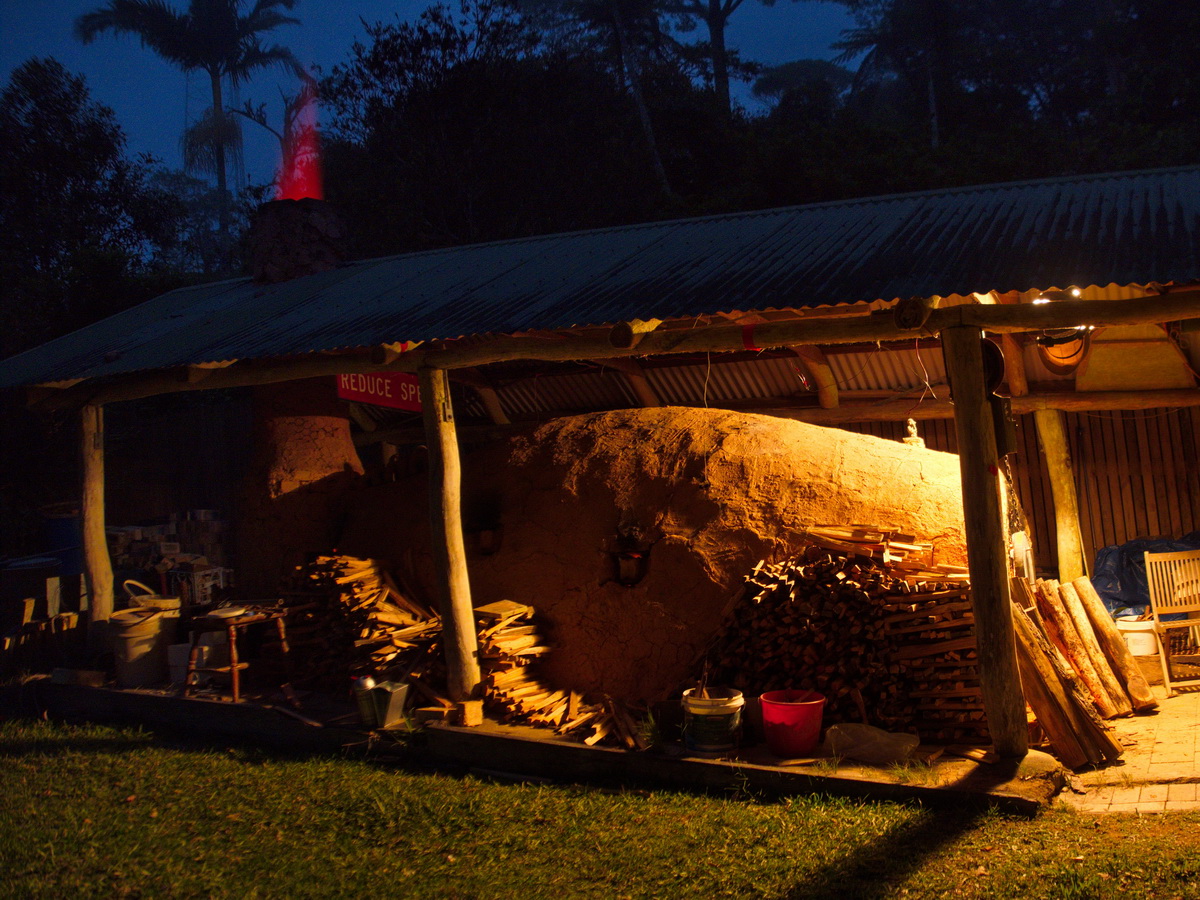
Len Cook’s famous Anagama wood kiln was fired up this Monday after a two year break, and those in the village would not have missed the smoke and fire belching from the chimney over the last four days.
As of writing, the kiln has been going for over ninety hours hours and is due to be shut down and sealed up on Friday evening. This year Len was supported by a visiting potter from down south, Tania Edwards, with occasional neighbourly assistance from Jamie.
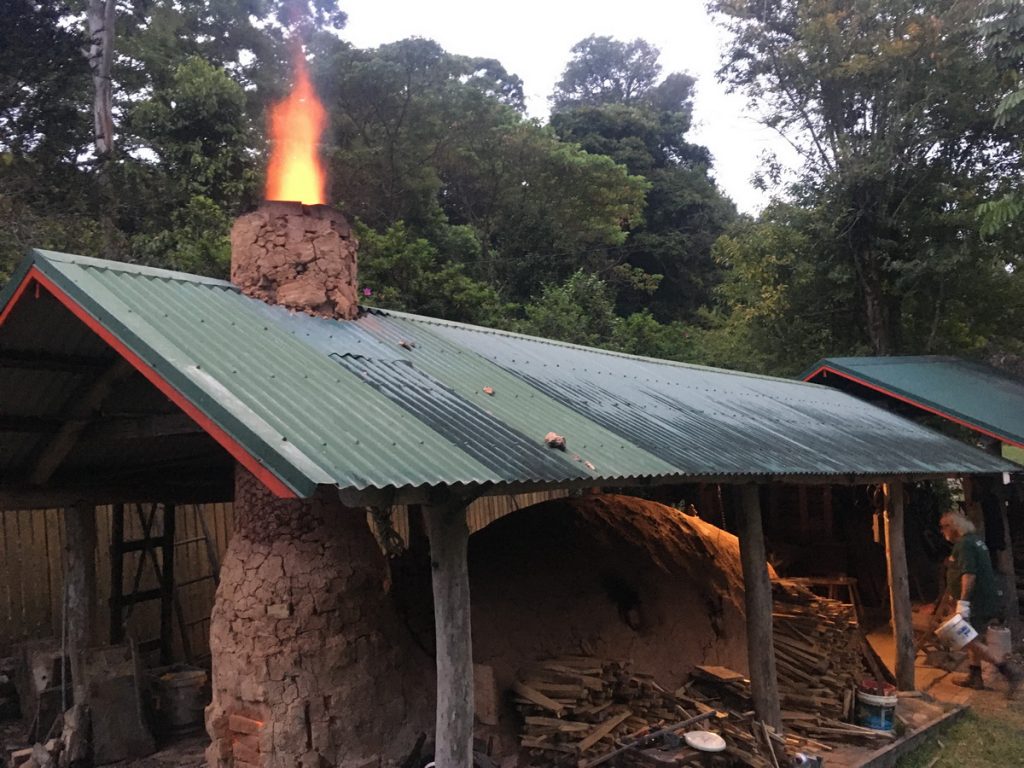
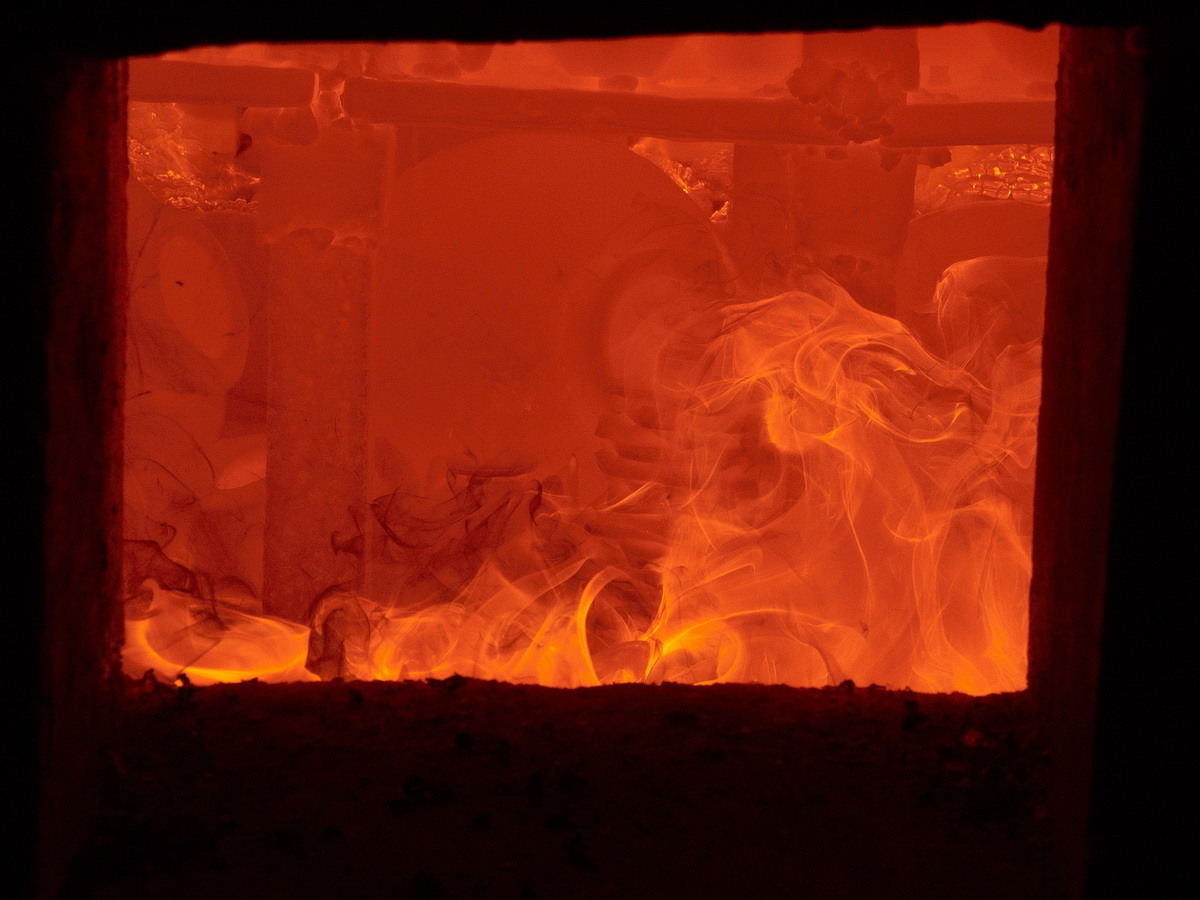
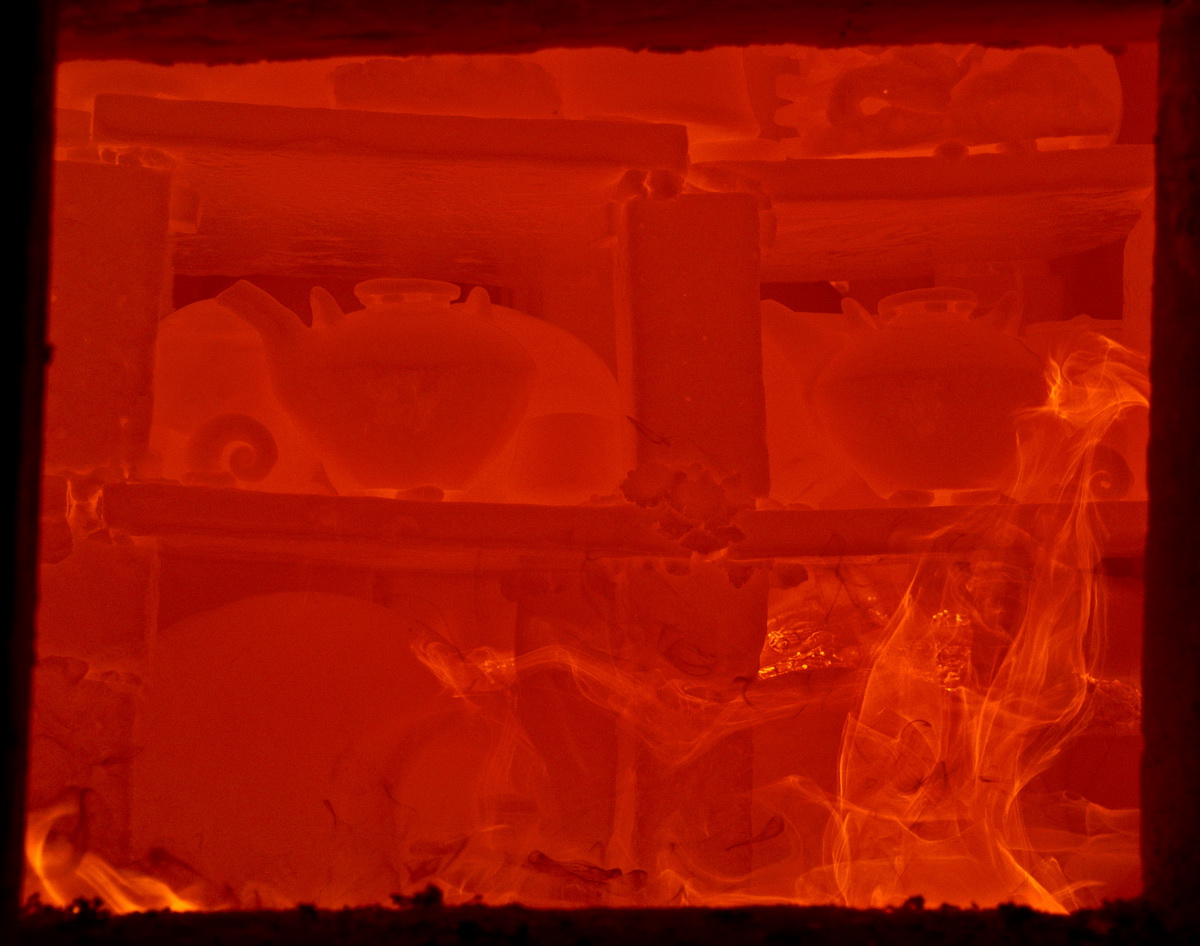
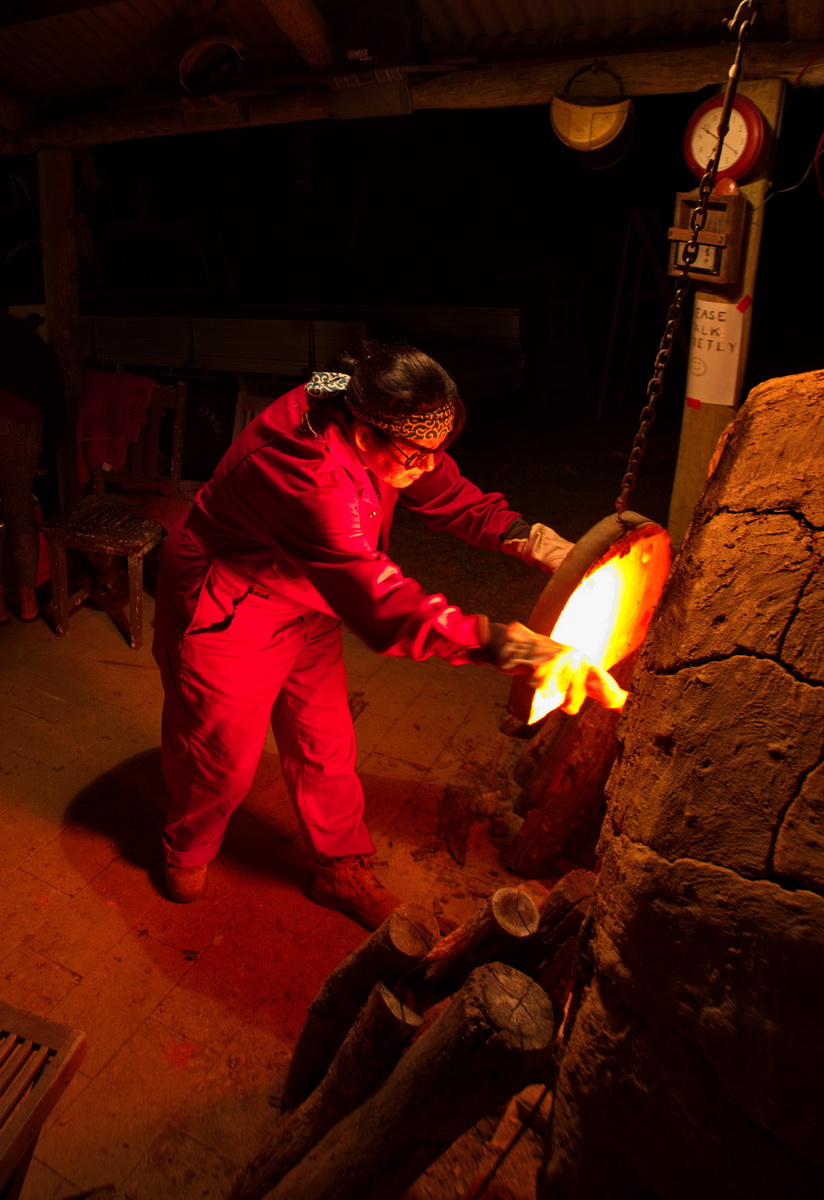
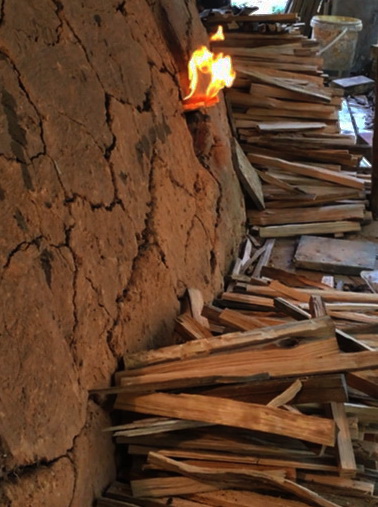
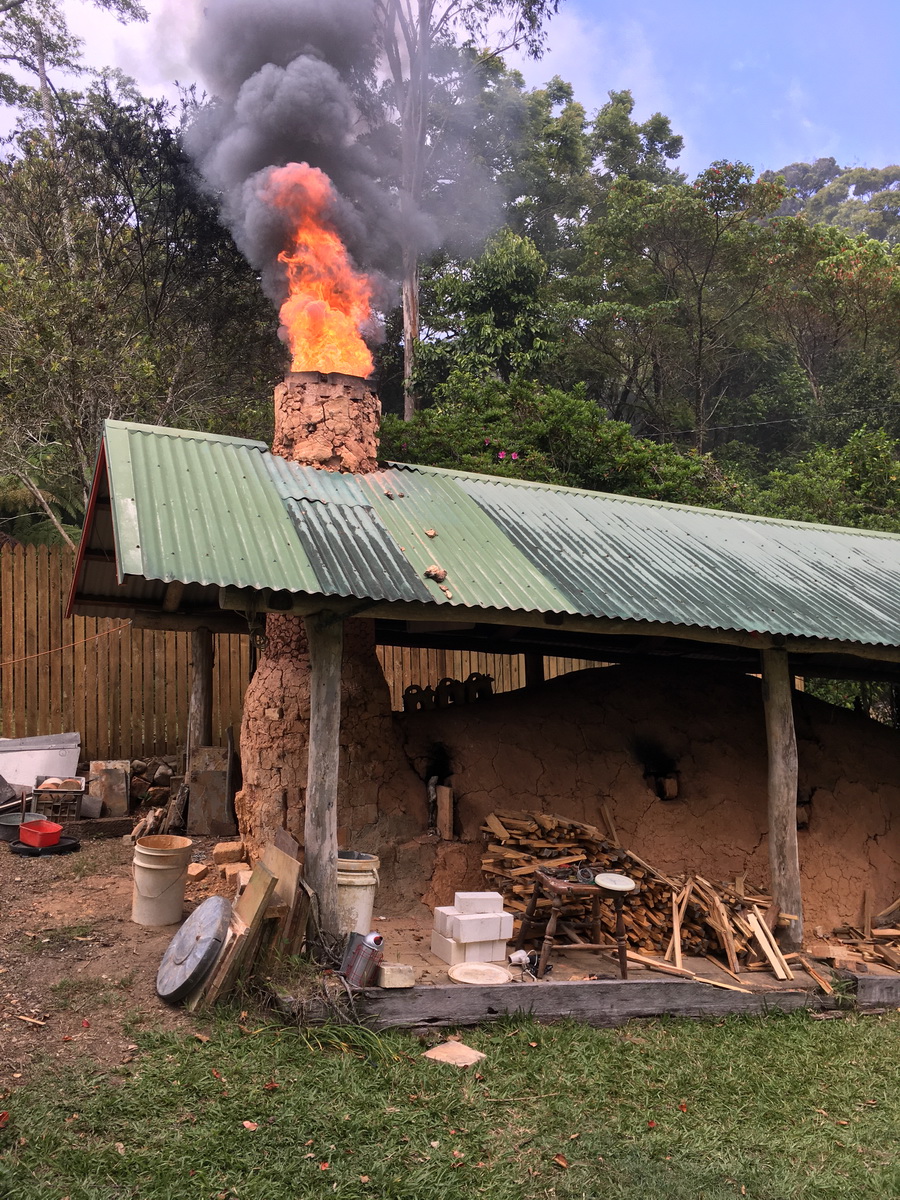
The Anagama firing is always a visual spectacle, with a roaring firebox that consumes tonnes of wood, and side stoke holes that occasional belch fire, and a chimney that sends smoke and flame skyward for 100 hours straight. Len is reportedly pleased with the firing this year, having reached temperatures in the front and back of the kiln that should be sufficient to produce some spectacular pots. However the outcome won’t be known in until next Saturday when the kiln will have cooled sufficently to be unsealed and inspected. I’m sure the results will be pretty impressive.
Len and Tania having a break after more than 90 hours “feeding the beast”
In the mean time, here is a selection of pictures from the firing.
Sam Stedman and the team from Outer Limits are calling for Volunteers from the Paluma Community to assist with the organisation of this year’s Paluma Dam Good Trail Run. This event will take place on Sunday 1 November 2020.
If you can assist and you are keen to be a volunteer, please contact Sam on mobile: 0421 484 211 or send an email to info@outerlimitsadventure.com.au
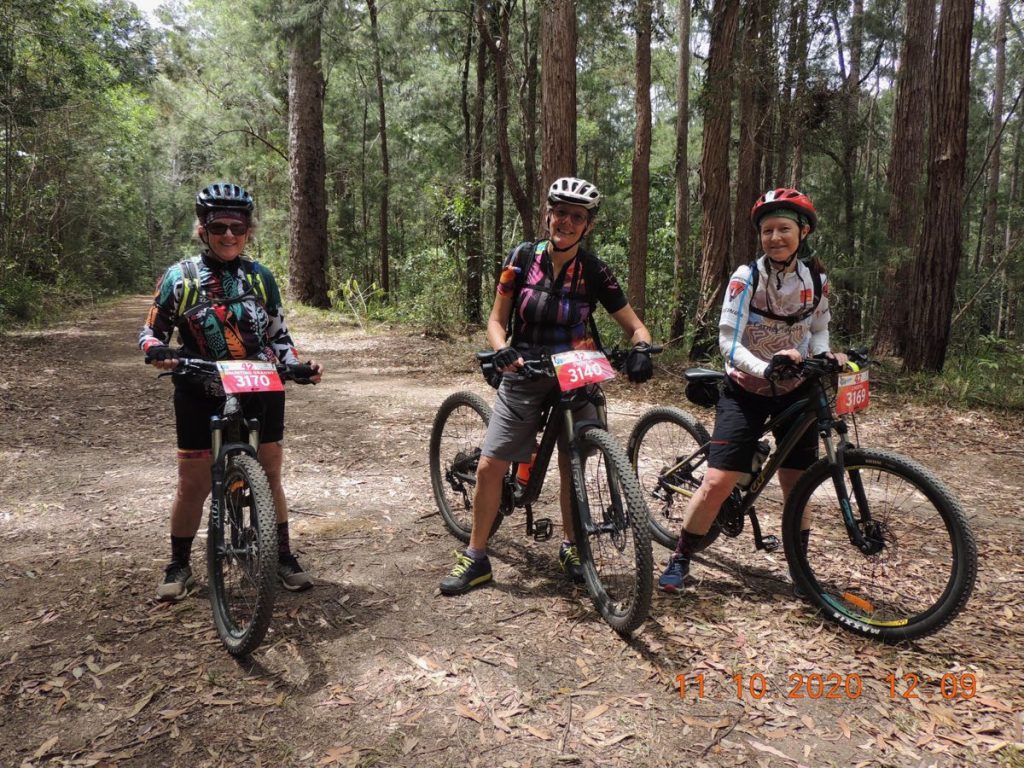
Paluma’s own Jill Meads joined the hordes of mountain bike riders last Sunday (11/10/20) to undertake the annual Paluma Push from Paluma Village to Hidden Valley.
Jill was joined by good friends Ruth and Cheryl and they tackled the 42 km recreational track. It was Jill’s third time in participating in the Push, with her last race about six years ago.
Jill was happy to report that all three riders finished their race in good spirits and in good health. They plan to do it all again next year in 2021 when the Paluma Push will celebrate its 20th year. Jill would encourage everyone to get out there and give it a go. It’s a lot of fun and the surrounding country is something to see.
Well done Jill, Cheryl and Ruth. Paluma is proud of you!!!!
Jill and friends Ruth and Cheryl at Checkpoint 3 during the Paluma Push.Time to relax and enjoy a cold drink at the Volunteers BBQ after the Paluma Push.