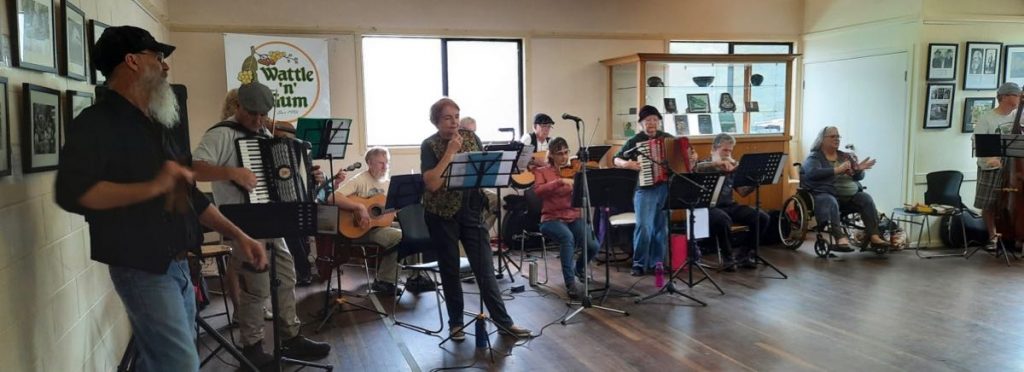
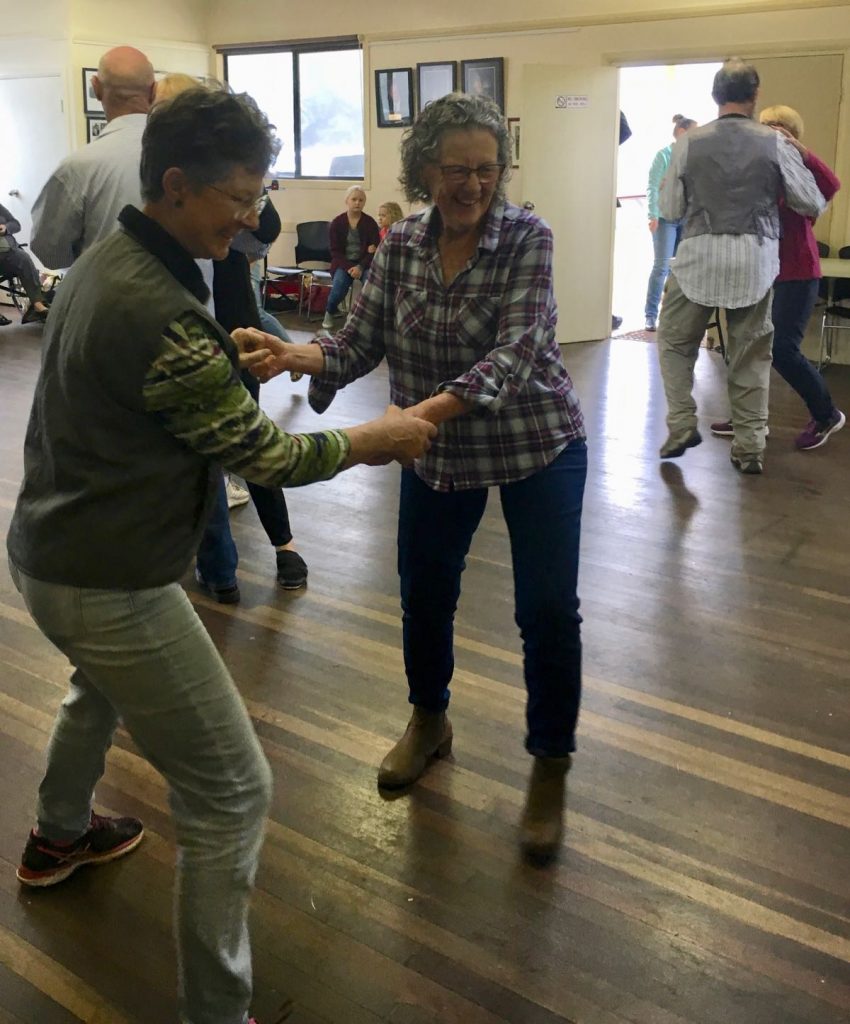
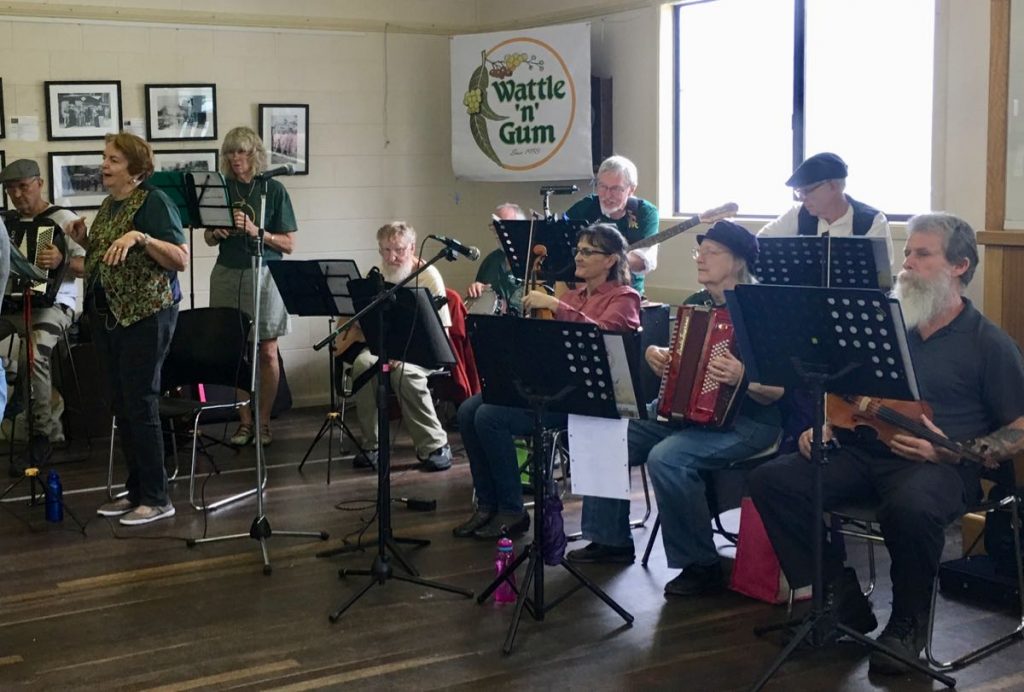
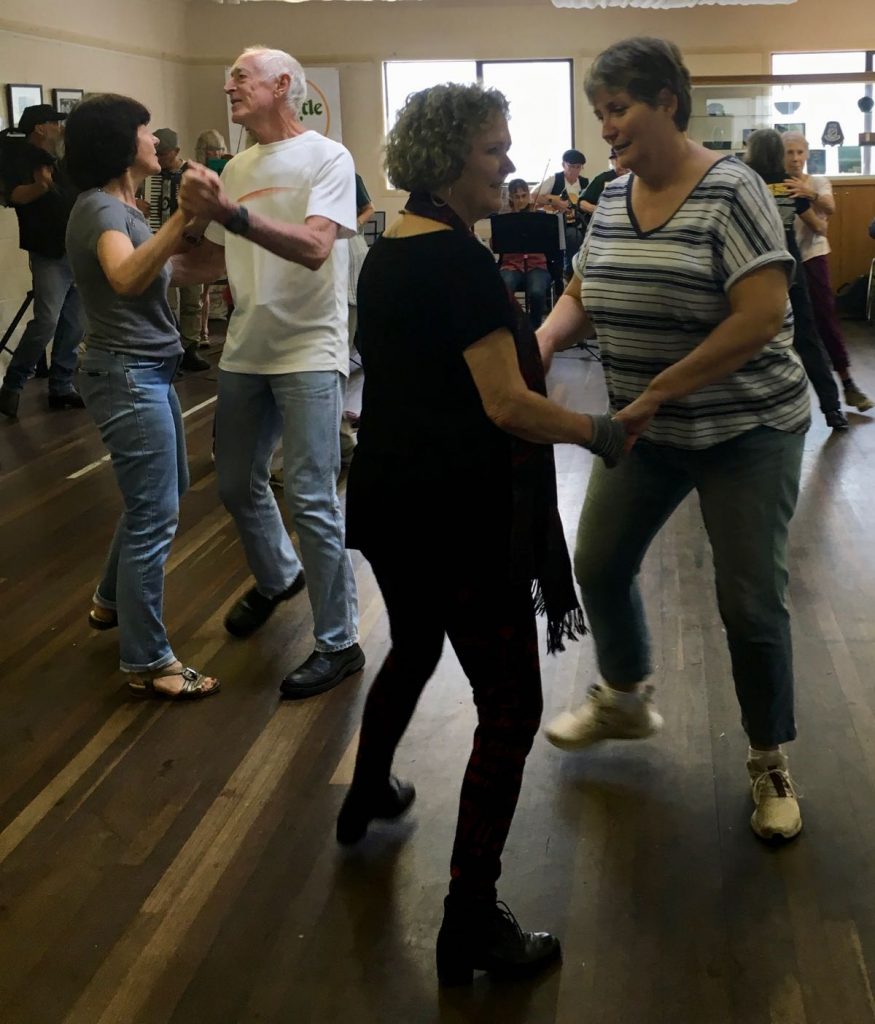
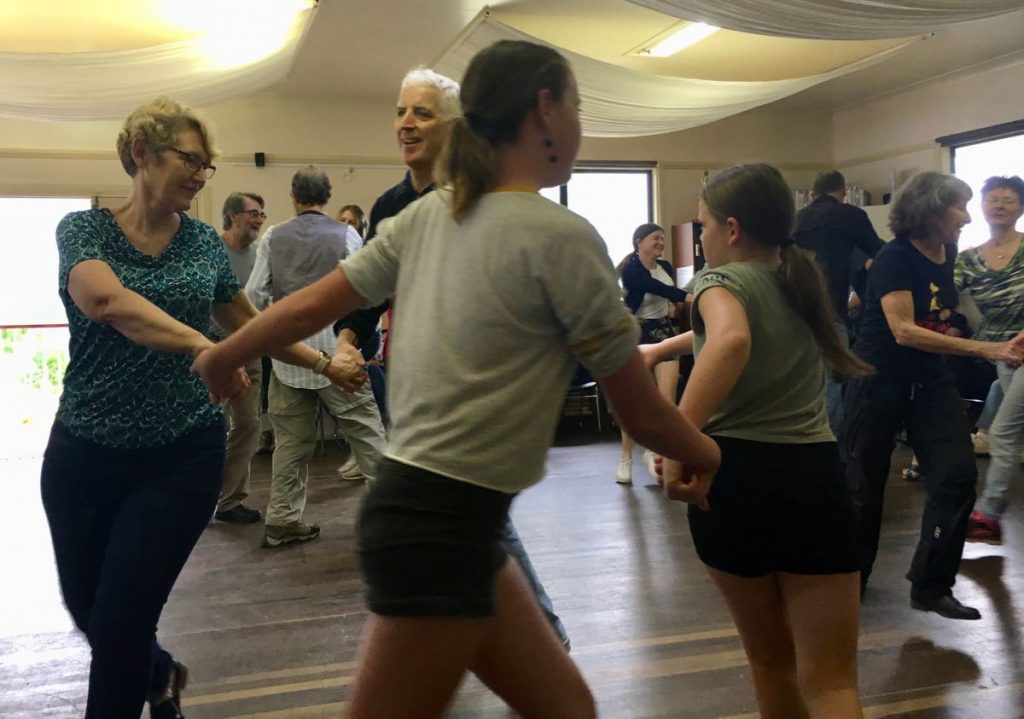
The year 2021 is flying by and it’s time for the first Paluma Social Event of the year. Chinese New Year will be acknowledged and celebrated in true Paluma-style and you are invited to attend. 2021 is the Year of the Ox.
When: Saturday 20 February 2021 at 6.30 PM
Where: Paluma Community Hall
What to Bring: The usual. A Chinese-inspired or other delectable savoury or sweet dish to share with your friends and neighbours.
Dress: Yes please, whatever you like to wear, but clothing is preferred. If you have a Chinese outfit, please don’t hesitate to come along in costume.
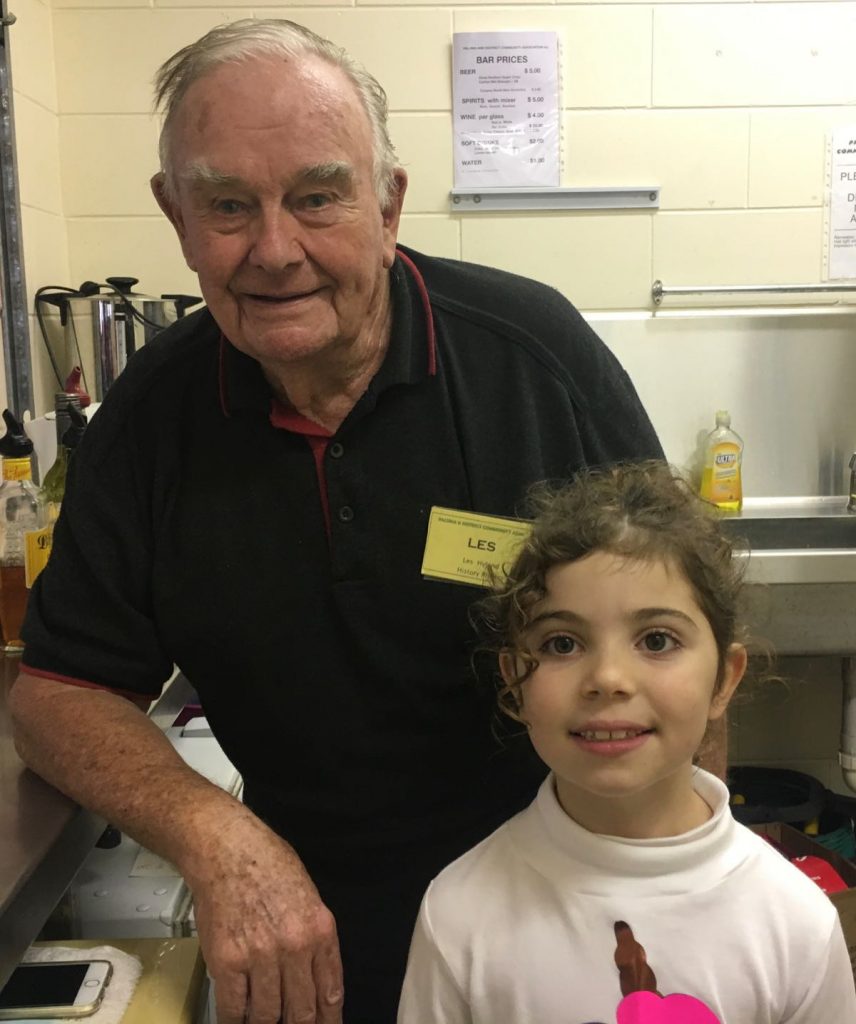
Barman Les will be open to serve all kinds of beverages at bargain prices.
All are welcome and encouraged to attend. We look forward to seeing you there.
Many dog lovers reside in the little village community of Paluma and it’s not uncommon to see people out and about walking their beloved canine companions in the fresh mountain air. But just lately, there are two very precious pooches who have taken to getting a bit of help when it comes to regular exercise. Let’s face it, some days it’s just hard to get out of bed and go for that vigorous walk, especially when you are well into your senior years.
At the outset of this tale (tail!) I must for the sake of clarity confirm the main characters in the story. The canine characters are Bailey and Flossie. Their well trained and dedicated human companions are Bruno and Colwyn, respectively.
Both Bailey and Flossie are well advanced in dog years. Arthritis, a bit of deafness and a few other ailments have made taking a stroll a bit of a challenge some days. The solution, get your human to invest in a new mode of transportation. Both these pooches now take their walk, or at least part of it, on wheels. They are the fast and the furriest!
Bailey has been seen recently in a bright red, rather flashy four-wheel drive version of a child’s pram. With mag tyres, a pillow and seatbelt, Bailey is ready for action. His pram is red because it goes faster. Strapped in on the top deck of his pram he can reach much greater speeds than he can on foot with his degenerative arthritis. There is a great view from the elevated deck so that Bailey can see everyone coming and going. There are no missed opportunities in getting free pats and loving attention from every passerby. Most importantly, Bailey no longer gets left behind at home when his favourite person in the world (Bruno) goes for a walk.
Bailey off on a walk in his flashy red pram.
Flossie also has a new pram, but hers is the deluxe version as far as canine transportation is concerned. Flossie’s wheels are like a ‘Pooch Porsche’, decorated with motifs and flashy designs. After all, a girl should be able to travel in style. Her pram has ample room for sitting, reclining or snoozing. When she gets tired of the walk (and her mum stopping to chat) she can settle herself down for a dog nap in transit.
Flossie is ‘hot to trot’ in her new wheels.
So, next time you are walking in the village of Paluma and you see someone approaching with a pram, do not assume it will hold a human baby or small child. No, around here the pram is much more likely to contain a ‘fur baby’ and a much coveted, spoilt and beloved pet.
These mobile pooches in prams are a testament to the devotion of both Bruno and Colwyn in caring for their elderly, increasingly fragile and very special best friends and canine companions. It also goes to show that sometimes you can teach an old dog a new trick!
Bruno and Bailey on a walk in the village.Colwyn and Flossie preparing to take a morning stroll.Bailey on a walk, catching up with his good pal Miss Molly.
The Atherton Fig (Ficus leptoclada) is one of 15 species of sandpaper fig in Australia. These figs are non-stranglers and have (to varying degrees) rough sandpapery leaves. Unlike the strangler figs, they are dioecious (having separate sexes).
Atherton Figs are endemic to northern Queensland rainforests up to an altitude of 1,000m. They are common on road sides or in regrowth areas where they grow as relatively small trees (up to 15m) with slender trunks. The leaves are eliptical to narrowly ovate and about 8-12 cm long with a raspy feel to the lips (yup – you are supposed to “kiss” the leaves to assist in identification!).
This Atherton Fig on the track to Witt’s lookout is the smaller tree with brighter green leaves to the right of the large trunked tree
When in fruit, trees can be spectacularly laden in small brightly coloured fruit. Ripening figs show attractive shadings of yellow to orange-red and are born both on branchlets and on the main trunk or limbs. When ripe they are more uniformly red/purple and are up to 2cm in diameter.
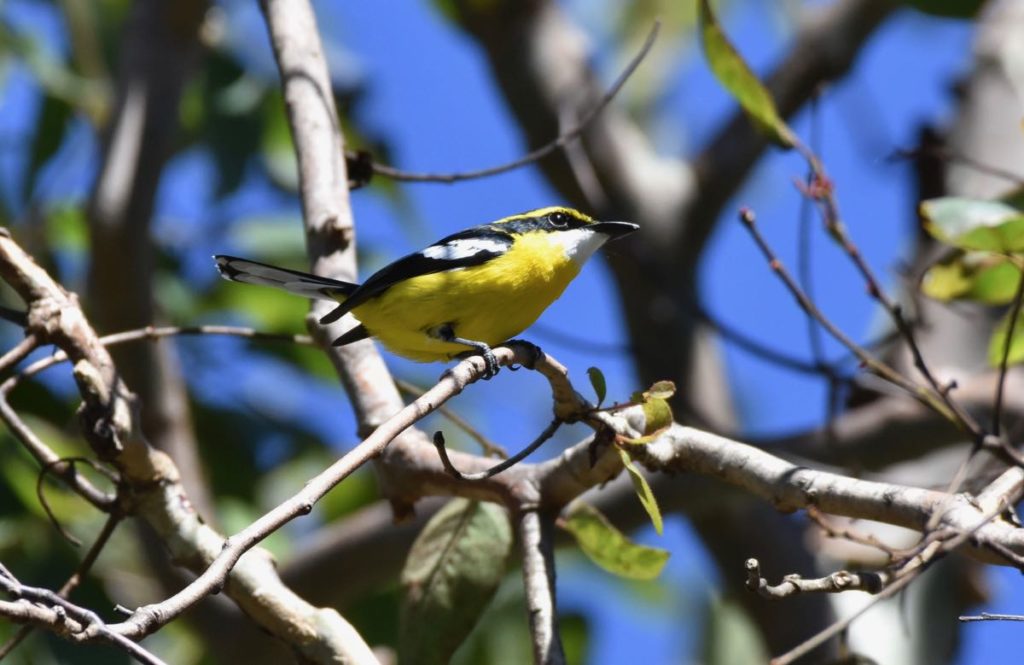
The figs are eaten by fruit pigeons and the double-eyed fig parrot.
There is a lovely example of an Atherton Fig that is currently in fruit at the first small clearing about 100m down the walking track from McClelland’s lookout to Witt’s lookout. Look for coloured fruit on the ground. The tree has a narow trunk just behind a larger tree at the edge of the clearling looking back to McClelland’s lookout.
I have previously mentioned the close relationship between figs and the specialised wasp species that they rely on to pollinate their flowers. If you are interest in joining me in a deeper dive into the evolutionary biology of this relationship keep reading below (it might get a bit technical).
Figs and Fig-wasps: an evolutionary arms race that may never end
Figs are not actually fruit (which develop from the ovary of a single flower) but rather an enclosed cluster of flowers (synconium). Since there are a variety of insects and other animals that enjoy munching on flowers, seeds and fruit, it makes some sense to enclose all your flowers in a tough leathery pouch, but then the problem is how to ensure polination of your flowers. Figs do this through associations with a family of wasps that specialize only on laying their eggs in the ovaries of figs. The relationship is highly specific: one fig-wasp species for each species of fig.
The basic sequence of polination and wasp reproduction is as follows. The female wasps are just small enought to enter the fig body through a small hole. In the process they lose their wings and antennae and will not subsequently be able to leave the fig. Once inside they lay their eggs in as many female flowers as possible and then die. The eggs then hatch out into male and female wasps. The males never leave the fig but spend their lives searching (and fighting other males) for newly hatched females to mate with. The last act of a male is to chew its way to the outside, making a large exit hole that allows new females to leave the fig. On their way out, the females collect pollen from male flowers, and then seek out new figs to lay their eggs in.
Wasps are notorious parasites and the fig wasps are no exception. Their main interest in the relationship is to produce as many offspring as possible by laying eggs in the ovaries of female flowers, where the larvae develop by eating the developing fig seeds and surrounding tissue. The destruction of any developing seeds is clearly not in the best interests of the fig, so the relationship is a tense one: the fig just wants to use the wasp to tranport pollen from the male flowers to the female flowers (in a different fig), while the wasps, given a chance, would lay their eggs in all or most of the ovaries of female flowers, rendering them (and potentiallly the whole tree) sterile in the process. Thus while each species is dependent on the other, they are both trying to gain the upper hand with the evolution of traits that maximise the advantage on both sides. In effect this is an evolutionary “arms race”.
In hermaphroditic figs, where the separate male and female flowers reside in the same fig body, the solution that has evolved in the fig species is to make some of the female flowers inaccessible by hiding them deep under the inner surface of the fig where the wasp’s ovipositor can’t reach, while letting the wasp parasitise the other flowers so as to ensure some wasps are allowed to develop. This compromise lets some of the fig flowers develop fully mature seeds, but many are sacrificed to allow wasps to developed. The wasp on the other hand has lower than optimal reproduction since it can’t parasitse every female flower. This has turned into a relatively stable stand-off between the competing interests of the two species. However ….
In dioecious species (thought to have evolved from hermaphroditic speces) there are trees with figs that are all male, and other trees that are all female. In these species the balance may have shifted a bit in favour of the figs. In this case the male trees have male flowers but also female flowers that are sterile (the figs are more accurately described as “functionally” male). As per the above sequence, female wasps enter male figs and lay their eggs in the sterile female flowers. The offspring hatch out and the new fertilised females collect pollen from the fully functional male flowers as they exit the fig to find other fruit to parasitise.
The twist here is that the female fig trees have fruit (with only fully fertile female flowers) that are equally attractive to the female wasps (they are drawn in by a specific odour emited by the fig) but the ovaries in these female flowers are completely inaccessible to the wasp. So female wasps that end up entering a female fig wander around inside polinating the female flowers but never managing to parasitise any flowers before they die. This arrangement suits these fig species well since it can invest as much energy as it wants into the development of female flowers and seeds and only sacrifice a smaller amount of energy into the production of sterile female flowers in the male figs.
Since a small amount of pollen can fertilise a large number of female flowers there are often many more female figs compared to male. The female figs don’t get parasitised so the result is a high reproductive output for the figs. But if the majority of figs in any location are female ones, then the wasps lose out since most of the female wasps will end up in female figs and never reproduce. The fig species only needs to produce enough male figs to ensure adequate pollen production and sufficient wasp production to ensure the pollen is duly transported to all the female figs. At this point if you have been following the story you may (like me) think that its starting to look like the fig is “farming” wasps for the purpose of polination! Perhaps future evolution will see wasps being more and more like a managed speces. But since evolution is based on the accumulation of chance events, perhaps wasps will evolve countermeasures that enable it to parasitise female fig flowers, or avoid them in favour of male figs ….. and the “arms race” will continue.
I hope you all had a very happy Christmas and an opportunity to relax and unwind over the Christmas / New Year break.
It was very exciting to sign off 2020 with the successful and timely completion of our Natural Disaster Program of works on Mt Spec Road. The overall scope of the project was set with an ambitious schedule, and with your patience and assistance the Department of Transport and Main Roads and the project contractor were able to complete these important works prior to the commencement of the 2020/2021 wet season.
With the 2021 year underway, I am now touching base to provide further information about remediation works to take place on Mt Spec Road this year.
Following investigations that took place in mid-2020, three areas on Mt Spec Road have been identified that will require further slope remediation outside of the disaster and recovery funded works. These areas are located at Culvert 57, Culvert 169 near Mountain Creek and Culvert 197. From Monday 8 February 2021, TMR will undertake some minor geotechnical works to assist with the design of slope remediation to these areas. I will shortly be sending a follow-up email with further details about these minor works.
After the completion of these geotechnical works and design of the slope remediation project, TMR will begin consulting with the community to develop a plan to complete these remediation works. We understand that any works that take place on Mt Spec Road have impacts on the community and we want to provide everyone with ample opportunity to provide feedback on how we propose to undertake this project.
I will be in touch following the completion of these initial minor works on Mt Spec Road to engage with you further about the remediation project. Please do not hesitate to contact me on the details below should you require any further information.
Kind regards
Meghan
Customer and Stakeholder Management (Northern) | North Queensland Region Program Delivery And Operations | Infrastructure Management & Delivery Division |
Department of Transport and Main RoadsFloor 6 | Townsville Government Office Building | 445 Flinders Street | Townsville Qld 4810 PO Box 1089 | Townsville Qld 4810 P: 1800 625 648 | F: (07) 4421 8725 E: engagement.northern@tmr.qld.gov.au W: www.tmr.qld.gov.au
Memories of the 2019 February inundation and the subsequent isolation of Paluma and communities to the west will be with us for years. These memories should prompt all of us living in the area to consider carefully how we prepare for this wet season.
The best way to start this years’ preparation is to visit the Queensland Government website www.getready.qld.gov.au. The site addresses preparation for a range of disasters that could affect Queensland. Cyclone, storm damage & fires are the most relevant to our area. It also lists a number of disaster related apps. Another useful website is www.disaster.townsville.qld.gov.au
Cyclones & extreme rainfall events
The get ready website suggests being prepared for 3 days of self-sufficiency. This may be adequate for the lowlands, but could easily prove inadequate for Paluma to Hidden Valley communities. If a high category cyclone crosses the coast anywhere near Townsville, Paluma to Hidden Valley problems are likely to be well down government priority lists, if they are not life threatening.
Plan for the worst – what if.
All access roads to the area closed for seven (?) plus days
Prolonged loss of the electricity grid supply.
Eventual loss of landline, mobile phone & internet communication due to loss of power to the Telstra site.
Damage to Townsville Water infrastructure resulting in unreliable water supply.
Structural damage to your private residences forcing evacuation to temporary accommodation.
If you work through the three steps of the Have a Plan section of the get ready website you should be covered for most things. However they don’t mention backup generators & standby gas cooking equipment or the associated fuel & gas.
For anyone without internet access the following checklist covers some of the things to consider.
Clearing around you residence to remove anything with the potential of becoming an airborne projectile.
Insurance – Check currency & adequacy.
Basic supplies
Enough food for the whole household including pets. If you have no generator backup for your refrigerator then stick mainly to non-perishable food. (dried or tinned)
Adequate supplies of prescription medication plus cold & flu tablets, pain killers etc.
Toiletries.
Adequate clothing for everyone for the duration.
Extra bed linen & towels.
Sturdy gloves.
Wet weather gear.
Allow 3 litres of bottled water per person per day. Alternatively a small rainwater tank with water purification tablets from chemist/camping stores. Without power electrical appliances will not be able to boil water for safety.
Important documents & a backup hard drive.
Up to date first aid kit.
Adequate generator fuel & gas for backup cooking equipment. Those on solar off grid systems should consider how much fuel they may need if the solar array is damaged.
Spare batteries for torches/radios.
Sturdy waterproof containers for food, clothes, medication, phones etc.
Communications
The Telstra site has a backup generator but when the fuel runs out Telstra will be unable to refuel if access roads to Paluma are closed. There are also likely to be batteries in the Telstra building. So the phones & internet may continue to work for some time after a power failure & then shut down. Suggest it wise to make any important phone calls or emails as soon as possible after the event.
Hopefully the Townsville City Council & Telstra will be able to come to some agreement where TCC staff resident in Paluma can refuel the Telstra genset if necessary.
For landline phones a non 240v phone is best.
Have an alternate way of charging mobile phones & tablets without mains power.
Will your mobile phone work at the Star Valley or McClelland’s’ lookouts.
Battery radio.
Equipment
Generator –tested/serviced.
Backup gas cooking equipment (BBQ) if you only have an electric stove.
Alternative lighting.
Evacuating your house due structural damage.
Extra things that should be considered for an evacuation kit include bedding (sleeping bags, inflatable mattresses & pillows), reading material & games, cash.
Rental properties. If you have any form of rental property in the area, consider the need to advise potential tenants of the risk of isolation after extreme weather events.
If you are not going to be in the Paluma area.
Ensure anyone occupying your house is aware of the above suggestions.
Clean out your fridge & freezer
Consider supplying a neighbour with a key & your contact details so they can access your property to check for damage & report to you.
Paluma residents, visitors and holiday-makers please note that the Rainforest Inn at Paluma will be closed over the period 30 December 2020 to 30 January 2021.
This means that with the exception of the vending machine (for snacks) at the Paluma Education and Environmental Centre (PEEC) there are no places or facilities to buy food, drinks or other supplies whilst visiting the village. Please bring your supplies with you to avoid disappointment (and being hungry!).
Although New Year’s eve in Paluma (like many other places in Australia) lacked a fireworks light-show, there is currently an nightly light-show to be seen along the rainforest tracks thanks to the bioluminescent fungi that are currently emerging with the rains. This display may not last too long, but with the rains predicted to persist for another week at least, you stand a good chance of seeing some of these remarkable little mushrooms if you wander down the H-track or the Rainforest track after dark.
In previous years I have occasionally gone out on wet nights during the summer and, after waiting in the dark for my eyes to adjust, could see faint ghostly glows scattered along the forest floor. But when turning my torch back on there was nothing to see. Even when I located the source of the glow, it was just a wet leaf or branch. I have always assumed that this was luminous fungal mycelia (the almost invisible network of threads that represent the bulk of the organism), but until last year I had never seen any actual mushrooms glowing in the dark. I only saw a couple back then so this year the family and friends went out on two nights to see if we could see them again. On the first night we went around the H-Track and on New Year’s eve Juanita and I went down the Rainforest Track. On both occasions we saw 5-10 clumps of tiny brightly glowing mushrooms on small twigs and along dead sections of lawyer vine.
Mycena clorophos; photo by Juanita Poletto
These were many times brighter than the glow from the mycelia seen on other occasions. Unfortunately I did not have by big camera with me to attempt to photograph the bioluminescence (it requires exposures of over a minute to get a good image) and we only got pictures of the mushrooms illuminated by our torches. But there are many pictures of this species on the web, such as the one below, that provide an idea of what can be seen.
While there are several species of mushroom that bioluminesce, these ones appear to be Mycena chlorophos, a widespread species found in sub-tropical Asia, Indonesia, Japan and Brazil. The caps can be much larger than the 3-8mm diameter ones seen so far in Paluma.
Reseach on a different species of bioluminescent mushroom suggest that this trait has evolved to enhance the dispersal of spores by insects attracted to the glow.
Last Christmas a amethystine python dubbed “Monty” with a very large lump was seen on the rainforest track. Well his assumed penchant for Christmas turkey seems to be confirmed with a recent sighting of a very similar python with a very similar turkey-sized lump opposite the High Ropes course.
Carla Oliver and friends were heading down the mountain on the afternoon of New Year’s eve when they saw Monty crossing the road.
It would be great if this were indeed the same python as last year, especially since these large slow moving reptiles (especially after a big meal) can be very vulnerable to being run over when crossing the road. Let’s hope this becomes an annual sighting!