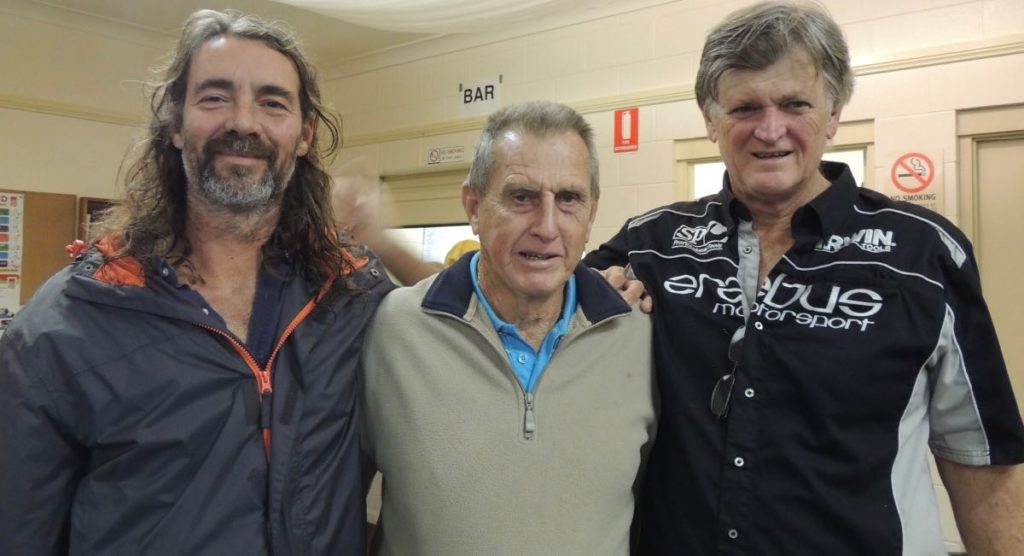
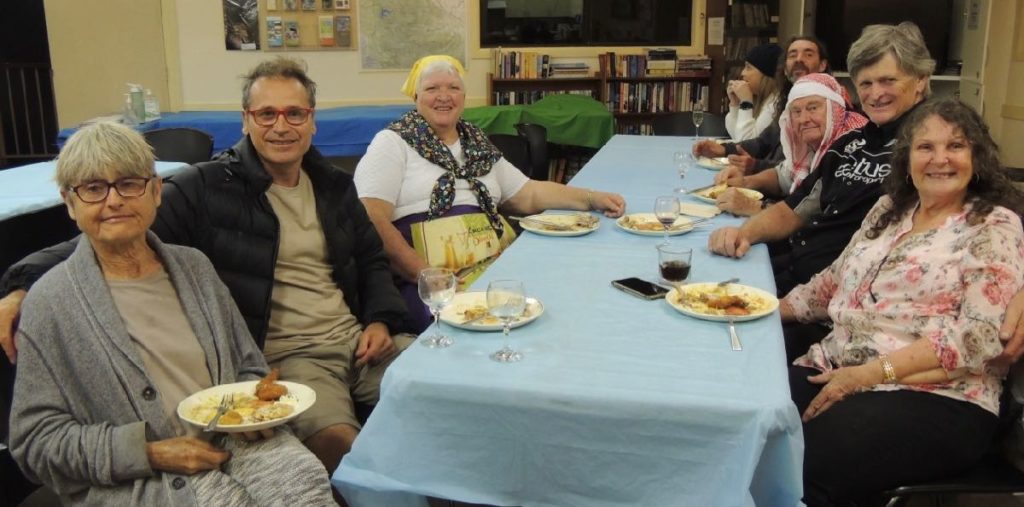
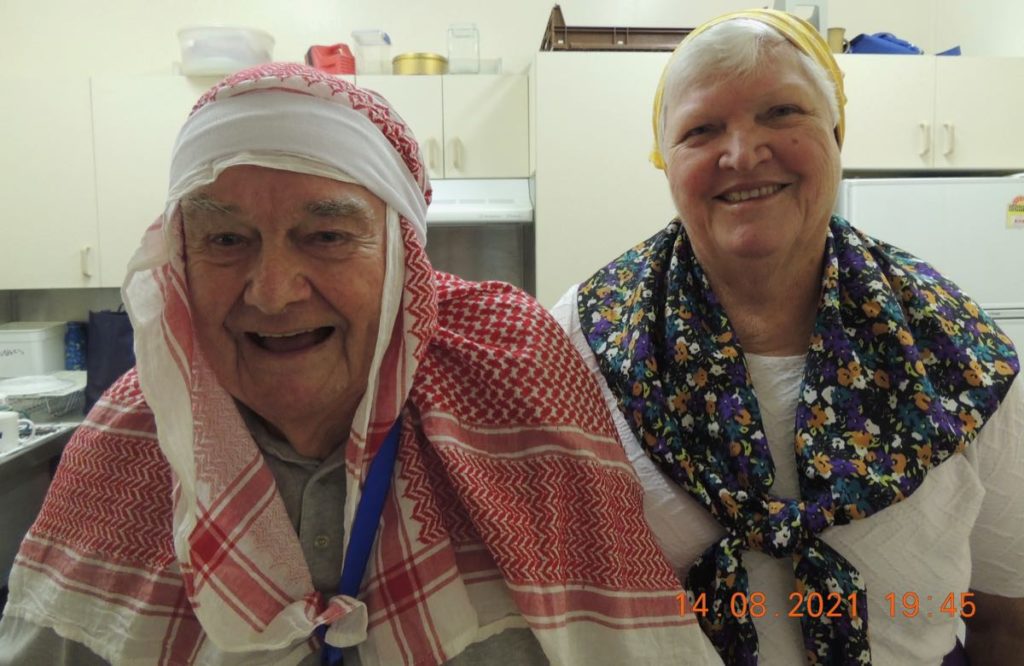
The following account was recently received (via Charlie Allen) from John Chick, an early resident of Paluma and one of a pioneering family that includes his brother Dave Chick, who lives on the eponymously named Chick’s road. Its great to receive these early accounts and the editors of the Paluma.org website warmly welcome this contribution and would love to receive others from people who were (or were related to) are first residents in the village. These stories are also published in our History section of the website.
My Early Memories of Paluma
by John Chick, August 2021
My early days at Paluma started around 1950 as I can recall. My parents Frank and Fran Chick along with my grandparents Jim and Marynne Chick took up a small heavily vegetated jungle block in what is now known as Whalley Crescent. At the time of the selection there was no road access to the property and everything that was needed to carry out the clearing etc had to be carried in by hand from Mt Spec Road at a point which is now the old Police Station block. It took four adults to carry our wood stove up this narrow track whilst avoiding the wait-a-while. As I was only six years old at the time I could not do much but pick up sticks and other small jobs at the direction of my grandparents.
The clearing was a big job and as we did not own a chain saw everything was done by an axe, a long scrub hook and some great fires. The property adjoined an existing block that had a modern brick home on it built by the Kiery family who had owned a Butcher shop on the western end of Flinders Street in Townsville. The property had a beautifully hand crafted aviary just inside their fence line with a large carved log as a viewing bench. The timber for the aviary had been hand shaped with an Adze as was the frame for a gate on the boundary fence adjacent to the cage. Of interest was the fact that the lower hinged end of the gate had been tapered and rested in the dimple of an upside wine bottle set in the ground as a lower hinge.
During the second world war this property was seconded by the US army and used as accommodation for its higher ranks. They must have had some great parties at this place judging be the amount of alcohol bottles, both whole and broken were all hurled over the fence into our block. My Grandmother spent many long weekends picking up very last slither of glass up.
We usually arrived at Paluma on Friday evening and after a big weekend of work would depart mid afternoon on Sunday. One of the most memorable events of the clearing procedure was the eventual removal of a very big tree situated pretty much central in the block. We had been applying fire to the base of this tree for many weekends with timber acquired from the rest of the clearing effort. Then came the Sunday when we were sure that the monster would finally fall on that day, however time ran out on us and we were having to leave for Townsville.
As was the usual, before departing we would visit Jimmy Linton’s shop where dad and grandad would have a couple of quick drinks with Jim and his wife Win. And then it happened; and we missed it; the sound of our nemesis crashing to the ground in the distance was fantastic but it was a shame to have missed the fall after all of the work that went into getting rid of it.
As most will know, you just don’t realise how much wood is in a tree until it hits the ground and you have to dispose of it. My grandmother took to this tree with the same gusto that removed the glass but it did take several months of weekends. Many years later I saw her deal out the same treatment to a very large Tamarind tree that stood in our Queens Rd back yard.
Our weekend accommodation on the mountain was at what was then called the Main Roads huts on the original road down to McClellands Lookout. They were big open plan units with a great fireplace. We had plenty of firewood.
A little further down this road and set back on the northern side was a small building about the size of a large outhouse. This area now appears to be a subdivision. I think this building was originally a munitions store for the US army and then used by Main Roads as an explosives store. The rainforest around and in behind this store was strewn with live ammunition such as 45cal pistol bullets and the common .303 rounds. The yanks did not clean up very well when they left.
The Americans had quite a presence at Paluma with the construction of a couple of radar installations in concrete igloos which have since become homes and water tanks for the town’s supply. When I first saw these igloos, some of the camouflage was still intact and the bats had taken over.
My favourite US leftover was a beautiful big log cabin which was constructed almost opposite the entrance to our block of land. The cabin was quite large with a high pitched roof and open plan design. Each log in the construction was over one foot in diameter. There was a large stone pitched fireplace on the left hand wall with a set of nice glass windows opposite. There was a heavy timber double door entrance and a smaller door at the rear. Straight out of an American movie.
I have fond memories of some of the old characters who had lived on the mountain for many years.
Jim Linton operated the local store which was an old US demountable with low push out panels as windows. It was always very dark in there and on the counter he had a stuffed Quoll on the counter and on the wall was an arrangement of native spears and a couple of boomerangs and a woomera, all collected in the locality.
Mrs Linton operated the local telephone exchange and post office in the back of this building. It just seemed a tangle of wires and plugs to me at the time.
Jim did a lot of tin prospecting throughout the area and I spent many hours wandering up and down local streams with him. The spot that I remember mostly was a little down the track that starts from the igloos and goes down the Blue Gum creek. There was a small creek off to the right of this track where we sluiced for tin and it was quite plentiful. Later on there was a vertical shaft sunk in the middle of this track adjacent to the sluicing point. The doorstops in Jim’s home consisted of two pound milk tins full of alluvial tin. Jim was also responsible for pumping the town water up from the creek behind the village to tanks situated at Lennox Crescent. I went with Jim on several occasions and it was quite an experience to see him fire up that old ancient diesel engine.
The scary man in the bark hut in the clearing. The story of Arthur (Possum) Benham is well known by locals and historians alike. To us young ones at the time, he was a scary man living alone in a very old style in the bush. Whilst we saw Arthur at a distance on many occasions I sometimes regret that I never got to speak to him. His tin workings in the clearing were quite extensive with the water collection channels commencing up near the road and going down to the extensive gullies that he had excavated. The lower end of the excavations drained into a small creek running parallel to the road and we caught many Yabbies in this creek. On the banks above the diggings were several grape vines of the green variety however they were never very productive.
At the head of Benham’s channels up by the road on the right hand side of the entrance to the clearing was the original Paluma school and the teacher was a miss Little whose parents owned the guest house at that stage.
Another local character was Tommy Nutt who owned a small home about opposite the entrance to Benham’s clearing. Tommy had a great collection of minerals and other artifacts from the surrounding area. Tommy’s income was generated by meeting the tourist bus when it arrived several times a week and taking tourists on walks on the local tracks. I was asked on one occasion myself to take a sound recordist from down south out early one morning to record the morning bird chorus as recordings were needed for the burgeoning film industry.
The Smith family lived in the last house on the right on the way out of Paluma towards Running River. They were relatively old when I met them and my brother and I mixed with their sons around the village. One son Russell lived out at the valley for some years and Trevor is now down at Eungella as part of Smith’s Sawmill. The family had been involved in the forestry all of their lives and at one stage also ran some cattle. Another brother I believe is up in the Gulf somewhere.
Paluma had a lot of visitors in those early days and the guest house was always busy. The guest house was owned by Mr and Mrs Bill Little and boasted the biggest combustion stove in the region. Old movies were regularly shown there on Saturday nights. Later on the guest house became a holiday resort for an order of religious nuns from Townsville.
A major milestone for Paluma was the clearing of the land for the creation of a park and the construction of the first community hall which was built with local logs. I recall the Saturday morning that the bull dozer arrived and the felling of the first trees began. A lot of locals assisted with this operation and also the reestablishment of the swimming pool originally constructed by the US army. I had previously walked down this creek from Benham’s end with Jim Linton prospecting for tin. At that time the metal gate at the bottom of the dam was open and the creek flowed through. For some years there was a fish around a metre long living in the pool; this looked like a Queensland Lungfish and no one seemed to know where it came from. Many great bush dances were held in the hall over the years and on one occasion I played the drums there.
As time went by, our little house was completed. Dad had pre-cut all of the frames in Townsville and then transported them to Paluma for assembly. During the week, we also made bricks in Townsville and carted them up in our Vanguard Spacemaster ute. I remember that with all of the other equipment our poor utility could only carry fifty two bricks at a time. When I was young I bought two pine tree seedlings from Magnetic Island and planted one on each side of the gate at the entrance to the property. When I was at Paluma a couple of years ago I noted that in spite of their unfamiliar environment they were now fifty or sixty feet tall but struggling. They did make great Christmas trees for us in the early days.
Power was connected to Paluma around 1969 / 70 and our farther Frank who was an electrician wired all of the homes in the village with the assistance of my brother David who had the task of pulling the wires through the ceilings.
I wonder how many Opossums and Pythons they encountered?.
The little house in Paluma was sold for $30,000 in January 1982 following the previous purchase of forty acres at Blackfriers for development. This block was purchased from Jimmy Heath who was a vegetable grower in the area. The property is on Chicks Road and is now operated as a tree plantation by David and Sharon Chick.