Paluma History Stories: ‘Robbery Under Arms’ – Part Seventeen

by Linda Venn

Click here for a list of key characters in this story

Evidence concluded; Edmonds committed for trial in the Supreme Court, Friday 8th January 1932.

On Friday 8th January 1932, evidence concluded with that of Thomas Murray and Arthur Ashman. Many regional newspaper reports provide no mention of their evidence e.g. Toowoomba Chronicle and Darling Downs Gazette, Saturday 9th January 1932, p. 6; Telegraph, Brisbane, Friday 8th January 1932, p. 2 – article repeated in the Telegraph, Saturday 9th January 1932, p. 2; Cairns Post, Saturday 9th January 1932, p. 5.)

The Brisbane Truth provides a brief summary of their evidence for the defence. Murray was a labourer, resident in the district. Ashman was an employee of the Main Roads Board. Their evidence was given

“in detail, regarding Constable O’Brien’s request for assistance in tracking the bushranger.

The description of the bandit, which the constable supplied to them was that of a tall, thin man wearing a dirty white shirt over the outside of his trousers, with a dirty piece of cloth over his face, and no hat on.

Both stated that O’Brien never at any time mentioned that Edmonds was the man concerned in the hold-up.” (Truth, Brisbane, Sunday 10th January 1932, p. 9.)

Once again, the Bulletin satisfies local interest with a detailed coverage. Both Murray and Ashman had been in the party of MRC employees involved in the initial search on the afternoon of the hold-up. Thomas Murray was a labourer employed on the Mt. Spec Road. He had been a local resident “for a number of years.” The report of Murray’s evidence continues:

On December 9 he saw Constable O’Brien at the office at Mt Spec road, who told him that there had been a hold-up, and asked witness’ assistance. O’Brien gave a description of the man. Saying he was a tall thin man and was wearing a dirty white shirt pulled down over his trousers, and that he was not wearing a hat. Witness then left for the scene of the hold-up on his own. O’Brien asked him if he could get a horse, which he considered he could get at Tealby’s. They then left, witness riding across country to Tealby’s, arriving there about the same time as the lorry.

That afternoon at O’Brien’s request, he (Murray) and a man named Ashby went searching the locality, calling- at Edmonds’ place during the day. The latter offered his assistance, but he (Murray) did not communicate this to O’Brien. O’Brien never suggested to him that Edmonds was the man.

On Thursday morning he met a party of police at the scene of the hold-up, and they told htm to search for tracks. The trackers found the tracks of a horse, and they asked witness if he rode through this certain spot in the gully, and he replied in the affirmative. They requested him to ride his horse again through the gully, and he did so. (Townsville Daily Bulletin, Saturday 9th January 1932, p. 7.)

Once again, we can only surmise the actual questions posed by Sub-Inspector Blackmore in his cross-examination of Murray. The Bulletin report continues:

O’Brien would be lying if he said he did not describe the bandit, nor did he ask witness to search round far any strangers in that locality. He (Murray) also went to Gill’s place, after calling at Edmonds and Tealby’s. Edmonds and Tear were the only persons at the former’s hut, where he told them they were looking for a bushranger. He remained at Edmonds about an hour, although he had only known defendant a few months. Gill was quite surprised when he heard of the hold-up.

He (Murray) rode a chestnut horse with medium size hoofs when he set out from Mt. Spec.

O’Brien did not tell witness not to go to Edmonds’ place, nor did he tell O’Brien on the following morning that he had not been to Edmonds’ hut. (Townsville Daily Bulletin, Saturday 9th January 1932, p. 7.)

Rainforest Biodiversity: 5 easy species Part 4 – Fungi

By Jamie Oliver

Fungi are an amazingly diverse group that includes not only mushrooms, coral, bracket, stinkhorn, and jelly fungi (to mention but a few), but also yeasts, moulds, and an assortment of nasty parasitic organisms that prey on both plants and animals. There is also a range of fungi that specialise in symbiotic relationships with other organisms e.g., lichens (fungus + alga + other micro-organisms), and mycorrhizae that are an important symbiont with the roots of many Australian trees. There are about 13,000 species of fungi formally named and recorded in Australia, although estimates put the real number  closer to 250,000, including 5,000 species of mushrooms (of which only 5% have been named)1

Note: Many of us enjoy the edible mushroom which we usually purchase from the supermarket. There are other edible Australian wild fungi but we do not recommend that you try any of the fungi mentioned below or indeed any that you might find around Paluma – they are likely to be toxic and can cause serious harm!

Fungus identification often requires experience and technical skills, but there is a reasonable number that are so visually distinctive that almost no skills other than a good eye are needed to make an identification. The following 5 easy species are very distinctive, and at least during the wet season, they are fairly common along Paluma’s tracks.


1. Cyptotrama asprata (Golden Scruffy Collybia)

This distinctive and beautiful orange mushroom can be found along the H-track as well as other local tracks. The colour and prickly-looking surface of the cap are diagnostic. It grows in small groups on dead wood on the forest floor and is found worldwide in the tropics.


2.    Leucocoprinus fragilissimus (Fragile Dapperling)

This dainty (and fragile) mushroom starts off with a rounded bell-shaped cap that becomes flat then slightly convex with age. The cap is generally cream coloured with varying degrees of yellow in the centre. It is quite common on local forest tracks. Even a gentle touch is likely to damage the cap. It is found on all continents.


3.    Filoboletus manipularis – Soldier Pore Fungus

This common wet-season mushroom forms large clumps on both living tree trunks and old fallen logs. It has a pale brown central cap surrounded by pale cream to white, with a white speckled stem. It differs from other clumping fungi on trees in that it has distinctive reticulate pattern of pores under that cap instead of linear gills.  Some strains of this mushroom are bioluminescent; however, this does not seem to be true of the ones around Paluma.

4.    Stereum ostrea – Golden Curtain Crust

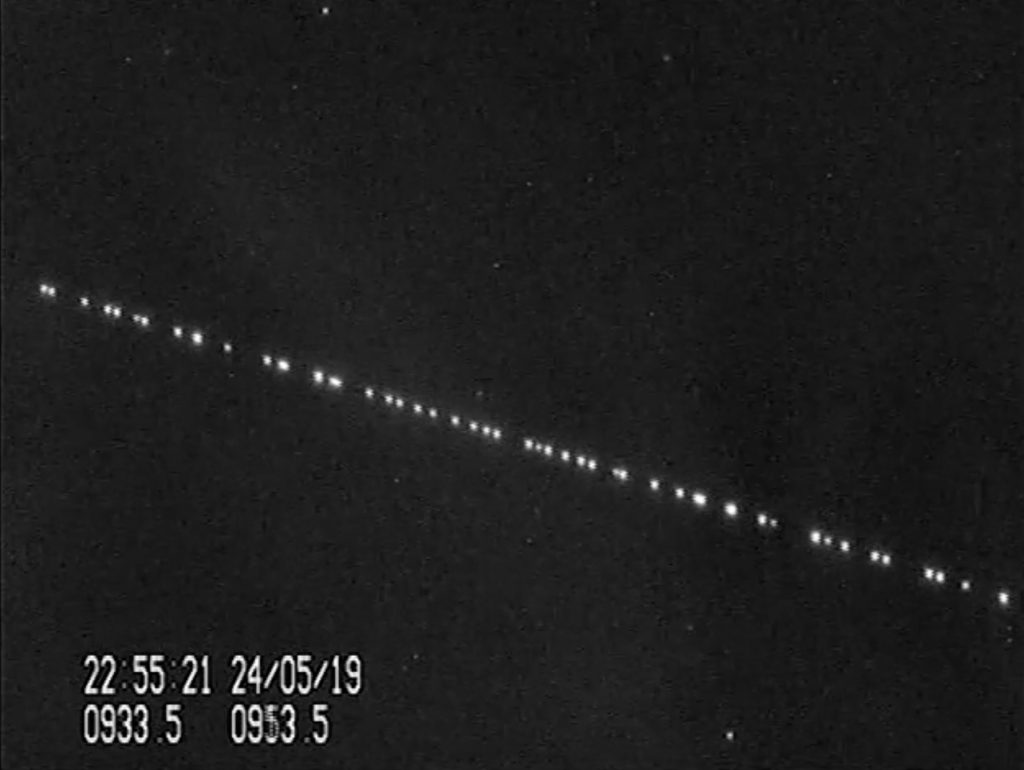
This fungus is commonly found on fallen logs. When still growing and the weather is damp, they form deep orange concave fans that grow out and up from a narrow base that remains attached to the log. The lower surface of the thin fan is smooth while the upper surface often displays concentric rings that vary in shade. In older specimens that are starting to dry the colours change to rings of grey, brown and green. Eventually they completely dry out and become papery crusts that crumble away. The fan can sometimes split radially as it grows. Individuals can occur singly or cover the length of large logs.


5.    Dacryopinax spathularia – Fan-shaped Jelly Fungus

This is a beautiful and common fungus that can be found as small yellow/orange blades poking out of cracks in dead wood or as larger convoluted fans. It has a rubbery texture and often grows in clusters following grooves in old lumber. It may even be found on the wooden exterior walls of local buildings.

Paluma History Stories: ‘Robbery Under Arms’ – Part Sixteen

by Linda Venn

Click here for a list of key characters in this story

Continuing evidence for the defence, Tuesday 5th January 1932

After lunch, Roberts called Edward/ Edwin Gill to the stand. Gill “gave evidence as to the defendant’s movements on the day of the hold-up, saying that he had seen him at breakfast, later at 10:15 a.m. when the defendant returned to the camp, and again at 10:30, when he gave him a message for Tear.” (Telegraph, Brisbane, Wednesday 6th January 1932, p. 9.)

Again, the local press gives us the most detailed report. Gill stated that

“on December 9 last he resided at Ollera Gorge, carrying on farming with William Searle. Since then they had dissolved partnership. His house was 100 yards from Edmonds’ hut. On December 9 he saw Edmonds early in the morning, about 7 o’clock. He was in company with tear, but he did not see him with Searle. Later on, he saw defendant riding back to his hut, and also saw him leave again in about a quarter of an hour’s time. Defendant left a message with witness to tell Tear not to leave till defendant arrived back. Witness (Gill) asked defendant the time and defendant told him 10:30 a.m. Witness returned to his camp 10 minutes later, where he noticed the time was 10:45 a.m.” (Townsville Daily Bulletin, Wednesday 6th January 1932, p.7.)

(Author’s note: Remember that Gooch had informed Edmonds that the hold-up took place at 10:45 a.m.)

Gill was then cross-examined by Sub-Inspector Blackmore. As only Gill’s responses are reported, we can only guess what the questions were.

“He (Gill) had only known defendant (Edmonds) about two months. At 8 o’clock that morning witness (Gill) was out horse-hunting. Tear and defendant were the only men residing at the latter’s hut. That morning Searle visited a farmer’s place near Ollera Creek, where they make concrete pipes, and returned later on, about 11:30, although he was not certain of the hour. (Townsville Daily Bulletin, Wednesday 6th January 1932, p.7.)

(Author’s note: The concrete pipes made on Ollera Creek now form the culverts under Mt. Spec Road. Initially, there was some concern about the quality of the concrete achieved, samples of which were sent south each week by rail for slump testing. This might explain why some pipes have failed after 80 years.)

Gill continued, answering question apparently designed to establish the times of Edmonds movements on the day of the hold-up: Gill “was working on the front gate from about 9 a.m. till 10:45 a.m., when he went to his house to knead some bread which he had set the previous night, and in 12 hours the bread had not risen. As far as witness knew Tear was employed by the defendant. Tear returned on horseback, but he (Gill) did not know the time. It would be untrue if Tear said witness told him Edmonds had just left. Defendant did not tell witness to tell Tear it was 10:30 when defendant left. He did not know what defendant wanted Tear for.”

Blackmore must have asked Gill for his opinion on Edmonds’ sweating horse: “On December 9, Tear and defendant mustered cattle in the afternoon. The condition of defendant’s horse was nothing unusual when it came home, because it was a hot horse.”

Gill was also asked for the time it would have taken a rider to travel from the hold-up, the location of which Gill was not certain of, to Tealby’s the long way round, via the property boundary: “Defendant would not have been able to go right round the boundary in the morning….It would take approximately an hour to ride from the scene of the hold-up to defendant’s hut and from there to Tealby’s. It would be shorter to go direct from the scene of the ambush to Tealby’s”. Blackmore seems to have been trying to discount Edmonds’ alibi of coming to Tealby’s from the direction of his hut, not from the direction of the hold-up. (Townsville Daily Bulletin, Wednesday 6th January 1932, p.7.)

Roberts was granted an adjournment to Friday 8th January, to allow other witnesses to appear. Edmonds’ bail was further extended. (Telegraph, Brisbane, Wednesday 6th January 1932, p. 9.)

Rainforest Biodiversity: 5 easy species Part 3 – Bryophytes

By Andi Cairns

Bryophytes, the collective name for mosses, leafy and thalloid liverworts, and hornworts, are generally small, inconspicuous plants. They are often overlooked but are extraordinarily diverse. Most people will walk past a mossy log in the rainforest without giving it a second glance…but did you know that there could be 5 or more species of bryophytes there? And they aren’t all ‘moss’!

Diversity is particularly high in the rainforests of the Wet Tropics. Of the 950+ species of mosses listed for the Australian continent, over 414 species have been recorded for north-eastern Queensland – almost 45% of the total! They are uncommon on the forest floor as they are quickly covered by fallen leaves, so look for bryophytes on earth banks, rotting logs, rocks, in streams, on the bark of trees and vines and on tree fern trunks (epiphytes), and as tiny communities on the upper surface of leaves (epiphylls). 

Characters that separate bryophyte species are often difficult to identify without the aid of a microscope but there are several taxa that are easy to recognise with the naked eye – so for the Bryophytes section we’ll go with ‘5 easy genera’!


1.    Leucobryum – moss
A rotting log covered with Leucobryum , H-track, Paluma
Leucobryon leaves appear pale green or whitish

Many rotting logs in the Paluma rainforest provide substrate for Leucobryum. The genus takes its name from the Greek leukos = white and bryon = moss.  Six species of this white moss have been recorded from the Wet Tropics, of which four may be found at Paluma, growing on tree trunks and roots, dead wood, rocks, and occasionally on soil. Most mosses have leaves that are one cell thick but Leucobryum is an exception. Leaves are up to 3-, sometimes 4-cells thick with small cells containing chloroplasts sandwiched between large, hyaline (clear) cells – which is why Leucobryum looks pale green or whitish compared with other mosses


2. Lopidium – moss
Loppodium struthiopteris, Witt’s Lookout walk

Lopidium grows on saplings and tree trunks and could easily be mistaken for a miniature fern. Fronds can be up to 9 cm long but are often shorter. Unlike most mosses, which have leaves in a spiral arrangement around the stem, Lopidium has leaves that appear flattened in one plane. Australia has two species of LopidiumL. concinnum and L. struthiopteris. Both are recorded from Paluma.


3.    Hampeella – moss

Two species of Hampeella are known from the Wet Tropics – H. pallens, also known from Malesia and Taiwan, and the endemic H. concavifolia. Both species occur in the Paluma rainforest, attached to saplings or twigs (epiphytic), and occasionally growing along leaf margins (epiphylls). Stems of this bright green moss are 3–7cm long, often shorter.

Hampeella pallens growing on a sapling at Paluma

4. Rosulabryum – moss

Rosulabryum is a genus of mosses recorded from most Australian States. Eleven species have been listed for the Wet Tropics but only five species occur in the vicinity of Paluma, growing on tree trunks or on the forest floor, often in large mats. Spirally arranged and usually clustered in a rosette, leaves are quite large (up to 6 mm long) – if you look closely you may see that each leaf has a central midrib (known as a ‘costa’).

Rosulabryum sp growing on a tree trunk at Rosulabryum sp leaf
McClellands Lookout the central midrib = costa

5. Bazzania – leafy liverwort

A closer look at the ‘mossy’ trunks of trees will reveal they are often not covered with moss at all!

The leafy liverwort Bazzania is common on tree trunks and branches or growing intermixed with mosses such as Leucobryum. Look closely at the log covered with Leucobryum along the H-track. At the lower edge of the log you’ll find a band of Bazzania adnexa.  Twenty-nine species of Bazzania have been recorded for the Wet Tropics, many of which occur in the Paluma rainforest. All Bazzania species have two rows of lateral leaves, a row of ventral leaves (underleaves), and fine branchlets with minute leaves arising from the axils of underleaves. The shape and size of the underleaves aid in identification of Bazzania species.


Found an interesting bryophyte in your garden?
Andi would be happy to identify it!
Contact Andi: andi.cairns@bigpond.com

Rainforest biodiversity: 5 easy species Part 2 – Ferns

By Jamie Oliver

Ferns are common plants found almost everywhere in the rainforest, from the forest floor, on logs, in tree canopies and on trunks, and growing as tall ‘tree ferns’. Ferns are a group of vascular plants that lack flowers and seeds. (The term ’vascular’ refers to specialised structures that conduct water, minerals, and nutrients around the plant.) The life cycle of a fern has two distinct stages – the larger plants that we are familiar with produce spores on their leaves, spores later germinate in damp areas into tiny plants that sexually reproduce – thereby completing the cycle to form new spore-producing plants.  Some ferns can be tricky to identify and require inspection of the placement of spores on the fronds, but there are quite a few that have distinctive features, readily distinguishable by a careful novice observer.


1.    Rebecca’s Tree Fern (Cyathea rebeccae)
Frond of Rebecca’s Tree Fern

Although many gardens around Paluma have tree ferns with robust trunks reaching up to 10 metres or more in height (Cyathea cooperi) the most common tree fern you will encounter along the shady walking tracks near the village is Rebecca’s Tree Fern. This species has a distinctive slender trunk and deep green glossy fronds that are ‘bipinnate’ (see leaf types below).  Rebecca’s Tree Fern is also commonly found along the sides of smaller roads (eg. back of Lennox Cr.) where its ability to produce suckers around the main stem (an unusual feature in a tree fern) allows it to form small clumps.  These young suckers can be mistaken for some other fern since the fronds don’t form secondary leaflets (they are pinnate rather than bipinnate).  Uncommon in the Paluma rainforest but more widespread in the north, Cyathea robertsiana is the only other species of tree fern that has a slender trunk . It can be distinguished from Rebecca’s tree fern by its more delicate fronds, with leaflets that are deeply lobed.

Types of fronds
Deeply lobed leaflets of the Lacy Tree Fern


2.    Bird’s nest fern (Asplenium australasicum)

The bird’s nest fern is a well-known feature of the Wet Tropics and easy to recognise by its elongate simple fronds arising from a central area that often accumulates leaf litter and the occasional seedling of other plants. This fern is generally epiphytic (growing on other plants) and along the walking tracks is usually found on tree limbs high up in the forest, although in well-lit areas (and gardens) it can be found on logs or tree trunks near the forest floor. Asplenium australasicum is by far the most common bird’s nest fern around Paluma and can be identified (if it is low enough) by checking the mid-rib of one of the larger fronds.  A. australasicum has a prominent triangular raised mid-rib on the lower surface of the frond, while the upper surface is much smoother.  Another species (A. nidus) which is less likely to occur has a prominent rounded mid-rib on the upper surface of its fronds while the lower surface is smooth.


3. King Fern (Angiopteris evecta)

While it is not a tree fern with a defined trunk, this fern has the largest fronds in the world (up to 9m long) and its base can be 3m across. Such giant specimens are more common around the Daintree, but smaller specimens (fronds up to 1.5m) can be found reliably along the banks of most creeks around the village.  It is most easily recognised by the large glossy pinnate fronds and by their bulbous base. There are examples of this fern on either side of the foot bridges halfway along the H-Track, and at the far end of the Rainforest Track.


4. Elkhorn Fern (Platycerium bifurcatum)

This is a common epiphytic fern around Paluma and can be found on trees from nearly ground level to the crown. It can grow to an enormous size and will occasionally overbalance a small tree and cause it to fall over. The primary erect fronds are flattened and divided into large fingers or lobes at the margin. The fronds are initially erect but then hang down to cover the base. The base is formed from flat guard leaves that turn brown. The elkhorn fern has multiple centres of frond growth, which distinguishes it from the staghorn fern (more likely found in open forests) which has only one centre.


5.    Gristle Fern (Blechnum cartilagineum)

The gristle fern is a glossy leaved fern of the forest floor that has beautiful pink new fronds. The fern can be distinguished from most others along the Paluma tracks by the shape of the leaf and the fact that the lobes or leaflets of each frond extend onto the central axis and merge with the adjacent leaflet. Most other ferns of this shape and habit have distinct leaflets arising from the bare central stem.

One other fairly common species of fern has this form of merged central leaflets along the stem but it also has small leaf-like lobes extending down the base, whereas in C. cartilageneum the base of the stem is bare. The patterns of veins on the leaflets are also quite distinctive – they occur in pairs that arise from a single point on the central stem.

Vein pattern on underside of leaflet Frond showing bare base

Paluma History Stories: ‘Robbery Under Arms’ – Part Fifteen

by Linda Venn

Click here for a list of key characters in this story

Continuing Edmonds’ evidence in his defence, Tuesday 5th January 1932

Following the first visit to the scene of the hold-up, Detective O’Driscoll had a conversation with Edmonds, saying that Edmonds “had not given sufficient explanation to clear himself and he would have to go to Rollingstone, which witness did, remaining there until the following afternoon before going to the scene a second time.” (Cairns Post, Wednesday 6th January 1932, p.3.)

Constable O’Brien had said: “’We’re a pretty lucky lot and we’ll take a ticket in Tatts.’ Witness (Edmonds) agreed and O’Brien said: ‘We’ll call it the Hit and Miss Syndicate’ and witness said: ‘Call it what you like.’’’ (Cairns Post, Wednesday 6th January 1932, p.3.)

Edmonds continued to assert his innocence and recounted the police conversation he had overheard “when they returned to the scene of the hold-up about 3 o’clock in the afternoon, he heard Gooch say: ‘We have nothing on this bird. The only thing to do is to identify him and stand by it. We’ll put a hat and coat on him and dress him up and let O’Brien identify him.’” Edmonds overheard the same “conversations among the police, who were taking shifts in watching witness. He heard them say they had ‘nothing on that bird’ and the only thing was for O’Brien to stick to his identification.”

(Telegraph, Brisbane, Wednesday 6th January 1932, p. 9)

“Detective Gooch asked him to don the hat and coat found in the witness’s hut, and on doing so, Gooch asked of Constable O’Brien, ‘What do you think of it?’ and he replied, ‘No mistake, I think that’s the man, and coat, too’”. (Daily Standard, Wednesday 6th January 1932, p.2.)

The Brisbane Courier reported that Edmonds denied the hat was his. Also reported was Edmonds’ recounting of how “Gooch told him to walk in the direction the bushranger ran. The witness immediately retorted: ‘How do I know which way he ran?’ Witness walked 10 or 15 yards besides Gooch, who asked O’Brien: ‘What do you think of it?’” (Brisbane Courier, Wednesday 6th January 1932, p. 14)

Once again, significant local interest in the case meant that the Townsville Daily Bulletin gave the most detailed coverage. We pick up the Bulletin’s report of Edmonds’ evidence from the time of the second afternoon’s visit to the scene of the crime.

The police commenced talking amongst themselves in various groups, and he (Edmonds) heard Detective Gooch say to Constable O’Brien they had nothing on him and the only thing to do was for Constable O’Brien to identify him.

Sometime after he put the hat and coat on, and denied the hat belonged to him. The hat was too big for him, coming down over his ears.

They then asked him to stand behind the ambush, and also asked him to walk the way the bandit ran away, whereupon he stated he did not know in which direction the bandit went in.

As he walked back towards the road, Detective Gooch asked Constable O’Brien what he thought of it, and Constable O’Brien replied there was no mistake and considered it was the man and the coat. He told Constable O’Brien he was making a mistake, but he disagreed with defendant, and if he were, it was an honest mistake, and he would be the sorriest man in the world. He had a duty to perform. Defendant told him he could always come to his camp.

Detective Senior Sergeant O’Driscoll told defendant that he had not given him sufficient proof, and asked him to accompany him to Rollingstone, which he did, staying there until the following afternoon.

Before arriving at the scene of the hold-up on the second occasion, Constable O’Brien said they were a pretty lucky lot and they would take a ticket In Tatts’. To which he (Edmonds) agreed, Constable O’Brien saying they would call it the Hit and Miss syndicate. Defendant told Constable O’Brien he was a lucky man, and the bandit was either a bad shot, or else did not want to shoot him.

At Rollingstone, he overheard a conversation in which they (the police) said they had nothing on defendant, and the only thing would be for Constable O’Brien to keep to his identification. Neither Killoran or Stewart identified him at Rollingstone.

He (Edmonds) was subsequently brought to Townsville and arrested. He had nothing to do with the hold-up, neither was he in the vicinity at 10.45 that morning. He had not ridden the chestnut mare in that locality on the previous day.

It was a deliberate lie by Gooch that defendant stated in the train that he (Edmonds) was out mustering on the day of the hold-up with two girls. It was an untruth also he referred to two other girls. At the watchhouse, Detective Gooch told defendant he had interviewed some girls at Mutarnee who had denied being out mustering with defendant Detective Gooch added they were the only two girls at Mutarnee that rode about.

At the hotel at Rollingstone, Detective Gooch said that the fact alone that defendant said the bandit was a bad shot or did not want to shoot Constable O’Brien was sufficient proof.

The Court then adjourned for lunch.”

(Townsville Daily Bulletin, Wednesday 6th January 1932, p. 7)

Edmonds evidence took two hours to deliver. He “concluded saying he had nothing to do with the hold-up, nor was he in the vicinity at the time.” (Daily Standard, Wednesday 6th January 1932, p.2.)

Bud Jones – The man of flowers

Paluma’s very long – term resident, Bud Jones, was a lover of flowers .

Bud resided on HusseyRoad from the 1940s until his death about 20 years ago. He owned three leasehold blocks totalling 15 acres on which he and his wife Nancy lived in a succession of dwellings with their two children before partially building a brick house at no 7 where he started a flower farm business featuring Gladioli of many hues.

He also planted many native flowering trees which still stand today as well as a number of exotics of which the Tibouchina Astonville pictured ( above/ below ) is a luminous example. Indeed , this tree is believed to be the progenitor of the many Tibouchinas around the Village. Whilst the naming of the Village Green after Bud was repealed some years ago his “budding”  legacy can be seen in the numerous gladioli and rain lillies  popping up around the District.

Well done Bud!

Text & Photo by Michael Drew

Rainforest Biodiversity: 5 easy species at a time. Part 1 – Birds

by Jamie Oliver

Introduction

Rainforests are the most biologically diverse of all terrestrial habitats, and the number of different species in just a small plot of forest can be huge.  For the interested amateur, identifying the myriad of rainforest plants and animals can be challenging! We don’t know exactly how many species of plants and animals live in the rainforests of the Queensland Wet Tropics – for some groups e.g.fungi, some insect families, there may actually be more undescribed species than ones that have been formally identified. It is likely that during a short 15 min walk along Paluma rainforest tracks you could be passing several hundred different species of plants and animals. Some of these are large and conspicuous while others could require much closer inspection (and perhaps a hand lens) to identify.

Paluma is located at the southern end of the Wet Tropics World Heritage Area. The WTWHA contains at least 663 vertebrate animal species, and invertebrate fauna is the richest in Australia. Land snails alone are represented by 222 species. It is estimated that the Wet Tropics probably has around 40,000 species of insect, including 230 butterfly species and 135 dung beetle species. Plant diversity is equally remarkable with 2,800 species of vascular plants – 700 of which are only found in the region[1].

All this seems very impressive but it leaves the casual visitor somewhat overwhelmed – to the point where any interest in identifying species can be lost in the enormity of the task.

The purpose of this series of posts is to enable even the most casual and inexperienced visitor to identify the five most common and distinctive species from each of 10 or so groups of plants and animals. By breaking the task down in to 5 easy species from each group a weekend visitor with a keen interest in the task might become familiar with 10 or 20 different rainforest species, and after a few such visits might claim knowledge of 50 or more species!

We will start with one of the easiest groups (birds) and then move on to other groups that may require a little more effort and patience. By the end of this series we hope to have compiled an online and downloadable  guide to the 50 most common and easily identified species around Paluma village.

[1] https://www.wettropics.gov.au/biodiversity , https://www.wettropics.gov.au/insects


Birds

Birds are one of the most conspicuous rainforest animals and many of them are quite easy to identify, so it is appropriate to start our ‘5 easy species’ series with this group. The five birds listed here were chosen because they are very common around Paluma roads and walking tracks at most times of the year. They are also easy to identify from photos and descriptions. All of these birds are less common down on the coast and thus contribute to the feeling that you have entered a whole new environment when you take the drive up to Paluma.


1.    Lewin’s Honeyeater (Meliphaga lewinii)

Lewin’s honeyeater is commonly seen flitting among low branches of trees and shrubs along road edges or in open picnic areas.   While its soft green and grey colouring does not make it stand out, the yellow half-moon cheek patch and its staccato call make it easily to identify. 

Lewin’s Honeyeater call. (recording by Andrée Griffin)

It is also a very common visitor to bird feeders around the village.  A related species, the yellow-spotted honeyeater, can also sometimes be found in the village. It has a more rounded cheek patch and its call is very different (not staccato).

Lewin’s Honeyeater

2.  White-cheeked Honeyeater (Phylidonyris niger)
White-cheeked Honeyeater

This strikingly bold black and white honeyeater is smaller than the Lewin’s and can be  found flitting amongst shrubs and trees, feeding on flowers. It has a large white cheek patch and yellow streaks on the wings. It is one of the most common birds to visit bird feeders around the village. Here it displays a surprisingly bold demeanor, chasing much larger birds away from the food on offer.


3.    Brush Turkey (Alectura lathani)

Photo by Michele Bird

This large black bird with a mostly bald red head is commonly seen around picnic areas, roadsides and along rainforest tracks where it uses its feet to scratch the leaf litter in search of insects.  During the breeding season (August to December), males develop gorgeous yellow neck wattles to attract females.  Eggs are buried in large mounds of leaf litter built and tended by the male. The heat of decomposition of litter in the mound provide the warmth needed to incubate the eggs.


4.    Crimson Rosella (Platycerus elegans)

This beautiful crimson and blue parrot is commonly seen around Paluma but almost never in the nearby coastal areas. It is found in trees or shrubs, as well as on the ground when grass seed is available. The head and breast are deep red, while its back is red with blue mottling. The tail, wings and throat are blue. While this species of Rosella is found in forests throughout southern Queensland and the southern states, in north Queensland it is restricted mostly to Paluma and the Tablelands. The only other parrot of this size in the area with predominantly red colouration is the King Parrot, which is red and green, instead of crimson and blue.

Crimson Rosella calls (recording by Andrée Griffin)

1.    Chowchilla (Orthonix spaldingii)

You are more likely to hear this bird than to see it.  In the early mornings and evenings the forest often resounds with the raucous sounds of family groups of Chowchilla calling back and forth.  

Chowchilla chorus around Paluma (recording by Andrée Griffin)

It is a small brown bird with mostly inconspicuous colouration – the female has a lovely orange chestnut throat, while in the female it is white. Both sexes have a distinctive white eye ring.  During the daytime they are mostly silent but can still be heard, and with a bit of luck, seen scratching around in the leaf litter beside village walking tracks. It stays almost entirely on the ground although it will fly when disturbed.

Photo by Brian O’Leary

There are many other species of birds that occur in Paluma, and lots of them are both common and easy to identify. Visit the Birds section of the website to learn more about what can be seen in the area.

Paluma History Stories: “Robbery Under Arms” – Part Fourteen

by Linda Venn

Click here for a list of key characters in this story

Continuing Edmonds’ evidence in his defence, Tuesday 5th January 1932

On the Thursday morning, 10th December, Edmonds was repairing the roof of his hut that had been damaged in the storm and heavy rain of the day before, when four police arrived. While there, the police “examined clothes and ammunition”. (Daily Standard, Brisbane, Wednesday 6th January, p. 2) This was when Detective Gooch took possession of Edmonds’ eight firearms, including the unlicensed revolver and a single-barrelled shotgun. (Brisbane Courier, Wednesday 6th January 1932, p. 14) Constable O’Brien spoke to Edmonds first, and Edmonds admitted making a comment that O’Brien had been lucky the previous day.

Edmonds continued his description of the police visit that morning. He had “informed the party they were welcome to have a look around….O’Brien took a silk shirt hanging on the line, but did not say anything about it. He also removed a khaki shirt coat hanging on the wall which defendant told O’Brien belonged to his father, and which defendant had never worn in his life. He was then called over to the car shed, where he admitted a handkerchief found in the car belonged to him.” (Townsville Daily Bulletin, Wednesday 6th January 1932, p. 7) Edmonds claimed that “nothing was said of the hold-up while the police were there.” (Telegraph, Brisbane, Wednesday 6th January 1932, p. 9)

Edmonds was then taken via Tealby’s to the scene of the hold-up about 3 o’clock in the afternoon. Edmonds continued, describing the police examination of the horse tracks.

“There was a fresh track coming from the road into Tealby’s and Gooch, Rynne and the tracker were satisfied that it was the track of the chestnut mare. He (Edmonds) asked them to measure the track of the mare. They did and said it was exactly the same. He (witness) told the police that the track was identical with that of the mare ridden by Murray that morning. His (Edmonds’) mare had been along the road the previous day, when he came from his hut to Tealby’s.” (Telegraph, Brisbane, Wednesday 6th January 1932, p. 9)

(Author’s note: Edmonds had left his mare at Tealby’s, which was between his hut and the hold-up scene. His mare had therefore come from the opposite direction on the day of the hold-up.)

At the scene of the hold-up, Edmonds “was unable to see the tracks alleged by the police but could see fresh bootmarks.”  The Brisbane Courier briefly reports on the activity at the scene of the hold-up, but does include Edmonds quoting Detective O’Driscoll when he and Edmonds “disagreed over the track marks at the side of the gully. Detective O’Driscoll said, ‘Charlie, don’t think we are putting anything over you with these tracks.’ The tracks they followed were not the tracks of the chestnut mare. They measured the tracks with a piece of stick, and they were identical with that of a mare ridden by Murray that morning.”  (Wednesday 6th January 1932, p. 14.)

The Townsville Daily Bulletin records this section of Edmonds’ evidence in more detail, and is worth repeating in full:

“the police pointed out to him where a horse had been tied up, in the gully. The country was heavily timbered. He told Detective Sergeant O’Driscoll he could not detect any horse tracks, only fresh boot tracks. He did not consider a horse was tied to the tree. Detective-Sergeant O’Driscoll then pointed to some fresh tracks, adding that it was where the horse had left the gully, but defendant argued there were two sets of tracks there, and was emphatic about it.

Detective-Sergeant O’Driscoll stated to defendant that they were not endeavouring to put anything over him in regard to the tracks. He had been amongst stock in the bush all his life. Acting-Sergeant Rynne or Detective Gooch suggested measuring the tracks, and he suggested they measure the mare’s hoof and the tracks, which they did. The original tracks were made in black loose sand on the bank of the gully, and heavy rain had filled the tracks, and made the outside of them much bigger, and when they were measured the tracks were not similar. They measured the mare’s tracks and compared them with the inner Imprint of the old track, and said they -were similar, but he disagreed with them. When they had the argument about the tracks, they said they would keep going, and about 80 yards from the first tree, they came to another tree where Detective Gooch said another horse had been tied up. He (Edmonds) said It was possible but they were still in the tracks of two horses. Asked to show them the tracks defendant did so, and the blacktracker said there also appeared to be two tracks there, but Acting Sergeant Rynne disagreed with him.

They followed the tracks round the fence up the hill. When they returned to the flat country again, Detective Gooch intimated to Acting-Sergeant Rynne that they were still on the track, but there were numerous tracks there.

They continued on for a further 100 yards, but Acting Sergeant Rynne told them It was not the track they followed the previous evening. After argument they followed the track, a little further, where Rynne Indicated he had lost the track the previous evening, but it had been, picked up that morning. They followed the track to Tealby’s, where they lost It, and defendant picked it up for them. They were not the tracks of the chestnut mare.

It had been stated in previous evidence that the tracks were found at Tealby’s gate, but this was impossible owing to the rain. Here they again measured the tracks and the mare’s foot, and stated they were the same. They lost the tracks for 10 or 15 yards. He (Edmonds) told them the track which they stated was that of his mare belonged to a horse ridden by Kelly Murray. His mare had been on the track the previous day. They returned to the scene of the hold-up between 3 p.m. and 3:30 p.m. in a lorry. (Townsville Daily Bulletin, Wednesday 6th January 1932, p. 7)

Mt Spec Road geotechnical investigations

The Department of Transport and Main Roads would like to advise that geotechnical inspections for Mount Spec Road will commence this Monday 30 March 2020 until Thursday 9 April 2020.

Geotechnical inspections will occur from the gates at the bottom of the range through to the start of Paluma Village.

Monday 30 March 2020 to Thursday 9 April 2020

Work Hours: 7.00am to 4.30pm, Monday to Sunday

Weather conditions permitting

During the inspections, road users are advised of changed traffic conditions including single lane closures, speed reductions, roadwork signage and on site traffic controllers to safely guide motorists through the inspection area and keep workers safe. Please slow down when travelling through the inspection area – road safety is your responsibility too.

Mount Spec Road will be reduced to single lane width through the inspection area. To minimise disruption, the inspections have been planned in stages with advanced warning signs to notify road users of these changes, however some delays may still be experienced. On occasion, full lane closures will be required throughout the works where there will be no access between the Bruce Highway and Paluma via Mount Spec Road. The wait time during these full road closures can be up to 15 minutes, please factor this additional travel time into your journey.

Should you have any questions, please contact the Customer and Stakeholder Management Team on 1800 625 648.

Customer and Stakeholder Management (Northern) | North Queensland Region
Program Delivery And Operations | Infrastructure Management & Delivery Division |

Department of Transport and Main Roads

Floor 6 | Townsville Government Office Building | 445 Flinders Street | Townsville Qld 4810
PO Box 1089 | Townsville Qld 4810
P: 1800 625 648 | F: (07) 4421 8711
E: engagement.northern@tmr.qld.gov.au
W: www.tmr.qld.gov.au