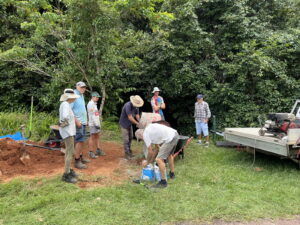
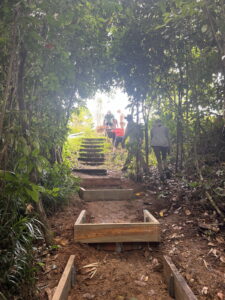
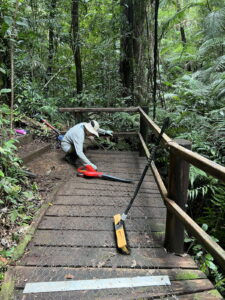
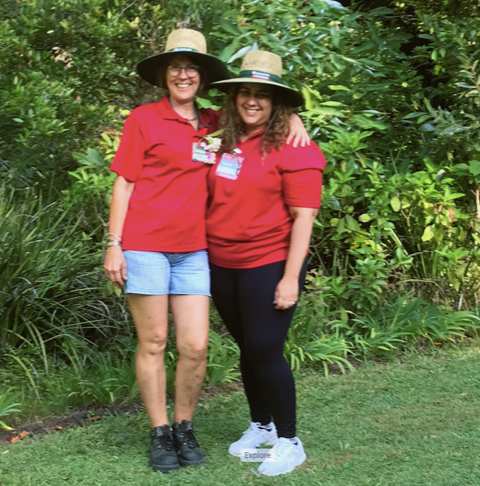
Yesterday’s working bee to refurbish the steps at the far end of the “Rainforest Walk” attracted a great turnout. There was a total of 10 people, 3 wheelbarrows, a generator and a cement mixer all working solidly for a couple of hours to fill in the new step frames and drainage channels that Wilfred and Colin had previously set up. The final result looked very impressive. Even the existing wooden bridges and platforms along the track got a major cleanup. We finished the effort back at the Community Centre congratulating ourselves with some well-earned drinks.
It was agreed that we should aim for a regular working bee on the first Saturday of every month to carry out various maintenance and improvement projects around the city. Look out for announcements on Paluma.org
For more than a year several people have raised the possiblity of creating a facebook group for Paluma residents to post notices to others about items for sale or even to let people know of an opportunity to share costs for bringing a plumber or electrician up to the village to do some work.
Well Stella Thompson-Wheway has recently taken the initiative to create just such a group. It’s called Paluma Buy, Sell, Swap and Give away and she is inviting all Paluma residents to join up. The link above should take you there, or else just use the search function to find the group (using “Paluma Buy Sell” in the search box should do it).
There’s already one item for give away on the site, and I am sure more posts like it will follow soon.
Many thanks to Stella for setting this up for the Community.
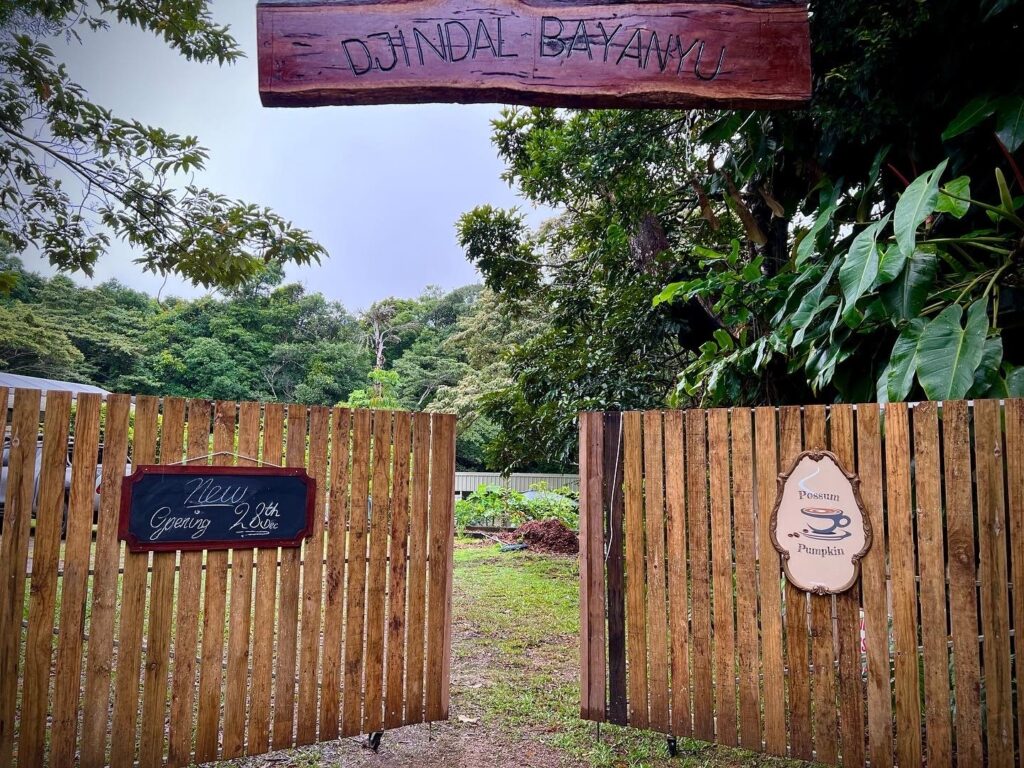
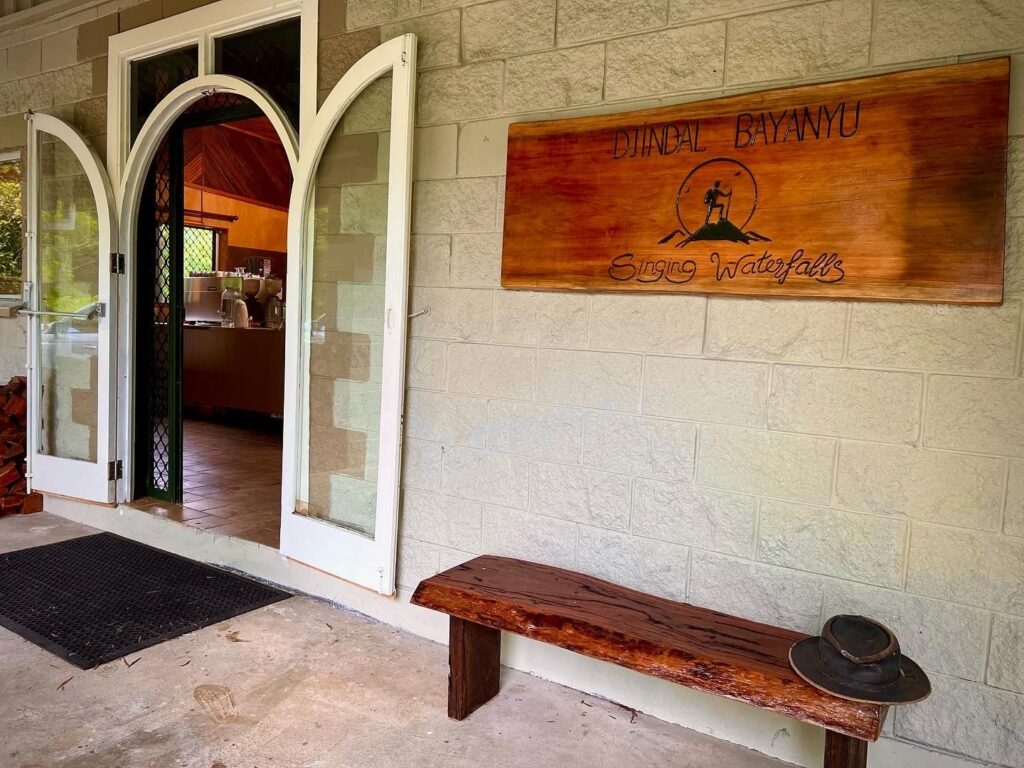
It’s not every day that a new commercial enterprise opens in Paluma, especially one that offers accommodation and meals in a beautiful rainforest setting. Mark and Leonie Crennan have been working tirelessly over the last year to refurbish the old Paluma Dreaming (and Heaven’s Kitchen) café at 1 Loop Road.
The new name, Djindal Bayanyu, was the result of many hours of research and consultation by Leonie, who wanted to acknowledge the original inhabitants of Paluma. The name means Singing Waterfalls in Nywaigi, which is the language group of the traditional owners who thrived for centuries in the abundant rainforest and pristine creeks of our spectacular mountain range.
Djindal Bayanyu will be open from 10:30am to 3pm Thursday – Sunday (and Wednesday this week) for excellent coffee, tea and sweet and savoury treats. Accommodation is also available with ensuite bathroom and kitchenette, or you can access shared facilities.
In addition to the refurbished interiors of the rooms and café, the garden has received a range of new plantings of native and ornamental trees and shrubs and artful landscaping. Their gardening efforts were recently recognised with an award in this year’s Paluma Garden Competition.
Ring or text 0490397650 to book accommodation or check cafe opening times.
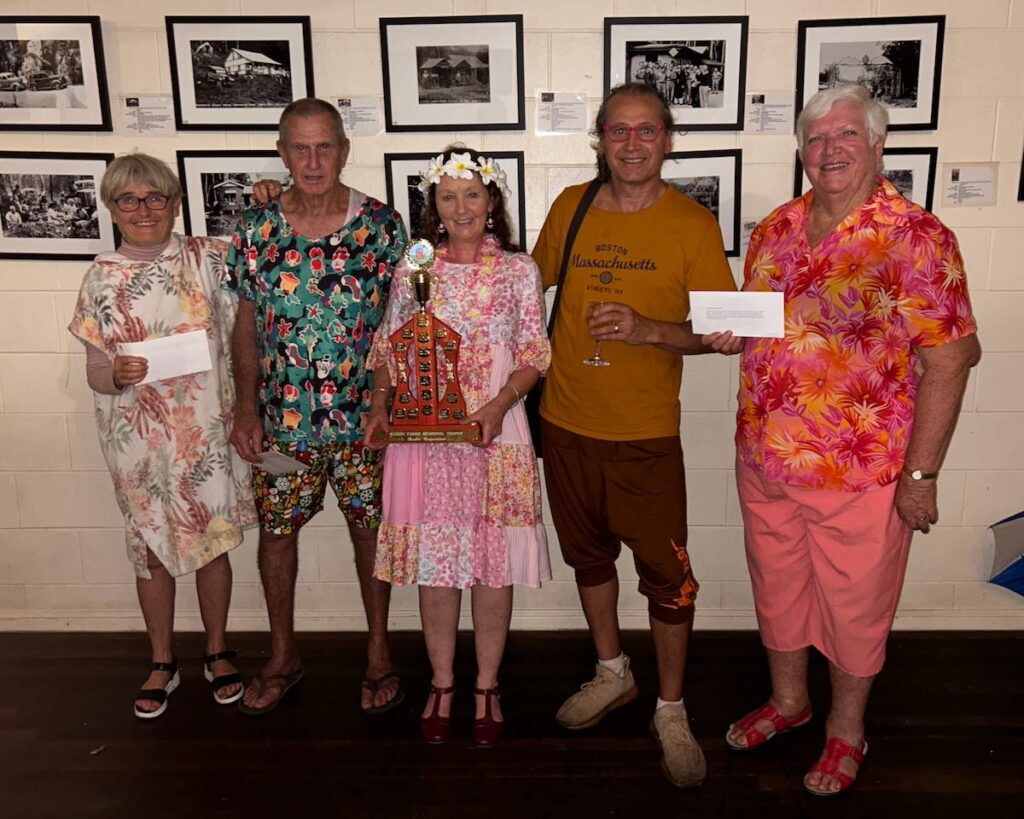
This year’s Garden Competition was held on November 14th. The competition was sponsored by Bunnings and judged by two experienced and enthusiastic garden-lovers from Bunnings (Ange, a trained horticulturalist and Kathleen, the local activities coordinator). Lynn and Jamie spent most of the day escorting judges around the village and 5 acre blocks, admiring the wonderful and varied landscapes and plantings created by Paluma residents. The judges commented on what a privilege it was to be able to see the spectacular displays of blooms and foliage that our misty, mountain climate can produce. Almost every garden had something that was striking and unique that caught the eyes and admiration of the judges. They left the village overwhelmed with the task of picking winners from such a range of beautiful gardens.
The Winners for this year (with comments from the judges) are:
1. Best Residential Garden in the Village (Allison Evens Trophy) Michele Bird.
From the front of the property to the back, everywhere we looked there was something interesting and beautiful to look at. The front was full of colour that was a delight to see. As you walked through the little paths it was like walking through a secret garden. The back was beautifully landscaped creating a lovely view from the balcony which also had an amazing array of plotted plants. We loved the eclectic style and she has done an amazing job with the space that she has.
2. Best Non-Residential Garden in the Village Djindal Bayanyu EcoRetreat (Mark Cubis and Leonie Crennan)
The place at the end of Mount Spec Rd/Loop Rd – The landscaping was very well done. It had different levels and points of interest such as the timber archway and water feature. The view from the deck down onto the garden was lovely and created such a relaxing space.
3. Best Acreage Garden Lynn and Les Hyland.
Out of all the acreage properties we saw, we felt this property used the space to its full potential. There were interesting paths to take you throughout the property, each one was a unique experience. We also loved that the forest itself was integrated as part of the garden. It created a beautiful balance of established gardens and the natural environment.
4. Highly Recommended Village Garden Julie and Tony Bligh
The Japanese style garden – It was such a surprise to see the beautiful little Japanese style garden amongst the Paluma rainforest. We loved the use of water which created an interesting and tranquil space and the black pine was a beautiful specimen. It was a unique little garden well worth seeing.
5. Most Unusual Feature or Plant Specimen Don Battersby
He had the most impressive collection of anthuriums we have seen and there were many interesting specimens but the poisonous pigtail anthurium was the most unusual garden specimen we had seen that day. Something we have never seen or heard of.
The winners…. (except the Blighs)
Congratulations to all the winners. We hope to post separate articles on recent winning gardens early next year.
2023 VACANCIES Paluma Environmental Education Centre
CASUAL COOK Casual Hours as needed when students onsite Ref: PEEC 2022-01
CASUAL RELIEF CLEANER Hours as needed when students onsite Ref: PEEC 2022-02
Casual Cook and Cleaner positions are based at the Centre at 53 Mount Spec Road, Paluma, 4816
Application packages available from the Business Manager, phone 07 4772 9555 or email principal@palumaeec.eq.edu.au
Successful applicant will be required to hold a current suitability card (Blue Card) from Blue Card Services before they commence work. The prospective employee is responsible for the cost of the Blue Card Check and the subsequent issue of the suitability card. Please check the Blue Card Services website for current fees.
The successful applicant will also be required to undertake a Criminal History Check prior to commencement.
Applications close 4:00pm Wednesday, 30 November 2022
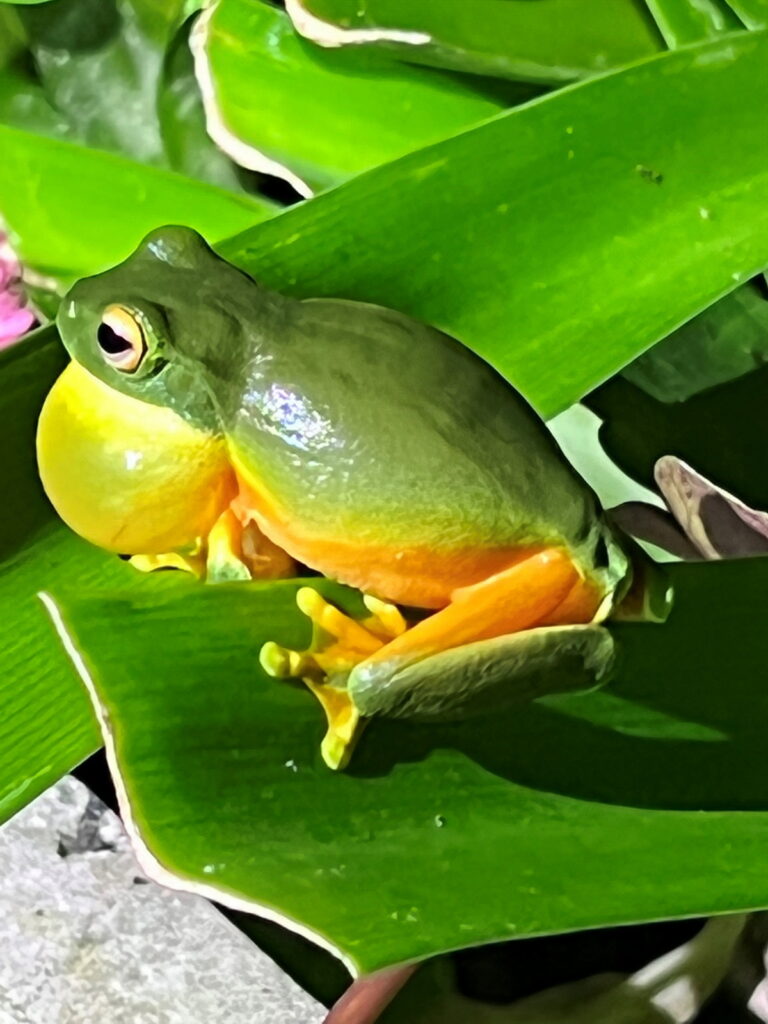
Orange-thighed tree frog (Litoria xanthomera) Photo by Jan Cooke
This Saturday’s night walk was very well attended (17 people) and provided lots to see, especially in terms of fluorescent wildlife. We started off the walk with a rousing solo vocal performance from one of my resident orange-thighed tree frogs, with distant vocal back-up from numerous nursery frogs and one or two robust whistling frogs.
As we started our walk around Lennox Crescent the glow worms formed an unmistakeable series of “fairy lights” along one of the exposed earth banks beside the road.
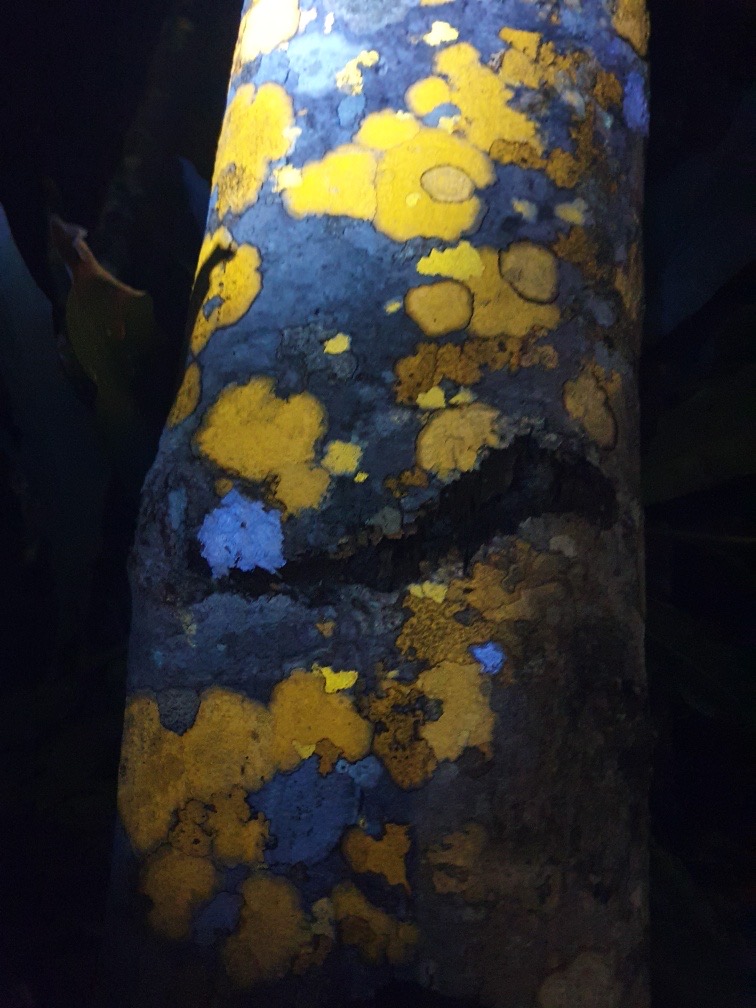
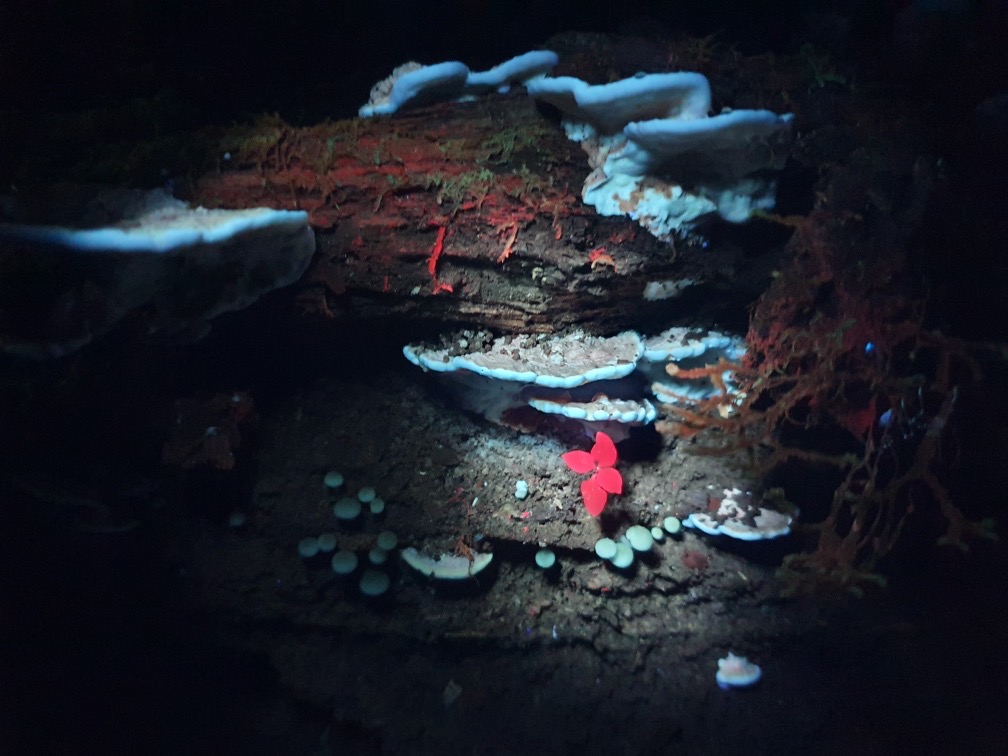
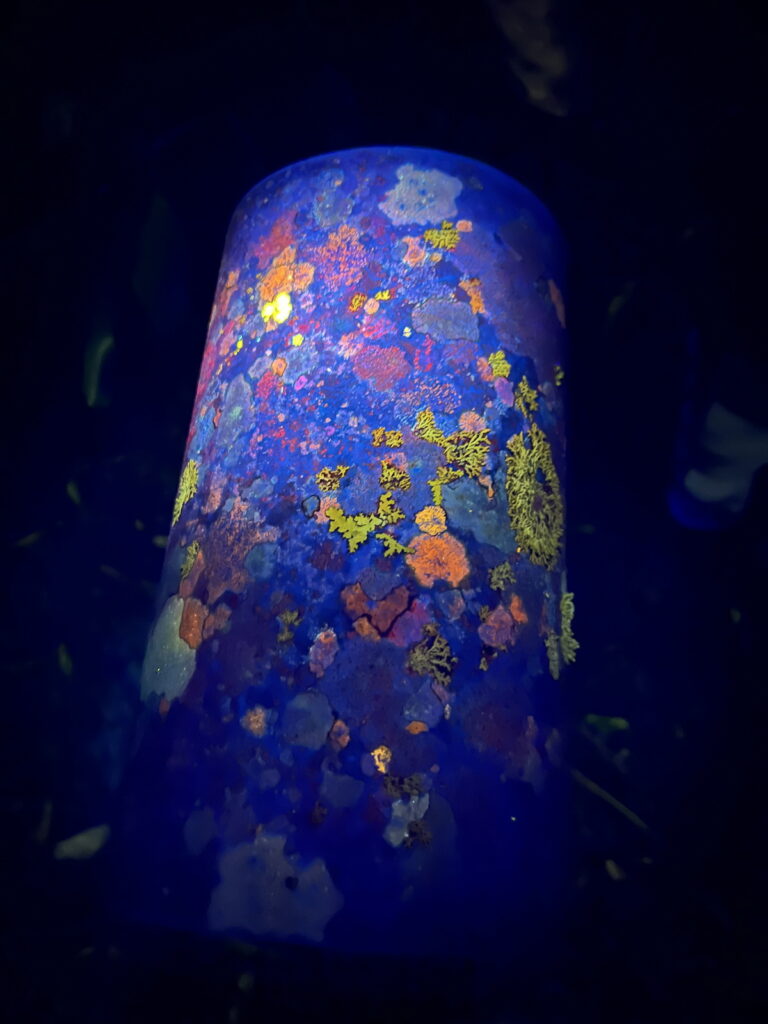
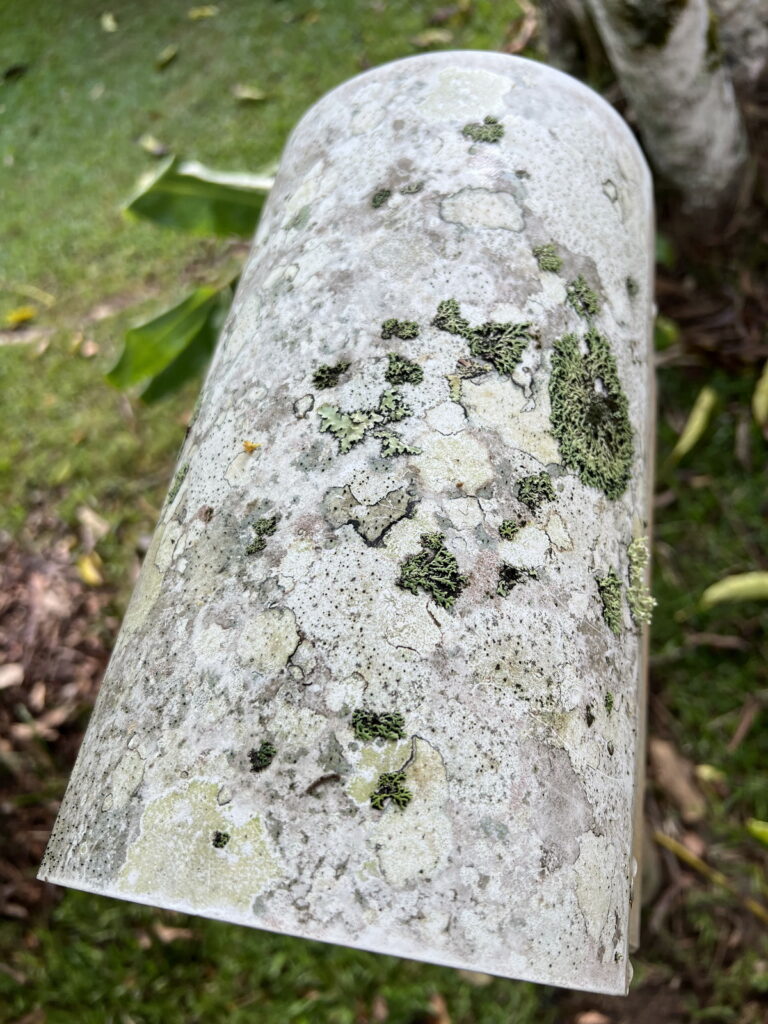
Brilliantly coloured fluorescent lichens were the most common organisms visible with our UV torches, with an amazing diversity of colours shapes and patterns on trees, logs and even mailboxes!
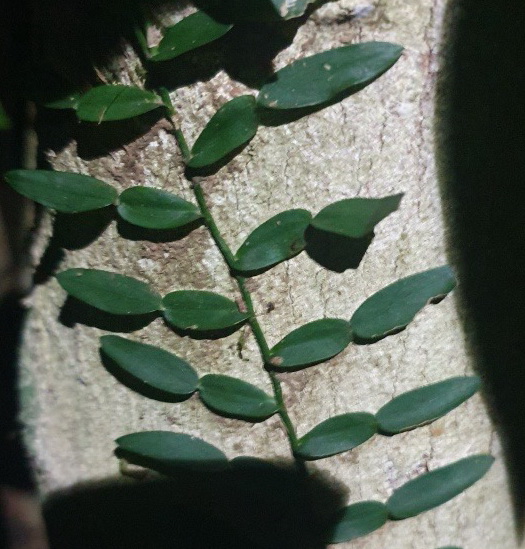
Top left: Fluorescent lichen on a tree. Top right: various hues of fluorescent colours emtted by moss, fungi and leaves. Bottom: Candlevine (Pothos longipes) fluorescing brilliant red under UV (left) compared with the normal grren colour seen using dead torches. All Photos by Peter Klumpp
More fluorescent lichen, Even a plain old mailbox(right) looks like a work of art from the psychdelic ’70s at night under a UV torch (centre) All photos by Jamie Oliver.
Supplejack (Ripognium album) Photo by Peter Klumpp
Along the track to Witts Lookout we also saw some great examples of the sinouus blue fluorescing supplejack vines.
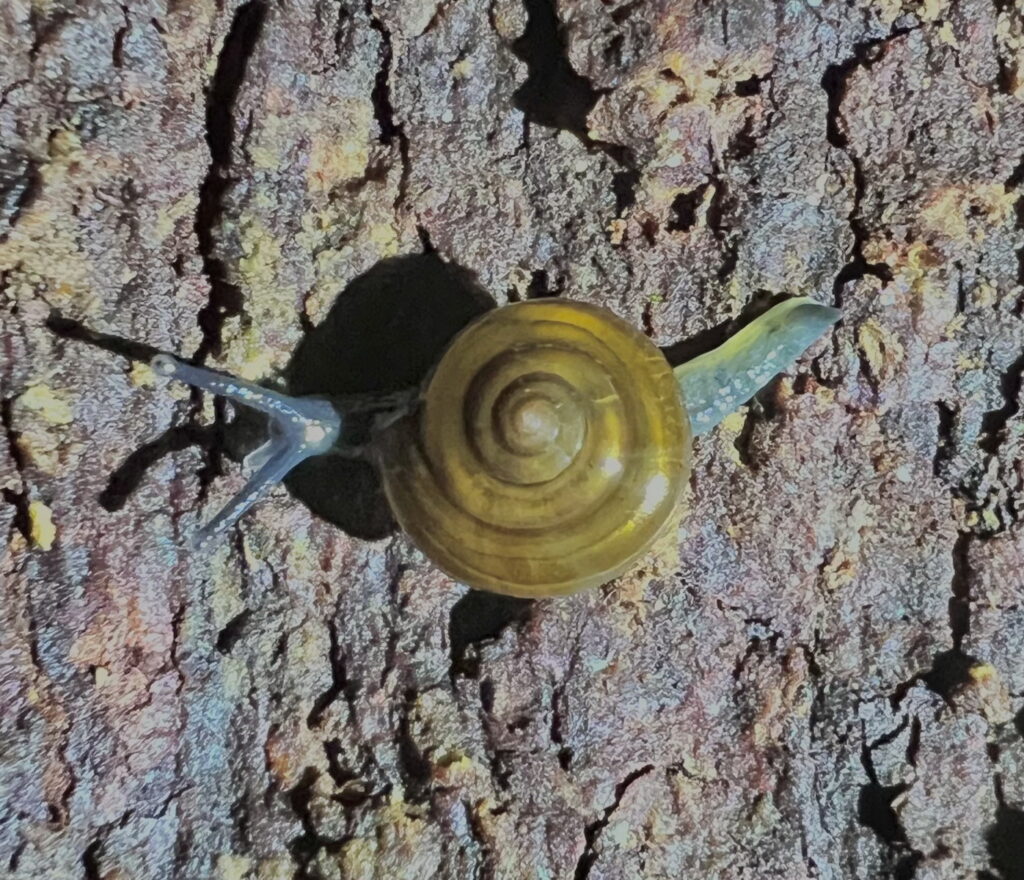
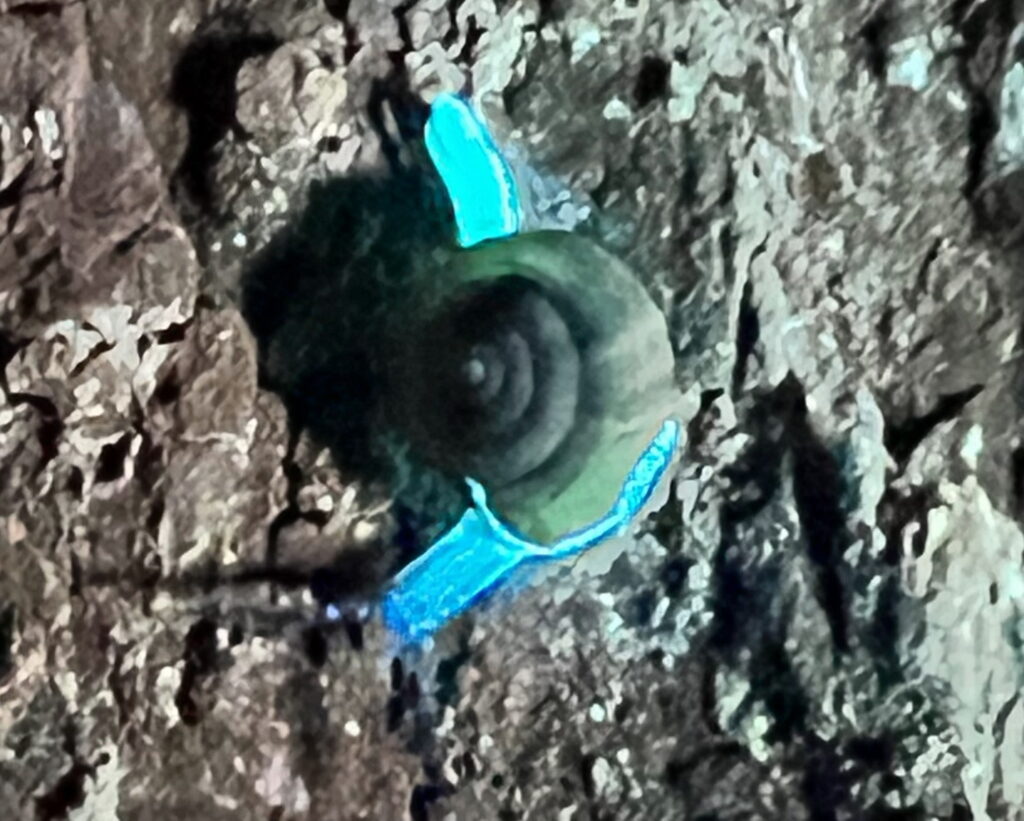
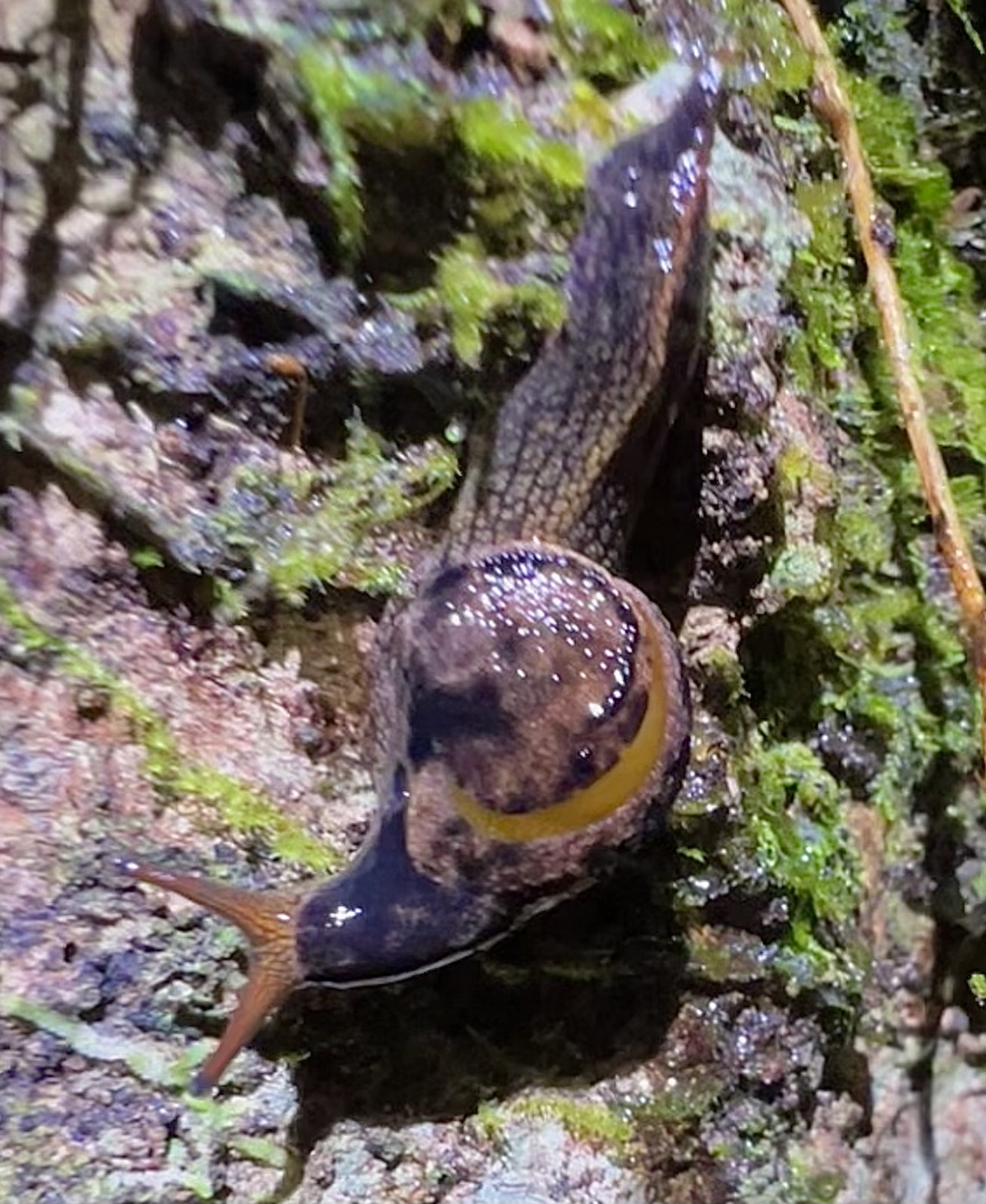
For the first time we also found two different animals exhibiting fluorescence: a small snail and a worm (not photographed).
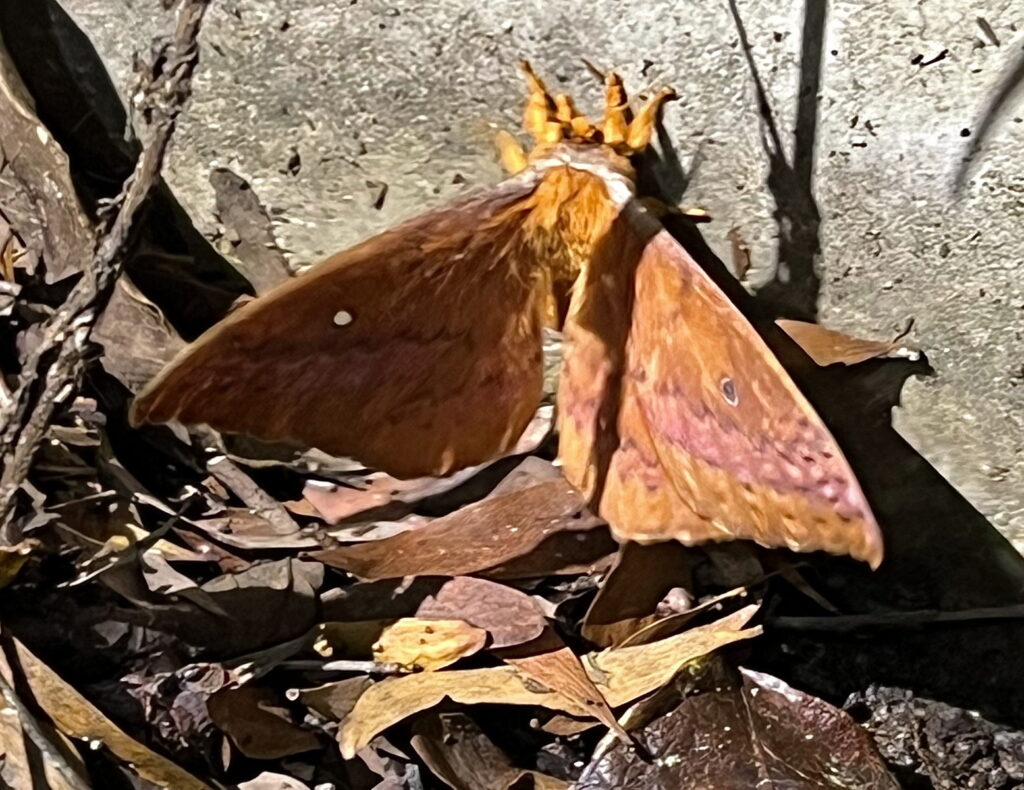
The normal array of small nocturnal spiders, crickets, millepedes and moths were also seen. I also had a fleeting glimpse of what was probably a bandicoot hopping across the track as we returned along the Witts lookout track.
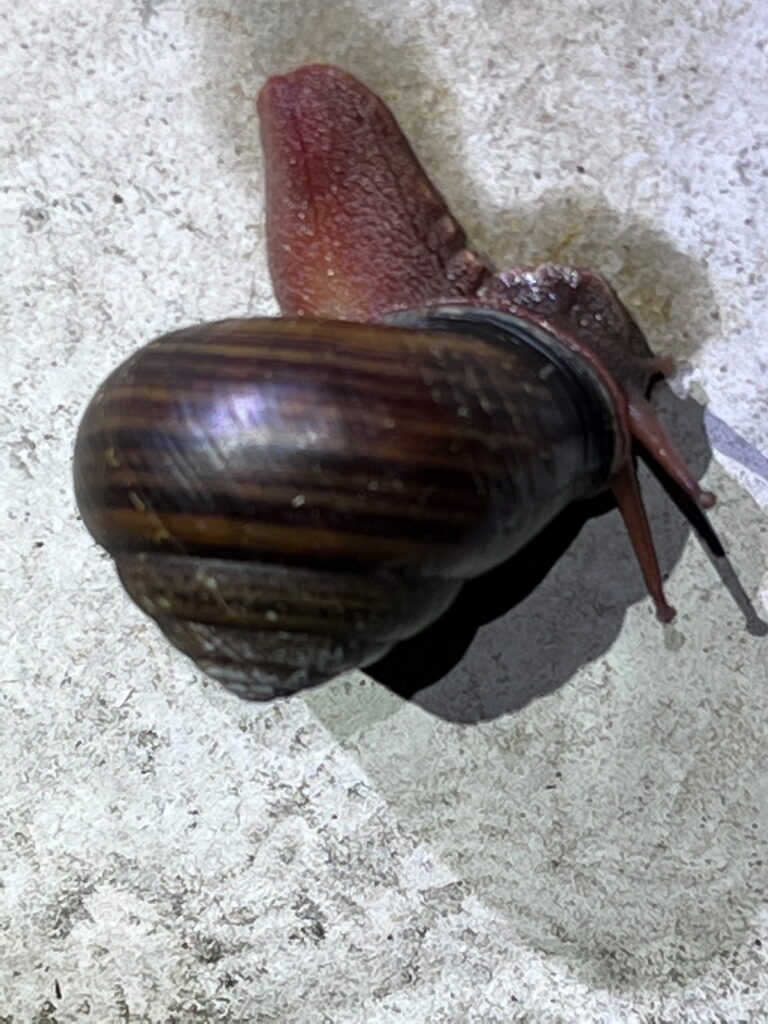
Moths, millepedes amd snails were also seen. Top Left: a nocturnal moth. Top centre: Paluma dark banded snail (Steorra jimfergusoni). Top right: a rainforest out grazing on rotten wood and lichen. Bottom: A small Camaenid snail whose body emitted a beautiful blue fluorescence under UV. Top center and top right images by Jan Cooke. Other images by Jamie Oliver
There seems to be a consistent difference in fluorescent and luminous flora between the H-Track and Witts Lookout track. Witts track had very few logs covered with the fluorescent liverwort (Bazzania vitatta) although it is very common on the much of the Lennox Crescent and back sides of the H-Track. Also there seem to be fewer luminous mushrooms. One of the group pointed out that the micro-climate on the H-track is more sheltered and humid compared to the Witt’s lookout track, which follows an somewhat exposed ridgeline that slopes steeply down to the coast. This seems a very plausible explanation. A few of us finished the night’s walk by going down the start of the H-track in order to see the large log that consistently puts on a gorgeous fluorescent display. It did not disappoint us!
The now well known “Blue Log” on the H-track Photo by Peter Klumpp
Last Thursday, I did an evening walk around the H-Track with two prospective new residents (John and Anneshka) and we were rewarded with the sounds of three frog species and superb views of fluorescent liverworts and luminous mushrooms. Some of the mushrooms were bigger than I have previously seen (2-3cm caps) and we even discovered some tiny fluorescent mushrooms. The recent rains up at Paluma have definitely livened up the forest and there is more substantial rain predicted later this week, so the prospects are good for an interesting night walk this Saturday (with little rain predicted on Saturday). Some of our endemic Paluma snails are almost certainly going to be out grazing and there is always a chance of seeing a Bandicoot or Pademelon.
This time we will head to McClellands Lookout and then along the track to Witts Lookout. Earlier this year, on a night walk along this track after heavy rain, large portions of the forest floor as well as entire dead logs were completely aglow with luminous fungal mycelia so we could be in for a substantial light show.
We will meet at Potters Park on Saturday at 7pm. Bring along a head torch and UV torch if you have one.
It was wet and cold but good weather for frogs and snails
The inclement weather probably accounted for the fact that Juanita and I were on our own last Saturday night and even we decided to take a shortened walk via Lennox Cr to McClelland’s lookout. However, the rain certainly didn’t discourage two groups of nocturnal animals that love moist weather. The robust whistling frog (Austrochaperina robusta) was calling continuously all around Lennox Cr.
This small frog is seldom seen (I have never seen one!) but is one of the most familiar nighttime sounds around Paluma whenever the weather is wet. We got within half a meter of several calling individuals but they were very well hidden. Another common frog around Paluma that is very noisy but highly secretive is the southern ornate nursery frog (Cophixalus ornatus). It too could be heard during the walk but much less frequently and as usual we did not see one (although I did spot one once in my garden last year). Have a listen to the calls below and see if they sound familiar.
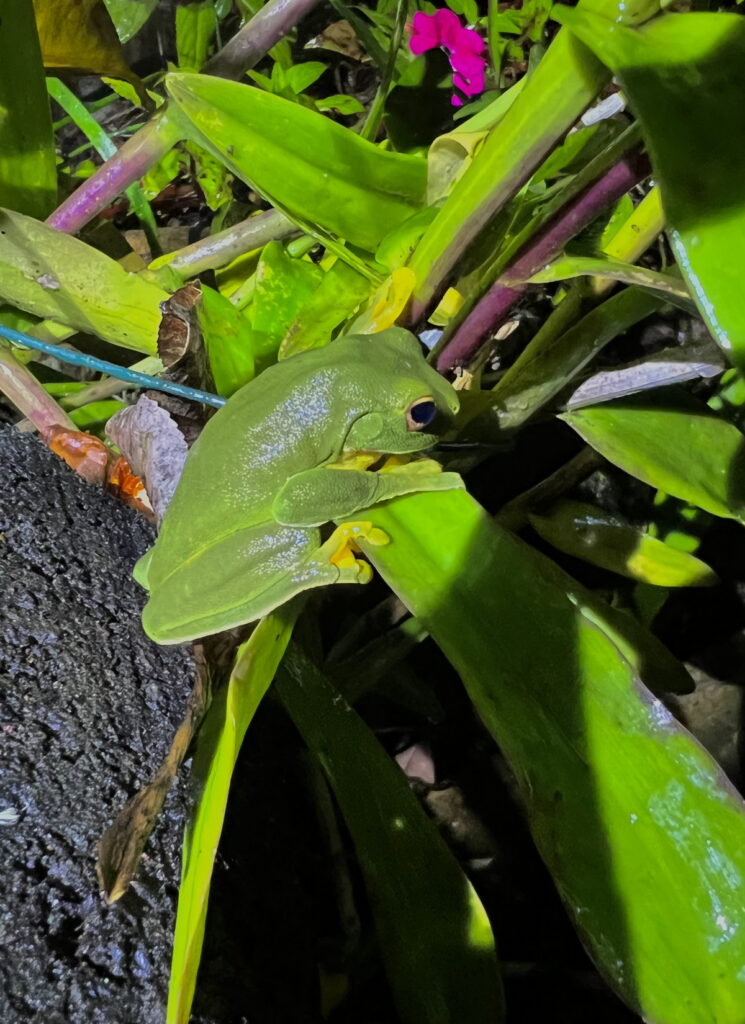
Although it was not calling on Saturday night we did spot our resident yellow-thighed tree frog hanging out near our concrete wash-tub pond at home at the end of the walk.
Our resident orange-thighed tree frog (Litoria xanthomera)
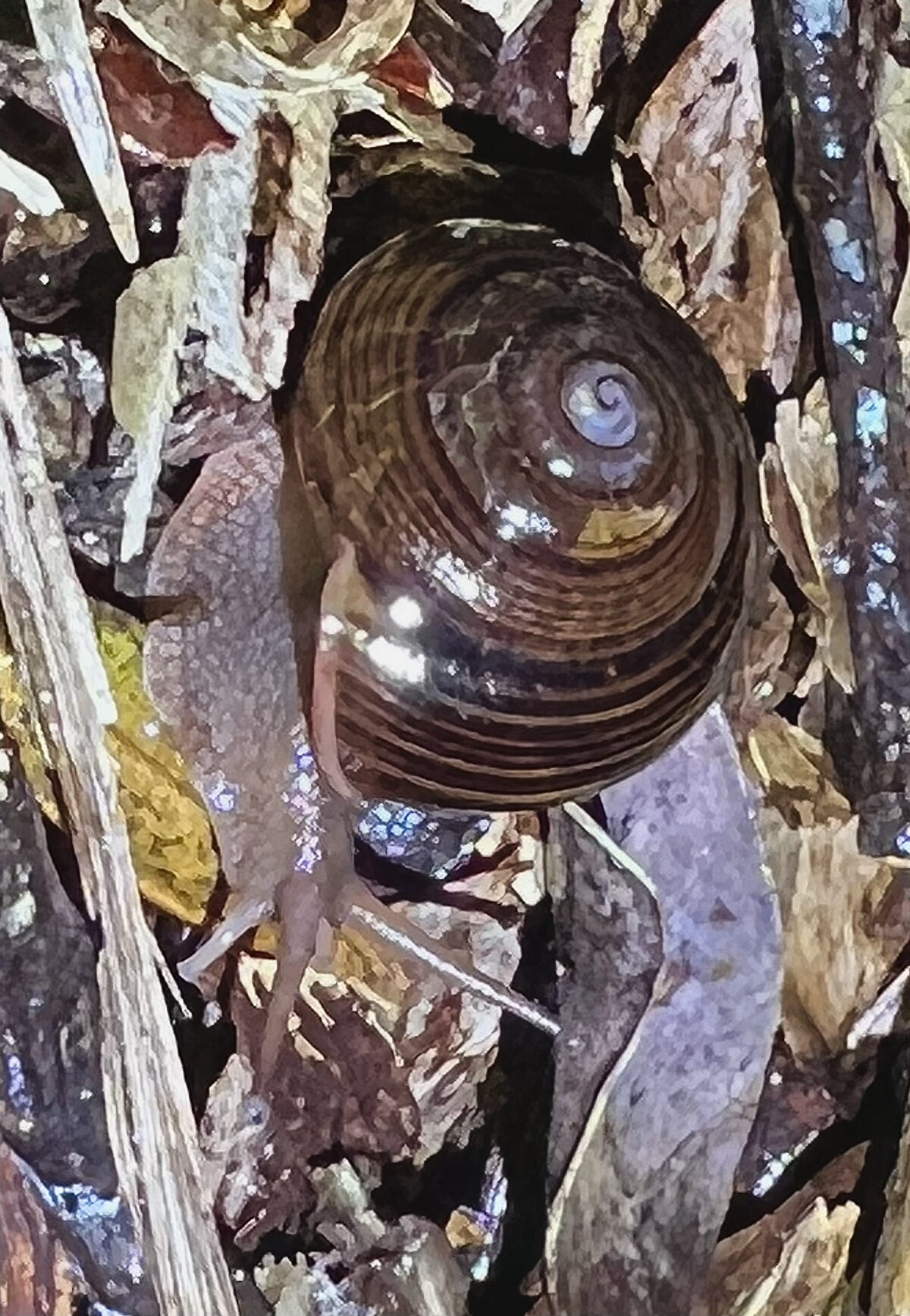
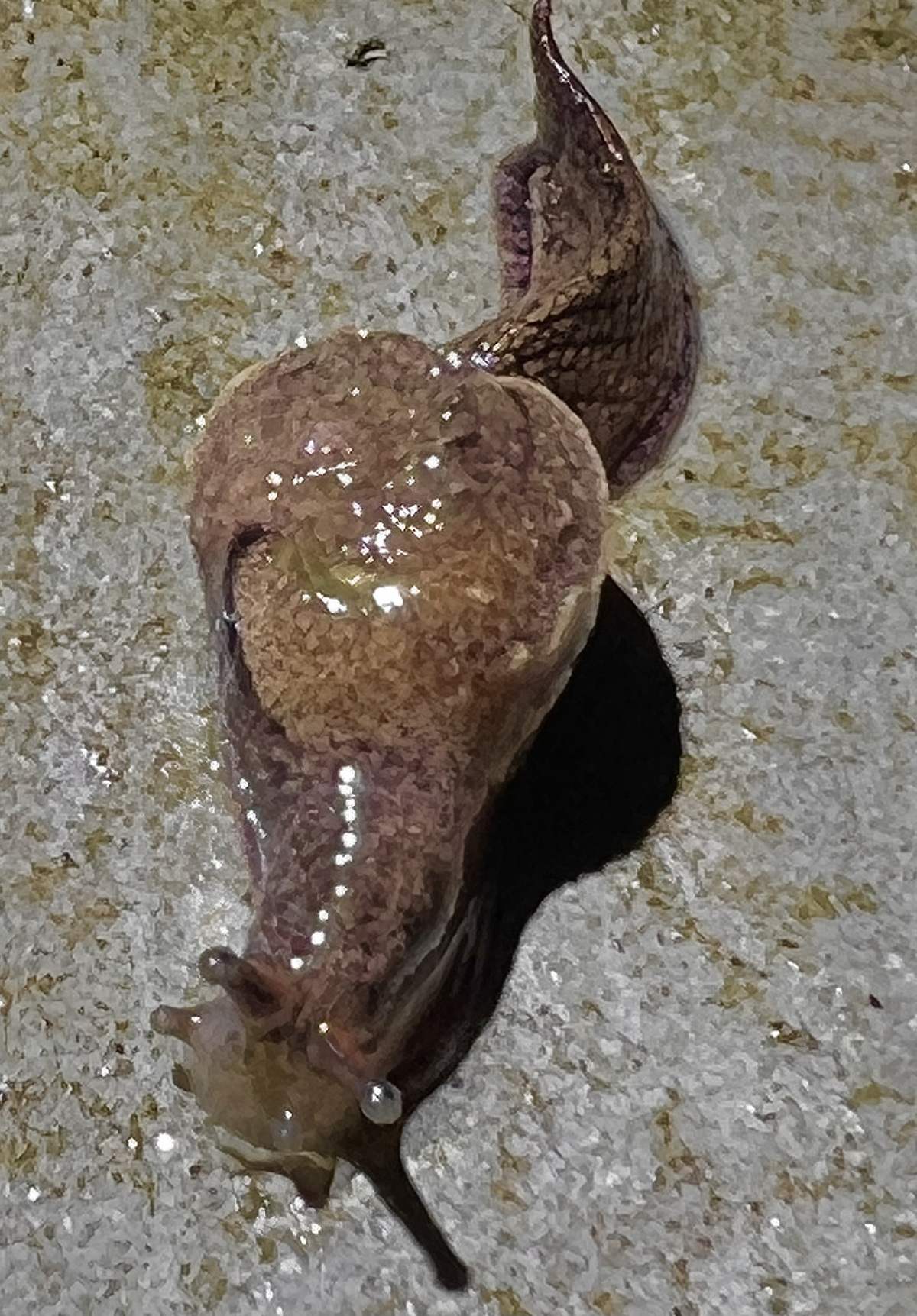
The other group of animals that reliably comes out at night, especially when it’s wet, is land snails. Australia has a very rich diversity of endemic land snails ranging from ones with full-sized shells to semi-slugs with a very small vestigial shell that they cannot retreat into and is normally covered by a layer of tissue. We saw two snail species and my best guess is that they were both locally endemic snails named after our village!
Dark Paluma banded snail (Steorra jimfergusoni)
Paluma semi-slug (Fastosarion paluma). Note the orange vestigial shell slightly exposed in the right hand image.
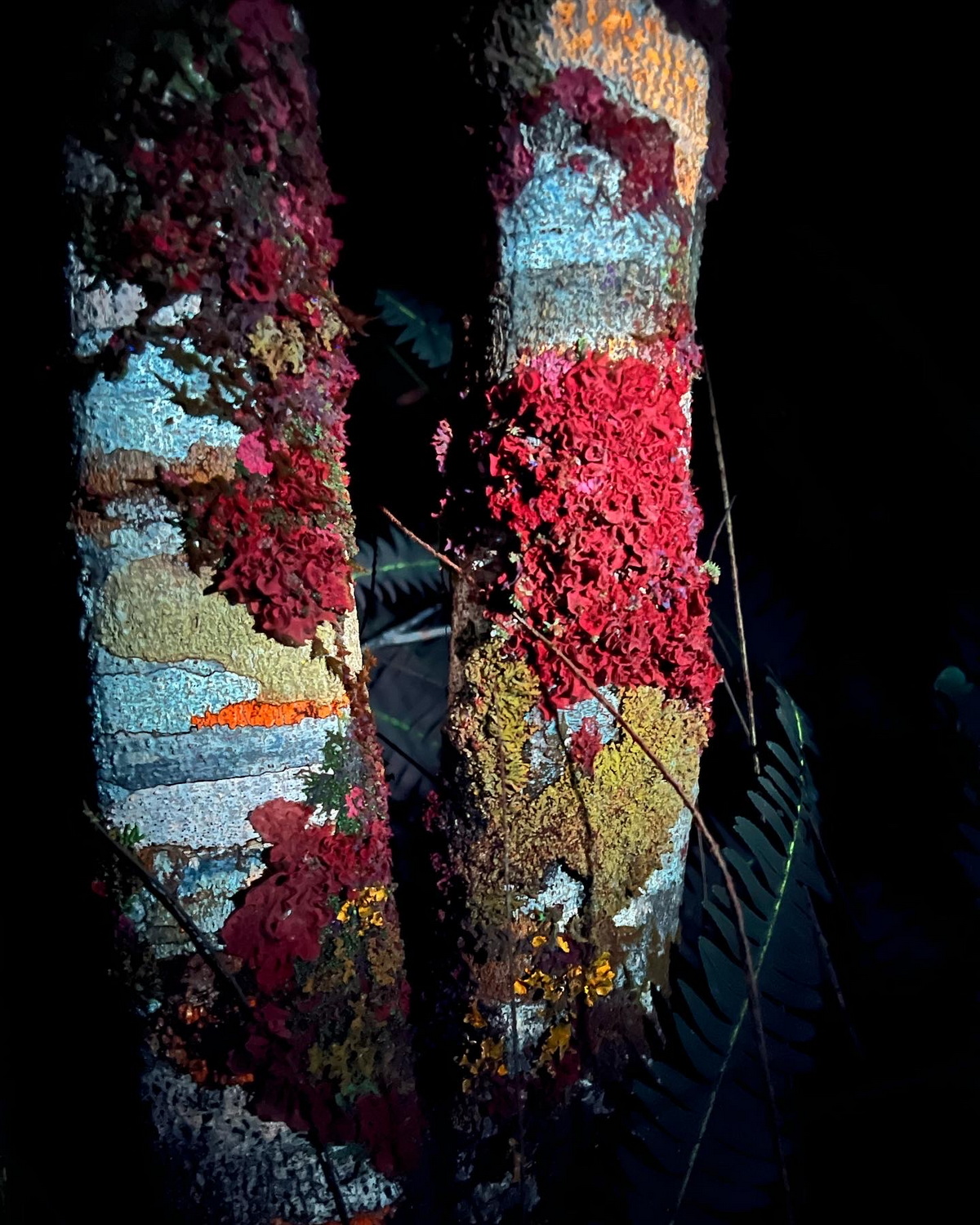
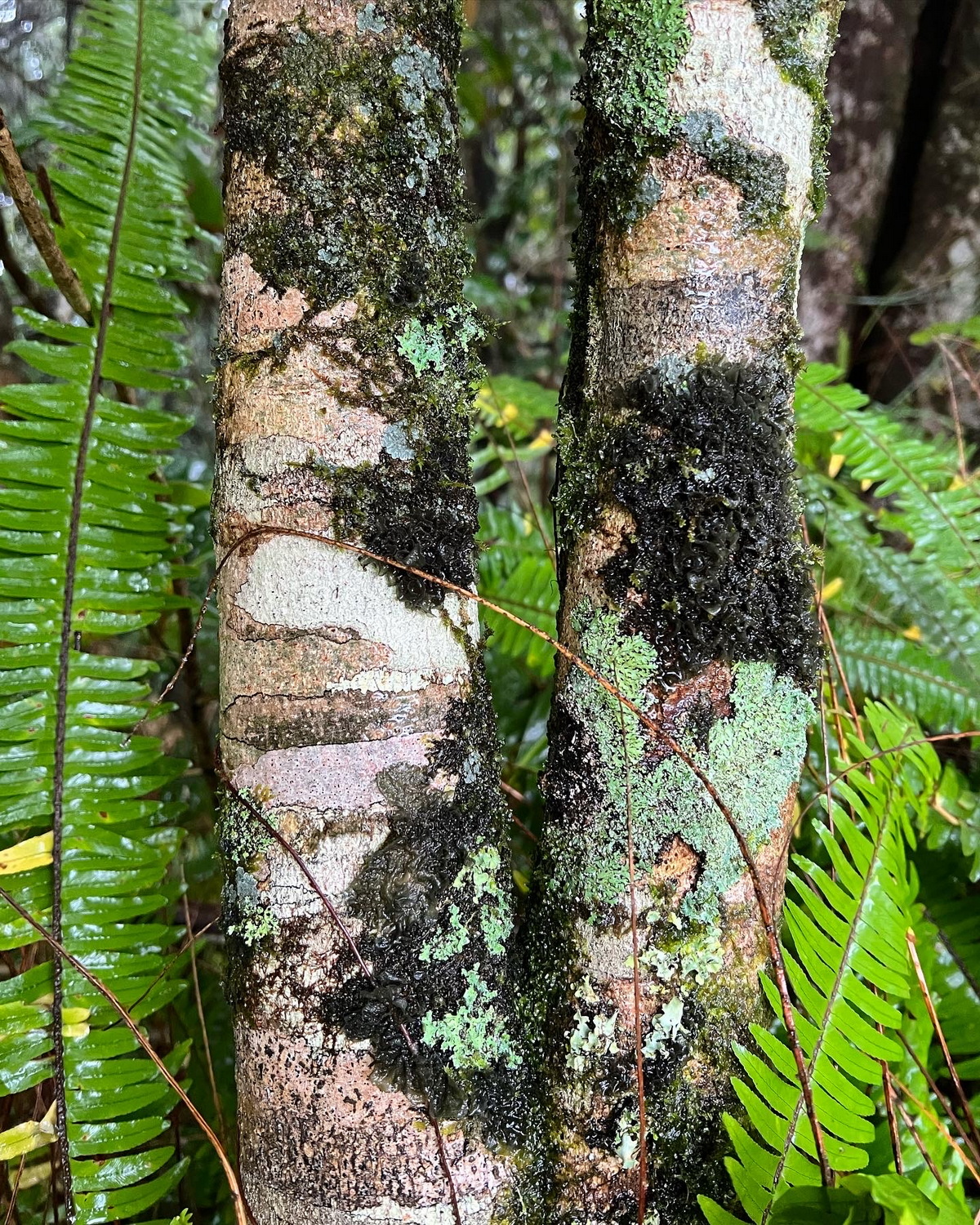
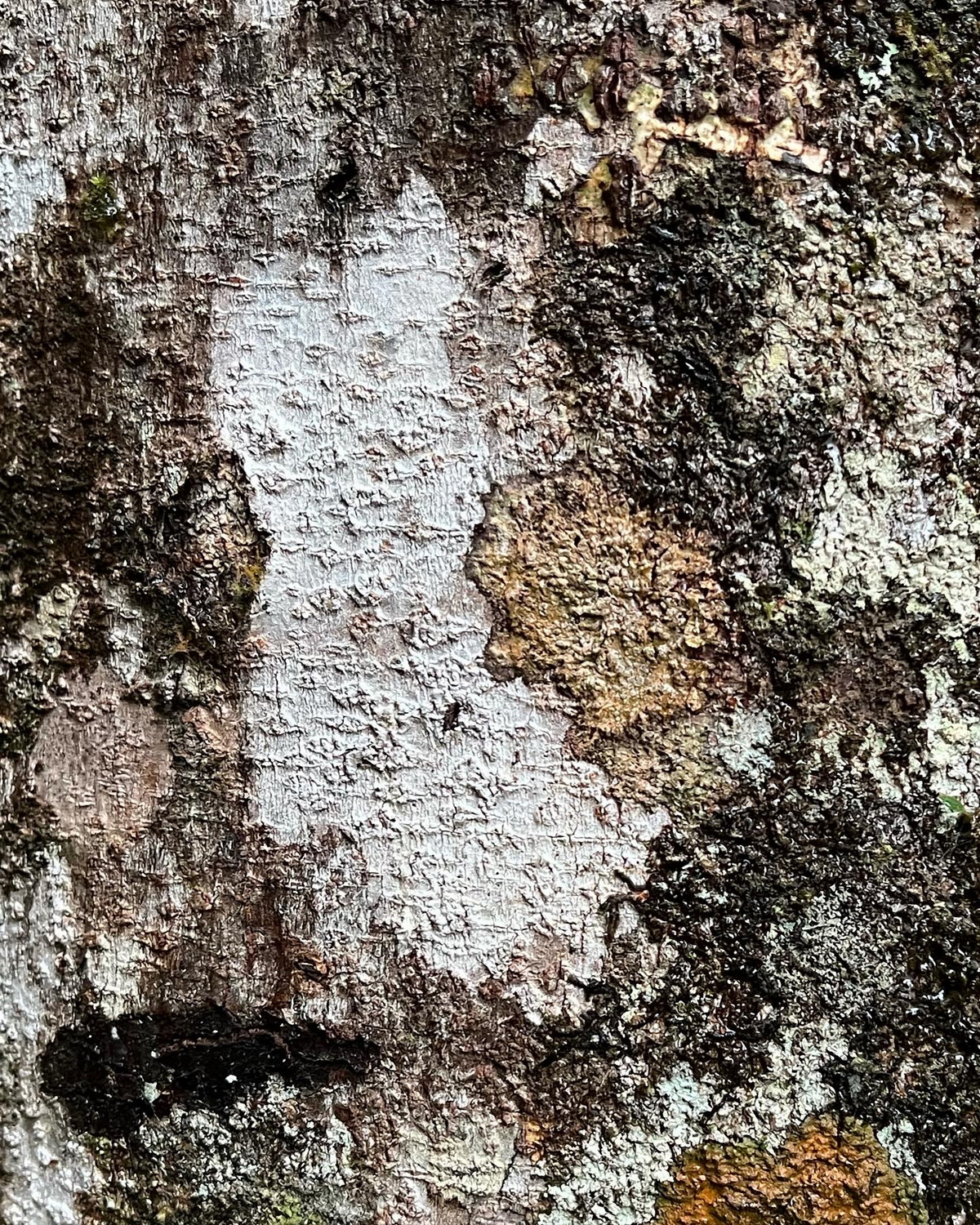
Using UV torches has become de rigueur on our night walks and while we did not come across any of the striking fluorescent blue liverworts that we often see on the H-Track, a couple of trees had strikingly fluorescent lichens. Juanita took several pictures and then returned on Sunday morning to get comparative daytime shots of the same patches. The difference is amazing.
Fluorescent lichen on trees under UV light (left) and during the day (right). Photos by Juanita Poletto
We will have another night walk in around 2 months time and would love some company if you are up in Paluma and feel like a night-time stroll. We always seem to find something interesting!
Text by Jamie Oliver; photos by Jamie Oliver unless indicated
This is a reminder that the next Paluma After Dark walk will be this Saturday, August 27th. We will meet at 6:30pm at Potters Park opposite 27 Lennox Cr. It could be a bit chilly and there is a small chance of rain, so bring a jacket/raincoat as well as a torch. I will have spare UV torches for anyone who is interested in looking for fluorescent liverworts or lichen. Hopefully, we will see some bandicoots and pademelons along the track.
The recent “Paluma After Dark” night walk took place last Saturday night at Don Battersby’s place on Hussey Road. The walk was well attended, with 7 locals and 5 visitors. A quick tour of Don’s property revealed a few interesting fluorescing lichens and plants and several tiny prowling wolf spiders whose eyeshine seemed disproportionately bright for their tiny size.
Once into the forest behind Don’s block we were given a full tour of the track to Ethel Creek and back via Hussey Road.
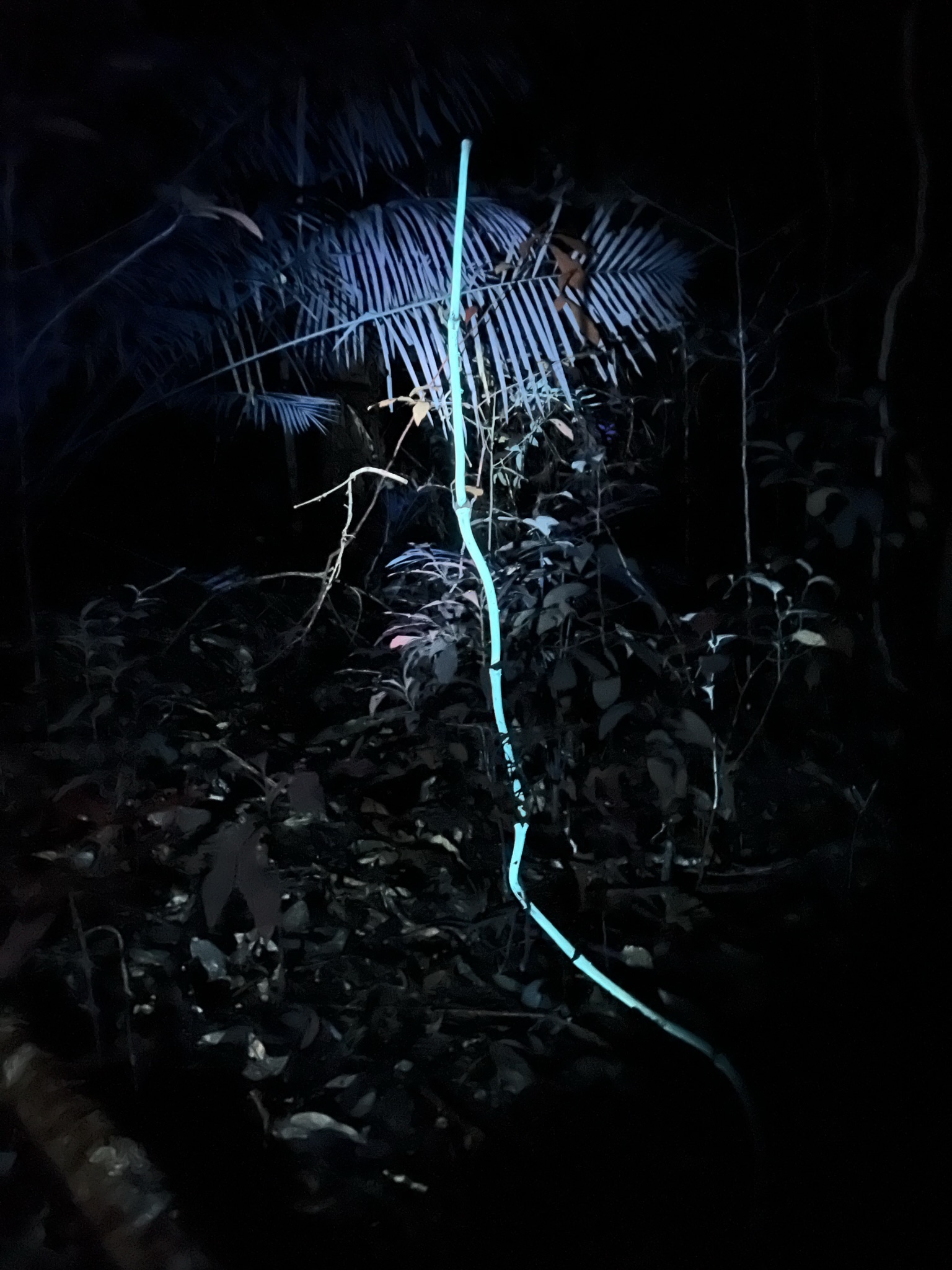
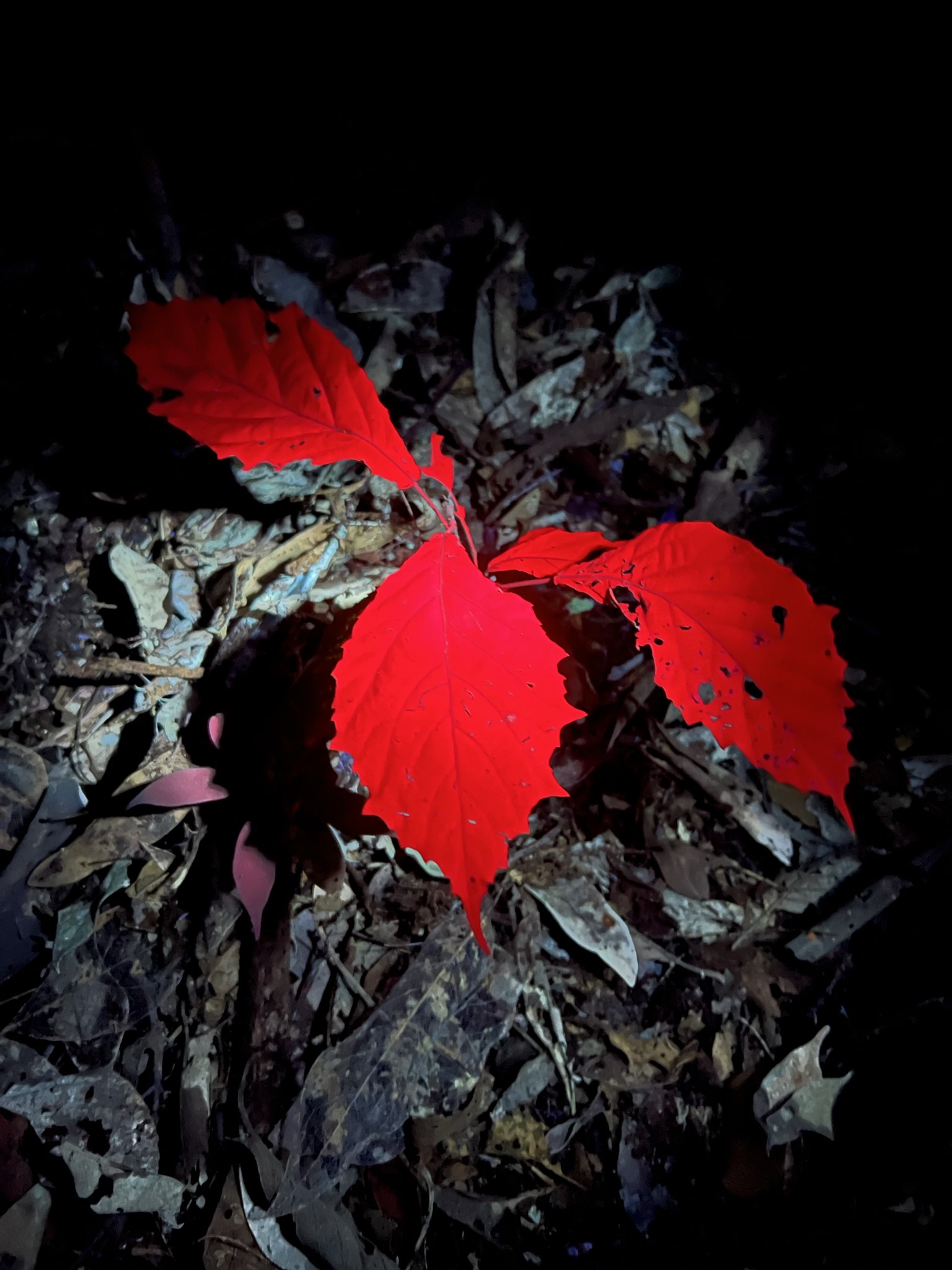
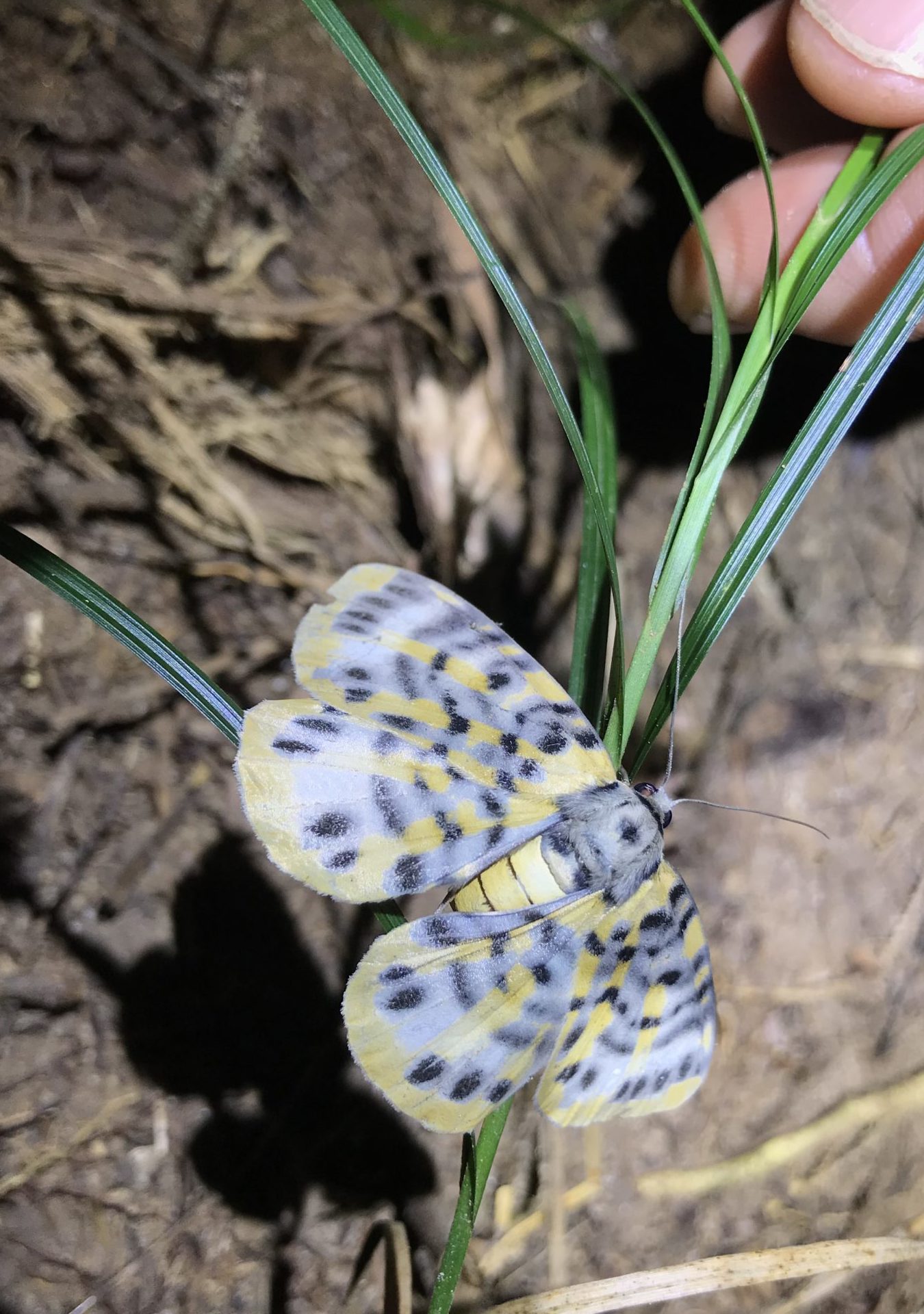
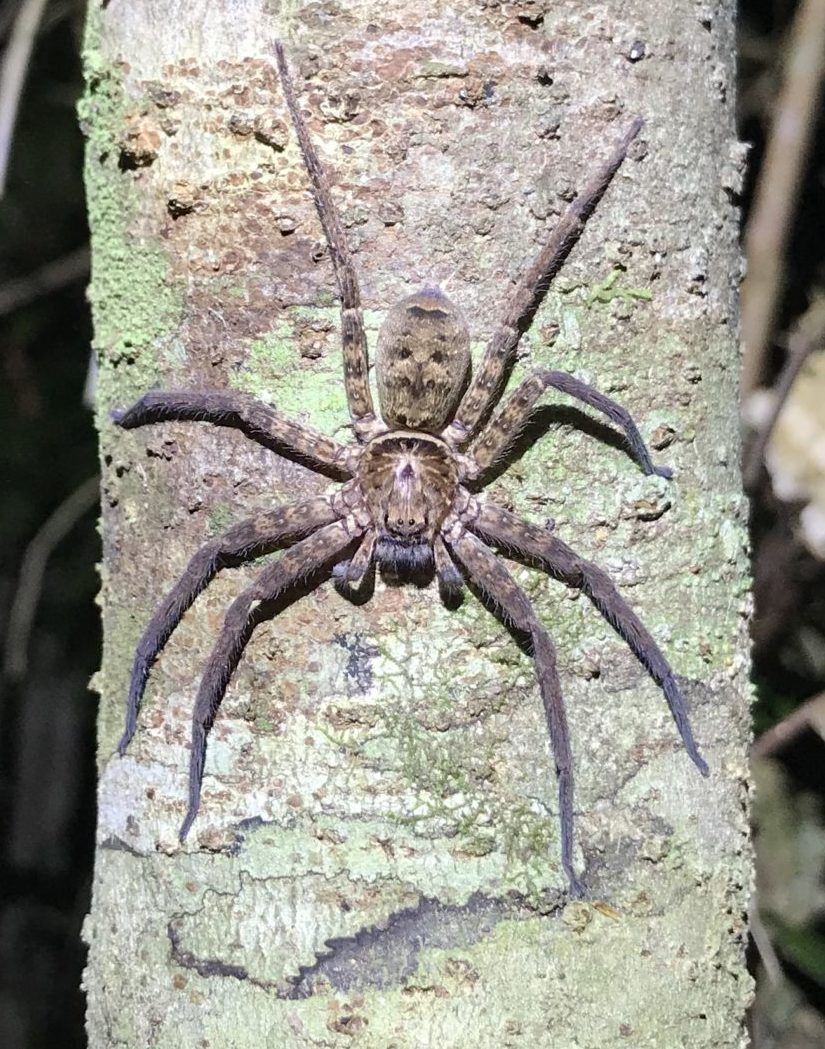
Top Left: A green suppleljack vine (Rhipognium album) fluorescing bright blue. Top Righ: An unidentified seedling with green leaves fluorescing bright red Bottom Left: A common but beautiful night moth with bright eyeshine (Bracca rotundata) Bottom Right: The jungle huntsman spider (Heteropoda jugulans is a common Paluma species Top photos by Jamie Oliver; Bottom Photos by Juanita Poletto
Using the various UV torches on hand, we saw several glowing supplejack vines, many brilliant red tree seedlings and several spiders, including the common jungle huntsman. Several mossy logs also had a sprinkling of fluorescent bryophytes similar to ones we have previously found on the H-Track.A couple of us also heard and caught a fleeting glimpse of a native rat, but not enough to identify the species.
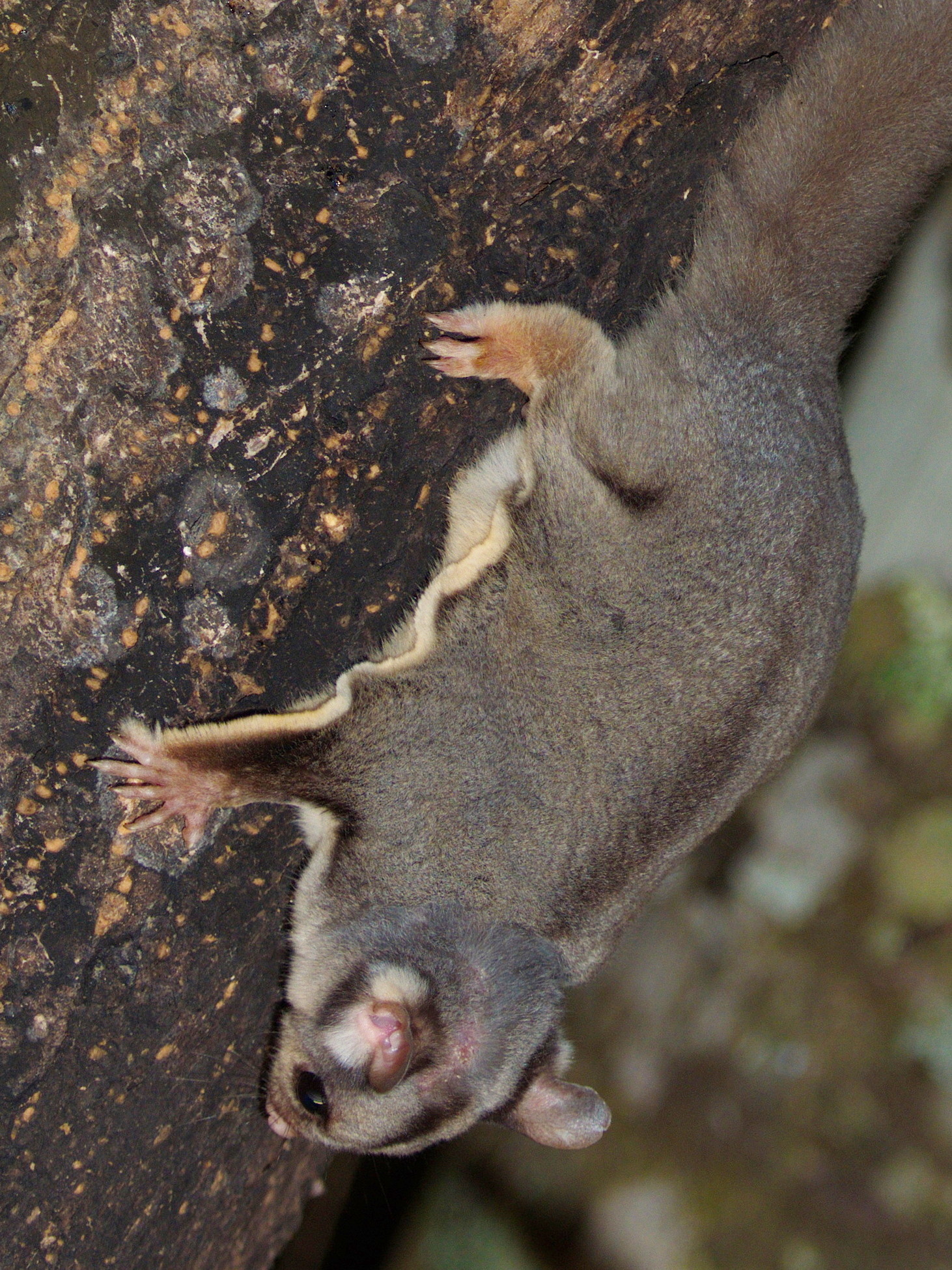
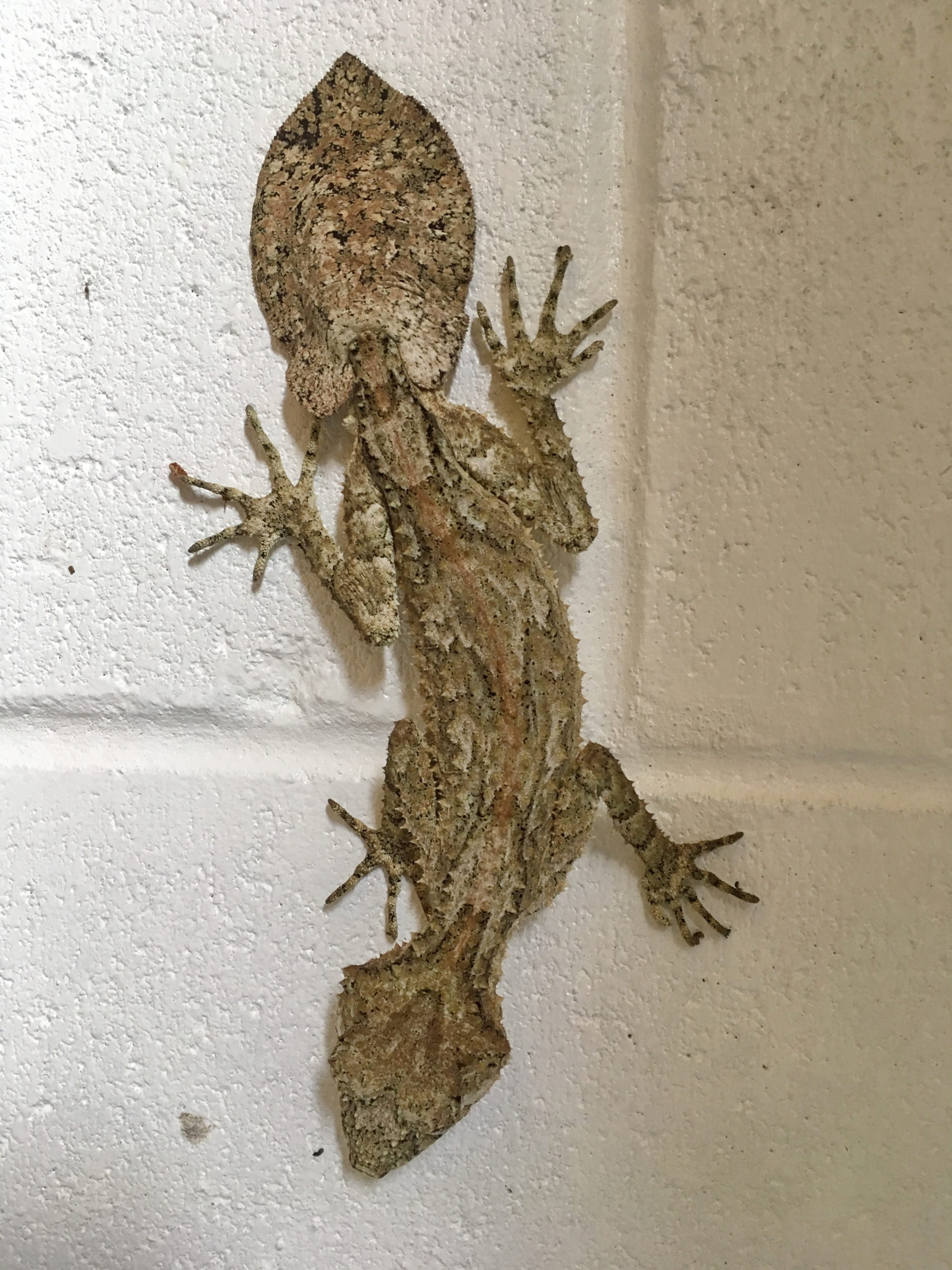
On the way back to Don’s, walking along Hussey road with heavy feet and flagging attention, Juanita spotted some eyeshine in a tree beside the road. Closer inspection showed it to be a sugar glider (Petaurus breviceps). Although about 5m up and partly obscured by branches it was nevertheless easy to make out the facial markings and skin folds between fore and rear legs that provide for fairly positive identification. It was a great ending to the evening and is the first arboreal mammal that many of us have seen in Paluma. As an added bonus, one of several leaf-tailed geckos (Saltuarius cornutus) living in Don’s shed came out to bid us goodbye as we prepared to leave. Below are pictures (not taken that night) that illustrate these last two species.
Left: A sugar glider near the Lake Eacham looking very similar to the one we saw Right: One of the leaf-tailed geckos living in Don’s shed – taken last year Photos by Jamie Olive
Many thanks to Don, for his enthusiasm and stamina in leading this walk.
Our next walk will be in August and will be advertised on the web.