Rainforest Biodiversity: 5 easy species Part 7 – Mammals

By Jamie Oliver

This selection of 5 easy mammals includes a mix of monotremes (platypus and echidna), marsupials (kangaroos and relatives), and placental mammals (all other mammals).  While monotremes and marsupials are mostly restricted to Australia, New Guinea and neighbouring islands, there is occasionally a misconception that Australia has no native placental mammals.  This is far from the case. Australia has a very rich diversity of native bats and rats which actually outnumber marsupials in terms of species. Recent scientific work also suggests that the dingo should be considered a native mammal.

In general, it will require more effort and a bit of luck to see the “easy” species listed here compared to other groups in this series. They are pretty easy to recognise, but unfortunately, they are not regularly encountered.

The majority of mammals in the Wet Tropics are either nocturnal (most active at night) or crepuscular (active at dawn and dusk). For three of the following 5 easy species of mammal your best chances of seeing them would be along the village tracks or roads after dark with a spotlight.

Dingo and platypus can be seen during the day but more frequently in the morning and evening.


1.    Northern Long-nosed Bandicoot (Perameles pallescens)

Bandicoots are marsupial mammals with rear- facing pouches.  The northern long-nosed bandicoot is now considered to be a separate species from the long-nosed bandicoot found further south. However, most nature guides will still refer to animals in this region by the earlier name – Perameles nasuta.
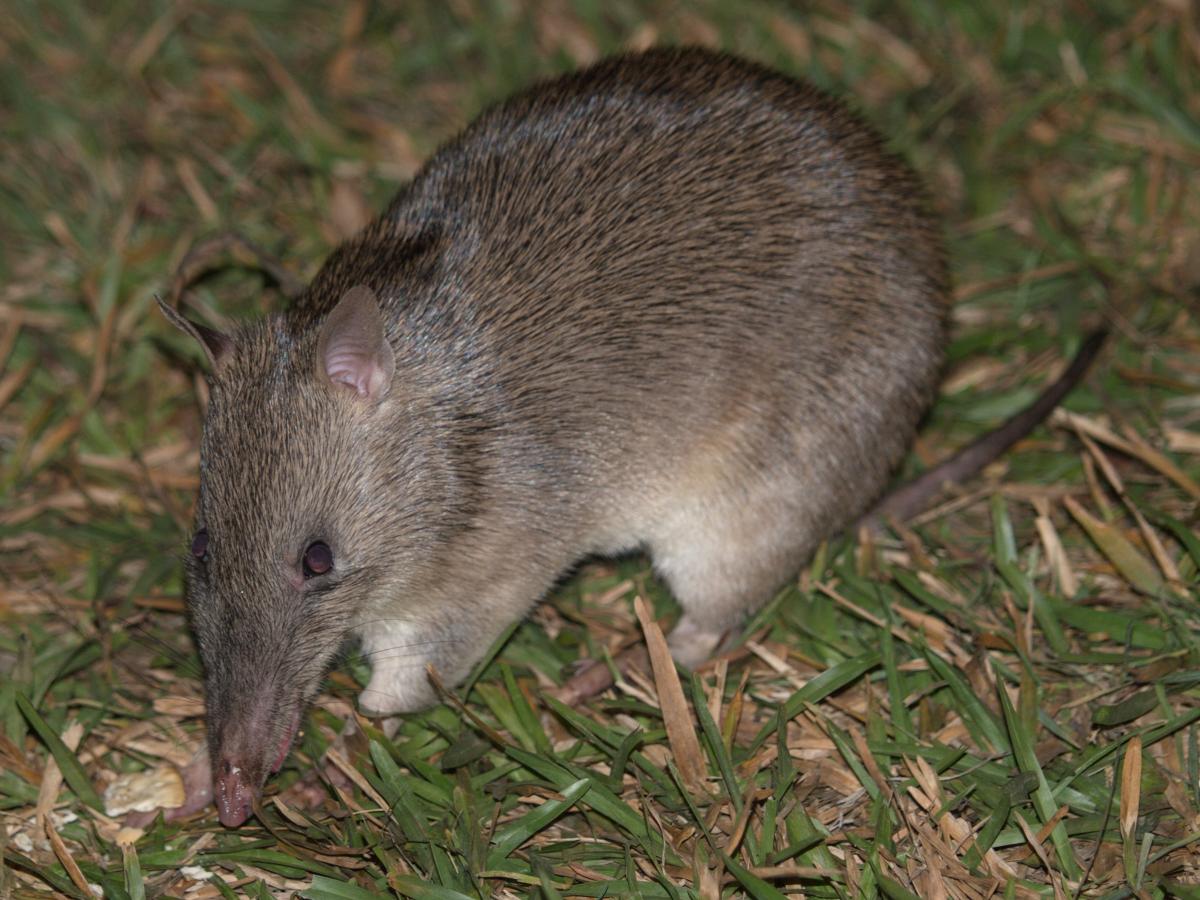
The northern long-nosed bandicoot is a common evening visitor in most gardens around the village, where it leaves round conical holes in lawns.  It has grey-brown fur on its back and a pale belly. Its most distinctive feature is its long, finely-tapered nose, which it uses to detect and dig out insects and other invertebrates near the soil surface.

Northern brown bandicoot (Isoodon marcrourus) Photo by Daniela Parra (C) Creative Commons

One other species of bandicoot that can be seen in the area is the northern brown bandicoot. It is a bigger animal with smaller rounded ears, a darker brown back with streaks of black, and a shorter, less finely-pointed snout. 

Bandicoots are commonly seen along the local walking tracks at night and can be detected from their eyeshine. They will occasionally make a grunting or squealing sound if disturbed.


2.    Red-legged Pademelon (Thylogale stigmata)

Pademelons are diminutive relatives of kangaroos that live in rainforests and dense bushland. The red-legged pademelon is frequently seen on grassy lawns after dark or foraging near the local walking tracks. They can be picked up from their eye shine if you are using a torch. It is often heard before it is seen, giving one or more thumps with its hind foot at it runs away into the bush. If you get close enough, you will see it has, in addition to ruddy-brown legs, a distinctive pale cheek stripe and horizontal hip stripe.
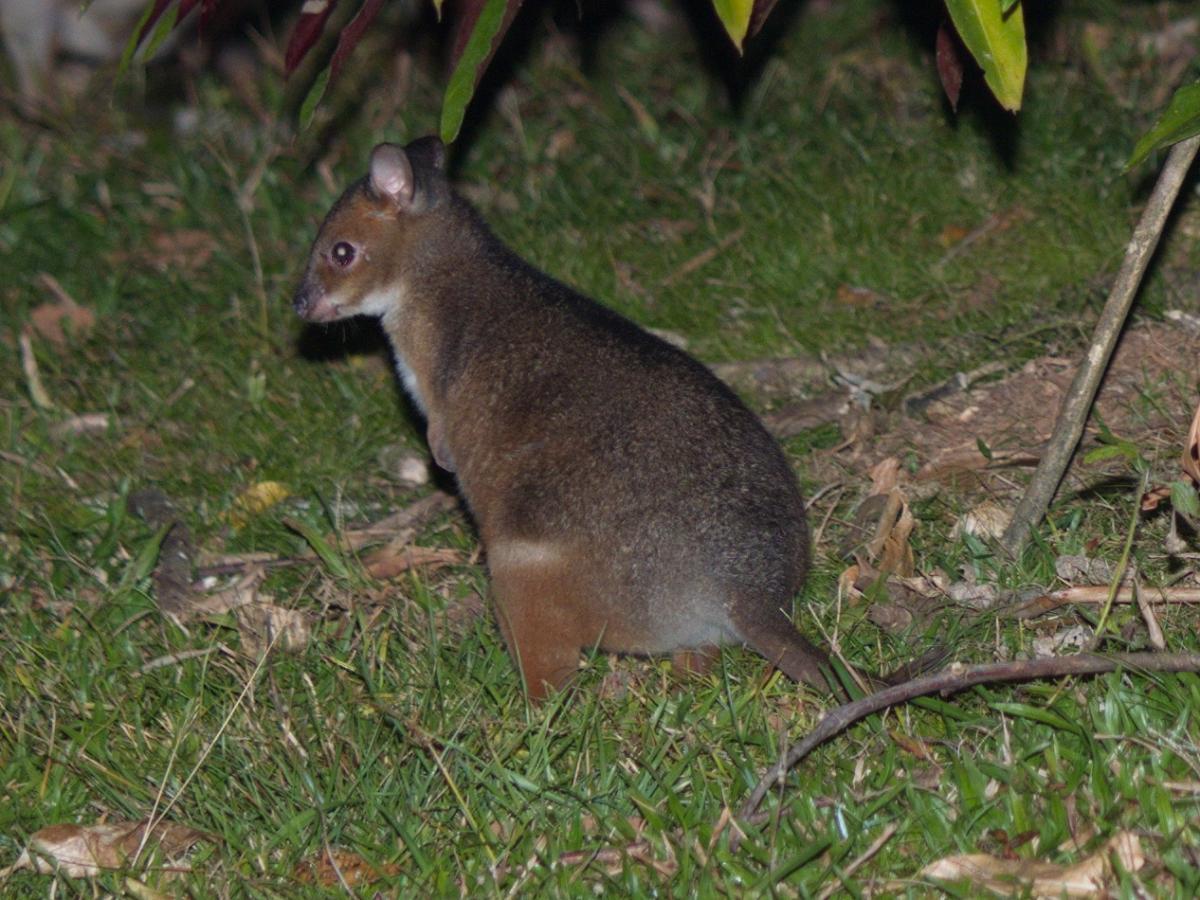
In the forest pademelons eat fallen leaves, but many gardeners in Paluma will attest to the fact that they are partial to certain fresh leaves of ornamental plants such as Gardenia, as well as lawn grass.


3.    White-tailed Rat (Uromys caudimaculata)

The white-tailed rat is a placental mammal whose reputation matches its size. It is one of the biggest rats in Australia, weighing up to 1 kg and is nearly 30cm long.
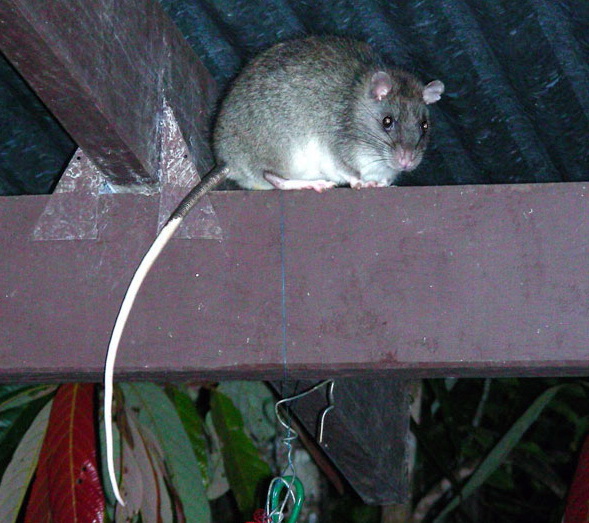
Photo (C) Bronwen Scott
A wheelie bin chewed open to get at the contents

It is active at night in the forest and around homes. You are most likely to see the results of this rat’s nocturnal activities around village houses rather than sighting the culprit.  These rats have tremendously strong teeth and jaws and readily chew through wood and hard plastic – including wheelie bins!  Some locals call it the “tin-opener rat” and swear it has opened tins to get at the contents!

If seen, the rat is easy to identify from its size (like a small cat) and its distinctive tail, which is half to two-thirds white.

White-tailed rats can be seen along the tracks as well as throughout the village at night and can be picked up by their eyeshine if you are using a torch.


4.    Dingo (Canis dingo)

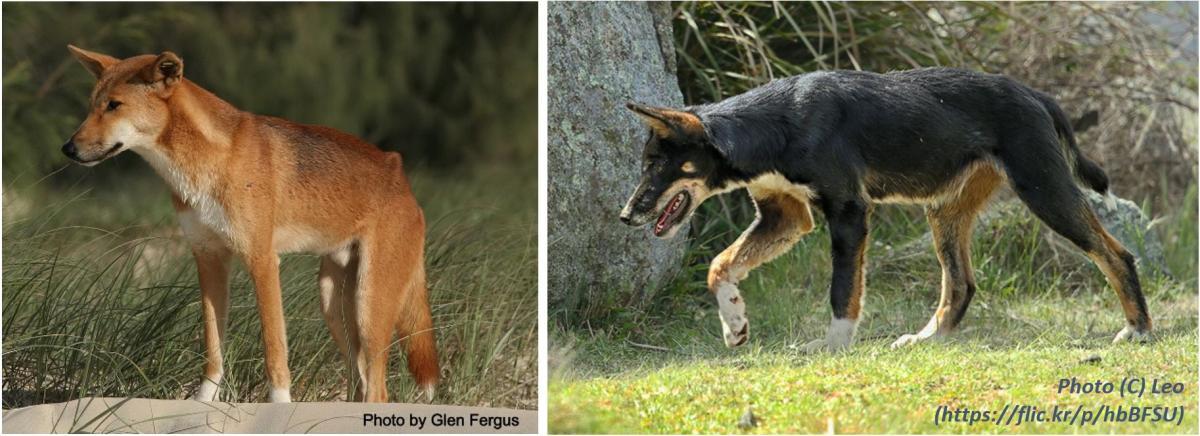
The Dingo is a placental mammal and has frequently been considered a subspecies  of the wolf (Canis lupis) together with domestic dogs. Recent scientific papers have argued that they should be considered a separate species (Canis dingo) and that they are true native mammals to Australia.

Dingos are very similar in size and shape to some domestic dogs. They are most frequently light golden brown in colour with a white chest, belly, paws and tail tip. There is a second colour morph that can be seen around Paluma that is dark brown and tan.  Dingos used to be very common around the village up until the local tip was closed. Now you are most likely to spot them in the early evening or morning along the side of the road out to Hidden Valley and to the Dam.  Like all mammals they can be detected by their eyeshine at night if you are using a torch. Like other canines, they hunt in packs and eat a variety of other mammals, lizards, birds as well as carrion.

5. Platypus (Ornithorhynchus anatinus)

The duck-billed platypus is one of two monotreme (egg-laying) genera of mammals in Australia (the other is the echidna).  Platypuses are often considered be a rare inhabitant of the bush, but they are actually quite common. Semi-aquatic, they can be found in most medium-sized streams and billabongs in a variety of habitats throughout eastern and south-eastern Australia and Tasmania.
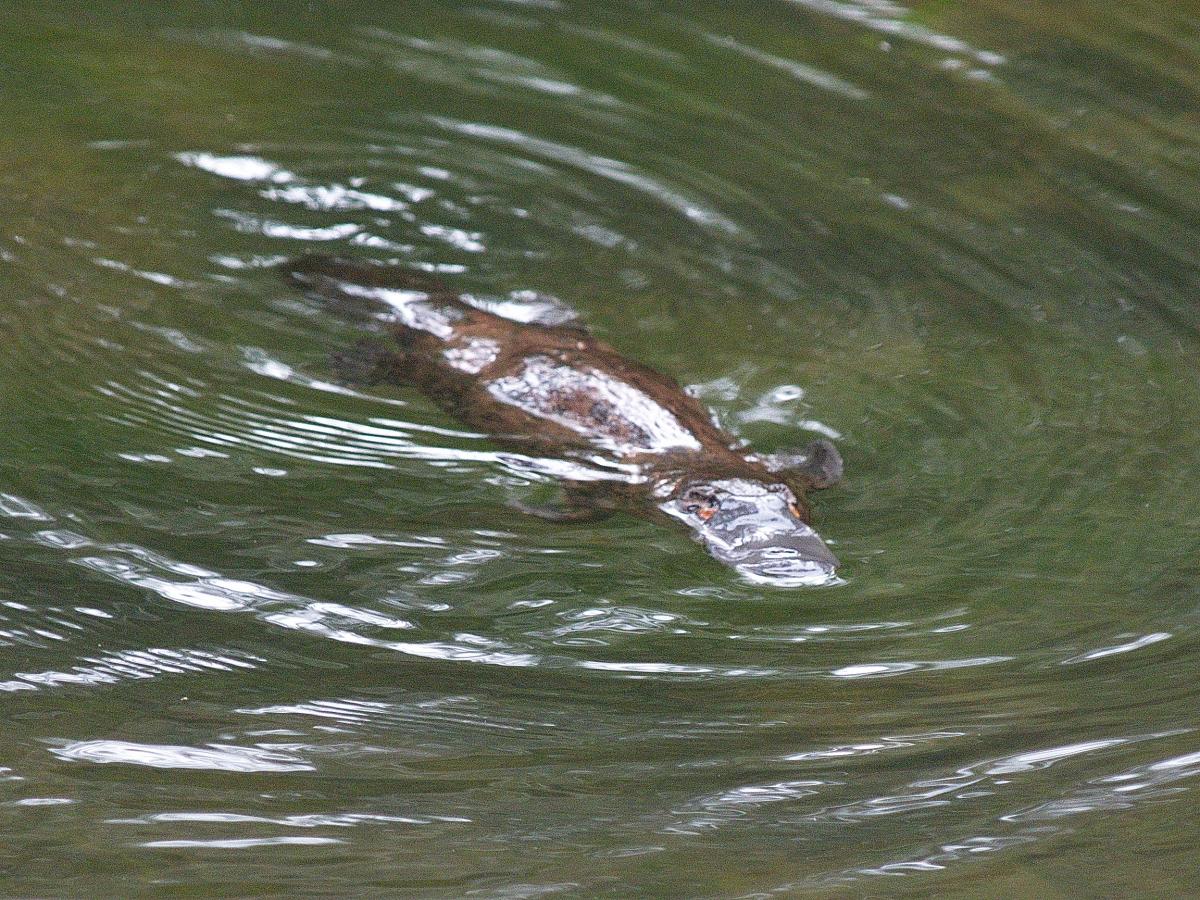
This platypus took up residence in the pond behind the village weir for several months in 2018.

They are mainly nocturnal but can be readily seen in the early morning or late evening diving down to catch a range of invertebrate prey, which they locate using electromagnetic sensors in their bills. Once hunted for their soft fur, platypuses are unmistakable! If you are lucky enough to get a good view, notice the leathery bill, webbed feet, and flattened naked tail when it comes to the surface to chew on the food it has gathered from the bottom. They are an irregular visitor to larger streams around Paluma, including Ethel Creek, Birthday Creek and the Village weir. Permanent populations can be found on Paluma Dam and Running River
A Weekend for the Birds

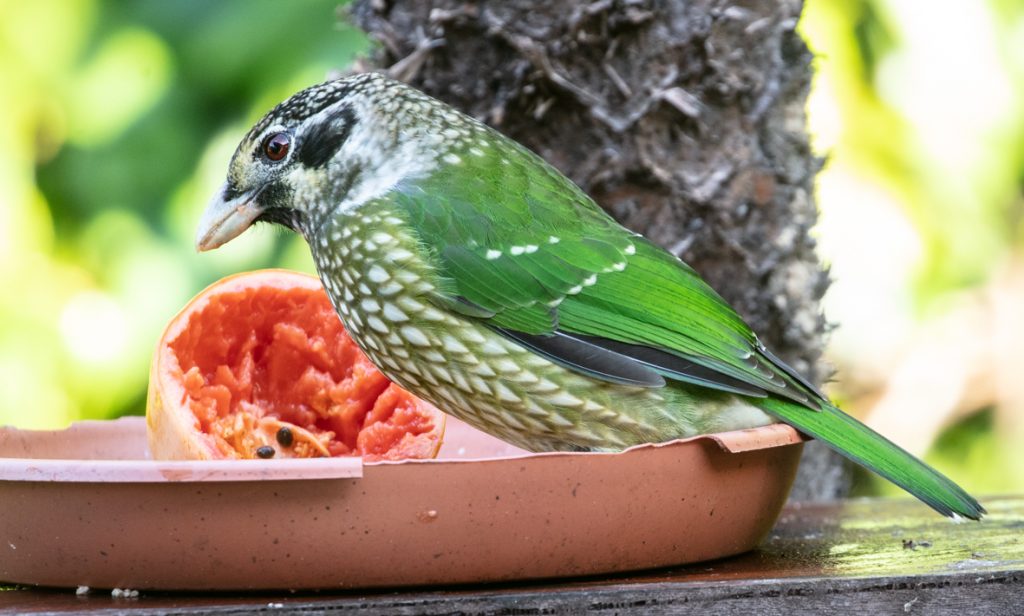
Most residents at Paluma are avid bird watchers and as the seasons change, so does the variety of bird species that come and go round the village. As winter approaches, many of our favourite species are becoming regular visitors to local gardens and verandahs as they check out what’s on offer at the bird feeder.

Last weekend was a great time for a spot of bird watching, with Jan and Peter Cooke taking up their favourite vantage point on their elevated verandah set adjacent to the rainforest. Some splendid feathered visitors arrived to enjoy the free fruit and easy pickings at the bird feeder.

Below are some of Peter Cooke’s fantastic photos from the verandah. What a way to spend the weekend!

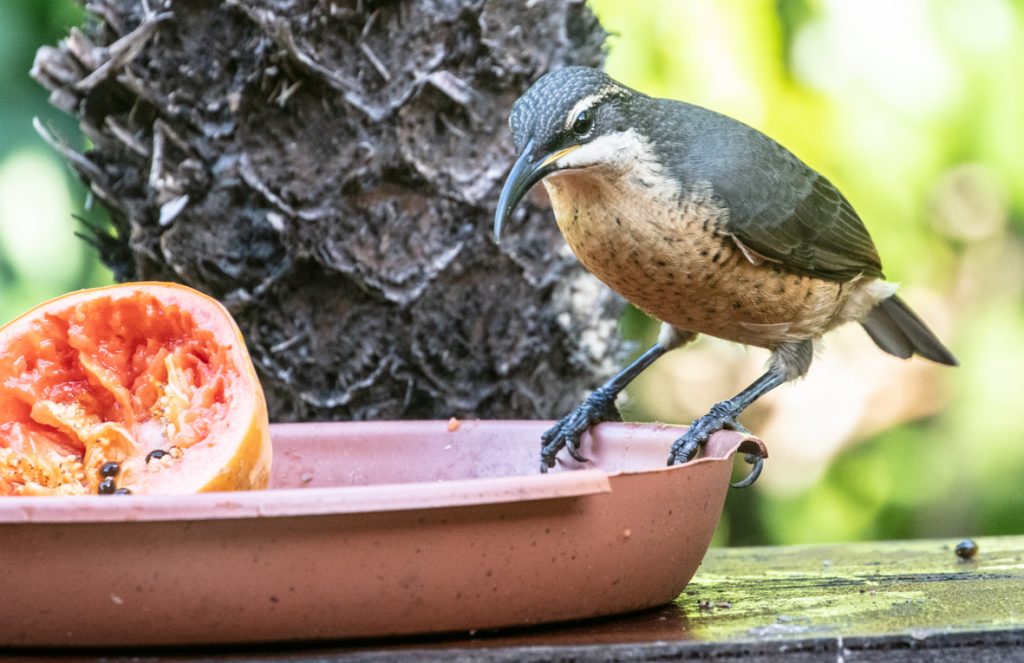
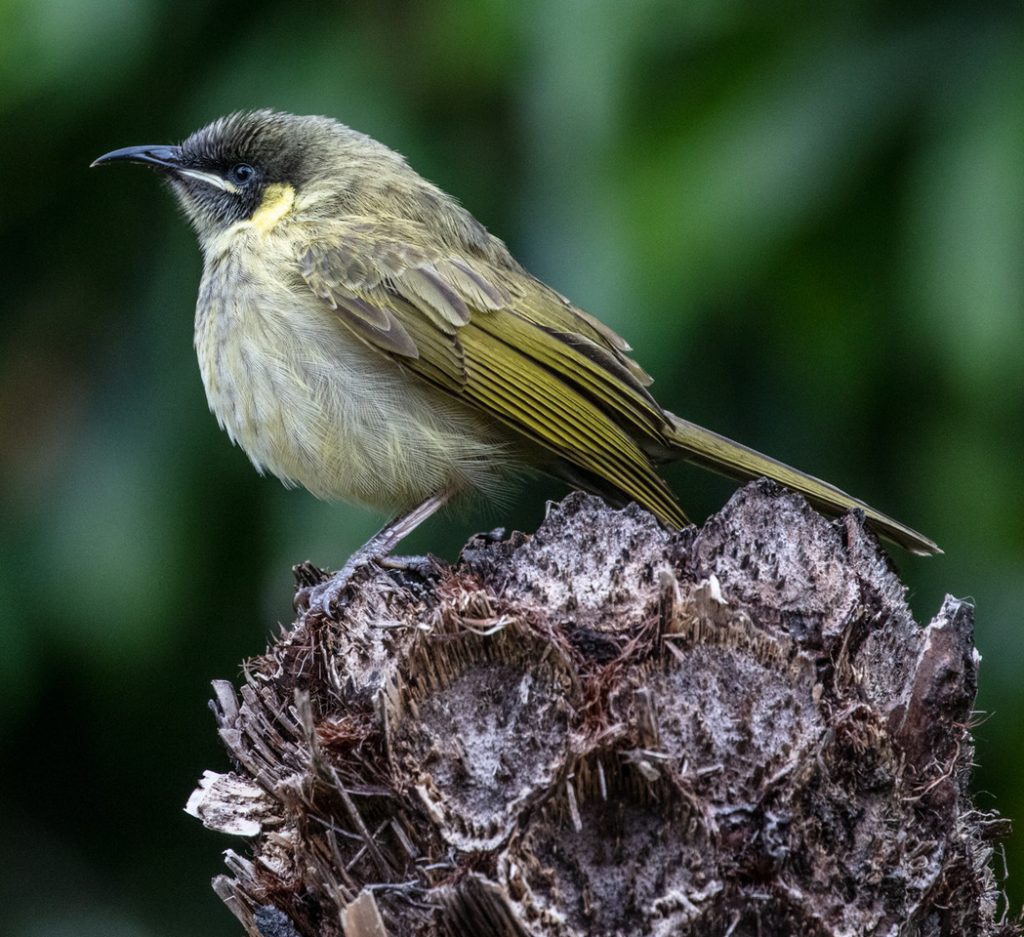
Lewins Honeyeater
A hungry Catbird
Female Riflebird or a young male Riflebird? Can you tell the difference?
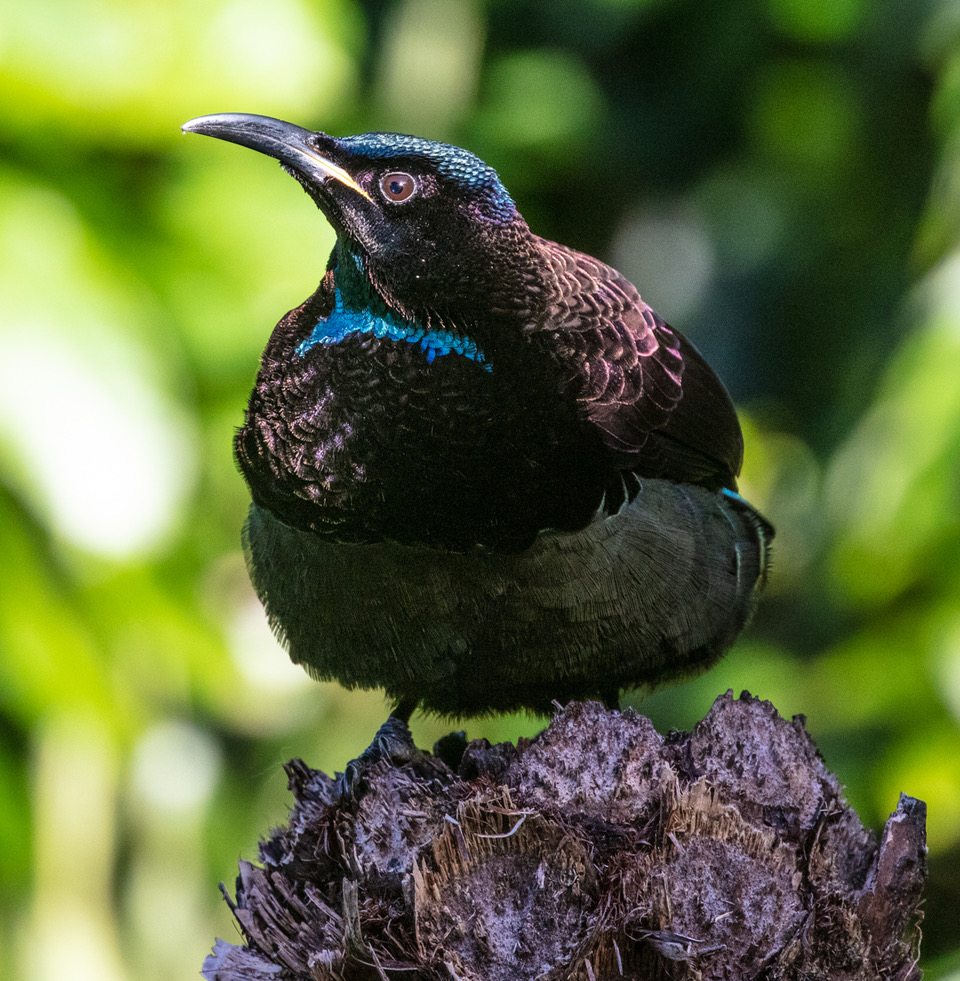
A male Riflebird at his iridescent best!

Photos by Peter Cooke & Text by Michele Bird (A ‘Cooked-Bird Collaboration’).

Rainforest Biodiversity: 5 easy species at a time – Part 6: Trees

By Colwyn Campbell and Jamie Oliver

Trees are the principal structural element of rainforests, creating a variety of climates and microhabitats for numerous plants and animals. The Wet Tropics hosts a huge diversity of trees (about 920 species) with over 100 species typically found in just 1 hectare.

The main visible parts of trees in a mature rainforest are the trunks, which are not particularly different among most species. This makes tree identification difficult for the inexperienced visitor. Three of the 5 easy species listed here are among the few with highly distinctive trunks and bark. The remaining two are common along the main roads of the village where their distinctive leaves and fruit are easy to see.

1.    Paperbark Satinash (Syzygium papyraceum)

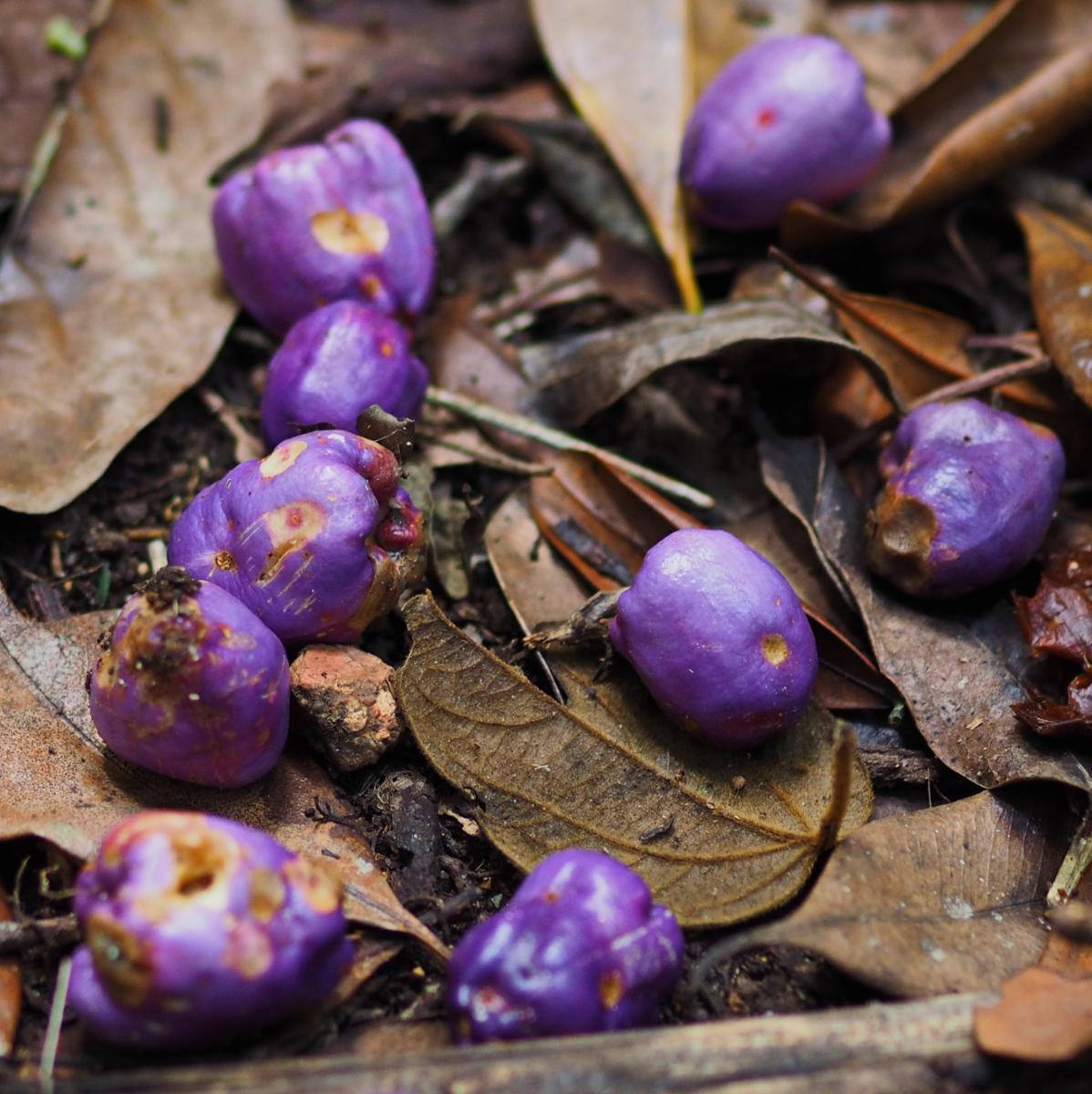
Paperbark Satinash Fruit (Syzygium papyraceum)

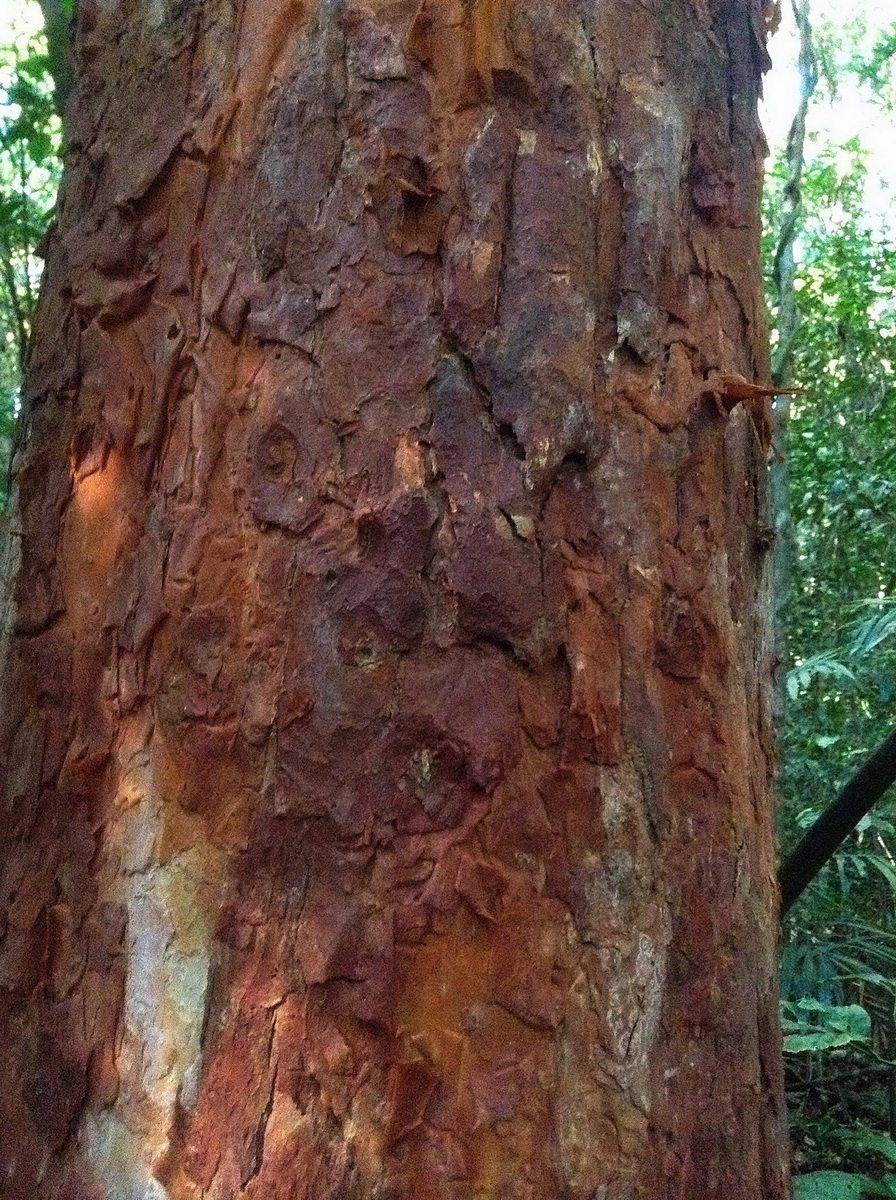
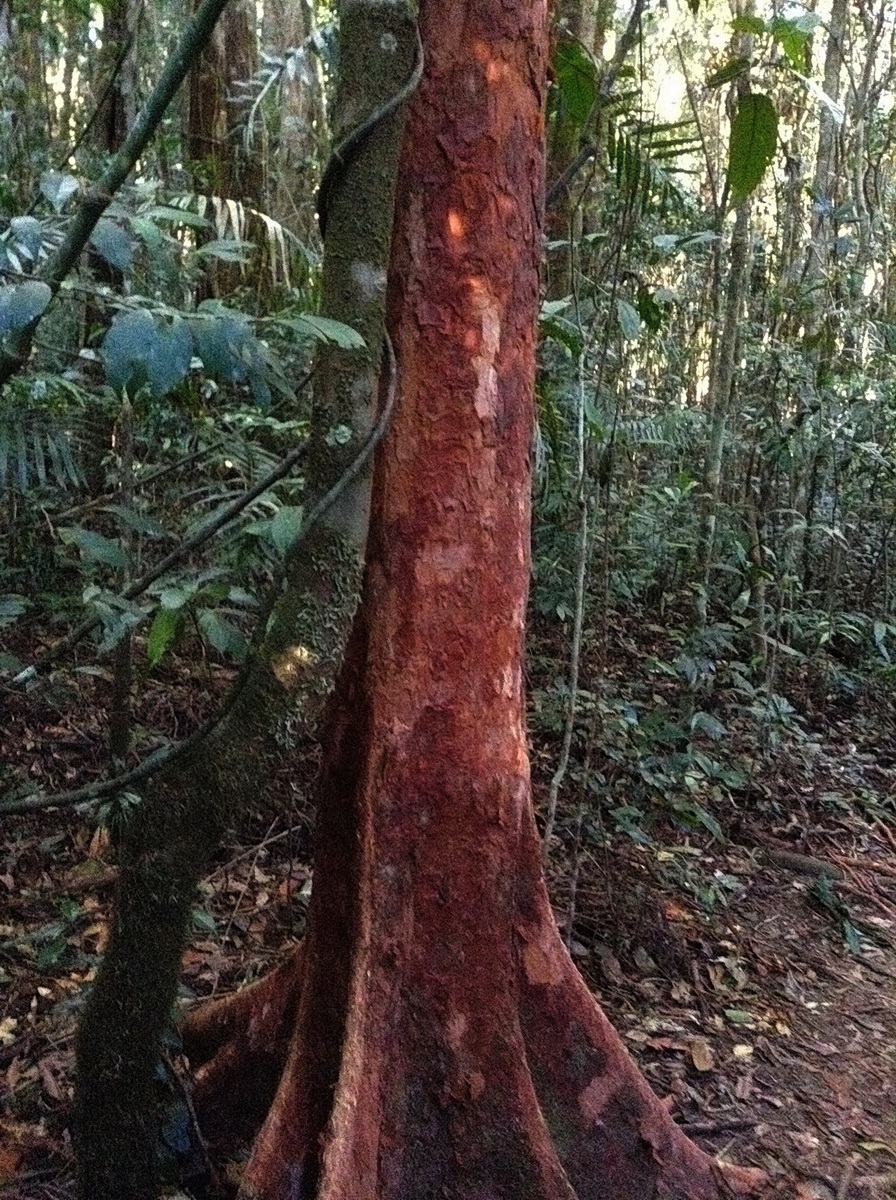
This is one of the most distinctive trees in the Paluma rainforest and is quite common, especially along the Andrée Griffin Track. It has bright orangey-brown flaky bark and roots. It grows to a height of 20 to 30 metres and often has buttresses.  While the flowers are not very distinctive the bright purple fruit, which litter the ground under the tree from December to February, are readily identifiable. Leaves are glossy dark green obovate (with the narrower end towards the leaf-base).

Cassowaries, Bush Rats, White-tailed Rats and Musky Rat Kangaroos eat the fruit.

For more information on this species see the Rainforest Tree of the Month (July 2018).

2.    Refrigerator Tree (Gossia bidwillii)

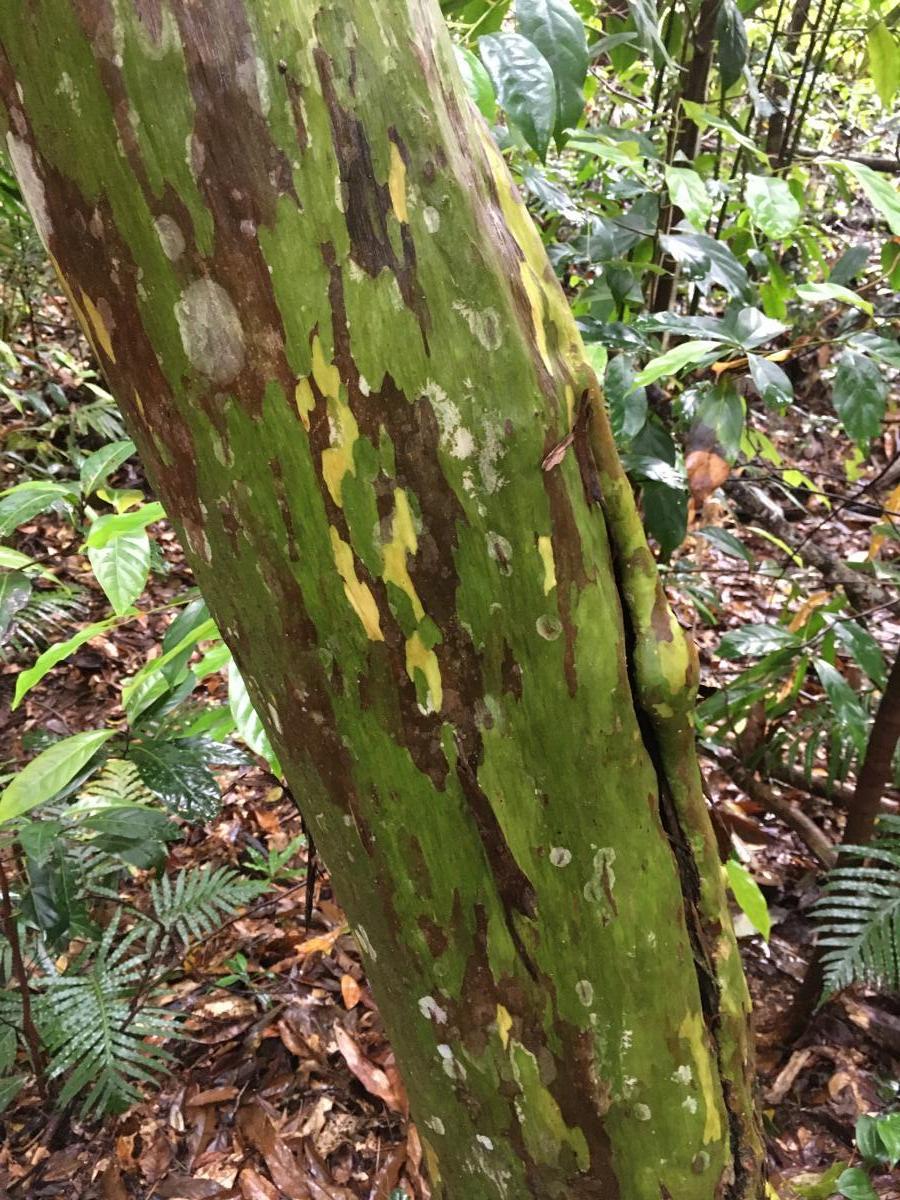
This tree gets its name because its trunk, when compared with other surrounding trees, is very cold to touch.  It is also known as the Python Tree perhaps because its mottled green and tan colouring and slightly twisting trunk resemble the marking and sinuous form of a large python. This combination of a smooth mottled bark and cold feel is what makes the tree easy to identify.

Growing to a height of about 25 metres it this tree can sometimes form buttress roots.  The simple leaves are about 80 to 105 mm long and elliptical or ovate in shape.  When crushed they have a slightly eucalyptus smell.

While not abundant in the forest track around Paluma, specimens can be seen on the Rainforest Track, H-Track and the main track towards Witt’s Lookout. See if you can spot them, growing among trees similar in appearance. 

For more information on this species see the Rainforest Tree of the Month (May 2018).

3.    Bleeding Heart (Homalanthus novo-guineensis)

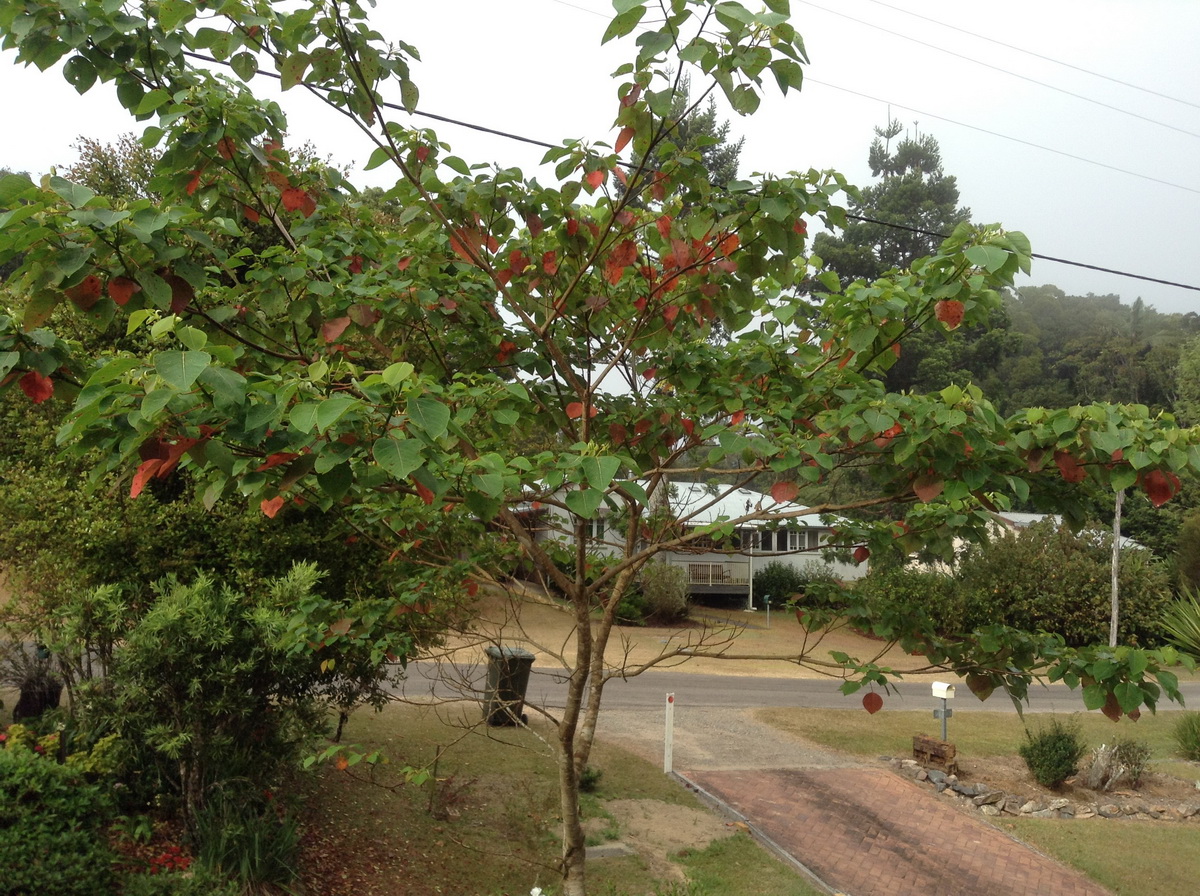
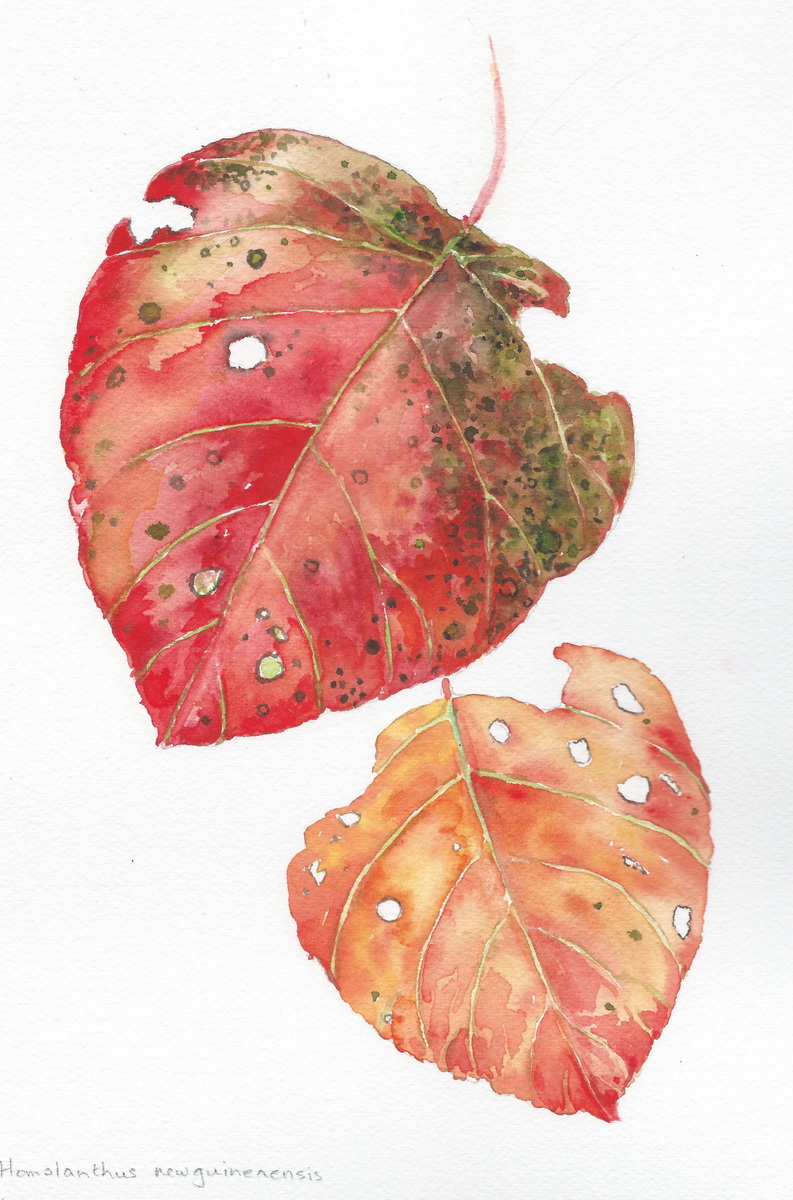
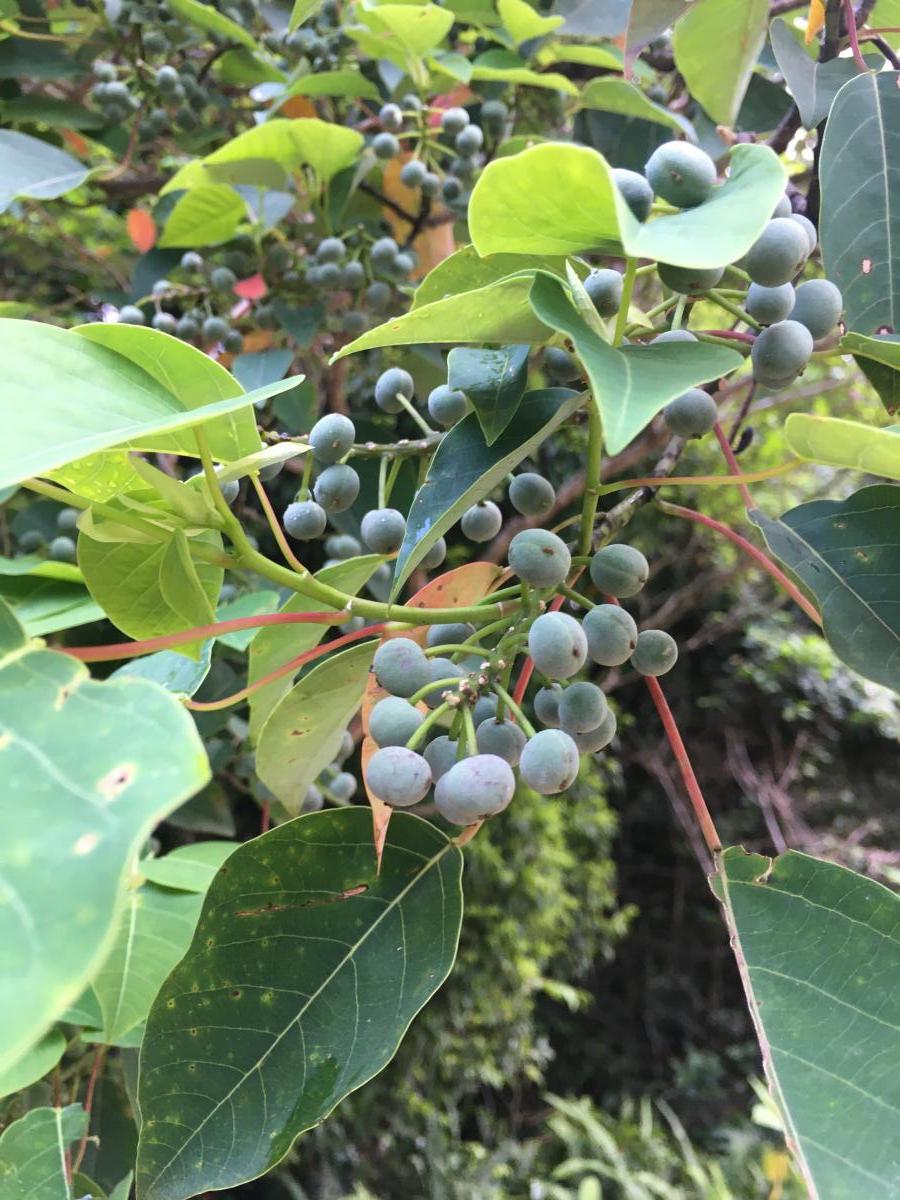
The striking feature of this tree is the scattering of brilliant red and orange heart-shaped leaves. Rather than a mass seasonal colouration change, only a few a leaves at a time turn bright red before dropping. Its leaves are simple with a smooth, glossy upper surface and a glaucous (pale) underside. The stems exude a milky sap when broken.

The tiny flowers are white or cream, have no petals making them difficult to detect. Flowering can occur in any month. The fruits which follow are small green to purplish. The fruit is eaten by many bird species, notably Rifle-birds, Bower-birds and Pigeons. Possums eat the leaves.

These trees are most easily seen along the roads in the village. A good example of the tree can be seen along the McClelland’s Lookout path and they are also commonly found along the village roads.

The Bleeding Heart is also the host tree for the Hercules Moth, which is the largest moth in the World.

For more information on this species see the Rainforest Tree of the Month (September 2018).

4.    Northern Silky Oak (Cardwellia sublimis)

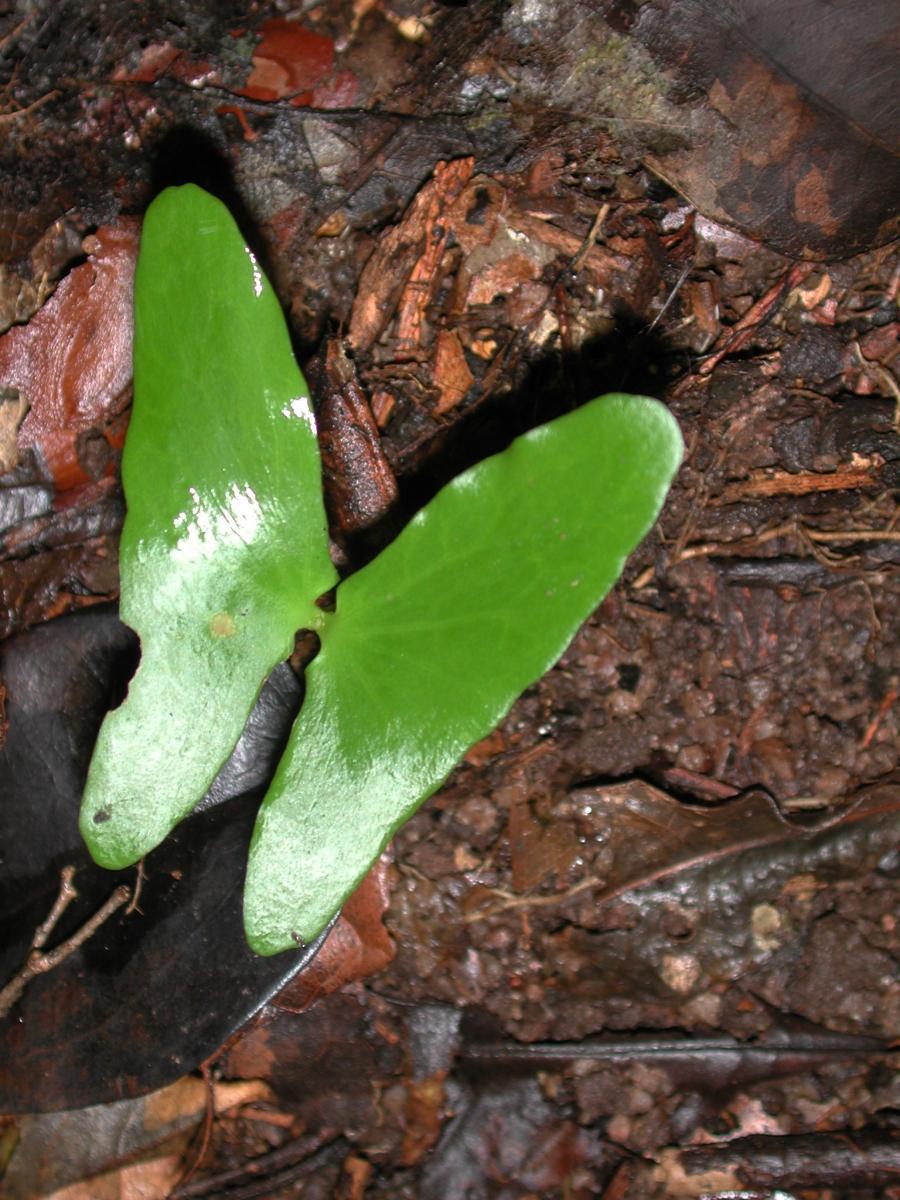
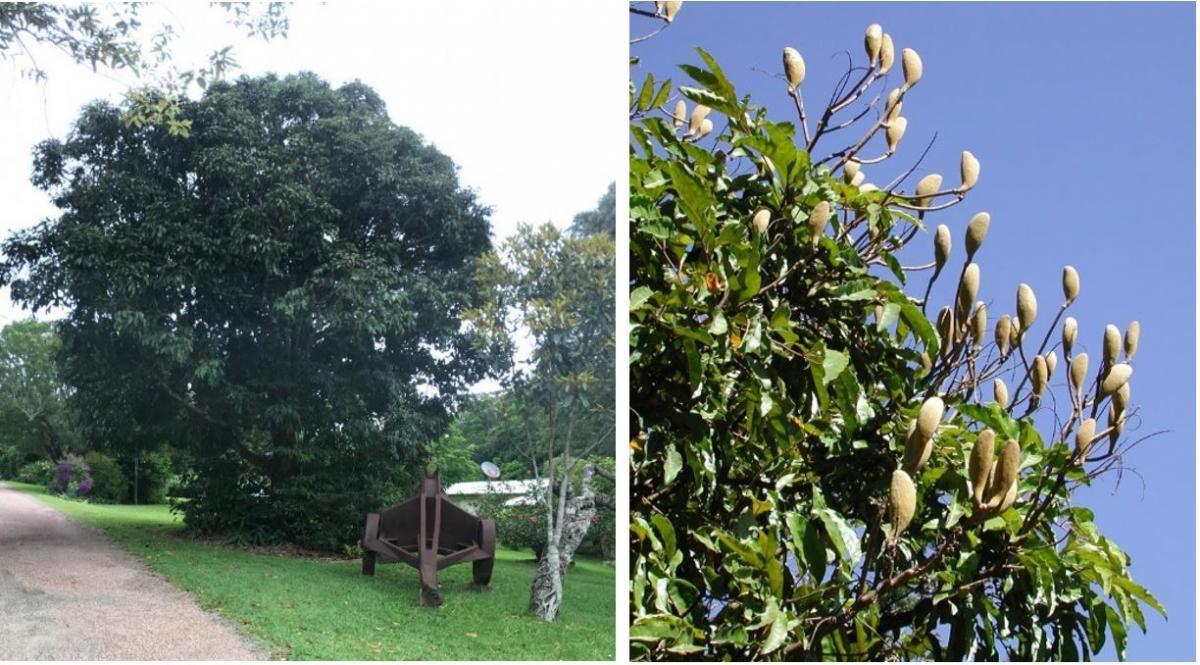
This tree is also known as the Bull Oak. Although it is quite common along the forest paths, the trunk is not particularly distinctive, so it is most commonly identified from the carpet of “butterfly seedlings” that occur near mature trees during the late wet and early dry seasons. A month or so after germination the first true leaves develop and the butterfly shape is lost.  Around the village roads there are several good specimens of the Northern Silky Oak that can be identified by the large prominent seed pods.

Photo by Andi Cairns

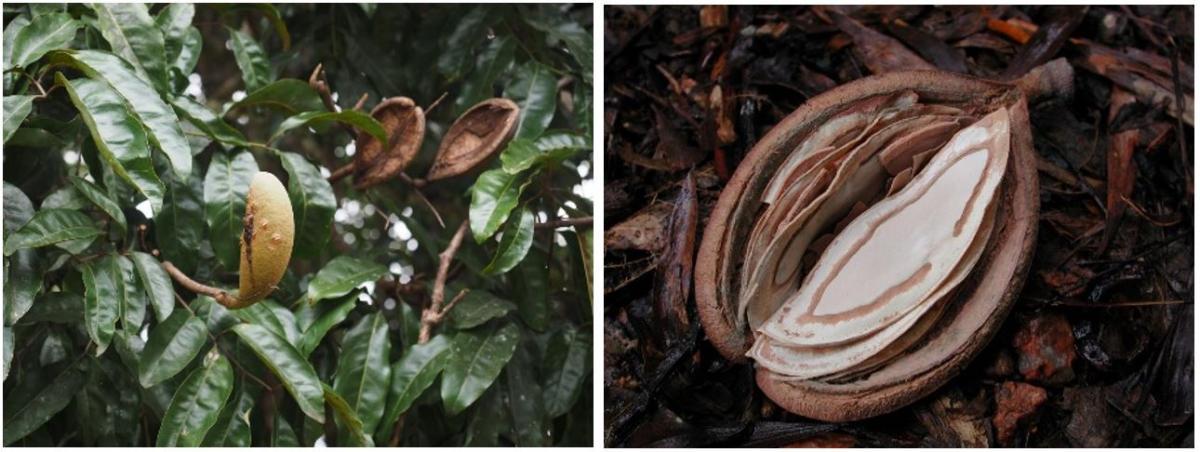
The fragrant white or cream flowers grow in terminal racemes or spikes, crowning the tree spectacularly from October to December. Then, in January, standing proud on long stems above the tree canopy, the large oval seedcases are silhouetted against the sky. The empty seed capsules are brown and woody and lie like miniature cobblestones on a bumpy pavement but they quickly decompose back into the soil.

Northern Silky Oak seed pod (Cardwellia sublimis)
Photos by Andi Cairns

The dark, oak-like timber of this tree is highly regarded and sought after for furniture and cabinet making. It once made up 15% of all timber production in the area.

For more information on this species see the Rainforest Tree of the Month (March 2020).

5.    Pimply Ash (Balanops australiana)

Pimply Ash fruit (Balanops australiana)
Photo by Keith Townsend, ©Creative Commons

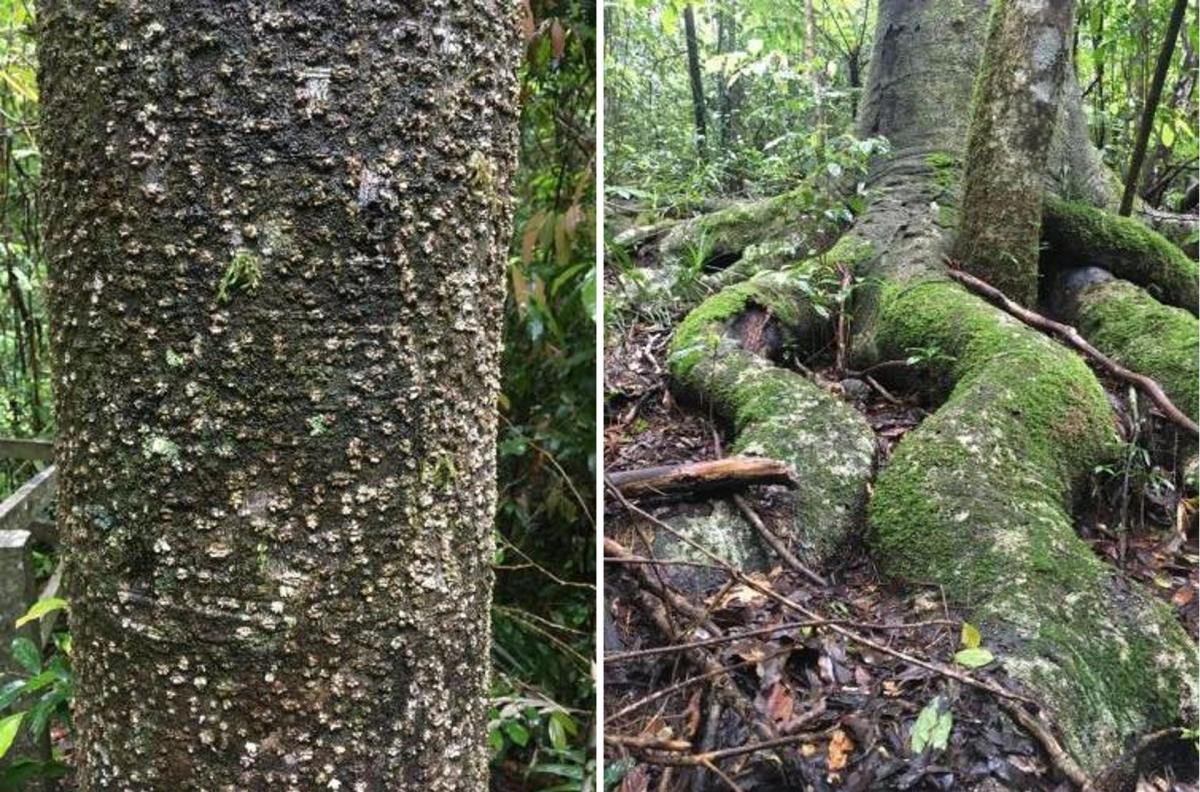
This species is one of the larger common trees along the rainforest tracks, with a round symmetrical trunk whose diameter can exceed 1 metre in mature specimens. It can be identified by its distinctive trunk, which is covered in pale “pimples” or lenticels. Larger trees also have distinctive raised, round, sinuous roots extending out several metres from the trunk.

All species in this genus have separate sexes with individual trees being either male or female.  The orange fruit on female trees are small, solitary and oval.  They are eaten by pigeons.

Cherrypicker, Chainsaw & Chipper

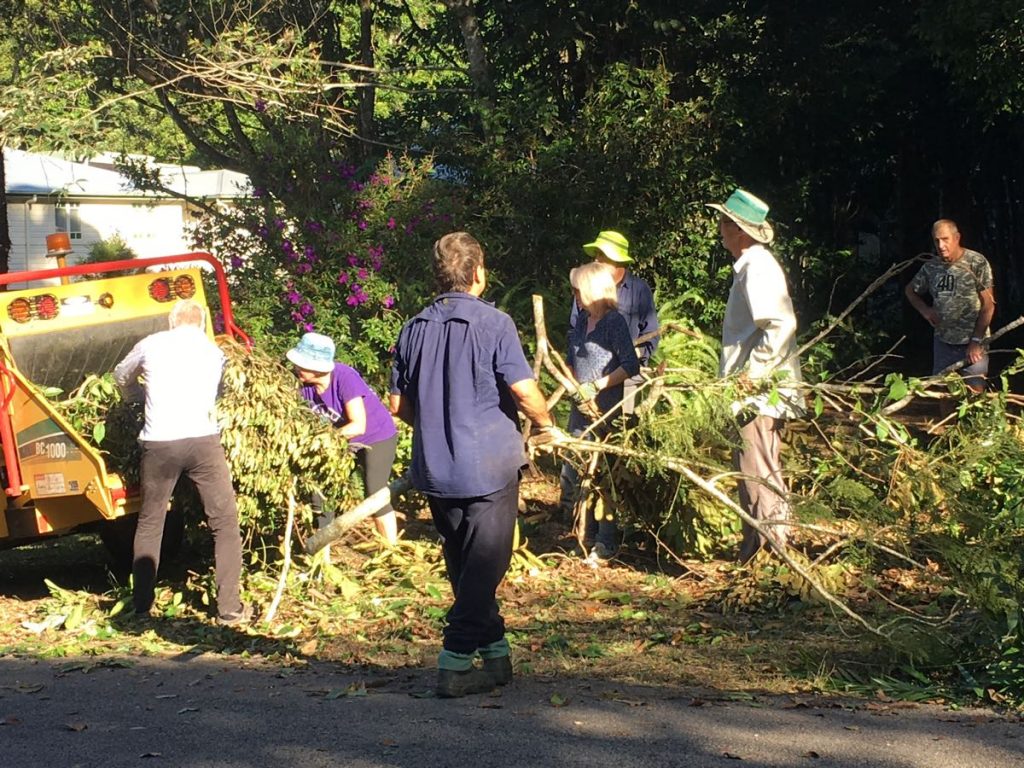
Paluma residents might have thought that the village had been taken over by a Lumberjack’s Convention last weekend as the reverberating sound of chainsaws and mechanical chipper echoed around the village. It just so happens that some locals decided to take advantage of the fine weather to get some major pruning works underway. It all came about when locals Colin and Jill arranged for their son’s mate Jason, who is a professional arborist, to come to Paluma to prune some large rainforest trees on their block. 

There was movement in the village and the word was passed around……..!

As it often does around here, word was quickly passed on that an arborist was in town and here was an opportunity not to be missed. While Jason had originally planned to spend a couple of days pruning trees at Paluma, he was quickly snapped up by neighbours far and wide for additional pruning jobs. He now has a week’s worth of bookings and he will be staying on for a while. Paluma often has that effect on people…..!

Jason has an interesting career. When not pruning trees, his regular day job is working on movie sets. He moved from Townsville to the Gold Coast to pursue this work. Most of his time involves setting up stunts for film-makers. He happens to be in North Queensland at the moment due to Covid-19 and travel restrictions. He is taking advantage of the enforced stay in the North to do some extra pruning jobs, with Paluma residents happy to oblige.

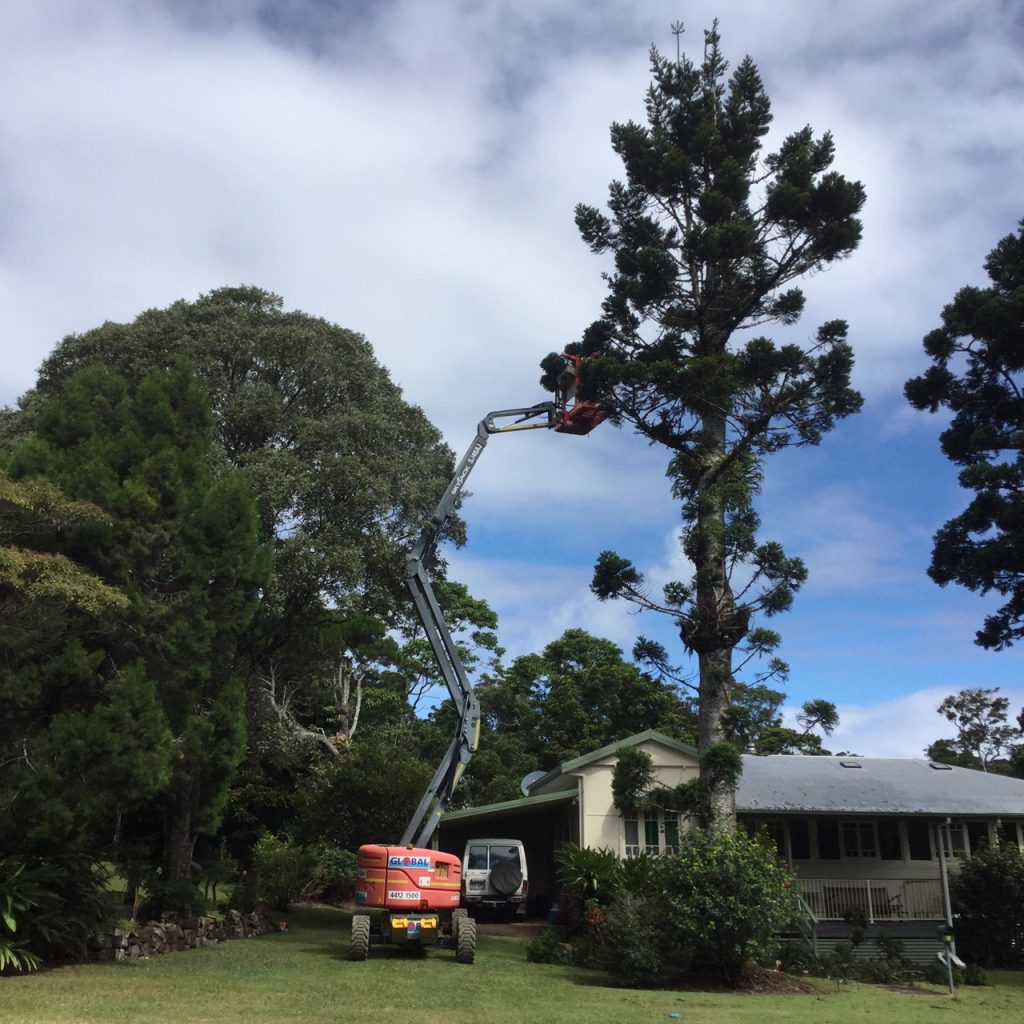
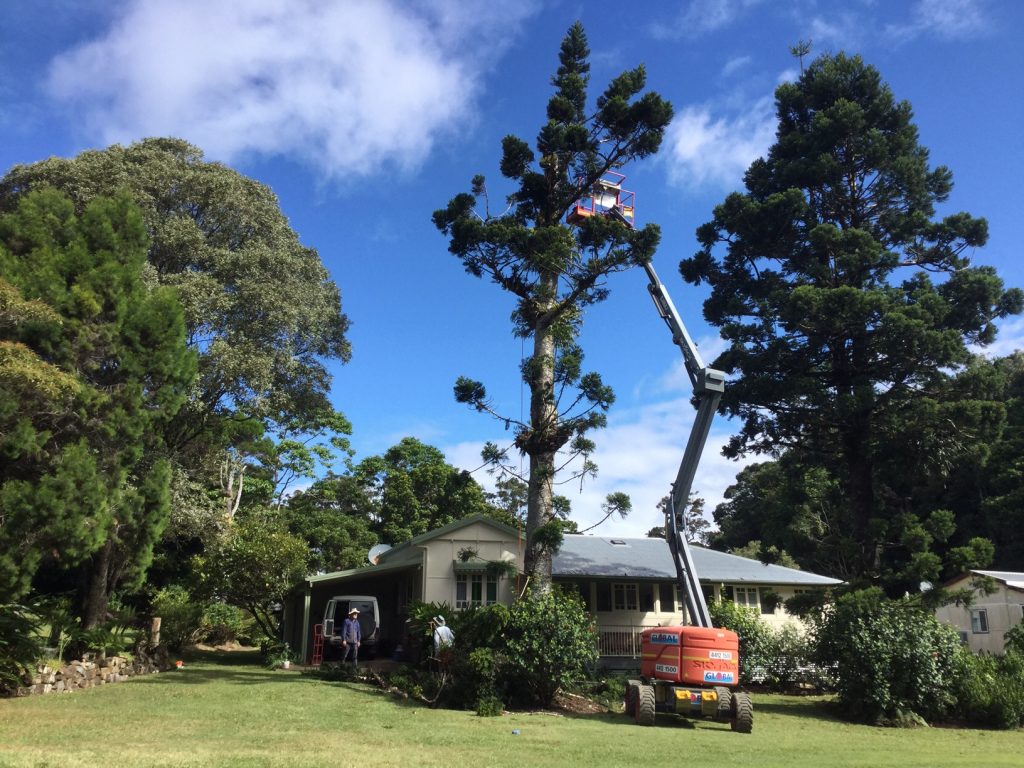
Jason’s expertise in his work provided much entertainment for locals as he worked from dizzying heights in the cherrypicker and from harnesses. He often had a small audience watching his every move as he worked away, high amongst the tree-tops to trim and tame some rainforest giants and also the tall pine trees at The Guesthouse. 

Jason working high among the branches of the tall pines at The Guesthouse.

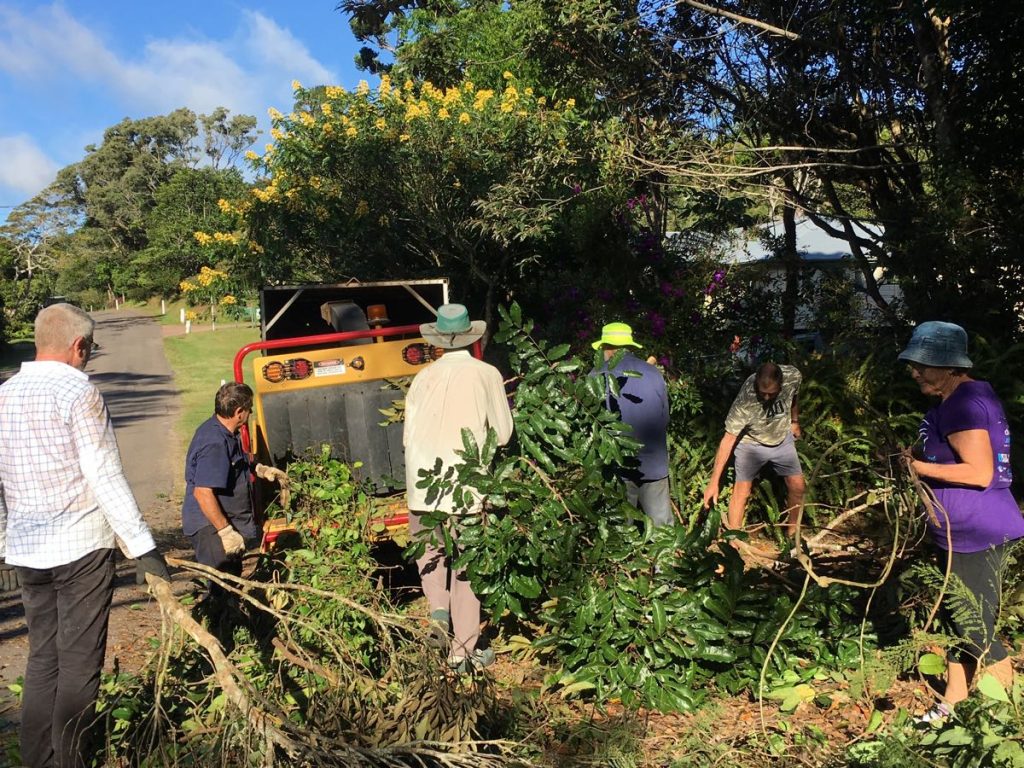
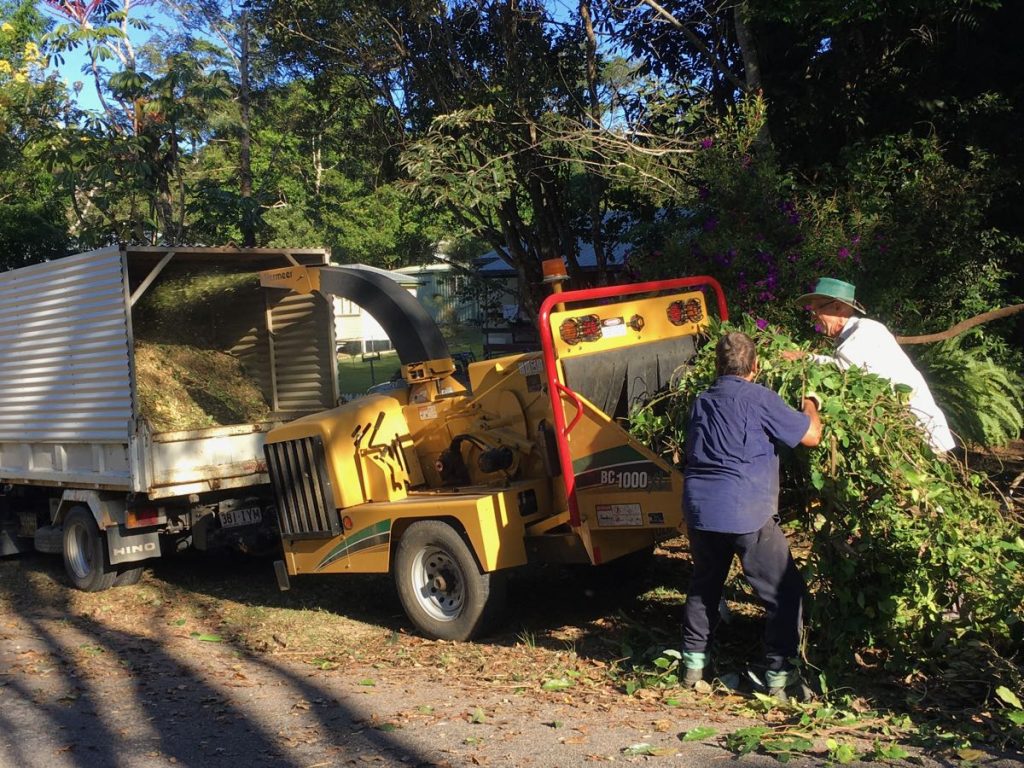
As always around this little village, the pruning became a community project with everyone ‘chipping in’ to lend a hand. It was all hands on deck at the chipper on Sunday afternoon. Not a branch or tree limb has gone to waste and the resultant mulch will be added to local gardens, flowerbeds and vegie patches. 

The frenetic mulching activity at the chipper on Sunday afternoon.
Paluma residents ‘chipping in’ during the pruning works.
Wilfred & Popey get serious at the chipper. Is mulch produced by Popey called ‘Paluma Pulch’??

Text by Michele Bird. Photos by Colwyn Campbell & Michele Bird

TMR Range Road Update – Geotechnical Works

The Department of Transport and Main Roads would like to advise that geotechnical investigations will occur on Mount Spec Road from Tuesday 12 May to Thursday 14 May 2020. These works complete the investigations started in March this year.

Mount Spec Road geotechnical investigation works 

Work duration: Tuesday 12 May to Thursday 14 May 2020

Work hours: 7am to 5pm

Impact on motorists:

  • Reduced speed limits of 40km/hr (through works area). 
  • Traffic controllers on site to guide motorists past works area.
  • Delays of up to 3 minutes may occur when investigation works are taking place on narrow sections of Mount Spec Road.
  • There will be no road closures during these works.

TMR would like to thank the local community and businesses in advance for their patience during these works. Should you have any further queries please do not hesitate to contact me on the details below. 

Kind Regards

Meghan

Customer and Stakeholder Management (Northern) | North Queensland Region
Program Delivery And Operations | Infrastructure Management & Delivery Division |

Department of Transport and Main Roads

Floor 6 | Townsville Government Office Building | 445 Flinders Street | Townsville Qld 4810
PO Box 1089 | Townsville Qld 4810
P: 1800 625 648 | F: (07) 4421 8711
E: engagement.northern@tmr.qld.gov.au
W: www.tmr.qld.gov.au

What’s Blooming in Paluma – Pagoda Flower

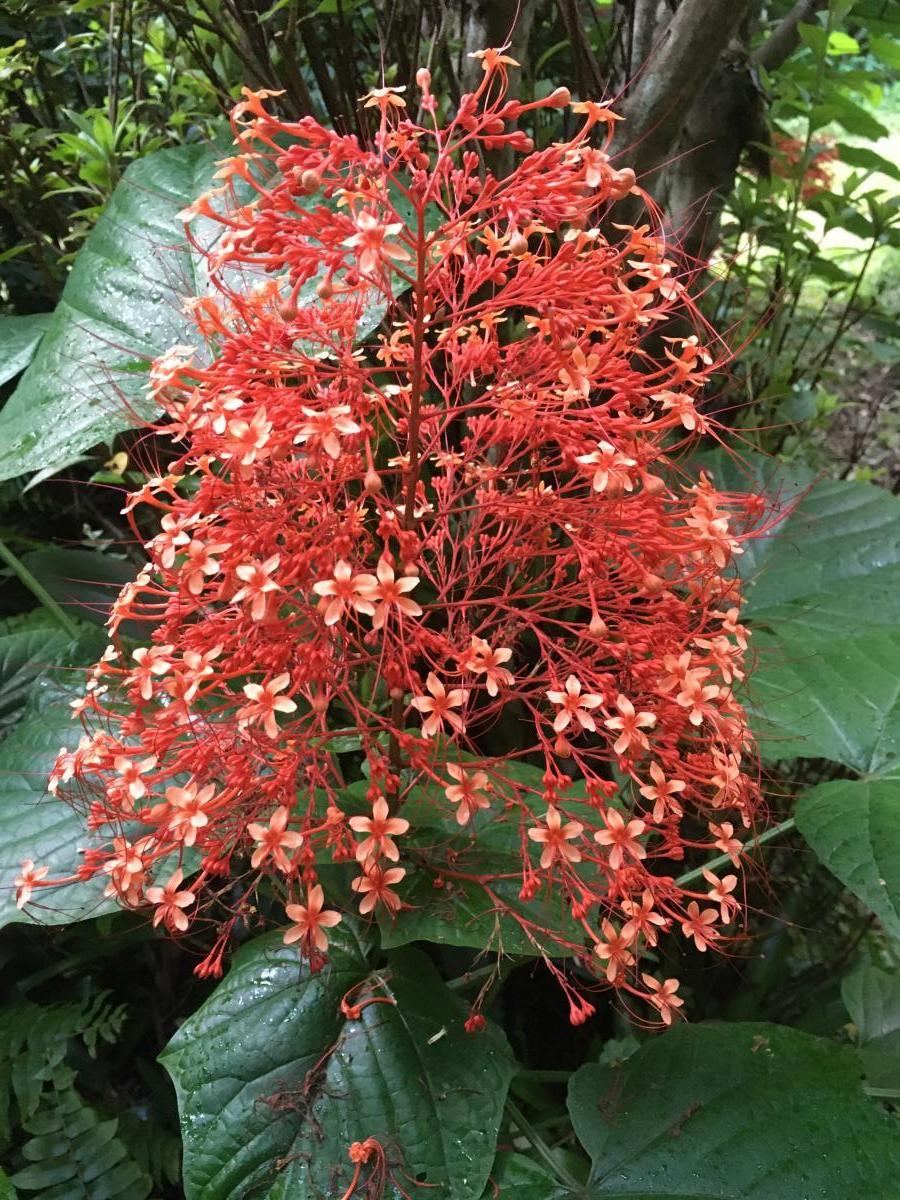
One of the shrubs in our garden that managed to survive a decade of neglect while we were working overseas, but which has sprung back to become a regular bloomer from about February to April is the Pagoda Flower (Clerodendrum paniculatum). The beautiful conical red flower head stands 1-1.5m up on the erect stem of the plant. It is originally from India and SE Asia and is now considered naturalised in NE Australia. The Pagoda Flower is a great butterfly attractor and I frequently see Cairns Birdwings hovering next to the flower cones. One species of Hawk Moth larva also uses it as a food plant.

Clerodendrum paniculatum is a member of the mint family and has a number of traditional medical uses. Laboratory experiments with rats indicate that it has anti-inflamatory and anti-oxidant properties but traditional beliefs in Malaysia suggest it has mystical spirit summoning properties, while in other areas it is used as an elephant medicine.

While this plant makes a nice feature flower, its enthusiasm for spreading via suckers does mean it can slowly take over parts of some gardens. While it is not a declared weed, in Cairns it is listed as an emerging weed while the Wet Tropics Management Authority has listed it as an “Undesirable Plant”. So we have a responsibility here in Paluma to make sure it does not escape our gardens if we already have this species, and to think twice before adding it. The PDCA has decided that we will not plant any species on the Undesirable List in any of its garden beds around the Community Hall. You can download the full list here.

Text and Photos by Jamie Oliver

TMR Range Road Update – Road Works Completed

Good Morning,

Please be advised that road works on Mount Spec Road have now been completed.

Kind Regards 

Meghan

Customer and Stakeholder Management (Northern) | North Queensland Region
Program Delivery And Operations | Infrastructure Management & Delivery Division |

Department of Transport and Main Roads

Floor 6 | Townsville Government Office Building | 445 Flinders Street | Townsville Qld 4810
PO Box 1089 | Townsville Qld 4810
P: 1800 625 648 | F: (07) 4421 8711
E: engagement.northern@tmr.qld.gov.au
W: www.tmr.qld.gov.au

A Sucker for Succulents

It’s no secret that there are some fanatical gardeners in the village of Paluma. At many a social gathering in ‘BC’ times (‘Before Coronavirus’), the main topic of conversation revolved around our passion for propagating, planting and growing our favourite plants, be they native or exotic species.

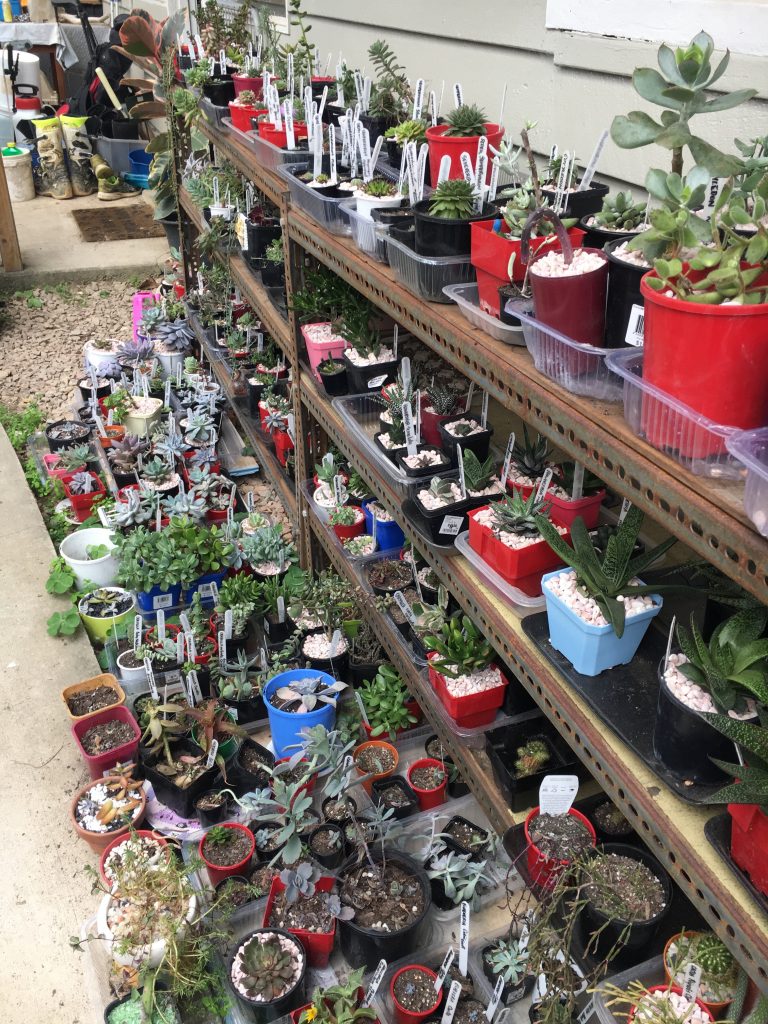
One such fanatic has to be Jennie at Cloud Cottage. Jennie has developed a serious addiction to succulents of many varieties, shapes, sizes and colours. Her collection is ever-growing and her dedication to growing these plants is very impressive.

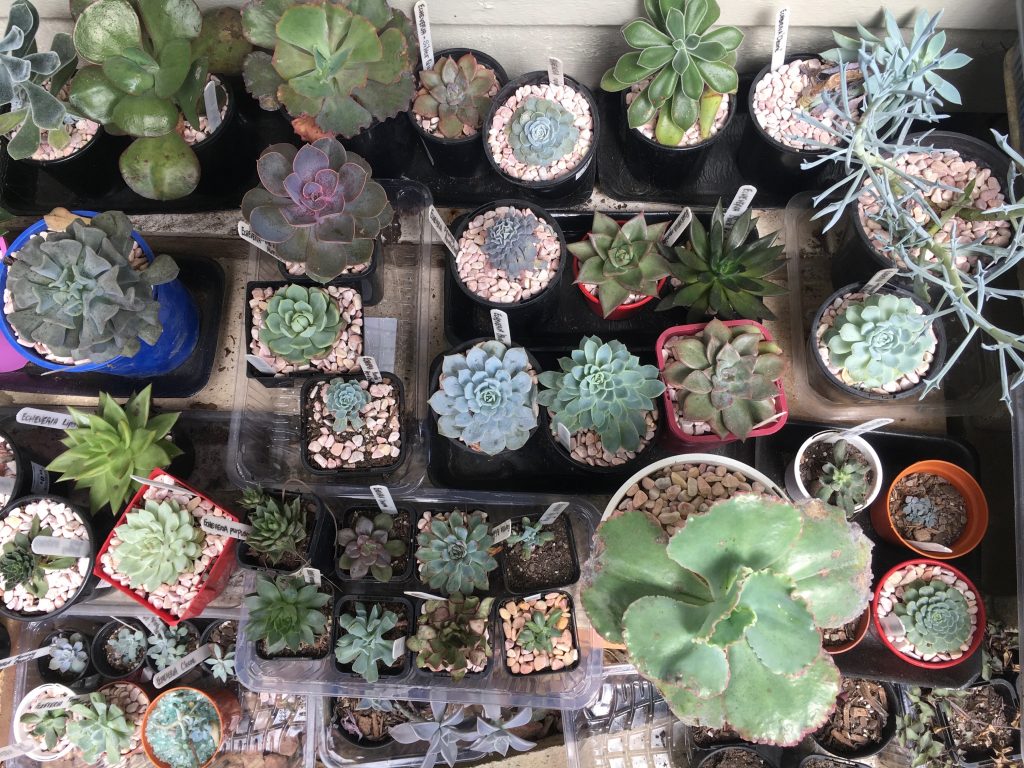
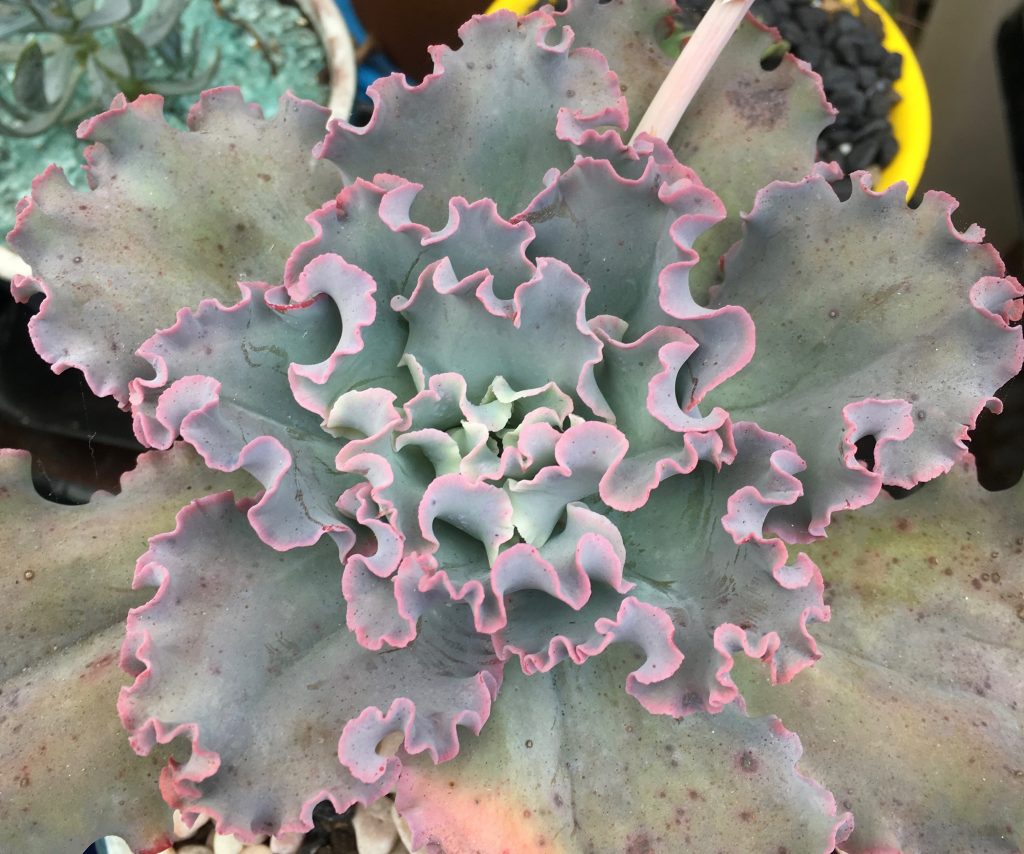
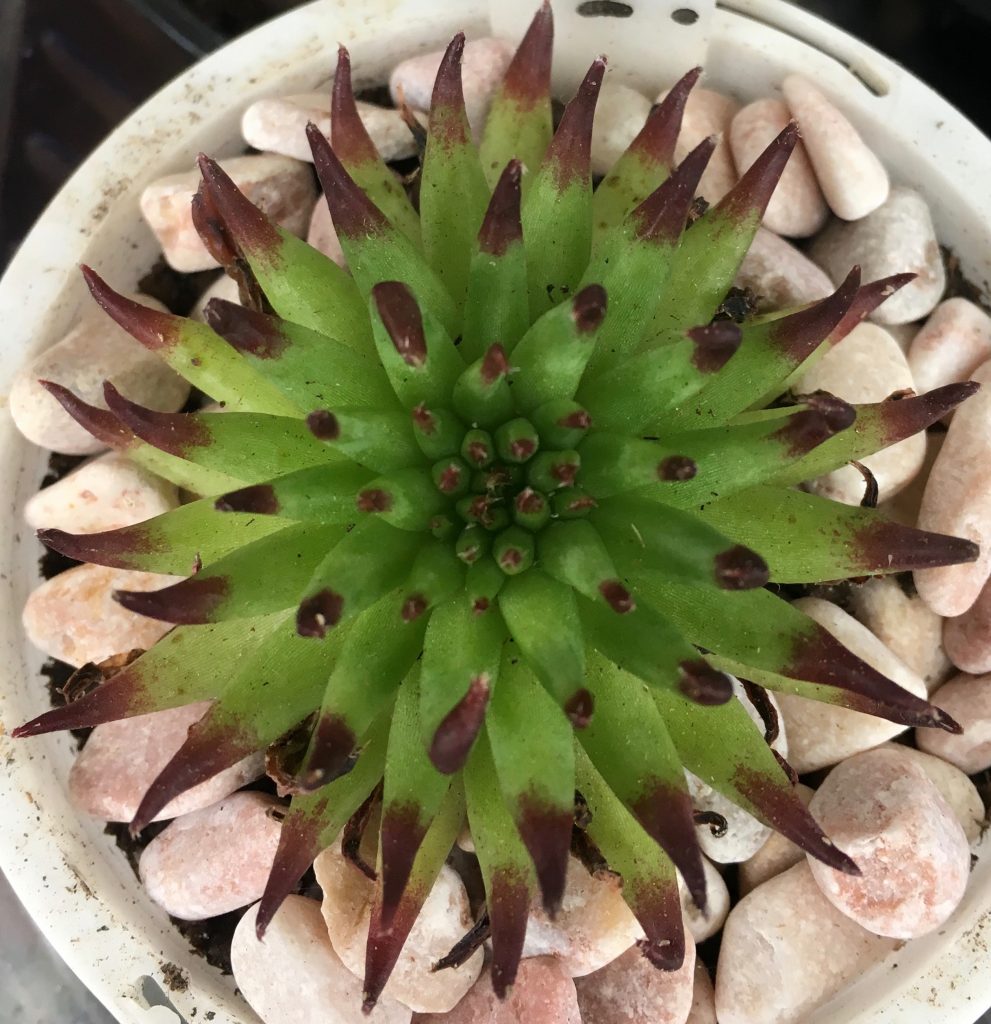
Jennie’s addiction developed just over a year ago, with just a couple of plants. A friend, fellow gardener and neighbour (another Jenny), inspired Jennie to grow some of the different varieties of succulents.  Since then her collection has rapidly expanded and she now has over 250 individual plants. Her favourite varieties are the Crassula’s and the Echeveria’s. Combined, she has over 90 different species and sub-species of these types of succulents. 

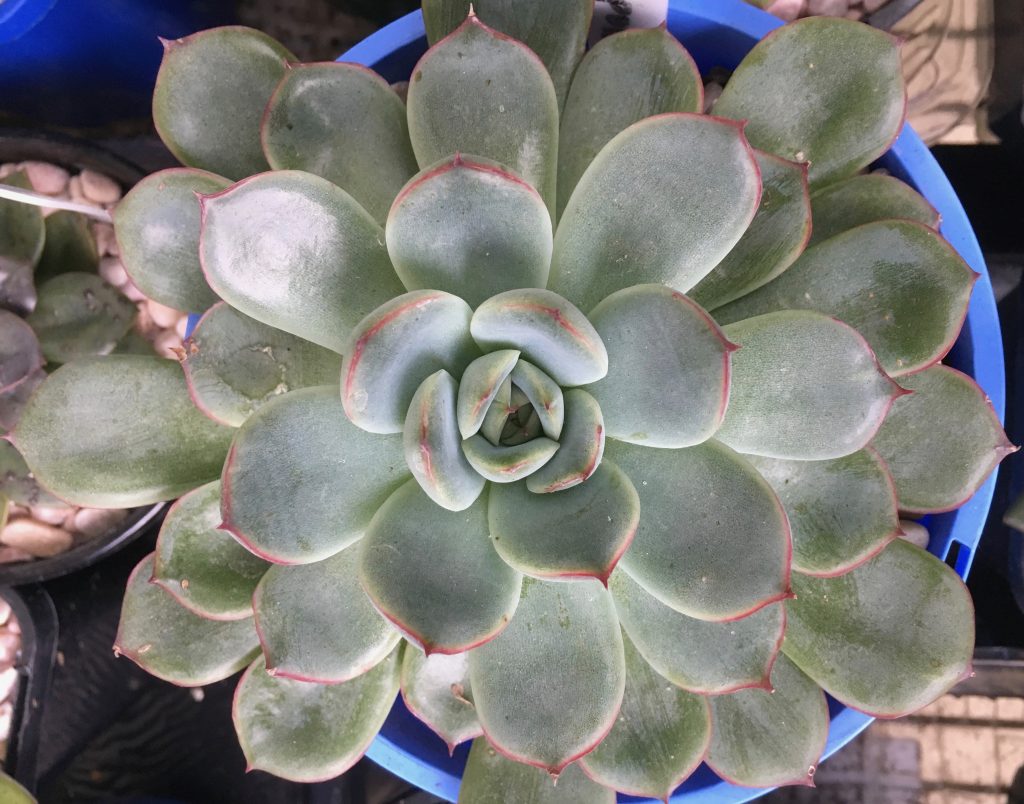
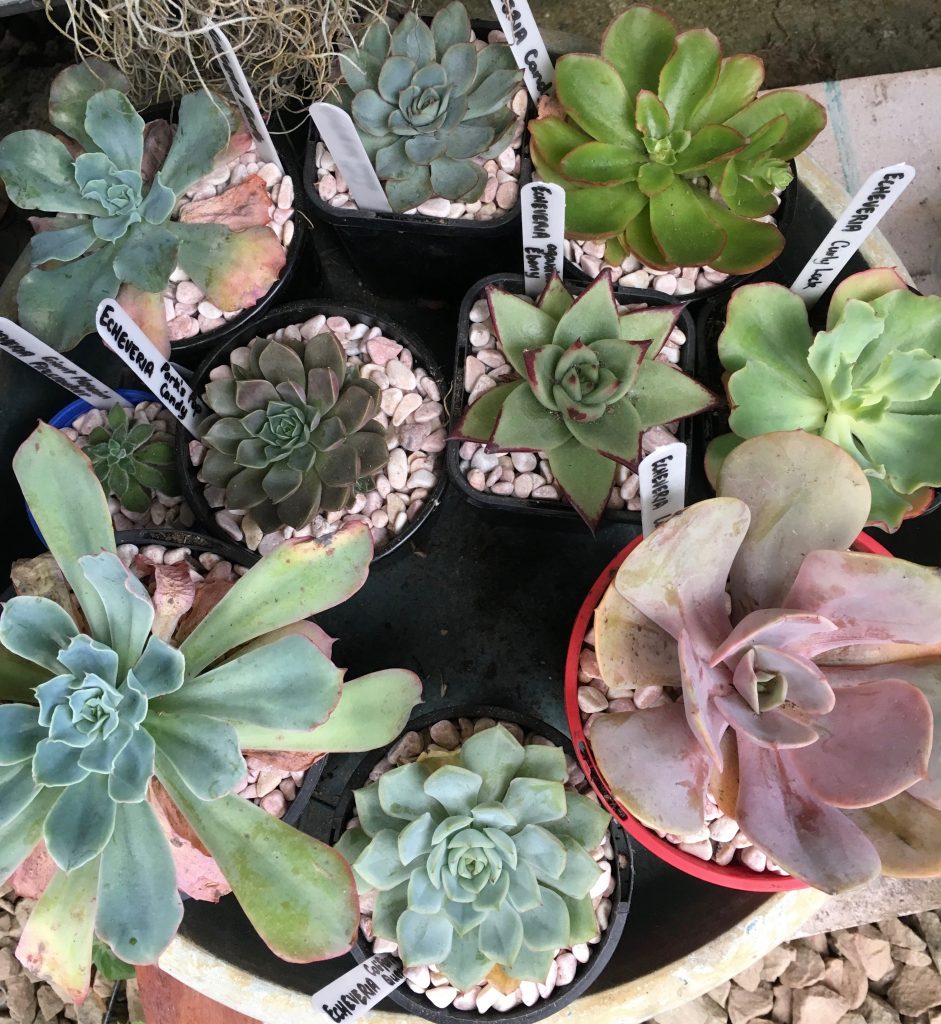
Just some of the many varieties of succulents grown by Jennie.

Why grow succulents? Jennie says they are very easy to grow and easy to propagate. You can get free plants and expand your garden with very little effort. There are a huge variety of shapes and colours to collect. They are very adaptable and forgiving plants – if you forget to water them they will continue to thrive with neglect. 

Jennie has some tips for ensuring successful succulent growing at Paluma (try saying that three times really fast!). Most importantly, they need protection from our heavy and continuous rain, so shelter is very important. They require bright, indirect light and some varieties like full sun, for at least part of the day. Good drainage is essential and they don’t like wet feet. Don’t kill them with kindness by watering them too often!

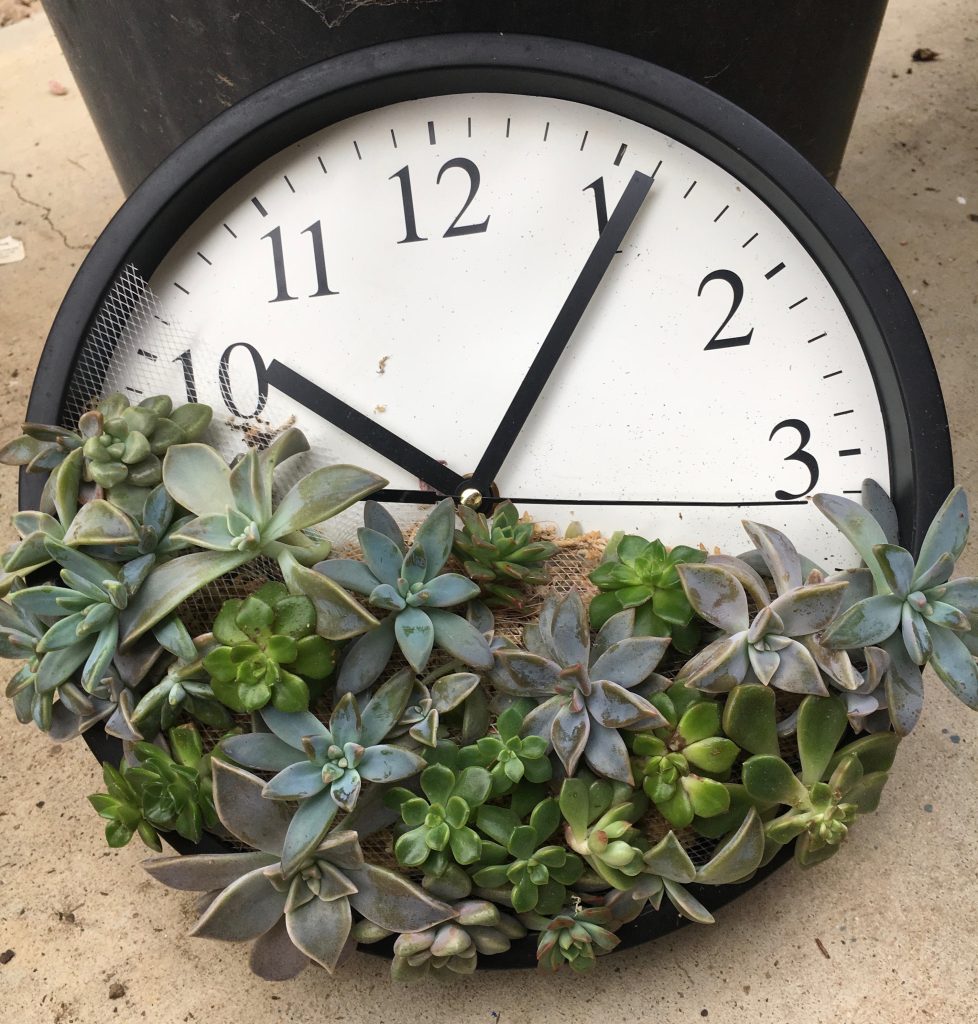
Jennie has taken to propagating many of her parent plants and she is also growing several specialist and rare varieties. She is potting up plants to sell in the future at the Rainforest Inn and at the Paluma Market (in ‘AC’ times – ‘After Coronavirus’).  She continues to be creative in finding new and innovative ways to use succulents in the garden and in home displays and arrangements. Her latest creation is a ‘living clock’ made entirely from ‘baby’ succulents.

What time is it? Time to get into the garden!

As with most ‘fanatics’, Jennie is always happy to talk about her passion and to share her vast knowledge and expertise in growing succulents. Just be aware……if you happen to ask Jennie about her succulent collection, prepare to be informed and inspired! 

Text by Michele Bird. Photos by Michele Bird & Jennie Robinson

Rainforest Biodiversity: 5 easy species Part 5 – Reptiles & Amphibians

By Jamie Oliver

About 162 species of reptiles can be found in the Wet Tropics. The concentration of endemic species (that are found nowhere else) is greater (18 species) than anywhere else in Australia. Likewise, the Wet Tropics hosts an impressive variety of frogs (amphibians). Out of the 212 species known to Australia nearly 29% can be found in the region[1]. Unfortunately, reptiles and amphibians tend not be as visible to the casual Paluma visitor. Frogs are most active at night during the wet season, while many reptiles seek the shade of logs and rocks when the sun is high. Nevertheless, there are two species of reptiles that are often out and about in gardens and along the roads and open tracks of the village. Two of the frogs listed here are best found by going out with a torch at night and listening first for their distinctive calls. With luck you may be able to trace the call to its origin and be rewarded with a view of the frog itself. The third frog can be found along the H-Track using a torch to look for eye shine on warm, wet, summer nights

[1] https://www.wettropics.gov.au/plants-animals


1. Red-bellied Black Snake (Pseudechis porphyriacus)
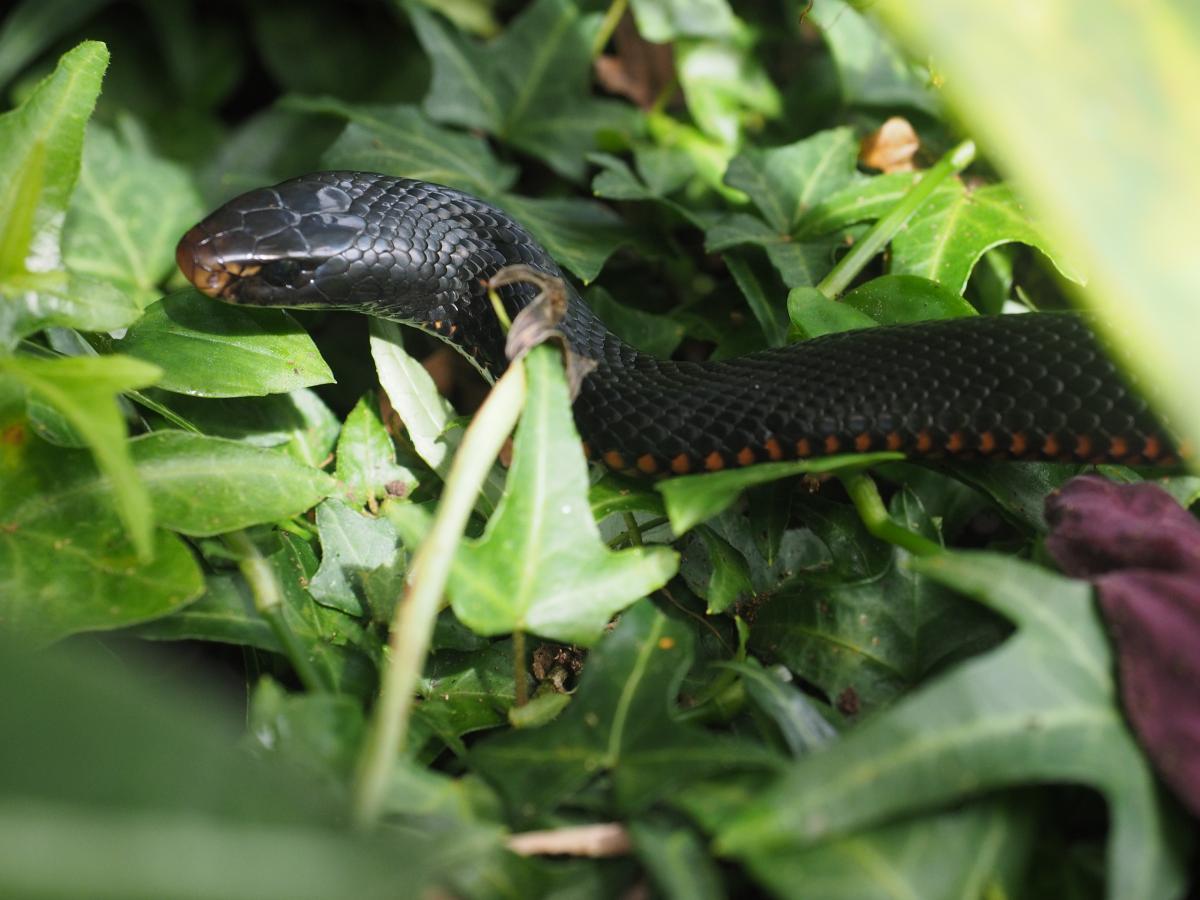
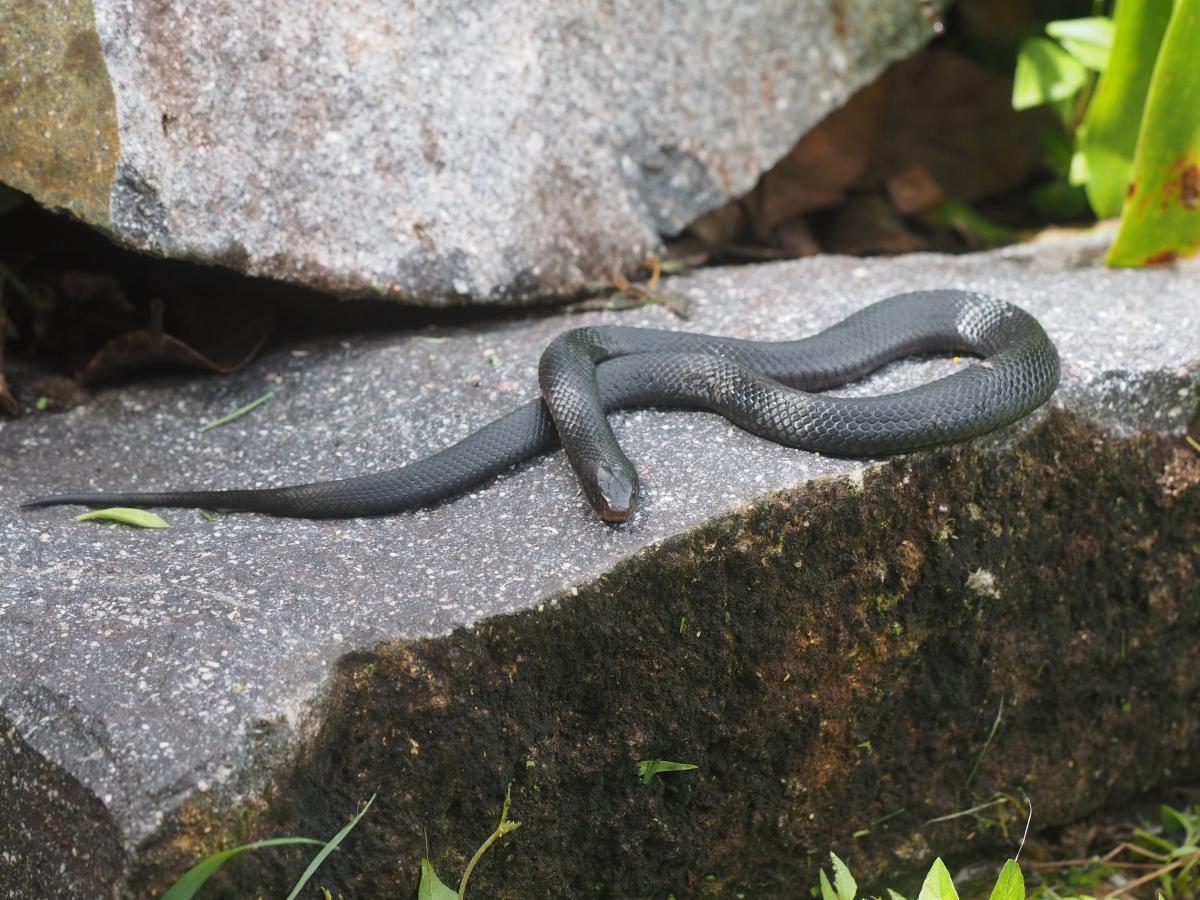
Red-bellied Black Snake showing red markings on its side

This is the most commonly seen snake around Paluma village, and can often be found sunning itself on a rock in gardens and along the road.  They hibernate during the winter but can be found most other times of the year. They are relatively thick bodied and a uniform dull black above and pale below with a series of red blotches long the side.

Although it belongs to the venomous elapid family, for its size the Red-Bellied Black Snake is probably the least dangerous elapid snake in Australia. Despite the number of bites received every year, very few human deaths have resulted. You should still be very cautious when encountering this snake. Keep your distance and stamp your feet to encourage it to move away.

During the morning they can often be seen sunning themselves on a rock

Red-bellied Black Snakes are the only species in the genus Pseudechis that have live young (the other species are all egg-layers). They feed on a variety of vertebrates including fish, tadpoles, frogs, lizards, snakes (including its own species), and mammals.

For a more detailed account of the Red-bellied Black Snake and it’s habits see the post by Colwyn Campbell. Addition notes and  observations by Linda Venn were also presented in a recent post here.


2. Eastern Water Skink (Eulampris quoyii)

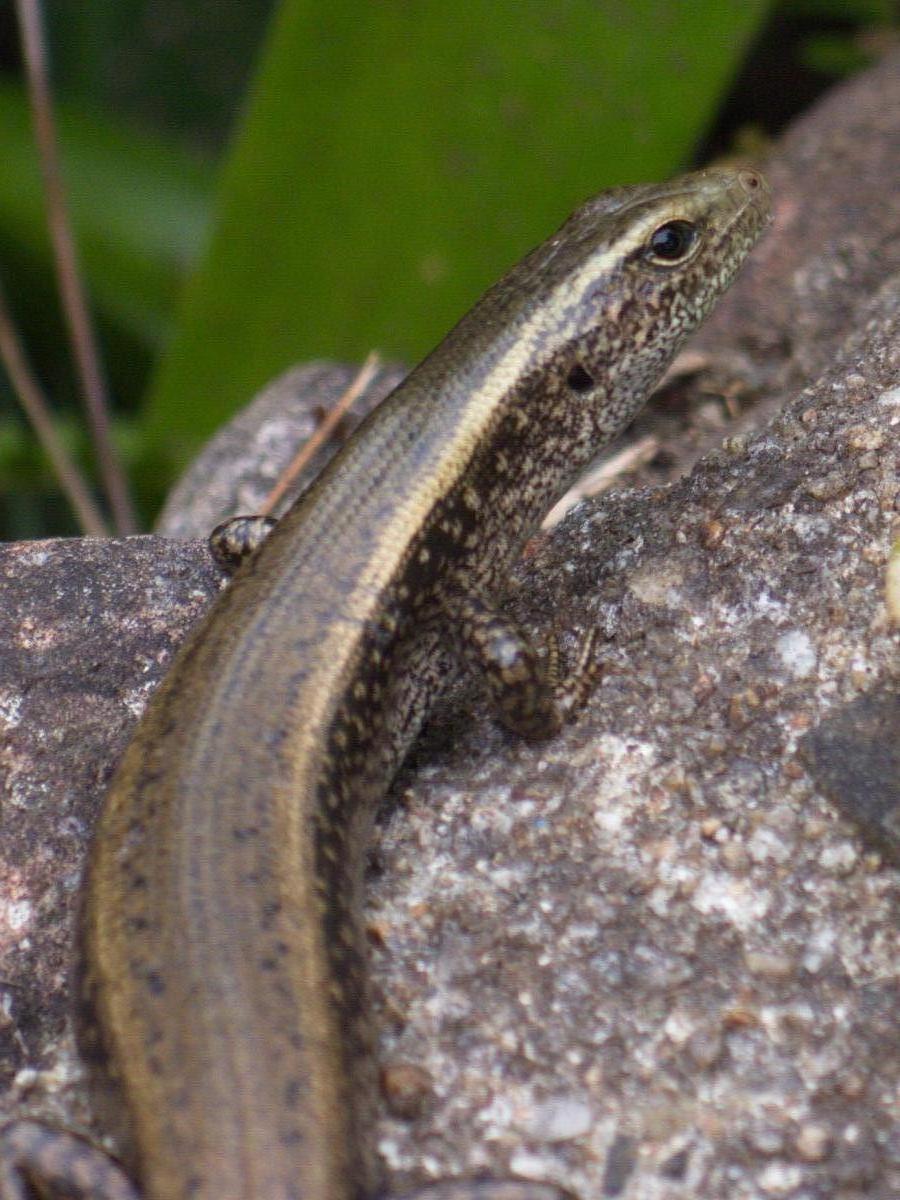
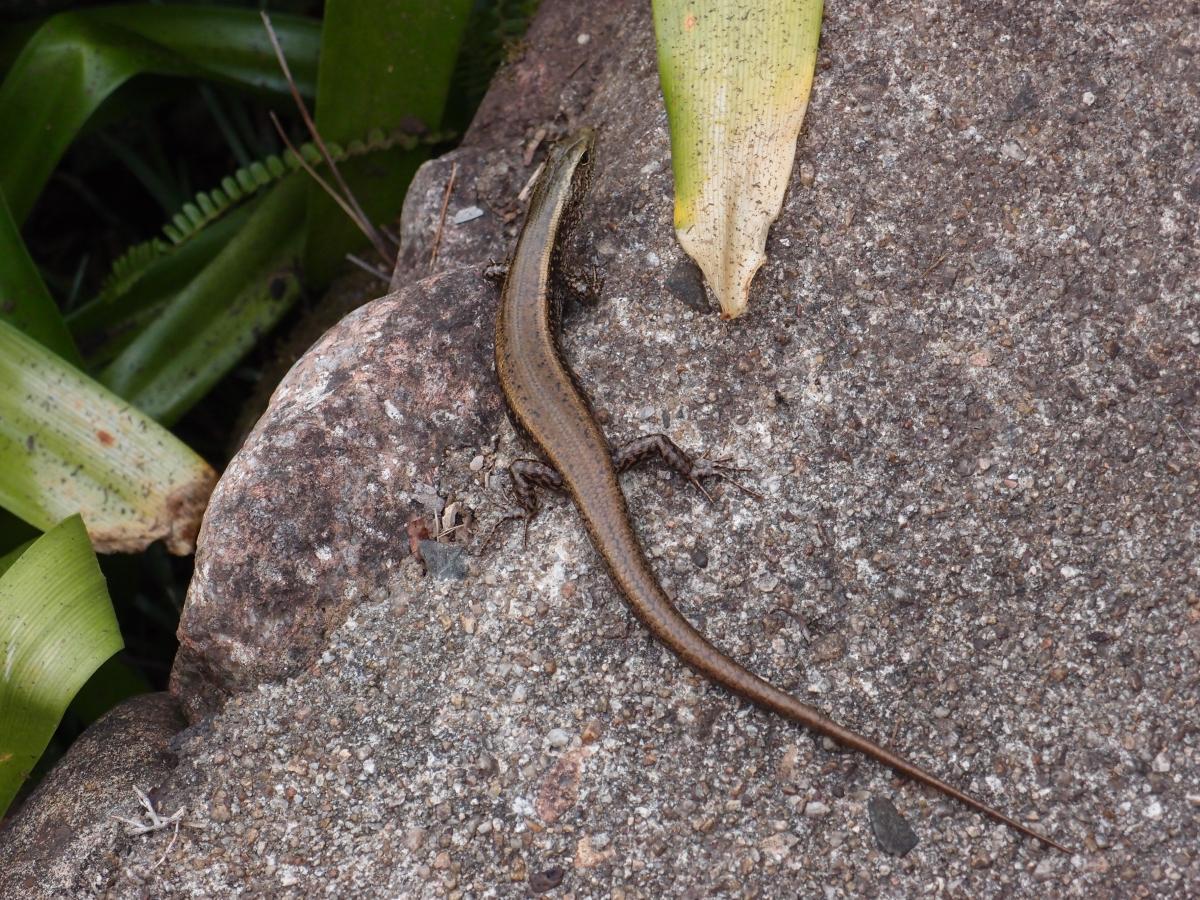
Skinks are small, smooth-bodied lizards, with most species having no defined neck. They are the most common type of lizard seen around gardens throughout Australia and there are about 389 different species. The Eastern Water Skink is a large species (28cm long) that can often be seen and heard rustling in the leaf litter in search of small prey.

They shelter in holes and burrows, under logs and rocks, and near streams and ponds feeding on a diet of water beetles and other aquatic insects, snails, tadpoles, spiders, small fishes, smaller lizards, and native fruit.   They can become quite tame and will quickly learn to eat small bugs and meal worms out of your hand. Birds, big lizards, and black snakes all prey on these skinks. Eastern Water Skinks breed in spring and as many as nine live babies are born in summer.

Further notes and  observations on the Eastern Water Skink by Linda Venn can be found here


3. Orange-thighed Tree Frog (Litoria xanthomera)

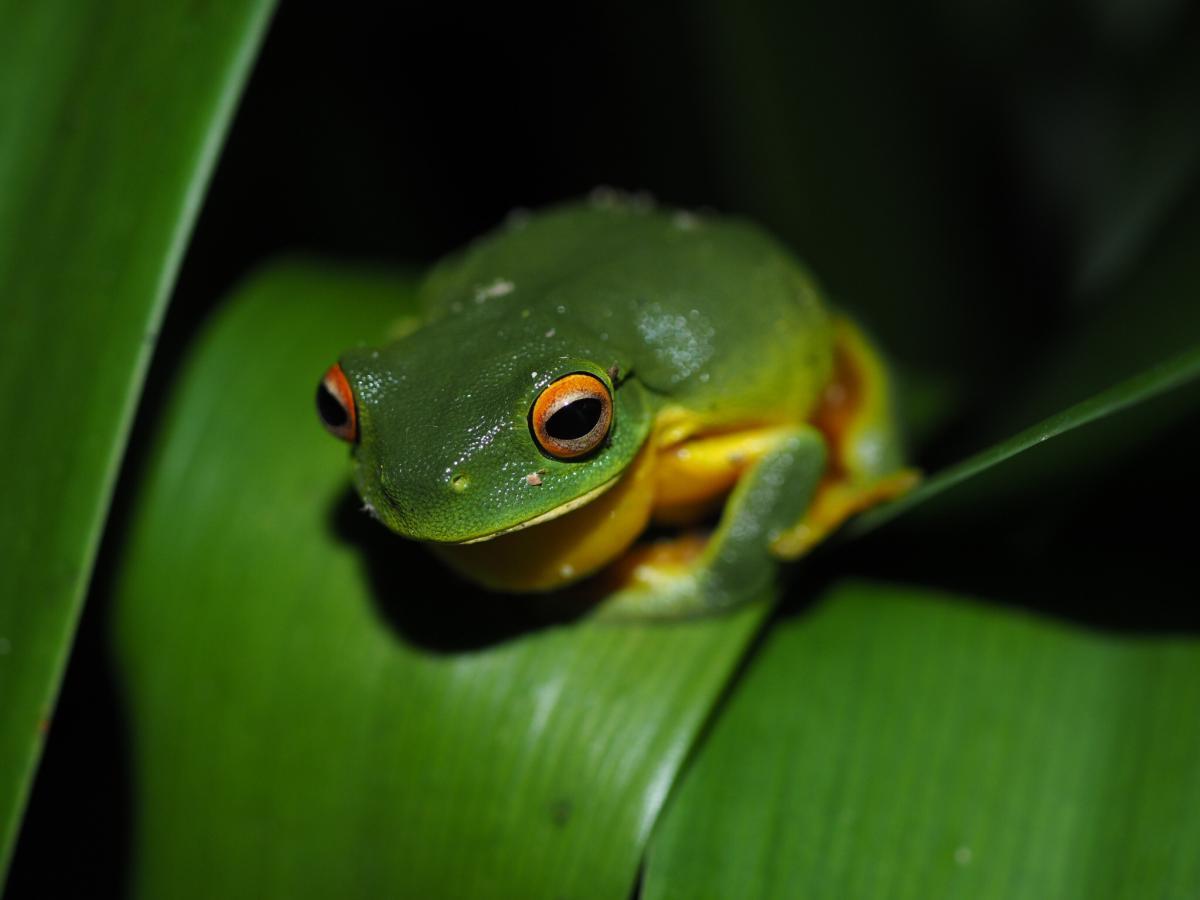
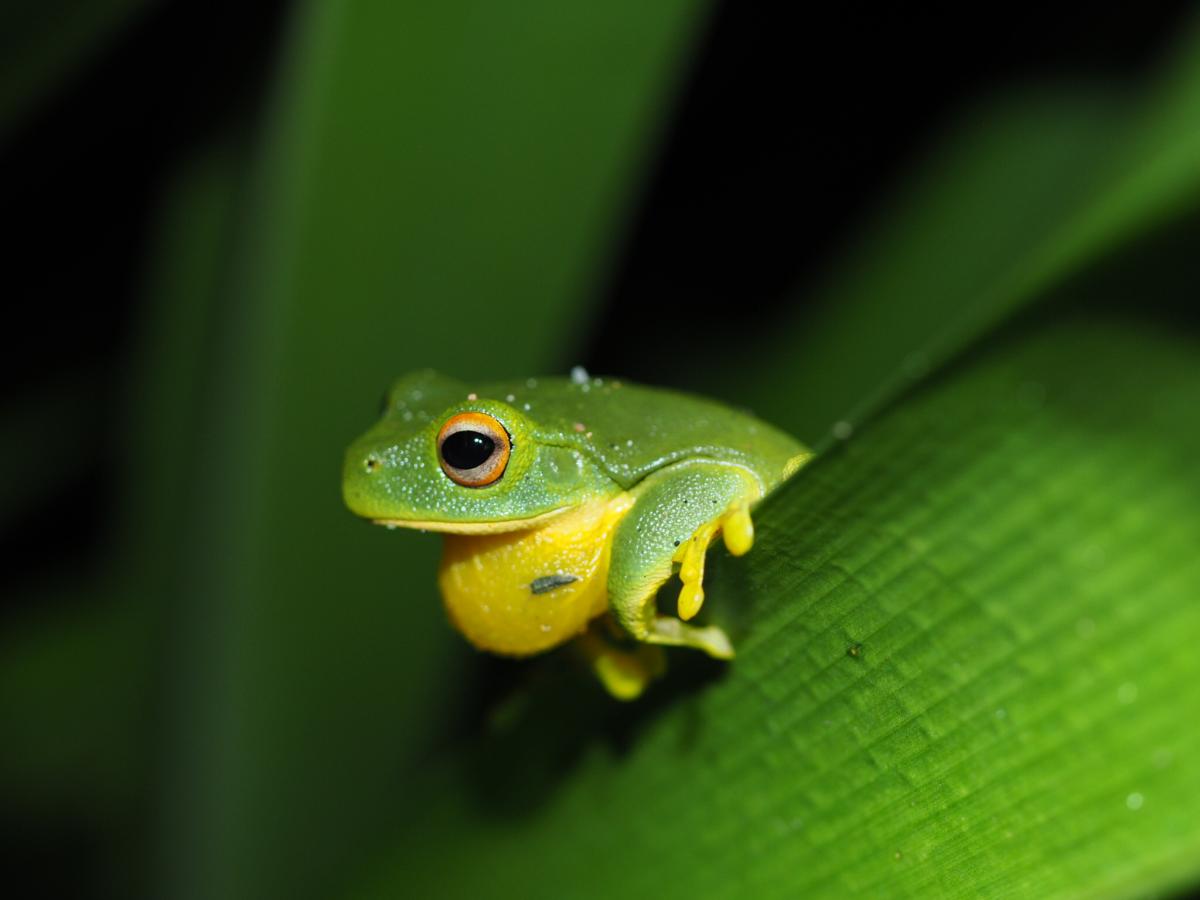
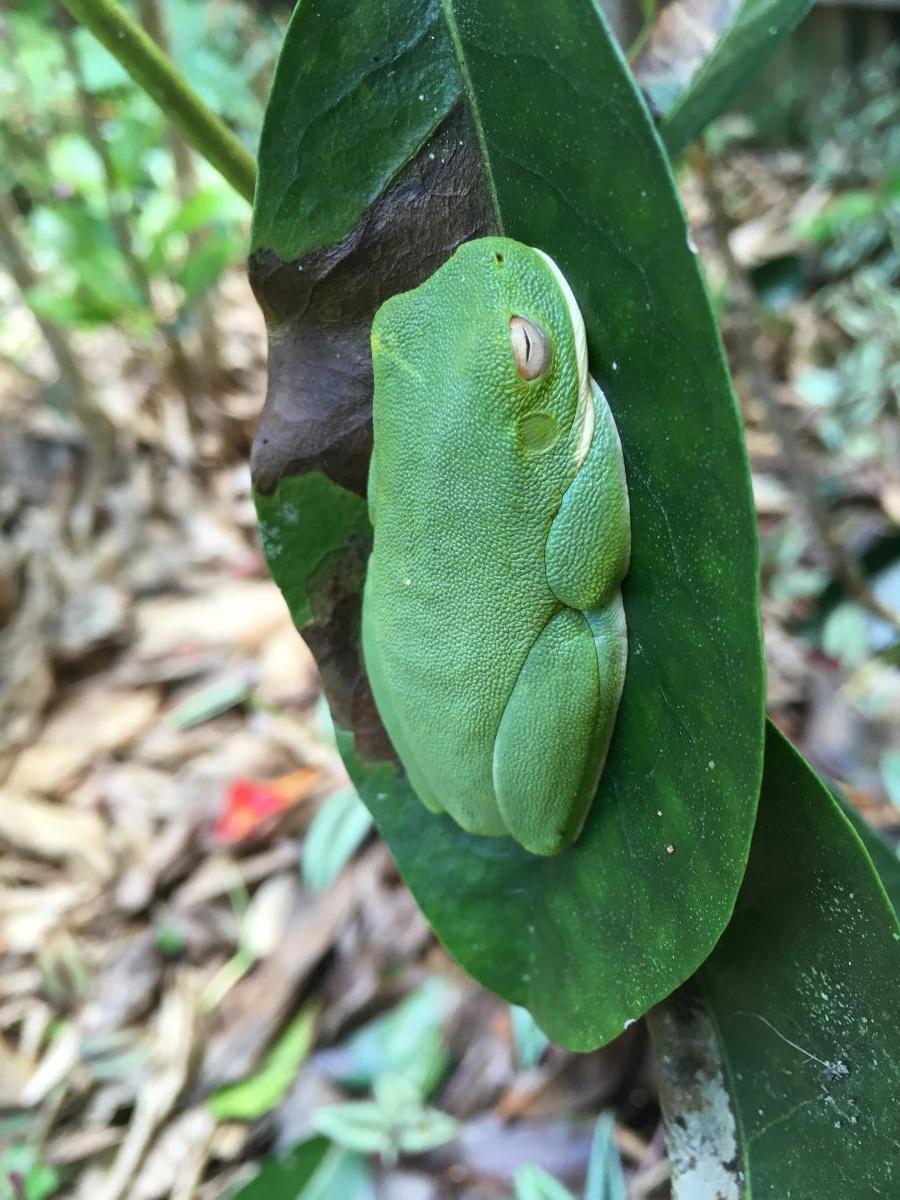
This frog is arguably the most photogenic in tropical Australia, with a deep green upper surface, deep red-orange eyes, and lemony-orange sides to its legs and toes. It is quite common in Paluma and during rainy nights it can often be heard calling near garden ponds and gutters around the village.

A male calling

Its call is very distinctive, and you are more likely to hear this species than see it. However, if you are able to trace the calls, you should be able to find a male perched on a leaf or twig near a pool or puddle. Watching a male inflate its yellow throat as it calls is a great reward for diligent searching.

Litoria xanthomera calling near a small pond in front of a house in the village

During the day these frogs hide in the foliage and can have very different pale green and white skin and whitish eye colour.


4. Mottled Barred Frog (Mixophyes coggeri)

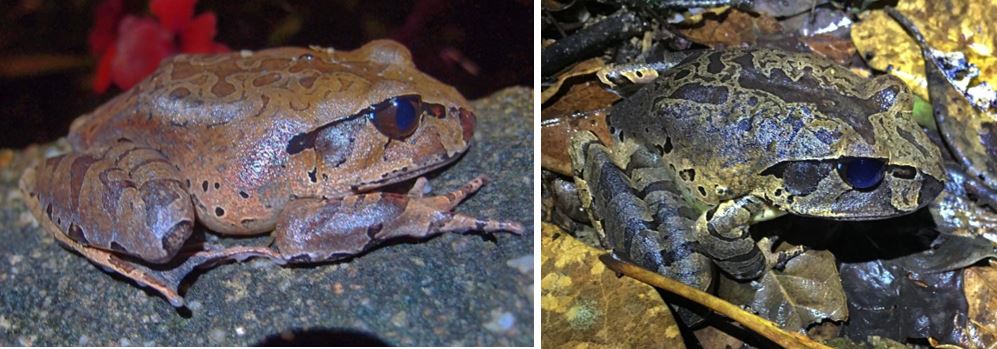
This large mottled frog can frequently be found beside the road on Lennox Cr. and along the H-Track at night during the wet season. They can be picked up from their eye-shine using a torch and tend not to move when approached, so it is easy to get close enough for a clear identification.

Mixophyes coggeri showing two different colourations

They are also found (and heard at night) around the Village Weir. The call is a loud croak that can be heard at some distance.

Mixophyes coggeri calling in the early evening from the weir near the Community Hall
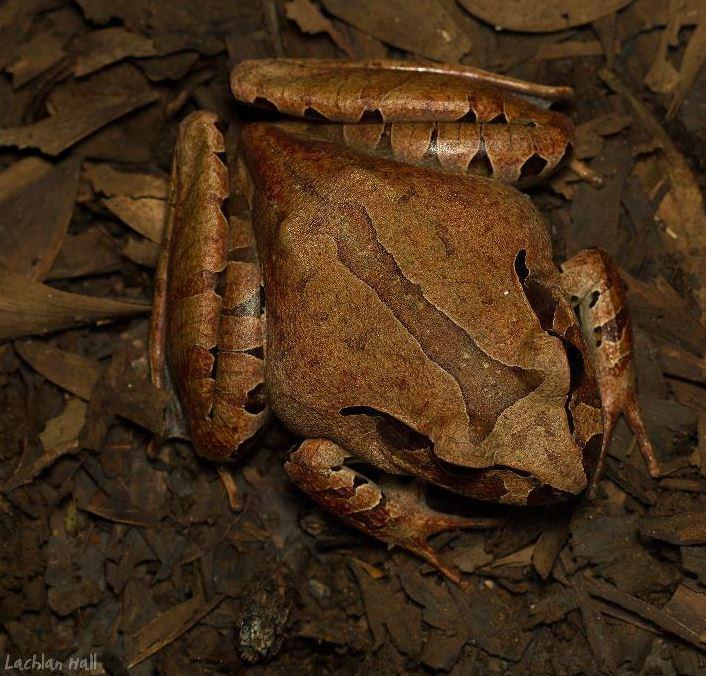
M. schevilli showing continuous dorsal stripe. © wild_lachie

There is one other species of mottled frog (Northern Barred Frog – Mixophyes schevilli) that can be found around Paluma that looks very similar but has a distinct continuous stripe down its back, whereas M. coggeri has an irregular and discontinuous series of dark blotches.


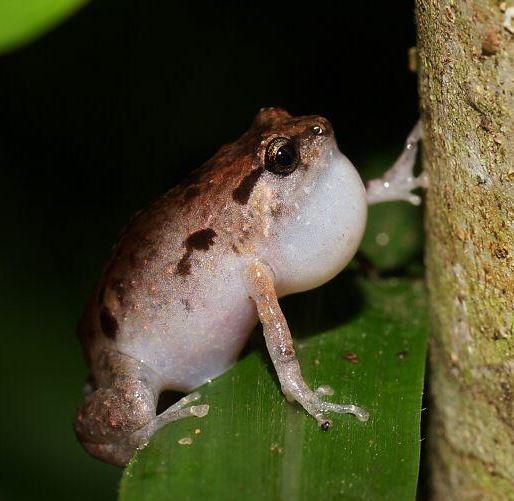
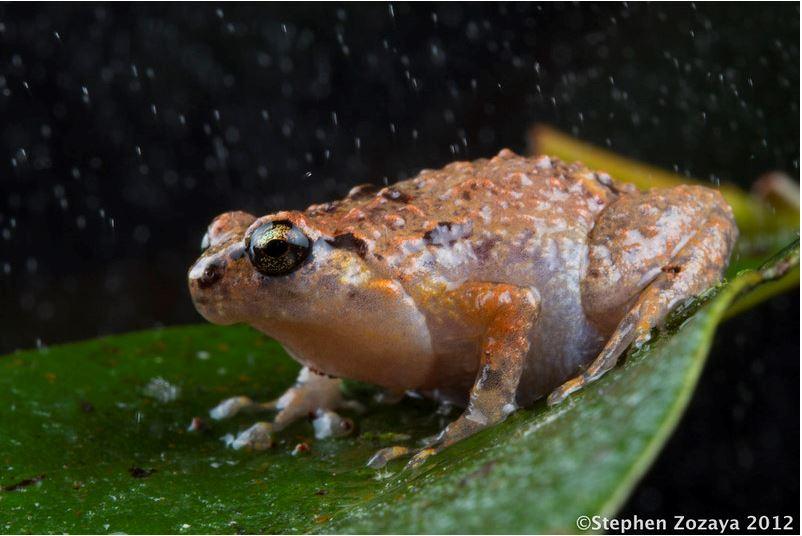
5. Southern Ornate Nursery Frog (Cophixalus australis)
Photo by Reiner Richter (Creative Commons Attribution International CC BY 4.0)

This tiny frog has an amazingly loud call that is so common in the evenings at Paluma that it becomes part of the background soundscape. It hides out in the foliage and on the forest floor and is seldom seen. Even tracking down a calling male can be a frustrating and often futile exercise. However, the call itself is so distinctive that you can confidently claim you have identified one just by hearing it.

Cophixalus australis calling near a house in the village

There are 13 species of nursery frogs in the Wet Tropics and many of them have highly restricted distributions with some occupying only a single mountain top forest. Consequently, Nursery Frogs are considered to be one of the most threatened groups of vertebrates in the Wet Tropics bioregion. However, the Southern Ornate Nursery Frog has a much wider distribution and is not considered threatened.

Nursery Frogs have direct development (eggs are deposited under rocks or logs in moist soil and the froglets hatch directly from the eggs). The male has been known to guard the eggs during development – hence the common name.