Paluma gardens are in a continuous state of change with a regular cycle of blooming and fruiting that makes each visit up to a the village a new experience. A walk along the village road can be a process of discovery of new blooms never before seen, or the emergence en masse of old favourites, or a re-aquaintance with an uncommon plant not seen for some time.
Although we continue to publish individual posts on interesting plants that are blooming in Paluma gardens, we have not, generally, created new posts for flowers that we have highlighted in previous months or years even, if they are currently in full bloom. Over time this is leading to there being fewer new things to write about in our “What’s Blooming?” section.
It seems a shame not to share our delight in seeing old favourites come into bloom during certain months, or to share a quickly taken picture of a particularly striking plant or flower that we don’t have the time or enough supplementary information to create a dedicated post. Consequently, we have started a new series which is a simple collection of photos from Paluma gardens highlighting what is in bloom during each month, and what interesting plants we have discovered.
We also invite residents with an interest in photography to send us their best photos from their gardens or from around the village for inclusion in the monthly collection.
Below is a slide show for June 202o. You can access slideshows for previous months on the Paluma through the seasons page on our website.
Enjoy the show…..
Jamie and Michele
Paluma in July 2020
Click on the image below to start the slide show… it will start automatically after a few seconds
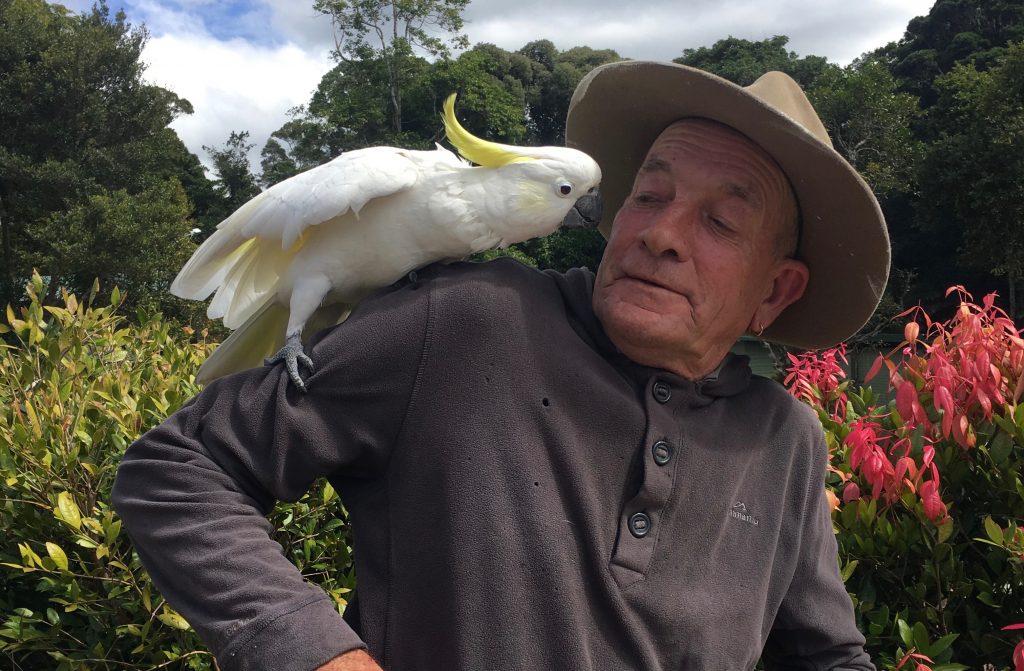
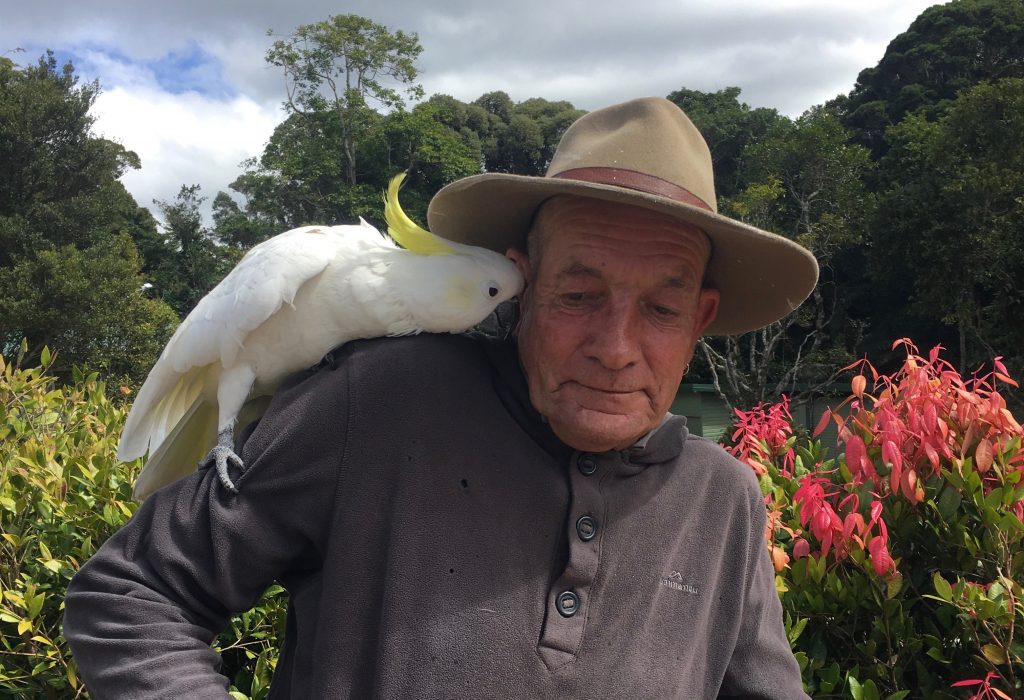
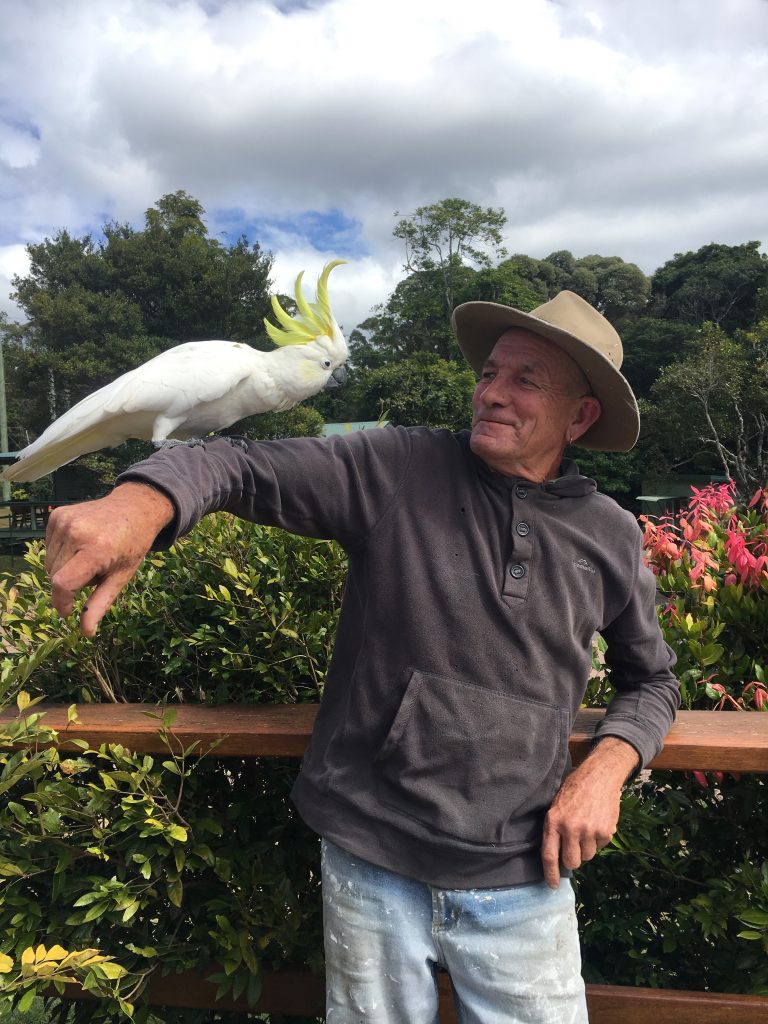
‘Chainsaw’ is a beautiful Sulphur Crested Cockatoo and she is the beloved pet and constant companion of Paluma resident Jim – best known to his friends as ‘Jungle Jim’ for the fact that he lives on a bush block about 35 km west of the village. Jim and Chainsaw have been together for 28 years.
Jim and Chainsaw
Chainsaw’s story is an interesting one.
Jim found Chainsaw, or more correctly, she found Jim when she flew into his home one day from out of the blue. Jim says that she was already quite tame, fond of attention and she knew a few words. Jim thinks she definitely had a previous owner and perhaps an elderly or sick person because Chainsaw would mimic ‘coughing’ noises. At first, Jim tried to discourage her from staying, hoping that she would return to her former owner.
The rest of this story is history. Chainsaw never left and now Jim and Chainsaw are inseparable. Both have recently enjoyed a holiday to the coast to see Jim’s family. Chainsaw enjoyed the trip immensely, with Jim’s extended family lavishing her with attention. Jim named ‘Chainsaw’ in honour of the renowned and famous bucking bull who was doing the rodeo circuit back at the time she arrived.
This unlikely partnership between bird and bushman is surely a match made in heaven.
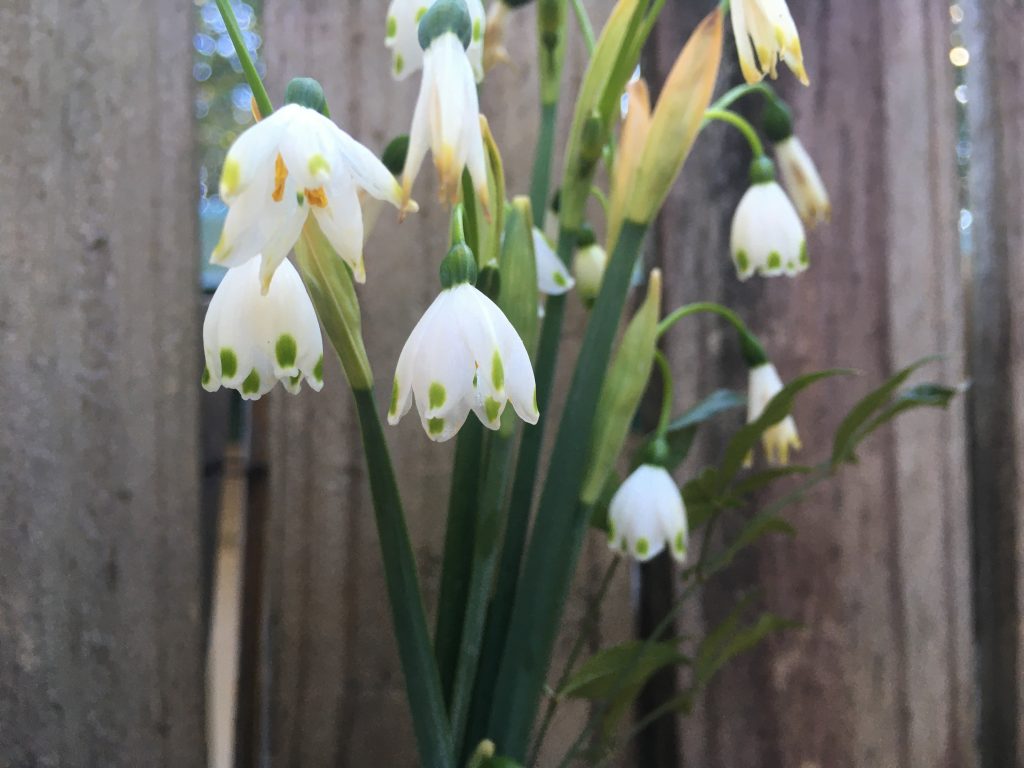
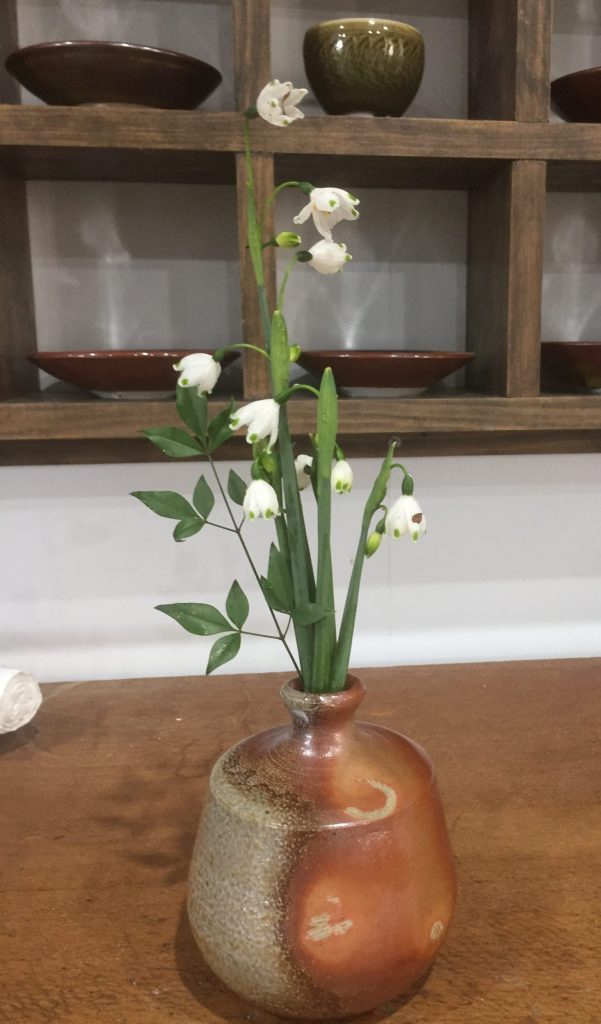
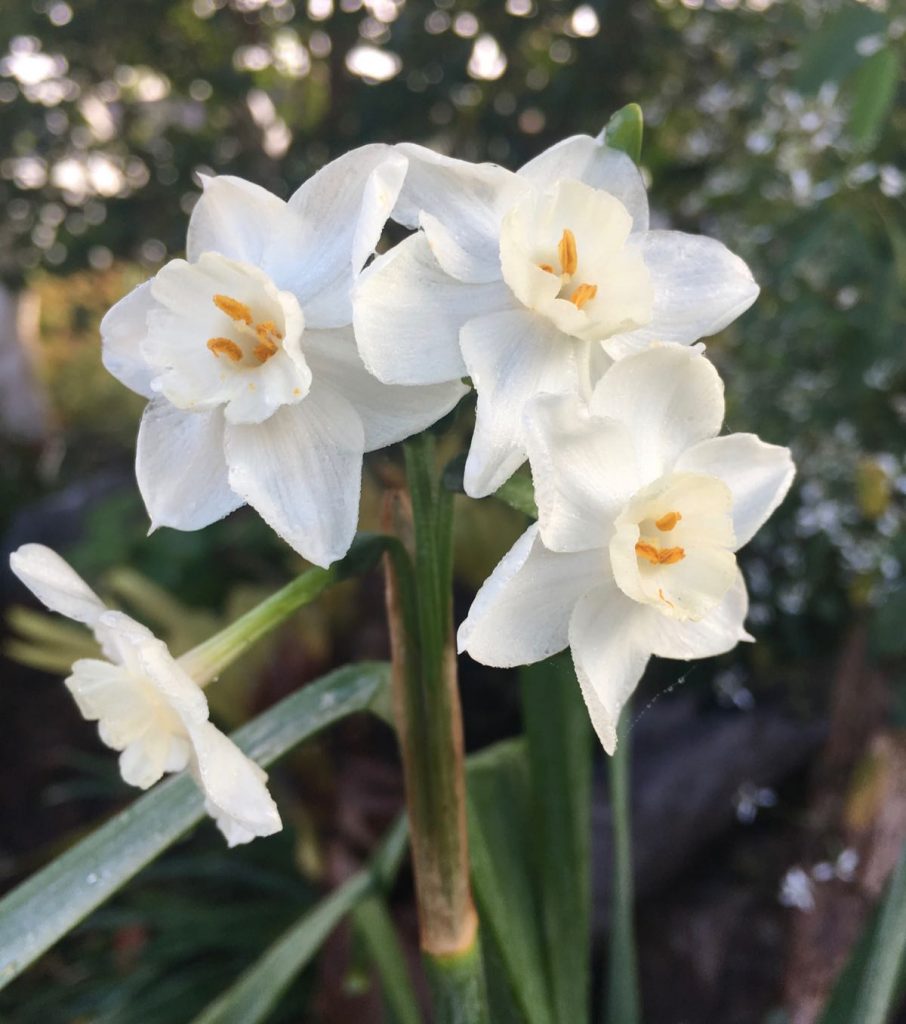
Its been a pretty cold winter so far in Paluma and the flowers in our gardens are showing it. The weather app on my phone indicates that temperatures have been well below 10°C with a few nights below 5°C. Jonquils and Tulips are two of the cold loving flowers that can be seen growing and occasionally flowering in Paluma, but Len Cook has made me aware that we can grow another bulb normally found in southern climes –Leucojum sp or “Snowflakes”.
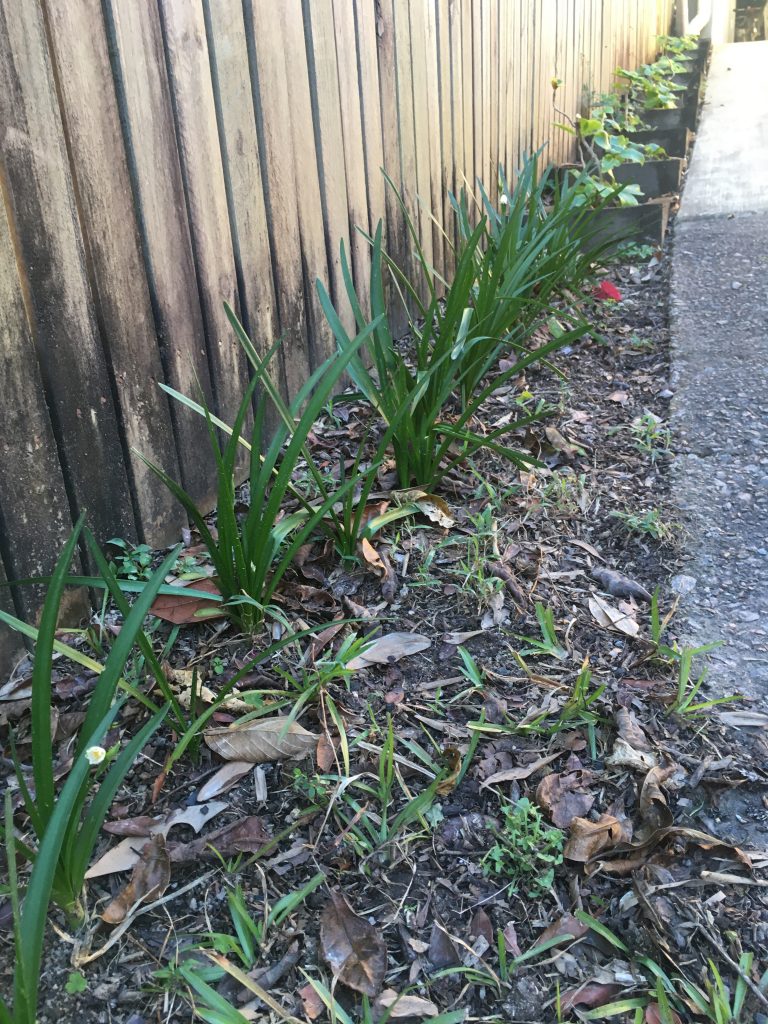
Len has had a steadily growing clump of these for several years that he recently replanted them as a row along his fence and they have produced sprays of gorgeous white flowers. They are often misnamed “Snow Drops”, which are nearly identical, but Snowflakes can easily be distinguised by the small green dots near the end of each of the 6 petals. They are more tolerant of warm conditions compared to Snow Drops (Galanthus sp), but both are sufficiently cold tolerant to be seen poking out of the spring snow in full flower in temperate regions.
Snowflakes are native to central and southern Europe but have become naturalised in North America and Australia)
Photo by Len Cook
Len’s snowflakes appear to be the Spring Snowflake (Leucojum vernum). The other species found in southern gardens is the larger Summer Snowflake (Leucojum aestivum).
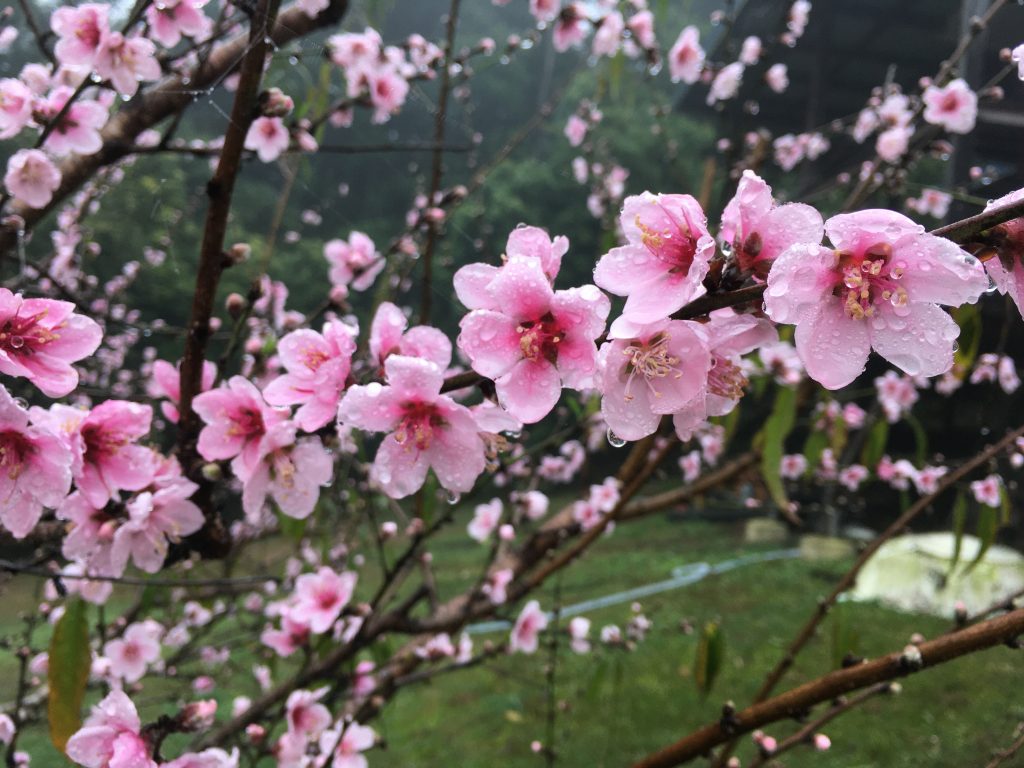
In addition to temperate bulbs, Paluma is also able to grow stone fruit in the form of “tropical” peaches which, despite their name, require at least a short period of cold weather to flower and bear fruit. There at least 3 residences which have flowering peach trees in Paluma at present. While the beautiful pink flowers are a delightful addition to any garden I am told that birds and native rats benefit the most from any fruit that are produced. However I gather one resident has been able to harvest enough to make peach jam one year.
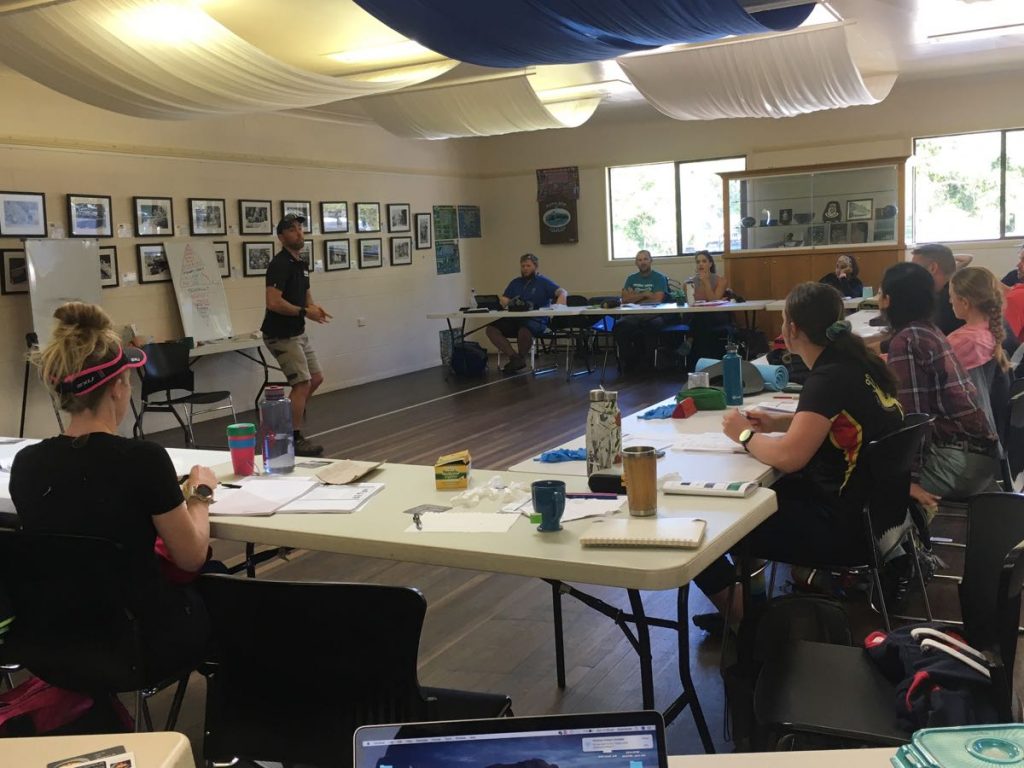
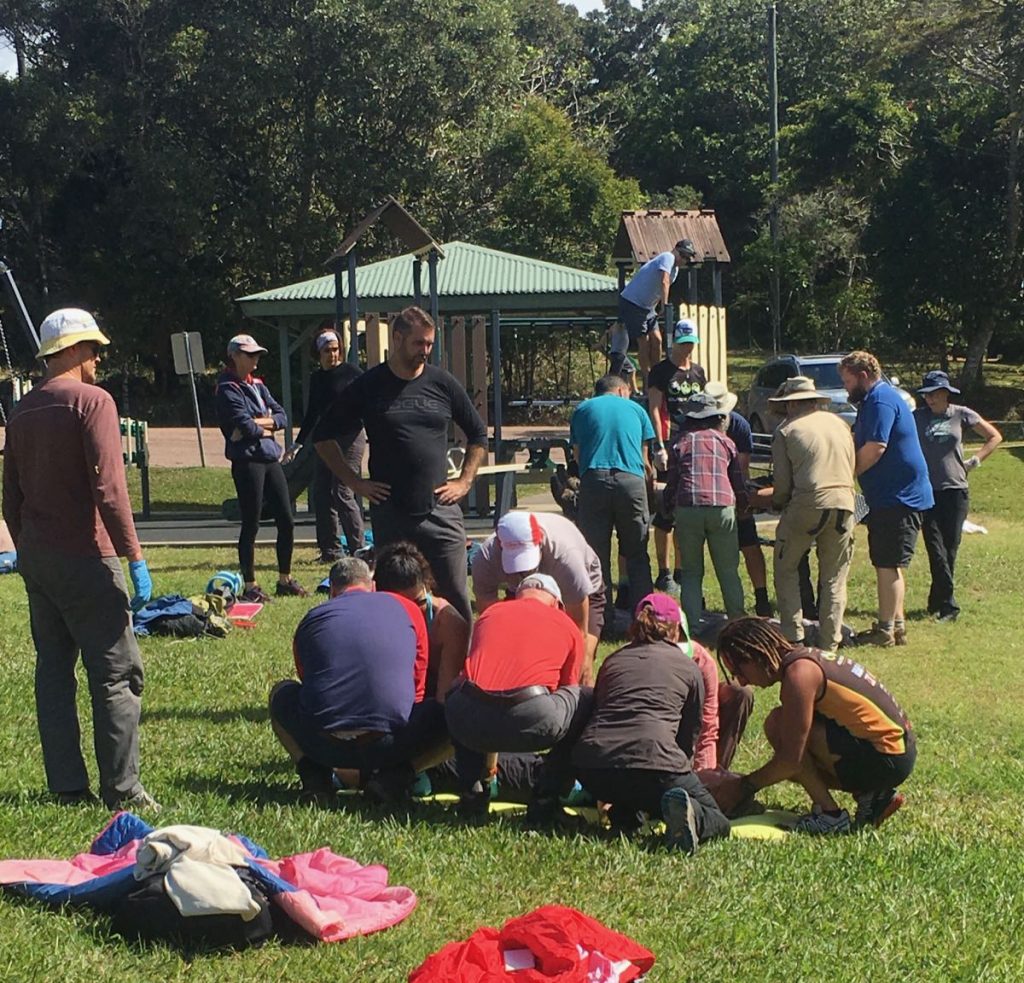
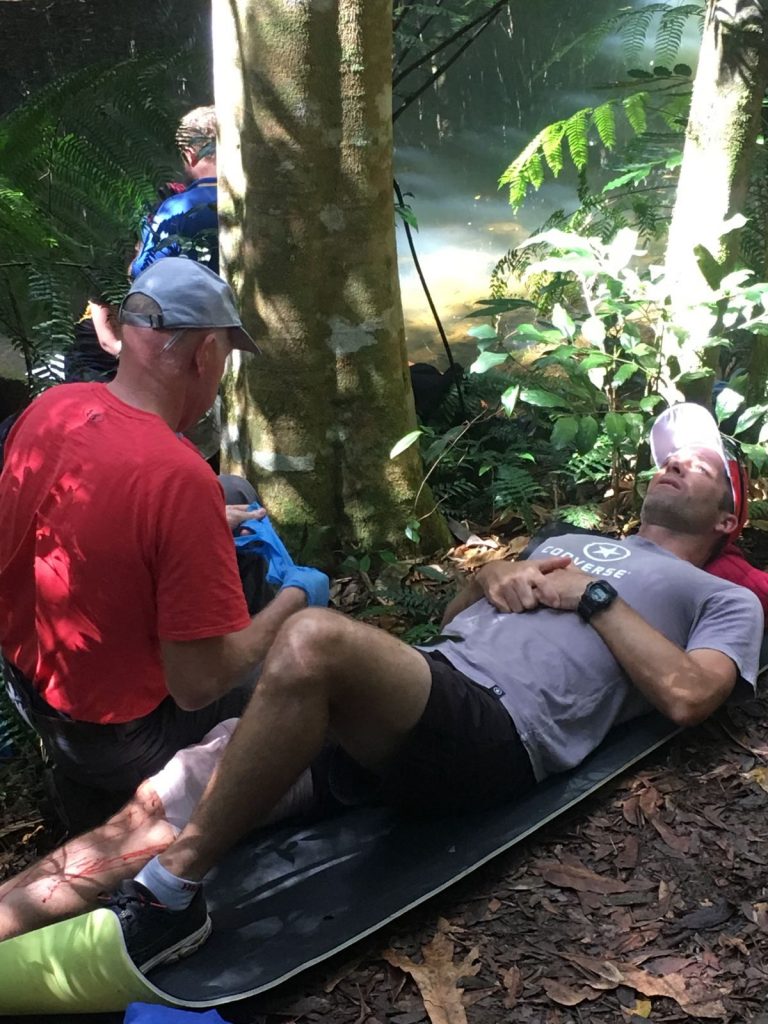
Last weekend Paluma Village was host to Jason Taylor and the team from Category 5 Emergency Care based out of Cairns. Jason conducted an Emergency and First Aid Training Course over several days at the Paluma Community Hall with emphasis on survival training and rescue in wilderness and remote locations. The course was well attended with over 20 participants. The Category 5 Emergency Care group specialises in teaching first aid training, event medical coverage, lifeguard courses and sports trainer education.
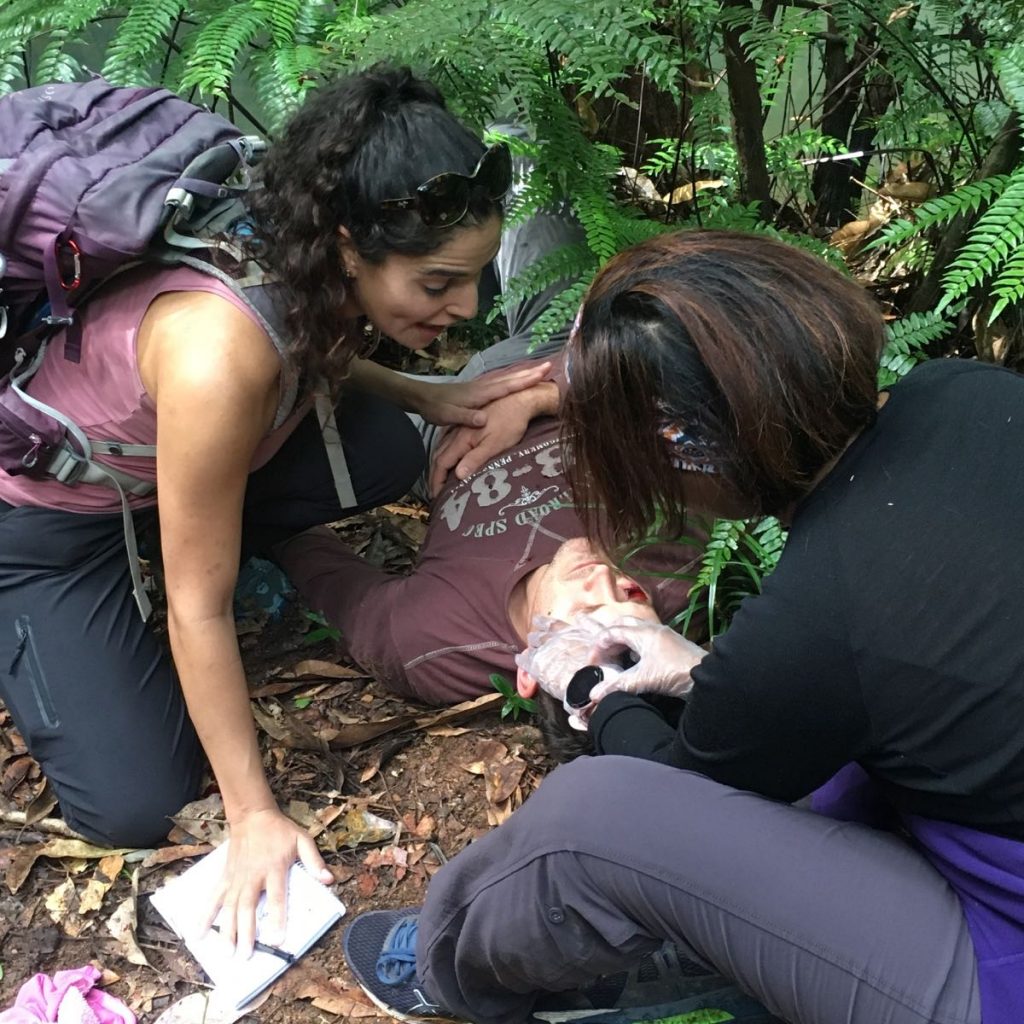
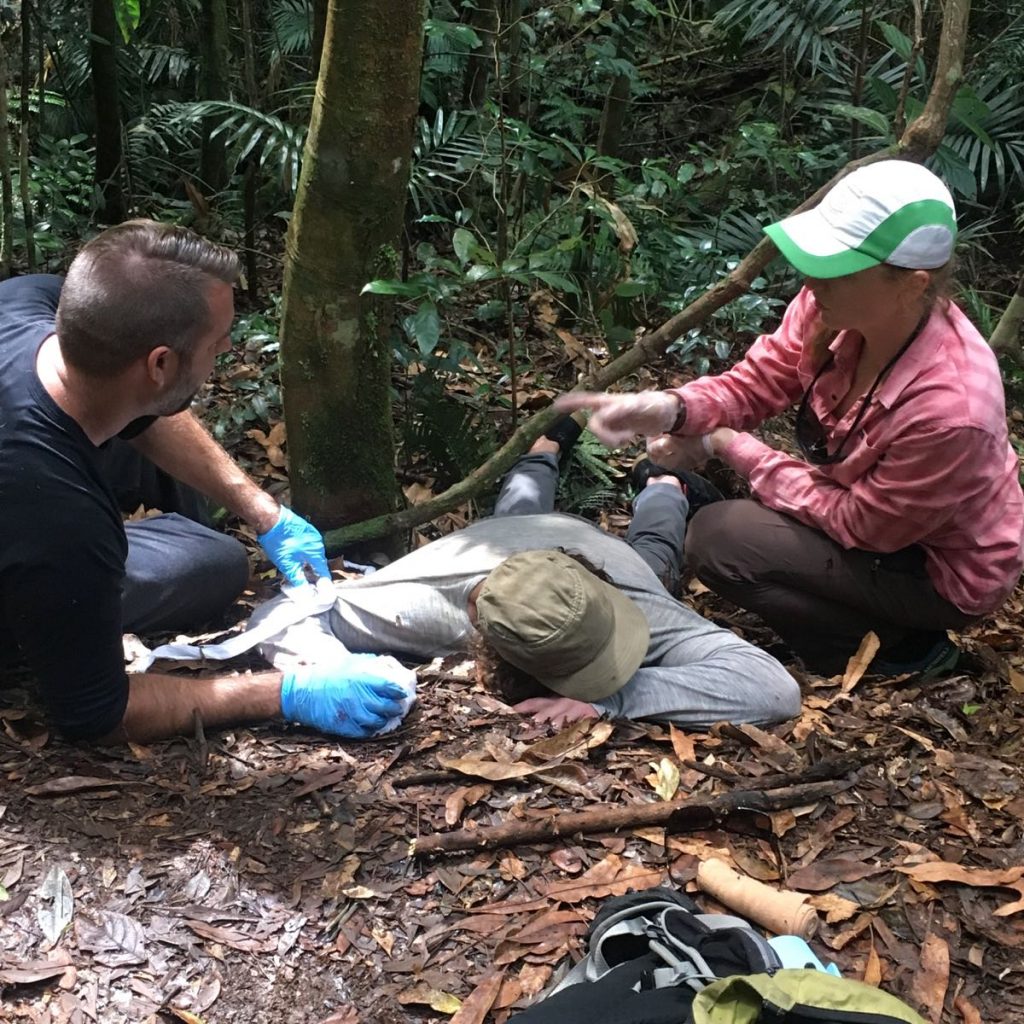
The training course included both theory and practical sessions with the participants actively engaged in several ‘mock scenarios’ in which they get to practice and hone their newly learned rescue skills.
Theory learning sessions took place at the Paluma Community Hall.
Practical sessions were held at the Village Green and one detailed ‘mock scenario’ on Sunday afternoon took place at the Paluma Weir. The emergency scenario as follows:-
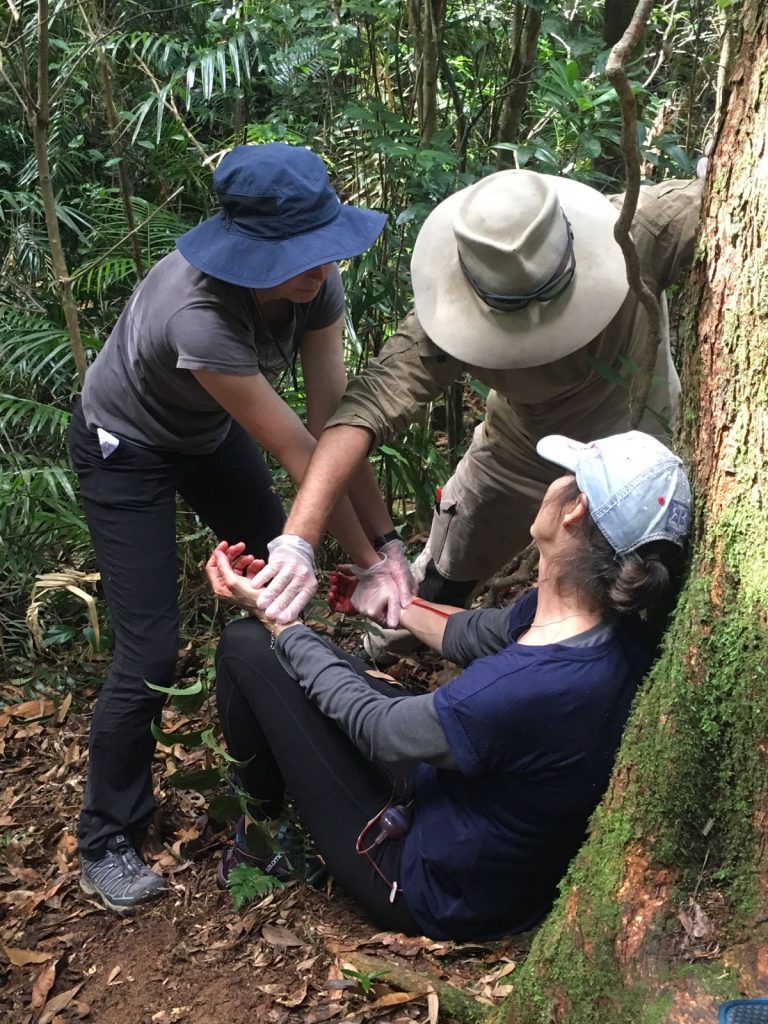
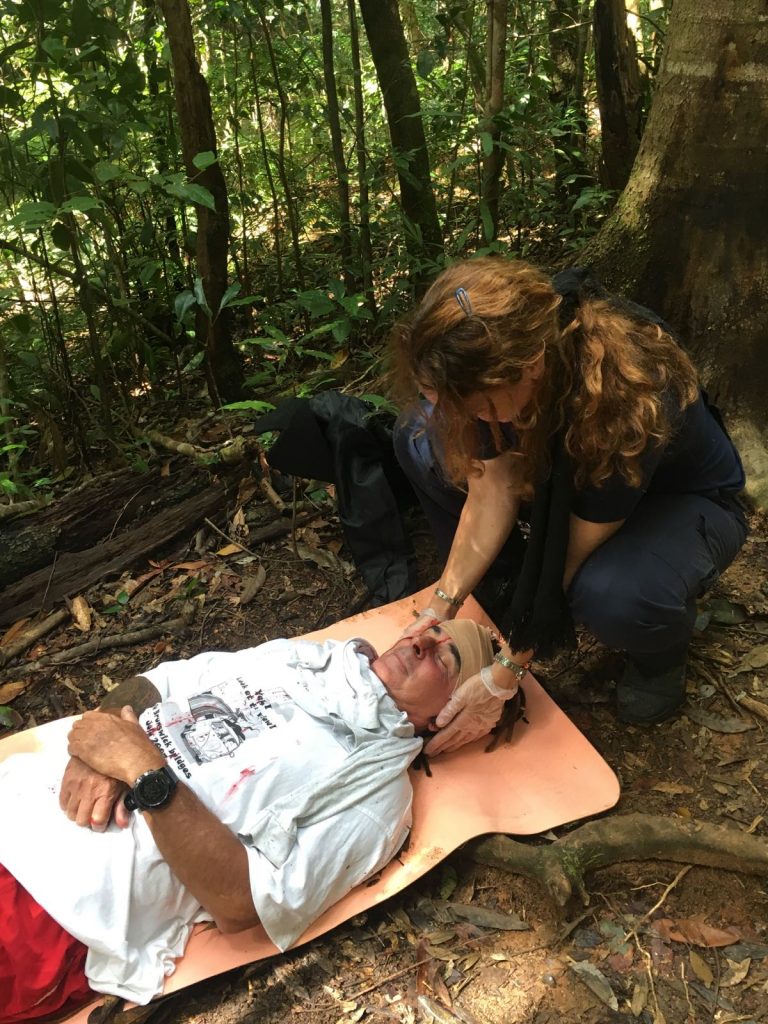
A group of weary bush walkers was returning from several days of hiking in the wilderness. Upon nearing the Paluma settlement there was an unexpected bridge collapse at the Paluma Weir. There were numerous casualties with a range of injuries from potential spinal injuries, to broken and sprained limbs, possible concussion, cuts and abrasions. Medical assistance would be more than one hour in arriving at Paluma. Those who were injured and incapacitated were rendered first aid by those who were not injured and/or who were at the scene, using only the first aid supplies and materials from their hiking backpacks.
Practical training in rescue skills at the Village Green.
The life-like emergency scenario at the Paluma Weir was fascinating to observe. The photographs below show the practical training in action.
You can imagine the complete surprise of a couple of unsuspecting tourists who came upon the grisly scene at the weir on the Andre Griffin Walking Track on Sunday afternoon, with injured and bloodied bodies strewn along and adjacent to the walking track! Much to their relief, they were quickly reassured that emergency and rescue training was in session.
You can watch a slide show of all the photographs of the Paluma Weir training scenario, at the end of the post.
Our unique mountain climate at Paluma has inspired many of us keen gardeners to experiment with growing plants from the more temperate climes. Many local gardeners have had great success with a range of ‘cool climate’ plants.
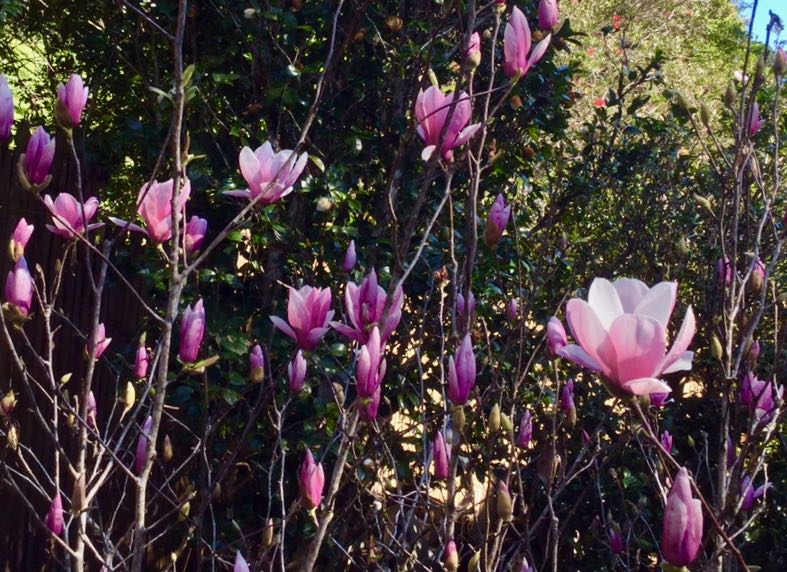
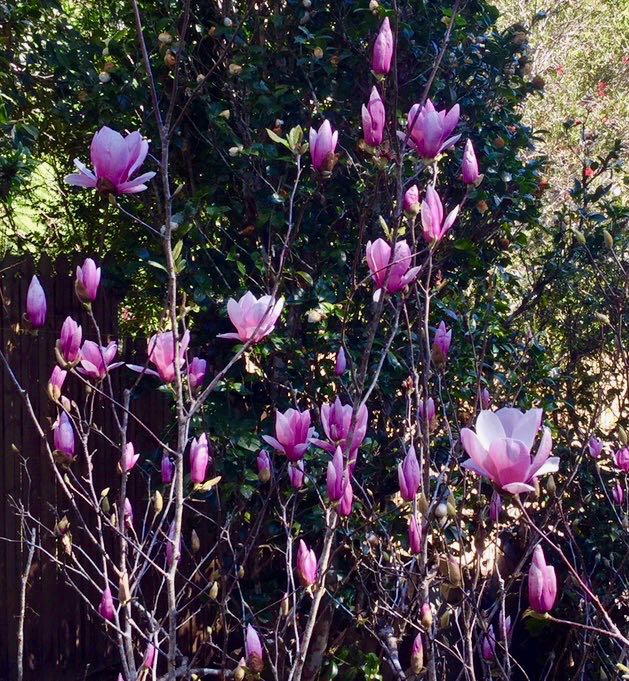
There’s Len Cook’s superb collection of camellias and magnolias (recently featured in a post on this website). Colwyn grows some spectacular blue hydrangeas, with large flower heads every bit as good as those grown in the south. Lynda has had great success with her potted Asiatic liliums and she currently has colourful pots of blooming pansies and violas. The Bligh’s have a Japanese inspired garden and water feature with some cool-climate conifers. The Cooke’s flowering peach tree is a sight to behold just now in full blossom. Then there’s the Van Rynswoud’s with their array of temperate plants – let’s face it, those two can grow just about anything!
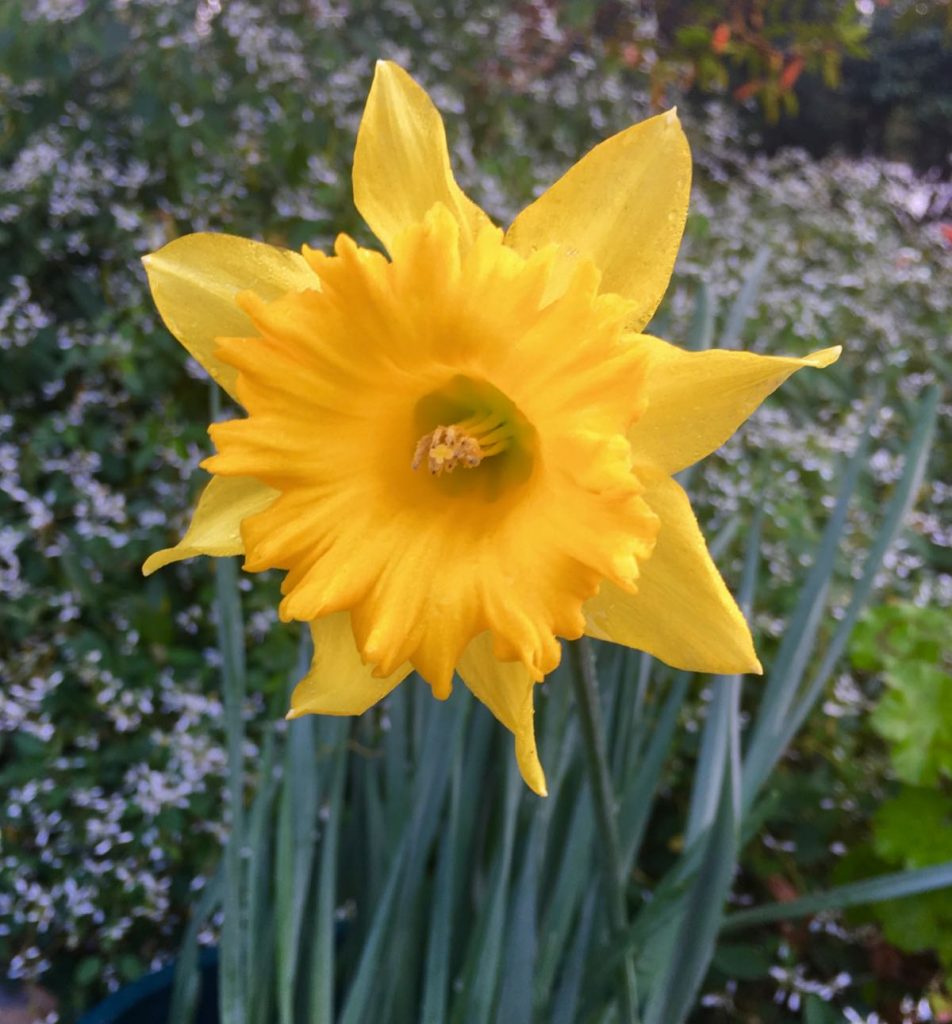
But, in my books the ‘garden gong’ for Winter 2020 has to go to Jennie for her potted jonquils and daffodils. A few months ago, Jennie planted several jonquil and daffodil bulbs in large tubs. The jonquils have prospered producing several heads of creamy and highly fragment blooms. Likewise, her daffodils bulbs have sprouted lush foliage. So far, there is one large perfect flower, hopefully with many more blooms to come.
Jennie’s Jonquils!
Several of us (myself included) have planted daffodils bulbs each year to have them produce lush foliage, but no blooms. Jennie’s theory is that this year the weather has been cold enough to encourage the bulbs to flower. She is currently the envy of many a gardener around the village. Jonquils and daffodils in the wet tropics – what an achievement!
The single, perfect golden daffodil bloom.
In conducting ‘research’ for this article (several cups of tea and a good gossip), I was informed that the late Kelly Davis planted jonquil bulbs every year. Marilyn said he was diligent in planting, raising, storing and then re-planting the bulbs each year in a small, dedicated garden bed at his Paluma residence. Together, Kelly and Marilyn planted their jonquil bulbs earlier this year. The jonquils have been blooming with an abundance of flowers for the past fortnight. While Kelly missed their flowering this year, bunches of the fragrant blooms have been shared amongst his Paluma friends and family. They are a warm reminder of his everlasting presence in the village and his legacy as one of our great gardeners.
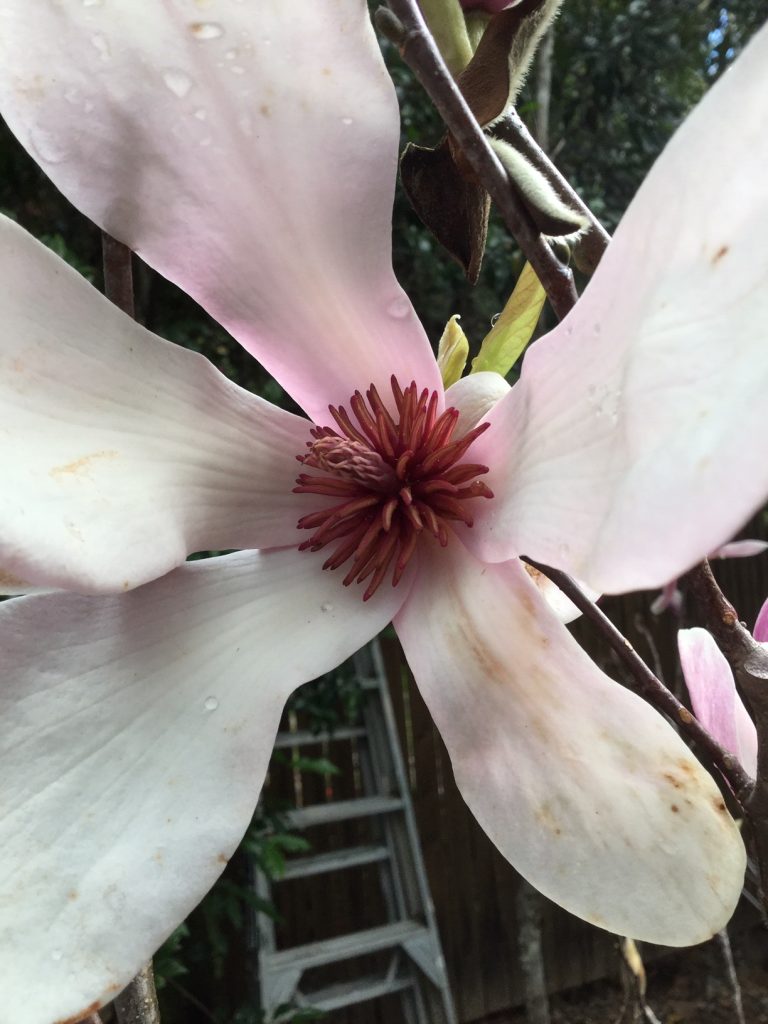
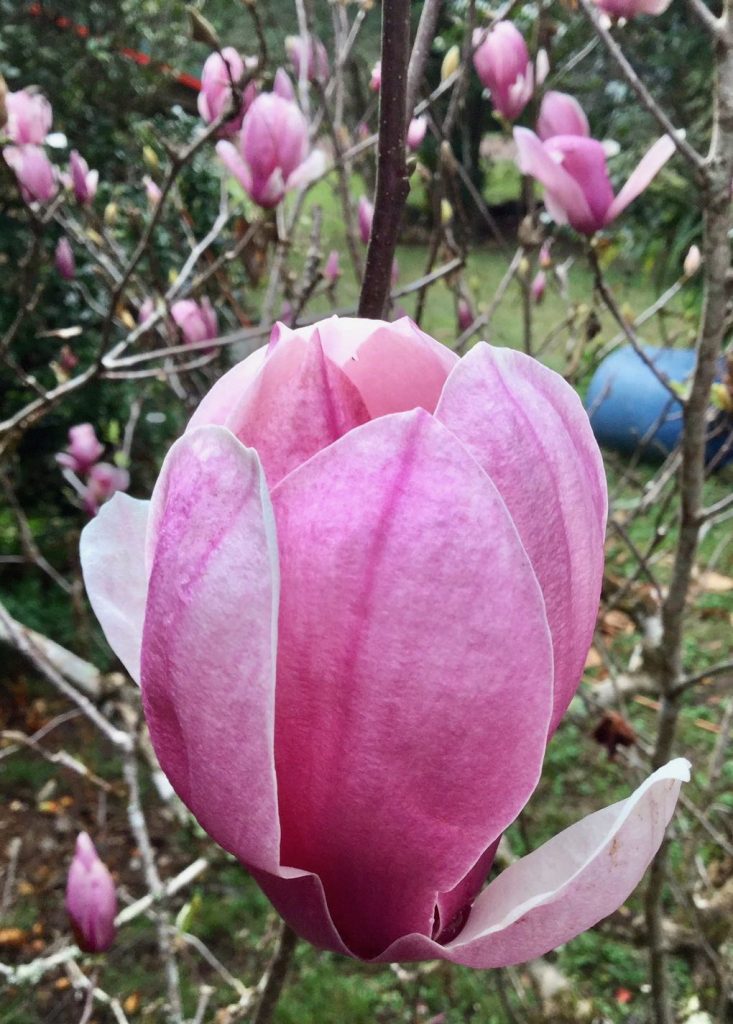
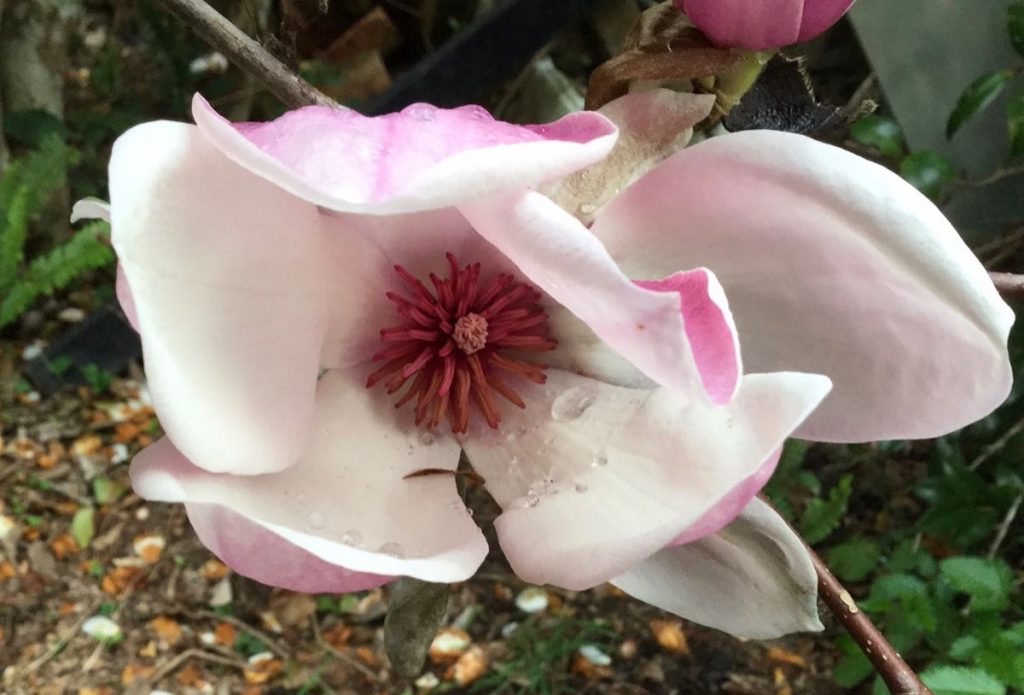
When Len Cook’s beautiful Magnolia was featured recently in ‘What’s Blooming in Paluma’, I felt that this plant deserves more than just a brief mention. So, having read a little about the Magnolia family, I would like to share with you, a little of what I have learnt.
The Magnolia is one of about 210 flowering plant species in the sub-family Magnolioidaceae of the family Magnoliaceae. It was named after the French botanist, Pierre Magnol.
The Magnolia is an ancient genus, one of the most primitive plants in evolutionary history. Fossil records suggest that the genus has existed from the Cretaceous Period (145-66 million years ago). The Magnolia was the first flowering plant, appearing around 95 million years ago. Before this were only ferns, horsetails, cycads and conifers. The connection with conifers can be seen in the protruding female organs which develop into a cone-like mass of seeds. The flower bud is enclosed in a bract rather than in sepals. The perianth parts are undifferentiated (similar in size and shape) and called tepals rather than distinct sepals and petals. The cone-like receptacle in the centre is composed of numerous spirally arranged carpels and numerous spirally arranged stamens.
The Magnolia evolved before bees and pollination is by beetles and beetle-type insects. To improve its means of successful pollination the inner tepals of the flower remain tightly closed, allowing visiting beetles to feed safely and become covered in pollen. Magnolias are monoecious, that is, bearing both male and female organs on the same specimen. To counteract the risk of self-pollination, individual plants will not mature their male and female organs at the same time. This enables pollen from one specimen’s male flower to reach the female organ of another.
Before the last Ice Age, distribution was across most of the Northern Hemisphere: mainland Europe, North America and Asia. Since the Ice Age, it has been restricted to southern USA, Central America and South-East Asia, however Magnolias have naturalised in many countries.
Apart from the large Magnolia genus, the family contains the fragrant Michelias and the tulip tree.
Although the flower colour may be only white, pink or purple, the flower shape has taken on a great variety with blooms being described as lily, goblet, cup or star shaped. One species, the rare giant Himalayan Magnolia (M. campbelli), may grow to 15 metres and has huge flowers, 25 centimetres across.
Many beautiful and varied plants have been hybridised. For example, from hybridising M. heptapeta and M.quinquipeta comes a host of M.soulangiana varieties from which in turn other cultivars have been developed.
Magnolias are fairly hardy but should be planted in a sheltered position, out of direct wind and rain. Ideally, they should be with other plants where they will get light, shade and shelter, but not too dense as they need sunlight to encourage flower formation. They are often difficult to transplant, especially when large. Layering is probably the best way of propagating or taking cuttings from a heel of older wood.
What a magnificent and venerable tree this is. And what a survivor!
Len Cook planted this magnificent Magnolia more than thirty years ago. Every winter since then, he has enjoyed the classical beauty and subtle, sweet perfume of the glorious, goblet-shaped flowers.
The Magnolia is a large genus of about 210 flowering plant species in the sub-family Magnolioidaceae of the family Magnoliaceae. It was named after the French botanist, Pierre Magnol. It is an ancient genus, appearing before bees did and it is believed the plants evolved to encourage pollination by beetles.
The Magnolia has such an interesting history that it deserves a more detailed article devoted to it. I shall endeavour to do this soon.
I have chosen Davidson’s Plum (Davidsonia pruriens) as the July Rainforest Tree of the Month because my attention was drawn to this tree by the abundant litter of large, purple fallen fruit on the ground beneath a tree near the Paluma Environmental Education Centre’s fire pit. Investigating, I saw that the tree was well laden with bunches of fruit, some ripe and ready to fall while small green fruits were also strewn along the branches. It was early in June when I saw the fruit but fruiting can occur at any time of year.
Although it is a rainforest tree, Davidson’s Plum is not endemic to Paluma. It grows to about 18 metres high and is found from sea level to altitudes of up to 1095 metres from near the Big Table-land near Cooktown to Cardwell. There are three species of this genus endemic to Australia, one occurring in Tropical North Queensland.
The name Davidsonia, named after a pioneer sugar-cane grower, J E Davidson is ironic given that so much of the lower level rainforest where this tree occurs, has been lost to cane-fields. Pruriens, means itching or stinging and applies to Davidson’s Plum because there are irritant hairs on leaves and young fruit.
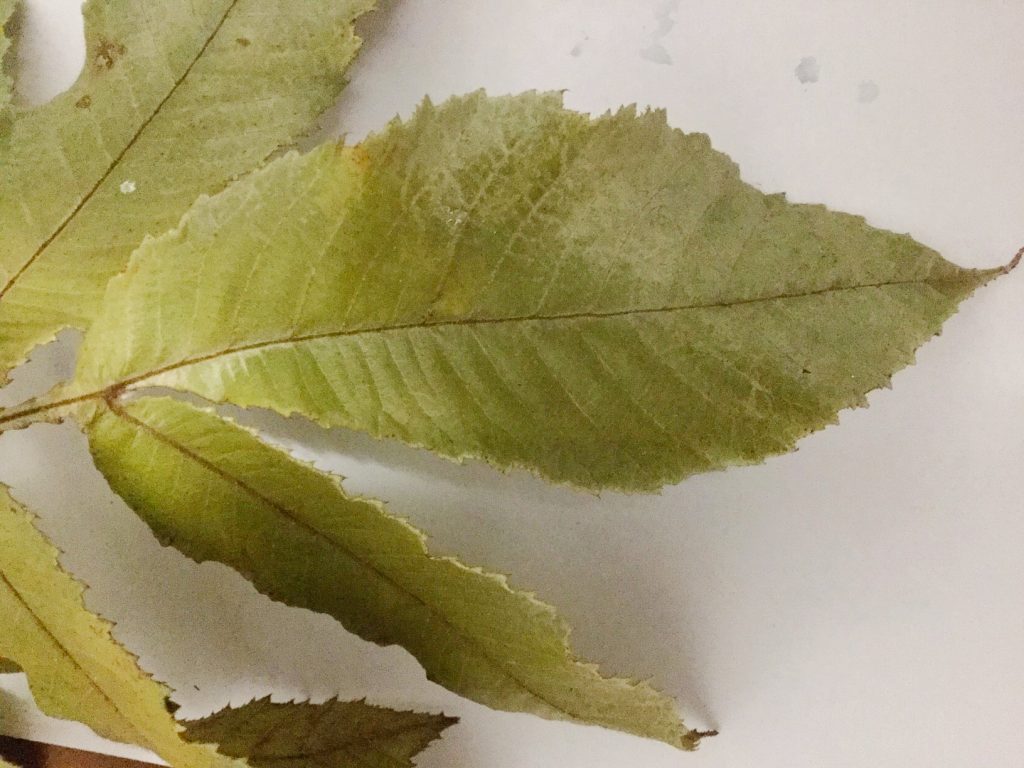
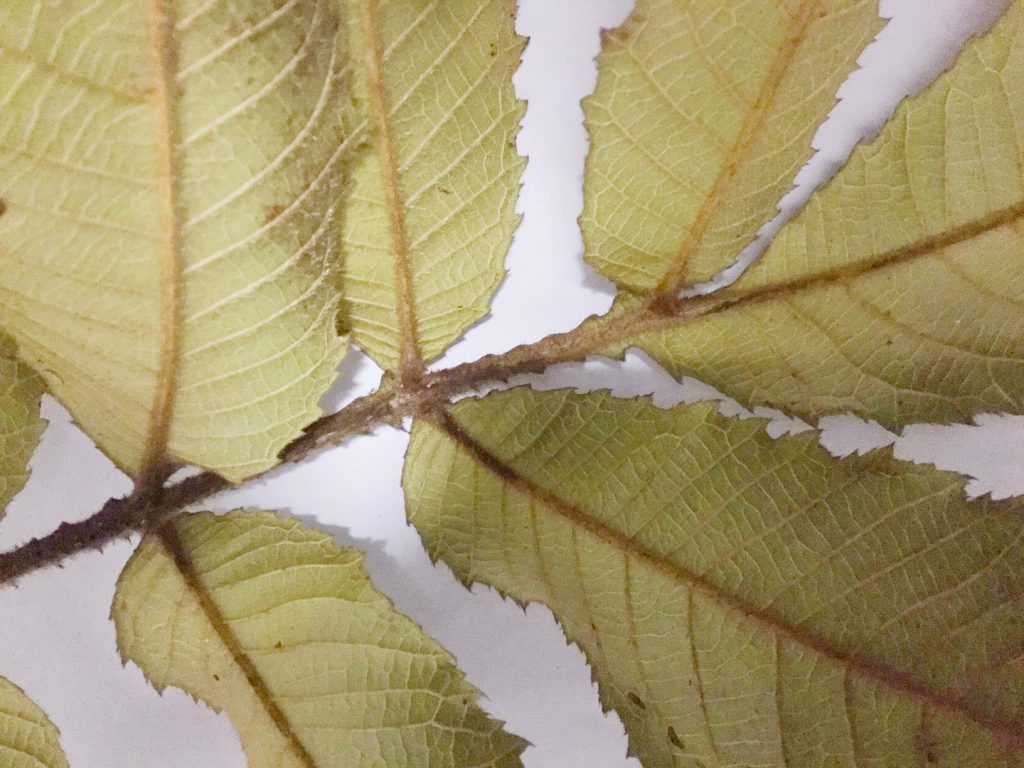
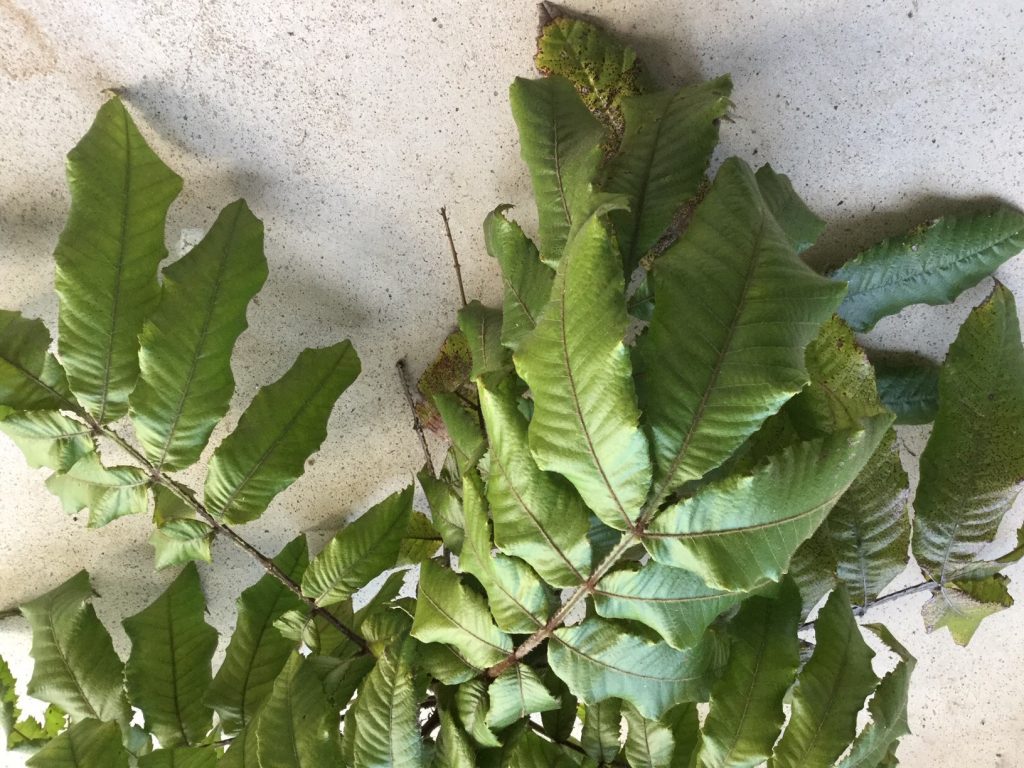
The large, hairy compound leaves of this tree are distinctive with deeply serrated edges to the leaflets and little leaf-like protrusions between the leaflets. Both sides of the leaf are covered with fine hairs.
Flowering can occur at any time. Flowers are tiny, with no petals but have four or five green or pink sepals. The grow in panicles (bunches) from leaf axils or are cauliflorous (along the trunk) or ramiflorous (on the branches).
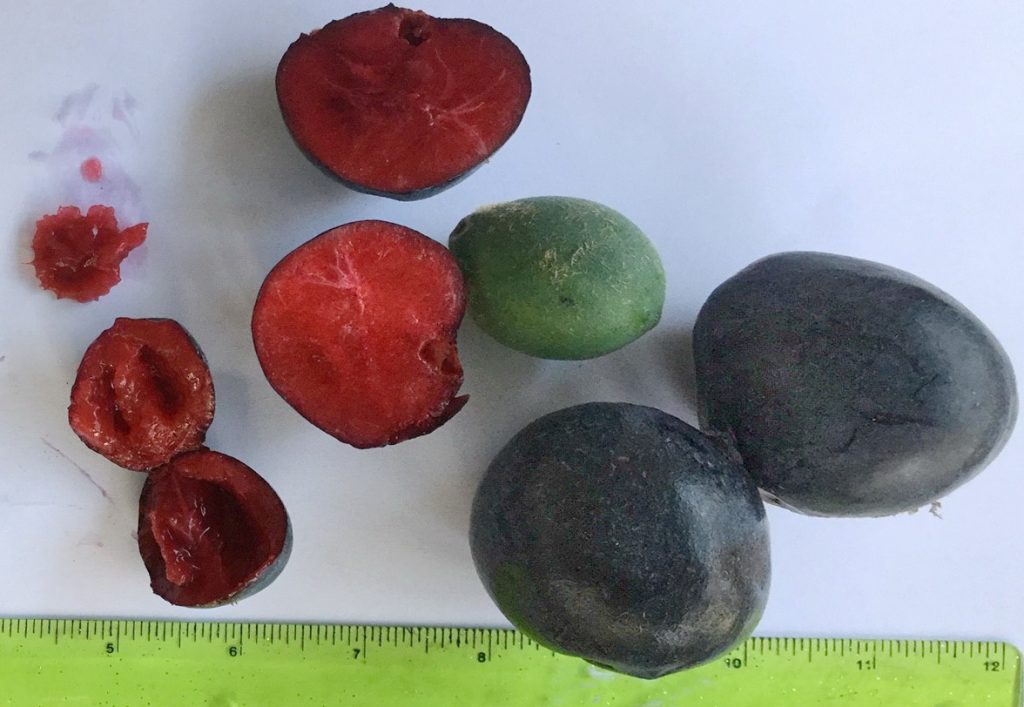
The fruit is a drupe, (fleshy), with two seeds The developing green fruit is well covered in fine hairs which can cause considerable irritation and itching. Ripe fruit is roughly oval to round, about five centimetres long, and is dark purple to almost black with a fine powdery, whitish bloom on the surface. The flesh is dark pink. Of the two seeds, usually only one is fertile. The fruit is highly acidic, too tart to eat raw, although it was eaten by Aboriginal people, but It can be made into a delicious wine, jam or jelly. Cassowaries, Sulphur-crested Cockatoos and Double-eyed Fig-parrots eat the fruit.
A good example of the Davidson’s Plum can be seen at the forest edge behind Paluma Environmental Education Centre, near the fire pit.
Sue Rimington passed away in May this year. She and her husband (Dr. Ron Rimington) owned the house opposite the old police station, which they built around 1984 using the same local builder (John Grail) who built Nick and Glenda Van Rynswood’s house. The Rimington family used to come up to relax on weekends occasionally and to enjoy the cooler weather. They loved nature and gardening. Dr. Rimington’s association with Paluma possibly began with his Army Reserves service in the 60’s -70’s exercising in Paluma area.
Sue was a gentle, quietly spoken lady who dearly loved flowers and gardening. Her interest in flowers got her involved in fund raising charity events and became a key person in the flower fantasies these fundraising events required. After Ron’s death in 1998, Sue moved to Brisbane.
The Rimingtons were members of the Paluma Progress Association and well known in the Community. Their daughter and husband (Robyne and David Maguire) owned a block of land at the end of Hussey Road opposite Browne’s property . Doc as we called him used to go out there and plant cardamom and they had some fruit trees.
One story I was told was that Doc one day went out on the block to pick a box fruit, stopping to go home for lunch. On returning he found the fruit out of the boxes onto ground. He was quite puzzled by this but did not have to wait long before out came the culprit – a cassowary.
Sue’s early life was spent in the suburb of Camberwell in Melbourne and then Camperdown Victoria where her father was in a furniture business. She went to primary and early secondary school in Camperdown before going to boarding school at Methodist Ladies College in Melbourne for her senior years.
Sue’s career was in nursing at the Royal Melbourne Hospital. Melbourne was where she met and married her husband Ron and from here they both moved to Townsville so Ron could take up a medical position at the Townsville General Hospital. Townsville is where they based their next 50 years. They had three children, Scott, Robyne and Mignonne.
Sue had many interests too numerous to mention but a couple come to mind one being how she started a home decorating business and her logo was a large snail with the wording “Is your home getting on your back”. The other one was later in life turning to painting and developed a style which seemed to be an extension of her real flair for colour.
She spent her last 20 years in Brisbane surrounded by a large and loving family whom she adored. Her grandchildren and great grandchild have many wonderful memories to pass onto their children in the future.
I gathered some of this information from family and what I knew myself of Ron and Sue as Ron was my boss at the Commonwealth Pathology Laboratory and James and I became very close friends with them over many years.
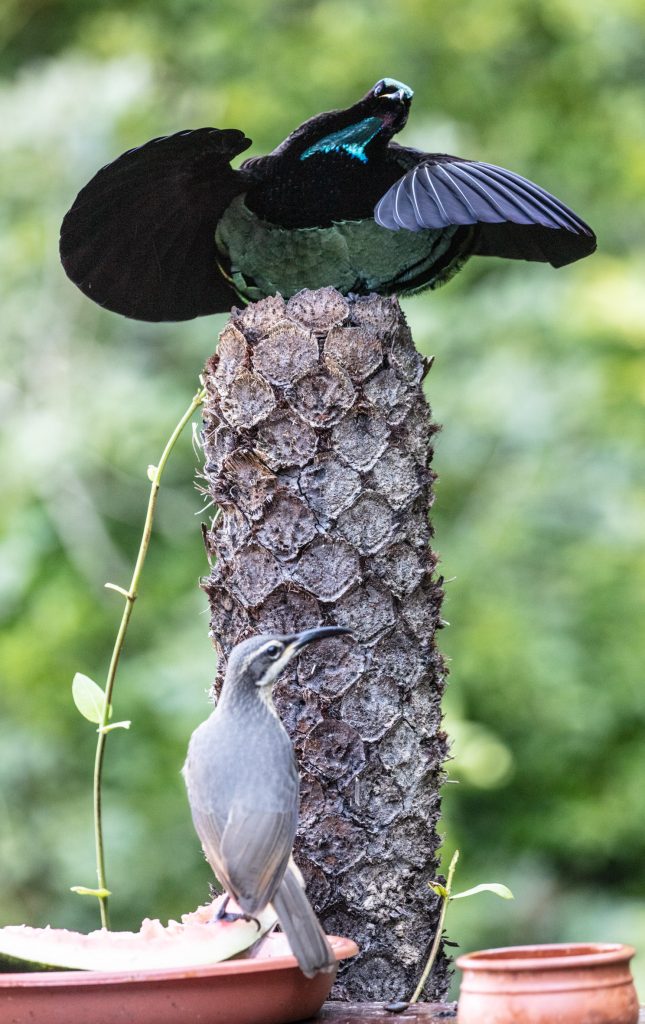
Jan and I are leaving in two weeks to head back to Northern Territory for a few months and have been expecting that this would mean we would miss the mating rituals of the Victoria’s Rifle Bird (Ptiloris victoriae)…..yet again.
But we got lucky on Friday when we came back from shopping in Ingham and barely had time to sit down before a different call from a male VRB made us check out the feed tray and tree fern post out on the verandah.
And there he was, getting right into it … a very early bird by the entries in bird books which list the VRB breeding season as September to January, obviously with male competition for female partners pretty much done and dusted before our usual return to Paluma in late October.
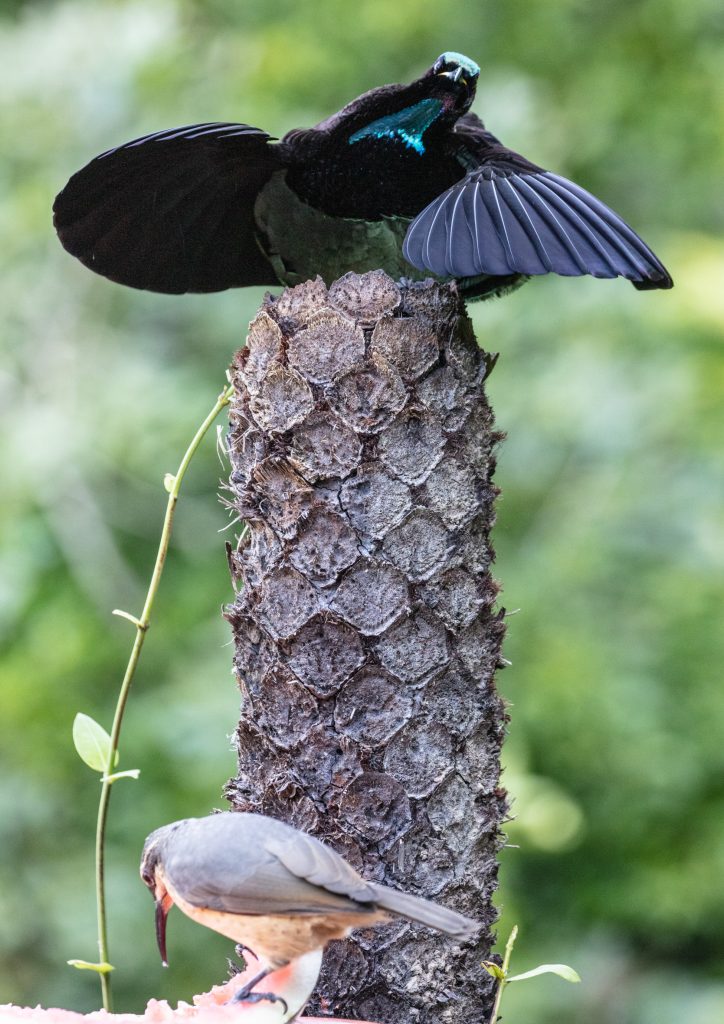
We got lucky, but Mr Riflebird wasn’t so lucky, despite a very intense performance on top of the tree fern.
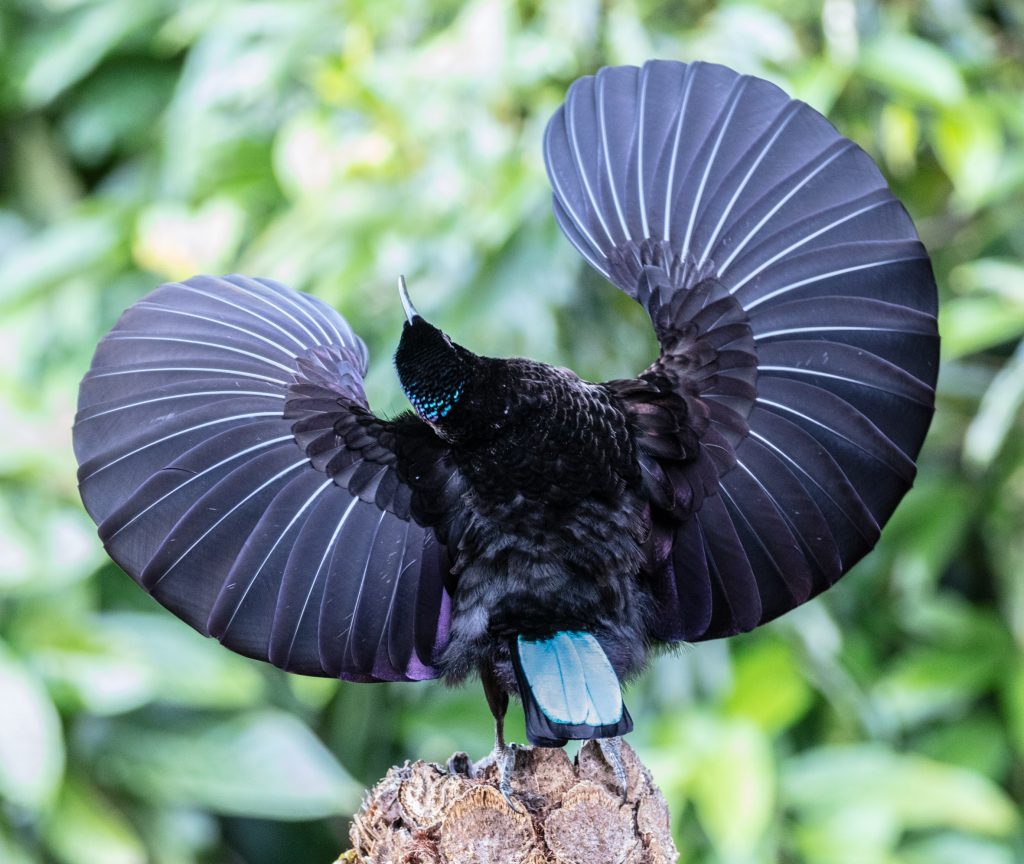
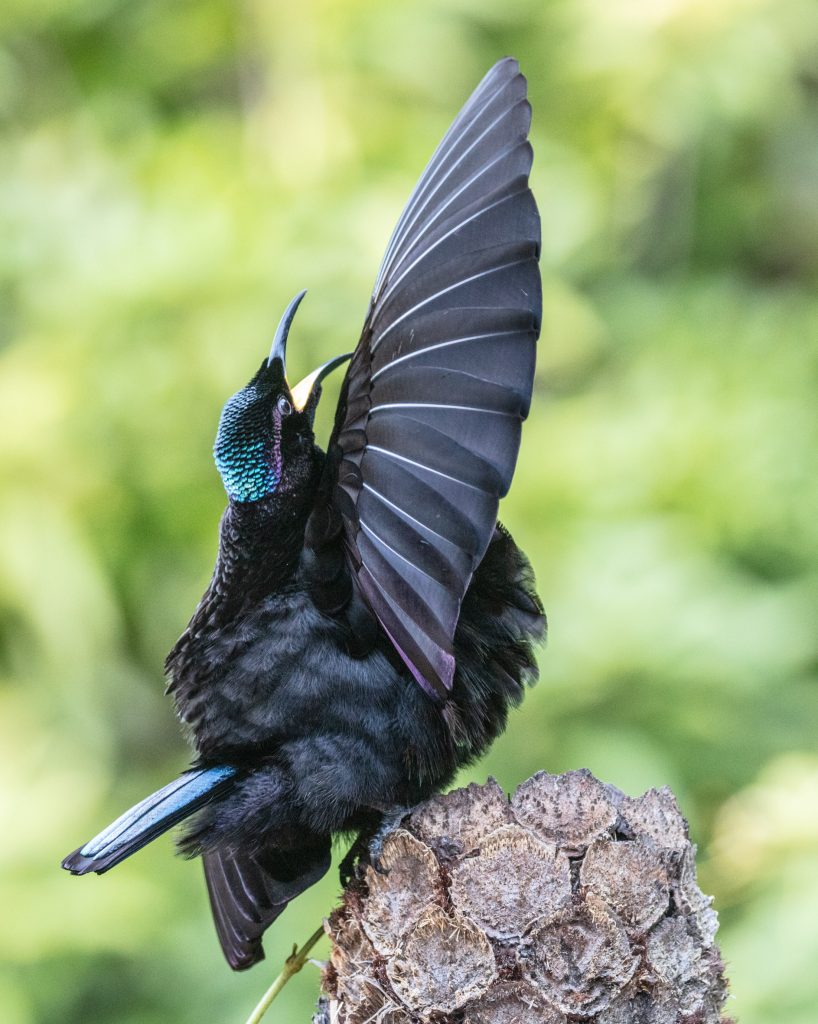
He started calling with wings upswept while facing the bushes off the verandah where VRBs, Honeyeaters, Catbirds and Satin Bowerbirds queue for the fruit buffet.
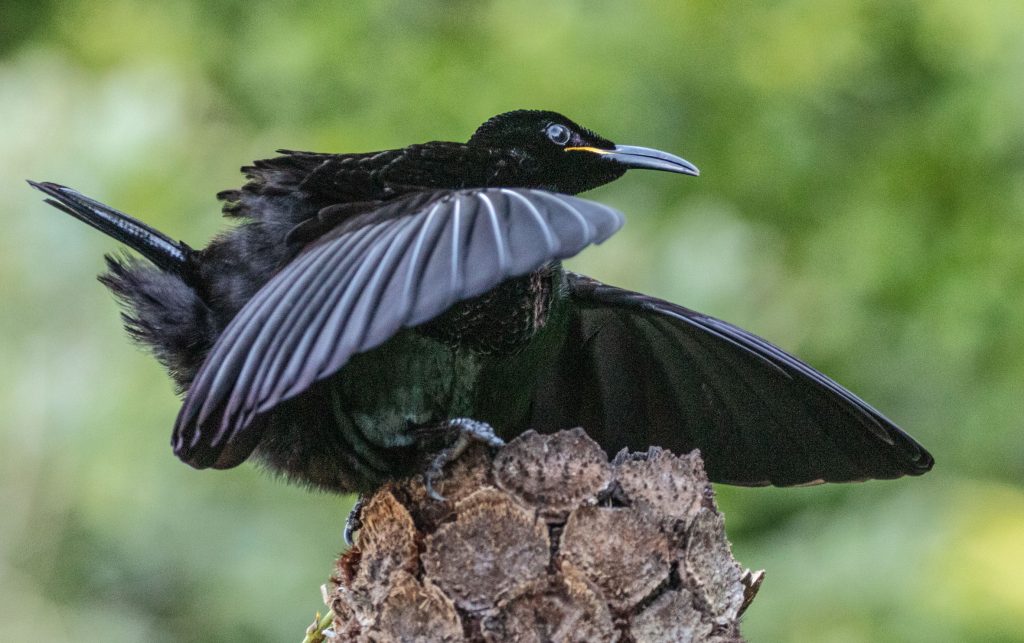
Still photos unfortunately don’t show the movements that go with each pose … with wings up, he kept in constant up and down motion by bending his legs while at the same time opening and closing his beak to get the bright yellow gape into the display.
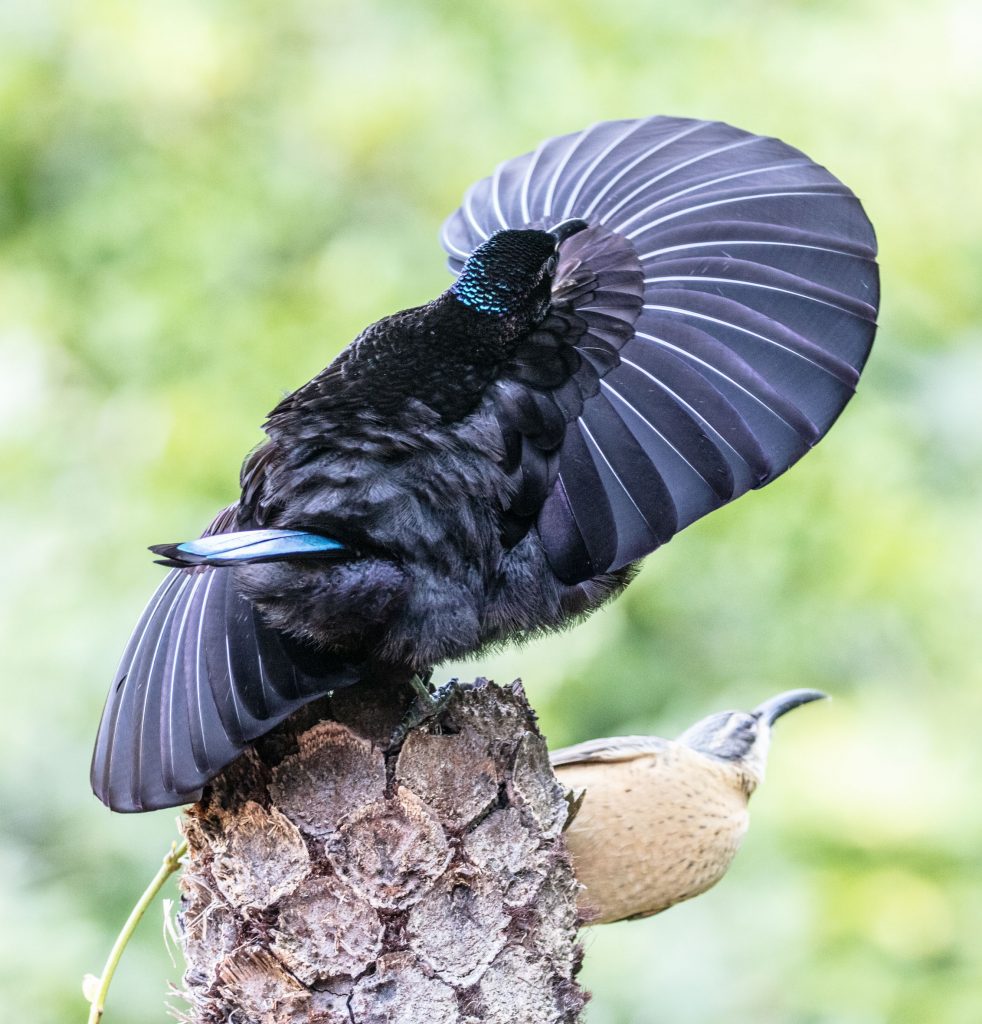
Things were looking good when a female landed on the tree fern just below him and looked up, at which point he dropped his left wing and played some peek-a-boo by hiding his head behind the right wing.
Then the day’s ration of watermelon caught her attention and she dropped to the food tray. While he kept on with his performance she looked up, looked right but eventually swiped left, preferring watermelon to his advances.
He was so intensely focused and hormonal that he paid no attention to me moving around on the verandah to get better camera angles. Light was fading and I had to crank up the ISO to 3000 to get a workable shutter speed.
This morning I went looking for more information about VRB courting and couldn’t find much…except what would seem to be the seminal document on this subject written by Harry Frith and William Cooper and published in Emu, the journal of Birds Australia, now published by CSIRO.
Great abstract online at:- https://www.tandfonline.com/doi/abs/10.1071/MU9960102, but if you want to read the whole article online it’ll cost you 50 bucks American… if you want to download that whole issue of Emu that’ll cost you $230 AUD. Universities usually have deals that get their people open access to academic publications but my university contacts couldn’t get free access via JCU or Monash. The hegemony of the ‘big boys’ in academic publishing is a very vexed issue, even for those working in the academy. For the rest of us, bad luck.
But back to the joyful experience of watching this display of unbridled avian lust. In wings-up display, we get to see mauve feathers at the base of the wings and a mauve streak running back from the eye alongside the blue spangled cap. Wow, I said!
What we didn’t get to hear was what Frith and Cooper describe as “a vigorous alternate wing clap display that all but embraces the female with rapidly alternating wing extensions and synchronous jerking of the stiffly rigid head and neck between them at a progressively rapid tempo until copulation.”
Clearly once she swiped left that wasn’t going to happen!
Here’s hoping we get to see a few more displays before we disappear towards the north west for a few months.
Talking with other villagers today the question was asked about the apparently unseasonal courting behaviour … is this just a precocious individual bird or is this another sign of the “new normal” as we see more unseasonal animal behaviour and plant flowering and fruiting?
Love to hear what unusual biological phenomena others are seeing??
Text & Photos by Peter Cooke, with Jan Cooke
Footnote: For those unfamiliar with the phrase “swiping left” Dictionary.com offers this definition: (On the online dating app Tinder) indicates that one finds someone attractive (or unattractive) by moving one’s finger to the right (or left) across an image of them on a touch screen. “I swiped right, but sadly for me, she swiped left”.
Further Information:-
Courtship Display and Mating of Victoria’s Riflebird (Ptiloris victoriae) with Notes on the Courtship Displays of Congeneric Species
“The courtship display and mating of Victoria’s Riflebird (Ptiloris victoriae) are described from numerous hours of direct observations and 117 minutes of videotape. Courtship display is typically performed on the apex of a vertical dead tree trunk stump and consists of three discrete components: Calling with the associated exposure of a bright mouth, a circular wings and gape display and a vigorous alternate wing clap display that all but embraces the female with rapidly alternating wing extensions and synchronous jerking of the stiffly rigid head and neck between them at a progressively rapid tempo until copulation. Subjective observations indicate that in immature, female- and sub-adult male-plumaged males the advertisement call is inferior in power and the courtship displays lacking in synchronisation and coordination of postures and movements. Victoria’s Riflebird courtship is compared with that of congeneric riflebirds and with other sexually dimorphic polygynous birds of paradise and similarities discussed. Contrary to previous views, the courtship display of Victoria’s Riflebird involves a progressive series of specific postures and movements increasing in tempo and leading to copulation. Some of its courtship behaviour is similar to that of other genera in the Paradisaeinae”.