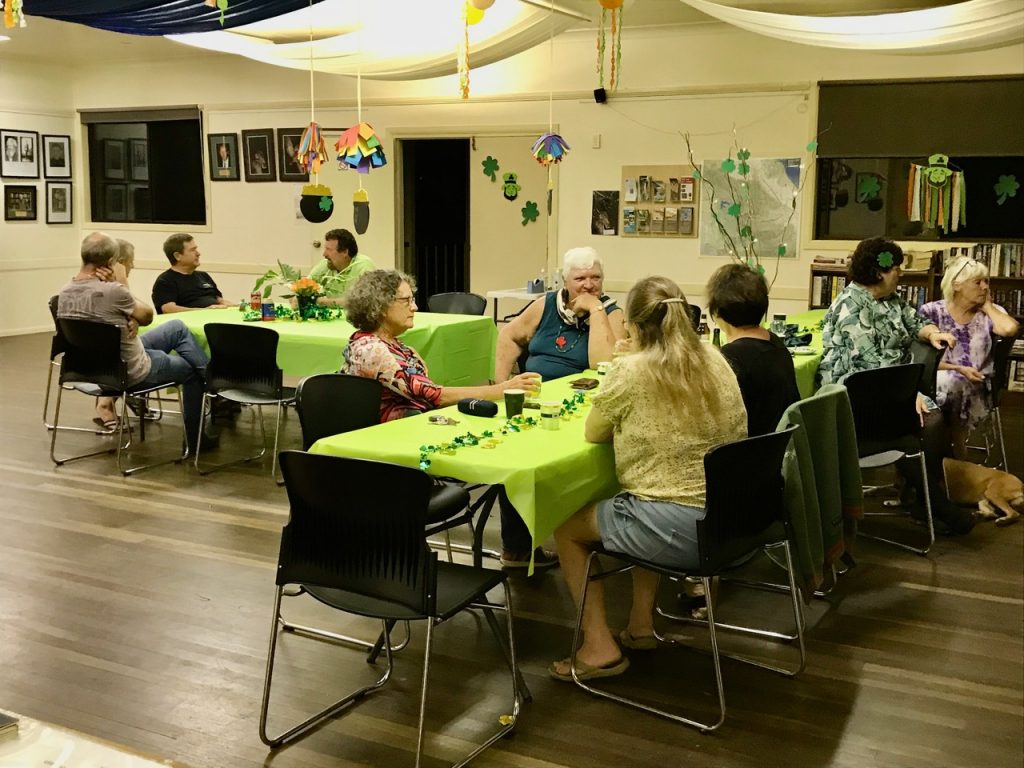
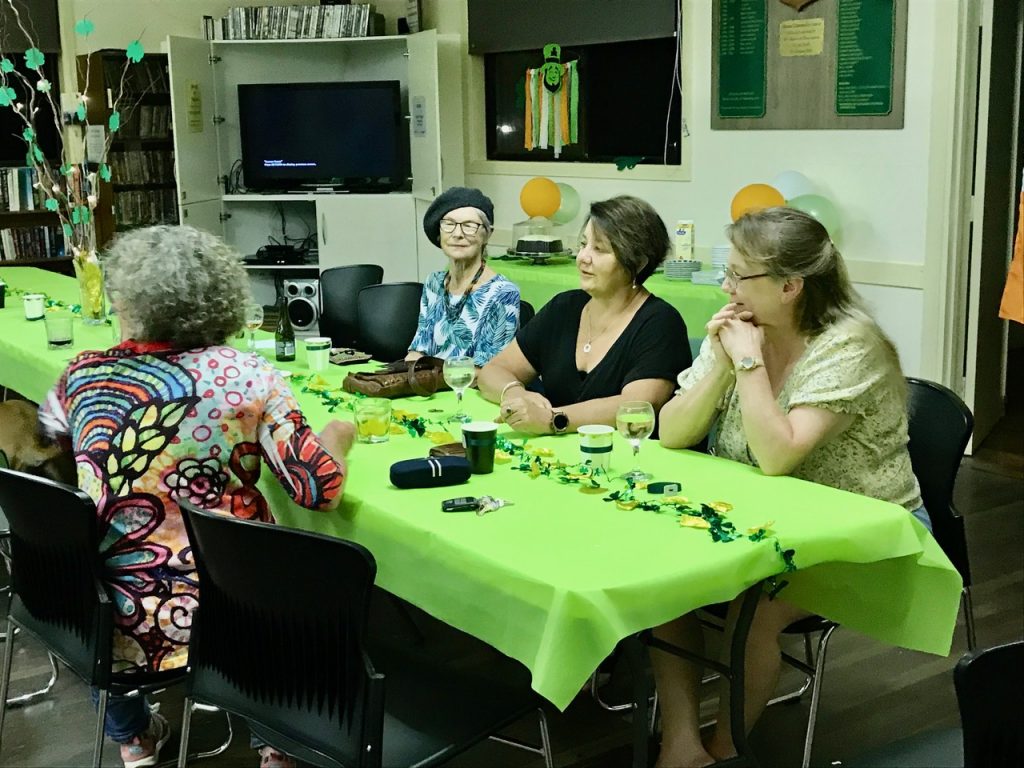
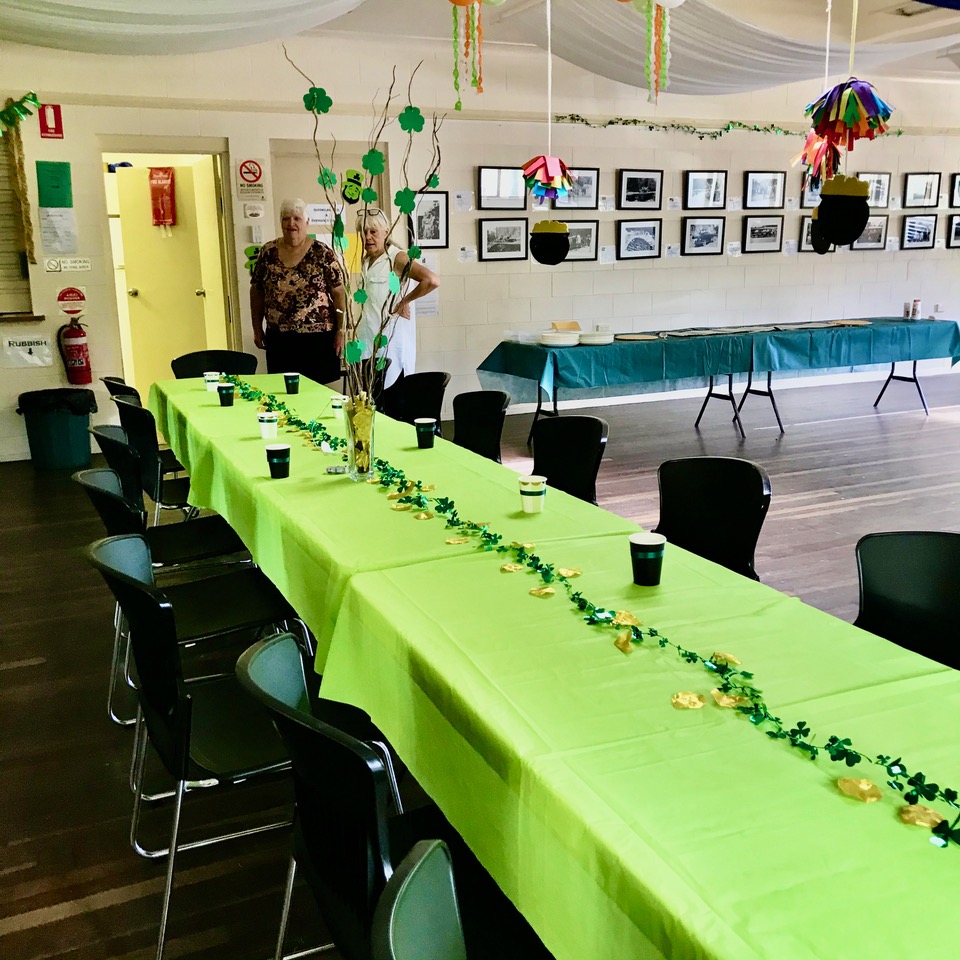
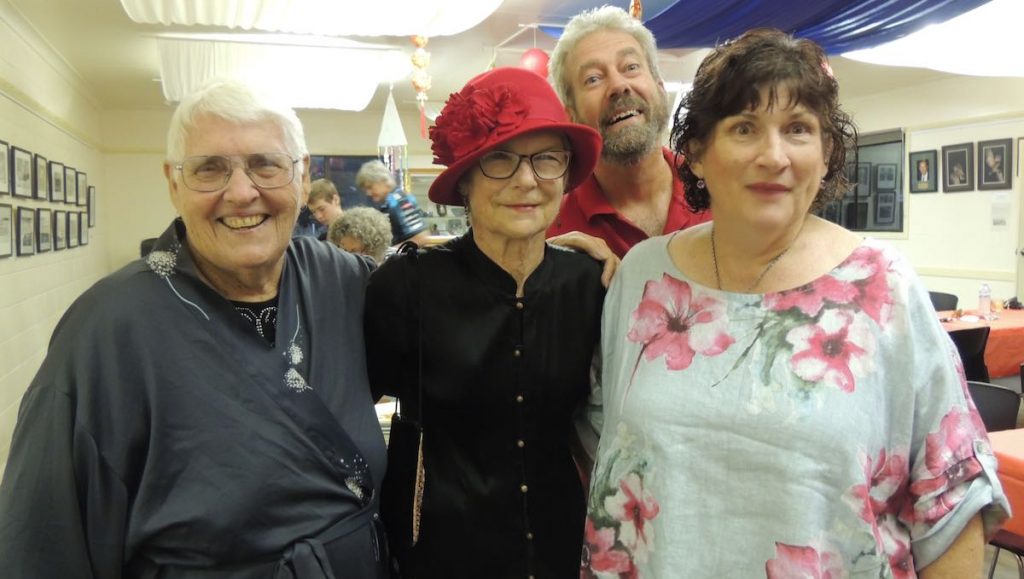
A small but enthusiastic crowd of revellers met at the Community Hall on Saturday night (20 March) to belatedly mark the occasion of St. Patricks Day which falls on 17 March. Crowd numbers were down at this Social with several villagers away working or attending the Cowboys home game in Townsville.
Despite the small crowd of only 13 people, Les was kept busy at the bar which did very well with takings. With the mix of local villagers, was a couple who were staying in the village who dropped in for some drinks and helped boost the bar takings and the camaraderie. The Guinness was a hit, given the Irish theme of the night.
Lynn ran the usual Irish quiz which was won by Colwyn who took home a bottle of pink champagne in reward for her Irish knowledge. The quiz illustrated the distinct lack of knowledge of all things Irish at Paluma Village! The Lucky Shamrock Competition didn’t afford any fortunes amongst the“scratchies”. Obviously the Leprechaun had given away all his good fortune.
Lynda and Lynn decorated the hall in a sea of green and shamrocks. As always, the gourmet delights meant everyone had plenty to eat, this time with a distinctive Irish theme.
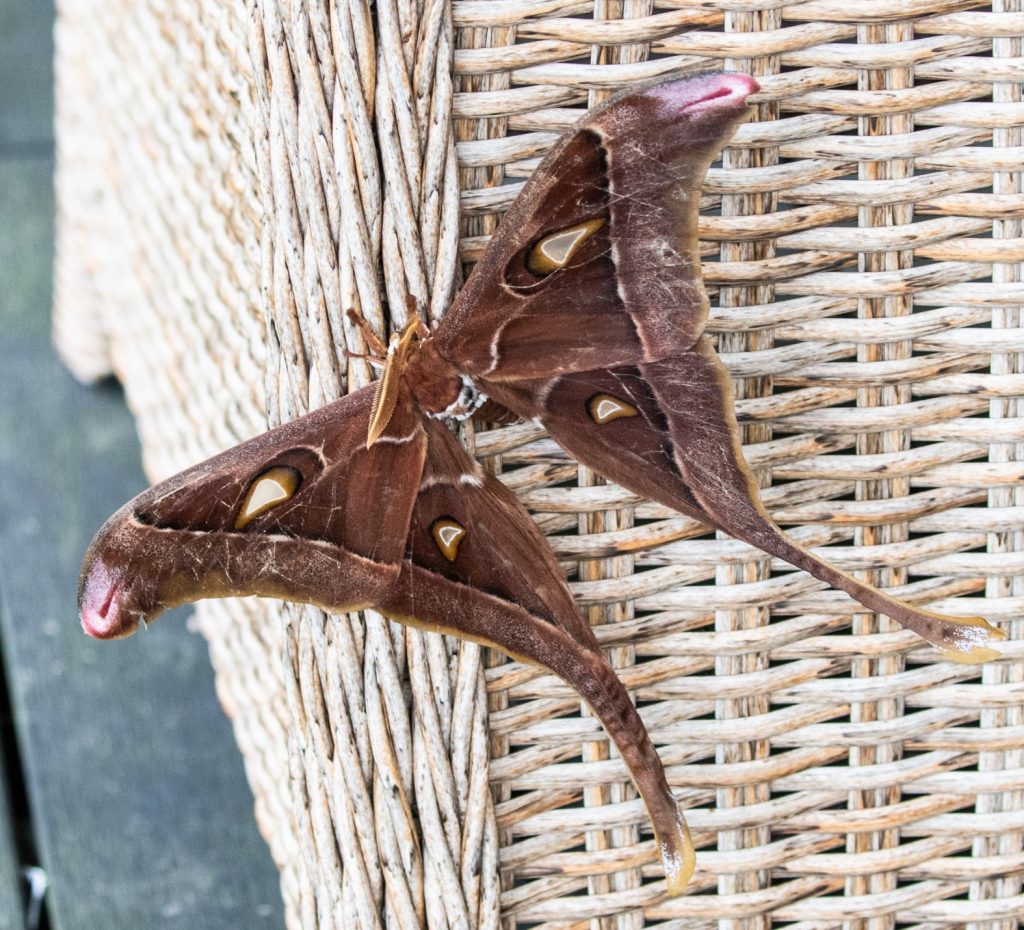
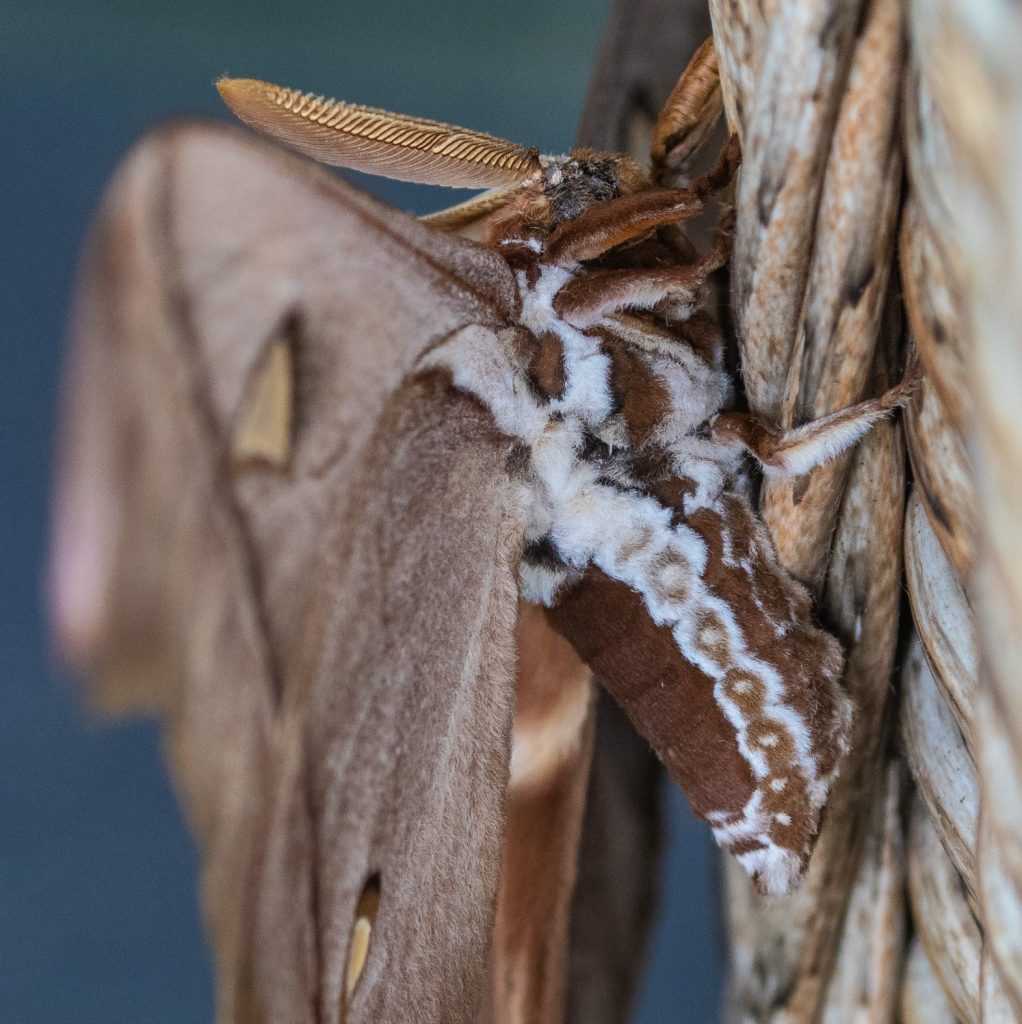
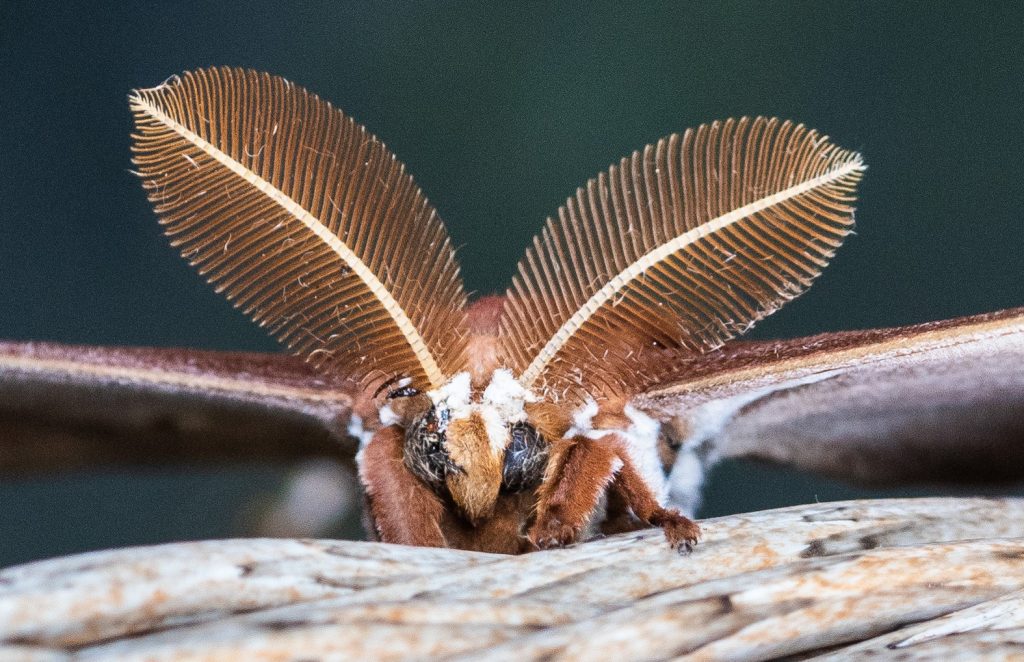
Came out on the verandah in downtown Paluma this morning to find a giant of the jungle sitting quietly on the deck furniture.
Male (we think) Hercules moth (Coscinocera hercules) 240mm wingtip to wingtip, 180mm overall length. … that’s very big for a male as Wildlife of Tropical Northern Queensland lists maximum size for the larger female as 225mm.
Wildlife of Tropical Northern Queensland and Guide to Australian Moths say range is Cape York south to Ingham — so the southerly extent of the range is a bit understated in both books.
The females have the largest wing area of any moth in the world.
The leaves of the medium sized rainforest tree Bleeding Heart (Homalanthus novoguineensis) is said to be the favorite food of the Hercules caterpillars.
We have a Bleeding Heart which is trying to climb onto our deck.
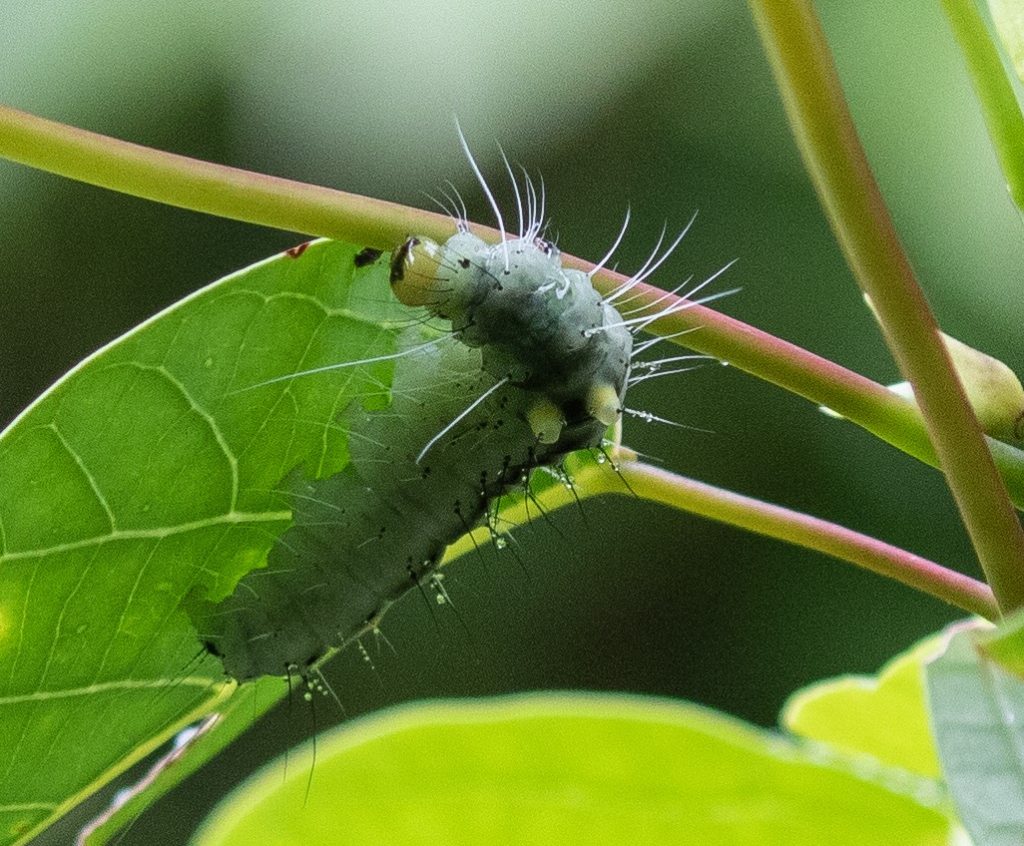
The leaves are being well munched and we did find a caterpillar there after we spotted the moth. However, it didn’t look like the Hercules caterpillars from the books.
Jamie Oliver has come across this caterpillar before and was able to provide an ID — Iscadiainexacta (Walker). Iscadia and Hercules share a preference for Bleeding Heart.
According to the Butterfly House websiteIscadia has a great party trick — “The caterpillar pupates in a papery cocoon covered in bits of chewed leaf. The pupa is famous for being able to produce sounds when disturbed, by rubbing projections on the abdominal skin against the hind surface of the cocoon.”
Hercules also has a surprising twist of biology — the adult moths don’t eat, they survive on food stores from when they were caterpillars, says the Australian Butterfly Sanctuary website. The adults live for only 10-14 days which they devote to finding a mate. The mating game is initiated by the female which emits a pheromone that can attract male suitors from over 2km away.
The caterpillars grow up to 12cm in length and are dotted with yellow spikes. Such a huge caterpillar makes sense when we consider how large the moth itself is.
The largest ever Hercules Moth had a wingspan of 36cm, says the Australian Butterfly Sanctuary website.
The Annual General Meeting of the Paluma Rural fire Brigade will be held on Saturday, 20th March 2021 at the Community Hall. All members are encouraged to attend, and anyone interested in joining or serving on the Committee are also warmly invited. If you have any questions about the PRFB or what’s involved in joining as a Volunteer, please contact Len Cook.
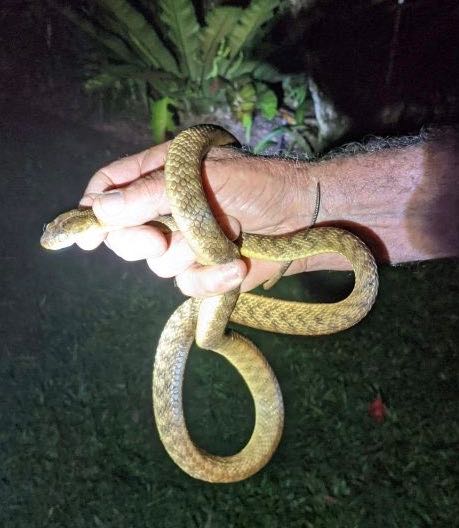
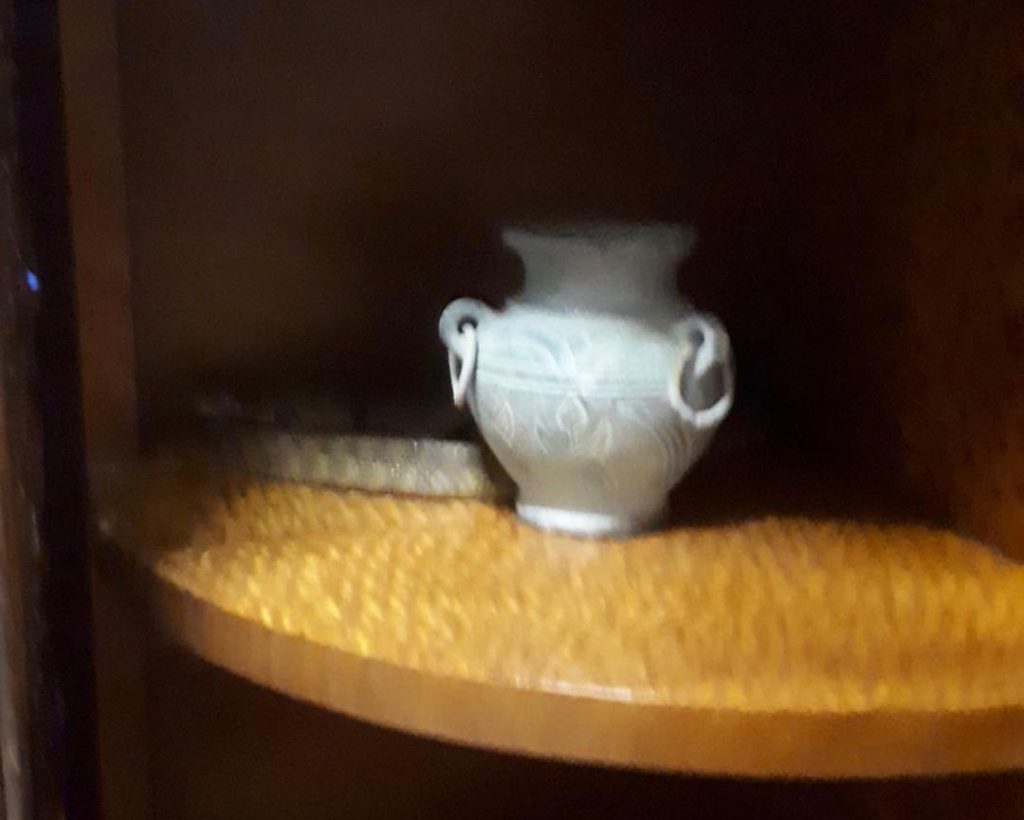
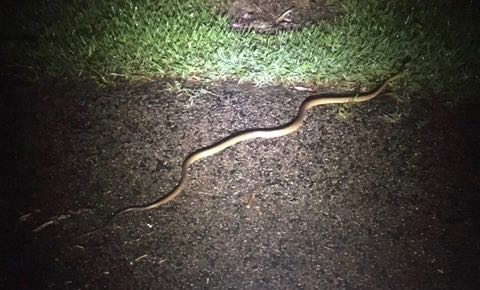
Just lately a very persistent prowler has been making a nuisance of itself in homes and gardens at the eastern end of Paluma Village. The perpetrator is a rather lengthy Night Tiger Snake, otherwise known as a Brown Tree Snake or Doll’s-Eye Snake (Boiga irregularis).
It all started with the onset of the warm weather and the wet season. Lynda at the Manali House started noticing that the Night Tiger was making regular visits to her front verandah. It wasn’t long before Lynda noticed that her closely guarded nest of Shrike-Thrush chicks had been raided. The chicks disappeared overnight and Lynda found the slithery culprit curled up in a nearby shrub with some distinctive lumps in its belly. Put that down to nature I suppose, but then the Night Tiger started to take some liberties around the place……
Several times Lynda was woken to things that go bump in the night, only to find the Night Tiger in her back room, actively rifling through the contents of boxes and other things in the search for food – geckoes, cockroaches and frogs.
The guilty reptile being relocated to the rainforest.
The next time Lynda encountered the snake it was in her lounge room, having a snooze under her favourite recliner. It was promptly relocated to the garden. Just last week, the Night Tiger was back in the lounge room, this time comfortably resting on the bookshelf. A late night call was made to the neighbours for some assistance in relocating the Night Tiger to the outdoors again. It was relocated to the forest at the eastern end of the village, but we are convinced it will be back, when it wants an easy feed of geckoes and tasty frogs or birds.
A spot of reading? The Night Tiger Snake resting on the bookshelf in Lynda’s lounge room.
My own encounter with the Night Tiger was one evening upon returning from an outing. I walked up my drive-way only to find the ‘stalker’ outside my garage door. With some skilful wrangling via my gumboot, my umbrella and a cake tray, the snake was re-diverted back up the driveway. It took off, heading again for Lynda’s place. No doubt it was missing the cosy lounge-room and its recliner!
Re-diversion of the Night Tiger Snake away from my garage.
The Night Tiger or Brown Tree Snake is a nocturnal snake (as we have obviously discovered!). They are arboreal and can often be found in buildings and in tree hollows. They feed mainly on birds, eggs, frogs, geckoes, small mammals and other reptiles. These snakes have a large head with distinctive and protruding large eyes with vertical pupils (I am not getting close enough to look into its eyes!). The head is distinct from the narrow neck. They are usually brown in colour with darker cross bands on the back and sides (hence the common name of ‘Night Tiger’). Specimens in northern Australia tend to have bold reddish bands with a creamy to orange belly. This snake can grow up to 2m in length. They are not usually considered dangerous, but they are venomous.
Text by Michele Bird with Photos by Paul Venn, Lynda Radbone and Michele Bird. Noting that the quality of our photos is not great, given the night time conditions and in my own case, the shaking hands and rapidly beating heart!
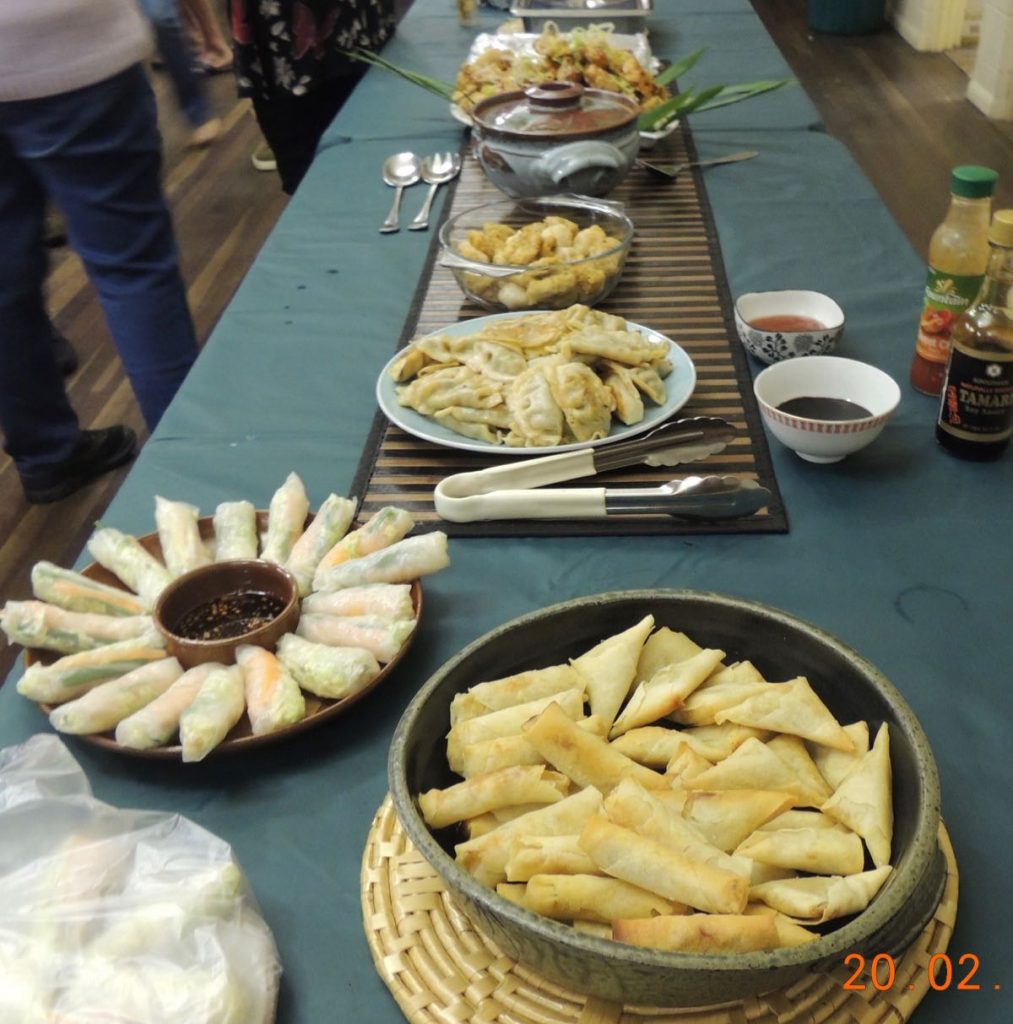
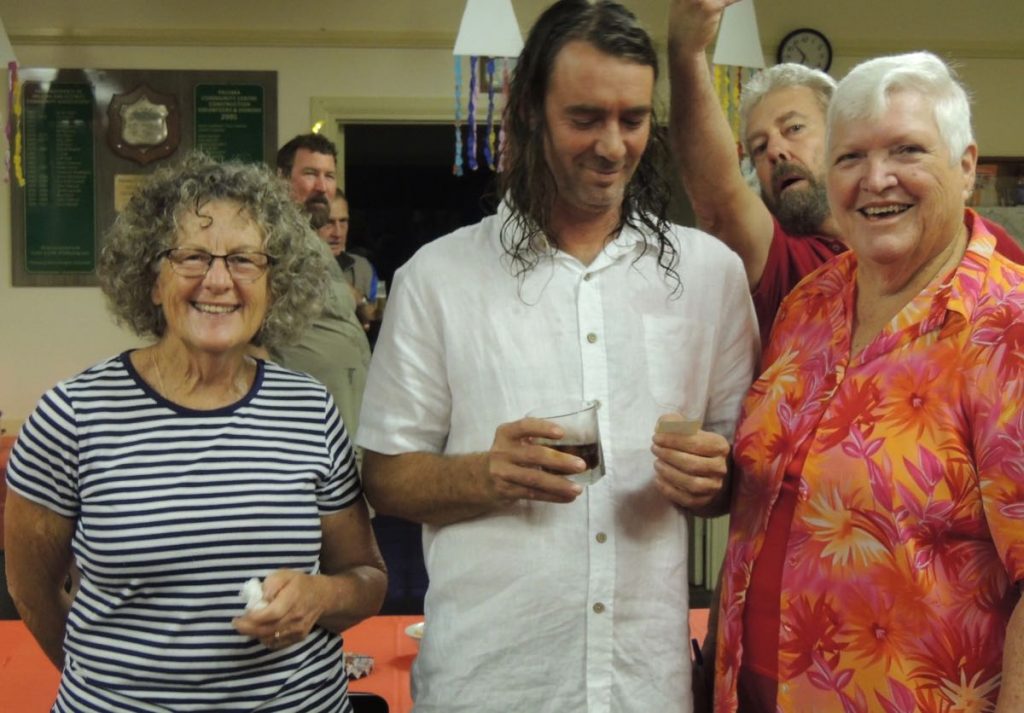
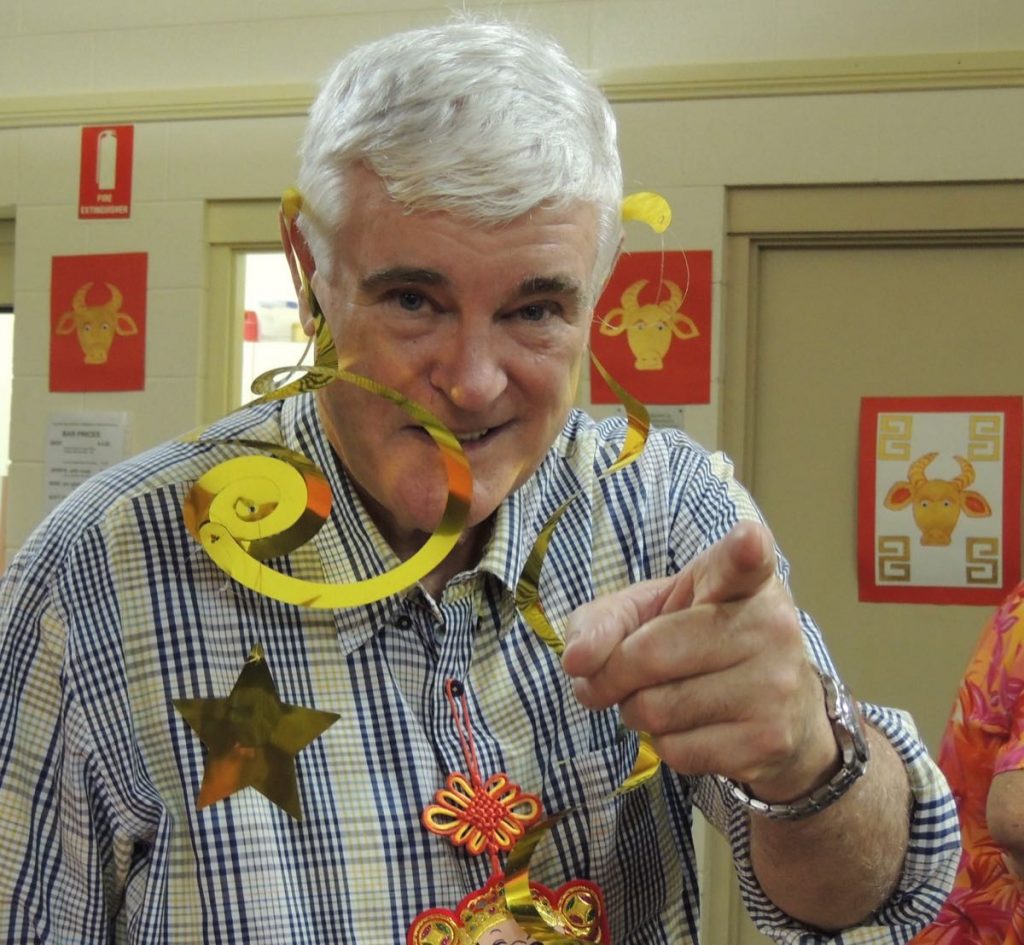
The incessant Paluma rain stopped on Saturday evening (20/02/21) just in time for the Chinese Lunar New Year celebrations at the Community Hall. Twenty-something very enthusiast residents gathered under red lanterns at the Hall to mark the occasion.
While it’s well known that Paluma has some great cooks, they really excelled on Saturday night. The Chinese-inspired banquet was good enough to rival any restaurant – even without the fried rice! Funnily enough, everyone assumed that everyone else would cook rice, when in fact no-one did (with the exception of Colwyn’s coconut milk and peach dessert). One thing was certain, everybody had more than enough to eat and plenty to share.
Lynn hosted her newly invented game called “The Chinese Tree of Good Fortune” whereby some residents got to try their luck with a Lunar New Year Scratchie. Unfortunately no major winnings were ‘scratched’ on the night. Chinese horoscopes were read in this the Year of the Ox. Fortune cookies were shared, with some residents still contemplating the profound messages contained in their cookie. My own fortune cookie read……”Judge not the horse by its saddle”. Mmmmmmm…..I’m still thinking on that one! A planned game of ‘Chinese Whispers’ was abandoned because the lively noise reverberating from the Hall meant that anybody ‘whispering’ would have gone unheard.
The Bar did a lively trade as always with some profits in the kitty for the PDCA. Thanks to all those who attended and for embracing the theme of the night.
Our next Social will be held on Saturday 20 March for St. Patrick’s Night celebrations. Time to put the Chinese clobber away and start thinking Irish GREEN!
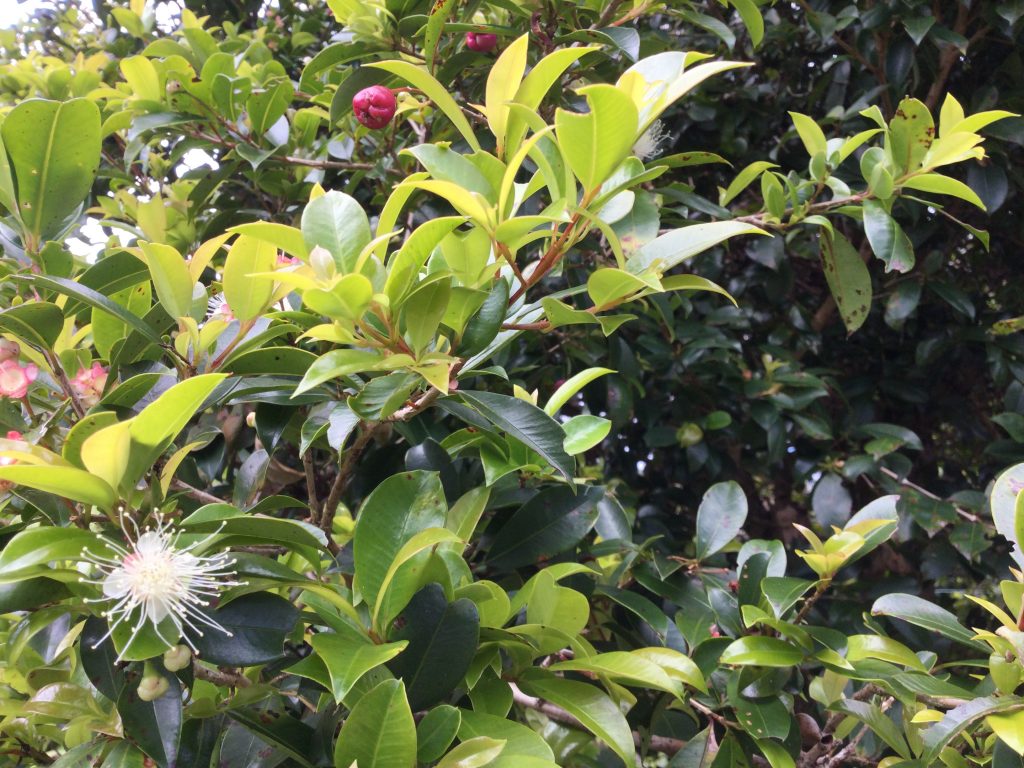
This attractive rainforest tree, a member of the Myrtaceae family, has many common names, including, brush cherry, scrub cherry, creek lilly-pilly, creek satin-ash and watergum. It grows mostly along water courses in rainforests and gallery forests at altitudes up to 1300 metres.
Worldwide, there are more than 1000 species of Syzygium ranging across PNG, the Pacific islands, Malaysia, SE Asia, India, Africa and Australia. Australia has 57 species, with 47 of them in tropical Queensland. Some species, easily recognisable are Paperbark satin-ash (Syzygiumpaparaceum with its purple fruit; Powder-puff lilly-pilly, (Syzygium wilsonii), with small purple fruit and a sub-species noted for its large magenta powder-puff flowers and lush creamy white fruit.
It is easy to understand how various Syzygium species, along with many other native Australian flowers, inspired May Gibbs to create her delightful bush babies. Who could forget the movie magnate’s daughter, Lilly Pilly with her skirt, beret and muff made of lilly-pilly berries.
Although Syzygium australe can grow to 35 metres with a trunk diameter of 60 cm, it is a popular plant in ornamental gardens as it can be shaped and pruned into hedges. It is a fast-growing tree and can grow 2 metres in a year.
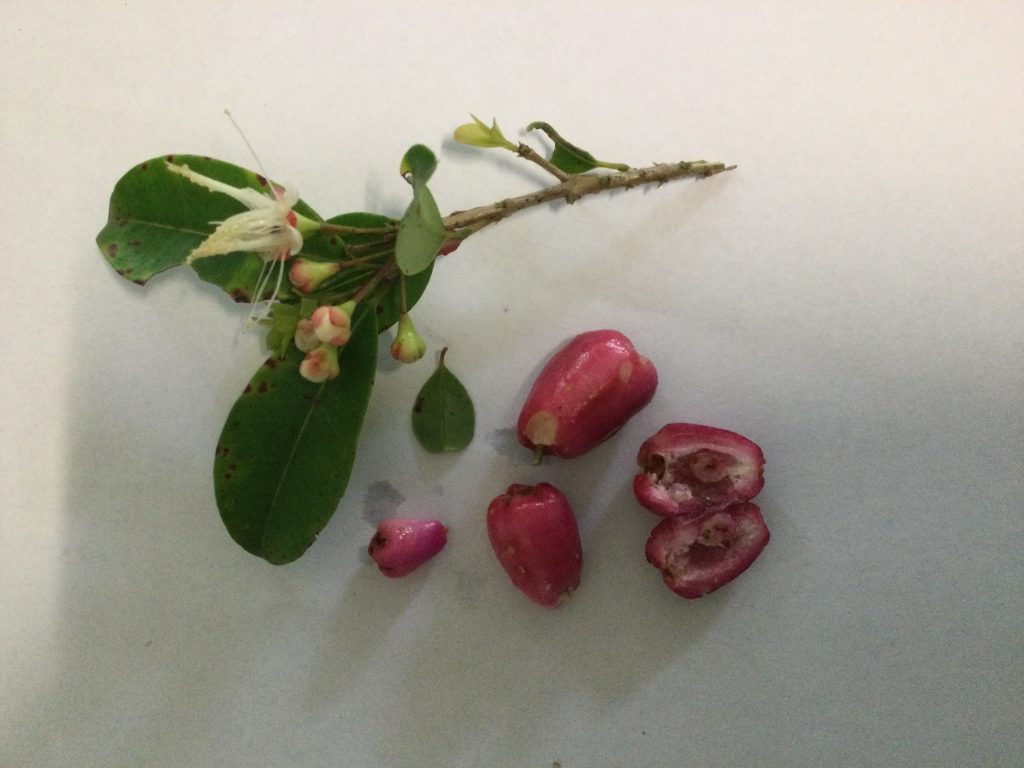
The ovate leaves are simple, opposite and approximately 30×100 x 10-40 mm. Young leaves are bronze, turning to a deep, glossy green as they mature. They form dense foliage on this shapely tree.
photo by J. Oliver
Flowering can occur at any time of year. Flowers are clustered in axillary or terminal racemes. They are tiny, with white petals and numerous white stamens which give the flowers the appearance of delicate powder-puffs. Flowering can be sparse, hiding amongst the leaves, or abundant, giving a dense cover of white. Flowers are followed by a profusion of red fruit – berries. These are 14-23 mm long with one or two seeds surrounded by crisp flesh similar to apple in texture. The fruit is edible, although can be tart. It makes excellent jam and can be used as a base and flavouring for jellies, cakes and wine.
Some species of Syzygium were previously classified in the genus Acmena and others in the genus Eugenia. The species known formerly as Eugenia Australis is now regarded as two separate species: Syzygium australe and Syzygium paniculatum.
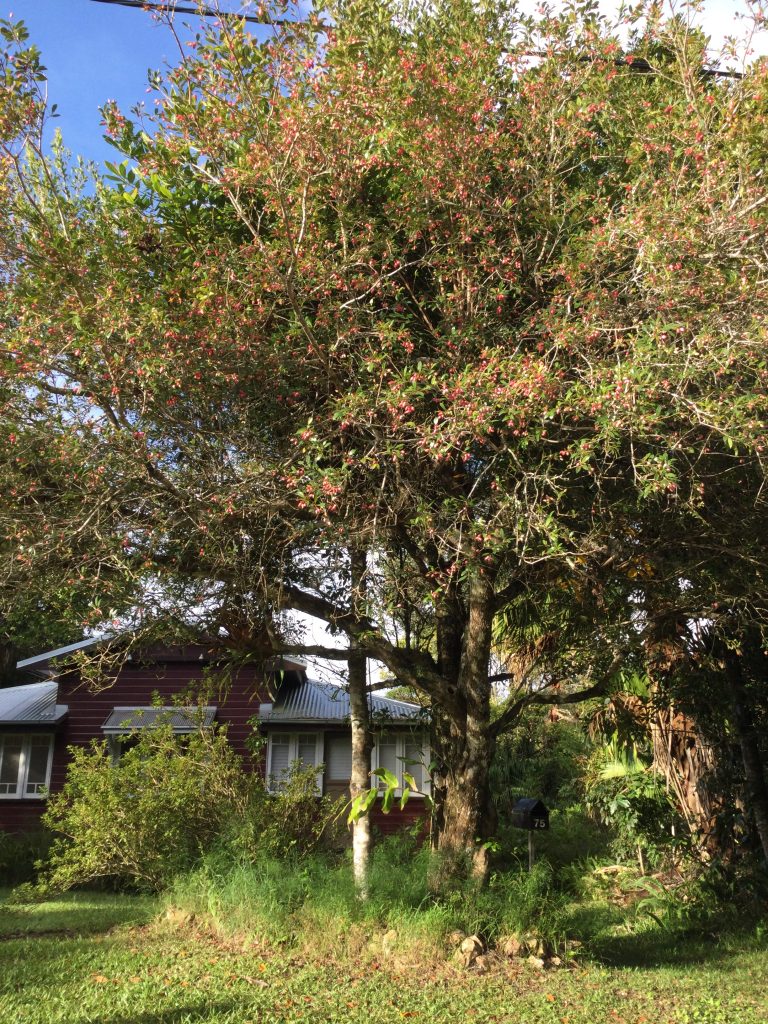
There are many examples of Syzygium australe in Paluma. A very old tree which usually bears fruit in profusion is outside No 75 Mount Spec Road, another, is outside the High Ropes course. Two more may be seen outside No 17 Mount Spec Road.
Text and photos (unless indicated) by Colwyn Campbell