Did anyone else feel the significant earthquake at Paluma today?
At 1 pm today (Sunday 23 August) my entire house shook for some 6 seconds. The windows and doors rattled quite violently and the cups on the kitchen sink also rattled and moved from their original position. There was a very brief hiatus and then another shorter rumble. The dog woke from his sleeping place on the floor and with the second rumble took off in fright to run outside. I have felt earthquakes and tremors before, but today’s was a significant shake-up.
After a few minutes I did a Google search to find that a 4.9 magnitude earthquake had been recorded in North Queensland some 197 km from Townsville towards Charters Towers.
Did others feel the quake too? Any damage at your place?
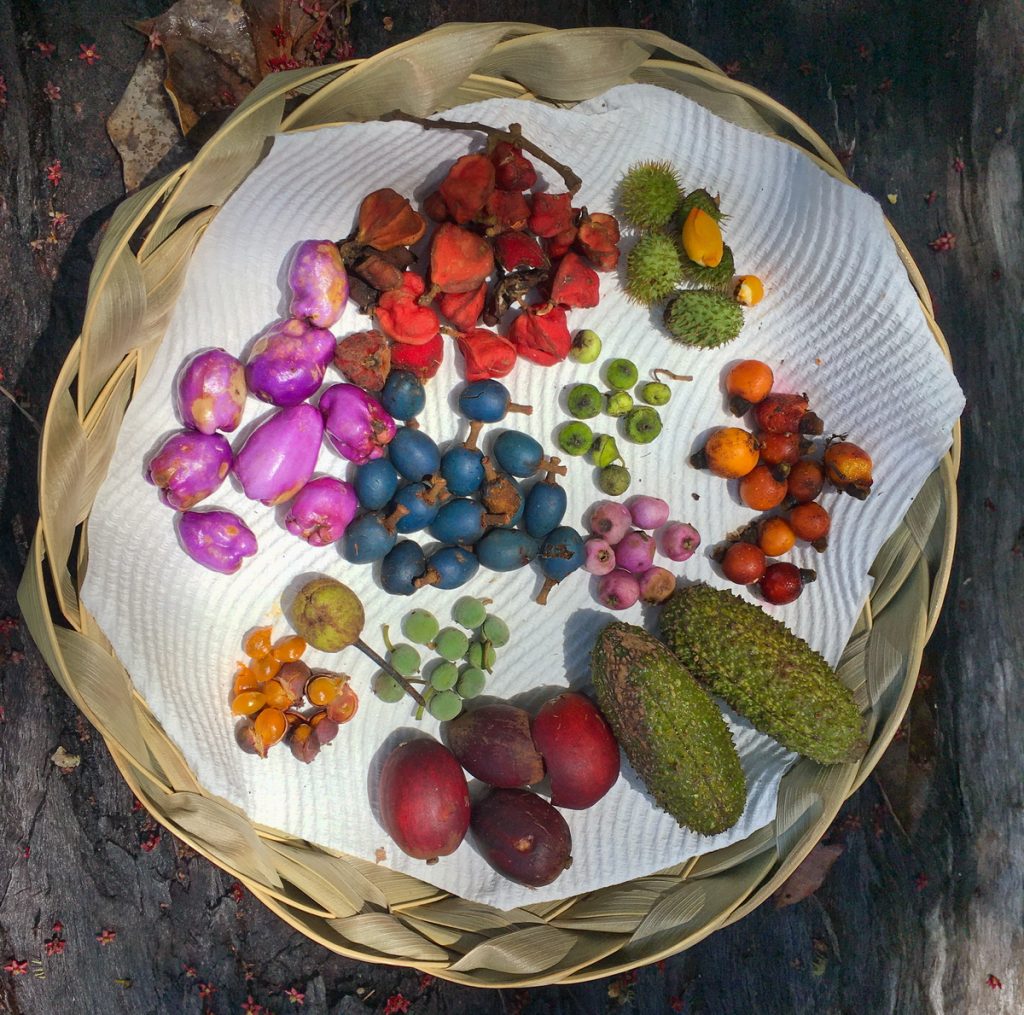
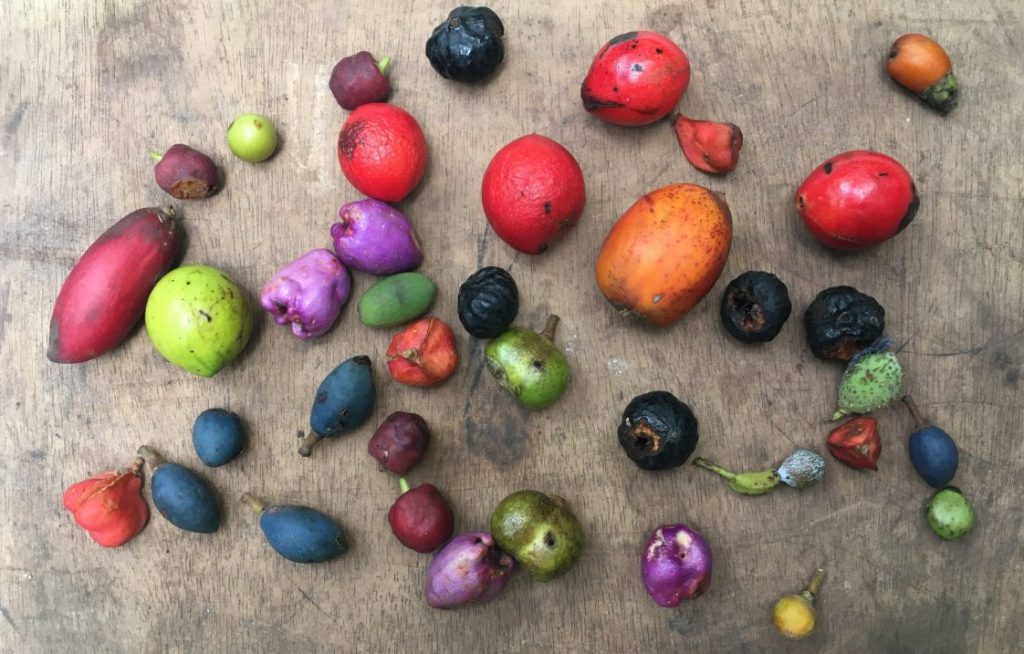
I am sure all of us have had a good feed of tropical fruit over the Christmas-New Year period but I doubt that this included any of the fruit which is currently scattered along our local walking tracks. This food is vitally important to local birds and mammals as well as insects, and some of it is edible and would have been highly valued by traditional owners of the forests. During two walks over the holidays (one by my daughter Carla and her partner Michael out behind the dam just after Christmas, and the other by me along the H-track this Sunday past) it was possible to accumulate a pretty diverse and colourful assortment of fruit. I thought I would share the photos since the colours and shapes are are visually stunning.
H-Track, January 5th, 2019 (also from Lennox Cr)DCK Shelter to Diorite Falls (behind Paluma Dam), December 27, 2019
Since retiring I have been sporadically collecting fruit during my walks and looking them up in the rainforest fruit “Bible”1. This has enabled me to make a guess at the names of around a dozen of what I reckon is 20 different species between the two platters displayed here. I know that some of these are edible, but others may not be so please do not experiment with any fruit you find in the forest unless you are absolutely sure of your identification and your knowledge of edibility.
Here is the list of trees whose fruit I have tentatively identified in the photos.
Paperbark Satinash (Syzygium paparaceum)
Silver Ash (Flindersia bourjotiana)
Grey Carrabeen (Sloanea mcbrydei)
Small leaved Fig (Ficus obliqua) a strangler fig
Silky Tamarind (Guioa lasionerua)
Hickory boxwood (Planchonella euphlebia)
Synima (Synima cordierorum)
Bleeding Heart (Homalanthus novo-guineensis)
Powderpuff Lilli Pilly (Syzygium wilsonii)
Quandong (Elaeocarpus sp – foveolatus?)
Black Pine (Prumnopitys amara)
Jitta (Halfordia kendack)
Cinnamon Laurel (Cryptocarpa densiflora)
If anyone has any other names to suggest please leave a comment!
Text and photos by Jamie Oliver
1Cooper & Cooper (2004). Fruits of the Australian Tropical Rainforest. Nokomis Editions, Melbourne
It is with heavy hearts and great sadness that we post the news that one of Paluma’s most beloved and admired residents, Roy Mackay has passed away.
Roy passed peacefully at 9.15 PM on Tuesday 12 February at the Regis Aged Care facility in the company of his long-time companion Colwyn Campbell and his dear friend Beth Snewin. Roy was 90 years of age.
Our sincere condolences to Roy’s family and to Colwyn at this sad time.
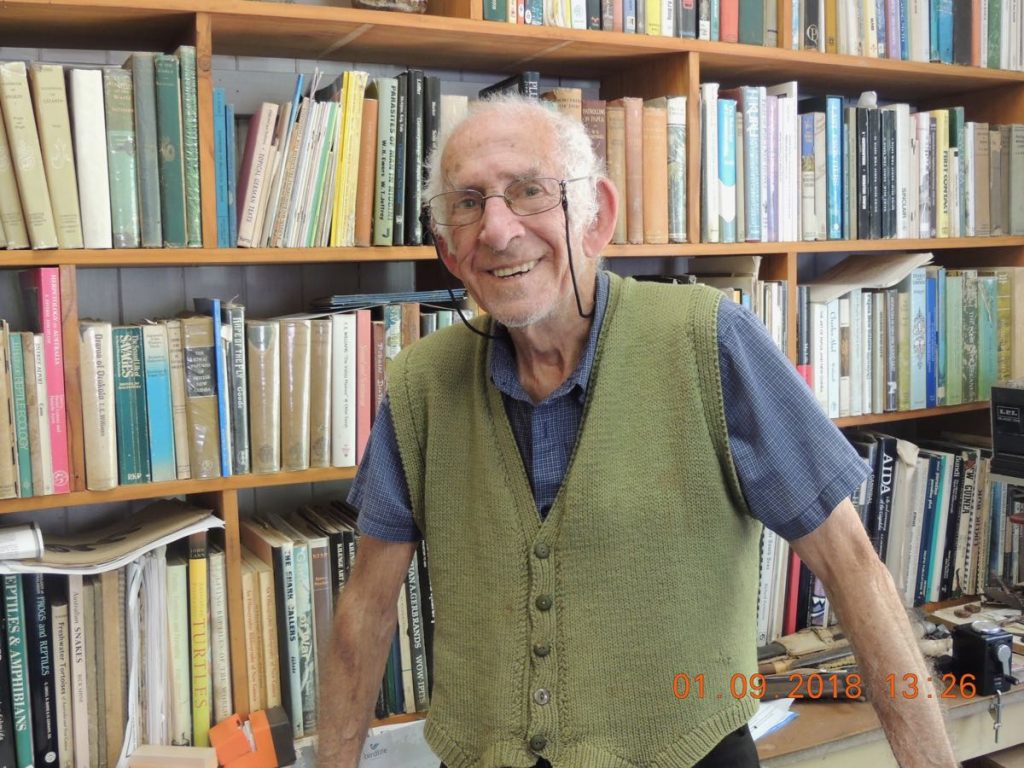
Roy Mackay in September 2018 in one of his favourite places – his library.
You will all have seen on the television
broadcasts, the widespread flooding around the Townsville – Ingham areas that
unprecedented rainfall has caused. Our
thoughts and sympathy go to those people in Bluewater and other areas where
homes and property have been destroyed or damaged.
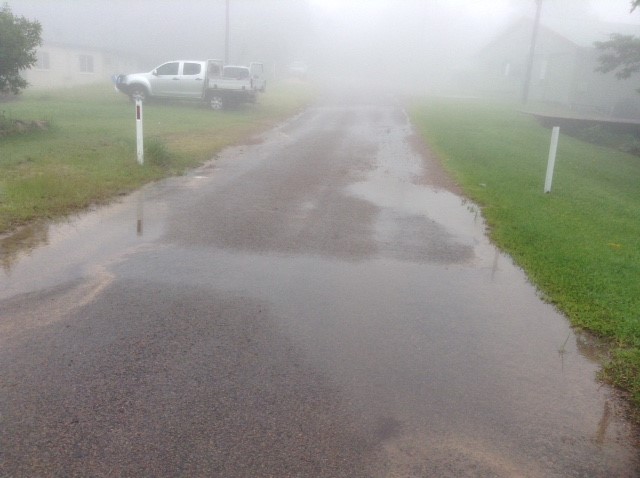
Mt Spec Road near the Community Hall
How has Paluma fared so far during this
extreme weather event?
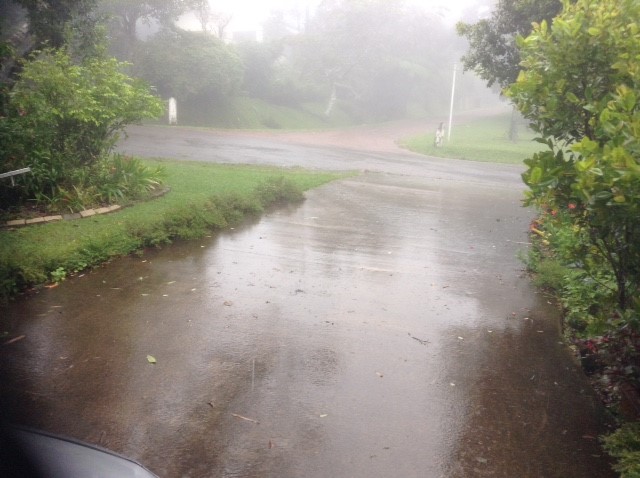
Paluma residents are used to receiving heavy rains during the Monsoon season but the rainfall over the past few weeks has been exceptionally heavy and unremitting with very heavy falls over the last five days of January. The total for the month was 1208 mm. Many long-term residents say that while heavy rainfall over a period of a few days is not unusual, the duration of this wet weather event is. Nothing like it has been seen for at least 30 years.
View from Colwyn’s driveway
Since Wednesday morning the Range Road has
been closed due to fallen trees and land slips.
TMR are working at restoring the road but are hampered by the continuing
wild weather. Predictions are that we
will experience at least another week of wet weather, so it possible that
Paluma could remain isolated for several more days. Maybe it is time to launch the Ark from
Noah’s Ark Creek.
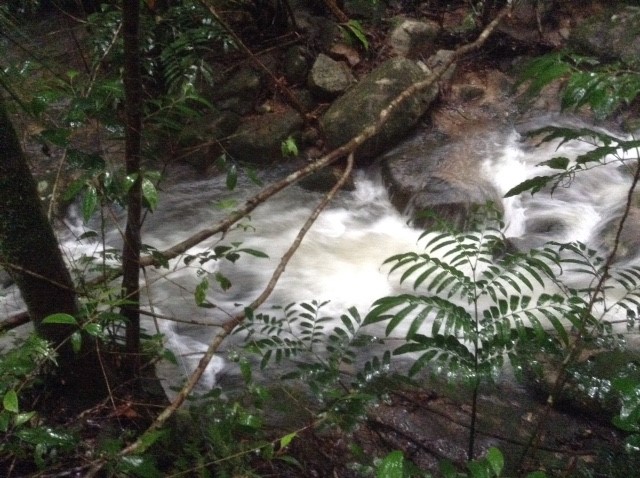
A cascade near Smith Crescent
Along the Range Road (when it was still
possible to travel to see the sights), the waterfalls were spectacular, the
seething water plunging through clefts and grottoes and cascading out and over
the road. Twin Falls gushed out like a
huge fountain forcing cars through a natural car-wash. Sheets of water hung to
rock faces, reflecting light like vast mirrors while rivulets of water coursed
across the road. The road surface was
littered with leaves and small broken branches.
Every so often a very bedraggled brush turkey would make a suicidal dash
across the road.
In the village, channels of water rush
alongside and over the road, lawns are water-logged, trees have fallen, others
hang their limbs low weighed down with the burden of water in their foliage and
inconveniently, water has seeped into the lower levels of several houses having
forced its way through cracks in brickwork.
Birds are ravenous and flock in great numbers to wherever they can find
a feed tray; Lorikeets and the smaller honey-eaters happy to share the same
dining-room.
It will be time soon, if some have not
already done so, to light fires to dry out the houses and our sodden shoes and
raincoats.
Even the editors at Paluma.org can’t resist the odd attention grabbing headline (or click bait as it is now called) …….
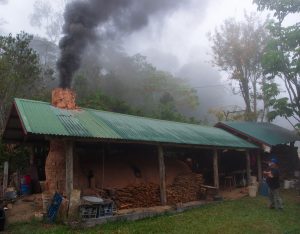
Len Cook watches the smoke and flames emerging from the Anagama kiln
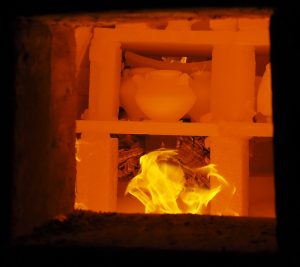
Last week saw the famous Anagama wood-fired kiln blaze into life at the Paluma Pottery on Lennox Crescent. Len Cook, our local award-winning Pottter, spent the last several months making hundreds of pots of various sizes and shapes, in preparation for the annual wood firing.
Len Cook at around 3am on the 4th day- still going strong
The process started last Monday evening (October 29) at 8pm and finished exactly 100 hours later at midnight on Friday. Prior to the start of the firing the lower part of the shelter that houses the kiln was chocked full of firewood, mostly pine and black wattle from the blocks at Hussey Road. By Friday most of the wood had been fed into the kiln, producing temperatures in excess of 2,000 degrees in the front part of the kiln. Continuous stoking of the fire was needed to maintain the temperatures that allow the wood ash that constantly flows over the pots to melt and form a wonderfully variable glaze on the pots. Len, together with Kelly Davis and Jamie Oliver worked shifts feeding the kiln, monitoring temperatures and making the odd adjustment to airflow vents and shutters.
The pots started to glow after the first day and by the end of the firing the entire inside was glowing red.
Each time new wood was added (about every 15 min, 24 hours a day) the chimney would produce billows of smoke and fire, which was particularly impressive at night.
The kiln is currently in cool-down mode and Len will not know what the results of this year’s efforts have been until later this week. But given the wonderful results from previous firings, there should be some spectacular pieces.
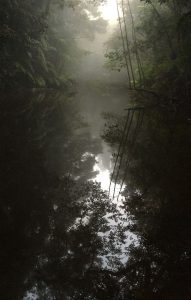
The Village Weir is a wonderful place to sit and contemplate nature, especially during a misty morning. You can even catch up on your emails while waiting for a platypus to appear.
Following the sighting of a platypus on the Village Weir in late September there have been 4 other confirmed sightings and it would seem that this individual has taken up residence (hopefully for the long term) in the weir.
Sightings have been primarily in the early morning (6-7am) and it appears to prefer the left side bank (looking up from the weir wall).
A list of all recent sightings can be found here. If you happen to see our new aquatic resident please contact Jamie Oliver with details so he can add this to the sightings record.
The video below shows the Platypus swimming across the weir from right to left early in the morning on October 28, 2018.