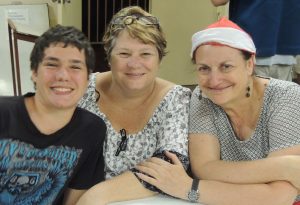
Last Saturday night (8 December) the annual Tropical Xmas BBQ was held at the Community Hall to close out the Paluma Social calendar for 2018. Up to 20 residents attended the event, with a few people coming and going over the course of the evening.
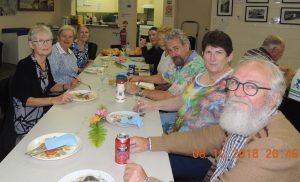 A sumptuous feast consisting of BBQ meats and an array of salads and sweets was enjoyed by all. The ‘BBQ-er’ for the evening was Ross Hyne, closely supervised by ‘Mr. BBQ’ himself, Don Battersby. As usual, the Bar and Beverages were expertly dispensed by Les Hyland.
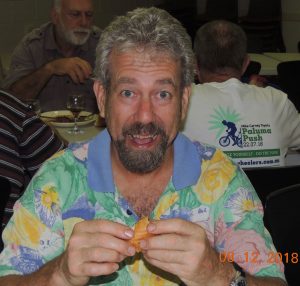
The ‘dish of the night’ was awarded to Jennie Robinson for her very special and unique recipe for ‘sweet but salty’ berry dessert cake! The encouragement award goes to Jim for his very special ‘do-it-yourself cucumber and egg salad’.
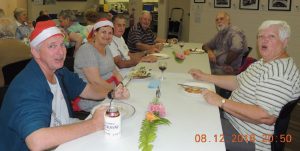
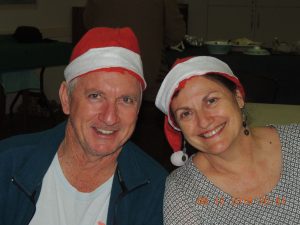
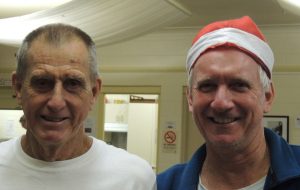
It was great to see many people embracing the ‘Tropical’ theme with their colourful shirts and other attire. We were lucky enough to have two of Santa’s Elves attend as well (Ross & Sonya).
As with all Paluma Social Events, many of us ate too much food, drank a little too much wine and laughed a lot! A happy and fun-filled Paluma time was enjoyed by all. Merry Xmas!
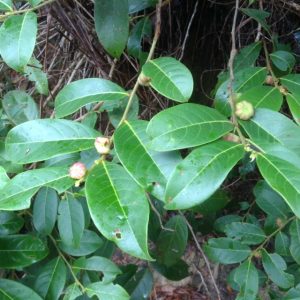 Glochidion hylandii is a shrub or small tree growing to a height of up to 12 metres, usually to be found on the edges of rainforests or in revegetation areas as a pioneer tree. The leaves are simple, elliptic and between 30 and 150 mm long with clearly defined veins. Upper surfaces are smooth, or sparsely covered with fine hair while the undersurface is slightly waxy with fine brown hairs. Flowers, growing in the leaf axils are inconspicuous, being only 2 or 3 mm with 6 green sepals and no petals.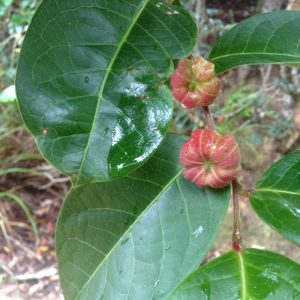

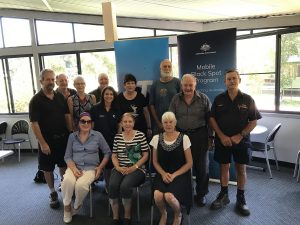 Rachel and Joanne from Telstra came up from Townsville and were welcomed by P
 Paluma Mobile Tower – Launch Celebration