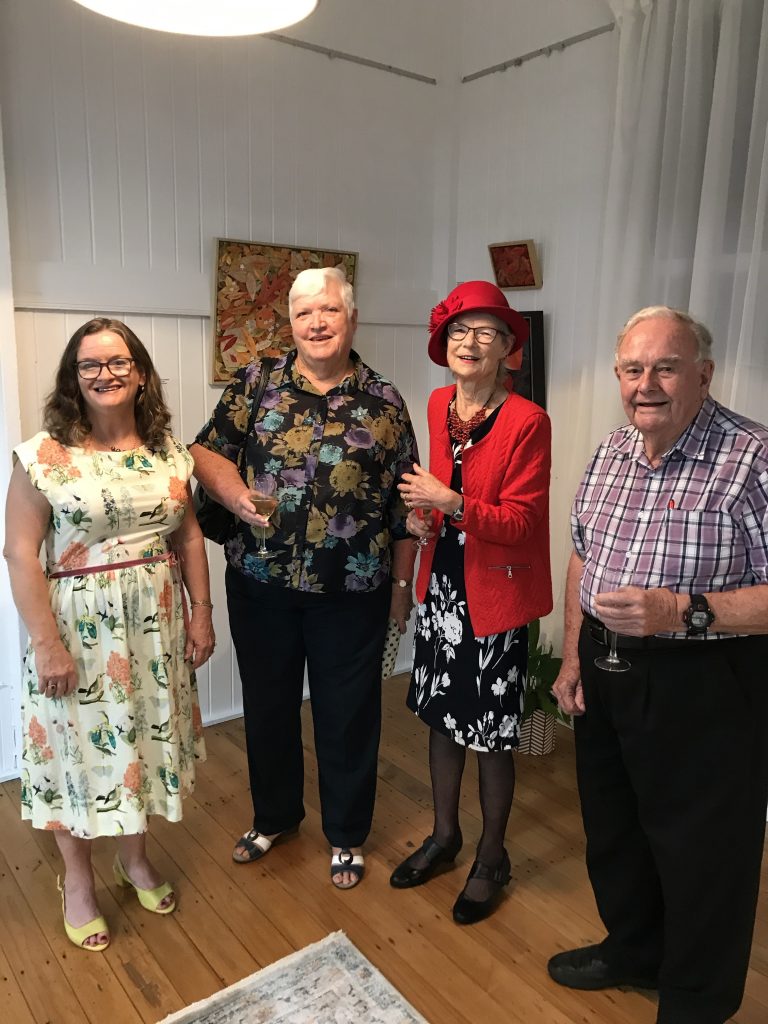
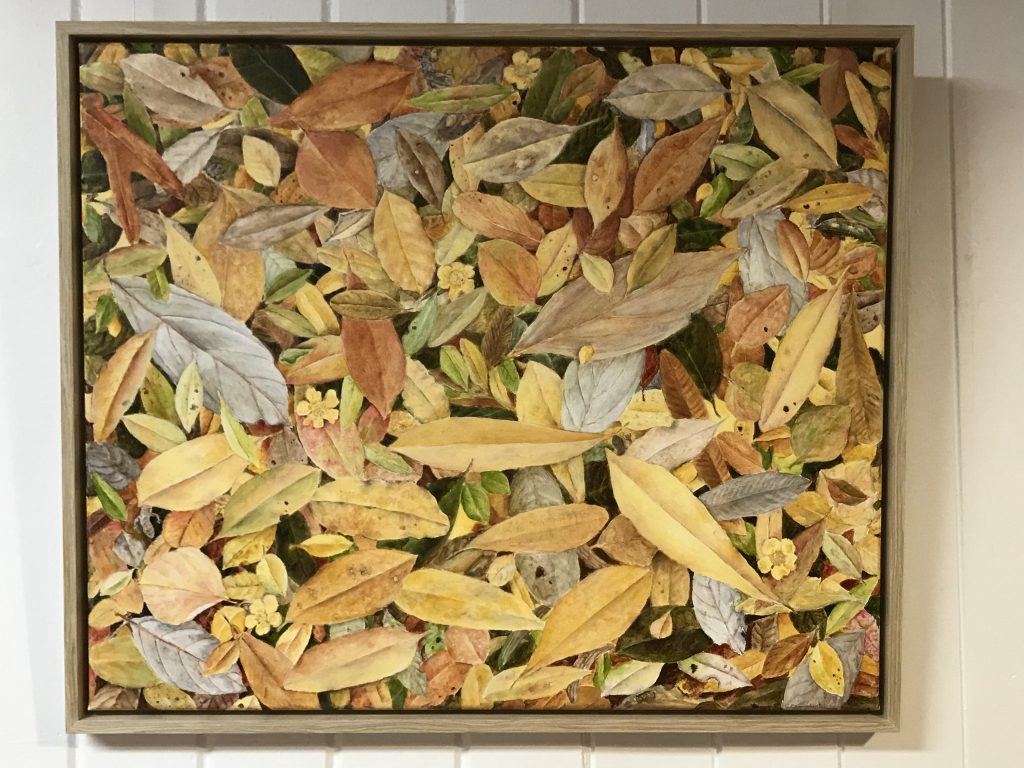
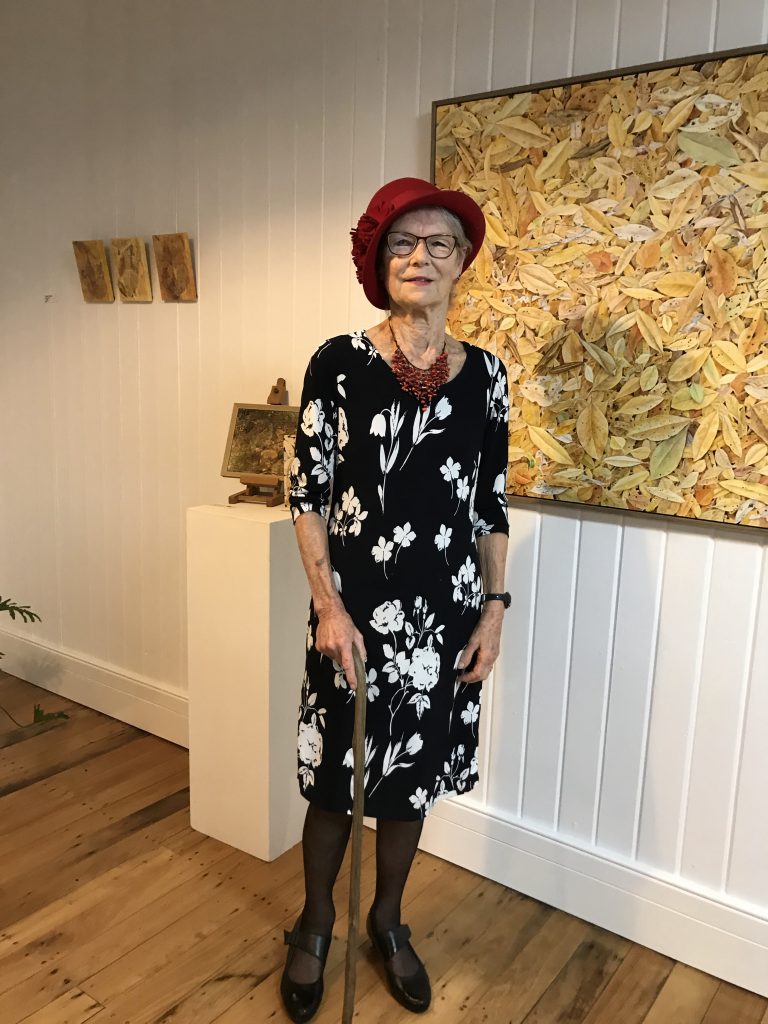
On Friday evening the exhibition of new artwork by our local artist Colwyn Campbell was opened by Sue Tilly and Ross McLennan at the Drill Hall in Townsville.
The event was well attended and dominated by Paluma residents who not only admired the stunning pieces on display but also purchased several of them.
The Buddhist concept of Anicca (impermanence) clearly pervaded the artwork. The detailed depiction of fallen leaves and other organisms associated with decay and recycling of life, combined with the repetitive colourful patterns resulted in images that were (to me at least) both abstract and yet highly realistic.
Congratulations to Colwyn on the success of the exhibition, which will remain open until May 20th.
Our local representative for the Townsville City, Councillor Margie Ryder will be visiting Paluma on Friday April 30th and would like to meet with any residents who are interested in chatting with her about local Paluma issues. Please come along to the Community Hall at 3:30.
Don’t forget to come along for a BBQ lunch and the Annual General Meeting this Saturday. We are keen to seen new residents come along and warmly welcome anyone who might be interested in joining the Commitee.
The Paluma Rural Fire Brigade (RFB) is formed of residents from the Paluma community and it cannot function without members and their involvement. With the recent resignation of several senior members of the brigade we are presented with the challenge of trying to keep the brigade functioning and to maintain its assets within the community. If the brigade is unable to recruit new members, the Rural Fire Service may need to close the Paluma brigade and move the fire truck to another community. If this occurs, the only guaranteed response if there is a fire in the Paluma area will be a Fire and Rescue (red) truck from Townsville, Ingham or the Waterfall Creek RFB – and these services are not always available.
This notice is to advise Paluma residents that we are planning to undertake a recruitment drive with a lunchtime BBQ on Saturday 1st May 2021.
You are invited to attend:
A Public Meeting/Recruitment Drive, Saturday 1st May 2021 at 11 AM.
To be held at the Paluma RFB Station (Community Hall).
Without your support this vital community service may be lost from the Paluma community. Staff from the Rural Fire Service Townsville Area Office will be in attendance to discuss the future of the brigade with the community, including explaining what it means to be a rural fire brigade member.
If you have any questions and to RSVP to attend this meeting, please contact the Rural Fire Service Area Office on (07) 4796 9082.
You can also ring the local contact person and serving Paluma RFB member Ross Hyne on 0427 447 415.
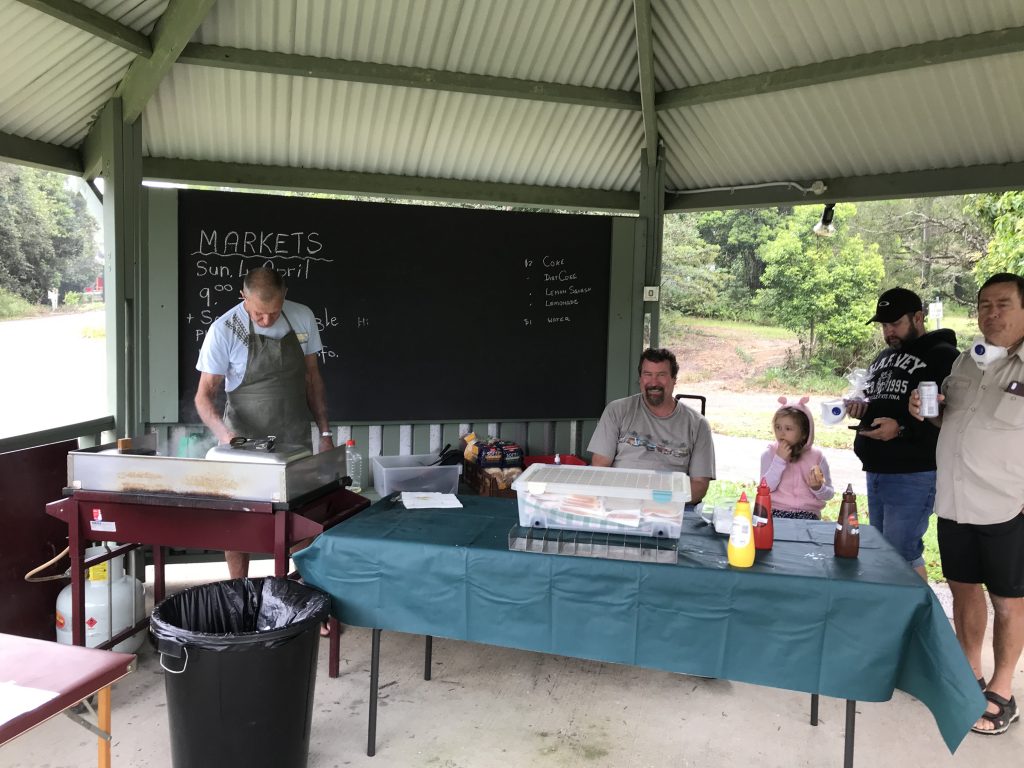
A misty morning and threatening rain, did not bode well for the Easter Sunday Mountain Markets, but we did get mentioned in “Townsville Eye” and seemingly people were determined to get out over Easter. As a result, despite the mandatory wearing of masks, a steady crowd appeared in the Community Hall and the nine stallholders were kept pleasantly busy and all seemed pleased with sales.
Over in the gazebo, Don Battersby and Glen Parker were kept busy on the sausage sizzle, while Les was the cashier, thus no conflict in the food handling. Customers were lining up before 09.00hrs and there were only odd occasions when there was no one at the counter. Two short light rain showers did not deter the crowd, many notably being family groups and by 12.00 hrs the sausages had sold out.
Altogether it was one of our most successful Market days. Hopefully, we will also do well on Sunday June 27th – the day after Wattle ’n Gum have their annual Bush Dance in the Hall.
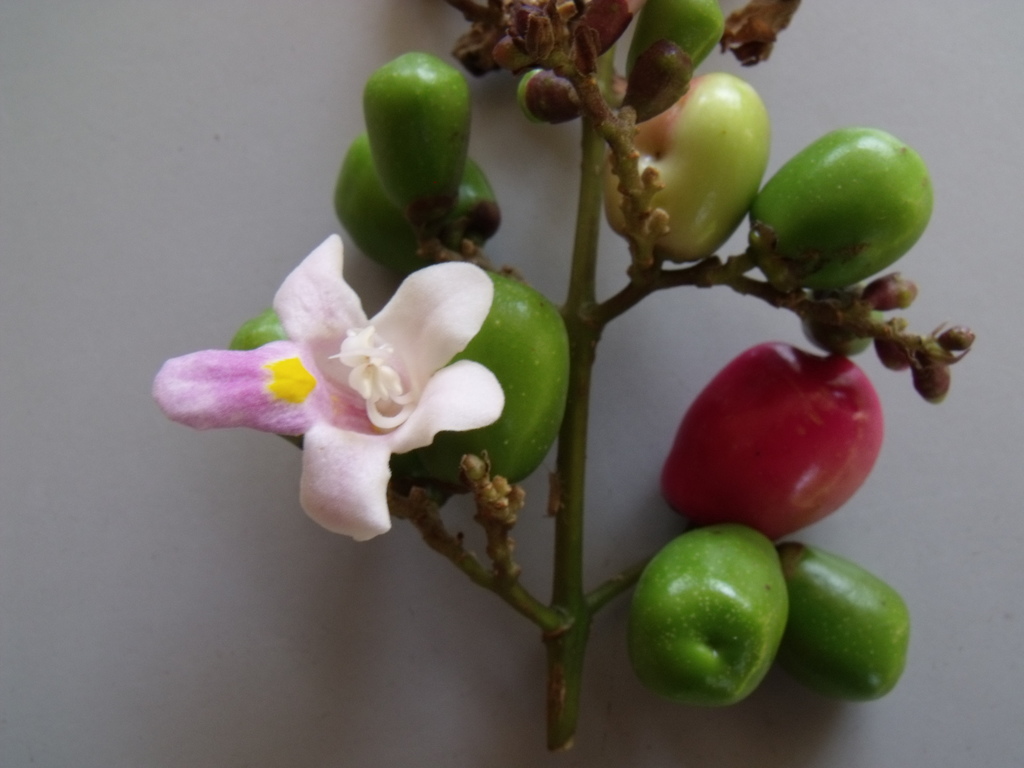
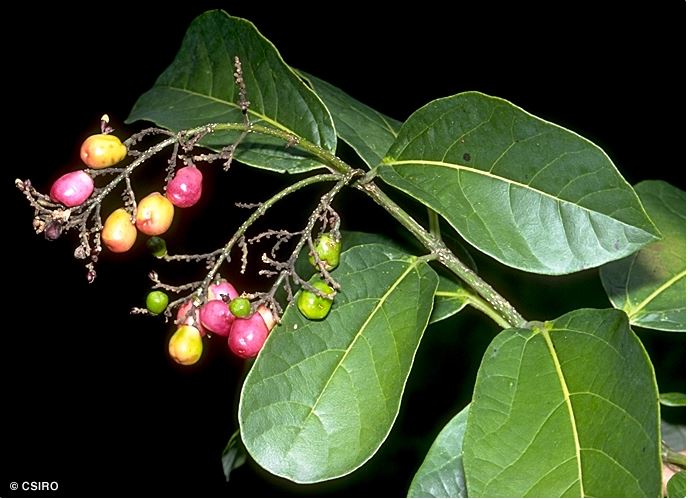
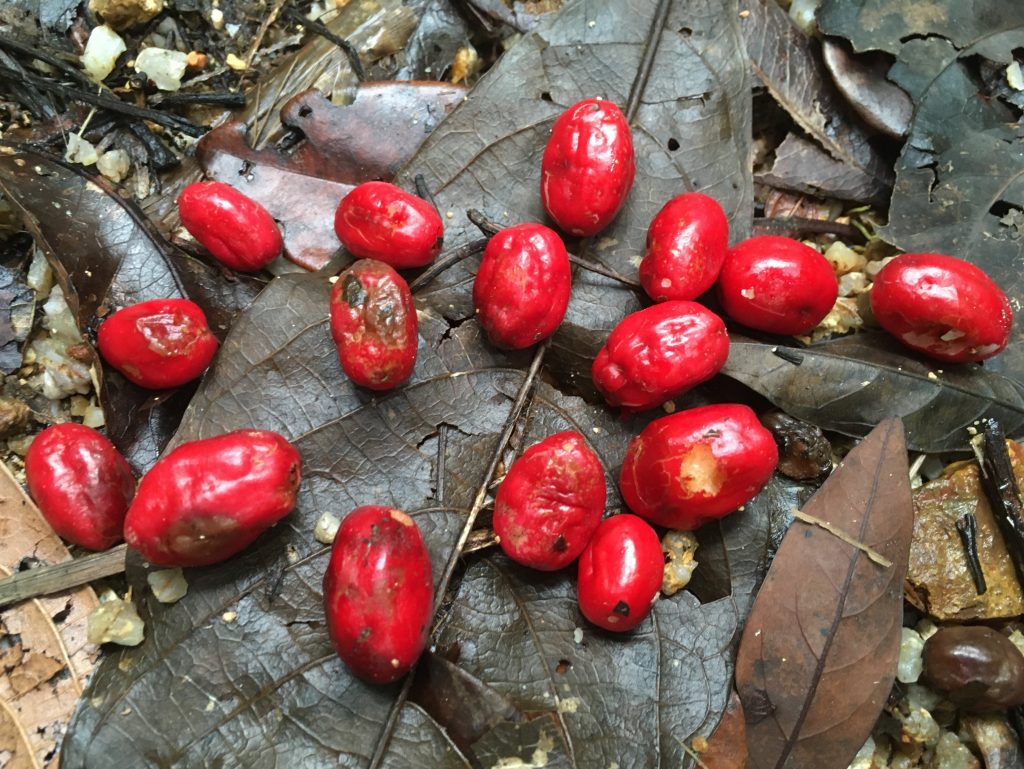
Gmelina dalyrympleana is a rainforest tree found in northeast Qld and Cape York as well as New Guinea. There are several species in this genus and most of them can be found in the wet tropics and share the common names White Beech, or Grey Teak). With its lovely pink flowers bright red fruit this species ranks as one of the more attractive in the genus.
Photo by “Paluma” CC on I-Naturalist (L) Photo copyright CSIRO (R)
This tree is currently in fruit around Paluma and the bright red, oblong cherry-sized fruit are unmistakeable at several spots along the H-Track. The fruit might be mistaken for a Satin Ash at first glance but its seed capsule, which is bound tightly to the flesh of the fruit, is small and woody. The small pink flowers are occasional seen scattered on the ground on or next to the H-Track.
The fruit is eaten by fruit pigeons. The tree can grow to 40m yields a course, but durable timber used for planks and floors. It is cultivated as an ornamental tree in Queensland and NSW.
Text and photos (unless indicated) by Jamie Oliver
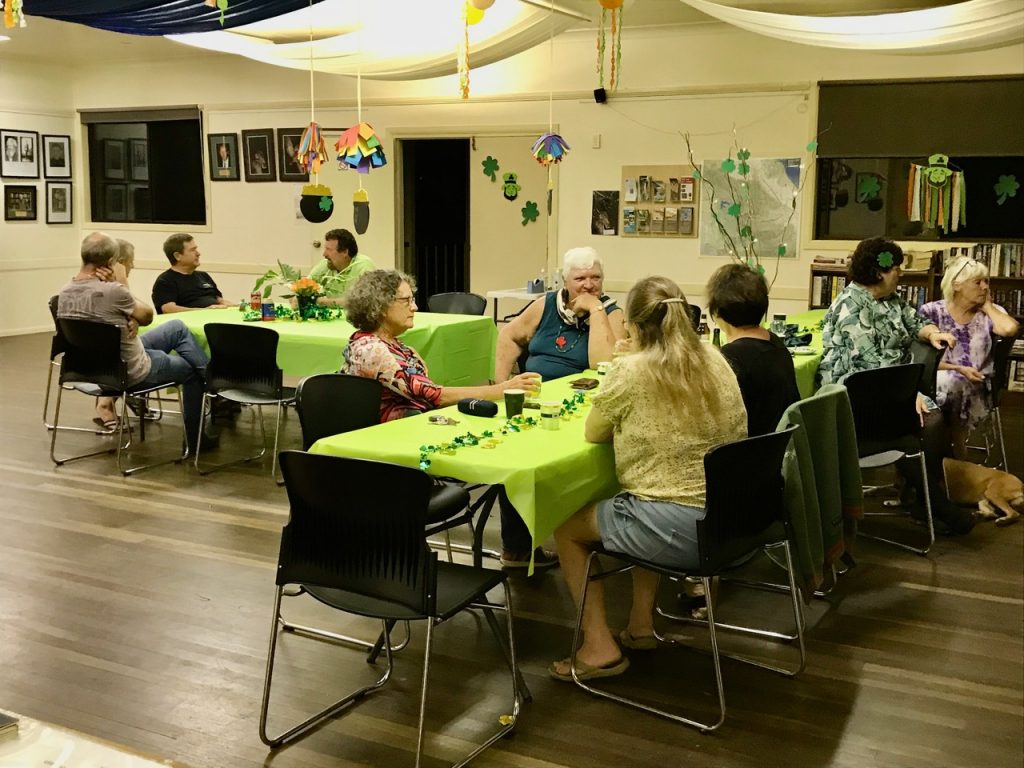
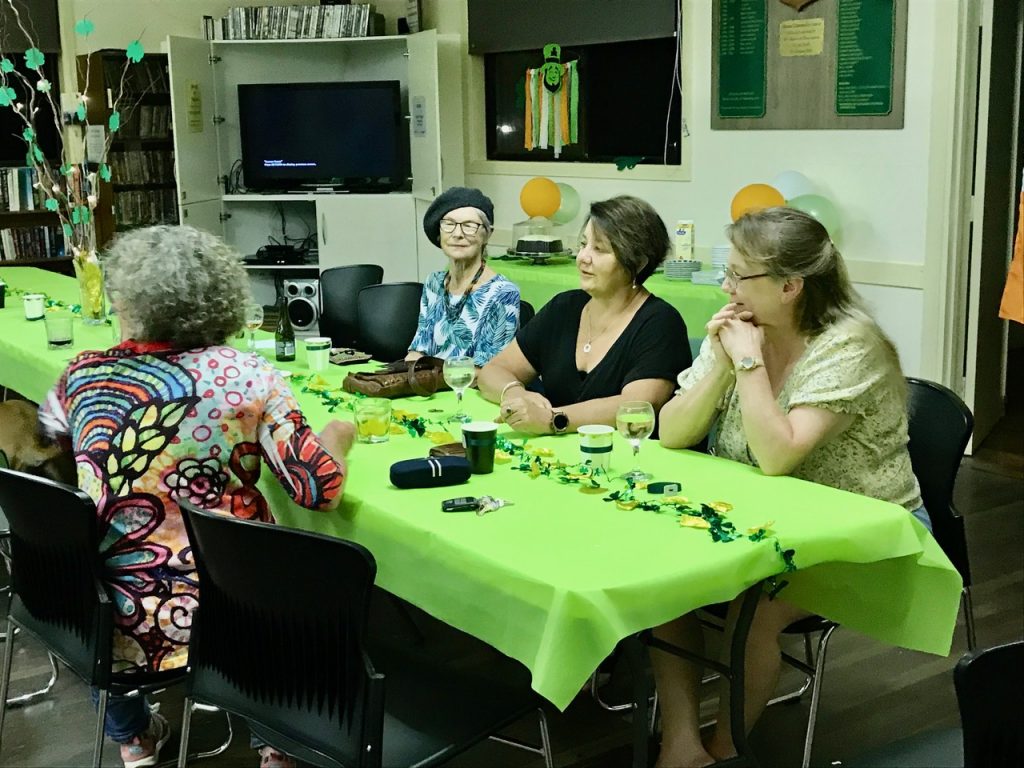
A small but enthusiastic crowd of revellers met at the Community Hall on Saturday night (20 March) to belatedly mark the occasion of St. Patricks Day which falls on 17 March. Crowd numbers were down at this Social with several villagers away working or attending the Cowboys home game in Townsville.
Despite the small crowd of only 13 people, Les was kept busy at the bar which did very well with takings. With the mix of local villagers, was a couple who were staying in the village who dropped in for some drinks and helped boost the bar takings and the camaraderie. The Guinness was a hit, given the Irish theme of the night.
Lynn ran the usual Irish quiz which was won by Colwyn who took home a bottle of pink champagne in reward for her Irish knowledge. The quiz illustrated the distinct lack of knowledge of all things Irish at Paluma Village! The Lucky Shamrock Competition didn’t afford any fortunes amongst the“scratchies”. Obviously the Leprechaun had given away all his good fortune.
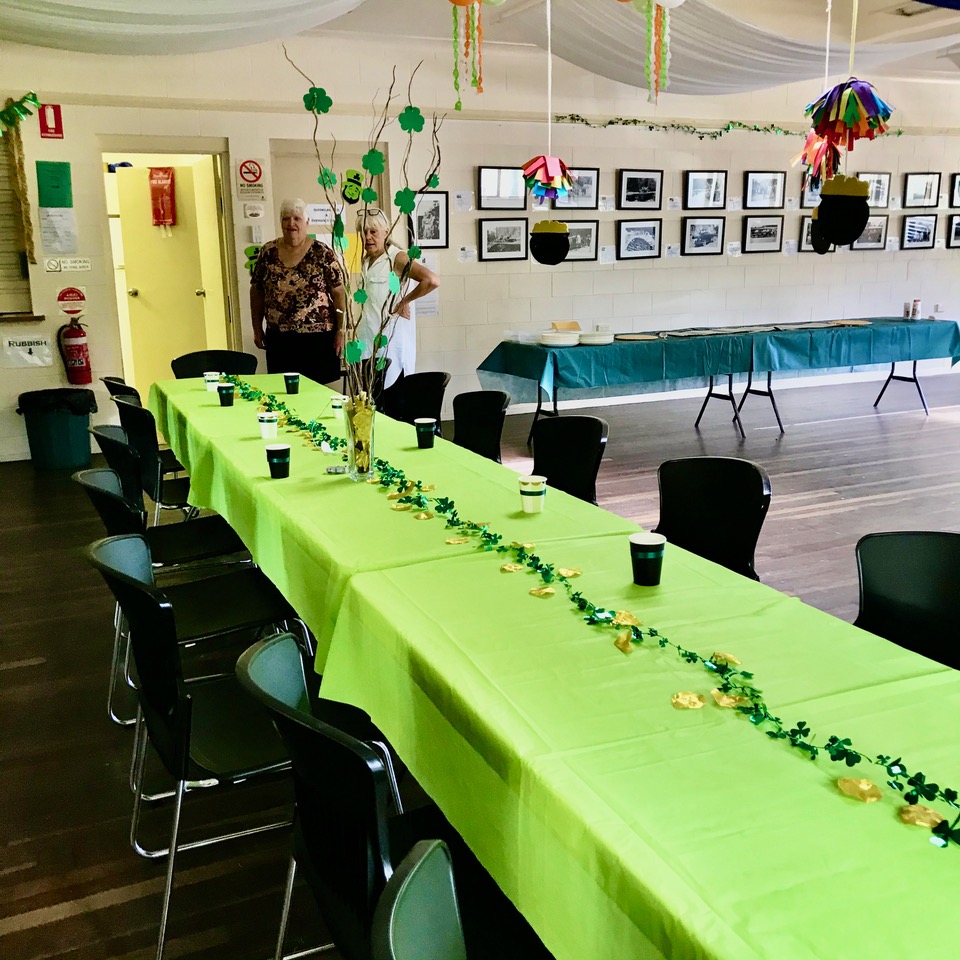
Lynda and Lynn decorated the hall in a sea of green and shamrocks. As always, the gourmet delights meant everyone had plenty to eat, this time with a distinctive Irish theme.
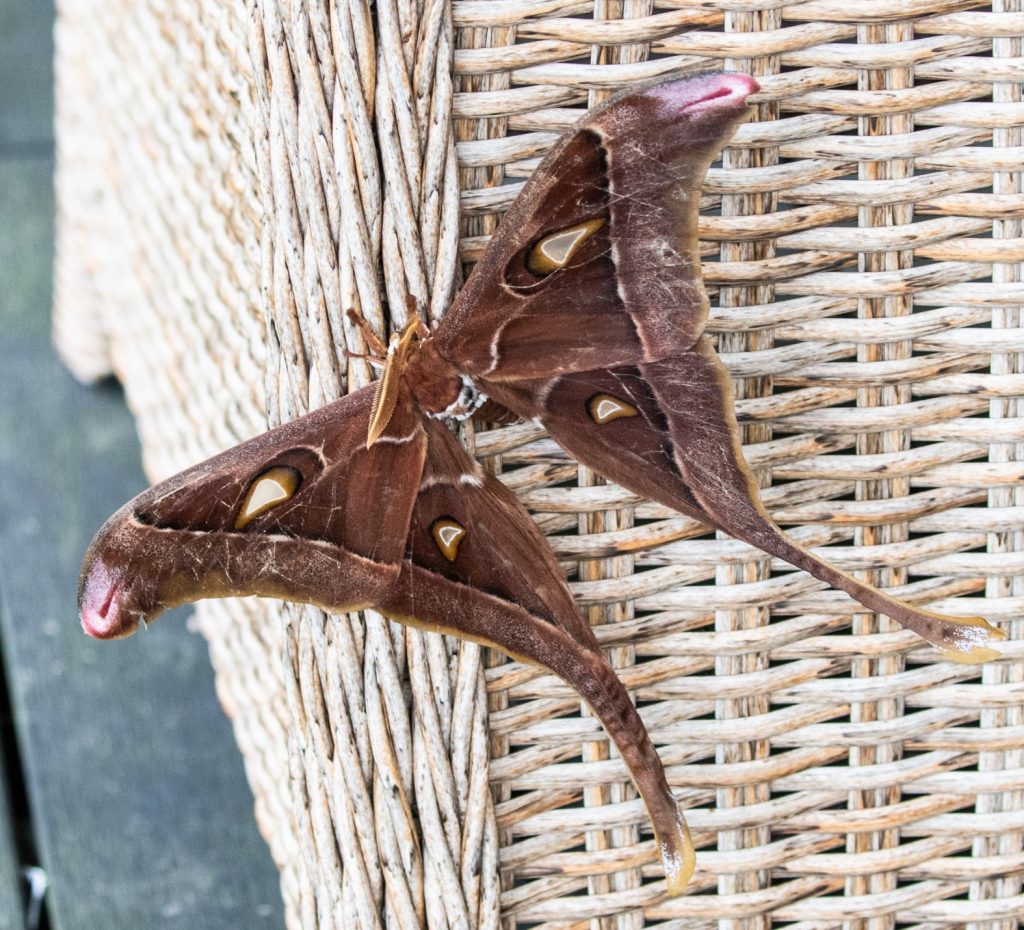
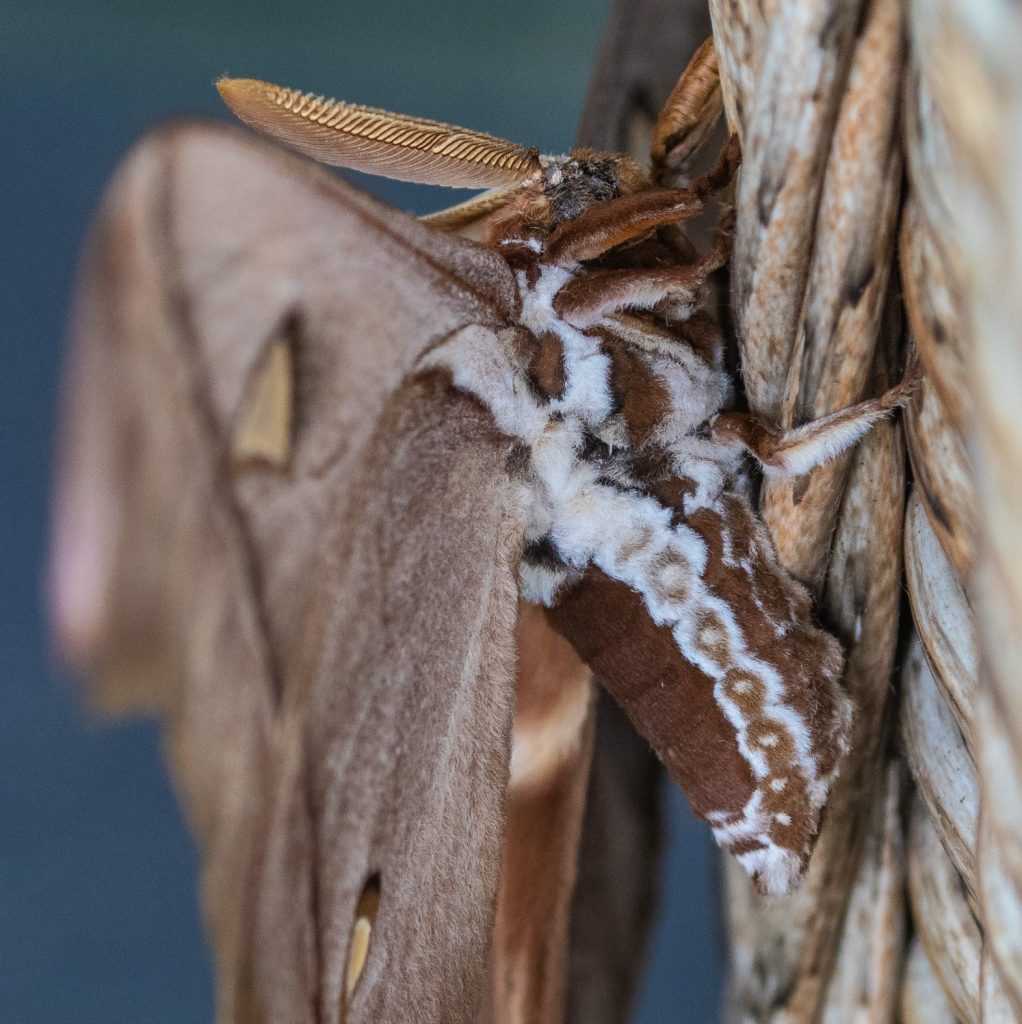
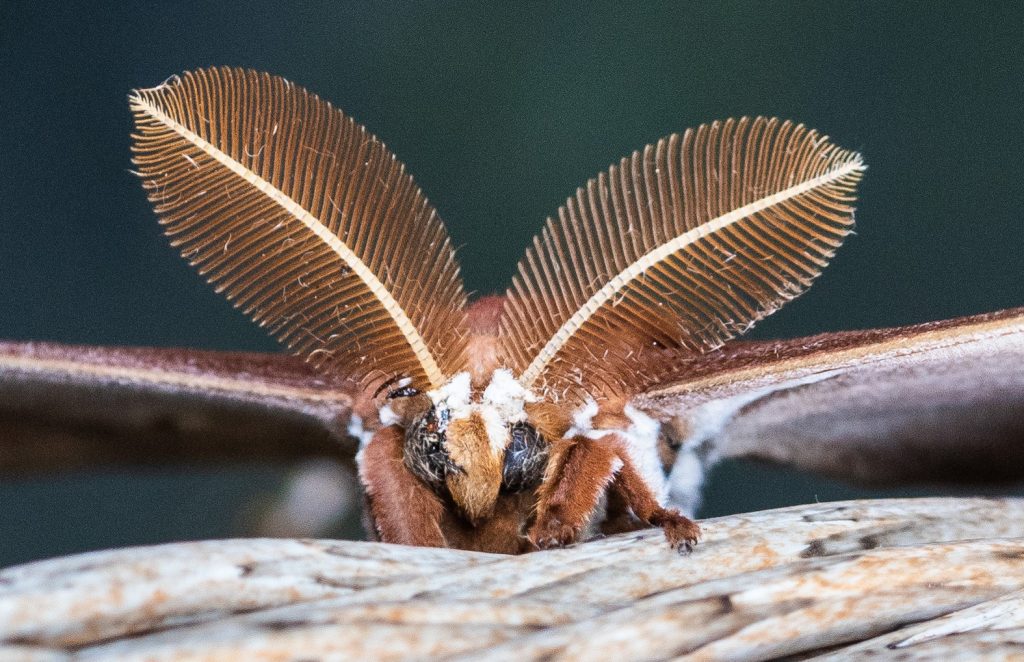
Came out on the verandah in downtown Paluma this morning to find a giant of the jungle sitting quietly on the deck furniture.
Male (we think) Hercules moth (Coscinocera hercules) 240mm wingtip to wingtip, 180mm overall length. … that’s very big for a male as Wildlife of Tropical Northern Queensland lists maximum size for the larger female as 225mm.
Wildlife of Tropical Northern Queensland and Guide to Australian Moths say range is Cape York south to Ingham — so the southerly extent of the range is a bit understated in both books.
The females have the largest wing area of any moth in the world.
The leaves of the medium sized rainforest tree Bleeding Heart (Homalanthus novoguineensis) is said to be the favorite food of the Hercules caterpillars.
We have a Bleeding Heart which is trying to climb onto our deck.
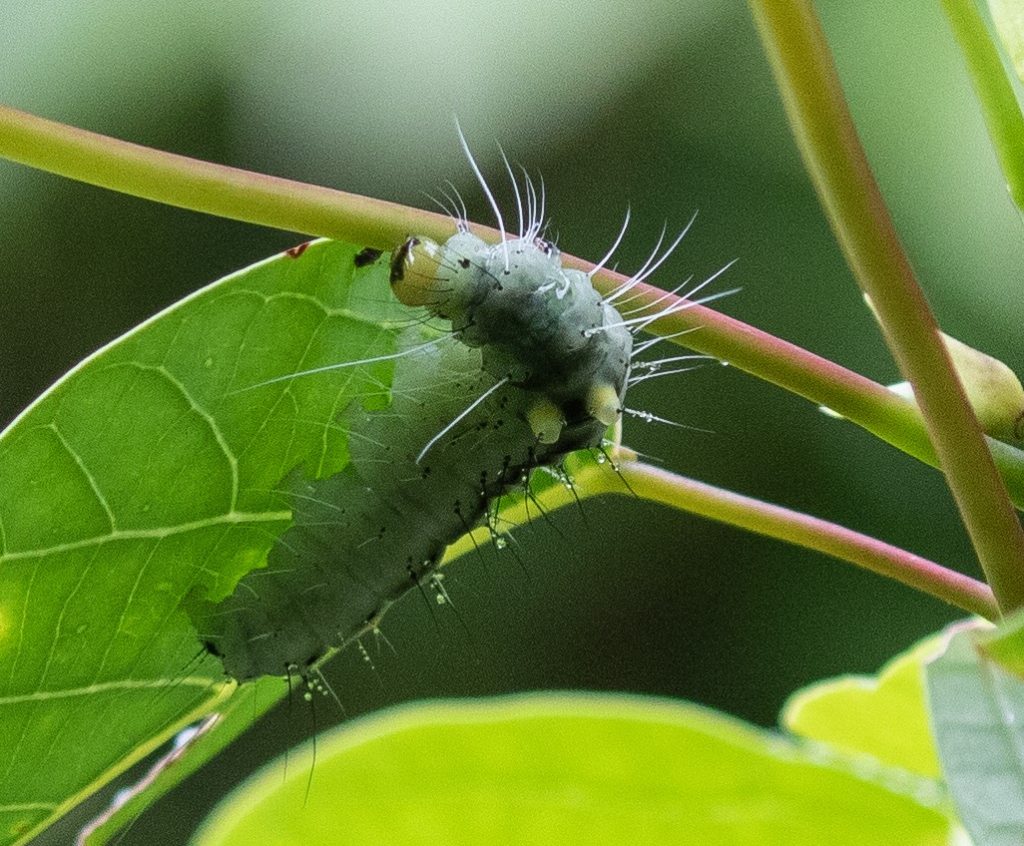
The leaves are being well munched and we did find a caterpillar there after we spotted the moth. However, it didn’t look like the Hercules caterpillars from the books.
Jamie Oliver has come across this caterpillar before and was able to provide an ID — Iscadiainexacta (Walker). Iscadia and Hercules share a preference for Bleeding Heart.
According to the Butterfly House websiteIscadia has a great party trick — “The caterpillar pupates in a papery cocoon covered in bits of chewed leaf. The pupa is famous for being able to produce sounds when disturbed, by rubbing projections on the abdominal skin against the hind surface of the cocoon.”
Hercules also has a surprising twist of biology — the adult moths don’t eat, they survive on food stores from when they were caterpillars, says the Australian Butterfly Sanctuary website. The adults live for only 10-14 days which they devote to finding a mate. The mating game is initiated by the female which emits a pheromone that can attract male suitors from over 2km away.
The caterpillars grow up to 12cm in length and are dotted with yellow spikes. Such a huge caterpillar makes sense when we consider how large the moth itself is.
The largest ever Hercules Moth had a wingspan of 36cm, says the Australian Butterfly Sanctuary website.
The Annual General Meeting of the Paluma Rural fire Brigade will be held on Saturday, 20th March 2021 at the Community Hall. All members are encouraged to attend, and anyone interested in joining or serving on the Committee are also warmly invited. If you have any questions about the PRFB or what’s involved in joining as a Volunteer, please contact Len Cook.