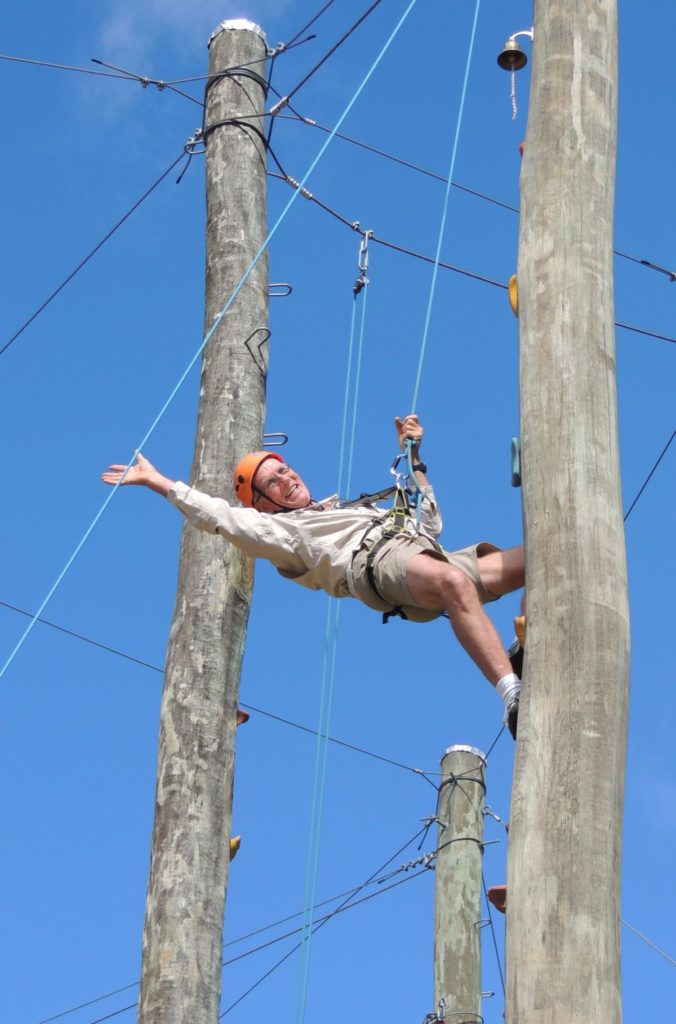
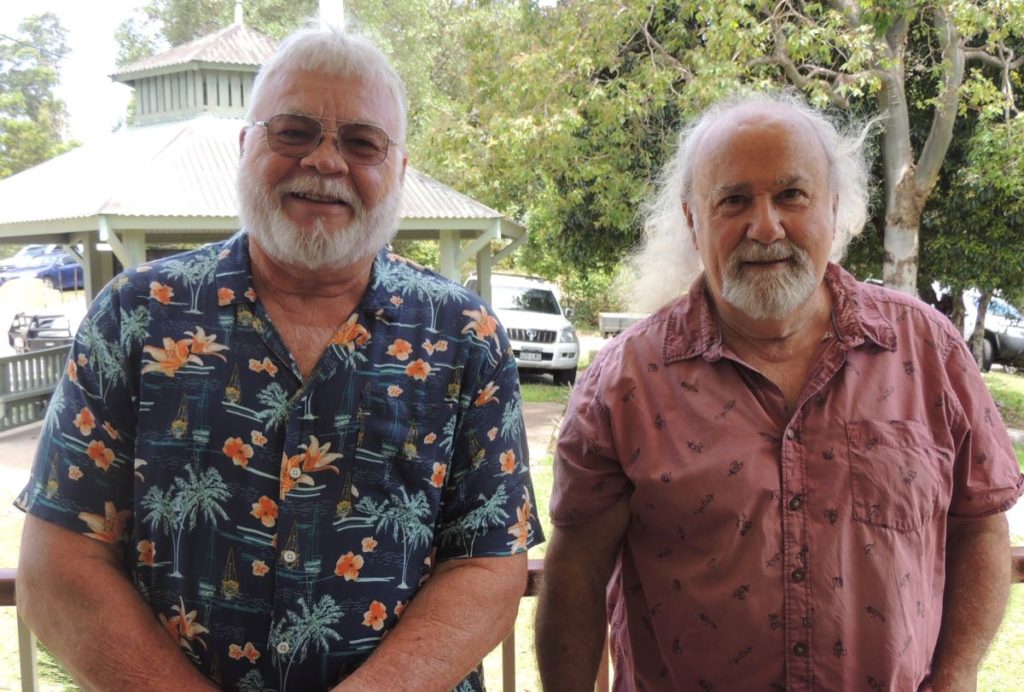
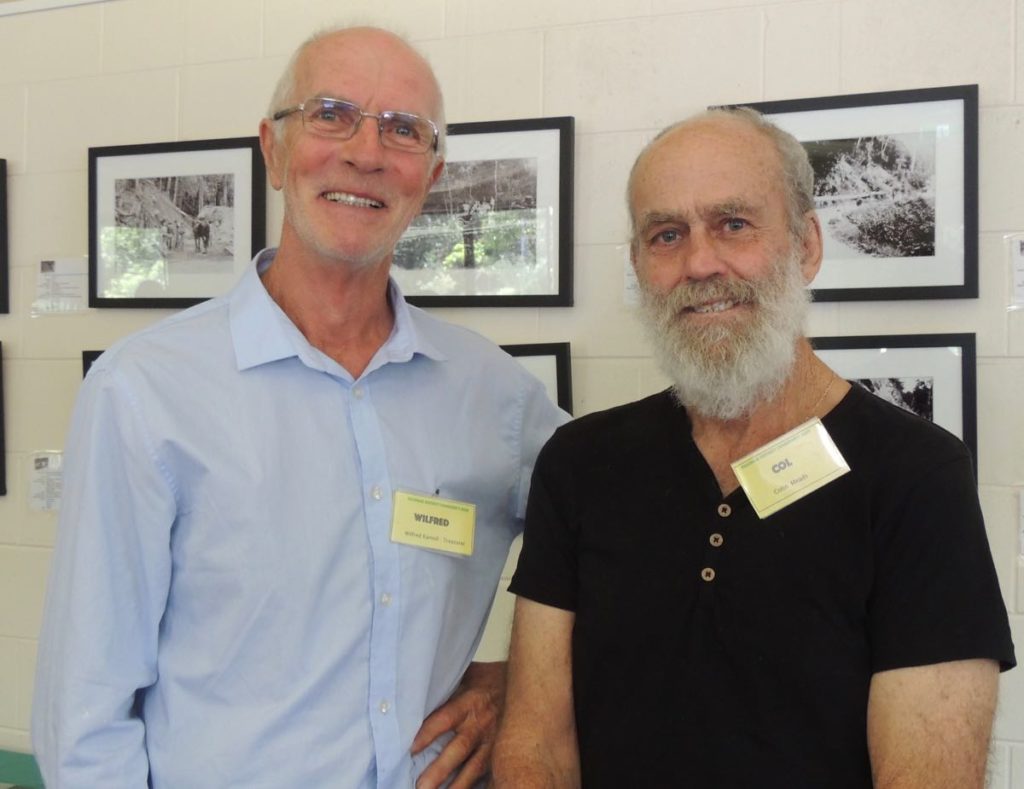
This weekend (7 November) one of Paluma’s long-time residents – Wilfred Karnoll – will celebrate his 70th birthday.
2021 has been a somewhat challenging year for Wilfred, but like everything else he has taken the ‘bull by the horns’ and just got on with things. Wilfred is a long-serving member of the PDCA and he is a consistent volunteer for just about everything in and around the village. He undertakes an array of regular maintenance work at the Community Hall and Village Green and he has been instrumental over many years in keeping our rainforest walking tracks in good condition. In more recent times, he has led a team of dedicated volunteers to re-open and make safe the Paluma Village to Hussey Road walking track and he currently has his sights set on upgrading the Rainforest Walking Track (between the Community Hall and the western end of the Village). There is not much that Wilfred doesn’t know about the walking tracks and trails around Paluma and across the Southern Wet Tropics region!
Wilfred is always ready to lend a hand and he is pretty good with the chain-saw, whipper snipper and a spot of heavy lifting. He will be the first to offer assistance when needed and he is particularly handy during Working Bees at the Community Hall for everything at height and well above the reach of the rest of us. Who needs a ladder when Wilfred is around.
Wilfred is a great friend and neighbour to have – even if he doesn’t always appreciate the therapeutic benefits of listening to AC/DC on the stereo at volume 50 on a Saturday night (ooops)!!
Cheers Wilfred and Happy Birthday To You from your friends at Paluma.
Halloween might be over, but there are still plenty of gremlins, ghouls and monsters hiding out at Paluma. All are set to come out of the mist this Saturday night 6th November as the village celebrates the Monsters on the Mountain Social.
This Social will be the second last community social for 2021, so make the most of the opportunity to join your friends and neighbours for a yarn, a good meal and a beverage (or two).
Please come along to the Community Hall around 6.30 pm and bring a dish/plate/meal to share. You don’t have to dress up to attend the Social, you just have to bring along your good humour and community spirit. Anyway, some of us don’t even have to dress up to look scary!
See you Saturday night. Be afraid (at least a little bit!).
Outer Limits ran their annual Trail Races on Sunday 31st October 2021. It was preceded by a ‘Pizza Dinner Under The Stars’ on Saturday night. This was not as well patronised as previous years and there were very few locals present which was a pity as the pizzas provided by the pizza van were excellent.
It would happen…..Ergon decided to have extended power outages on both Saturday and Sunday. SES to the rescue, thanks to Charlie Allen who fired up their generator on Sunday so we had hall lights and power for Public Address all morning.
On Sunday morning the village green was humming with people from an early hour. It was a clear sunny day tending to being quite hot as the day wore on although mitigated by a pleasant breeze mid morning.
There were three courses as usual 6 km 10 km & 20 km and the shorter courses were run in what appeared to be extremely fast times. There were perhaps rather fewer competitors than expected, but there was a great enthusiasm among all and it really was a superb event. Congratulations to Sam and his team for excellent organisation.
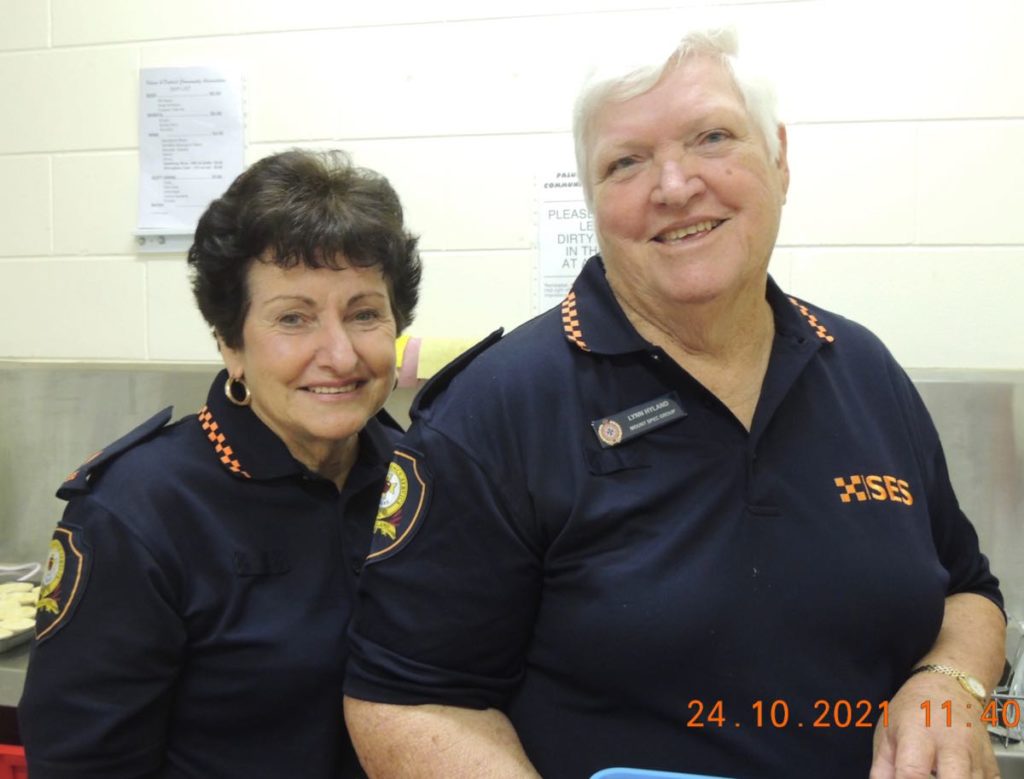
The PDCA ran the sausage sizzle with a skeleton staff. Bruno excelled as chief cook and he was kept busy producing sausages and onions for the competitors who returned after their races in batches. This is only the second time Bruno has done this job and he excelled in keeping sausages available at all times. He is an offical BBQ cook from now on. Lynn dispensed the fare while Les did the soft drink and cash. Despite being rushed at times we managed to cope and our efforts were appreciated by the customers.
Among the announcements was that the 2022 Paluma Push will adopt the same format as this year with the race on Saturday 16th July 2022, the party at Hidden Valley that night and a recovery ride on Sunday 17th. Put the date in your diary.
The buff alder (Apodytes brachystylis) is a common understory tree in well-developed rainforests from sea level to 1200m. The genus (around 8 species are recognised) is distributed from Africa through Asia to the western Pacific, but A. brachystylis is endemic to (found only in) north Queensland and is most common in upland rainforests from Cooktown to Townsville.
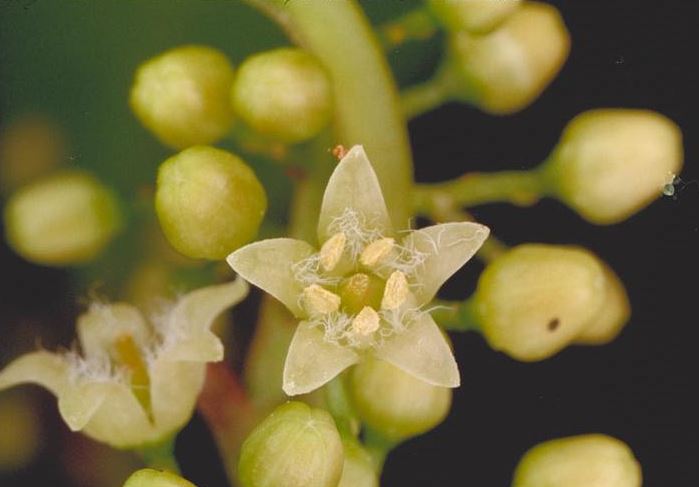
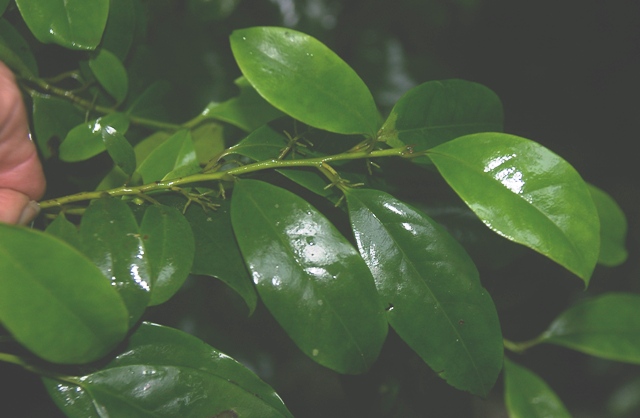
The leaves have a wavy margin and the leaf stems (petioles) are yellowish with a grooved upper surface. The flowers are small (petals 3-4.5mm long) with hairs on the inner surface.
Left : Buff Alder flower and buds (photo by B. Jago CC by 3.0). Right: Leaves (Photo by Russel Cumming on Flickr)
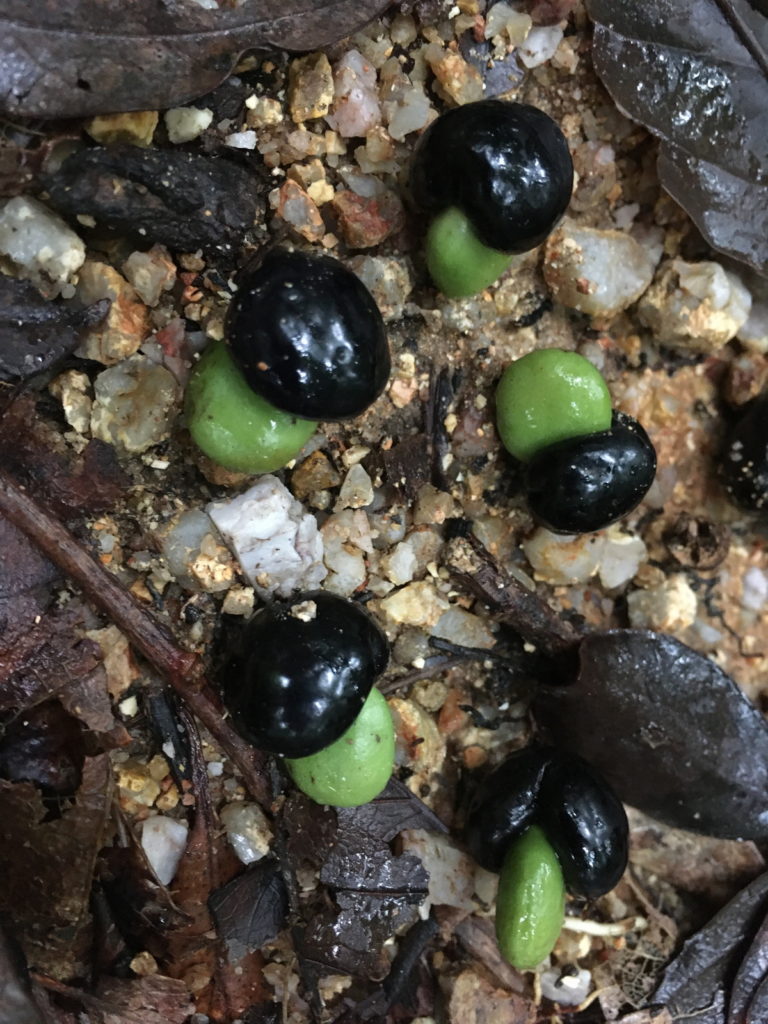
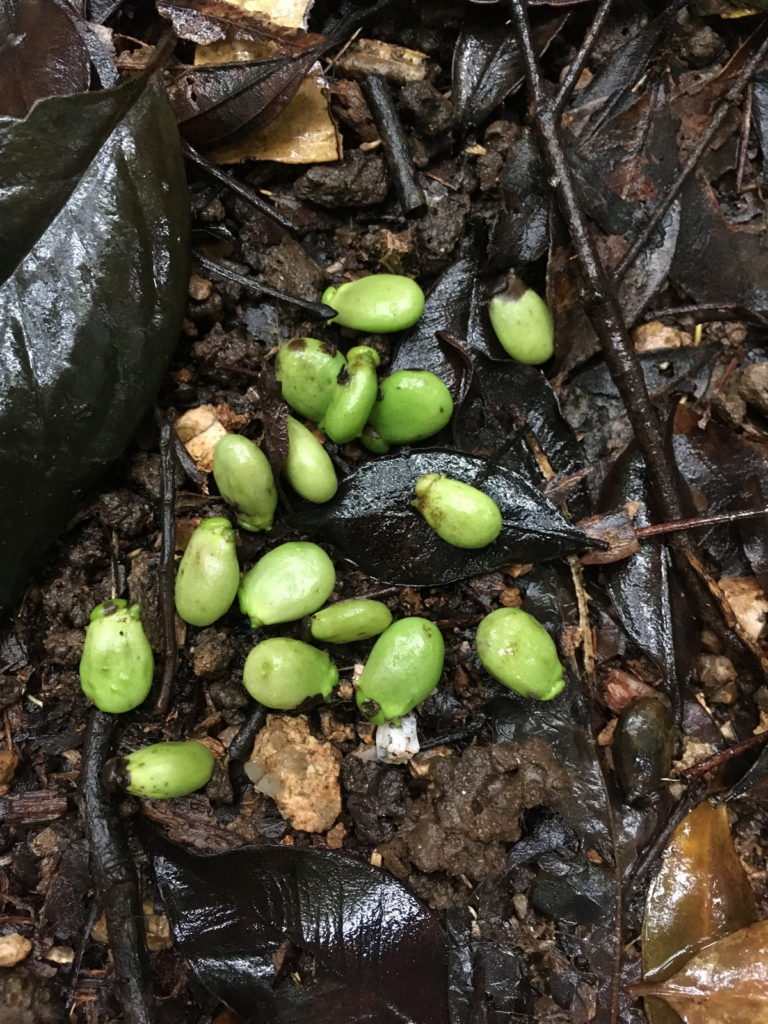
None of these features make it easy to spot this species during a casual walk through the rainforest, however, once the fruit drops ) to the ground (November to February) this species is unmistakable. Usually what drops is a very handsome combination of a dark blue-black receptacle (the basal part of the flower) and a bright green carpel (the seed bearing structure that contains the ovaries, stigma and style).
Fallen buff alder fruit. Right image shows examples where only the green carpel remains on the ground.
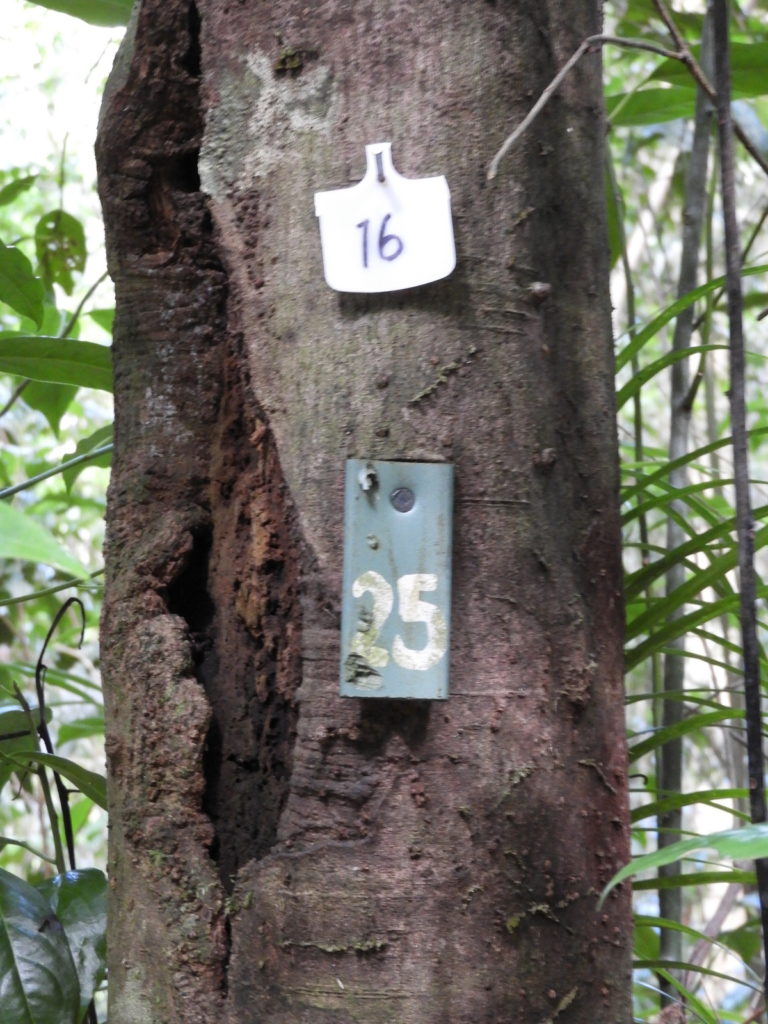
Tagged buff alder on H-track. Photo by Will Cairns
Based on my frequent encounters with the fallen fruit on the tracks around Paluma it appears to be quite common around the village. There is a tagged specimen (White Tag Number 16) of the tree about 3/4 of the way down the slope toward the main plank bridge on the H-Track (starting from Whalley Crescent.
Text and Photos (unless indicated) by Jamie Oliver
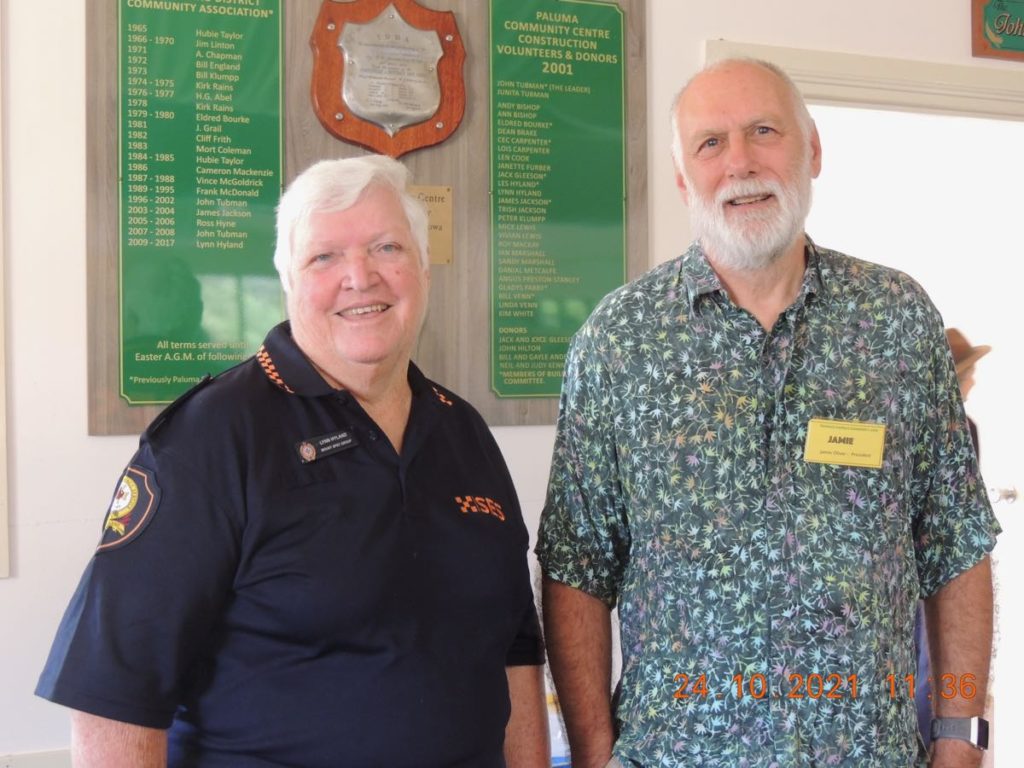
Article prepared & presented by Lynn Hyland for the Paluma Community Centre 20th Anniversary Morning Tea, Sunday 24th October 2021.
This is a short history of how the Paluma Community Centre came into being back in 2001.
Our earliest community association records date back to 1965 and it was in January of 1965 that electricity was connected to the then ‘Town Hall’ as it was fondly referred to. The exact date in 1946 of its construction is unknown, but it was a well patronised facility by the 1960’s. This hub of community life was constructed of bush timbers and corrugated iron. It had previously been the Recreational Building for the Medical Unit during the final years of World War 2. It had no windows or doors. On a misty day the cloud rolled into the open space via the rear ¾ wall. Seating was built in along the walls and the entrance was an open walkway. A hall user could access power by collecting the fuse from Ivy Cottage after signing for it. Social activities of the day took the form of dances, children’s fancy dress balls and bingo. The bar servery bench was also well used I believe.
Unfortunately Cyclone Althea was not kind to the Progress Hall and thanks to the efforts of the Rotary Club of Townsville West it was repaired in 1972. The operation of the reserve, that we now know as the Village Green was in the hands of of four local trustees who had control over activities on behalf of the Lands Department. They vetoed the community suggestion of installing a playground and establishing a small campground. It was mainly used as a golf course and that’s how they wanted it kept. Suddenly in the mid 90’s, the Paluma Progress Association (PPA) found that the trustees had relinquished their positions and it had reverted to the control of the Thuringowa Shire Council as their asset. Previously replacement trustees had been nominated by the PPA and readily accepted by the Lands Department. No such option had been offered.
To the dismay of the locals, we were informed that the Town Hall was to be demolished as it had been condemned. What a blow for this small community. In April 1983, the Paluma Rural Fire Brigade had been formed and stored its equipment on a share basis with the PPA in a small metal shed on the cement slab behind the present gazebo. Then in October 1989 a local Mt. Spec SES group was formed. For many years the SES operated out of the garage of the 1st Officer’s home, before moving for a short while to the closed Police Station office, until it was sold to James Cook University. A permanent base for SES was required.
The PDPA had been furiously fund raising through the annual Rainforest Festivals run by the community. They desperately wanted to have a new ‘Town Hall’. It looked for a while that the Village Green would be peppered with three new buildings. Some creative thinking came up with the concept of a shared facility, to be contained in one larger building fronting the main road and thus preserving the ambience of the Village Green. And so the project began under the guidance of a Building Management Committee.
Funding for the project was provided by the PDPA, Thuringowa City Council (SES), the Gleeson Family Trust, the Gaming Benefit Fund and the Casino Trust. The many volunteers who are named on our Honour Board, laboured over a number of years with many a Saturday working bee to allow the weekenders to contribute their time and effort too. The project was carried out under the umbrella of Tubman Homes with John, Mick Lewis acting as site supervisors as required. Work was often followed by a BBQ on the Green. The steering committee was charged with forming a Management Committee consisting of the three legal lessees – PDPA, Mt. Spec SES and Paluma Rural Fire Brigade and also forming a constitution.
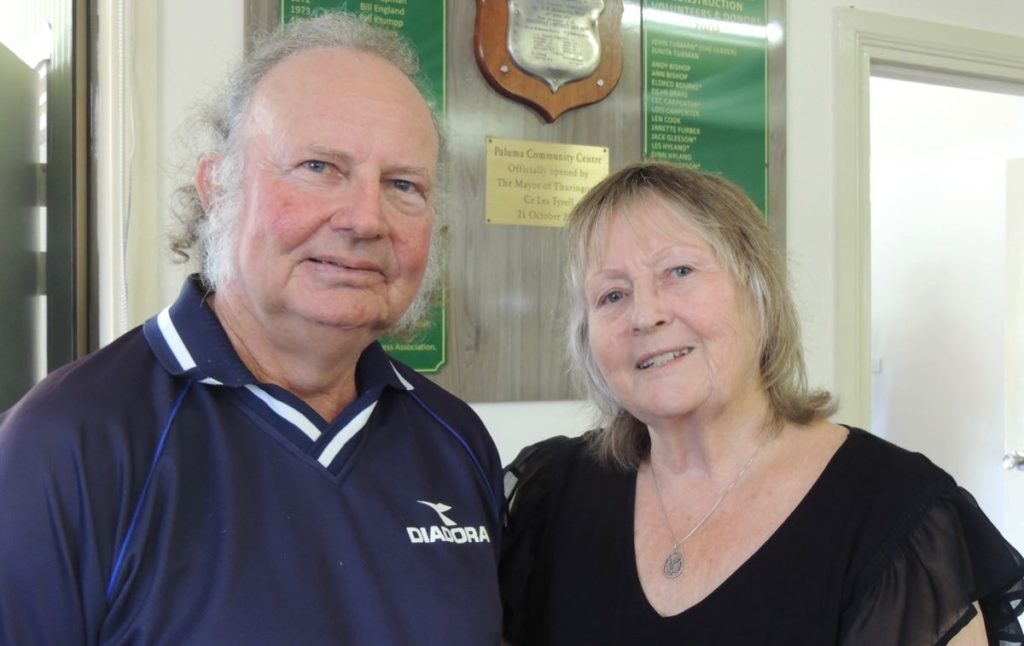
The official opening was to be on Sunday 21 October 2001, but the hall and services side were utilised prior to this date for minor socials, training and emergency events. The rush was on to complete the painting and fitting out in readiness for our Gala Social – the Centenary Ball to be held the night preceding the official opening ceremony the next day. WOW – what a celebration and did we scrub up well for the occasion. The start of a new century and the restoration of a community hub for the residents of Paluma was well and truly rejoiced. Many of you present today will have attended the many community dinners, overseas slide shows, bush dances, games nights, art exhibitions, markets, Anzac ceremonies and birthday celebrations of locals here in the hall. Both service groups have utilised the centre for training, running courses and district exercises. The centre’s true value has been appreciated at the time of major events such as land searches and rescues.
The Management Committee charged the PDCA with the role of supervising hall usage. Over the years our many regular hirers have given us a small income to supplement PDCA membership fees in meeting the costs of running the Centre. All three lessees contribute annually to cover the cost of electricity and rates. The PDCA covers the cost of the $20 Million Public Liability Insurance required under our lease agreement. The Centre is listed as a TCC asset and leased back to us at nil cost on a 30 Year Lease basis. Visitors are always amazed that this facility was built by volunteer labour in such a small community. Even the Director General of Emergency Services, Michael Kinnane, who opened the Centre with Mayor Les Tyrell, was amazed by this revelation. Very few QFES units have access to such good facilities.
Our regular community spring cleans and maintenance have kept the centre in good condition. From 2020 onwards this role will be carried out by TCC’s Infrastructure Department – we await action on an internal paint, floor restoration and external cleaning. From time to time, PDCA grant applications have been successful. In July 2012, the Paluma History Project came to fruition through funding from Powerlink and we finally got some decent chairs through Queensland Community Country Bank. A number of history projects have evolved over the past nine years such as the Trees in Memory Grove; the Pioneer Honour Board; the Flight Sergeant Plant Memorial Service; the PDCA Past President’s Honour Board; the Opening of the Andree Griffin Walking Track; the Memorial Stone unveiling; and the Community Centre Construction Honour Board. The large historical photo collection is opened to the public from 11.00 am to 1.00 pm on Tuesdays between April and November. We have photographer Brian O’Leary to thank for the superb ‘Birds of Paluma’ DVD, of which he has donated the rights to our community.
As we all know, communication is a problem in our area. In 2017, the installation in the Centre of a free WiFi service by TCC was a godsend to locals and tourists alike. Then in 2018, the long awaited Mobile Black Spot problem was finally overcome. As the hall became a well used facility and group sizes had increased, a desire to extend the Centre was expressed. A small group of PDCA members worked at a number of Northern Beaches Festival events and secured a share of the profits to be put away into a PDCA ‘Building Fund’ Account. The PRFB through community support had received funding from the many Paluma Push Bike Races and now that the Government was meeting new vehicle costs had a healthy bank balance. The brigade agreed to join forces with the PDCA in funding the rear extension to incorporate a small meeting room and realign the verandah area. They had not been able to contribute financially back in 1997 but could do so now. And so began the recent Centre extension project.
Unfortunately John Tubman’s health did not allow him to continue and a further Gaming Benefit Grant was obtained to meet the increased cost of a new builder. On 22 September 2018, the John Tubman Meeting Room was officially opened by John himself and the Centre Construction Honour Board unveiled. This year (2021) sees the 25th Year of our annual Garden Competition and the new garden beds around the centre are looking good thanks to the many garden enthusiasts in Paluma. So 20 years on, the Centre is in regular use for major recreational events, community socials and celebrations and used by regular community groups and commercial hirers. The History Project continues to expand and the SES and PRFB are still functioning well despite their ups and downs in membership over the years. We live in a wonderful part of North Queensland’s Wet Tropics. The Paluma community welcomes visitors to our little bit of paradise and we are renowned for our helpfulness and friendliness. Long may it be so!
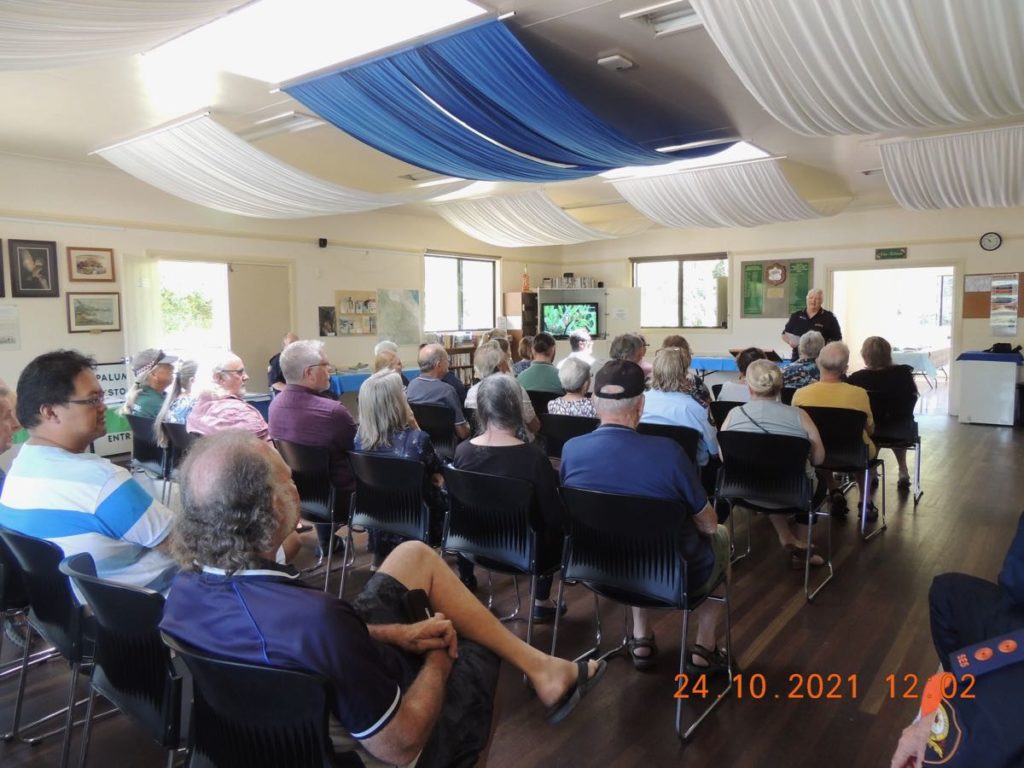
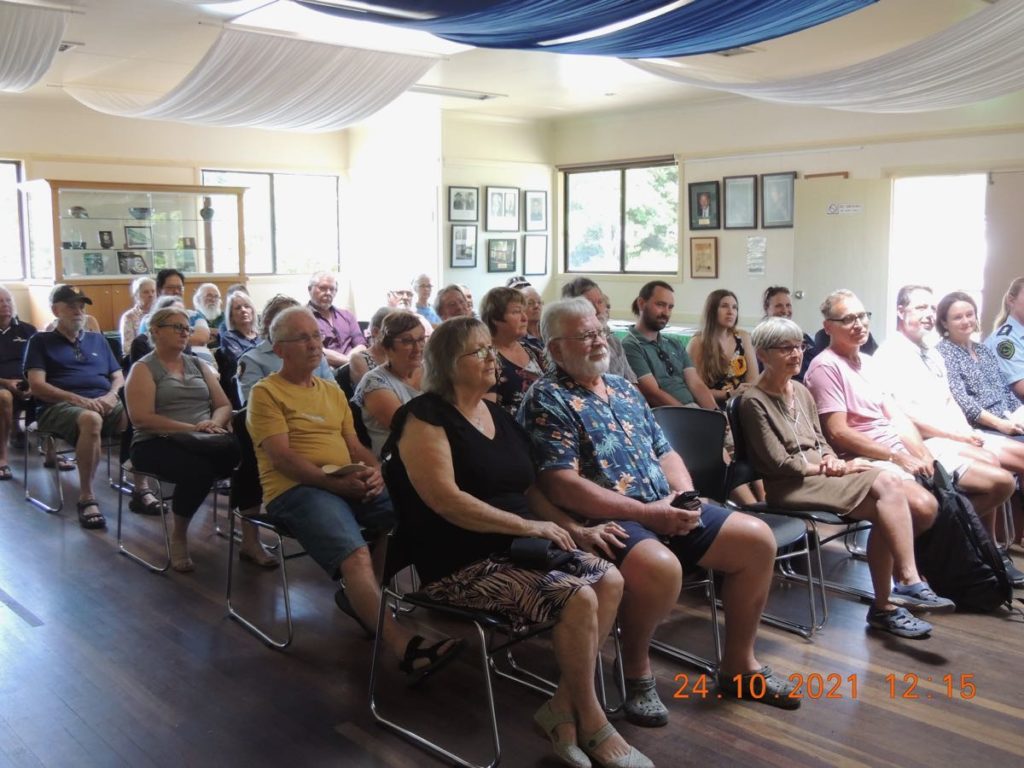
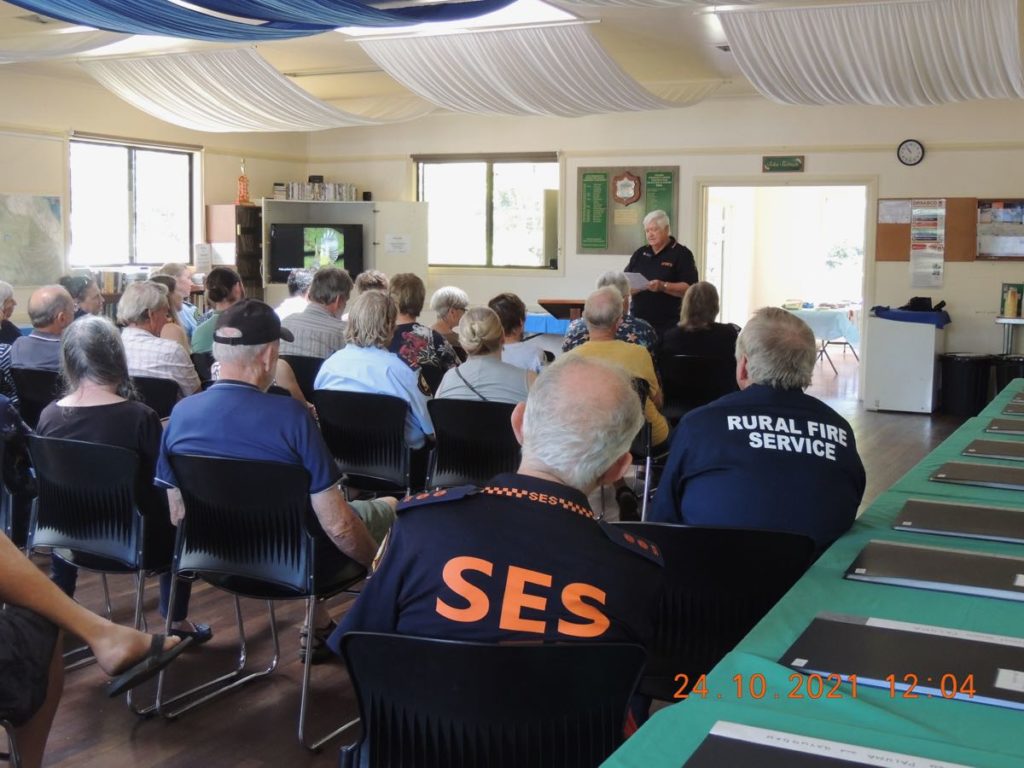
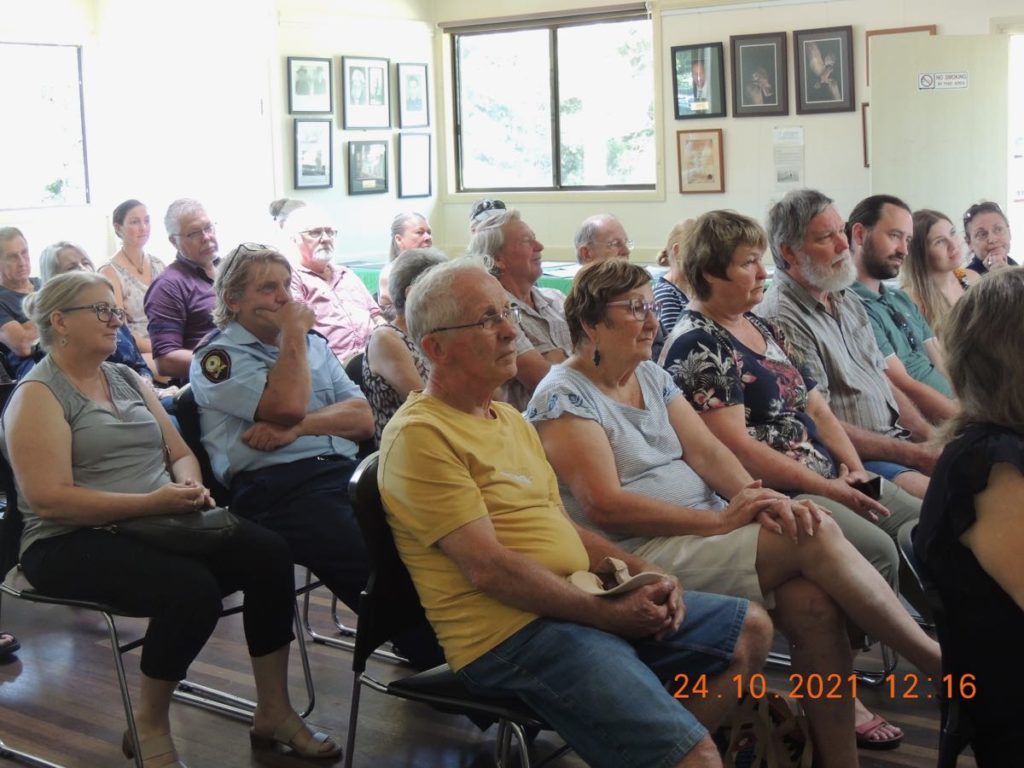
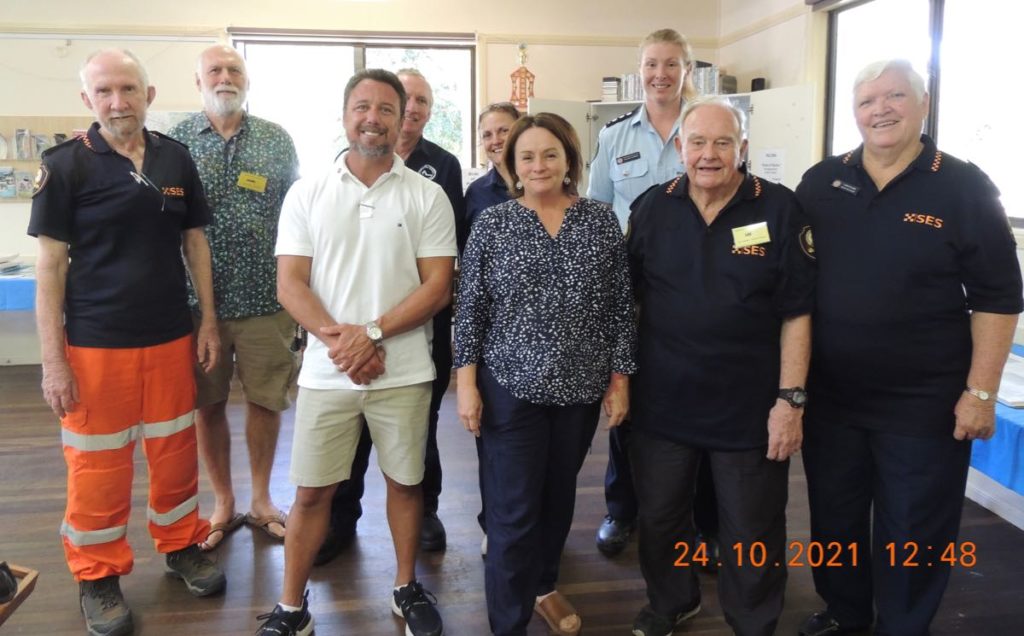
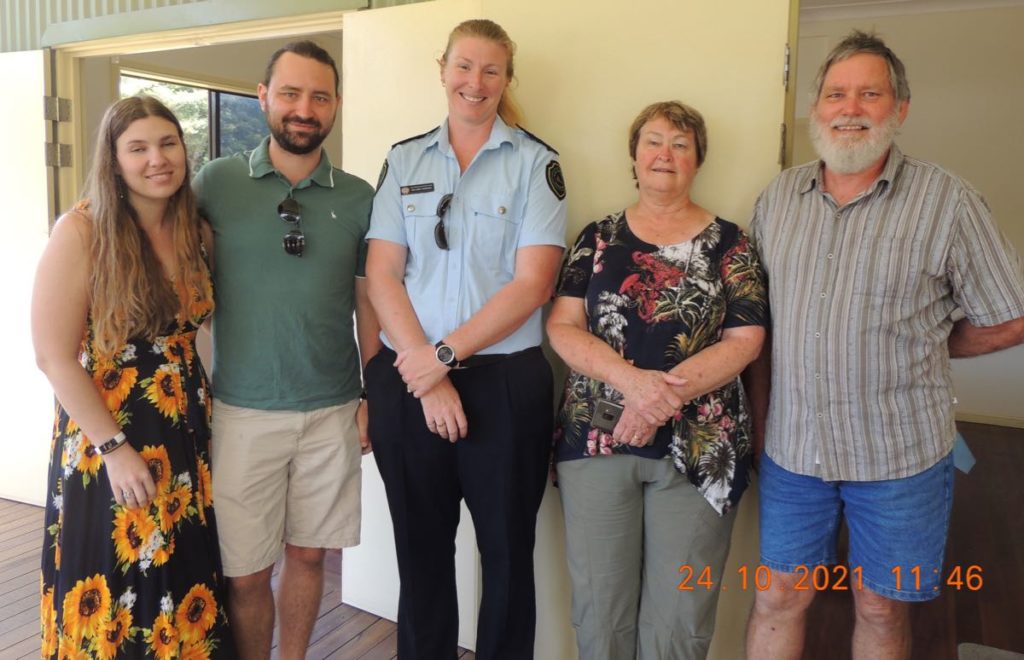
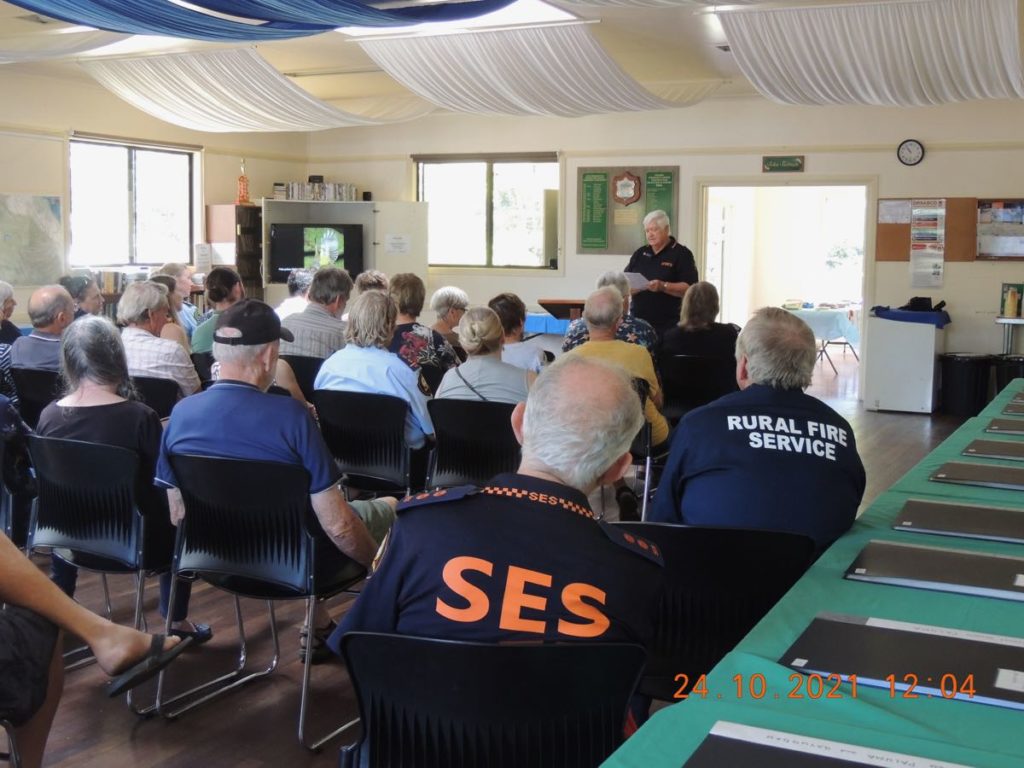
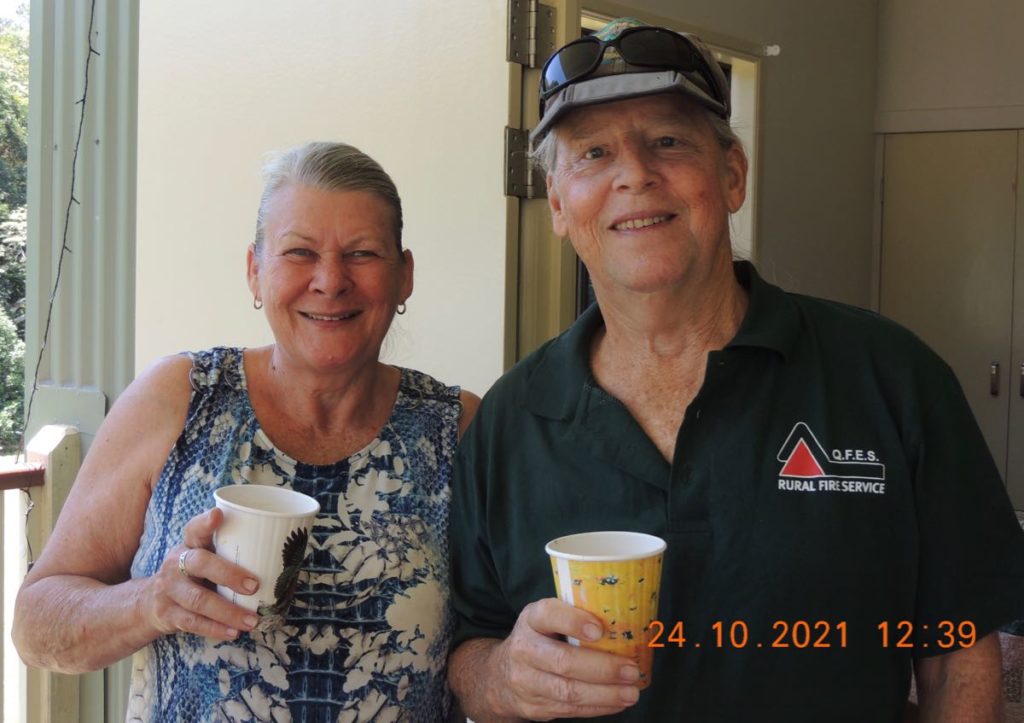
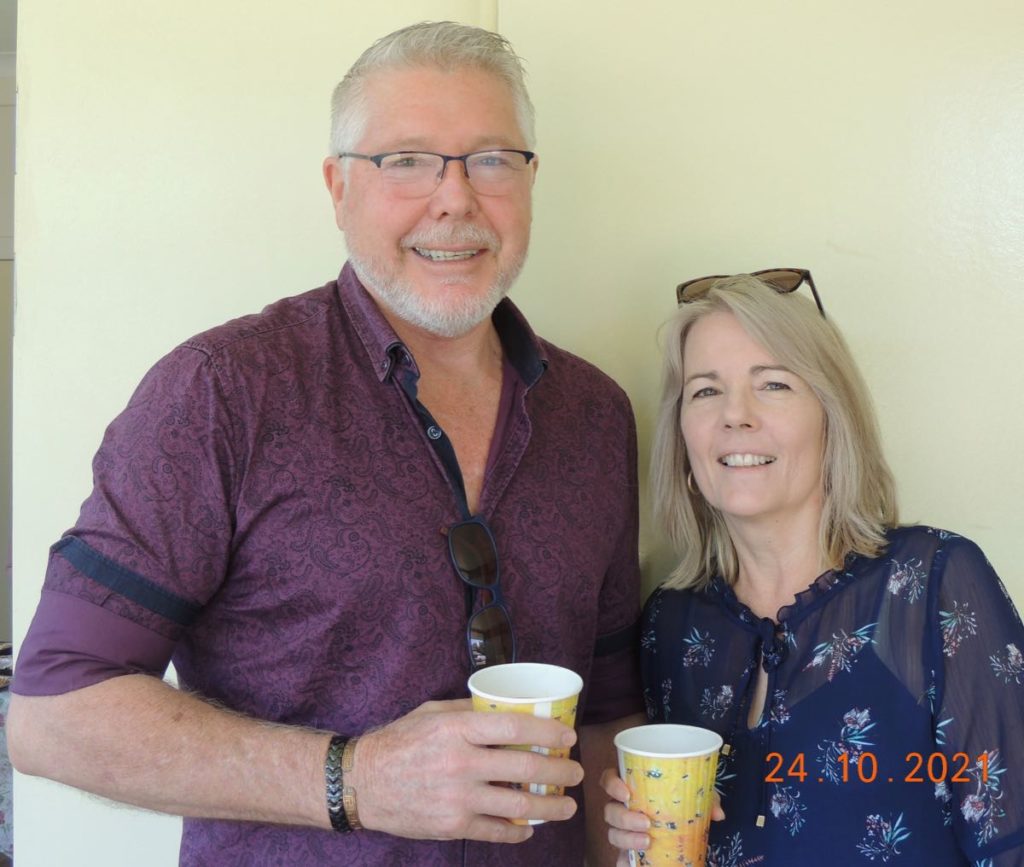
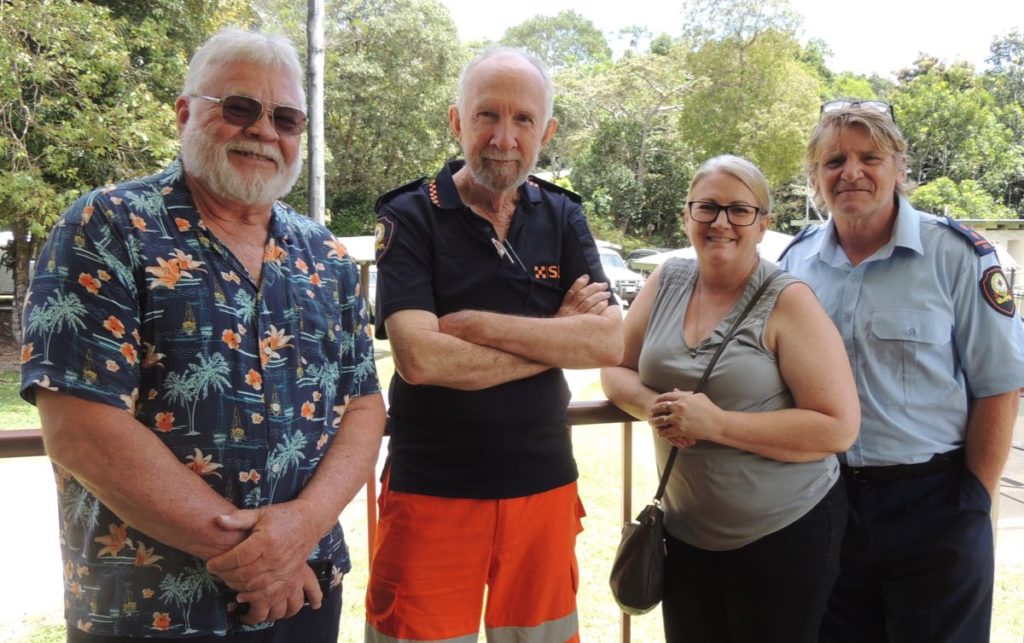
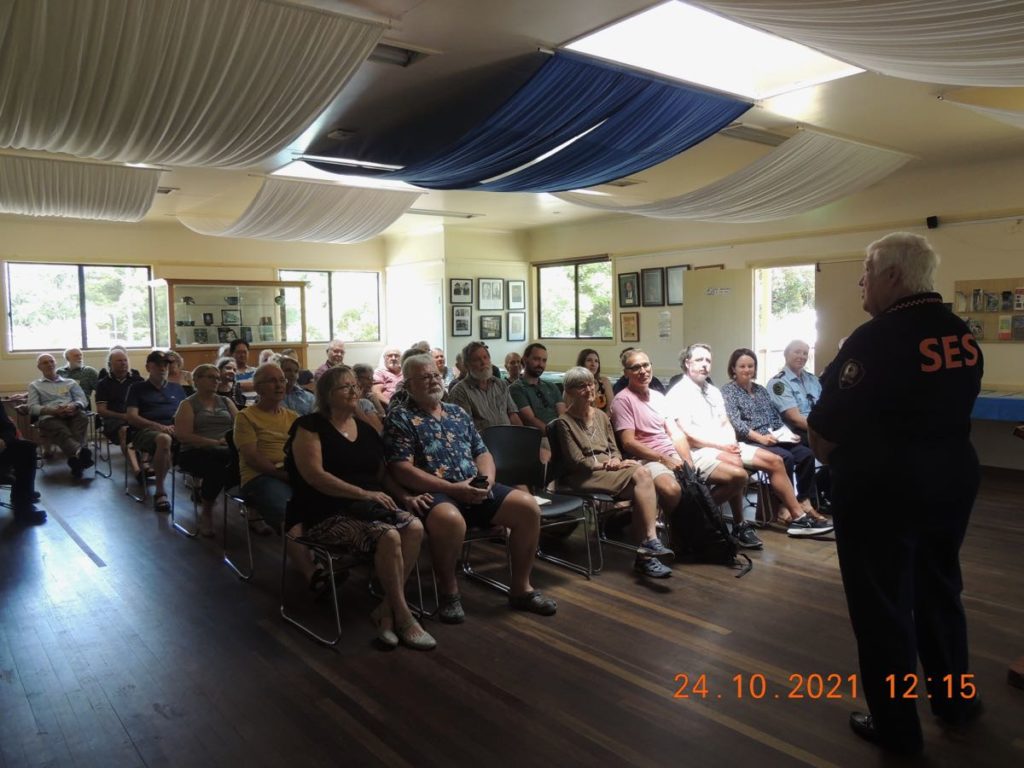
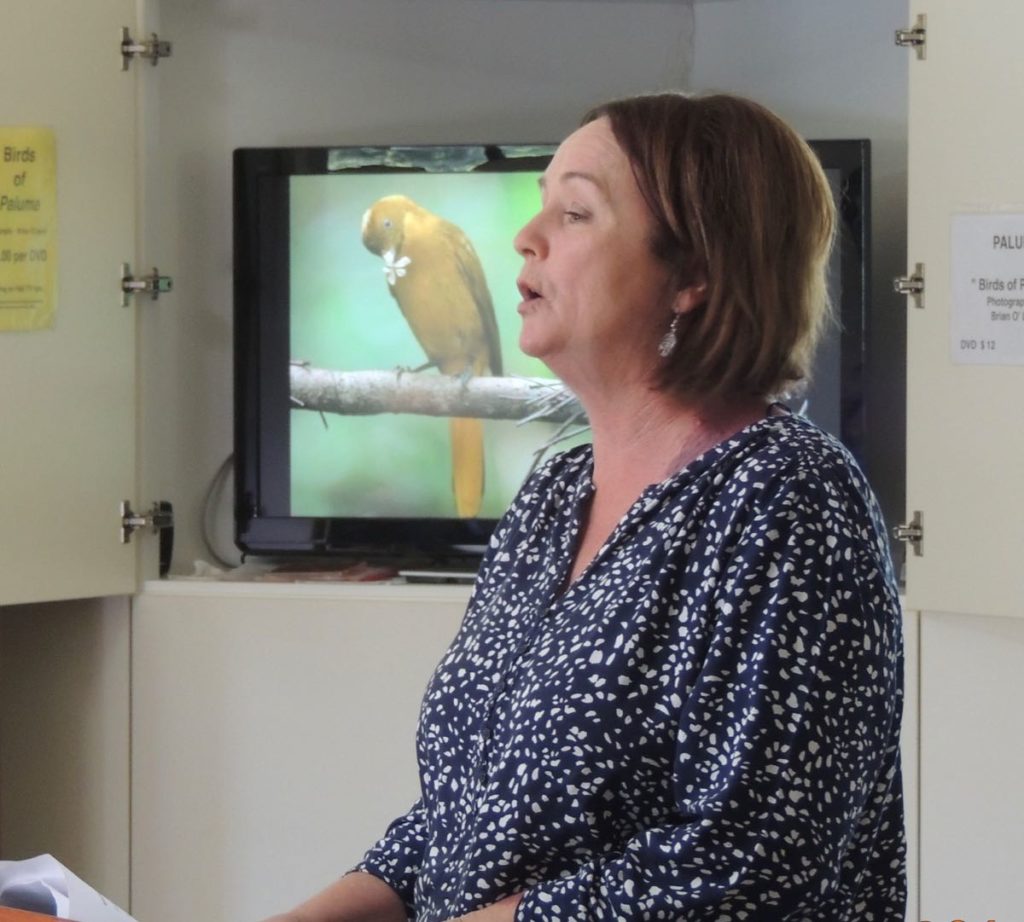
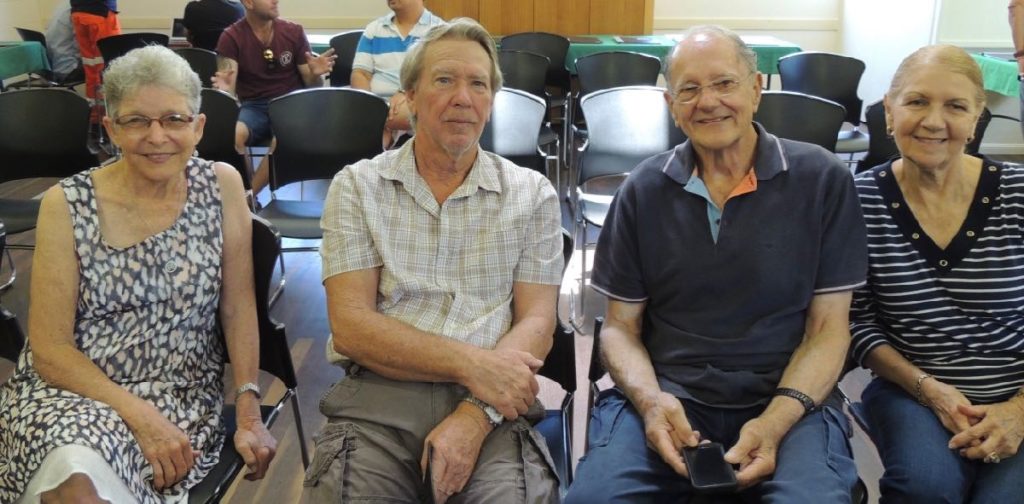
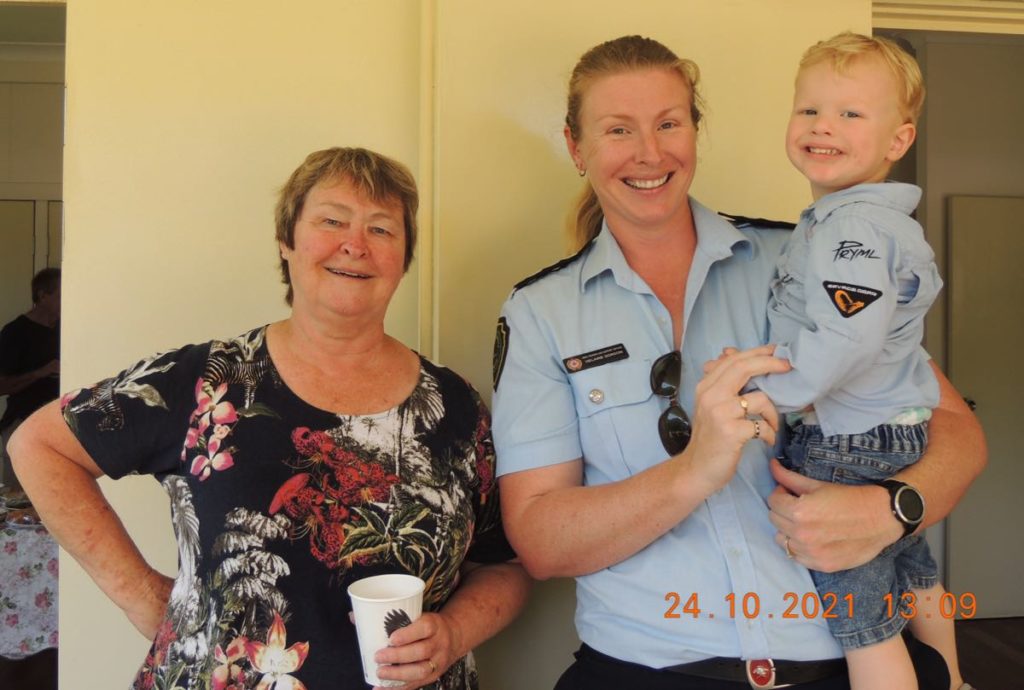
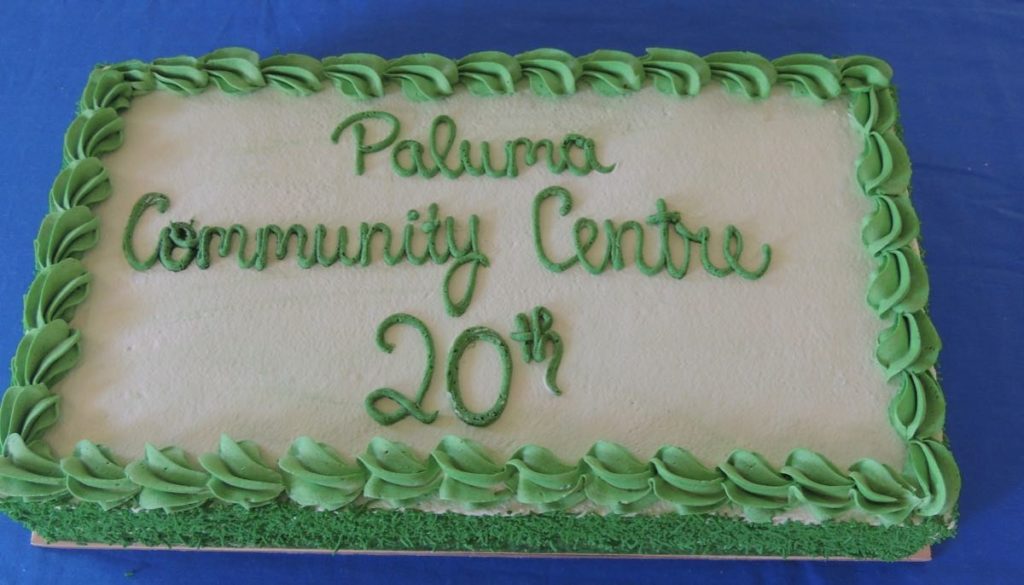
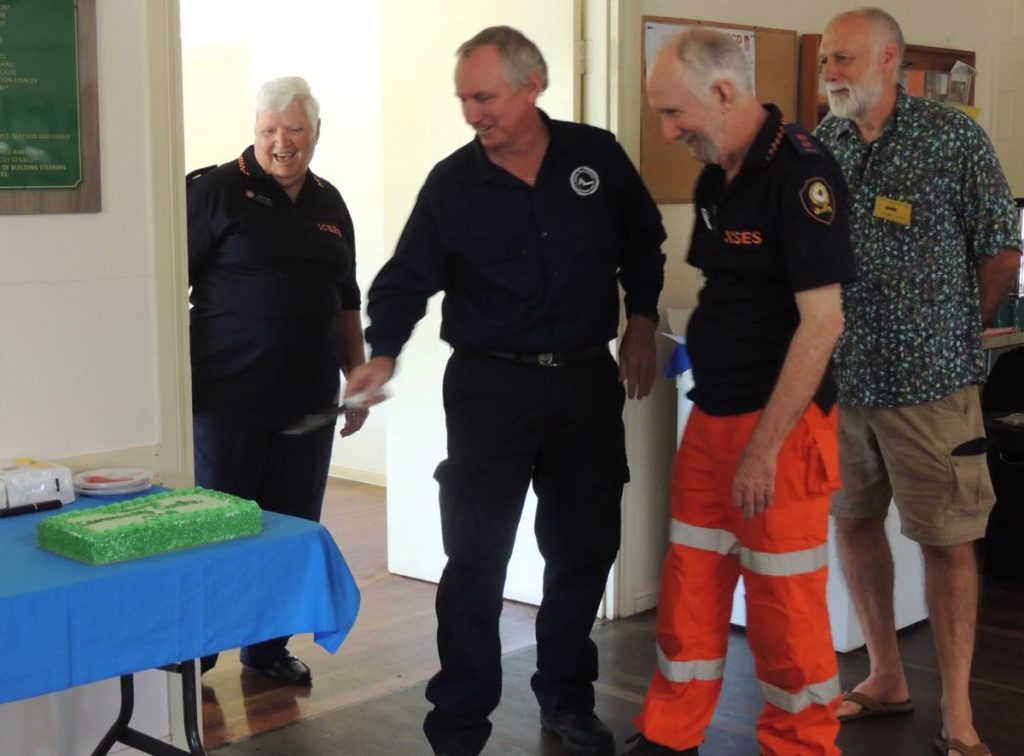
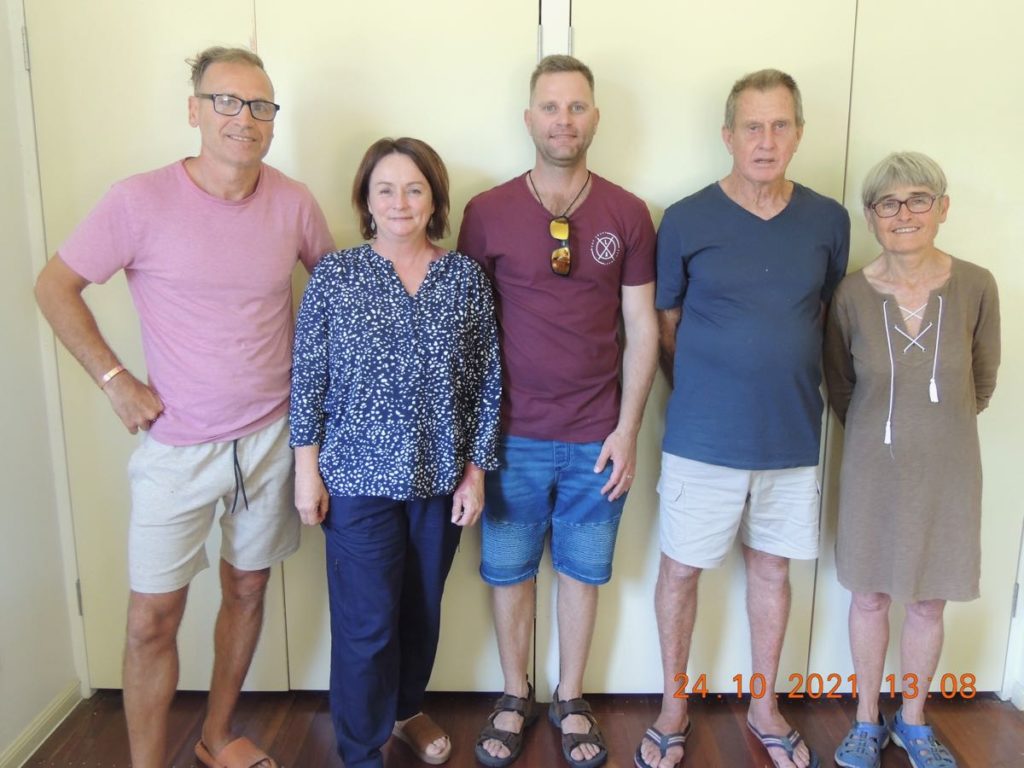
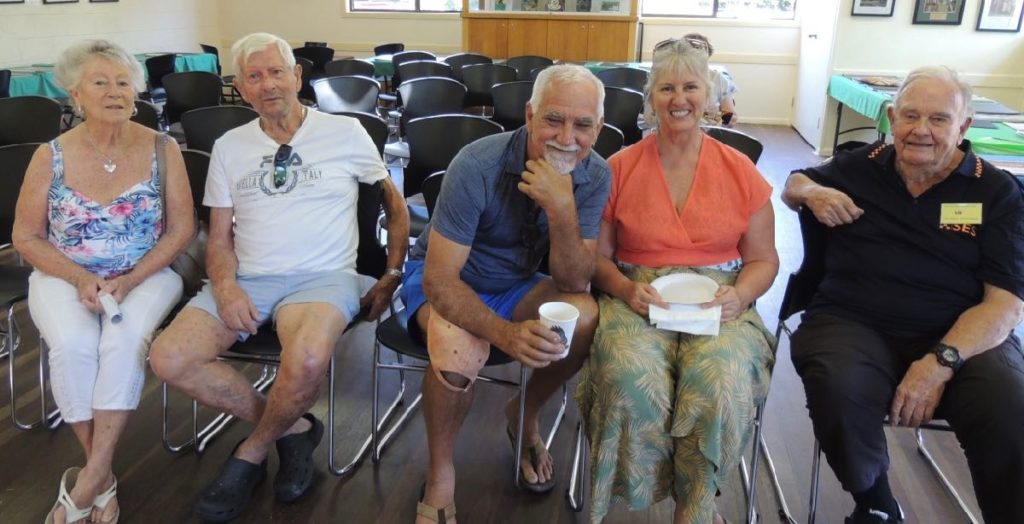
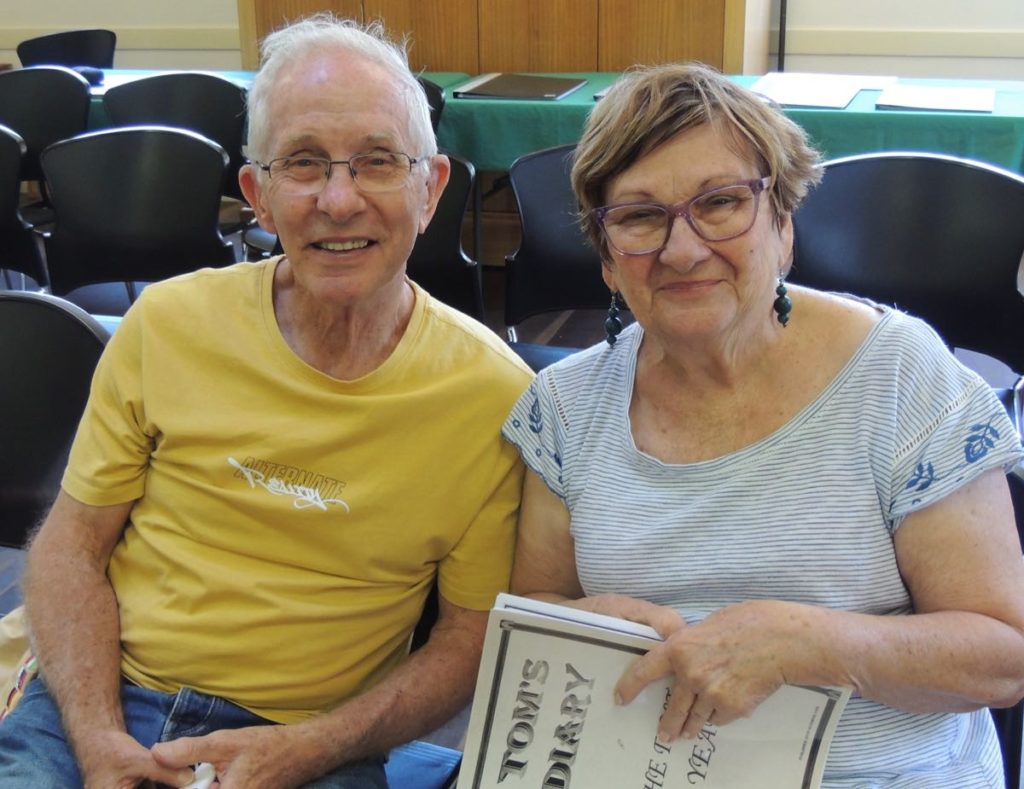
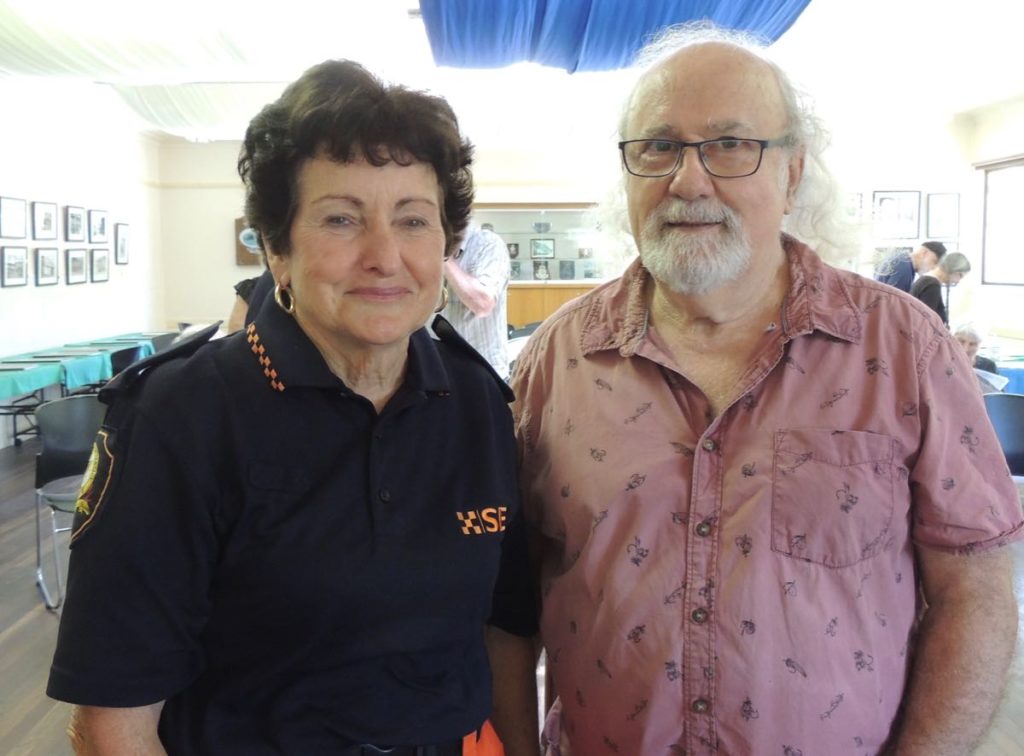
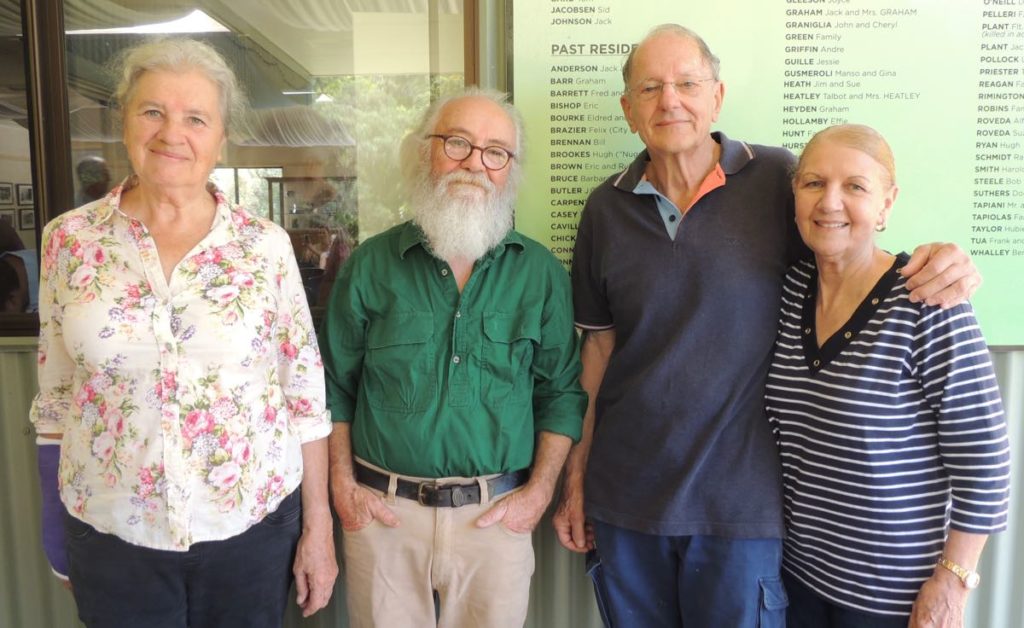
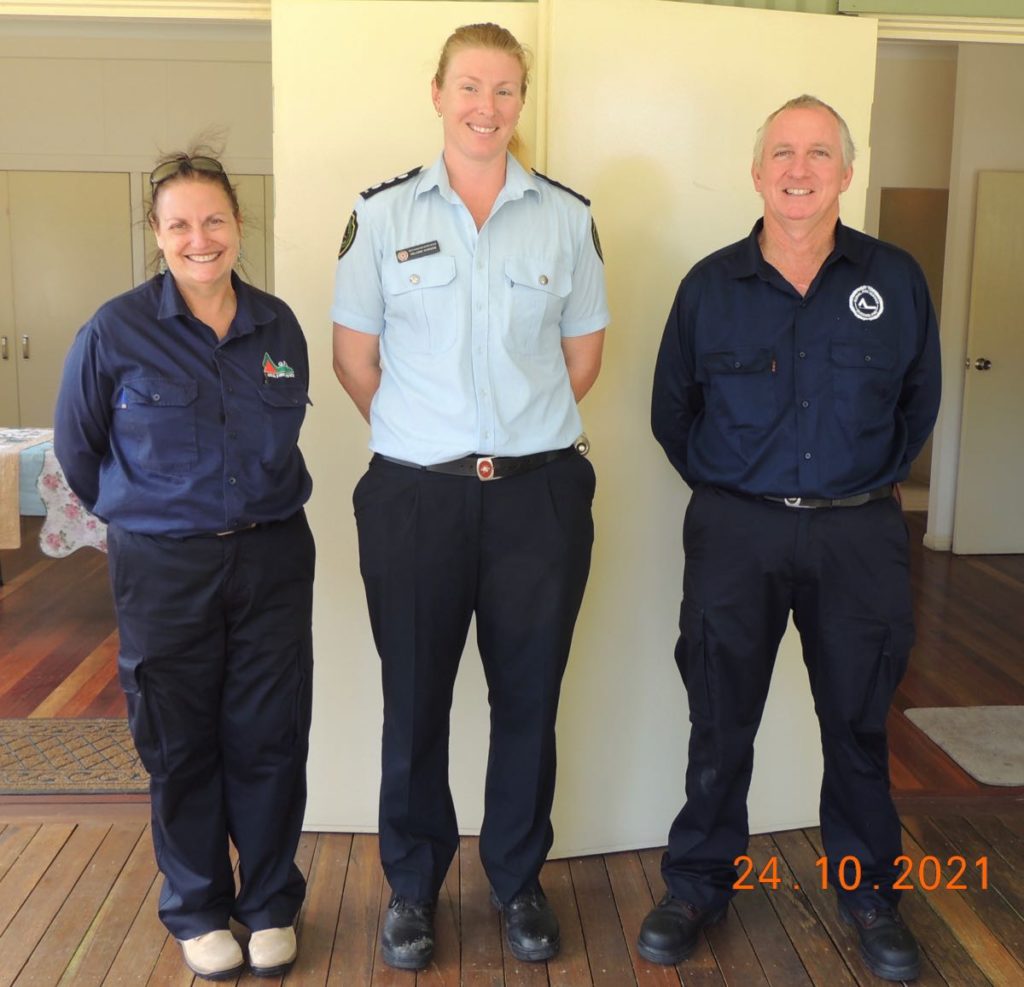
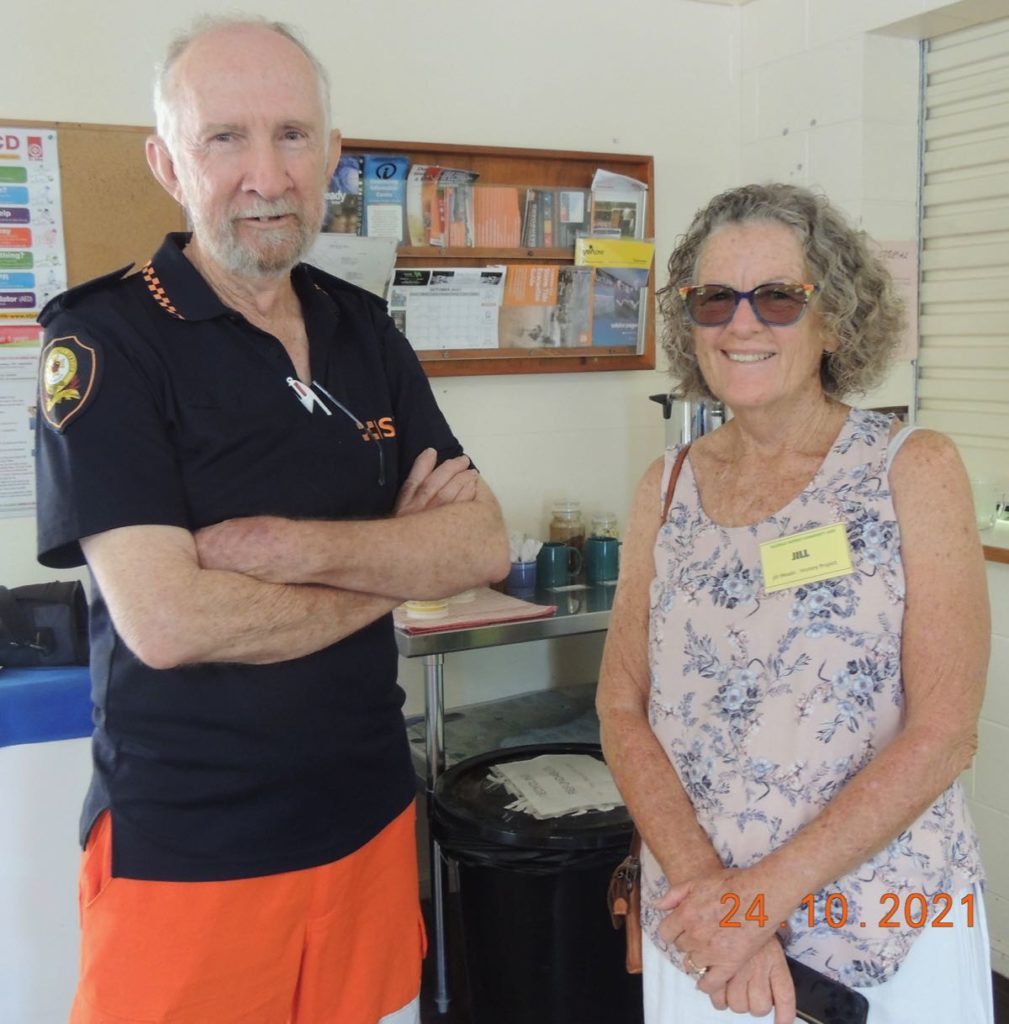
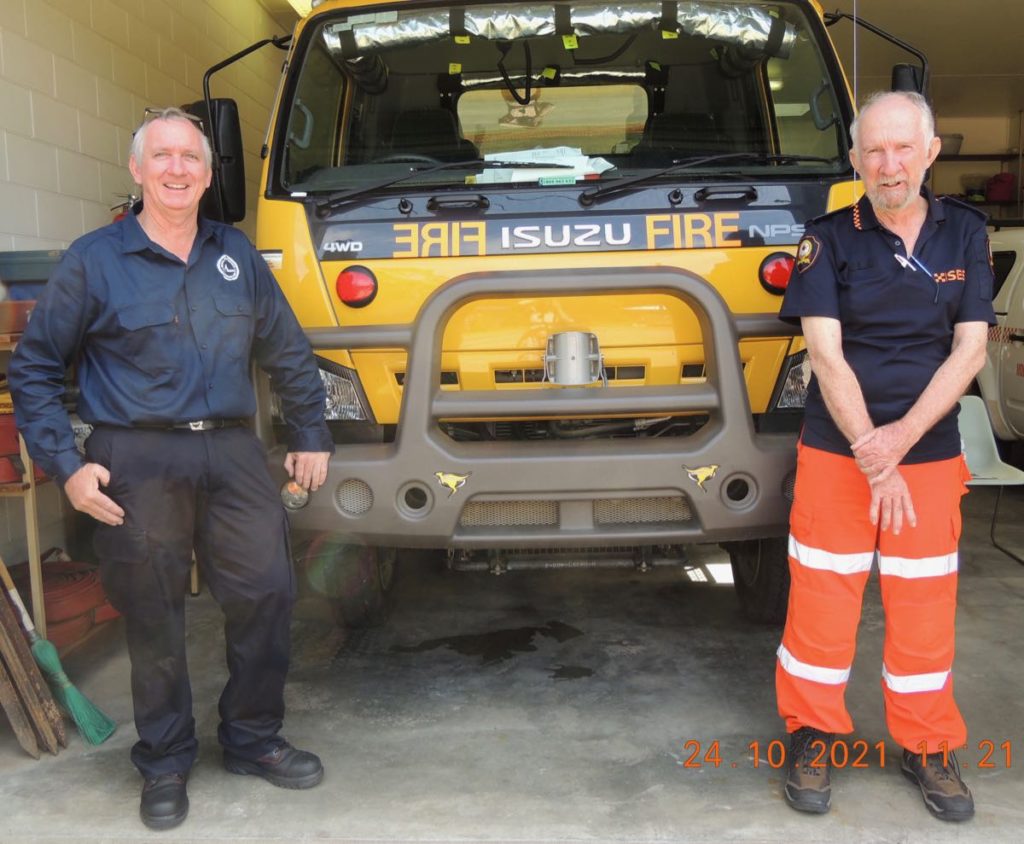
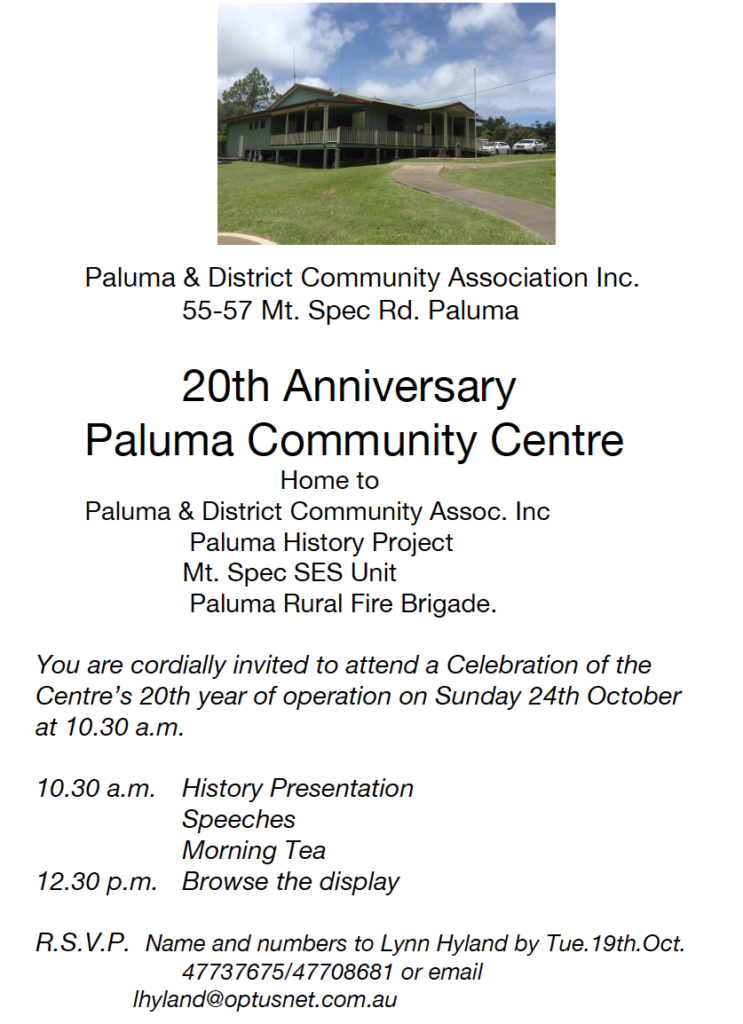
On Sunday 24th October 2021 the village of Paluma celebrated the 20th Anniversary of our Community Hall. A morning tea was held to mark this important occasion and was attended by some 50 people, including past and present residents. We were delighted to see the return of many past, long-time residents of Paluma whose families established and built the Community Hall. It was a great opportunity to acknowledge and thank these people and their extended families for their hard work in making the village what it is today.
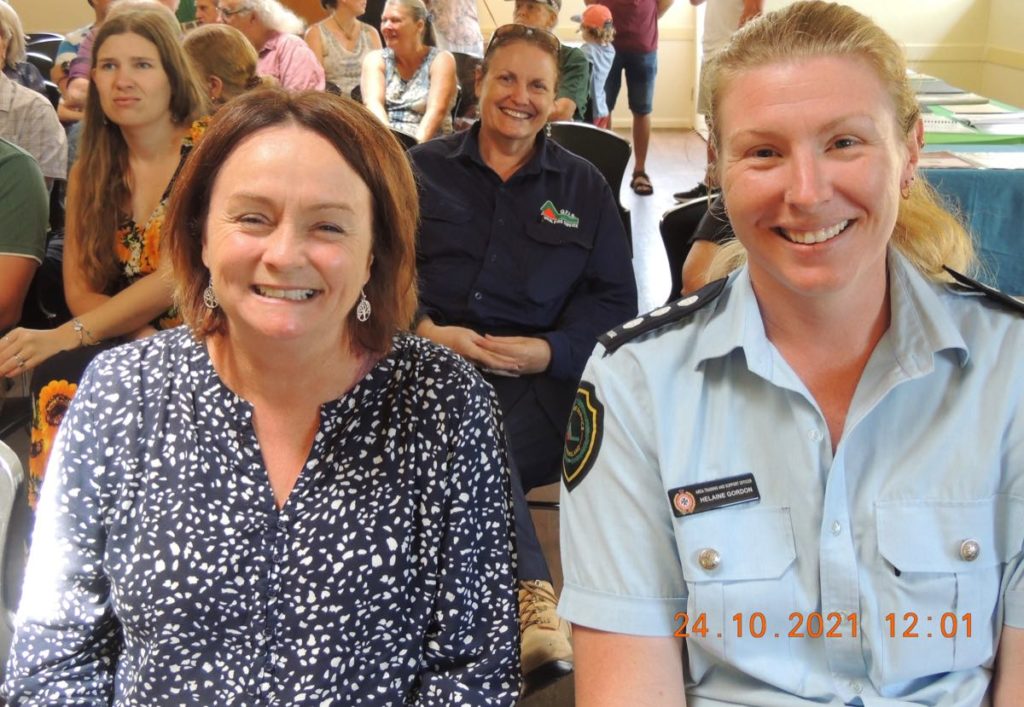
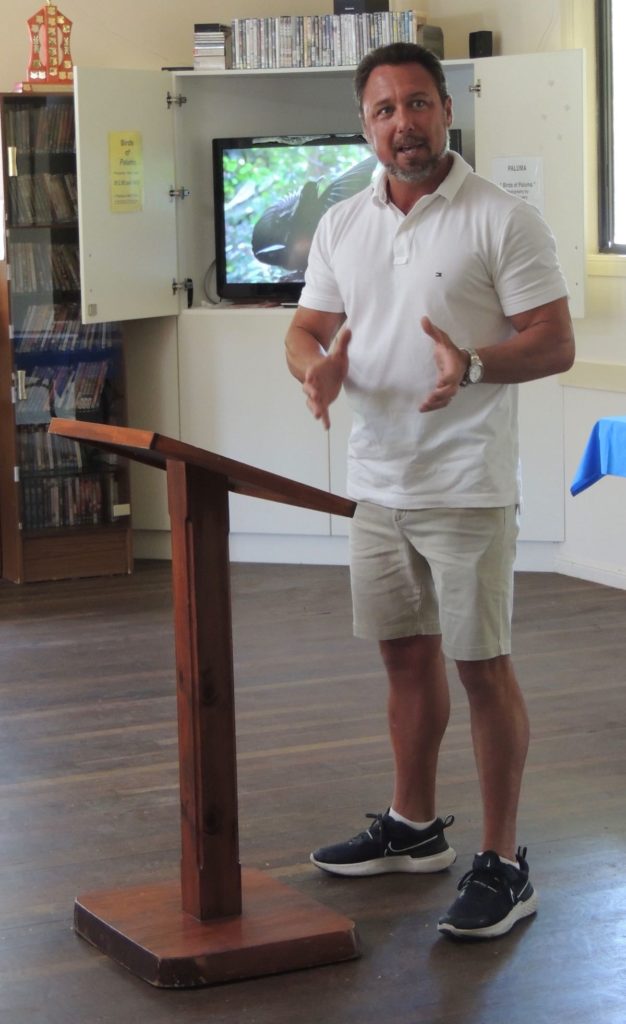
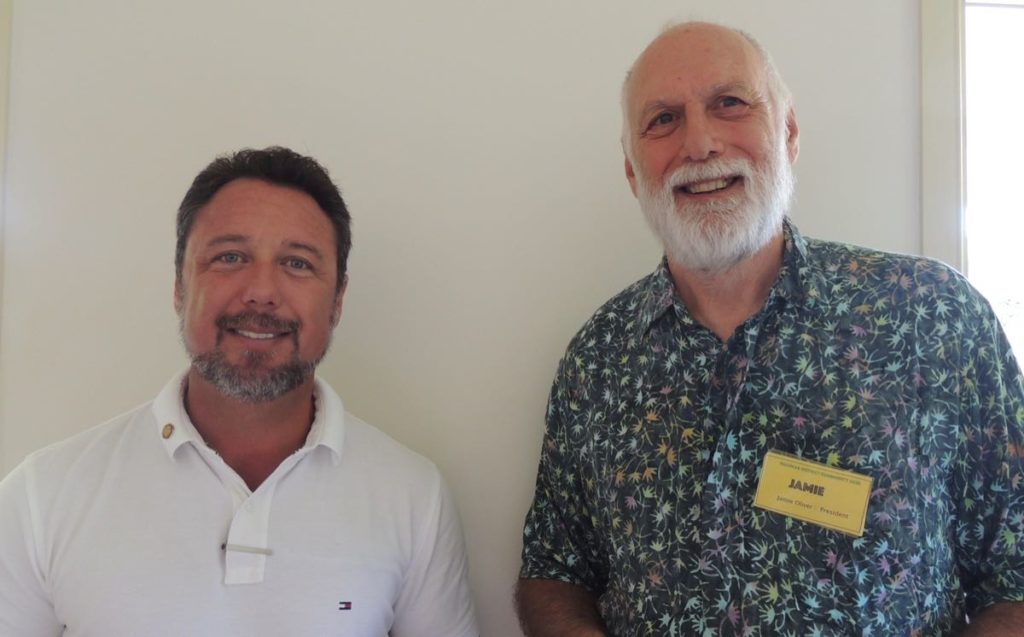
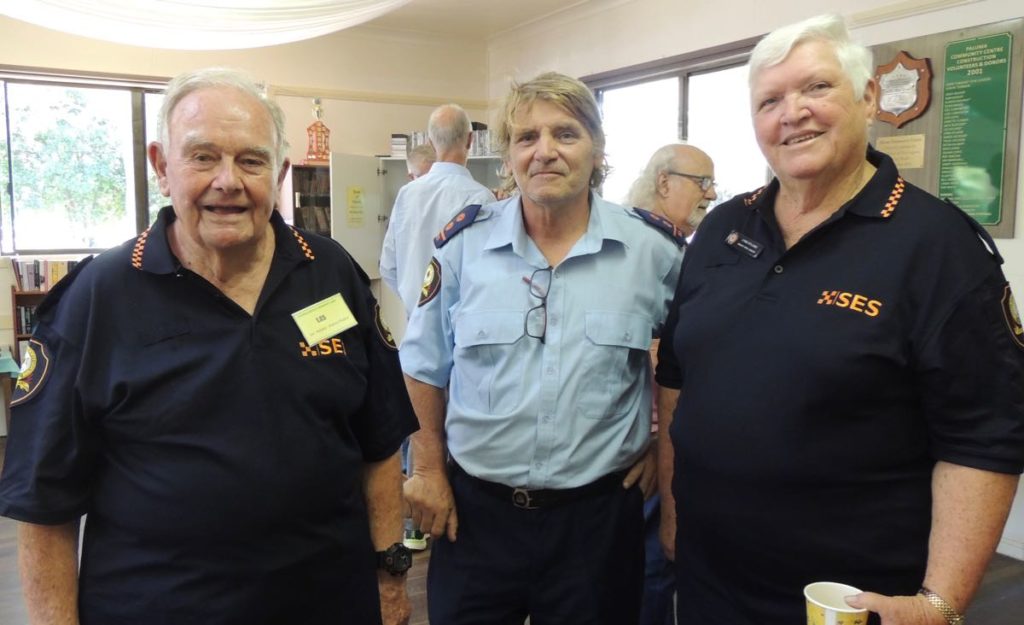
The gathering was joined by Councillor Margie Ryder, Nick Dametto (Member for Hinchinbrook), Helaine Gordon (Area Director, Townsville Rural Fire Service) and Lewis O’Rourke (SES, Deputy Local Controller). Our many dedicated local and resident service volunteers from the Rural Fire Brigade and SES were also in attendance, since the Community Hall is the headquarters for both the Paluma RFB and the SES. Lynn Hyland provided a comprehensive history of the Hall and how it came to be in its present form.
All of the speakers on the day spoke warmly about Paluma and what our little village means to them. The common theme was COMMUNITY. Our sense of community at Paluma is no better represented than in the walls of our Community Hall. Yesterday was a glowing example that the community spirit is alive and well in Paluma. We work together to get things done and when it matters, we are there for one another. With enough community spirit you can even build a Hall!
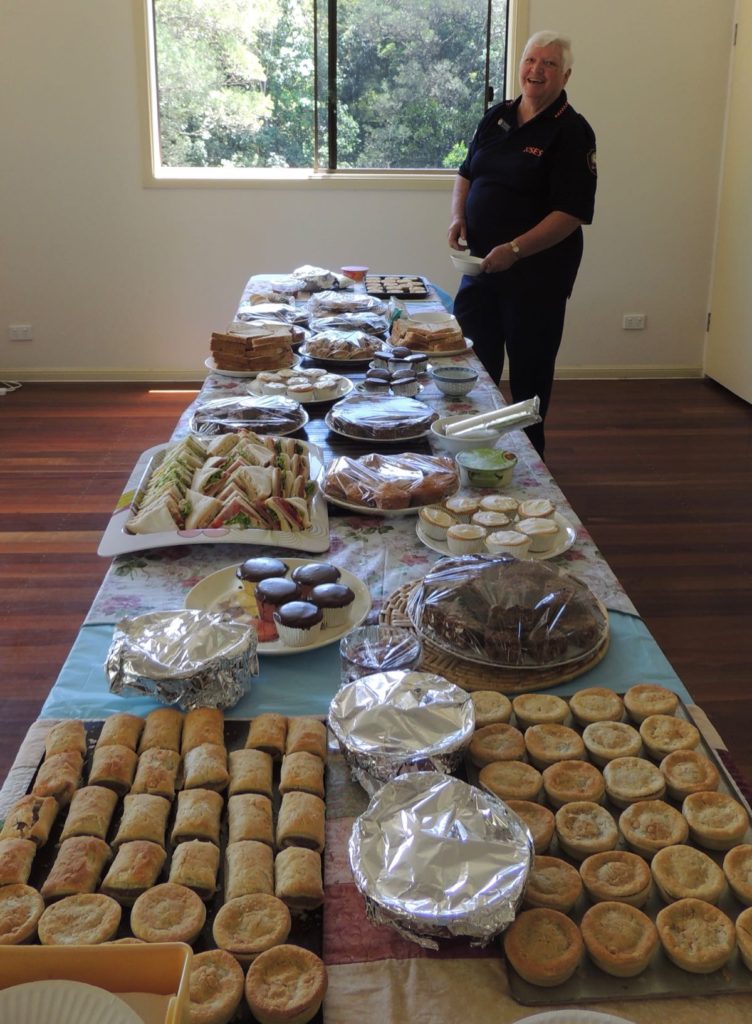
The morning tea provided enough food to feed an army and the Hall was filled with lively chatter of days gone by and good things to come. Special thanks to the many volunteers who organised the event – you know who you are.
Here’s to the next 20 years of celebrating community in our village hub.
This coming weekend, 30 and 31 October, Outer Limits will host their annual Dinner Under the Stars on Saturday evening 30 October, to be followed by the Paluma Village Trail Run on Sunday 31 October.
Join us for an end of year celebration, the night before our last trail run for 2021. The Dinner Under the Stars is held on Saturday night, 30th October from 5.30pm onwards. The Feel Good Foodie will be set up at the Outer Limits Adventure Centre for a casual night out under the stars or as it is Paluma, it will most likely be in the clouds.
The final run in the Outer Limits Trail Run Series 2021. The Paluma Village Trail Run is our favourite event in the series, we have kept the best for last. It features amazing trails, taking you through the World Heritage listed rainforest in the most southern part of the Wet Tropics. This time of the year, Paluma Village is a great escape from the heat in Townsville.
For more details on both events and how to register, please go to the Outer Limits website.
A reminder to all Paluma residents past and present that there will be a Morning Tea this Sunday 24 October at 10.30 am to celebrate the 20th Anniversary of the Paluma Community Hall.
We encourage everyone to attend to mark this important occasion and to learn some more about the history of our beloved Community Hall and also to acknowledge those members of our village community who were instrumental in establishing the Hall (in its past and present forms). Please come along and enjoy a cuppa and some cake. Everyone has a story or an experience about our beloved Community Hall and we encourage you to come along and share your memories and reminiscences.
Prior to the Sunday Morning Tea, we are calling for some keen volunteers from the community to help us give the Hall a clean so it looks its very best on Sunday morning. Please come along to the Hall at 9 am on Saturday morning 23 October. The more the merrier and the sooner we get the job done!
A timely reminder that a Working Bee is to be held on Saturday 16th October, from 2pm to 4pm at the Rainforest Walking Track opposite the Community Hall.
Please come and join us with a wheel burrow, shovel, rake, and your enthusiasm to undertake some repair works on the track including the spreading of deco.
A refreshing drink will be made available at the Community Hall after the Working Bee. Please contact Wilfred on 0447 822 626 for further information.