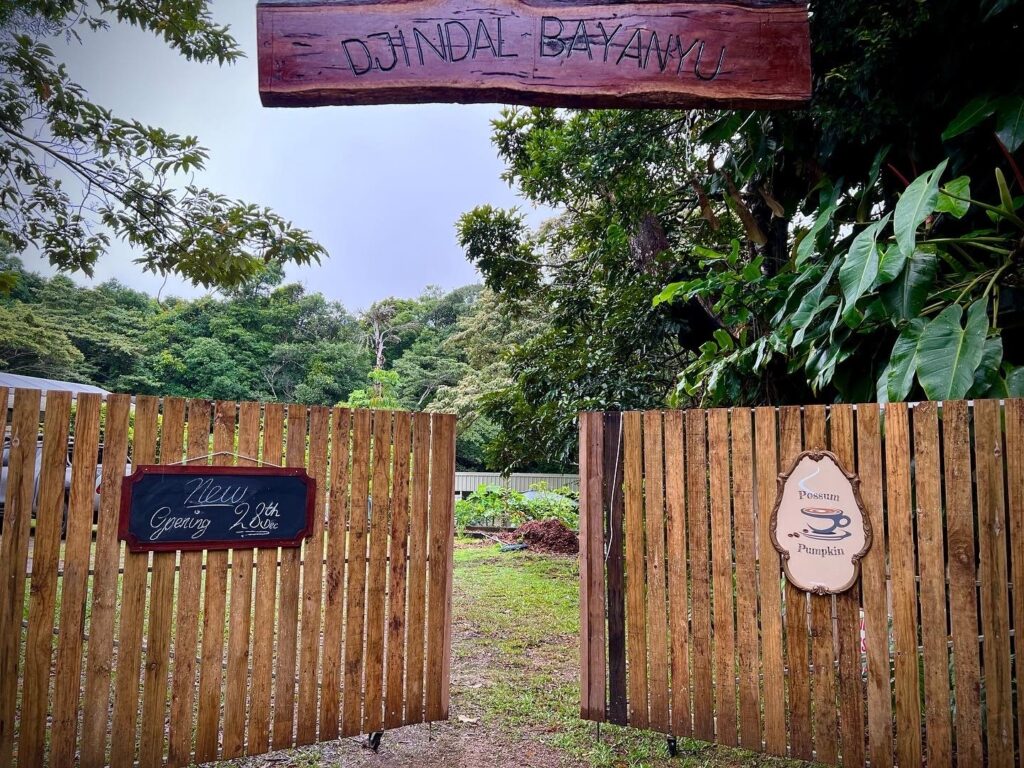
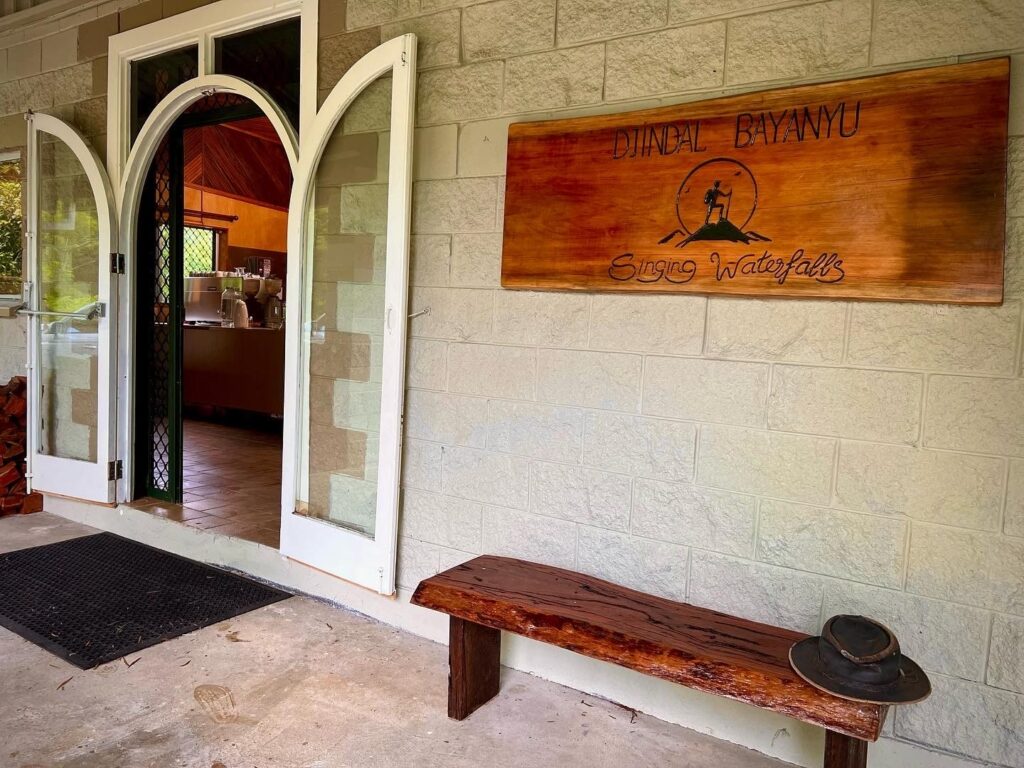
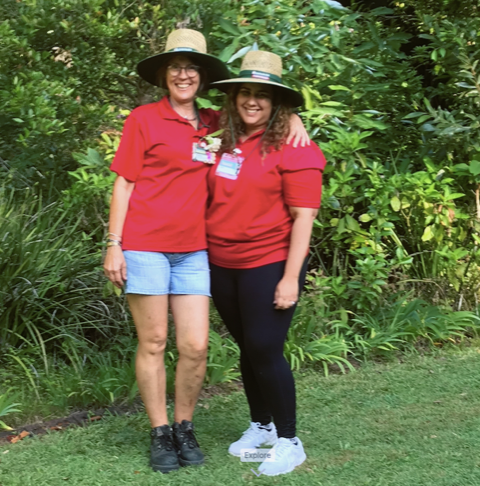
It’s not every day that a new commercial enterprise opens in Paluma, especially one that offers accommodation and meals in a beautiful rainforest setting. Mark and Leonie Crennan have been working tirelessly over the last year to refurbish the old Paluma Dreaming (and Heaven’s Kitchen) café at 1 Loop Road.
The new name, Djindal Bayanyu, was the result of many hours of research and consultation by Leonie, who wanted to acknowledge the original inhabitants of Paluma. The name means Singing Waterfalls in Nywaigi, which is the language group of the traditional owners who thrived for centuries in the abundant rainforest and pristine creeks of our spectacular mountain range.
Djindal Bayanyu will be open from 10:30am to 3pm Thursday – Sunday (and Wednesday this week) for excellent coffee, tea and sweet and savoury treats. Accommodation is also available with ensuite bathroom and kitchenette, or you can access shared facilities.
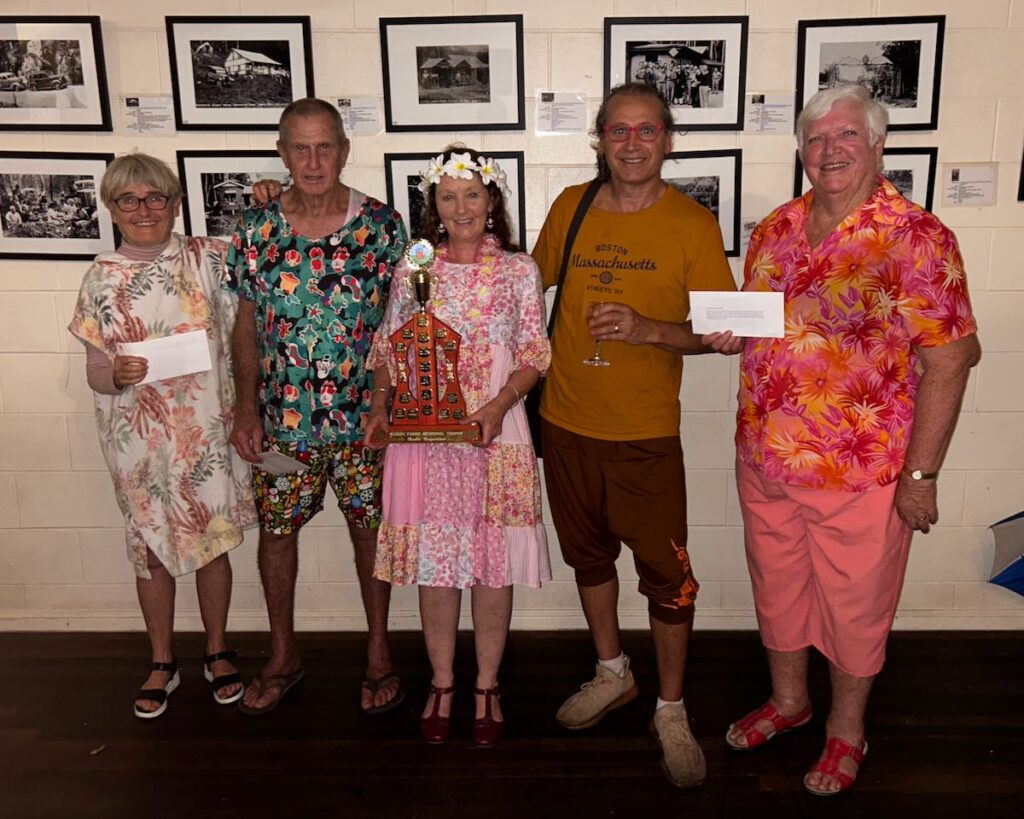
In addition to the refurbished interiors of the rooms and café, the garden has received a range of new plantings of native and ornamental trees and shrubs and artful landscaping. Their gardening efforts were recently recognised with an award in this year’s Paluma Garden Competition.
Ring or text 0490397650 to book accommodation or check cafe opening times.
Receive disruptive event updates from the Department of Transport and Main Roads (Northern District)
Good afternoon
Ahead of the 2022/23 wet season, the Department of Transport and Main Roads (TMR) is updating its email distribution lists for disruptive events. You have previously provided your contact details to TMR Northern District for road or project updates, and have been identified as a stakeholder who may wish to receive TMR’s disruptive event updates.
During disruptive events, such as severe wet weather and flooding, TMR may issue various updates to stakeholders in its distribution lists. This information will not replace emergency and general information on each local government’s Emergency Management and Disaster Dashboard, and information about traffic and travel conditions on the QLDTraffic website. Rather, these updates may include information about TMR’s recovery and response efforts to inspect, repair and reopen roads after severe events.
If you would like to subscribe for disruptive event updates from TMR, please click on the subscribe button below to add your contact details. In this form, you can also select which local government area (Townsville, Burdekin, Hinchinbrook or Charters Towers) you would like to receive updates for.
If you are aware of people or organisations that would also like to be added to this distribution list, please forward this email on.
If you do not wish to receive any further information from TMR Northern District, please click ‘Unsubscribe’ at the bottom of this email.
Please do not hesitate to get in touch with our team if you have any queries about this information:Email:engagement.northern@tmr.qld.gov.auPhone: 1800 625 648Wishing you a safe and happy festive season.
Customer and Stakeholder Management team Northern District Department of Transport and Main Roads
Graham and Julie invite all Paluma residents to New Years Eve celebrations at the Pope residence on the hill. Everyone is welcome to come along and join in the party.
The event will kick off about 6.30 pm on New Years Eve, Saturday 31 December.
Please bring a plate of food to share and BYO drinks.
This is always a fun event for the Paluma community.
This year’s Garden Competition was held on November 14th. The competition was sponsored by Bunnings and judged by two experienced and enthusiastic garden-lovers from Bunnings (Ange, a trained horticulturalist and Kathleen, the local activities coordinator). Lynn and Jamie spent most of the day escorting judges around the village and 5 acre blocks, admiring the wonderful and varied landscapes and plantings created by Paluma residents. The judges commented on what a privilege it was to be able to see the spectacular displays of blooms and foliage that our misty, mountain climate can produce. Almost every garden had something that was striking and unique that caught the eyes and admiration of the judges. They left the village overwhelmed with the task of picking winners from such a range of beautiful gardens.
The Winners for this year (with comments from the judges) are:
1. Best Residential Garden in the Village (Allison Evens Trophy) Michele Bird.
From the front of the property to the back, everywhere we looked there was something interesting and beautiful to look at. The front was full of colour that was a delight to see. As you walked through the little paths it was like walking through a secret garden. The back was beautifully landscaped creating a lovely view from the balcony which also had an amazing array of plotted plants. We loved the eclectic style and she has done an amazing job with the space that she has.
2. Best Non-Residential Garden in the Village Djindal Bayanyu EcoRetreat (Mark Cubis and Leonie Crennan)
The place at the end of Mount Spec Rd/Loop Rd – The landscaping was very well done. It had different levels and points of interest such as the timber archway and water feature. The view from the deck down onto the garden was lovely and created such a relaxing space.
3. Best Acreage Garden Lynn and Les Hyland.
Out of all the acreage properties we saw, we felt this property used the space to its full potential. There were interesting paths to take you throughout the property, each one was a unique experience. We also loved that the forest itself was integrated as part of the garden. It created a beautiful balance of established gardens and the natural environment.
4. Highly Recommended Village Garden Julie and Tony Bligh
The Japanese style garden – It was such a surprise to see the beautiful little Japanese style garden amongst the Paluma rainforest. We loved the use of water which created an interesting and tranquil space and the black pine was a beautiful specimen. It was a unique little garden well worth seeing.
5. Most Unusual Feature or Plant Specimen Don Battersby
He had the most impressive collection of anthuriums we have seen and there were many interesting specimens but the poisonous pigtail anthurium was the most unusual garden specimen we had seen that day. Something we have never seen or heard of.
The winners…. (except the Blighs)
Congratulations to all the winners. We hope to post separate articles on recent winning gardens early next year.
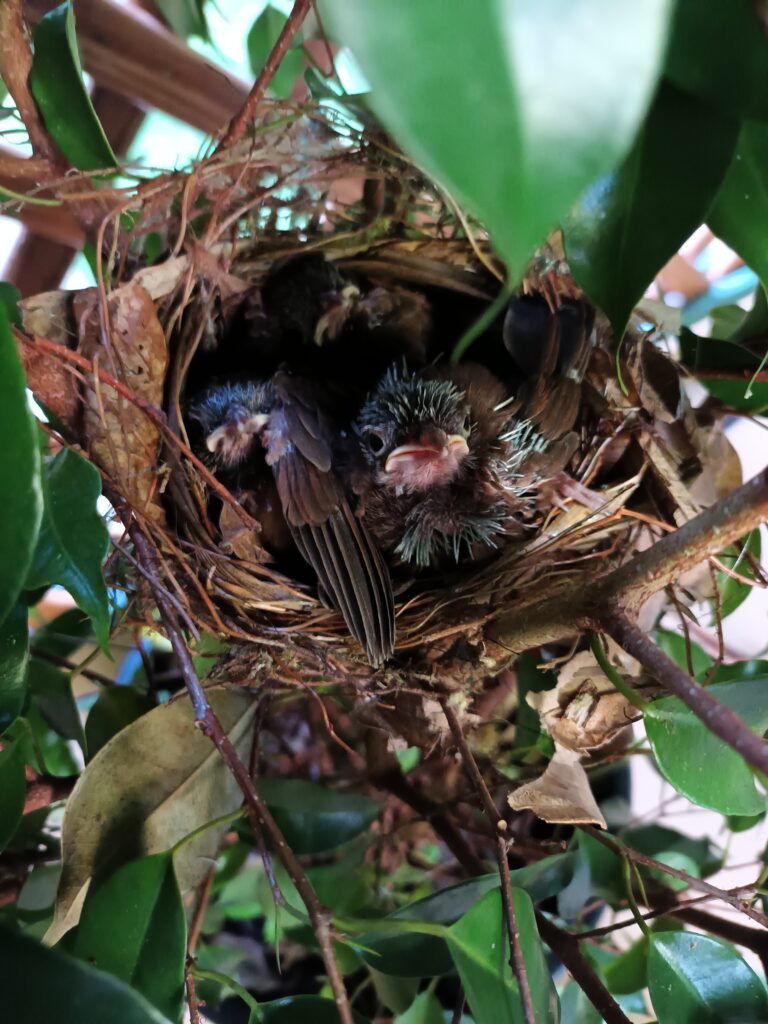
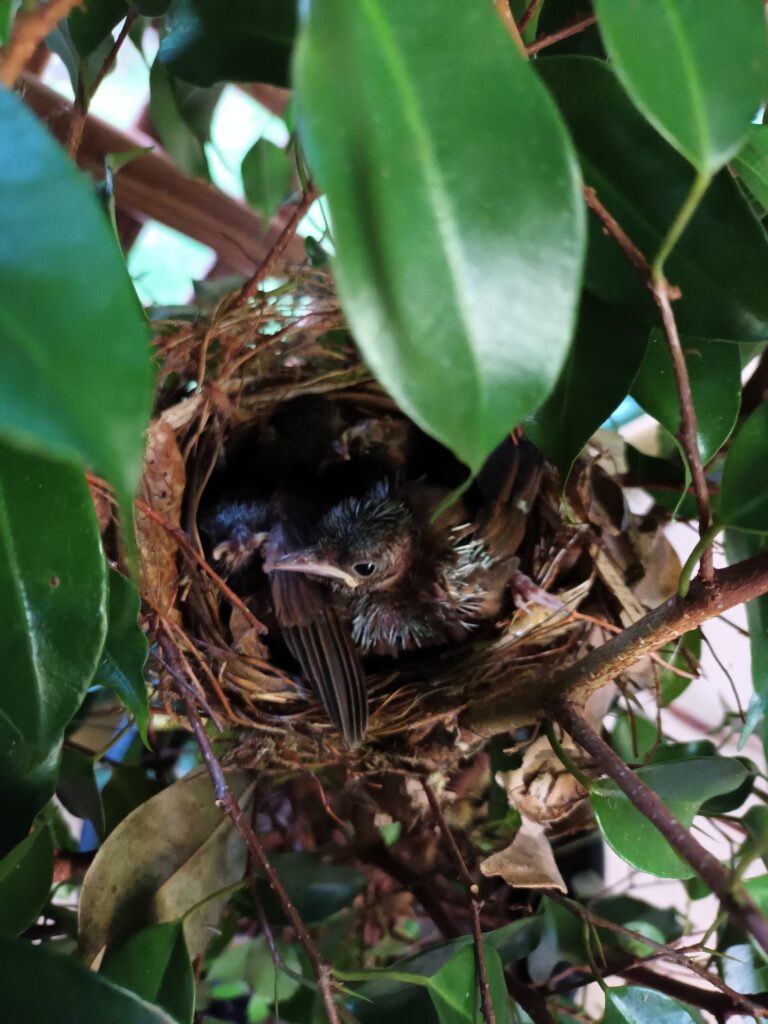
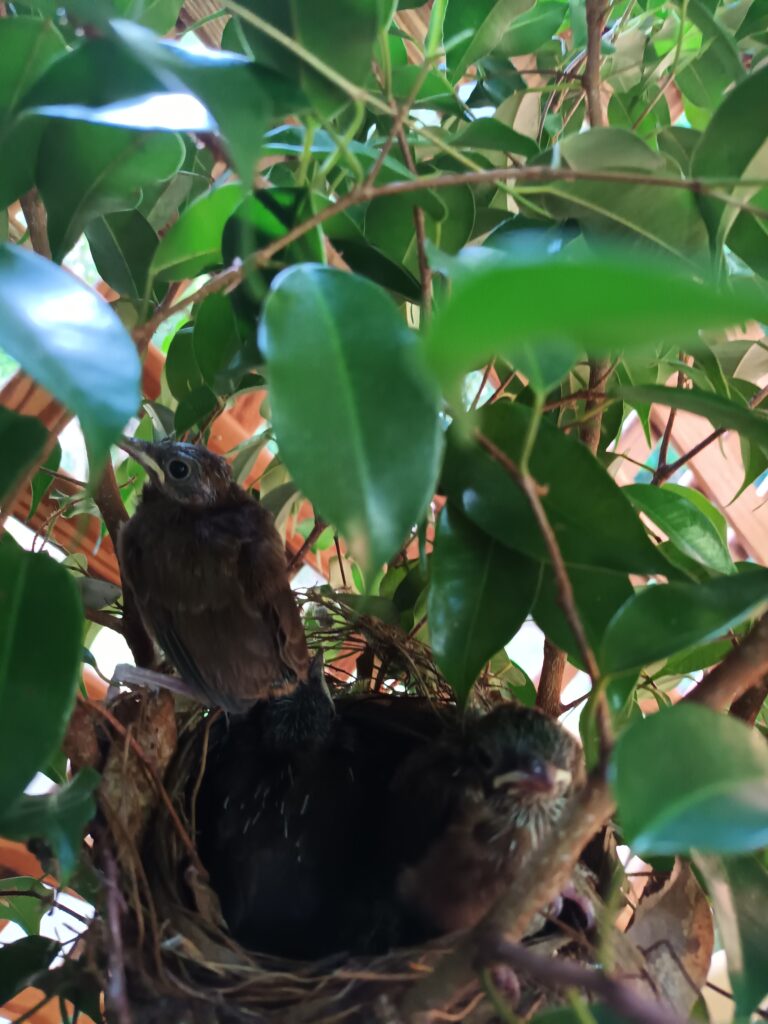
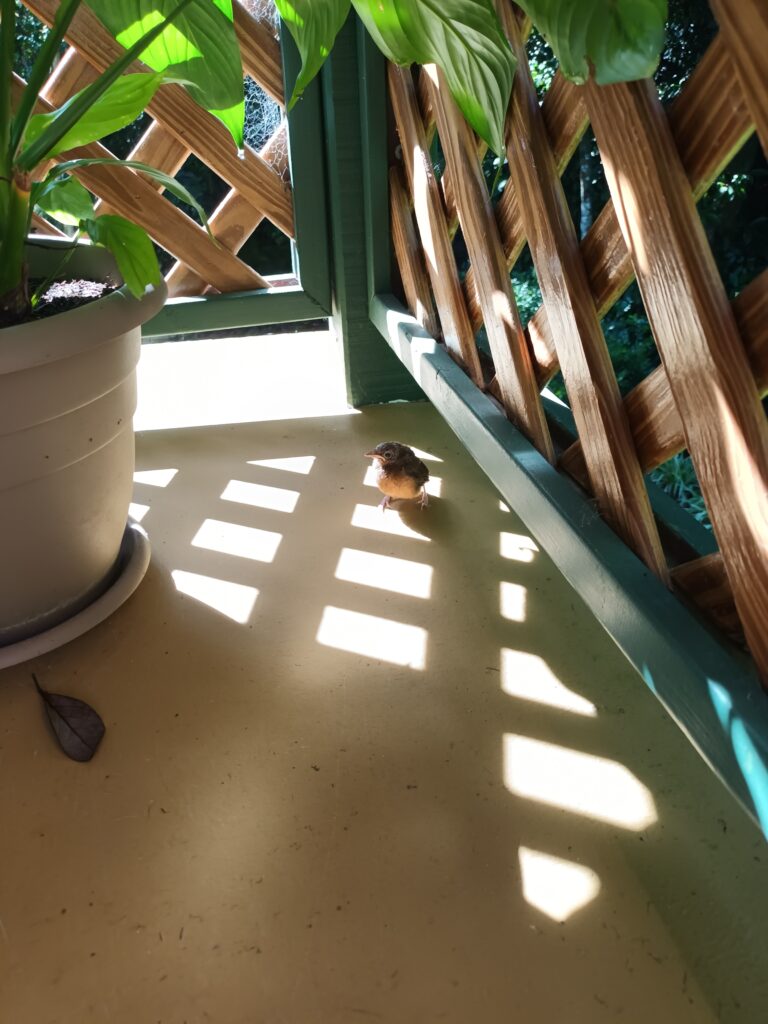
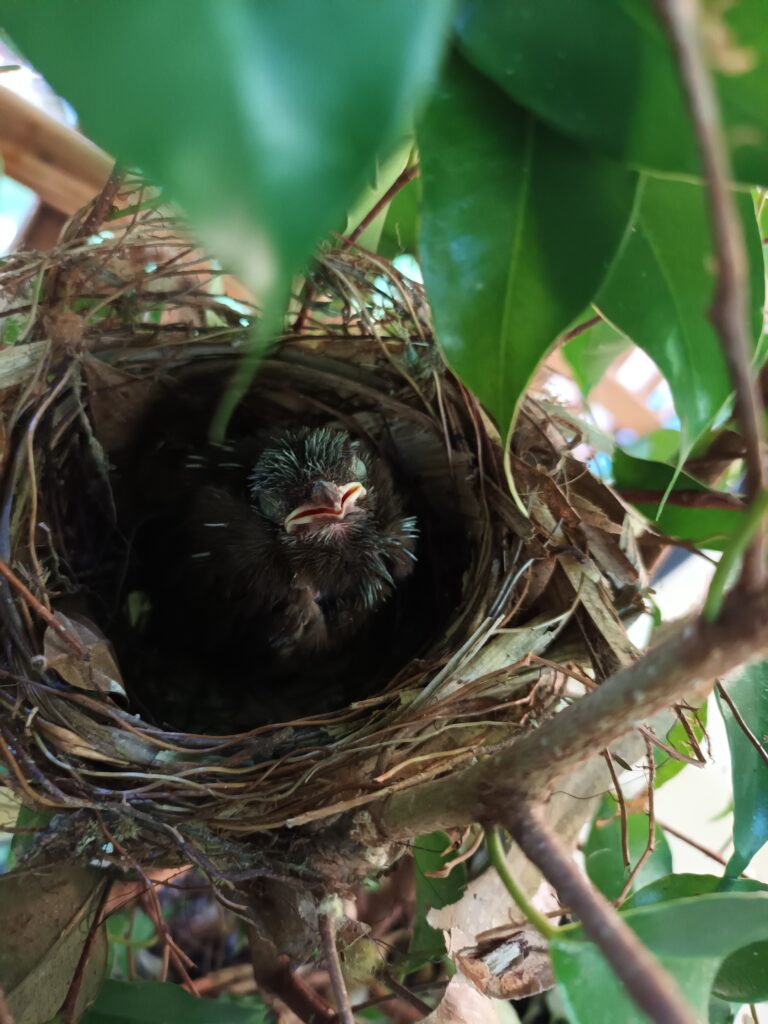
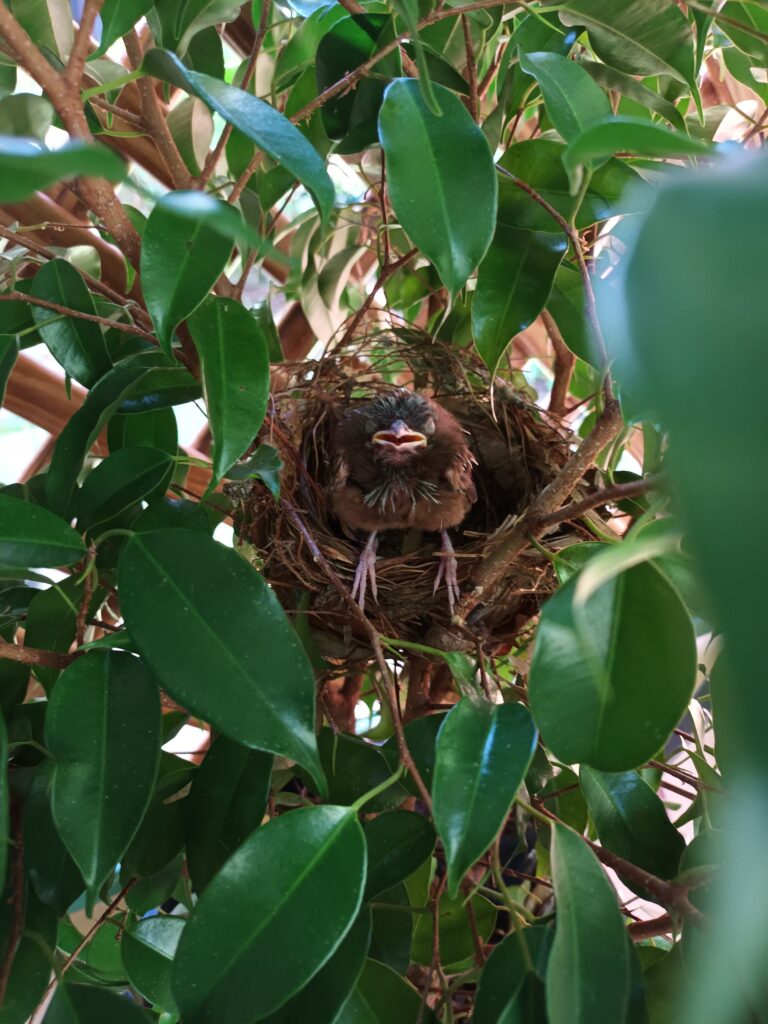
Well, if you have been following Lynda Radbone’s updates from the Thrike-Shrush nest in her fig tree there is some very BIG news to report. It has been a hive of activity at the nest today – Wednesday 14 December. Here’s what happened in the space of a few short hours this morning as photographed and reported by Lynda…….
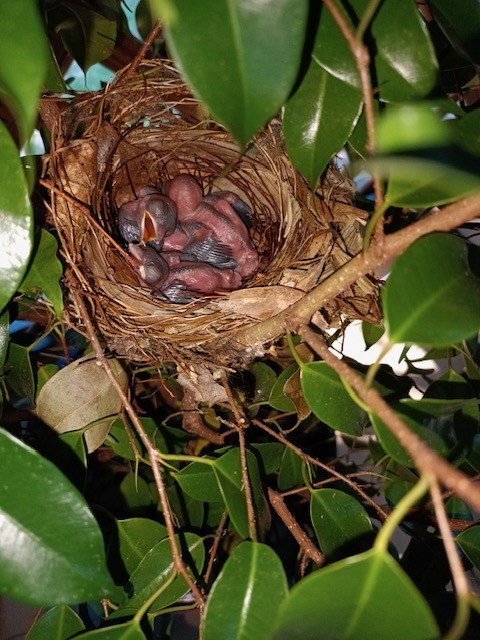
(1). 7.57 AM. Lynda rechecked the date of birth (hatching) of the chicks. They are 10 days old today. Two of the chicks (the larger ones) have their eyes open. The nest is getting very crowded as the birds grow. Lynda is worried the chicks are going to push each other out of the nest. It’s getting to be a tight squeeze in there. The constant chirping of the chicks is lovely to hear from the verandah. Mum and Dad Shrike-Thrush are run off their feet with the feeding. ‘Chirpy’, ‘Cheep’ and ‘Tweety’ (as named by Lynda) are thriving and the predatory cat birds have stayed away. (2). 8.04 AM. There is some ‘unrest in the nest’ as the wide-eyed growing chicks hustle for space in the nest.(3). 8.12 AM. There is movement out of the nest as the larger chicks start hopping up on the branches of the fig tree.(4). 8.33 AM. A maiden flight by one of the chicks is unsuccessful. Lynda puts the chick back in the nest (for protection from predators). There were several more attempts to fledge with crash landings each time. Lynda keeps watch and puts the chicks back in the nest for safe keeping when predatory birds are around.(5). 10.12 AM. By now the two larger chicks have fully fledged and left the nest. Only one chick remains in the nest, the smaller of the three. This chick appears to be weaker and its eyes are not fully open as yet. Lynda hopes that this chick is not abandoned!(6). 12.00 PM. Some five attempts later, the remaining chick finally gets lift off and leaves the nest. It’s off and away into the nearby forest.
At about 12.15 PM, Lynda realises she’s an ’empty nester’. She hopes that the universe takes care of her wee fledgings and keeps the catbirds and other predators at bay. All is unusually quiet in the fig tree on the verandah.
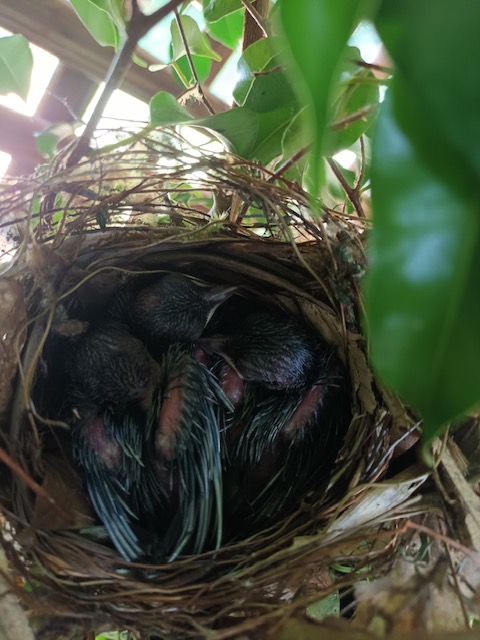
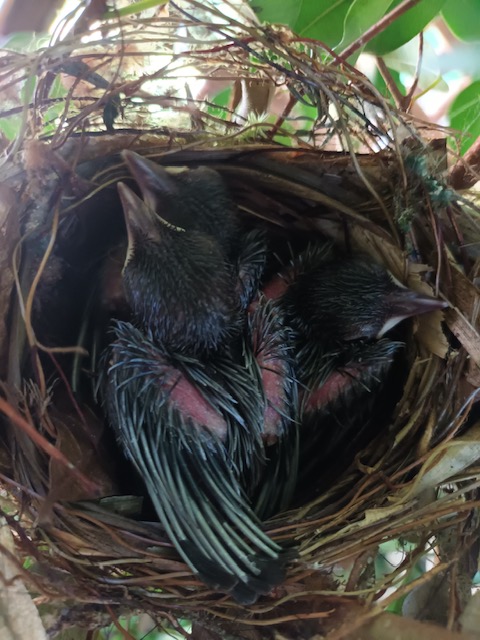
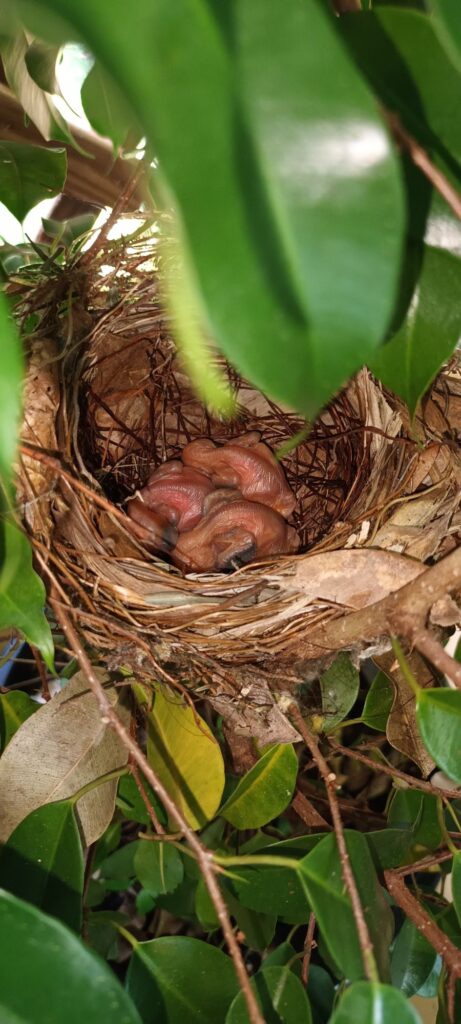
Following on from our previous post on 9th December regarding the Shrike-Thrush chicks at Lynda’s place. At about 7 to 8 days of age, the chicks are thriving in the nest. They are growing steadily and just look at those wing feathers!
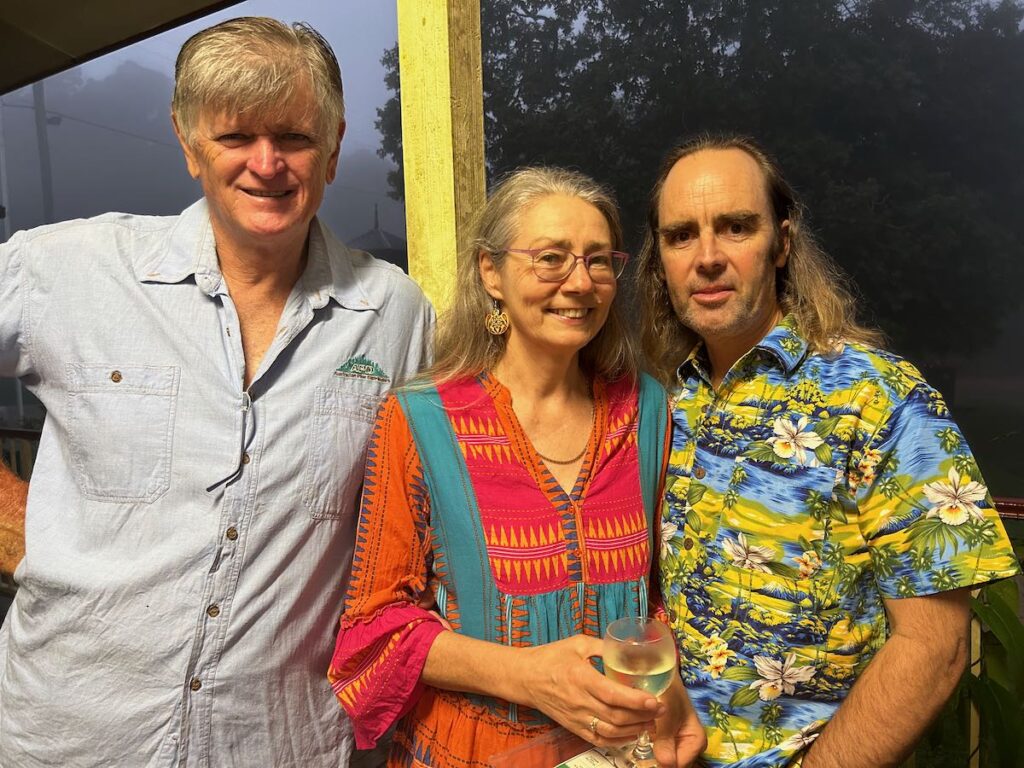
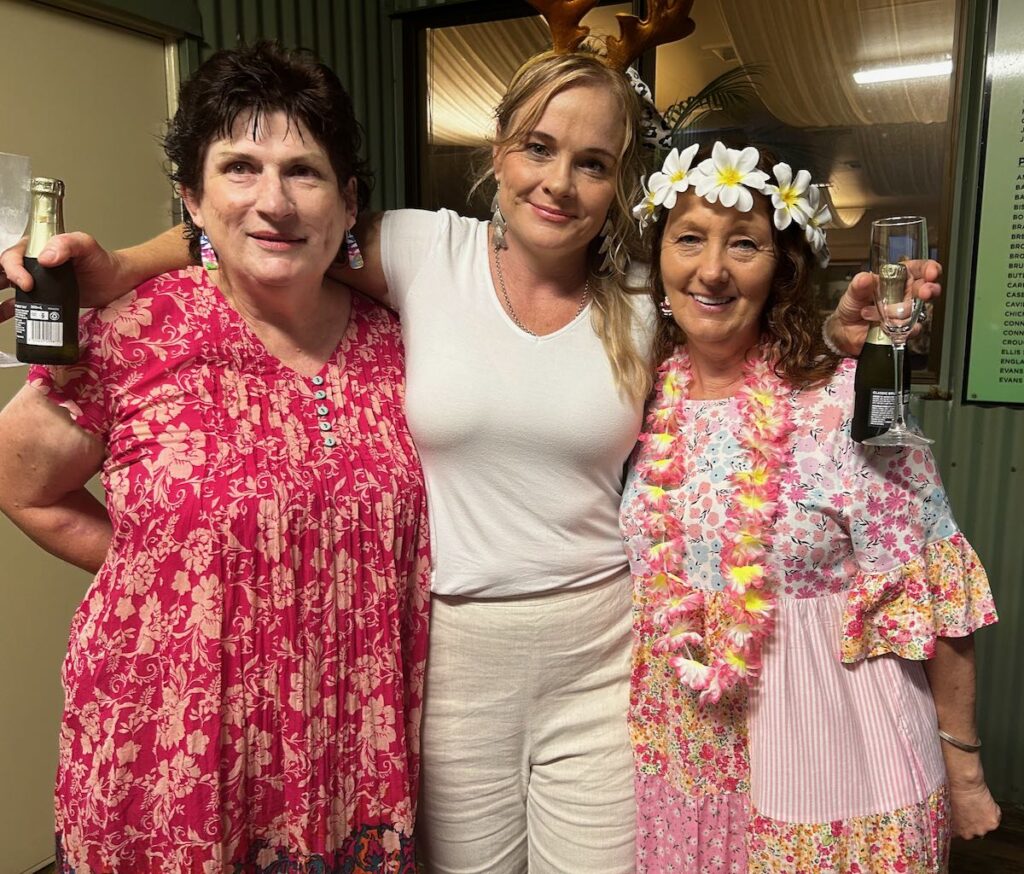
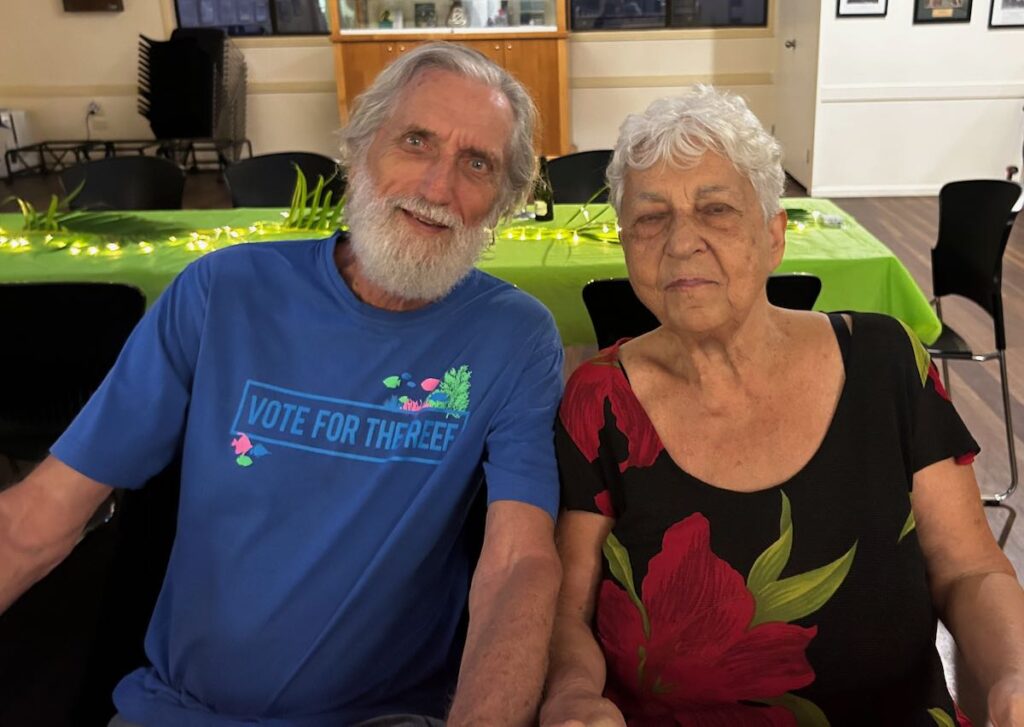
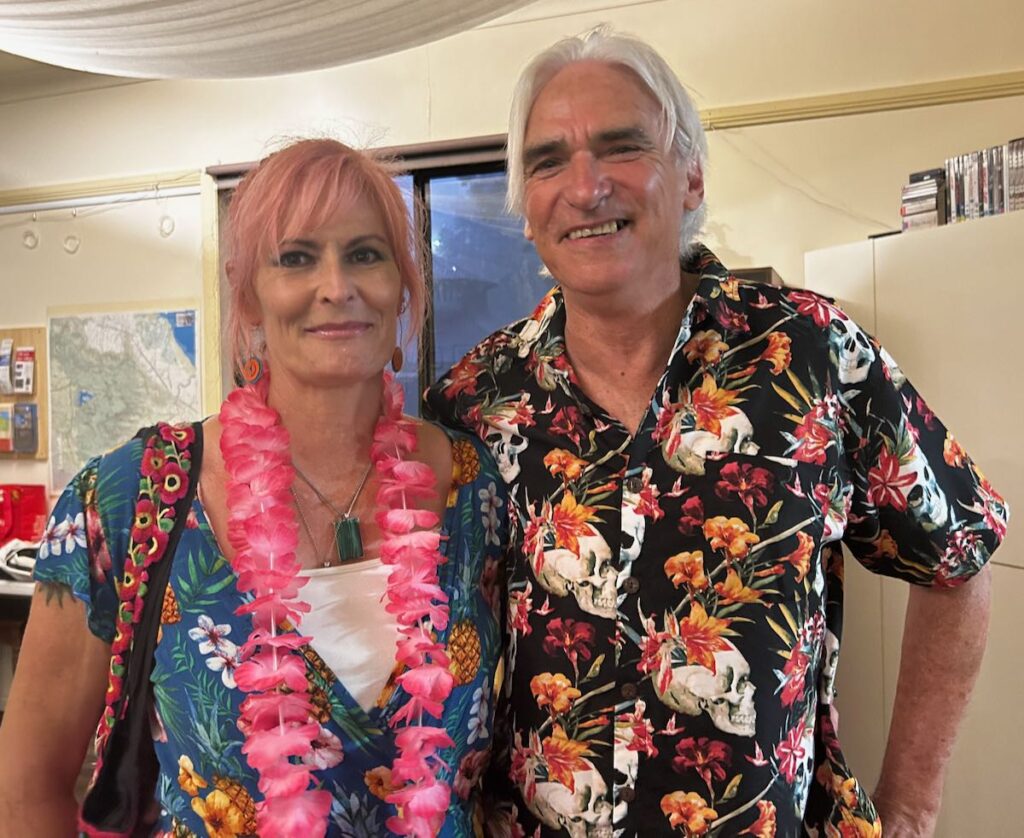
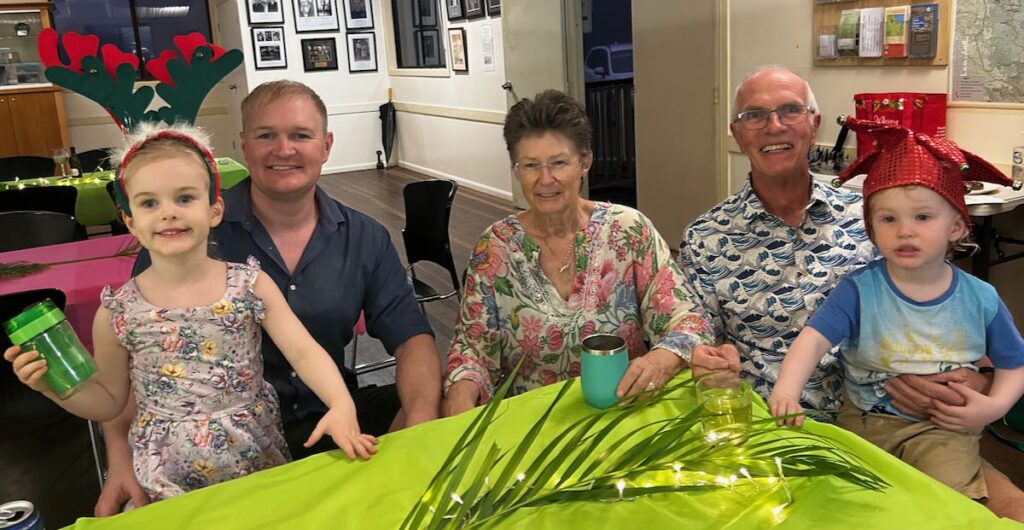
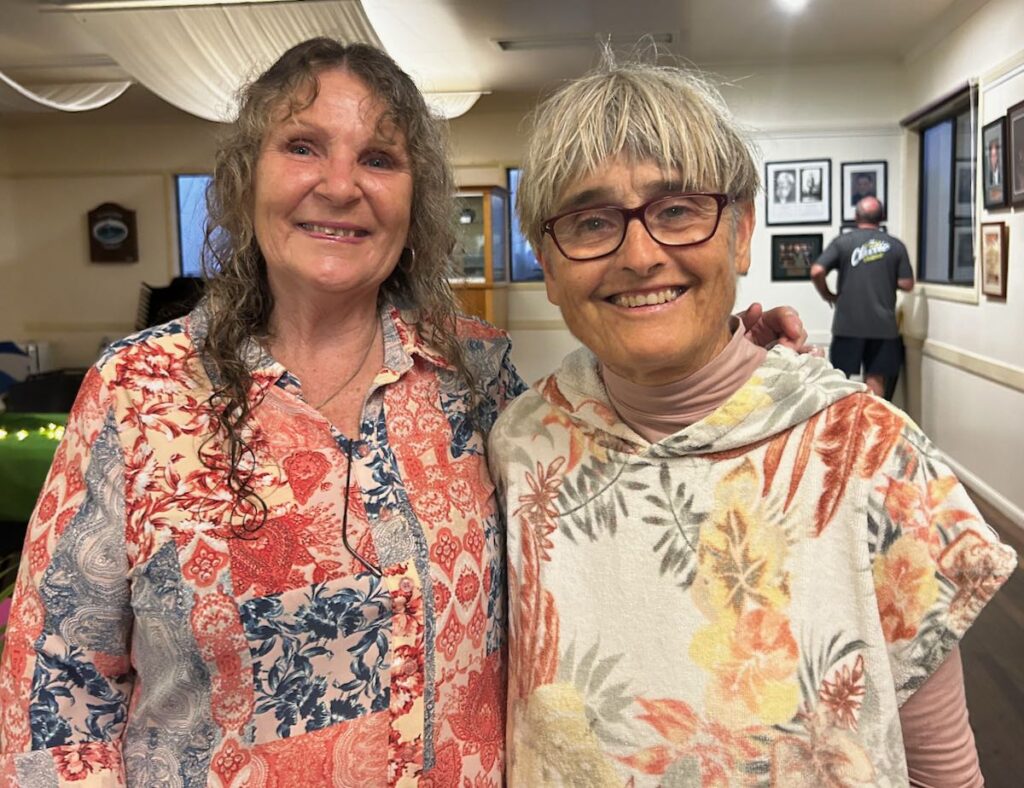
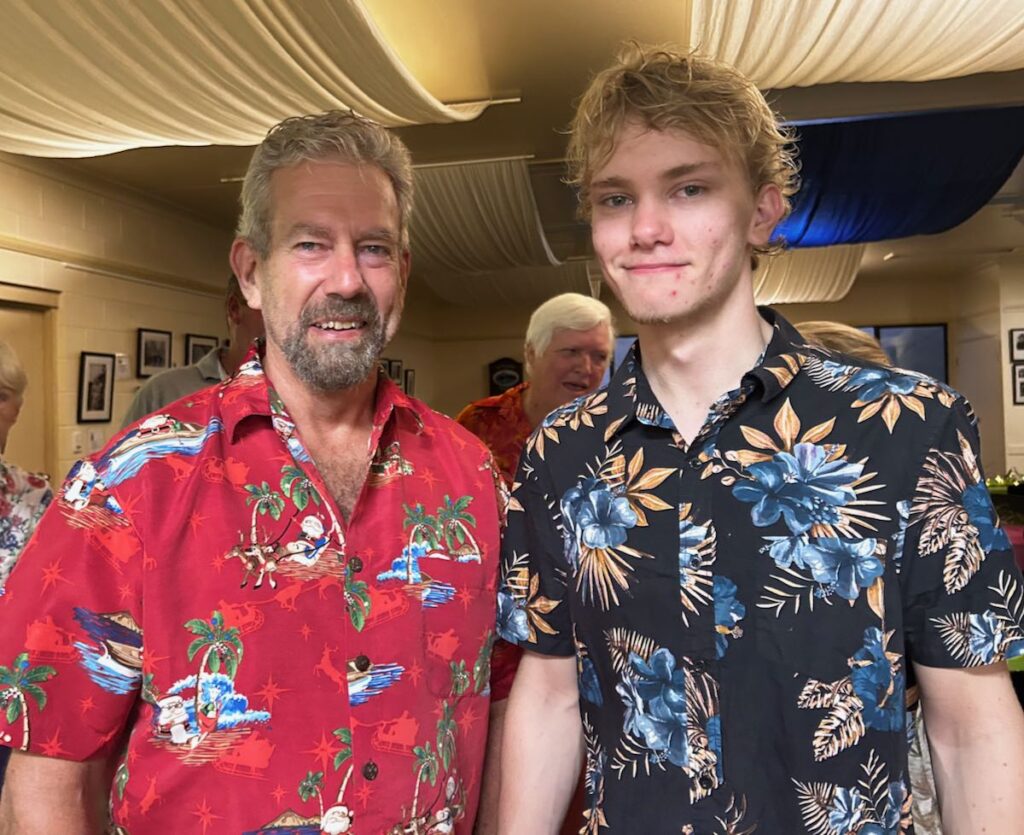
A rowdy crowd of about 35 Paluma residents attended the Tropical BBQ as the last social event on the PDCA calendar for 2022. As always, Paluma’s great cooks outdid themselves with a banquet of dishes for all to enjoy. The dessert table alone was something to behold. Josh and Don on the BBQ did a splendid job in cooking everyone’s dinner. The tropical theme of the night was embraced with gusto, judging from the number of very loud shirts and other attire around the hall. Palm trees, pineapples and tropical flowers were definitely the fabric of choice on the night. A great night was had by all with lots of chatter and a good chance to catch up with friends and neighbours before the Christmas season.
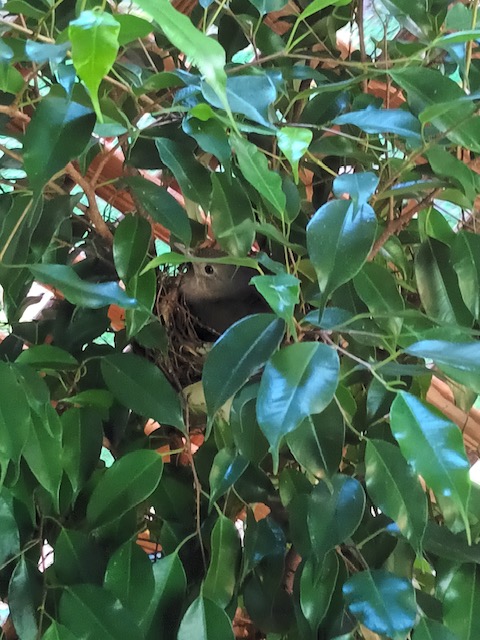
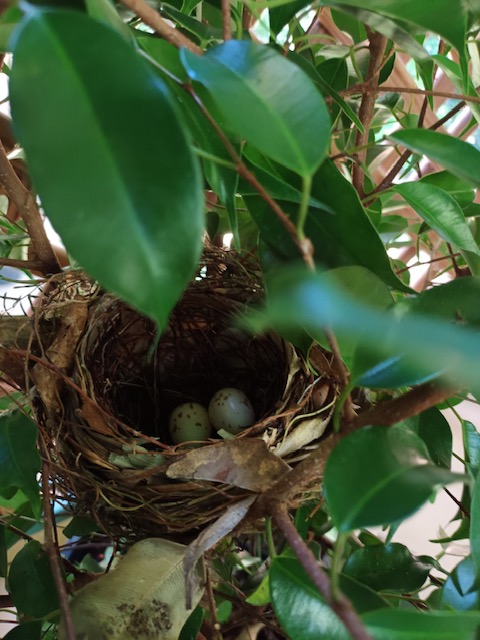
Some exciting news from Lynda Radbone’s garden in the central sector of Paluma Village. A few weeks ago a pair of Shrike Thrush birds started nesting in Lynda’s fig tree. After some frenetic nest building, some eggs appeared in the nest to be closely cosseted by Mum and Dad Shrike Thrush. Earlier this week, the eggs hatched and there are three splendid and very hungry chicks in the nest. Lynda continues to monitor the nest to guard the chicks from hungry Catbirds, with the help of Miss Molly the dog. Lynda has kindly shared these photos of the progress of this little feathered family.
1. Sitting on eggs in the nest nestled amongst the fig tree branches.
Here’s a rainfall update from Barry Smith for November and the year to date….
We have had 145 mm of rain for November 2022 with 18 days of rain this month.
For 2022, we have cracked the 2 metre mark with 2,080.4 mm so far to 29 November. Judging from the forecast, it looks like plenty more rain to come before the year is out.
Paluma’s rainfall recorders are a dedicated bunch, never missing a day in checking the gauge and recording the rainfall figures.
Special thanks go to all the volunteers for their great work in 2022, including Barry Smith for recording the week day rainfall, with back-up assistance when required from Tracy Cooper and Rick Roveda. Peter Cooke and Michele Bird do the recording on the weekend. Other keen volunteers step in from time to time when called upon. Great work everyone in keeping these important records for our little village in the mist (and rain).
A reminder to Paluma residents that the annual Tropical BBQ will be held at the Community Hall on Saturday 10 December. This is the final PDCA social event for 2022 so make the most of the opportunity to catch up with your friends and neighbours before Xmas arrives.
Where: Paluma Community Hall.
When: Saturday 10 December at 6.30 PM.
What to Bring: Yourself and some meat (protein) for the BBQ.
Please also bring a plate of food to share – nibbles, salad or sweets.
What to wear: Tropical attire is essential. Wear your best tropical shirt – the brighter the better!
All important – the Bar will be open for low-cost drinks.