Come to the hall, this Saturday June 6th, to help out with various community jobs. Wheelbarrows and shovels will be needed if the Council delivers a load of mulch for the gardens around the hall and under the trees of memory at the village green. We will also give the hall a much-needed clean, inside and out, to get it ready for the bush dance and markets later this month.
The Community Hall, and the bar will be open from 6pm – ~8pm on Friday, June 5th. Come along for a drink and a catch-up with other residents. Table Tennis, Darts, Music and other activities are available for anyone willing to set up the equipment. Bring along some nibbles/finger food.
To those newer to our community, Viv lived at 19 Mt Spec Road from the mid-1980s until around 2010.
During her years in Paluma, Viv gave generously to the community, serving for many years as Treasurer of the then Paluma Progress Association, helping secure funding for important local projects.
Alongside Mick, Viv later built and operated the Rainforest Inn, welcoming many visitors to our beautiful village.
Viv truly loved Paluma and its people. She especially cherished the opportunity to create a cool-climate garden filled with many beautiful flowering plants, which brought her great joy and was admired by many.
She will be warmly remembered as a valued member of the Paluma community to all those who knew her.🌷
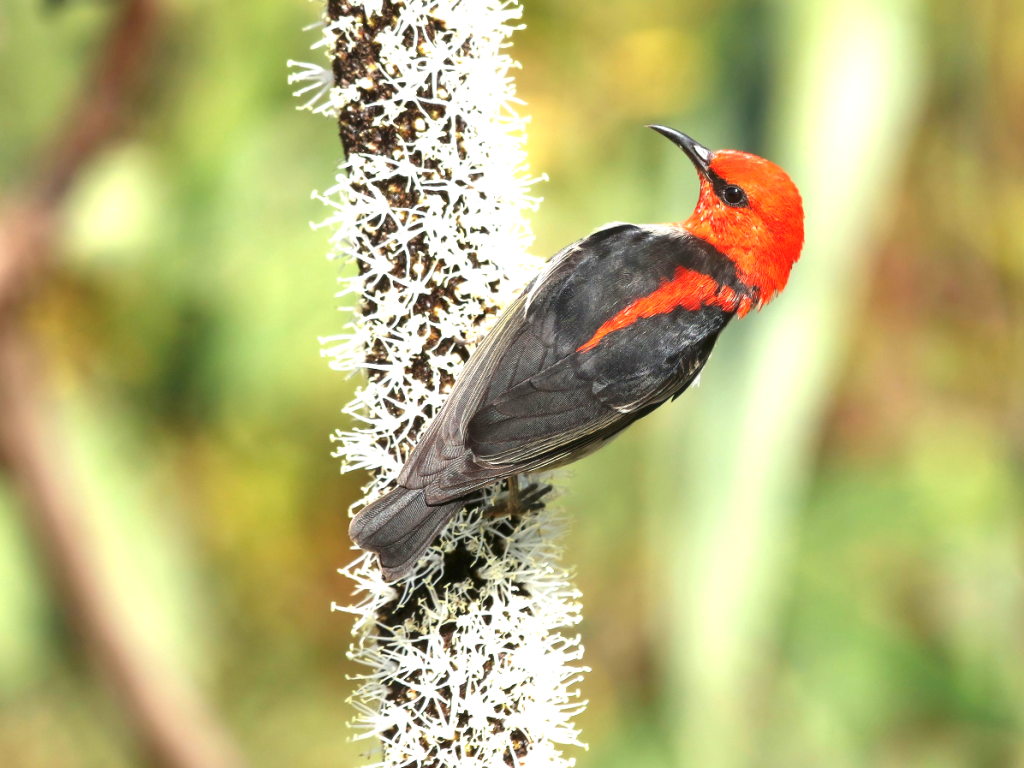
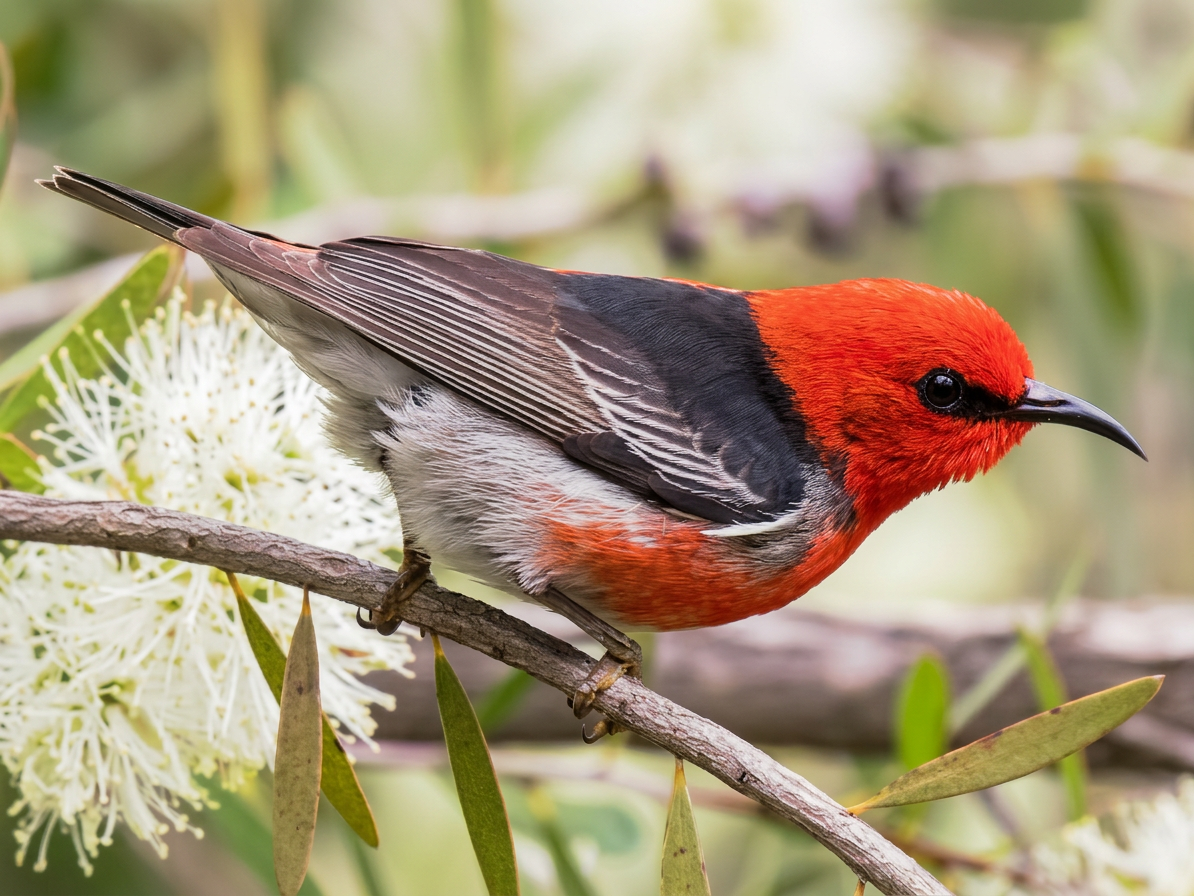
During the last two weeks, I have been hearing the faint, high-pitched, wispy warble of the Scarlet Honeyeater (Myzomela sanguinolenta), a consistent but relatively rare visitor that feeds on flowering trees, often high up in the canopy. Houses that offer a view of tree canopies in flower may provide a glimpse of this strikingly coloured little bird. Len Cook’s front verandah is one of the few places I have been able to get a good view in the past, but so far this year it has been heard but not seen. It is the male that catches the attention of birdwatchers, with it brilliant red head and neck, set off by black back and whitish underparts.
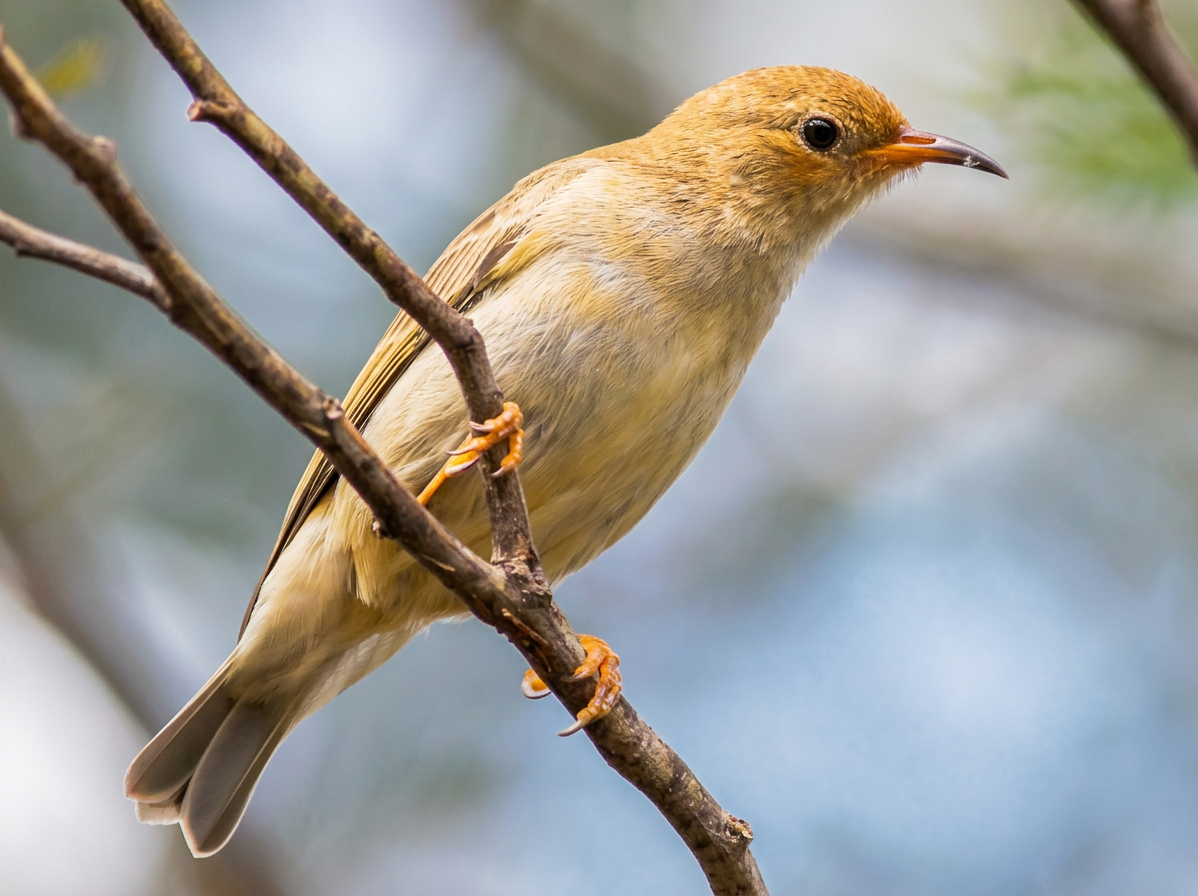
The female is rather drab and brown with a cream belly and sometimes a reddish flush around the face.
Female Scarlet Honeyeater photo by Chris Wiley eBird
The Scarlet Honeyeater is the smallest Australian honeyeater (Family Meliphagidae) and can be found in open eucalypt woodlands, wet sclerophyl forests and riverine Melaleuca habitats. It feeds predominantly on nectar from flowering trees, with insects and fruit only occasionally eaten. Most feeding occurs above 10m in the canopy. It occurs along eastern Australia from Cooktown to northeastern Victoria. In the far north, its range overlaps with the quite similarly coloured Red-headed Myzomela, which is mainly found across northern Australia.
The brilliant plumage of the Scarlet Honeyeater has made it a well-recognised bird to many Australians. Early colonists gave it various names, including Bloodbird and Little Soldier (in reference to its similarity to English redcoat soldiers). The officially recognised common name, used predominantly outside Australia, is Scarlet Myzomela.
The genus Myzomela is the largest in the honeyeater Family, containing 41 species distributed from Indonesia to Australia and the Pacific Islands. Australia has only 3 species, and two occur in Paluma: the Dusky Honeyeater and Scarlet Honeyeater. The name refers to this group’s feeding method of sipping or “sucking” honey-rich nectar from flowers. It is derived from two old Greek words: “myzo”, meaning to suck or suckle; and “meli”, meaning honey.
Text by Jamie Oliver; Photos and recording as indicated in the text
In preparation for the Wattle n Gum Bush Dance (June 27) and the Paluma Winter Market (June 28), we require help to prepare food, cook and serve at the two sausage sizzles.
Any donations of baked items, cakes, biscuits, scones, whatever your signature dish, and preserves for the PDCA run stall would be appreciated. We’ve had some wonderful and delicious creations at previous markets that sold very well. Please let someone on the PDCA committee know if you can help out in any way at these two events.
With the opening of the range road, the annual Wattle n Gum Winter Solstice Bush Dance and BBQ is back on the Paluma Calendar.
It will be held at the Paluma Community Hall on Saturday, June 27th. This is one of our most popular events of the year, and there is always an eager group of dancers and bush music enthusiasts to encourage the band. It will be great to see all the locals come along to enjoy an afternoon of dancing and laughter. The band will have a caller to teach everybody the dance steps – so no excuses about not knowing the dance steps or having two left feet, everybody, young and old can have a great time! The BBQ will start at 12 noon with the band commencing at 1pm.