Our local representative for the Townsville City, Councillor Margie Ryder will be visiting Paluma on Friday April 30th and would like to meet with any residents who are interested in chatting with her about local Paluma issues. Please come along to the Community Hall at 3:30.
Don’t forget to come along for a BBQ lunch and the Annual General Meeting this Saturday. We are keen to seen new residents come along and warmly welcome anyone who might be interested in joining the Commitee.
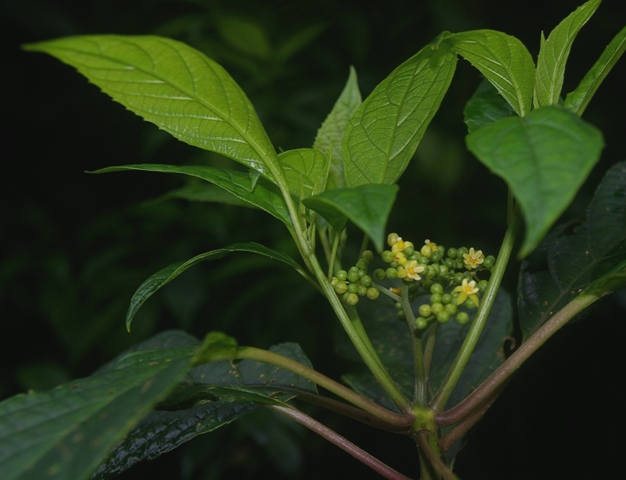
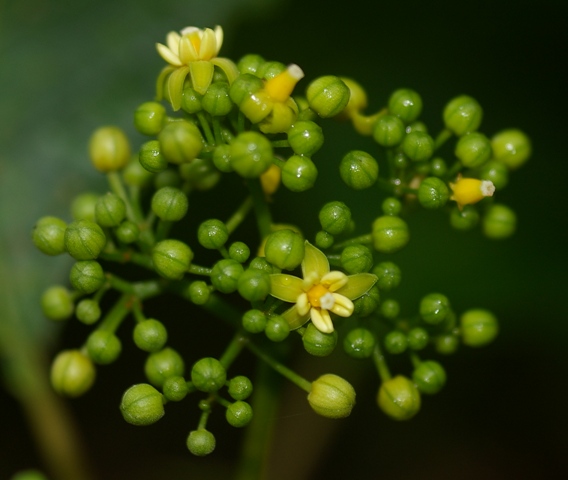
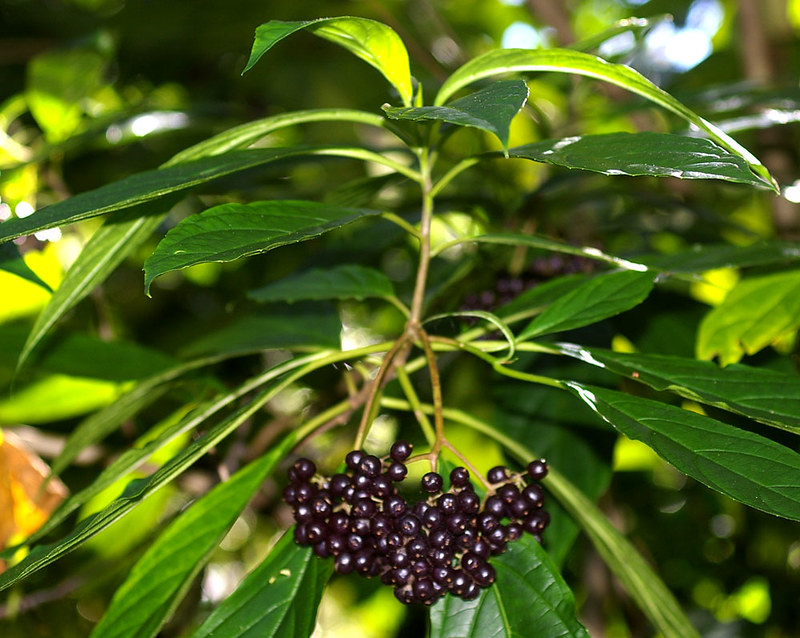
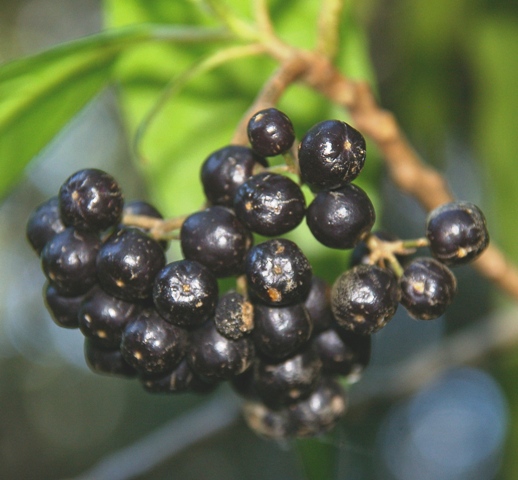
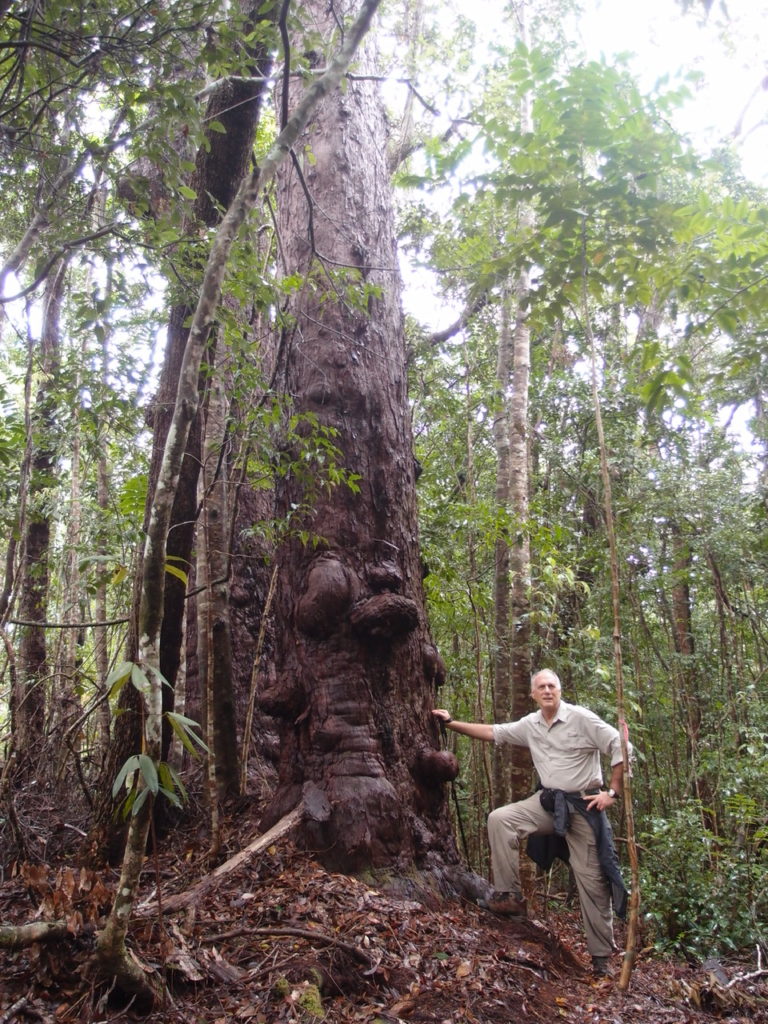
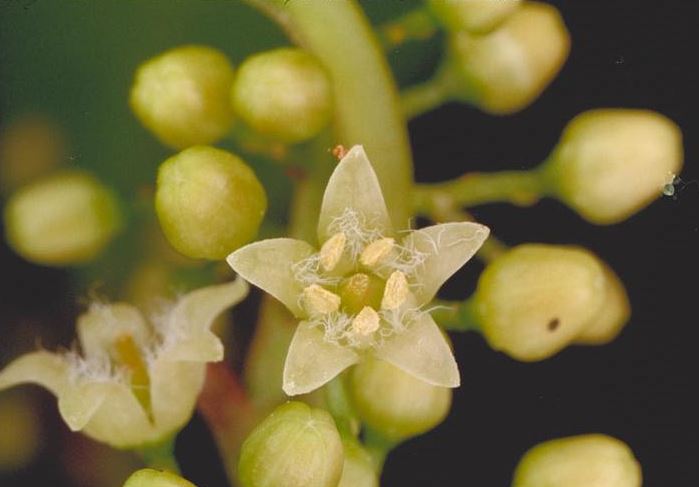
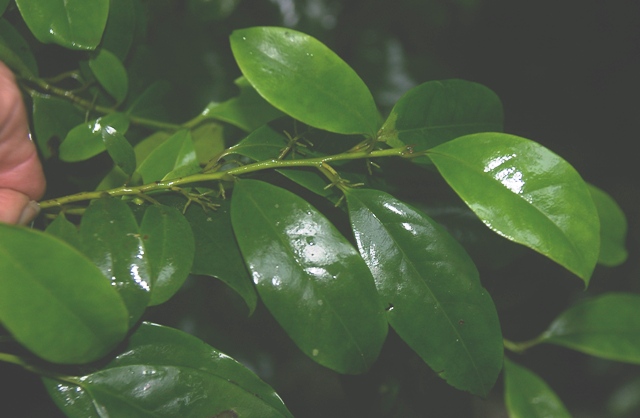
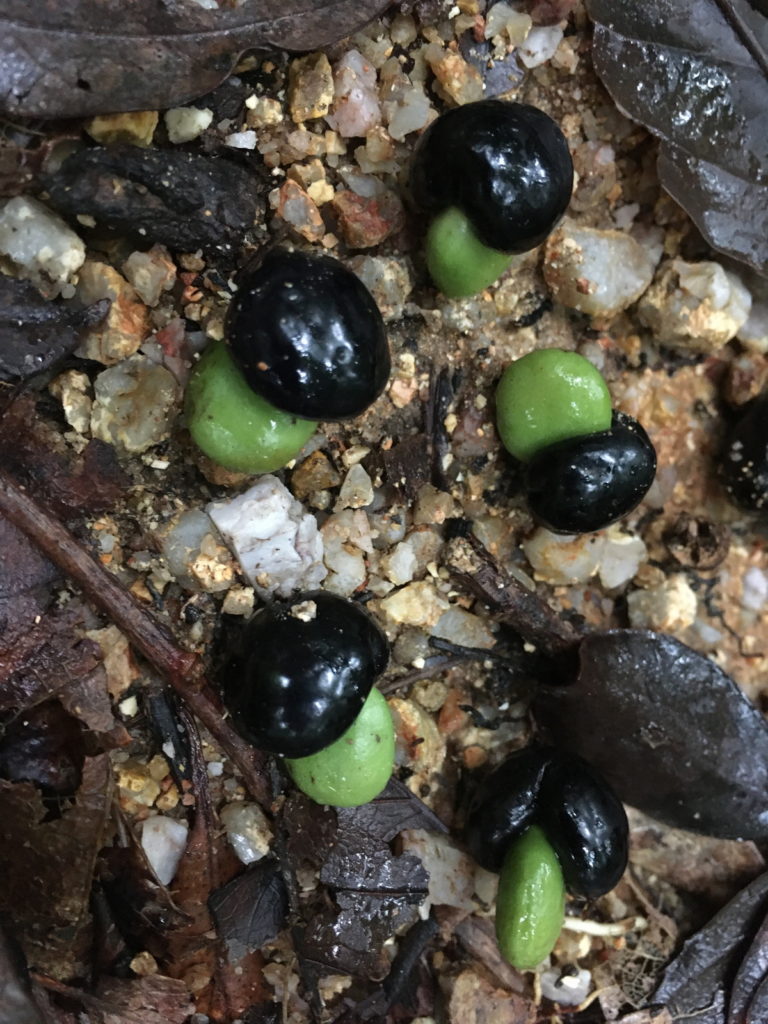
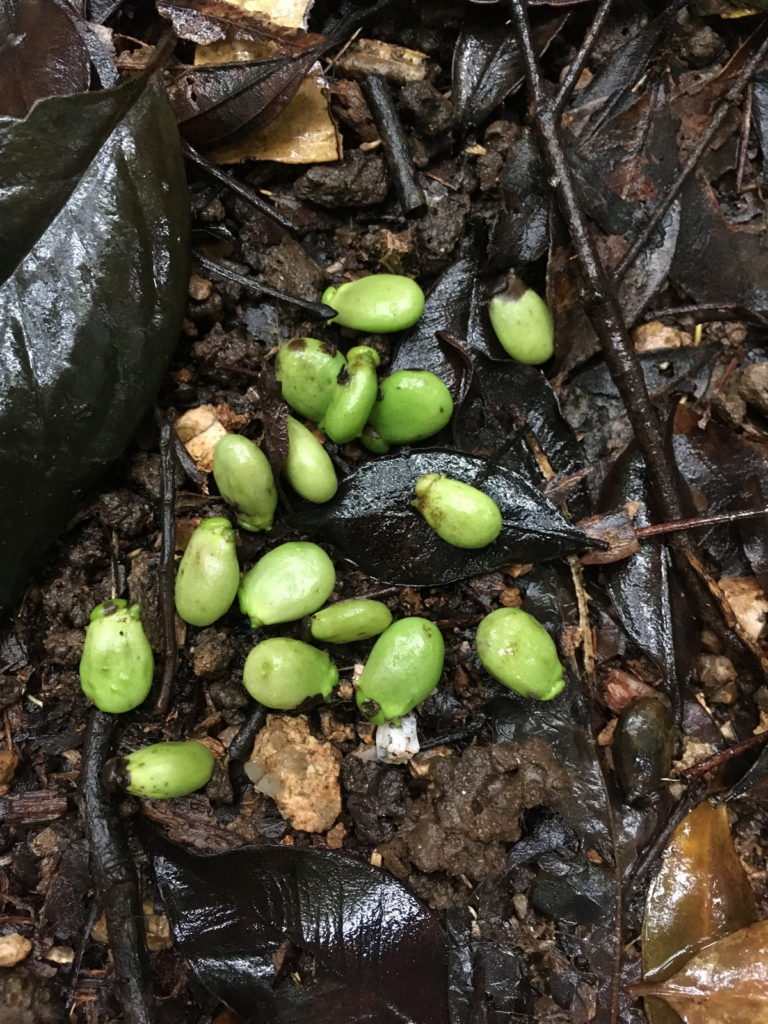
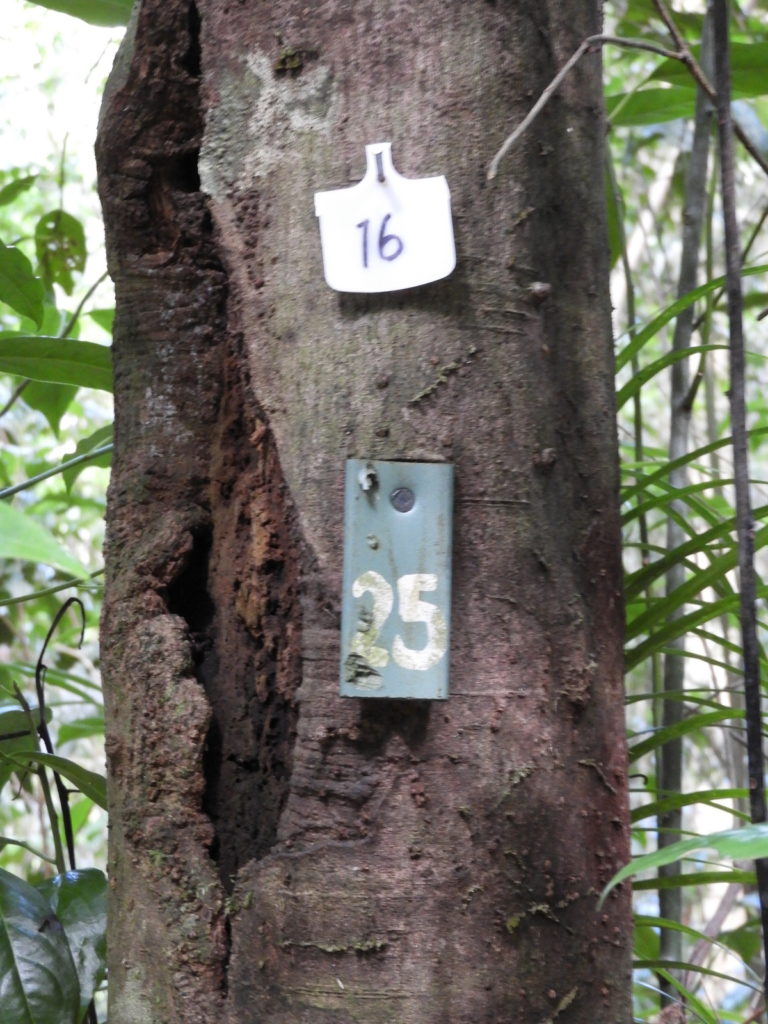
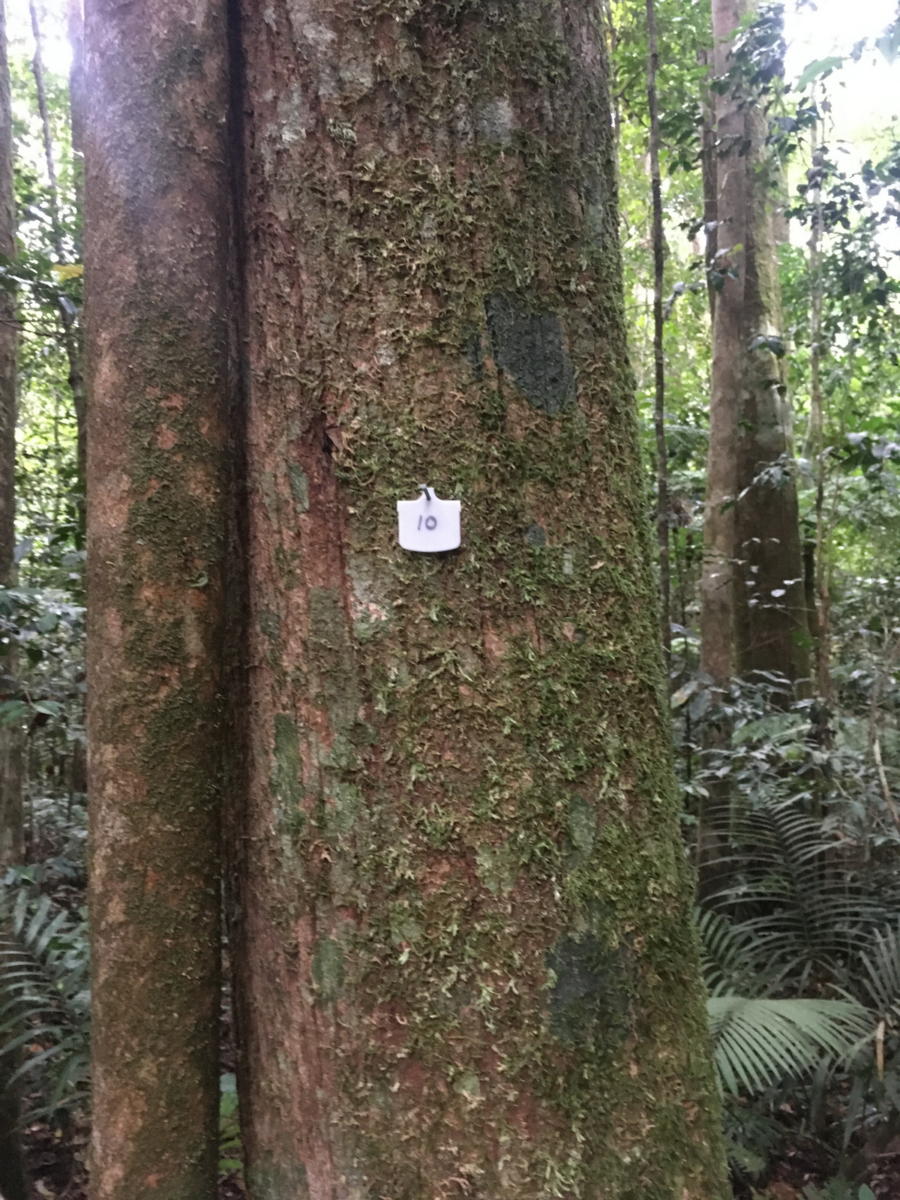
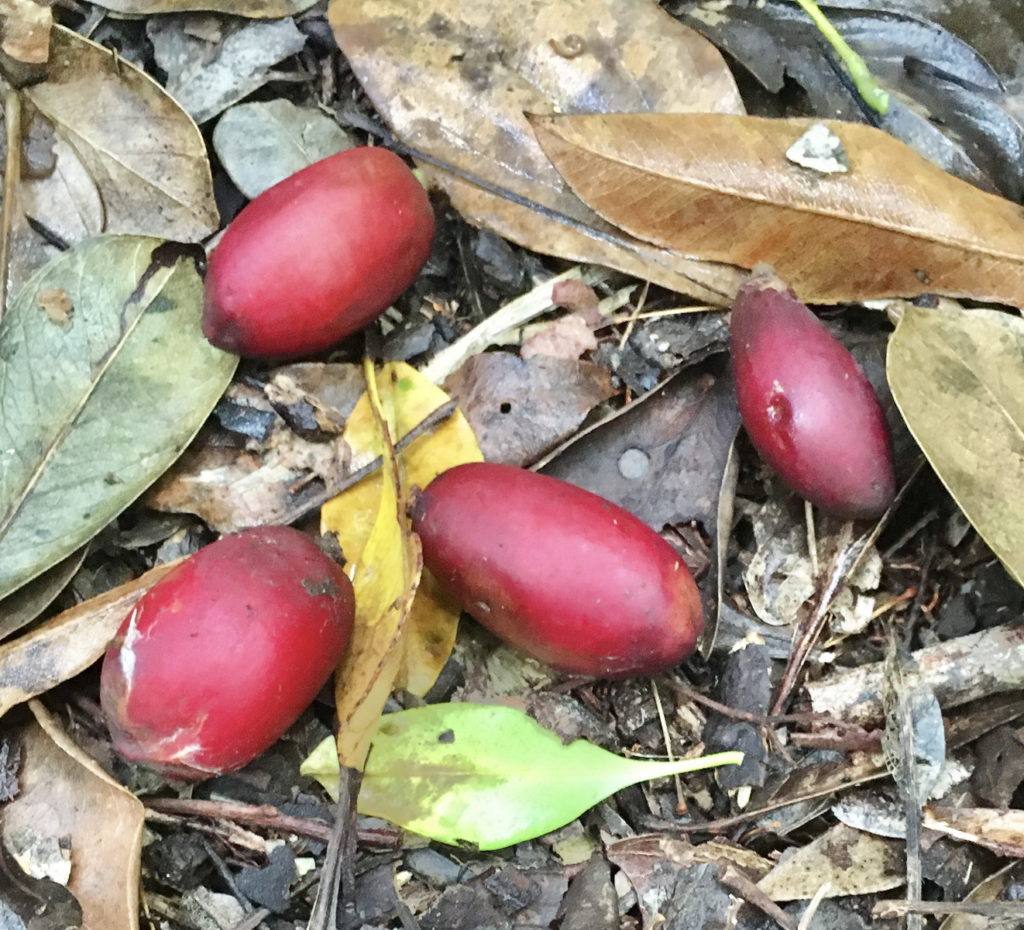
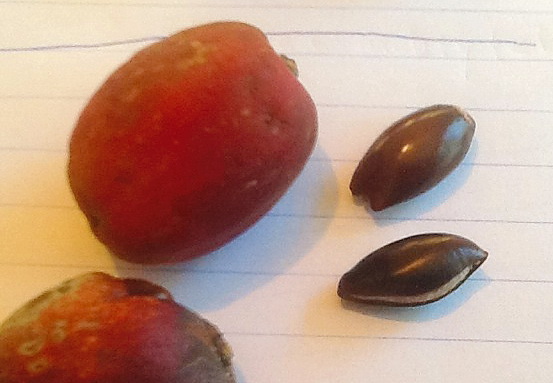
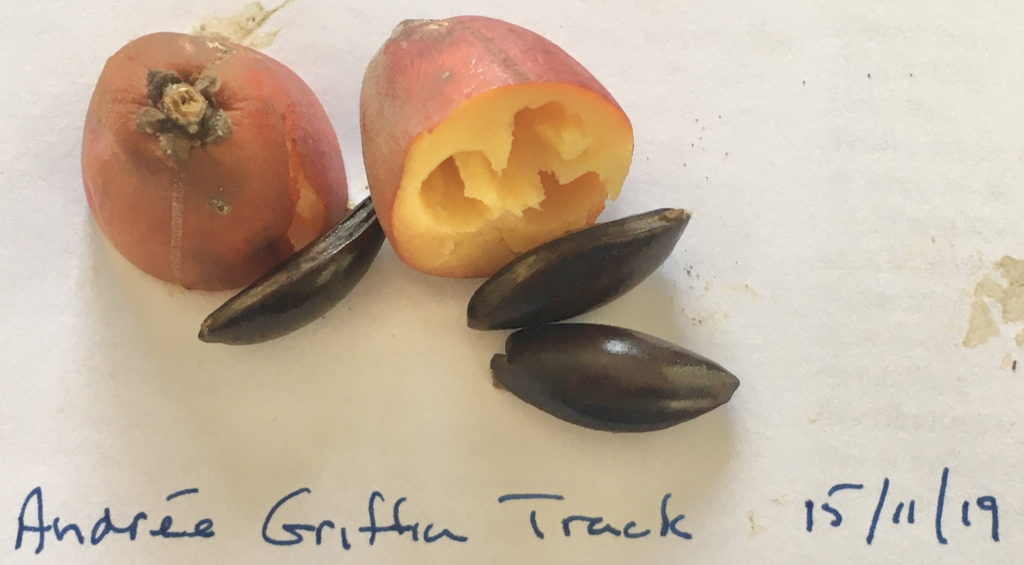
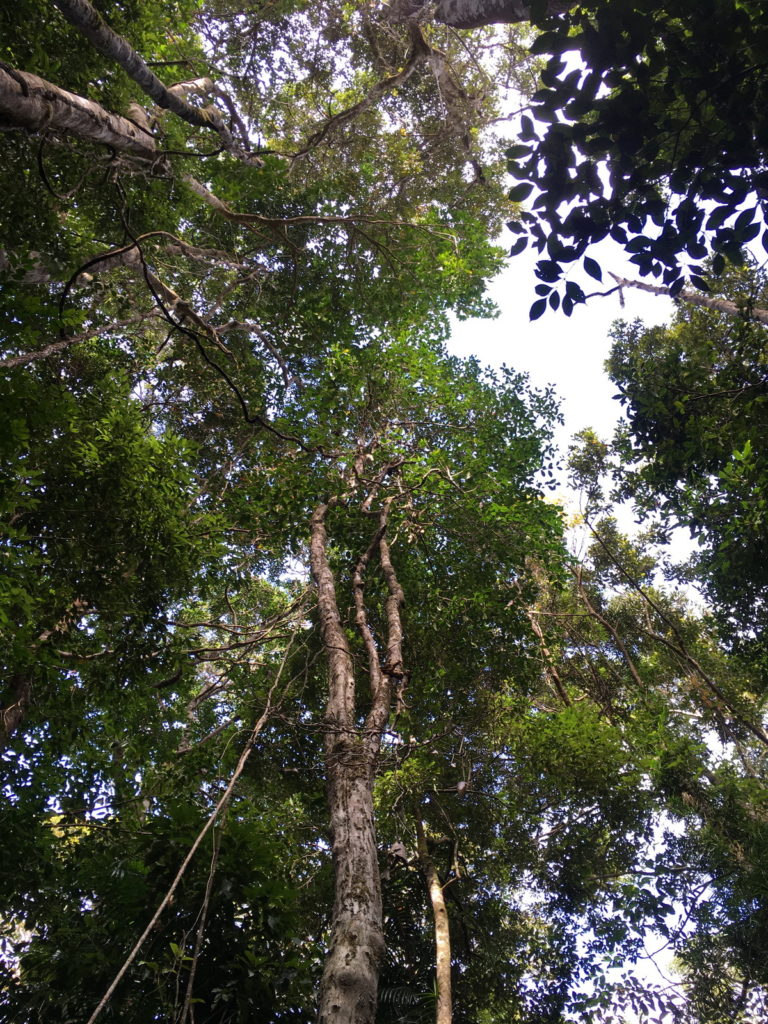
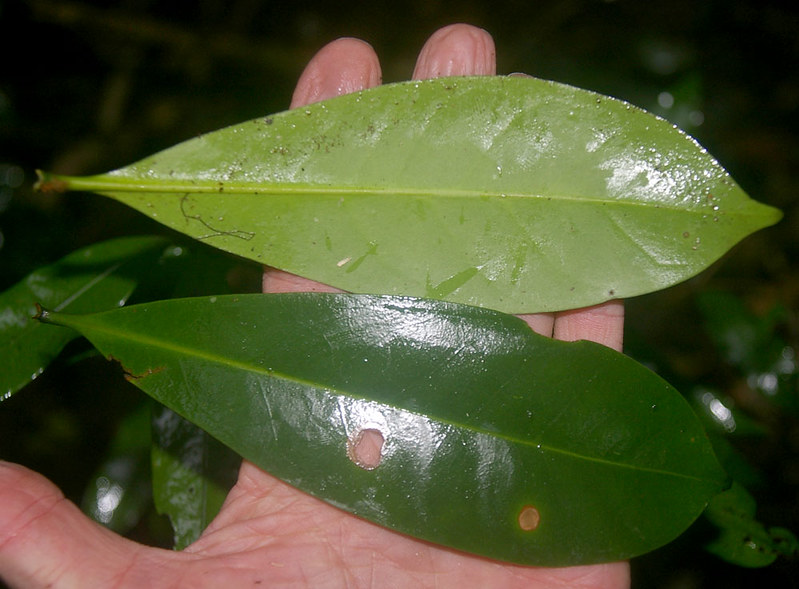
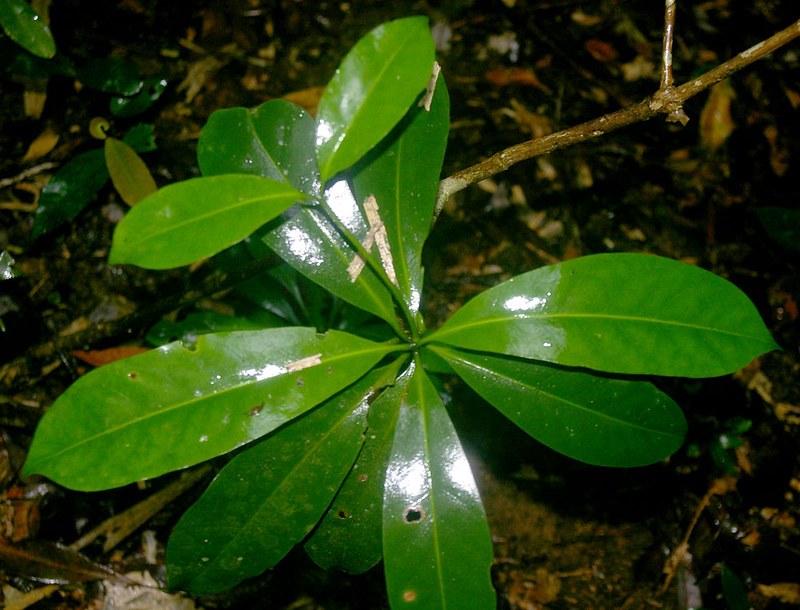
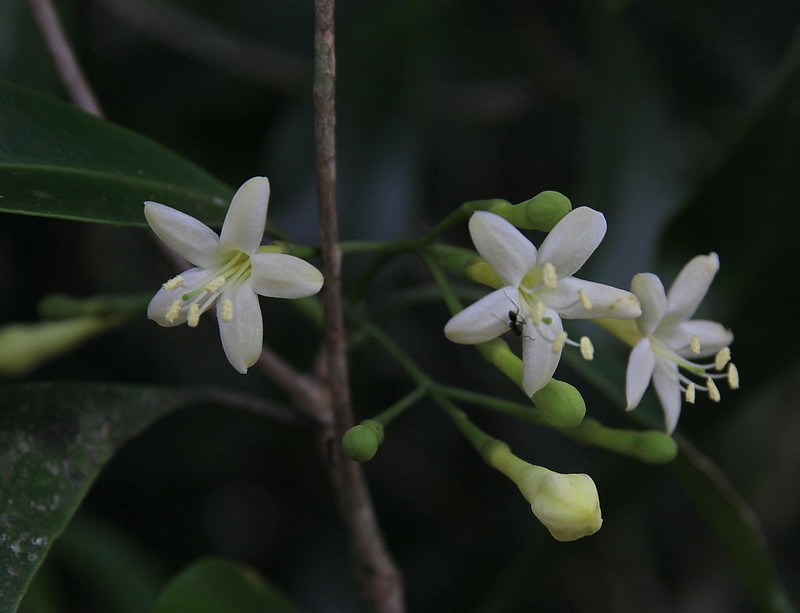
Gmelina dalyrympleana is a rainforest tree found in northeast Qld and Cape York as well as New Guinea. There are several species in this genus and most of them can be found in the wet tropics and share the common names White Beech, or Grey Teak). With its lovely pink flowers bright red fruit this species ranks as one of the more attractive in the genus.
Photo by “Paluma” CC on I-Naturalist (L) Photo copyright CSIRO (R)
This tree is currently in fruit around Paluma and the bright red, oblong cherry-sized fruit are unmistakeable at several spots along the H-Track. The fruit might be mistaken for a Satin Ash at first glance but its seed capsule, which is bound tightly to the flesh of the fruit, is small and woody. The small pink flowers are occasional seen scattered on the ground on or next to the H-Track.
The fruit is eaten by fruit pigeons. The tree can grow to 40m yields a course, but durable timber used for planks and floors. It is cultivated as an ornamental tree in Queensland and NSW.
Text and photos (unless indicated) by Jamie Oliver
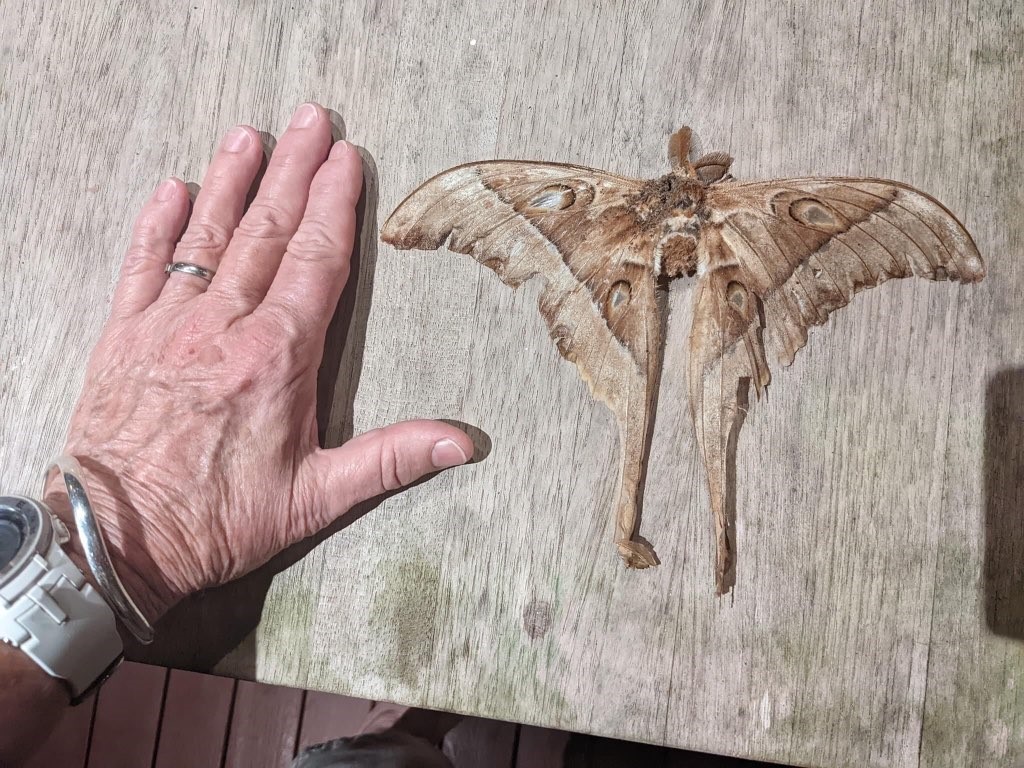
Came out on the verandah in downtown Paluma this morning to find a giant of the jungle sitting quietly on the deck furniture.
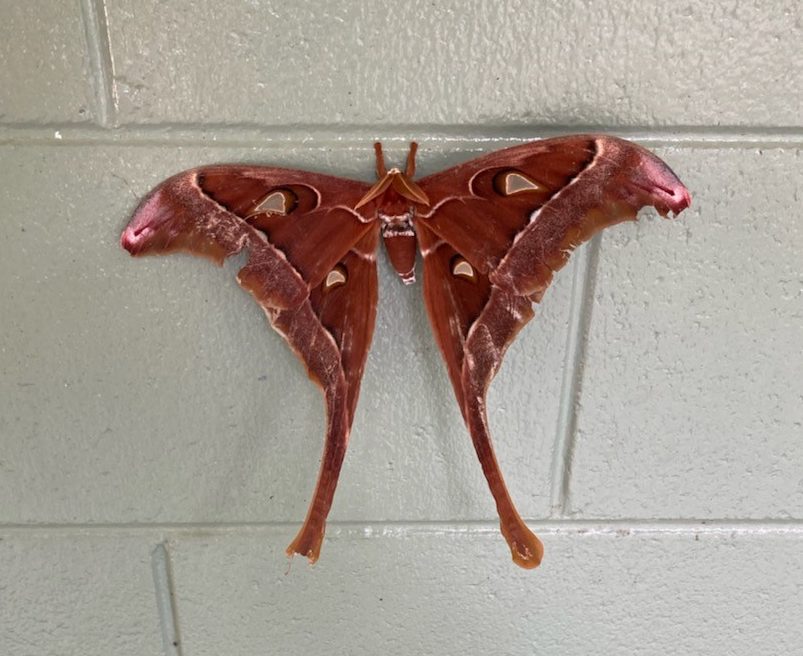
Male (we think) Hercules moth (Coscinocera hercules) 240mm wingtip to wingtip, 180mm overall length. … that’s very big for a male as Wildlife of Tropical Northern Queensland lists maximum size for the larger female as 225mm.
Wildlife of Tropical Northern Queensland and Guide to Australian Moths say range is Cape York south to Ingham — so the southerly extent of the range is a bit understated in both books.
The females have the largest wing area of any moth in the world.
The leaves of the medium sized rainforest tree Bleeding Heart (Homalanthus novoguineensis) is said to be the favorite food of the Hercules caterpillars.
We have a Bleeding Heart which is trying to climb onto our deck.
The leaves are being well munched and we did find a caterpillar there after we spotted the moth. However, it didn’t look like the Hercules caterpillars from the books.
Jamie Oliver has come across this caterpillar before and was able to provide an ID — Iscadiainexacta (Walker). Iscadia and Hercules share a preference for Bleeding Heart.
According to the Butterfly House websiteIscadia has a great party trick — “The caterpillar pupates in a papery cocoon covered in bits of chewed leaf. The pupa is famous for being able to produce sounds when disturbed, by rubbing projections on the abdominal skin against the hind surface of the cocoon.”
Hercules also has a surprising twist of biology — the adult moths don’t eat, they survive on food stores from when they were caterpillars, says the Australian Butterfly Sanctuary website. The adults live for only 10-14 days which they devote to finding a mate. The mating game is initiated by the female which emits a pheromone that can attract male suitors from over 2km away.
The caterpillars grow up to 12cm in length and are dotted with yellow spikes. Such a huge caterpillar makes sense when we consider how large the moth itself is.
The largest ever Hercules Moth had a wingspan of 36cm, says the Australian Butterfly Sanctuary website.
The Annual General Meeting of the Paluma Rural fire Brigade will be held on Saturday, 20th March 2021 at the Community Hall. All members are encouraged to attend, and anyone interested in joining or serving on the Committee are also warmly invited. If you have any questions about the PRFB or what’s involved in joining as a Volunteer, please contact Len Cook.
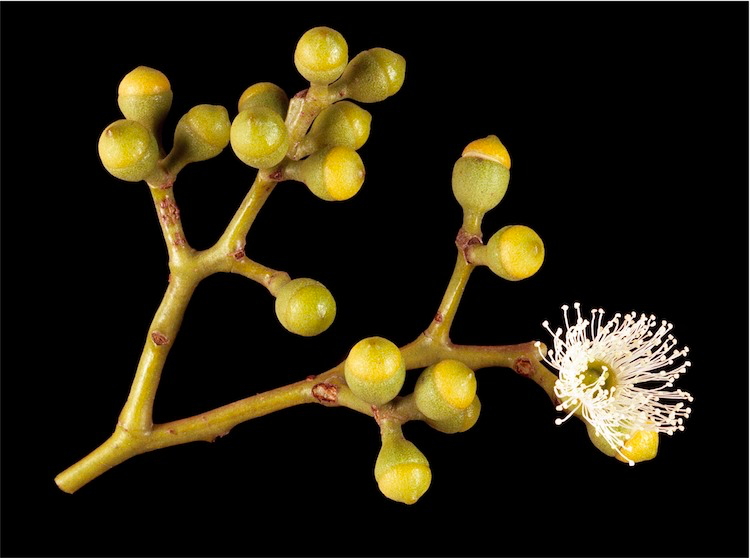
This attractive rainforest tree, a member of the Myrtaceae family, has many common names, including, brush cherry, scrub cherry, creek lilly-pilly, creek satin-ash and watergum. It grows mostly along water courses in rainforests and gallery forests at altitudes up to 1300 metres.
Worldwide, there are more than 1000 species of Syzygium ranging across PNG, the Pacific islands, Malaysia, SE Asia, India, Africa and Australia. Australia has 57 species, with 47 of them in tropical Queensland. Some species, easily recognisable are Paperbark satin-ash (Syzygiumpaparaceum with its purple fruit; Powder-puff lilly-pilly, (Syzygium wilsonii), with small purple fruit and a sub-species noted for its large magenta powder-puff flowers and lush creamy white fruit.
It is easy to understand how various Syzygium species, along with many other native Australian flowers, inspired May Gibbs to create her delightful bush babies. Who could forget the movie magnate’s daughter, Lilly Pilly with her skirt, beret and muff made of lilly-pilly berries.
Although Syzygium australe can grow to 35 metres with a trunk diameter of 60 cm, it is a popular plant in ornamental gardens as it can be shaped and pruned into hedges. It is a fast-growing tree and can grow 2 metres in a year.
The ovate leaves are simple, opposite and approximately 30×100 x 10-40 mm. Young leaves are bronze, turning to a deep, glossy green as they mature. They form dense foliage on this shapely tree.
photo by J. Oliver
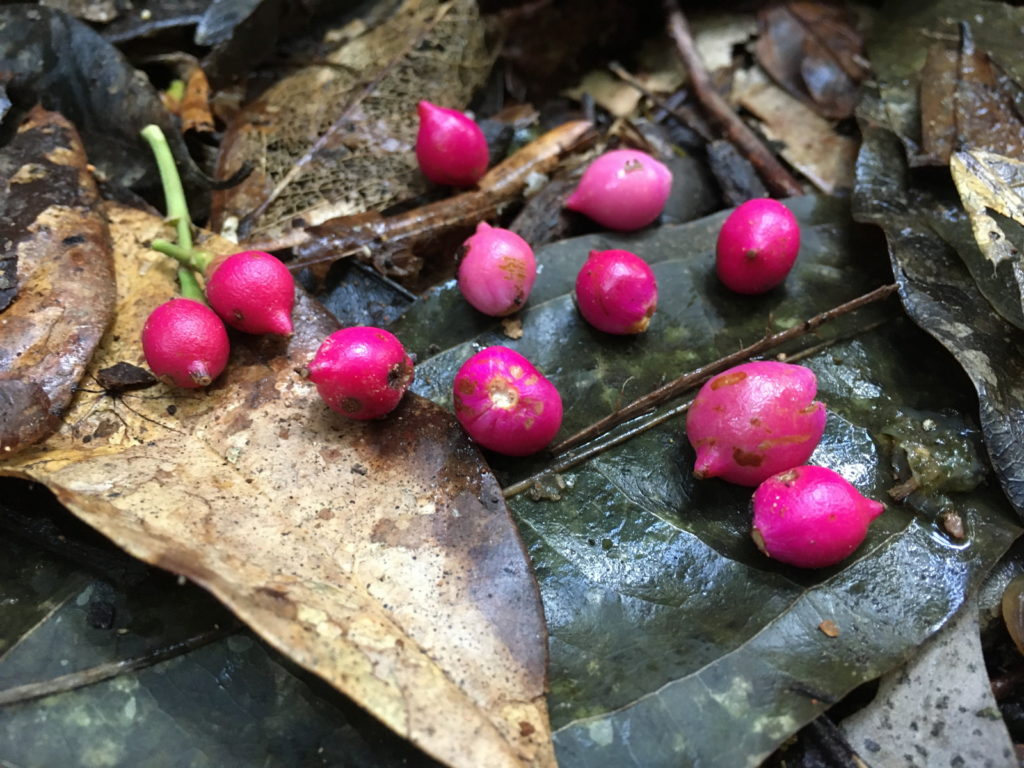
Flowering can occur at any time of year. Flowers are clustered in axillary or terminal racemes. They are tiny, with white petals and numerous white stamens which give the flowers the appearance of delicate powder-puffs. Flowering can be sparse, hiding amongst the leaves, or abundant, giving a dense cover of white. Flowers are followed by a profusion of red fruit – berries. These are 14-23 mm long with one or two seeds surrounded by crisp flesh similar to apple in texture. The fruit is edible, although can be tart. It makes excellent jam and can be used as a base and flavouring for jellies, cakes and wine.
Some species of Syzygium were previously classified in the genus Acmena and others in the genus Eugenia. The species known formerly as Eugenia Australis is now regarded as two separate species: Syzygium australe and Syzygium paniculatum.
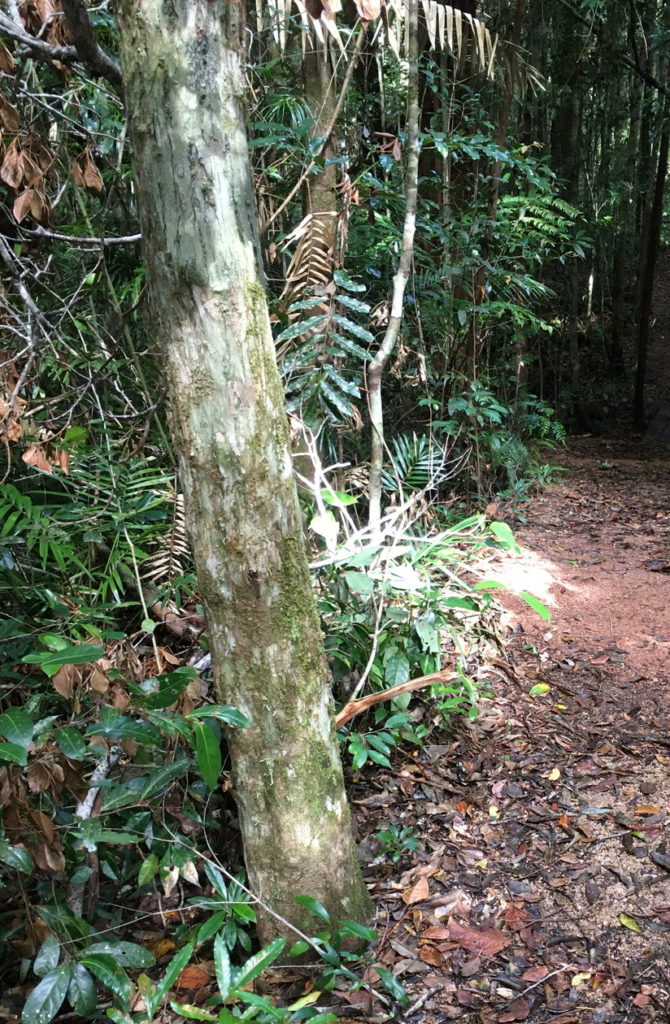
There are many examples of Syzygium australe in Paluma. A very old tree which usually bears fruit in profusion is outside No 75 Mount Spec Road, another, is outside the High Ropes course. Two more may be seen outside No 17 Mount Spec Road.
Text and photos (unless indicated) by Colwyn Campbell
On the way up the range road yesterday, Peter and Jan Cooke saw several examples of one of our truly spectacular native flowers, the Native Rosella or Marsh Mallow, Abelmoschatus moschatus tuberosus. The flowers look very much like a Hibiscus (they share the same plant family) and only last for a day or so. They favour drier coastal areas so you will probably not see them around the village. But they are certainly worth looking out for as you drive to Paluma.
Photo by Peter Cooke
The plant grows along the ground or can be partially upright. It dies back to an underground tuber in the dry season. The tubers, as well as the leaves and seeds are edible and were eaten by local aborigines.
Mistletoes are a group of parasitic plants belonging to the Order Santalales. Australia has a high diversity of mistletoes (over 85 species) with the majority in the family Loranthaceae.
Mistletoe (Amylotheca dictyophleba) in the cutting on Mt Spec Road
When we think of parasites we often envisage small or microscopic animals that can make you sick, or even kill you, but this way of living (where one organism harms another by using it for nourishment or other vital need) is widespread in all branches of life. In vascular plants parasitism has evolved at least 12 times, with the mistletoe form having evolved 5 separate times within the Order Santalales.
Mistletoes are considered to be obligate hemiparasites because they cannot grow independently of their host plant (the relationship is obligatory) and because they still have their own leaves that can provide a significant proportion of their energy needs through photosynthesis (hemi=half). A spectacular mistletoe in Western Australia looks more like a tree (it parasitises roots rather than tree branches) and is said to be the largest parasite in the world.
Mistletoe (Amylotheca subumbellata) Top left photo taken opposite the high ropes course (sth side of the road). Other photos taken on the cutting looking towards Whaley Cr.
Paluma hosts several mistletoe species and one, with beautifully shaped and gaudily coloured flowers is currently in bloom along the roadsides of the village. Its scientific name is a bit of a tongue-twister: Amylotheca subumbellata and it, unfortunately, doesn’t have a common name other than the generic “Mistletoe”. A. subumbellata has a restricted distribution (northeast Qld) with the majority of records from the Paluma region. Its clusters of small torpedo-shaped flowers with orange/red bases and yellow-green tips are very distinctive. Its leaves are also very distinctive, being narrow, strap-shaped and grey-green. One related and more widespread species that is also common around the village is the Bush Mistletoe (Amylotheca dictyophleba) has almost identical flowers, but its leaves are glossy green and ovate. It has very similar flowers (around the village they are more uniformly red), but they differ markedly from A. subumbellata in the shape and colour of their leaves, which are oval glossy green.
The Bush Mistletoe (Amylotheca dictyophleba) has very different leaves and more uniformly red flowers. Fallen mistletoe flowers (probably A. dictyophleba) are a common site in Dec-Feb on the ground along village walking tracks.
The name mistletoe is thought to be derived from two Anglo-Saxon words: “mist or mistel” meaning dung; and “tan” meaning twig. This “dung on a twig” name is quite apt. Mistletoe fruit is a favourite food for the mistletoe bird (a common Paluma resident) but the seed in the fruit is surrounded by a very sticky substance that resists digestion. When a mistletoe bird sits on a branch and tries to defecate, the sticky mass containing the seed just hangs off the birds rear end forcing the bird to wipe its bottom on the branch or twig. The seed is now exactly where it needs to be in order to germinate and infest a new host tree. David Attenborough came to Australia years ago to film this process and the result is a delightful sequence, well worth watching here.
The best places to see both of the mistletoe species discussed here are in the trees on the north side of the road cutting from 27-21 Mt Spec Road, and on either side of the road opposite the High Ropes Course.
Position based at the Centre at 53 Mount Spec Road, Paluma, 4816
Application package available from the Business Manager, phone 07 4772 9555 or 4750 8528.
Successful applicant will be required to hold a current suitability card (Blue Card) from Blue Card Services before they commence work.
The prospective employee is responsible for the cost of the Blue Card Check and the subsequent issue of the suitability card. Please check the Blue Card Services website for current fees.
The successful applicant will also be required to undertake a Criminal History Check prior to commencement.
Successful applicant may be subject to a probationary period
Applications close 4:00pm Friday, 19 February 2021
On Sunday, with the enthusiastic help of several volunteers, the project to enhance the appearance of our Community Centre with new garden beds and a selection of native plants provided by the Townsville City Council was finally completed. Last year saw the construction of some the garden beds using black wattle logs sourced from Ann Bruyeres’ property, and the sourcing of a large selection of native plants courtesy of a grant from the Council. Ann played a key role in selecting the plants and getting them up to Paluma, where we kept them in a well-watered location until we could finish preparing the remaining garden beds and find a suitable time after the rains had set in to undertake the planting-out.
Working in the rain turned out to be much more pleasant than toiling in the blazing sun!
Anne provided much needed guidance in assigning a suitable spot for each plant, while the rest of us (Colin, Jill, Don, Michele and Jamie) dug the holes. Even now, the Centre and surrounds look much improved, and with a continued good wet season the plants will all take hold and begin to fourish and further transform the site. It’s good to have some pictures from the start so that we can record the changes as the plants grow over the next 5-10 years.
Thanks again to Megan Taylor (TCC) and Councilor Margie Ryder for their support in getting the plants for this project.